
The Black Moth
by Georgette Heyer
On This Page
Description
When the notorious Lord Tracy Belmanoir, Duke of Andover and also the infamous Black Moth, is caught attempting to abduct the dark-haired Diana Beauleigh by estranged Jack Carstares, the rightful Earl of Wyncham, he's sent scurrying after a thrilling sword fight. Injured in battle, Jack relies on Diana to nurse his wounds and, as their feelings for each other blossom, realizes that he must return to Wyncham, clear his name of previous accusations, and rightly take over as earl. But the Black show more Moth waits patiently to take what he wants, and he is relentless. Can Jack take over as earl, defeat the Black Moth, and finally be with the woman he loves? show lessTags
Recommendations








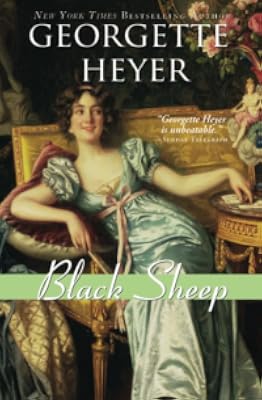



Member Recommendations
Member Reviews
Oh! This was just what I had needed – some wonderful Heyer to help me through a stressful holiday season!
I will admit that going into this knowing it was Heyer’s first published novel, I didn’t expect it to be as wonderful as some of her others that I love. In fact, since most of my favourites of hers seem to have been written later in her career, I had expected this one to be rather mediocre. But, oh! It was everything that I love about Heyer’s books. Dashing heroes! Witty and loveable love interests! Hilarious and charming secondary characters! Everything that was wonderful and good with a book was in this one.
Molly O’Hara was definitely the highlight of this book for me. While a minor character – the wife of our own dear show more Jack Carstares’ best childhood friend – every moment she graces the pages, she brings all kinds of sunshine and happy times. Heyer is able to convey so much excitement and joy and mischief whenever Molly is around, that she totally steals every scene she’s in and really should have a book written all about herself. She deserves to be the main character!
The lovely Diana Beauleigh, while positively lovely and kind and all those wonderful things, really pales in comparison to Molly O’Hara. If Molly hadn’t been in the book, I’m sure I would’ve quite liked Diana, but as it was, she didn’t have that certain SPARK that made her feel like leading lady material. Alas!
In fact, now that I’m thinking about it, I’m not sure really what it is about Ms. Beauleigh that makes both a Duke and an Earl fall head over heels in love with her… She seemed rather plain and a little boring a lot of the time.
The male characters were very much what one would expect from a Heyer book, though not anything that really makes them stand out. Yes, Jack is charming. And a bit of a rake – hello, highwayman! But he’s not as wonderful as Miles Caverleigh from Black Sheep… (Are any of her heroes? I think not!)
The story itself was highly amusing – comedic event after comedic event ensues, which left me giggling at some of the most inopportune moments. What luck Jack seems to have! First holding up his brother, then his best friend (when he is without even a loaded gun)… well, let us just say that many hijinks ensue in this book from the moment the prologue starts to the the last page of the epilogue.
The Bottom Line
Utterly delicious! Highly recommended to regency fans; I will definitely be revisiting this one! show less
I will admit that going into this knowing it was Heyer’s first published novel, I didn’t expect it to be as wonderful as some of her others that I love. In fact, since most of my favourites of hers seem to have been written later in her career, I had expected this one to be rather mediocre. But, oh! It was everything that I love about Heyer’s books. Dashing heroes! Witty and loveable love interests! Hilarious and charming secondary characters! Everything that was wonderful and good with a book was in this one.
Molly O’Hara was definitely the highlight of this book for me. While a minor character – the wife of our own dear show more Jack Carstares’ best childhood friend – every moment she graces the pages, she brings all kinds of sunshine and happy times. Heyer is able to convey so much excitement and joy and mischief whenever Molly is around, that she totally steals every scene she’s in and really should have a book written all about herself. She deserves to be the main character!
The lovely Diana Beauleigh, while positively lovely and kind and all those wonderful things, really pales in comparison to Molly O’Hara. If Molly hadn’t been in the book, I’m sure I would’ve quite liked Diana, but as it was, she didn’t have that certain SPARK that made her feel like leading lady material. Alas!
In fact, now that I’m thinking about it, I’m not sure really what it is about Ms. Beauleigh that makes both a Duke and an Earl fall head over heels in love with her… She seemed rather plain and a little boring a lot of the time.
The male characters were very much what one would expect from a Heyer book, though not anything that really makes them stand out. Yes, Jack is charming. And a bit of a rake – hello, highwayman! But he’s not as wonderful as Miles Caverleigh from Black Sheep… (Are any of her heroes? I think not!)
The story itself was highly amusing – comedic event after comedic event ensues, which left me giggling at some of the most inopportune moments. What luck Jack seems to have! First holding up his brother, then his best friend (when he is without even a loaded gun)… well, let us just say that many hijinks ensue in this book from the moment the prologue starts to the the last page of the epilogue.
The Bottom Line
Utterly delicious! Highly recommended to regency fans; I will definitely be revisiting this one! show less
I quite like it. Lavina - all the Belmanoirs - are utter idiots in various ways - very spoiled. They've never had to deal with the consequences of their choices...but two of them learn that lesson by the end of the book. Dick is a different kind of idiot, one who is extremely familiar with consequences - but again, by the end of the book he's progressed quite a bit. And Jack and Diana are sweet (though Jack is yet another type of idiot - but a heroic one). I like Jim, actually - obsessively loyal for very good reason. And Miles and Molly, too. The story is quite silly - false names and pride and playing at highwayman - and leans a bit too heavily on coincidence at several points (why _were_ his pistols unloaded?). But it makes a nice show more stage for the characters to play out their games. They're not particularly well-rounded - more like well-done puppets - but it's definitely worth reading, and rereading (I recognized a few scenes as I came across them, though I didn't remember the story as a whole). show less
A thoroughly fun read. If I hadn't known it was Georgette Heyer's first novel (written at the age of 15, no less), I would have simply pegged it as one of her more colorful but not perfectly skillful tales — highly entertaining, but betraying a few wooden moments and contrived events. However, armed with the first-novel and written-by-a-minor tidbits, I can say, with a wise and knowing look, that here we see Heyer developing the trademark wit, characterization, historical verisimilitude, and creative plotting that make her successive novels such a delight.
Really though — Devil Belmanoir. It's astonishing to think of a 15-year-old girl penning such a memorable villain. His unfailing arrogance and aplomb are hard to forget, and show more there's more than a hint of Heyer's own admiration for such a dashing and unapologetic bad guy. I think she used him as a partial model for her later-developed stock hero, the worldly-wise, handsome, thoroughly competent whip and corinthian who, beneath the stylish cravat and polished self control, is truly captivated by the heroine. Devil is captivated, all right, but he's gone too far to be fully redeemed. However, the way his thread ends the story is highly pleasing.
The hero and heroine are a bit stereotypical in their physically gorgeousness, intelligence, strict honor, and all that. Sir Miles was fun, although a bit incongruous for me (the last Irish character I read was Gene Stratton Porter's Freckles... a very different sort of story!). I liked Molly too and see in her the prototype for many other Heyerian supporting females. I also thought Lavinia was surprisingly well crafted... a bit depressing to read about in the beginning, but she comes around.
All in all, The Black Moth is an imperfect but enjoyable story that lays its author open to far fewer first-novel criticisms than is usual. Applause from me! show less
Really though — Devil Belmanoir. It's astonishing to think of a 15-year-old girl penning such a memorable villain. His unfailing arrogance and aplomb are hard to forget, and show more there's more than a hint of Heyer's own admiration for such a dashing and unapologetic bad guy. I think she used him as a partial model for her later-developed stock hero, the worldly-wise, handsome, thoroughly competent whip and corinthian who, beneath the stylish cravat and polished self control, is truly captivated by the heroine. Devil is captivated, all right, but he's gone too far to be fully redeemed. However, the way his thread ends the story is highly pleasing.
The hero and heroine are a bit stereotypical in their physically gorgeousness, intelligence, strict honor, and all that. Sir Miles was fun, although a bit incongruous for me (the last Irish character I read was Gene Stratton Porter's Freckles... a very different sort of story!). I liked Molly too and see in her the prototype for many other Heyerian supporting females. I also thought Lavinia was surprisingly well crafted... a bit depressing to read about in the beginning, but she comes around.
All in all, The Black Moth is an imperfect but enjoyable story that lays its author open to far fewer first-novel criticisms than is usual. Applause from me! show less
First of all I should say that I listened to the Penguin audiobook narrated by Stewart Clarke. This narrator does an excellent job! He is particularly good at doing different voices and for long stretches I forgot that this was indeed the same person. I was under the impression of listening to a dramatized version because he does it so well - and all without overdoing it and making it all ridiculous.
Now on to the story: Jack Carstares, the Earl of Wyncham, has been living as a highwayman for seven years. Back then, his brother cheated at cards, but Jack took the blame onto himself to save his brother from ruin and despair, and went into hiding.
The Black Moth refers to the Duke of Andover, Jack's enemy and the scoundrel of the story, show more who wishes to marry Diana Beauleigh and plans to abduct her.
As is to be expected, there are many turns and twists. There are also quite a lot of other characters who have important roles in the story.
I must admit that in the beginning, it was a bit hard for me to settle into Heyer's style. I had trouble keeping up and was confused by all the different names and characters. But after some time, it became easier and I enjoyed the story very much. The characters are so lively and I like how Heyer takes her time to let things develop. The dialogues are not rushed and it all plays out nicely.
I only wish that there was more of Diana herself - she as a character as well as the actual love story come a bit short. show less
Now on to the story: Jack Carstares, the Earl of Wyncham, has been living as a highwayman for seven years. Back then, his brother cheated at cards, but Jack took the blame onto himself to save his brother from ruin and despair, and went into hiding.
The Black Moth refers to the Duke of Andover, Jack's enemy and the scoundrel of the story, show more who wishes to marry Diana Beauleigh and plans to abduct her.
As is to be expected, there are many turns and twists. There are also quite a lot of other characters who have important roles in the story.
I must admit that in the beginning, it was a bit hard for me to settle into Heyer's style. I had trouble keeping up and was confused by all the different names and characters. But after some time, it became easier and I enjoyed the story very much. The characters are so lively and I like how Heyer takes her time to let things develop. The dialogues are not rushed and it all plays out nicely.
I only wish that there was more of Diana herself - she as a character as well as the actual love story come a bit short. show less
Georgette Heyer's first novel has a few differences that could mark this out as a novice piece of writing, but still remains very much a Heyer romance in style and story. The book involves a large cast of characters, almost too many to juggle. The noble Lord Jack Carstares, eldest son of Earl of Wyncham, takes the blame when his younger brother cheats at cards. Since money was on the line, the disgrace is great, and Jack is ostracized from his family and friends. He disappears to the continent, and the novel fast forwards in time. Richard, Jack's younger brother, is now the acknowledged earl. He is racked with guilt for his actions, but can't confess because his wife, the lovely and spoiled Lady Lavinia, refuses to let him disgrace show more their name. She was the reason Richard let Jack take the blame all those years ago, and she continues to rule his life now.
Lavinia is sister to the Duke of Andover, also known as the Devil, a dissolute man who only seeks his own gratification. He was present the night of Jack's disgrace, and it is apparent to the reader that he knows that Richard is the guilty one while he happily prods Jack to take the blame. He now remorselessly bleeds Richard of the Wyncham money to support his many infamous habits. The Devil becomes entangled with Jack again when he attempts to abduct beautiful Diana Beauleigh and Jack stops him. Oh yes, Jack has now returned to England and is living as a highwayman.
Jack falls in love with Diana while he is spending time at her home to recuperate from the gunshot he took in the shoulder while saving her. He meets her father and devoted aunt. The cast of characters still isn't complete, however - there is still Jack's old friend Sir Miles and his perky wife who has the habit of interfering. Jack eventually moves to their house for an extended stay. Meanwhile, Richard and Lavinia are staying in town. Richard puts up with his wife's many admirers, but when he sees the way she acts around Captain Lovelace he fears that she is in love with another. Meanwhile (again), Tracy the Duke of Andover is still plotting on how to acquire Diana, whether she wills it or no. The many players come together in a melodramatic conclusion, where an attempted rape is thwarted and confessions made, leading to happy endings all around.
The book never uses the word rape, by the way, although that is clearly what the Devil intends so he can force Diana into marriage with him. Her honor gone, she would have no choice but to accept. Other characters in the story allude to the fact that this is not the first time Tracy has carried girls off against their will, either; however, they were not of the upper class, and therefore didn't count. Ugh. I wish I could say this is one aspect of Heyer's fledgling writer status, but it is not an unusual element of her books. I recognize that she is accepting the cultural status quo both of her own time and the historical time she is presenting, so I don't get too worked up about it, but I still don't like it. I'm glad I am not a woman living in those times.
Getting off my soapbox, let's look at the rest of the book. The story has a fun plot, which is unnecessarily complex but still easy to follow, and it has a fast pace. The dialogue is witty and believable, and Heyer catches the historical setting with phenomenal detail and colloquialisms. The romance is sweet, albeit a bit rushed, because the author has so many story lines and characters to manage. For a first book, this is a nice escapist story, although I am glad Heyer focused in on on her central characters in later novels. show less
Lavinia is sister to the Duke of Andover, also known as the Devil, a dissolute man who only seeks his own gratification. He was present the night of Jack's disgrace, and it is apparent to the reader that he knows that Richard is the guilty one while he happily prods Jack to take the blame. He now remorselessly bleeds Richard of the Wyncham money to support his many infamous habits. The Devil becomes entangled with Jack again when he attempts to abduct beautiful Diana Beauleigh and Jack stops him. Oh yes, Jack has now returned to England and is living as a highwayman.
Jack falls in love with Diana while he is spending time at her home to recuperate from the gunshot he took in the shoulder while saving her. He meets her father and devoted aunt. The cast of characters still isn't complete, however - there is still Jack's old friend Sir Miles and his perky wife who has the habit of interfering. Jack eventually moves to their house for an extended stay. Meanwhile, Richard and Lavinia are staying in town. Richard puts up with his wife's many admirers, but when he sees the way she acts around Captain Lovelace he fears that she is in love with another. Meanwhile (again), Tracy the Duke of Andover is still plotting on how to acquire Diana, whether she wills it or no. The many players come together in a melodramatic conclusion, where an attempted rape is thwarted and confessions made, leading to happy endings all around.
The book never uses the word rape, by the way, although that is clearly what the Devil intends so he can force Diana into marriage with him. Her honor gone, she would have no choice but to accept. Other characters in the story allude to the fact that this is not the first time Tracy has carried girls off against their will, either; however, they were not of the upper class, and therefore didn't count. Ugh. I wish I could say this is one aspect of Heyer's fledgling writer status, but it is not an unusual element of her books. I recognize that she is accepting the cultural status quo both of her own time and the historical time she is presenting, so I don't get too worked up about it, but I still don't like it. I'm glad I am not a woman living in those times.
Getting off my soapbox, let's look at the rest of the book. The story has a fun plot, which is unnecessarily complex but still easy to follow, and it has a fast pace. The dialogue is witty and believable, and Heyer catches the historical setting with phenomenal detail and colloquialisms. The romance is sweet, albeit a bit rushed, because the author has so many story lines and characters to manage. For a first book, this is a nice escapist story, although I am glad Heyer focused in on on her central characters in later novels. show less
When he was young, Jack Carstares took the blame when his younger brother was caught cheating at cards. He was ostracized from society and fled to the Continent, where he eventually made his fortune gambling and teaching fencing. Now he has returned to England, where he plays at being a highwayman (but in fact, gives all his ill-gotten gains to the poor). When his younger brother realizes that Jack is back, he is wracked with guilt, but as before his love for the spoiled Lavinia keeps him from revealing the truth.
Meanwhile, the Duke of Andover (called Devil by friends and foes alike) has fallen for young Diana. He woos her under a false name, then tries to abduct her--but Jack, in his guise as a highwayman, fights him back. The Duke show more returns to London to come up with another plan to get Diana into his clutches, and Jack and Diana fall in love while she nurses him from his wounds. But Jack is still unwilling to cast aside his bad reputation, and so he and Diana cannot get married. Alack! It all ends happily, of course.
This is a very odd book. First off, the morality system is quite strange: when Jack is accused of cheating at cards his friends and family cast him out entirely. But the Duke can try to seduce, abduct, and full on rape a lady *repeatedly*, and no one considers so much as disinviting him from a party. Nor, in fact, will Jack even reveal the Duke's real name to the woman he tried to ruin--he puts actual effort into keeping the Duke's true identity a secret. Madness!
The other oddity is that the male friendships are given so much more intensity and page time than the romance between Jack and Diana. Jack and his valet Jim have an adorably/uncomfortably (depending on your feelings about class differences) feudal relationship. A great deal of the book is made up of conversations between Jack and O'Hara, who adore each other, banter constantly, and defend each other viciously. And, of course, there is the Duke and his bff Fortescue. The book opens with a letter from the Duke to Fortescue, and finishes with the Duke and Fortescue talking in their shared lodging in Venice. The Duke says Fortescue is literally the only person he likes in the whole world, and Fortescue spends all his time hanging out with the Duke, trying to get him to talk about his feelings.
Although Diana does not get nearly the amount of page time the menfolk do (and in fact, Lavinia and O'Hara's wife get about as much page time as she does), she's a good character. She particularly shines in her final showdown with the Duke. But as for the Duke himself--I don't get why Heyer would want to write this character again, nor why anyone finds him fascinating. He's just another drawling menacing asshole, another Marquis St. Evrémonde or Lucius Malfoy. Maybe I'm just tired of the type, which seems to be everywhere in Regency romances. show less
Meanwhile, the Duke of Andover (called Devil by friends and foes alike) has fallen for young Diana. He woos her under a false name, then tries to abduct her--but Jack, in his guise as a highwayman, fights him back. The Duke show more returns to London to come up with another plan to get Diana into his clutches, and Jack and Diana fall in love while she nurses him from his wounds. But Jack is still unwilling to cast aside his bad reputation, and so he and Diana cannot get married. Alack! It all ends happily, of course.
This is a very odd book. First off, the morality system is quite strange: when Jack is accused of cheating at cards his friends and family cast him out entirely. But the Duke can try to seduce, abduct, and full on rape a lady *repeatedly*, and no one considers so much as disinviting him from a party. Nor, in fact, will Jack even reveal the Duke's real name to the woman he tried to ruin--he puts actual effort into keeping the Duke's true identity a secret. Madness!
The other oddity is that the male friendships are given so much more intensity and page time than the romance between Jack and Diana. Jack and his valet Jim have an adorably/uncomfortably (depending on your feelings about class differences) feudal relationship. A great deal of the book is made up of conversations between Jack and O'Hara, who adore each other, banter constantly, and defend each other viciously. And, of course, there is the Duke and his bff Fortescue. The book opens with a letter from the Duke to Fortescue, and finishes with the Duke and Fortescue talking in their shared lodging in Venice. The Duke says Fortescue is literally the only person he likes in the whole world, and Fortescue spends all his time hanging out with the Duke, trying to get him to talk about his feelings.
Although Diana does not get nearly the amount of page time the menfolk do (and in fact, Lavinia and O'Hara's wife get about as much page time as she does), she's a good character. She particularly shines in her final showdown with the Duke. But as for the Duke himself--I don't get why Heyer would want to write this character again, nor why anyone finds him fascinating. He's just another drawling menacing asshole, another Marquis St. Evrémonde or Lucius Malfoy. Maybe I'm just tired of the type, which seems to be everywhere in Regency romances. show less
I read a lot of Georgette Heyer back in my youth but I missed this one. Apparently, it was her first book. I could see a lot of These Old Shades here, and in doing some googling found this was sort of a precursor to that wonderful book - she changed names: Satanas, Duke of Avon, is Devil, the Duke of Andover here, and so on. The Black Moth has some of the elements that made the later book so great but is a bit over the top and very melodramatic.
Jack Carstares is the disgraced Earl of Wyncham and now a half-hearted highwayman. He rescues Diana Beauleigh from the Duke of Andover's abduction but is wounded. It's a good read, just not as strong as her later books. I give it 3 1/2 stars.
Jack Carstares is the disgraced Earl of Wyncham and now a half-hearted highwayman. He rescues Diana Beauleigh from the Duke of Andover's abduction but is wounded. It's a good read, just not as strong as her later books. I give it 3 1/2 stars.
Members
- Recently Added By
Lists

Favorite Georgette Heyer Novels, Ranked
49 works; 29 members

Set in the 18th century
13 works; 4 members

Best Friendship Stories
205 works; 16 members

Books with Colourful Titles
171 works; 8 members

A Rainbow of Books: Colors in the Title
570 works; 24 members
Author Information

125+ Works 78,055 Members
Georgette Heyer was born on August 16, 1902 at Wimbledon, London. She wrote The Black Moth as a story for her brother Boris. Her father, impressed with his daughter's imagination, suggested that she prepare it to be published, which it was by Constable in 1921. Having scored an instant success with The Black Moth at the age of nineteen under her show more own name, Georgette Heyer, she experimented with a pseudonym, Stella Martin, for her third book, published by Mills & Boon. She continued writing and in 1925 she married Ronald Rougier, a mining engineer. After reasonable but not spectacular sales from her first few books the instant success of These Old Shades in 1926 brought her a solid source of income which was very necessary at the time since the family relied to a large extent on the income from Georgette Heyer's writing. She wrote over fifty books during her lifetime and created the Regency England genre of romance novels. She died on July 4, 1974 at the age of 71. (Bowker Author Biography) show less
Some Editions
Series
Belongs to Publisher Series
rororo (1689)
Work Relationships
Common Knowledge
- Original title
- The Black Moth: A Romance Of The XVIII Century
- Original publication date
- 1921
- People/Characters
- Lord Jack Carstares, Earl of Wyncham; Diana Beauleigh; Lord Hugh Tracy Clare Belmanoir, Duke of Andover (Black Moth); Richard Carstares; Lavinia; Miles O'Hara
- Important places
- England, UK; Surrey, England, UK
- First words
- Clad in his customary black and silver, with raven hair unpowdered and elaborately dressed, diamonds on his fingers and in his cravat, Hugh Tracy Clare Belmanoir, Duke of Andover, sat at the escritoire in the library of his t... (show all)own house, writing.
- Last words
- (Click to show. Warning: May contain spoilers.)"How very pleasant it must be, Frank, to have one's prophecies so happily verified!" he purred. "Allow me to felicitate you!"
- Original language
- English
Classifications
Statistics
- Members
- 1,733
- Popularity
- 12,748
- Reviews
- 45
- Rating
- (3.51)
- Languages
- English, Estonian, German, Italian
- Media
- Paper, Audiobook, Ebook
- ISBNs
- 98
- UPCs
- 2
- ASINs
- 49