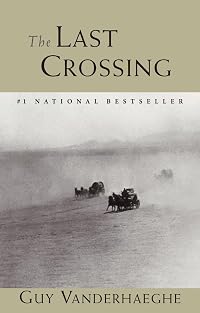
On This Page
Description
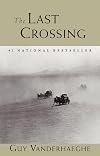
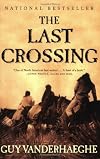
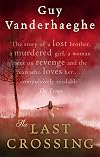
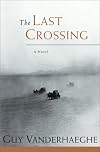
Journey from Victorian England to the whiskey trading posts of the Old West in this epic award-winning bestseller from the author of The Englishman's Boy.In the late nineteenth century, Englishmen Charles and Addington Gaunt are sent by their father to find their brother Simon, a missionary who has gone missing in the wilds of the American West. In the outreaches of the Montana frontier, the brothers hire a guide—a half Blackfoot, half Scot named Jerry Potts—to lead them further north show more into the area where Simon was last seen. As the party heads out, it grows to include a journalist, a saloonkeeper, a Civil War veteran in search of love, and a young woman bent on revenge.
There's no telling what awaits them . . .
"One of North America's best writers . . . A feast of a book." —Annie Proulx, The Globe and Mail (Toronto)
"Stuffed with enough goodies to keep us entertained for days." —The New York Times Book Review
"Quest and revenge, love and loss converge before the novel's satisfying final twist." —The Boston Globe
"The quality of its plotting, vivid characterizations and descriptions and dark humor place it firmly in the company of the likes of Larry McMurtry and Cormac McCarthy." —St. Louis Post-Dispatch. Literature. Fiction. show less
Tags
Recommendations








Member Recommendations

Member Reviews
I read Guy Vanderhaeghe's THE ENGLISHMAN'S BOY several years ago and loved it. THE LAST CROSSING (2002) is the second book in his Canadian West trilogy. A big book at nearly 400 pages, I thought, well, this is gonna take a while. But I finished it in just a few days, it was so good! The Canadian frontier in the late 1800s really comes alive here, and so does England, in a framing story of the wealthy Gaunt family, with its cruel demanding father; an older son, Addington, a British Army veteran of the "troubles" in Ireland, with some cruel, twisted habits of his own; and twins - Charles and Simon, perhaps as unalike as twins could be. The plot revolves around a search expedition for Simon, who has gone missing in wild and wooly western show more Canada. Some Canadian characters are key too, as the point of view shifts between several voices. Perhaps the most iinteresting of these is Custis Straw, a widowed combat veteran of the U.S. Civil war who, despite his PTSD, has amassed a small fortune as a horse trader with the Indian tribes. He is much taken with Lucy Stoveall, a woman hell bent on finding the killers of her younger sister. And there is Aloysius Dooley, Straw's friend and the saloon keeper, as well as Jerry Potts, a half-breed guide (based on a real, historical person). Compelling, finely wrought and complex characters, crime, sex, violence, cowboys and Indians stuff - they all make for one humdinger of a yarn, and a highly literate one at that. Vanderhaeghe is simply a wonderful writer. I cannot over emphasize that. My very highest recommendation. (And the third book of the trilogy, A GOOD MAN, is already in my teetering to-read pile.)
- Tim Bazzett, author of the memoir, BOOKLOVER show less
- Tim Bazzett, author of the memoir, BOOKLOVER show less
I found this book very dense: in description, writing, and events. Vanderhaeghe built a very precise world, slowly pulling us in, introducing us to the characters, unravelling their fears, urges and loves. The story is told in different voices, but it's subtle and incredibly well done. There are some very strong passages that illustrate the difficulties of the time (mid 1800s), from illness to working conditions or social expectations. What I found the most interesting, however, was the culture clashes and exchanges between white Americans, Indigenous peoples and the British: all coexisting in various ways with very different view points and privileges.
Vanderhaeghe does a tremendous job of pulling all these items together with exciting show more minutiae and although it does require close attention, I found it incredibly rewarding. show less
Vanderhaeghe does a tremendous job of pulling all these items together with exciting show more minutiae and although it does require close attention, I found it incredibly rewarding. show less
”I think it’s safe to say that a fondness for all things past is a sure sign of creeping rot.”
In 1870, Charles and Addington Gaunt are charged by their father with the task of leaving England and traveling across the U.S. to find their brother Simon, who has not been heard from in some time. His companion’s body was found by a prospector but there was no sign of Simon. So the hunt is on across the American and Canadian West, through unfriendly Indian country. Along the way the brothers take up with an unlikely cast of characters and it’s the interactions of these people, each with their own thorny reasons for joining the group, combined with the beauty and danger of the far West that make this narrative sing.
No question show more about it, Vanderhaeghe is a masterful storyteller. His descriptions of the region and people, and the intimate vignettes---the discovery of an Indian village devastated by smallpox, the meeting of a Metis caravan, a sharpshooter’s shocking obliteration of his victim---had me furiously turning pages. The book is worth the read just to sink into the few pages devoted to the bear hunt. Incredible characters, each with their own demons, and each depicted in insightful detail by an author who has the ability to cast a spell like few other authors I’ve encountered. If I was going to compare him to anyone it might be Dickens and the book certainly brought back memories of Lonesome Dove.
Vanderhaeghe is a new author for me and only affirms my belief that the best writers often come from Canada. I’ll be moving on to another of his before too long. show less
In 1870, Charles and Addington Gaunt are charged by their father with the task of leaving England and traveling across the U.S. to find their brother Simon, who has not been heard from in some time. His companion’s body was found by a prospector but there was no sign of Simon. So the hunt is on across the American and Canadian West, through unfriendly Indian country. Along the way the brothers take up with an unlikely cast of characters and it’s the interactions of these people, each with their own thorny reasons for joining the group, combined with the beauty and danger of the far West that make this narrative sing.
No question show more about it, Vanderhaeghe is a masterful storyteller. His descriptions of the region and people, and the intimate vignettes---the discovery of an Indian village devastated by smallpox, the meeting of a Metis caravan, a sharpshooter’s shocking obliteration of his victim---had me furiously turning pages. The book is worth the read just to sink into the few pages devoted to the bear hunt. Incredible characters, each with their own demons, and each depicted in insightful detail by an author who has the ability to cast a spell like few other authors I’ve encountered. If I was going to compare him to anyone it might be Dickens and the book certainly brought back memories of Lonesome Dove.
Vanderhaeghe is a new author for me and only affirms my belief that the best writers often come from Canada. I’ll be moving on to another of his before too long. show less
This has western written all over it. Plenty of action with shooting, stabbing and scalping - but it's not just an action packed story. Even more I would say it's reflective and deals with the inner turmoils of the many very different characters coming to terms with their conflicted past.
The two brothers Charles and Addington Gaunt sail from England to "The New World" in a doomed search of their lost brother Simon. Charles is a good-hearted but disillusioned artist, Addington, a disgraced military captain, is a reckless man without honor - together they assemble an unlikely search party at the Montana frontier - among them the "half breed" scout Potts (half Blackfoot, half Scot) - the Civil War veteran Custis Straw and - of course - a show more woman - the young Lucy Stoveall - who have an agenda of her own - to seek revenge for the murder of her sister. And she attracts the attention of both Charles and Custis which brings additional tension to this band of misfits.
Canadian author Guy Vanderhaeghe alternates between many of the characters perspective - sometimes narrating in first person, sometimes in third person - and he does something magical with the language in this book - his "archaic" style (in a good way) fits with the time and place so well - you are instantly brought back to 1871 and immediately get a lot of dust in your eyes riding a long the trail. The sense of place is exceptional here. This is a clever, well-researched intellectual, yet suspenseful western. show less
The two brothers Charles and Addington Gaunt sail from England to "The New World" in a doomed search of their lost brother Simon. Charles is a good-hearted but disillusioned artist, Addington, a disgraced military captain, is a reckless man without honor - together they assemble an unlikely search party at the Montana frontier - among them the "half breed" scout Potts (half Blackfoot, half Scot) - the Civil War veteran Custis Straw and - of course - a show more woman - the young Lucy Stoveall - who have an agenda of her own - to seek revenge for the murder of her sister. And she attracts the attention of both Charles and Custis which brings additional tension to this band of misfits.
Canadian author Guy Vanderhaeghe alternates between many of the characters perspective - sometimes narrating in first person, sometimes in third person - and he does something magical with the language in this book - his "archaic" style (in a good way) fits with the time and place so well - you are instantly brought back to 1871 and immediately get a lot of dust in your eyes riding a long the trail. The sense of place is exceptional here. This is a clever, well-researched intellectual, yet suspenseful western. show less
While reading Guy Vanderhaeghe's novel of the Old West, The Last Crossing, you might want to slip a little mood music into your CD player: a soundtrack by Ennio Morricone, perhaps—something with a lonely harmonica, a chorus of whistles that sound like coyotes, or a rousing crescendo that climaxes with the crack of a bullwhip.
The Last Crossing is a widescreen, big-landscape novel populated with rough, grimy characters who'd feel right at home in a western movie—with or without spaghetti. Yet, Vanderhaeghe's novel is more than a sage-and-saddle yarn filled with cowboys and Indians; it's a saga about family ties, class prejudice, and failed ambition. On some levels, it's Middlemarch with chewing tobacco.
Originally published in Canada show more two years ago, it's only just now making its way south of the border after garnering awards, hitting the bestseller list and being picked as the "Canada Reads" book. Though parts of the novel are set in Saskatchewan, The Last Crossing is an American tale through and through. Thirty years ago, Hollywood might have turned it into a John Wayne movie—the eyepatched, cynical Wayne of the Rooster Cogburn era, that is.
The tale opens in 1871 as English aristocrats Charles and Addington Gaunt are sent by their father to find Simon, another brother (and Charles's twin) who has gone missing somewhere in Montana territory. Simon, always the odd sheep of the family, has come to America on the coattails of a religious fanatic who hopes his missionary zeal will bring light unto the dark-hearted Indian tribes of the frontier. When the hapless Reverend Witherspoon is found dead after a blizzard and Simon is nowhere to be found, the worst is feared.
Nevertheless, the two brothers continue their quest, which eventually brings them to Fort Benton in Montana Territory where they meet the rest of the book's large cast of characters: Lucy Stoveall, abandoned by her husband and vowing revenge on the men who raped and murdered her little sister; Custis Straw, a shell-shocked Civil War veteran who is hopelessly and foolishly in love with Lucy despite the fact that he's eighteen years her senior and she rarely turns an eye in his direction; Aloysius Dooley, saloonkeeper and Custis's faithful friend; Caleb Ayto, a journalist who's hired to turn Addington Gaunt's exploits into legend; and Jerry Potts, the half-Blackfoot, half-Scot guide who will lead them north toward Fort Whoop-Up in Alberta as the party searches for Simon. The Last Crossing is told in shifting perspective—sometimes in first-person (Custis and Charles), sometimes in the third-person point-of-view. Most of the characters move through the story trying not to get swallowed up in the panorama of history.
As it turns out, Potts is a real historical figure, a legend in the annals of the Royal Canadian Mounted Police who still revere him for his tracking and diplomatic skills. Described on a RCMP website as "a short, bowlegged, oddly dressed man who rarely spoke more than two words together," Potts leaps off the pages as the novel's most interesting character.
Less interesting are the Gaunt brothers, though Vanderhaeghe sets them up for some Shakespearean-level conflict. Addington is eight years older than Charles and Simon and has always treated them with a cavalier disregard. Their mother died giving birth to the twins, turning Addington's heart against them or, as his father remarks, "It must have put the worm in the apple."
That worm continues to turn as Addington and Charles venture deeper into the American frontier. While Charles just wants to find his soul-mate twin, Addington has other ambitions. As Charles tells us:
With every day that passes, it is brought home to me ever more clearly and discouragingly that my brother regards the search for his own brother as nothing more than an opportunity to exercise his taste for outdoor life and adventure. He is a character in a boy's book.
Indeed, haughty Addington rides around with delusions of self-grandeur, dreaming of a hunt for a grizzly bear in which he looms large as an epic hero:
Mr. Ayto will write that exploit up very thrillingly and he is certain Charles can be prevailed upon to do him a capital illustration for the book. There it is in his mind's eye, ravening bear erect on its hind legs, pawing the shaft buried in its throat, and there he is, a mere arm's-length away from those terrible teeth and claws, cool and collected.
He often mulls over titles for his book in moments such as this. A Gentleman Nomad in the Great American Desert. The Rambles and Adventures of Captain Gaunt.
When the encounter with ursus arctos horribilis comes—and surely we know from all Vanderhaeghe's hints that it's inevitable—the result is brutal and thrilling, one of a handful of memorable moments in The Last Crossing; others include a Civil War scene, an encounter with desperate outlaws holed up in a cave, a battle between the Blackfoot, Cree and Assiniboine tribes and a couple of sex scenes which the author firmly plants in our imagination through the use of graphic and visceral details.
Here is how Charles describes one erotic encounter with a woman while out strolling through Mother Nature:
Walks through the dew-soaked grass to gaze upon another dusky bronze, rose madder sunrise; a smear of leaping fire jigging up and down the spine of the horizon, slowly extinguishing the tiny stars, the aubergine sky flooded with light as the egg of the sun hatches a fierce, crowing blaze. Or sheltered in some leafy glade, falling on one another with hungry mouths, the aspen leaves dappling her with shade and sunshine as she disrobes. Yet every happy moment is undermined by the knowledge that all we share is fleeting, temporary. Sadness rising up even in the thrall of desire and passion.
Beyond the Rocky-Mountains-as-soft-porn motif in that paragraph, this is one example of the weight of discourse which pulls at the narrative and, at times, bogs it down to a crawl. Mostly confined to Charles's first-person sections, the lead-foot language is The Last Crossing's biggest handicap. Vanderhaeghe, through the medium of Charles, aims to resurrect the long-winded style of James Fenimore Cooper which is admirable but hardly productive—especially when other sections rip along with the all the fervor of a dime novel.
The Last Crossing is a book crowded with exquisite details which hint at the long hours Vanderhaeghe spent poring over dusty manuscripts and going through the archives of historical societies. Here's just an example of a tidbit he must have stumbled across during research and couldn't resist including: one ancient Crow chief has a "mane [which] measured ten feet and which was kept rolled up in a package that he carried under his arm like a man returning home from a shop with a purchase." It's the little details like this which give The Last Crossing some much-needed flavor when the plot starts to weaken.
Woven into the action and detailed research, the psychological baggage gives the book its weight. In the course of the novel, we come to understand that the characters are not just fighting to preserve themselves from death by malevolent nature or marauding Indians, they're struggling to save the last shreds of a fast-disappearing frontier. Jerry Potts's moral burden, for instance, is "to save white men from themselves." As one character observes, in requiem, Potts was "a perfectly equipped factotum for a crucial transition in history." The Last Crossing attempts to paint a scenic landscape of that crucial transition, though without the tame, bucolic beauty of an Albert Bierstadt painting. The Old West on these pages is brutal, dirty, dangerous.
Gradually, we come to realize that the book's main character—indeed, the only character that really matters—is History itself. The tiny, brief lives of the people on these pages are ultimately less consequential than the panoramic time and landscape they inhabit. show less
The Last Crossing is a widescreen, big-landscape novel populated with rough, grimy characters who'd feel right at home in a western movie—with or without spaghetti. Yet, Vanderhaeghe's novel is more than a sage-and-saddle yarn filled with cowboys and Indians; it's a saga about family ties, class prejudice, and failed ambition. On some levels, it's Middlemarch with chewing tobacco.
Originally published in Canada show more two years ago, it's only just now making its way south of the border after garnering awards, hitting the bestseller list and being picked as the "Canada Reads" book. Though parts of the novel are set in Saskatchewan, The Last Crossing is an American tale through and through. Thirty years ago, Hollywood might have turned it into a John Wayne movie—the eyepatched, cynical Wayne of the Rooster Cogburn era, that is.
The tale opens in 1871 as English aristocrats Charles and Addington Gaunt are sent by their father to find Simon, another brother (and Charles's twin) who has gone missing somewhere in Montana territory. Simon, always the odd sheep of the family, has come to America on the coattails of a religious fanatic who hopes his missionary zeal will bring light unto the dark-hearted Indian tribes of the frontier. When the hapless Reverend Witherspoon is found dead after a blizzard and Simon is nowhere to be found, the worst is feared.
Nevertheless, the two brothers continue their quest, which eventually brings them to Fort Benton in Montana Territory where they meet the rest of the book's large cast of characters: Lucy Stoveall, abandoned by her husband and vowing revenge on the men who raped and murdered her little sister; Custis Straw, a shell-shocked Civil War veteran who is hopelessly and foolishly in love with Lucy despite the fact that he's eighteen years her senior and she rarely turns an eye in his direction; Aloysius Dooley, saloonkeeper and Custis's faithful friend; Caleb Ayto, a journalist who's hired to turn Addington Gaunt's exploits into legend; and Jerry Potts, the half-Blackfoot, half-Scot guide who will lead them north toward Fort Whoop-Up in Alberta as the party searches for Simon. The Last Crossing is told in shifting perspective—sometimes in first-person (Custis and Charles), sometimes in the third-person point-of-view. Most of the characters move through the story trying not to get swallowed up in the panorama of history.
As it turns out, Potts is a real historical figure, a legend in the annals of the Royal Canadian Mounted Police who still revere him for his tracking and diplomatic skills. Described on a RCMP website as "a short, bowlegged, oddly dressed man who rarely spoke more than two words together," Potts leaps off the pages as the novel's most interesting character.
Less interesting are the Gaunt brothers, though Vanderhaeghe sets them up for some Shakespearean-level conflict. Addington is eight years older than Charles and Simon and has always treated them with a cavalier disregard. Their mother died giving birth to the twins, turning Addington's heart against them or, as his father remarks, "It must have put the worm in the apple."
That worm continues to turn as Addington and Charles venture deeper into the American frontier. While Charles just wants to find his soul-mate twin, Addington has other ambitions. As Charles tells us:
With every day that passes, it is brought home to me ever more clearly and discouragingly that my brother regards the search for his own brother as nothing more than an opportunity to exercise his taste for outdoor life and adventure. He is a character in a boy's book.
Indeed, haughty Addington rides around with delusions of self-grandeur, dreaming of a hunt for a grizzly bear in which he looms large as an epic hero:
Mr. Ayto will write that exploit up very thrillingly and he is certain Charles can be prevailed upon to do him a capital illustration for the book. There it is in his mind's eye, ravening bear erect on its hind legs, pawing the shaft buried in its throat, and there he is, a mere arm's-length away from those terrible teeth and claws, cool and collected.
He often mulls over titles for his book in moments such as this. A Gentleman Nomad in the Great American Desert. The Rambles and Adventures of Captain Gaunt.
When the encounter with ursus arctos horribilis comes—and surely we know from all Vanderhaeghe's hints that it's inevitable—the result is brutal and thrilling, one of a handful of memorable moments in The Last Crossing; others include a Civil War scene, an encounter with desperate outlaws holed up in a cave, a battle between the Blackfoot, Cree and Assiniboine tribes and a couple of sex scenes which the author firmly plants in our imagination through the use of graphic and visceral details.
Here is how Charles describes one erotic encounter with a woman while out strolling through Mother Nature:
Walks through the dew-soaked grass to gaze upon another dusky bronze, rose madder sunrise; a smear of leaping fire jigging up and down the spine of the horizon, slowly extinguishing the tiny stars, the aubergine sky flooded with light as the egg of the sun hatches a fierce, crowing blaze. Or sheltered in some leafy glade, falling on one another with hungry mouths, the aspen leaves dappling her with shade and sunshine as she disrobes. Yet every happy moment is undermined by the knowledge that all we share is fleeting, temporary. Sadness rising up even in the thrall of desire and passion.
Beyond the Rocky-Mountains-as-soft-porn motif in that paragraph, this is one example of the weight of discourse which pulls at the narrative and, at times, bogs it down to a crawl. Mostly confined to Charles's first-person sections, the lead-foot language is The Last Crossing's biggest handicap. Vanderhaeghe, through the medium of Charles, aims to resurrect the long-winded style of James Fenimore Cooper which is admirable but hardly productive—especially when other sections rip along with the all the fervor of a dime novel.
The Last Crossing is a book crowded with exquisite details which hint at the long hours Vanderhaeghe spent poring over dusty manuscripts and going through the archives of historical societies. Here's just an example of a tidbit he must have stumbled across during research and couldn't resist including: one ancient Crow chief has a "mane [which] measured ten feet and which was kept rolled up in a package that he carried under his arm like a man returning home from a shop with a purchase." It's the little details like this which give The Last Crossing some much-needed flavor when the plot starts to weaken.
Woven into the action and detailed research, the psychological baggage gives the book its weight. In the course of the novel, we come to understand that the characters are not just fighting to preserve themselves from death by malevolent nature or marauding Indians, they're struggling to save the last shreds of a fast-disappearing frontier. Jerry Potts's moral burden, for instance, is "to save white men from themselves." As one character observes, in requiem, Potts was "a perfectly equipped factotum for a crucial transition in history." The Last Crossing attempts to paint a scenic landscape of that crucial transition, though without the tame, bucolic beauty of an Albert Bierstadt painting. The Old West on these pages is brutal, dirty, dangerous.
Gradually, we come to realize that the book's main character—indeed, the only character that really matters—is History itself. The tiny, brief lives of the people on these pages are ultimately less consequential than the panoramic time and landscape they inhabit. show less
Note: this is a review of the story as it appeared on the CBC podcast "Between the Covers".
CBC put together a fine crew to read this book for "Between the Covers". Through the actors' reading I was able to better appreciate Guy Vanderhaeghe's wonderfully descriptive writing, for example Lucy's dream. His ability to capture different voices was also broadcast to great effect here. Custis spoke differently than Lucy, who differed from Dooley, who of course differed from Charles. I also thought it kind of funny that whenever any of the other narrators had to quote dialogue spoken by Charles, they ALL did their best British accents. It was a hoot! Oh Charles and his pompous Britishness. And Vanderhaeghe's rendering of Jerry Potts' thought show more processes in narration was very good.
As for the story itself, it was interesting the second time around. I read it before but put it down perilously close to the end and never got back into it. Suffice to say the end was quite the surprise, but the various ends were tied up nicely (or left to continue their usual patterns). The adventures of the search party were very exciting, and the characters' evolution (or lack thereof) throughout the story kept you reading. The dialogue was also good and contained some amusing one-liners, such as Custis Straw's sharp remark to Titus Kelso: "Titus, the best part of you dripped down your mother's leg." I laughed aloud at that one because it was just so sharp and rude! Also because Eric Peterson said it.
Overall, a good book. Might be better in audio if you can get it, just so you can fully appreciate the different voices. show less
CBC put together a fine crew to read this book for "Between the Covers". Through the actors' reading I was able to better appreciate Guy Vanderhaeghe's wonderfully descriptive writing, for example Lucy's dream. His ability to capture different voices was also broadcast to great effect here. Custis spoke differently than Lucy, who differed from Dooley, who of course differed from Charles. I also thought it kind of funny that whenever any of the other narrators had to quote dialogue spoken by Charles, they ALL did their best British accents. It was a hoot! Oh Charles and his pompous Britishness. And Vanderhaeghe's rendering of Jerry Potts' thought show more processes in narration was very good.
As for the story itself, it was interesting the second time around. I read it before but put it down perilously close to the end and never got back into it. Suffice to say the end was quite the surprise, but the various ends were tied up nicely (or left to continue their usual patterns). The adventures of the search party were very exciting, and the characters' evolution (or lack thereof) throughout the story kept you reading. The dialogue was also good and contained some amusing one-liners, such as Custis Straw's sharp remark to Titus Kelso: "Titus, the best part of you dripped down your mother's leg." I laughed aloud at that one because it was just so sharp and rude! Also because Eric Peterson said it.
Overall, a good book. Might be better in audio if you can get it, just so you can fully appreciate the different voices. show less
Members
- Recently Added By
Lists

The Best of Canadian Literature
235 works; 33 members

Canada Reads Winners and Nominees
129 works; 9 members

CBC's Great Canadian Reading List
149 works; 5 members

Canadian Historical Fiction 🇨🇦
157 works; 8 members
Author Information

14+ Works 2,446 Members
Guy Vanderhaeghe was born in Esterhazy, Saskatchewan, Canada on April 5, 1951. He received a Bachelor of Arts degree in history and a Master of Arts degree in history from the University of Saskatchewan and a Bachelor of Education degree from the University of Regina. His works include Man Descending, which won the Governor General's Award for show more English fiction and the Geoffrey Faber Memorial Prize in Great Britain; My Present Age; The Englishman's Boy, which won the Governor General's Award for English fiction, the Saskatchewan Book Award Fiction prize, and the Saskatchewan Book of the Year Award; Homesick, which was a co-winner of the City of Toronto Book Award; and Daddy Lenin and Other Stories, which won the Governor General's Award for English fiction. His first play, I Had a Job I Liked. Once., won the Canadian Authors Association prize for the best drama published in 1993. (Bowker Author Biography) show less
Awards and Honors
Awards
Distinctions
Series

Common Knowledge
- Original publication date
- 2003
- People/Characters
- Charles Gaunt; Addington Gaunt; Simon Gaunt; Custis Straw; Jerry Potts
- Important places
- American West; Canadian West; Saskatchewan, Canada; Montana, USA; Alberta, Canada; Western Canada (show all 14); Fort Benton, Montana, USA; Virginia, USA; The Wilderness, Virginia, USA; South Saskatchewan River, Canada; Fort Whoop-up; Oldman River, Alberta, Canada; Belly River; Fort Edmonton, Edmonton, Alberta, Canada
- Dedication
- This book is dedicated to all those local historians who keep the particulars of our past alive.
- First words
- I let myself into the house, stand looking up the stairs, turn, go into the study, pour a whisky and soda.
- Last words
- (Click to show. Warning: May contain spoilers.)Charles Gaunt walked on quickly to his house in Grosvenor Square.
Classifications
- Genres
- Fiction and Literature, General Fiction, Historical Fiction
- DDC/MDS
- 813.54 — Literature & rhetoric American literature in English American fiction in English 1900-1999 1945-1999
- LCC
- PR9199.3 .V384 .L37 — Language and Literature English English Literature English literature: Provincial, local, etc.
- BISAC
Statistics
- Members
- 870
- Popularity
- 31,228
- Reviews
- 24
- Rating
- (3.95)
- Languages
- Dutch, English, French
- Media
- Paper, Audiobook, Ebook
- ISBNs
- 21
- UPCs
- 1
- ASINs
- 8