On This Page
Description
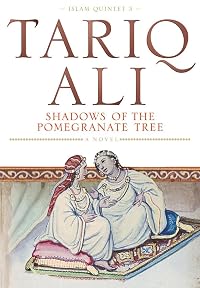
A novel of the deep roots of the clash between Islam and the West The savagery of the Reconquest tore apart the world of the Banu Hudayl family. For the doomed Muslims of late-fifteenth-century Spain, the approaching forces of Christendom bring not peace but the sword. Capturing the brutality of a war both military and cultural-and the price paid by the innocent-Tariq Ali opens his Islam Quintet with a harrowing and profound historical fiction.Tags
Recommendations








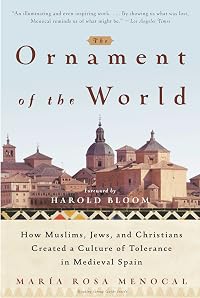




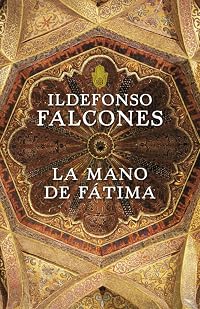

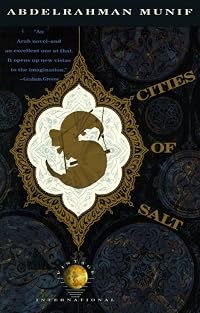
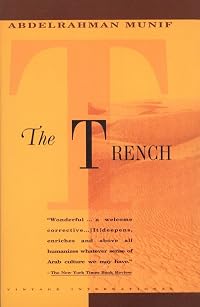










Member Recommendations

TallArnie The novel tells the story of an Iranian family as they struggle to survive the changing times and the Iranian revolution.
Member Reviews
This is the first in a series Ali has written concerning the history of Islam, and the setting is the late 15th-century Iberian Peninsula, near the culmination of the Spanish Reconquista. Young Yazid's well-to-do family has lived for countless generations on their estate outside Gharnata (Span. Granada) in the Al-Andalus region of modern-day southern Spain. But they are Muslim, and the Catholic Church has issued an ultimatum: convert or be destroyed.
I selected this book somewhat randomly while browsing the library stacks one day, and I'm so glad I did, although it is utterly heartbreaking. Any book lover -- or worse, librarian -- will be horrified and dismayed at the opening scene in which nearly the entirety of the written culture of show more the Moors goes up in flames. The reader is also obliged to consider the meaning of ownership when it comes to land and geography. The Moors themselves invaded Al-Andalus in 722, and enjoyed a cultured, sophisticated, educated society in that region for the next 700+ years. Did it now belong to them? Or was Christian Spain fully within its rights to take back land that had been out of its control for as long? Is not history a perpetual campaign of humans wresting land and resources from one another? show less
I selected this book somewhat randomly while browsing the library stacks one day, and I'm so glad I did, although it is utterly heartbreaking. Any book lover -- or worse, librarian -- will be horrified and dismayed at the opening scene in which nearly the entirety of the written culture of show more the Moors goes up in flames. The reader is also obliged to consider the meaning of ownership when it comes to land and geography. The Moors themselves invaded Al-Andalus in 722, and enjoyed a cultured, sophisticated, educated society in that region for the next 700+ years. Did it now belong to them? Or was Christian Spain fully within its rights to take back land that had been out of its control for as long? Is not history a perpetual campaign of humans wresting land and resources from one another? show less
Not quite a decade after the fall of Granada, a new archbishop orders the burning of Islamic books and begins forced conversions contrary to the treaty. This book covers the last months of a noble Islamic family with lands producing silk and food and the choices they make. It really seems to be a call for Islamic unity as nearly every catastrophe is bracketed by lamentations about infighting which is itself only mentioned in that context.
The historical novel, The Shadows of the Pomegranate Tree by Tariq Ali tells of the Reconquest of Spain during the reign of Ferdinand and Isabella in the 1500s. The Reconquest was the absorbing or eliminating of Jews and Muslims from Christian lands. Although the Moors had allowed all religions their freedoms and rights and there existed treaties for the Christians to allow the Muslims their religion and culture, both Queen Isabella and certain Church officials were strongly opposed. Focusing on one family, the Banu Hudayl, we learn of the price paid by the doomed Muslims of the sixteenth century Spain.
This family lived just outside Grenada and for over 800 years had been a powerful force in the Muslim world. In the times written of, show more each member held their own beliefs and expectations of what was going to occur and how best to react. Narrated by multi-generational members of the family, we learn of their life and their culture through the descriptions of food, clothing, daily routines and the inter-action of various family members with one another.
While much of the book seemed more like a non-fiction recreation of Moorish society, the author certainly managed to get across his message of how hatred can destroy. I was fascinated by this look at events from a different aspect. Shadows of the Pomegranate Tree is a tragic story of the destroying of Islamic Culture for the political and monetary gain of the Roman Catholic Church. show less
This family lived just outside Grenada and for over 800 years had been a powerful force in the Muslim world. In the times written of, show more each member held their own beliefs and expectations of what was going to occur and how best to react. Narrated by multi-generational members of the family, we learn of their life and their culture through the descriptions of food, clothing, daily routines and the inter-action of various family members with one another.
While much of the book seemed more like a non-fiction recreation of Moorish society, the author certainly managed to get across his message of how hatred can destroy. I was fascinated by this look at events from a different aspect. Shadows of the Pomegranate Tree is a tragic story of the destroying of Islamic Culture for the political and monetary gain of the Roman Catholic Church. show less
The first of a series of novels by Tariq Ali that describe historical events through the artifice of fictional or semi-fictional and some historical players. The first in the series is an easy-to-read account of the tragic aftermath of the Reconquista of the Iberian Peninsula by King Ferdinand and Queen Isabelle when first Jewish and then Muslim families were forced to convert or evicted despite initial promises of tolerance. I'm not a big factition fan, but if you're looking for a short novel on this period, this would be a good choice. Would recommend for young readers (13 and up--there's some sexual content) interested in 15-16C European history.
In both its subject and its point of view this is a fascinating book, because it deals with an aspect of Renaissance history that we very rarely see in historical fiction - life in Gharnata (Grenada) in circa 1499-1500, after the city's fall to Ferdinand and Isabella - and a perspective that is similarly represented - that of the Muslim citizens suffering Christian oppression. As their liberties and religious freedom are slowly eroded by the queen's confessor Ximenes de Cisneros, and as the shadow of the Inquisition looms on the horizon, the men and women of Gharnata must make their choice about how to live in this new world. Will they convert, in order to keep their lands? Flee to Africa? Or stand and fight? We follow one noble family show more and their retainers - the Banu Hudayl - as they tackle these questions, while still trying to draw what pleasure from life they can.
The concept behind the book is well worth your time - but unfortunately the writing is heavy-handed and sometimes simply weak. The point of view dances about between characters in a single scene, sometimes within a matter of lines, and dialogues are often simply ways to have one character tell another a large slice of backstory or family history. Despite their moving setting, the characters never quite come to life enough for me to really care about them - and these stylistic issues were distracting enough to undermine my pleasure in the story itself. This is still worth reading if you're interested in the period or religious history, because there don't seem to be many other novels which take such an original perspective on the Renaissance, but personally I found it extremely hard to engage with it.
See a longer and more detailed review on my blog:
http://theidlewoman.blogspot.co.uk/2013/10/shadows-of-pomegranate-tree-tariq-ali... show less
The concept behind the book is well worth your time - but unfortunately the writing is heavy-handed and sometimes simply weak. The point of view dances about between characters in a single scene, sometimes within a matter of lines, and dialogues are often simply ways to have one character tell another a large slice of backstory or family history. Despite their moving setting, the characters never quite come to life enough for me to really care about them - and these stylistic issues were distracting enough to undermine my pleasure in the story itself. This is still worth reading if you're interested in the period or religious history, because there don't seem to be many other novels which take such an original perspective on the Renaissance, but personally I found it extremely hard to engage with it.
See a longer and more detailed review on my blog:
http://theidlewoman.blogspot.co.uk/2013/10/shadows-of-pomegranate-tree-tariq-ali... show less
This was a story of one family's fight to keep their religion and not have to convert to become Christians. They wanted the right to practice their Muslim religion. Umar the father is very rich and will not convert nor will his two daughters or his two sons, they want to be able to practice freely and openly and not fear death. The older son leaves to form an army to fight the Jihad. This book told a story about how one religion wants to be the only religion and would try to accomplish it anyway they could.
The author had a great storyline and wonderfully realistic characters. I plan on reading more of this author soon.
The author had a great storyline and wonderfully realistic characters. I plan on reading more of this author soon.
Meh, I honestly found this quite dull. Which is a shame considering the harrowing and exciting time it is set in.
The writing itself was fine, but there were too many characters and Ali didn’t make me care about any of them. Also this was one of those books where the names just confused me. I understand it’s historically accurate but it confuses me if someone is referred to by multiple names if it isn’t done well.
I have no problem following Lynch’s Locke Lamora name changes, but Ali’s for ALL the various dudes in the book just got a bit much for me.
The writing itself was fine, but there were too many characters and Ali didn’t make me care about any of them. Also this was one of those books where the names just confused me. I understand it’s historically accurate but it confuses me if someone is referred to by multiple names if it isn’t done well.
I have no problem following Lynch’s Locke Lamora name changes, but Ali’s for ALL the various dudes in the book just got a bit much for me.
Members
- Recently Added By
Published Reviews
Tarik Ali pripoveda o posledicama pada Granade kroz priču o porodici koja pokušava da preživi nakon sloma svoga sveta. Ova vešto ispričana saga govori o životu ukletih stanovnika grada opkoljenog sa svih strana netrpeljivim hrišćanskim snagama. Ovo je roman koji ono što ima da kaže, govori glasno i jasno.
added by Sensei-CRS
Lists

History novels (not too romancey)
37 works; 5 members

The Emergence of the Modern Middle East
289 works; 13 members
Author Information

83+ Works 5,265 Members
Tariq Ali is a writer and filmmaker. He has written more than two dozen books on world history and politics, seven novels (translated into over a dozen languages), and scripts for the stage and screen. He is an editor of New Left Review and lives in London.
Awards and Honors
Series

Belongs to Publisher Series
Work Relationships
Is contained in
Common Knowledge
- Canonical title
- Shadows of the Pomegranate Tree
- Original title
- Shadows of the Pomegranate Tree
- Original publication date
- 1992
- People/Characters
- Umar bin Abdallah; Zubayda bint Quddus; Zuhayr bin Umar "al-Fahl"; Kulthum bint Zubayda; Hind bint Zubayda; Yazid bin Umar (show all 23); Amira "Ama"; Wajid al-Zindiq / Mohammed ibn Zaydun; Zahra bint Najma; Francisco Jiménez de Cisneros (Ximenes de Cisneros); Íñigo López de Mendoza [2nd count of Tendilla]; Ibn Daud al-Misri; Ibn Hisham / Pedro de Granada; Meekal al-Malek / Miguel el Malek; Umayma; Ibn Farid; Asma bint Dorothea; Dwarf; Abu Zaid al-Ma'ari; Ibn Amin; Ibn Basit; Ibn Wahab; Hernán Cortés
- Important places
- al-Hudayl, Andalusia, Spain; Granada, Andalusia, Spain; Andalusia, Spain
- Important events
- Spanish Inquisition; Moorish uprising in Granada (1500 | 1502)
- Dedication
- For Aisha, Chengiz and Natasha
- First words
- The five Christian knights summoned to the apartment of Ximenes de Cisneros did not welcome the midnight call.
- Last words
- (Click to show. Warning: May contain spoilers.)'Do you know what they call this remarkable place?' he asked, to test his aide, as the boat carrying them docked at the palace.
'Tenochtitlan is the name of the city and Moctezuma is the king.'
'Much wealth went into its construction,' said the captain.
'They are a very rich nation, Captain Cortes,' came the reply.
The captain smiled. - Original language
- English
Classifications
Statistics
- Members
- 683
- Popularity
- 42,167
- Reviews
- 20
- Rating
- (3.65)
- Languages
- 12 — Bosnian, English, French, German, Greek, Hungarian, Italian, Portuguese, Romanian, Serbian, Spanish, Turkish
- Media
- Paper, Ebook
- ISBNs
- 43
- ASINs
- 9