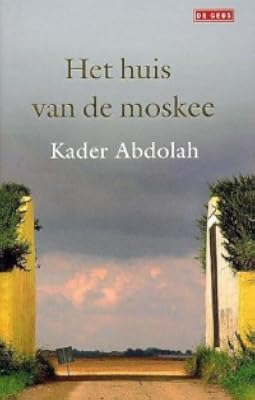
The House of the Mosque
by Kader Abdolah
On This Page
Description
Iran 1969. In the house of the mosque, the family of Aqa Jaan has lived for eight centuries. Now it is occupied by three cousins: Aqa Jaan, a merchant and head of the city's bazaar, Alsaberi, the imam of the mosque, and Aqa Shoja, the mosque's muezzin.Tags
Recommendations











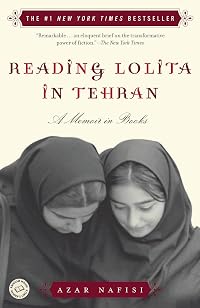






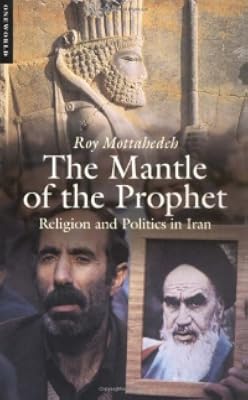


Member Recommendations
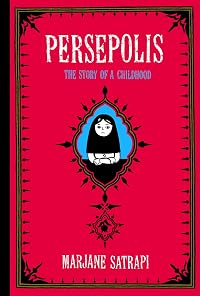
souloftherose Both books show the effects of the Iranian Revolution of 1979 on Iranian families. The House of the Mosque shows its effect on a Muslim family whereas Persepolis shows its effect on a more secular family. Both authors are writing from their own experience

anonymous user Beide boeken vertellen over een manier van leven
Member Reviews
“There was once a house, an old house, which was known as ‘the house of the mosque’.”
So begins The House of the Mosque by Kader Abdolah.
Written by an Iranian author, now living in the Netherlands and writing in Dutch, The House of the Mosque follows an extended family who live in a house built onto a mosque in Senejan in Iran. The story starts in 1969 just before the first men land on the moon and continues through the Iranian Revolution of 1979 and the subsequent Iran-Iraq war.
Before reading this book, I knew very little about the above events or about Islam and its traditions but I didn’t feel this affected my enjoyment of this book; in fact I would recommend this as a good starting point for someone who’s interested in show more reading literature about this period or area.
The House of the Mosque is a beautifully written novel, fable like in style with perhaps a touch of magical realism. Abdolah has been criticised for not being accurate enough in his treatment of the events surrounding the Iranian Revolution and I don’t know enough about the history of this period to know whether this criticism is accurate or not. But I think this is intended as a fable, as a fictionalised account of the author’s experiences in Iran during the time of the revolution and as a homage to the ‘old ways’, before the revolution changed things. The ending of the book makes it clear that to some extent this novel is autobiographical in nature and the novel is dedicated to Aqa Jaan, the main character in the book, ‘so I can let him go’. This is an emotional rather than factual account of this period of upheaval in Iran but despite the many struggles and sufferings described, the story is not depressing and ends on a note of hope that is truly uplifting.
A wonderful book and one that has made me interested in reading more literature about this area of the world. show less
So begins The House of the Mosque by Kader Abdolah.
Written by an Iranian author, now living in the Netherlands and writing in Dutch, The House of the Mosque follows an extended family who live in a house built onto a mosque in Senejan in Iran. The story starts in 1969 just before the first men land on the moon and continues through the Iranian Revolution of 1979 and the subsequent Iran-Iraq war.
Before reading this book, I knew very little about the above events or about Islam and its traditions but I didn’t feel this affected my enjoyment of this book; in fact I would recommend this as a good starting point for someone who’s interested in show more reading literature about this period or area.
The House of the Mosque is a beautifully written novel, fable like in style with perhaps a touch of magical realism. Abdolah has been criticised for not being accurate enough in his treatment of the events surrounding the Iranian Revolution and I don’t know enough about the history of this period to know whether this criticism is accurate or not. But I think this is intended as a fable, as a fictionalised account of the author’s experiences in Iran during the time of the revolution and as a homage to the ‘old ways’, before the revolution changed things. The ending of the book makes it clear that to some extent this novel is autobiographical in nature and the novel is dedicated to Aqa Jaan, the main character in the book, ‘so I can let him go’. This is an emotional rather than factual account of this period of upheaval in Iran but despite the many struggles and sufferings described, the story is not depressing and ends on a note of hope that is truly uplifting.
A wonderful book and one that has made me interested in reading more literature about this area of the world. show less
 This review was written for LibraryThing Early Reviewers.
Kader Abdolah is a pen-name, constructed from the names of two of the author’s friends murdered in the troubles surrounding the Islamic Revolution in Iran. This is my second experience of his writing, the first being Cunéiforme (My Father’s Notebook) and I conclude he will come to be recognised as a great and subtle writer. Right now his books are slow to appear in English.
This is a book by an exile who loves the country he fled. He writes with a light touch, spanning decades and giving us a view of the country during both the Shah’s reign and the Khomeini years from the point of view of the peaceful head of a household who is repeatedly drawn by family members into confrontation with the authorities. The disgraceful conduct of show more America in supporting the Shah’s regime and in supporting Saddam Hussein’s savage chemical war gets a restrained and honest airing in the book.
It’s so easy to dismiss Iran, based on the country as reported to us in the evening news. Read this book for an entirely new perspective on a dignified and cultivated people living under two consecutive intolerable regimes. show less
This is a book by an exile who loves the country he fled. He writes with a light touch, spanning decades and giving us a view of the country during both the Shah’s reign and the Khomeini years from the point of view of the peaceful head of a household who is repeatedly drawn by family members into confrontation with the authorities. The disgraceful conduct of show more America in supporting the Shah’s regime and in supporting Saddam Hussein’s savage chemical war gets a restrained and honest airing in the book.
It’s so easy to dismiss Iran, based on the country as reported to us in the evening news. Read this book for an entirely new perspective on a dignified and cultivated people living under two consecutive intolerable regimes. show less
The book follows the story of an extended family living in a mosque in Iran. Starting in the 1950s, the family's fortunes are intertwined with the changing religious and political scene in Iran, to such an extent that the family itself is driven apart.
The family in the mosque are a mixed bunch. First there is the Iman Alsaberi, a weak man obsessed with hygiene and rather negligent of his family. The household is kept together by Aqa Jaan, who also keeps the records of the mosque, as previous generations have done. Their brother Muezzin, a blindman, calls the people to prayer.
Times are changing, with the death of Alsaberi comes a vaccum, into which a new Iman steps, one that will change the path of the mosque. Aqa Jaan tries to keep show more everything together, but the political turmoil makes it harder and harder.
As an introduction to Iran, this is a good read, but will keep you turning the pages to find out what happens to the family. The author has taken care to show the reader the conflict and destruction brought upon the family, but at the same time showing, for me, a rather little-known side to life in Iran. show less
The family in the mosque are a mixed bunch. First there is the Iman Alsaberi, a weak man obsessed with hygiene and rather negligent of his family. The household is kept together by Aqa Jaan, who also keeps the records of the mosque, as previous generations have done. Their brother Muezzin, a blindman, calls the people to prayer.
Times are changing, with the death of Alsaberi comes a vaccum, into which a new Iman steps, one that will change the path of the mosque. Aqa Jaan tries to keep show more everything together, but the political turmoil makes it harder and harder.
As an introduction to Iran, this is a good read, but will keep you turning the pages to find out what happens to the family. The author has taken care to show the reader the conflict and destruction brought upon the family, but at the same time showing, for me, a rather little-known side to life in Iran. show less
This review was written for LibraryThing Early Reviewers.In the regional city of Senejan in Iran, stands the Friday Mosque and the house attached to the mosque, For generations, the Imam of the Mosque and his family, and also the caretaker of the mosque have lived together. The book opens in the mid twentieth century, when the local successful carpet salesman Aqa Jaan and his family caretake the mosque, and the Alsaberi family live alongside them. Kader Abdolah paints life at the mosque as unconcerned with the politics of the time, living life under the Shah without overt criticism for the progression of social values, quietly plodding on with everyday concerns, content, idyllic and free. The house is peopled by quirky characters; Imam Alsaberi suffers with a form of obsessive compulsion and show more cannot bear to be touched. He is washed everyday in his specially constructed bathroom by the 'the grandmothers' before he can preach. The Grandmothers have lived at the house of the mosque since they were very young, they are not actually related to the inhabitants of the house, they take care of everything quietly, invisibly. Muezzin is another quiet inhabitant of the house of the mosque, he spends his time shaping ceramic vases and plates in the basement, he is blind but he has a beautiful voice with with he calls the community to prayer, he hides his transistor radio under his clothes. There are other family members who visit occasionally like Nosrat, the modern photographer who brings his unveiled girlfriends to the house at the mosque, making love to them in sacred places, or Kazem Khan the elderly poet from the Jaan ancestral village who comes to seduce the Grandmothers and smoke opium.
When Imam Alsaberi dies, everything slowly unravels. Every new imam is unsatisfactory in some way, the politics of the country heats up, the mosque becomes a place where tradition and dissent clash, people are forced to change or be imprisoned. The events at the house of the mosque as observed by Aqa Jaan mirror the changing social and political events which ultimately lead to the overthrow of the Shah and the imposition of an ayatollah, Khomeini as the ruler of the country. Iran sees great upheaval but also previously unthinkable evils.
The House of the Mosque provides an insight into the impact of the significant political difficulties in the second half of the twentieth century upon ordinary Iranian people. The book took a hold over me as I followed the trials of the inhabitants of the House of the Mosque, so much so that I cared what happened to each character. Excellent characterisation, story and setting. 4 stars, an early reviewers copy. show less
When Imam Alsaberi dies, everything slowly unravels. Every new imam is unsatisfactory in some way, the politics of the country heats up, the mosque becomes a place where tradition and dissent clash, people are forced to change or be imprisoned. The events at the house of the mosque as observed by Aqa Jaan mirror the changing social and political events which ultimately lead to the overthrow of the Shah and the imposition of an ayatollah, Khomeini as the ruler of the country. Iran sees great upheaval but also previously unthinkable evils.
The House of the Mosque provides an insight into the impact of the significant political difficulties in the second half of the twentieth century upon ordinary Iranian people. The book took a hold over me as I followed the trials of the inhabitants of the House of the Mosque, so much so that I cared what happened to each character. Excellent characterisation, story and setting. 4 stars, an early reviewers copy. show less
This review was written for LibraryThing Early Reviewers.I loved Kader Abdolah's 'The House of the Mosque'. The book follows the fortunes of one family, who through successive generations have served as custodians of the main Friday mosque in Senejan. The author maps the impact of Iran's turbulent history from the late 1960s through to the Iranian revolution and beyond as it impacts on this family. We see the specific marks that the broad sweep of history leaves on individuals, and how powerless they prove in the face of dramatic and violent change. We watch members of the family hold to their principles through times of extreme hardship, notably the patriach Aqa Jaan, and also how the promise of power or lure of temptation, perverts others, who succumb to the lure of dictatorship and show more religious extremism. The book weaves its spell slowly and surely. I was left caring deeply for this family, and more awake to the fate of the many other families who also faced life and loss through these turbulent times. show less
This review was written for LibraryThing Early Reviewers.Aqa Jaan’s family has lived in the house of the mosque for centuries. Two of his cousins also live in the house; one is the mosque’s imam and the other is the muezzin. At first glimpse, their lives are going about as they have been for hundreds of years; television exists, but the house’s inhabitants studiously avoid it, and the women still cover themselves even though others in Tehran no longer bother. The family’s daughters are waiting for respectable men to approach their families to offer marriage, and the imam’s son is studying diligently to take his father’s place when he dies. Yet all is not the same, as a revolution is forming in 1970s Iran, and that revolution stands to change the family’s ways forever.
I found show more this book totally fascinating. I know so little of Iran, let alone what it’s like to live there, and I really felt like this book put me right in the midst of a revolution. Enough of their culture was established so that I felt terror and confusion just as the house’s residents did, and I was amazed at what some of the family was capable of doing for political purposes. It was all in the name of Islam, which makes it worse for me. I could see today’s political situation in the making, and it made me so sad that Iran couldn’t have continued on its former path of slow liberation without becoming extremists and closing up completely. The book does reveal how things can spiral out of control, without the people necessarily giving consent or realizing what they are doing. A few extremists can change the entire country given just a little encouragement, and that’s exactly what happens here.
My favorite character in the book was definitely Aqa Jaan. It’s predicted early in the novel that he’ll be the last one left of the family, and indeed this seems to be the case as his family either become extremists or become targets in the revolution, or simply disappear of their own volition. His emotions are often heartbreaking and I wished things could be different for him as his family began to fall apart. This is such a stunning novel of a country falling apart; it’s almost as though Aqa Jaan’s family is a microcosm of that, split between all the different factions, while he just wants life to remain as it has been for hundreds of years.
There is a lot of anti-Americanism here, but given the political circumstances, it’s understandable and didn’t put me off the book despite the fact that I am American. I also was left wondering how much of the book is true. The author, who fled Iran in 1988, was an illegal journalist and leftist there, and I expect much of the revolution was witnessed by him first-hand. He’s using a pen name here to honor executed friends (though his own name is available on wikipedia) and he dedicates the book to his own Aqa Jaan, so my curiosity is definitely piqued.
Honestly, I can’t recommend this book highly enough. It inspires me to read more non-fiction to learn more about the conflict and to read more multi-cultural fiction. This book helped me understand what’s happening in the world today and still engaged all of my emotions and thoughts. You should not miss The House of the Mosque.
http://chikune.com/blog/?p=2003 show less
I found show more this book totally fascinating. I know so little of Iran, let alone what it’s like to live there, and I really felt like this book put me right in the midst of a revolution. Enough of their culture was established so that I felt terror and confusion just as the house’s residents did, and I was amazed at what some of the family was capable of doing for political purposes. It was all in the name of Islam, which makes it worse for me. I could see today’s political situation in the making, and it made me so sad that Iran couldn’t have continued on its former path of slow liberation without becoming extremists and closing up completely. The book does reveal how things can spiral out of control, without the people necessarily giving consent or realizing what they are doing. A few extremists can change the entire country given just a little encouragement, and that’s exactly what happens here.
My favorite character in the book was definitely Aqa Jaan. It’s predicted early in the novel that he’ll be the last one left of the family, and indeed this seems to be the case as his family either become extremists or become targets in the revolution, or simply disappear of their own volition. His emotions are often heartbreaking and I wished things could be different for him as his family began to fall apart. This is such a stunning novel of a country falling apart; it’s almost as though Aqa Jaan’s family is a microcosm of that, split between all the different factions, while he just wants life to remain as it has been for hundreds of years.
There is a lot of anti-Americanism here, but given the political circumstances, it’s understandable and didn’t put me off the book despite the fact that I am American. I also was left wondering how much of the book is true. The author, who fled Iran in 1988, was an illegal journalist and leftist there, and I expect much of the revolution was witnessed by him first-hand. He’s using a pen name here to honor executed friends (though his own name is available on wikipedia) and he dedicates the book to his own Aqa Jaan, so my curiosity is definitely piqued.
Honestly, I can’t recommend this book highly enough. It inspires me to read more non-fiction to learn more about the conflict and to read more multi-cultural fiction. This book helped me understand what’s happening in the world today and still engaged all of my emotions and thoughts. You should not miss The House of the Mosque.
http://chikune.com/blog/?p=2003 show less
"Now, for the first time, the family's foe was Islam itself", February 26, 2015
This review is from: The House of the Mosque (Paperback)
Opening in 1950, in the city of Senejan, this story tells the recent history of Iran by following a fictional extended family through the years and the impact that politics had on everyday people.
The family are conservative in outlook, somewhat disapproving of the Shah's regime where women in big cities wear western dress, and America exerts an unseen influence. Yet they are far removed from the extremism which is starting to take hold in the 'religious' centres. As Ayatollah Khomeini seizes power, the evil of fundamentalism starts to become apparent.
If this makes Abdolah's novel sound like a dry show more political novel, that is far from the case, for this is primarily a family saga; headed by carpet merchant, Aqa Jaan, this highly readable novel features marriage, birth and death - and tragedy. Beautiful descriptions of the country bring to life a place that readers in the West tend to equate merely with war.
I have learnt so much from reading this - and enjoyed every minute. show less
This review is from: The House of the Mosque (Paperback)
Opening in 1950, in the city of Senejan, this story tells the recent history of Iran by following a fictional extended family through the years and the impact that politics had on everyday people.
The family are conservative in outlook, somewhat disapproving of the Shah's regime where women in big cities wear western dress, and America exerts an unseen influence. Yet they are far removed from the extremism which is starting to take hold in the 'religious' centres. As Ayatollah Khomeini seizes power, the evil of fundamentalism starts to become apparent.
If this makes Abdolah's novel sound like a dry show more political novel, that is far from the case, for this is primarily a family saga; headed by carpet merchant, Aqa Jaan, this highly readable novel features marriage, birth and death - and tragedy. Beautiful descriptions of the country bring to life a place that readers in the West tend to equate merely with war.
I have learnt so much from reading this - and enjoyed every minute. show less
Members
- Recently Added By
Published Reviews
ThingScore 63
Abdolah might say that he is offering a fabulous alternative to history, suited to a busy international taste nourished by Louis de Bernières and the Latin American school. Yet in Iran, where the government insists, for example, that protester Neda Agha Soltan was shot by her friends, there is already more than enough fable.
added by souloftherose
Abdolah's juxtapositions - the spiritual and the earthly, myth and reality - give the story a powerful irony. Khomeini is, in 1979, a hero, we are reminded, before he becomes the villain. He offers Iran salvation from the tyrannical whimsies of the Shah. By the end, the freedom fighters are the new tyrants. Abdolah lathers the story with an almost deliberate nostalgia, choosing not to drive show more recent history into the present day. Instead, he presents just the nascent phases of the revolution and the wide-eyed innocence of those, such as Aqa Jaan, who held such high hopes for all it could have been. show less
added by souloftherose
Lists

Houses and Buildings as Characters in Fiction
182 works; 29 members

Middle East Fiction
179 works; 16 members

Revolutions
72 works; 5 members

Translingualism
191 works; 4 members

Which house?
423 works; 16 members
Author Information

52+ Works 4,063 Members
Some Editions
Awards and Honors
Series
Belongs to Publisher Series
List Taschenbuch (60856)
Common Knowledge
- Canonical title
- The House of the Mosque
- Original title
- Het huis van de moskee
- Original publication date
- 2005; 2008 (Italian translation) (Italian translation)
- People/Characters
- Aga Djan; Ruhollah Moosavi Khomeini; Shahbal; Alsaberi; Fagri Sadat; Galgal (show all 8); Nasrin; Nosrat
- Important places
- Qom, Iran; Senedjan, Iran; Iran
- Important events
- Iranian Revolution (1979); Iran-Iraq War (1980 | 1988)
- Epigraph
- Nun, wa alqalame wa ma yastorun.
By the pen and by what you write.
The Pen surah
'Bij de pen en bij wat je ermee schrijft'-de Pen - Dedication
- To Aqa Jaan, so I can let him go
Aan Aga Djan om hem te laten gaan - First words
- There was once a house, and old house, which was known as 'the house of the Mosque'. It was a large house with thirty-five rooms.
Alef Lam Miem. Er was eens een huis, een oud huis, dat ´het huis van de moskee´ heette. - Last words
- (Click to show. Warning: May contain spoilers.)Then, breaking the silence, he chanted:
He is light.
His light is like a niche with a lantern.
The glass is like a shining star,
Lit by the oil of a blessed olive tree.
Its oil is almost aglow.
Light upon light!
(Click to show. Warning: May contain spoilers.)De olie geeft bijna uit zichzelf licht. Licht boven licht. - Blurbers
- Anam, Tahmima
- Original language
- Dutch
Classifications
- Genres
- Fiction and Literature, General Fiction
- DDC/MDS
- 839.31364 — Literature & rhetoric German & related literatures Other Germanic literatures Netherlandish literatures Dutch Dutch fiction 20th Century 1945-1999
- LCC
- PT5881.1 .B36 .H85 — Language and Literature German, Dutch and Scandinavian literatures Dutch literature Individual authors or works 1961-2000
- BISAC
Statistics
- Members
- 1,396
- Popularity
- 17,007
- Reviews
- 56
- Rating
- (3.99)
- Languages
- 17 — Bosnian, Catalan, Czech, Danish, Dutch, English, Finnish, French, German, Greek, Italian, Norwegian (Bokmål), Norwegian, Romanian, Slovak, Spanish, Swedish
- Media
- Paper, Audiobook, Ebook
- ISBNs
- 47
- ASINs
- 8
