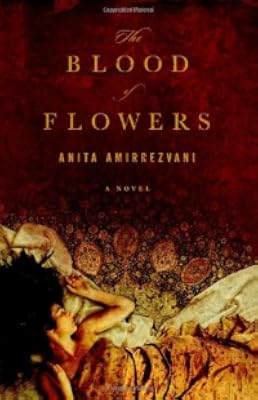
The Blood of Flowers
by Anita Amirrezvani
On This Page
Description
In 17th-century Persia, a 14-year-old woman believes she will be married within the year. When her beloved father dies, she and her mother find themselves alone and without a dowry. With nowhere else to go, they are forced to sell the brilliant turquoise rug the young woman has woven to pay for their journey to Isfahan, where they will work as servants for her uncle, a rich rug designer in the court of the legendary Shah Abbas the Great. Despite her lowly station, the young woman blossoms as show more a brilliant designer of carpets, a rarity in a craft dominated by men. But while her talent flourishes, her prospects for a happy marriage grow dim. Forced into a secret marriage to a wealthy man, the young woman finds herself faced with a daunting decision: forsake her own dignity, or risk everything she has in an effort to create a new life. show lessTags
Recommendations



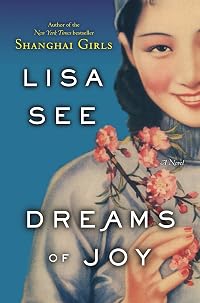
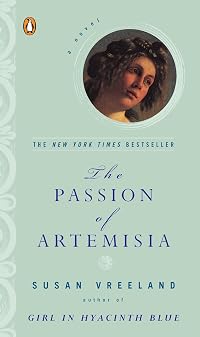
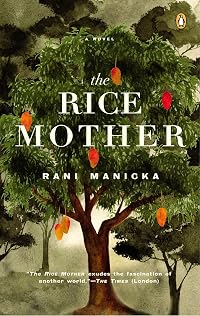
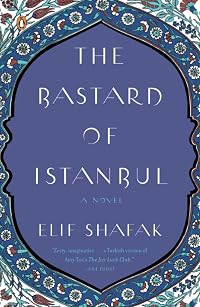
Member Recommendations
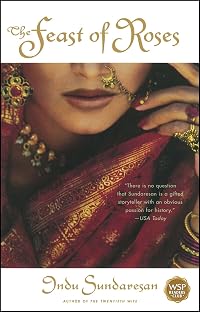
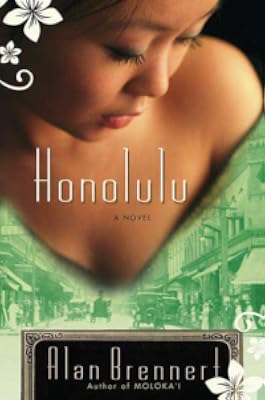
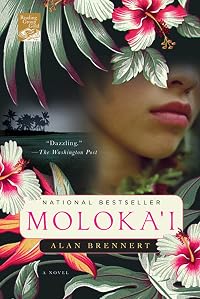
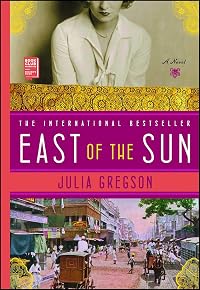
elbakerone Another beautifully written historical fiction with a focus around mother daughter relationships.
Member Reviews
this was surprisingly compelling when i think about what i usually care about in a story. for some reason, the carpet making was fascinating to me, even as i don't really feel that i learned much about it. but i kind of feel like i could have read about that forever. i was so absorbed in the story that i didn't even notice that the main character wasn't named until over 1/3 of the way through, and then it was easily forgotten again. but i really like this aspect, maybe not quite for the reason the author meant, but because of how anonymous women are when covered from head to toe in a chador. how they are seen for their separate body parts and not who they are, like an unnamed narrator can be, but how we see how much more there is to show more her.
i really liked the interspersing of the folktales and oral stories passed down; it worked really well here. this was a really interesting look at an iran hundreds of years ago, and what life was like for a segment of the population. the idea of the temporary marriage, the sigheh, was particularly interesting, and i can see how it can both really help and really hurt someone, often at the same time. show less
i really liked the interspersing of the folktales and oral stories passed down; it worked really well here. this was a really interesting look at an iran hundreds of years ago, and what life was like for a segment of the population. the idea of the temporary marriage, the sigheh, was particularly interesting, and i can see how it can both really help and really hurt someone, often at the same time. show less
This is a compelling historical novel -- and a welcome relief from Tudor-mania. The unnamed narrator and her mother are left poverty-stricken by the sudden death of her father; they must now rely on the charity and goodwill of her unknown uncle, a wealthy carpet maker to the shah in Isfahan.
The tale is, on the surface, a straightforward one: the heroine must rise above many obstacles to discern and pursue her own path in life. But the setting and the author's voice are distinctive enough to propel this above and beyond the genre. The story is interwoven with traditional Persian folk tales; at times, the book itself takes on a similar rhythym. The personalities of the characters -- the envious aunt, the hen-pecked uncle who nonethless show more takes immense pride in his niece's burgeoning talent as a carpet designer, the mother striving to make the best possible arrangements for her dowryless daughter -- are as vivid as the colors of any Persian carpet.
This is a beautiful and impeccably written novel. The themes are about as traditional as you can get, but who cares? show less
The tale is, on the surface, a straightforward one: the heroine must rise above many obstacles to discern and pursue her own path in life. But the setting and the author's voice are distinctive enough to propel this above and beyond the genre. The story is interwoven with traditional Persian folk tales; at times, the book itself takes on a similar rhythym. The personalities of the characters -- the envious aunt, the hen-pecked uncle who nonethless show more takes immense pride in his niece's burgeoning talent as a carpet designer, the mother striving to make the best possible arrangements for her dowryless daughter -- are as vivid as the colors of any Persian carpet.
This is a beautiful and impeccably written novel. The themes are about as traditional as you can get, but who cares? show less
This was such a wonderful story that was left a bit mysterious to me since the author decided to leave the main character unnamed. It is funny, but I have to admit that I did not even realize that her name was not given throughout the novel until it was brought up in one of the discussion questions. We are taken on a journey of this innocent girl's life as she crosses over from a naive young lady to a strong and independent business woman.
This book begins with the girl's life in a small village in Persia, living with her parents she is able to rely on them for her every need. As the only child of the family she has a very close relationship with her parents but seemed to bond closer with her father as he has taught her everything that show more she knows about making carpets that are beautiful to the eye. She could never foresee how her life would change forever after her father passes away.
The mother and daughter try to stay on in the village that they have always known as their home. Life becomes quite difficult as they have no way to earn money so when food starts to run dangerously low they decide to reach out to distant family members hoping that they will take them in. Since they don't have a dowry to offer for the young girl they do not think that they have any other option.
They are grateful beyond words when her father's brother in Isfahan decides to take them both in. Although they graciously accept his hospitality, they are quite disappointed when they arrive to learn that they will be living and treated like servants rather than family members. Knowing they do not have a choice in the living arrangements they accept the circumstances as they are.
Since the mother and daughter are living at the mercy of the aunt and uncle they are very unsure of their future in the household. They become worried that they could possibly make one wrong move and be cast out into the streets with just the clothes on their backs. One of their only hopes was that the young girl would marry a successful man, but without a dowry that option was more than likely lost. The young girl found herself growing close to her uncle and gaining a respect for him as he worked for the Royal Rug Company and has offered to teach her everything that he could about carpet making. The poor girl had every reason for her feelings of frustration and deception when her uncle arranged for a less than reasonable marriage arrangement.
I must admit that I never really considered the hard work that has gone into producing one of these beautiful rugs. Although most today are probably factory made, to think that something similar was handmade with two hands (or more, depending on how many people were working on the rug) and a loom amazes me. It has been said that these rugs tell their own stories, and I could see the stories coming too life through the rugs that this young girl created. She struggled with her rug creations as she did with her life choices and I enjoyed how the rugs were more beautiful as she gained wisdom.
This was a beautiful story that brings to life another culture along with it's vivid colors. Not only can you see the beauty and vibrance of the carpets, but you also get a good sense of the tastes and smells of the ethnic foods. With themes of love, loss, beauty, perseverance and struggles, this book was enjoyed by my entire book group. show less
This book begins with the girl's life in a small village in Persia, living with her parents she is able to rely on them for her every need. As the only child of the family she has a very close relationship with her parents but seemed to bond closer with her father as he has taught her everything that show more she knows about making carpets that are beautiful to the eye. She could never foresee how her life would change forever after her father passes away.
The mother and daughter try to stay on in the village that they have always known as their home. Life becomes quite difficult as they have no way to earn money so when food starts to run dangerously low they decide to reach out to distant family members hoping that they will take them in. Since they don't have a dowry to offer for the young girl they do not think that they have any other option.
They are grateful beyond words when her father's brother in Isfahan decides to take them both in. Although they graciously accept his hospitality, they are quite disappointed when they arrive to learn that they will be living and treated like servants rather than family members. Knowing they do not have a choice in the living arrangements they accept the circumstances as they are.
Since the mother and daughter are living at the mercy of the aunt and uncle they are very unsure of their future in the household. They become worried that they could possibly make one wrong move and be cast out into the streets with just the clothes on their backs. One of their only hopes was that the young girl would marry a successful man, but without a dowry that option was more than likely lost. The young girl found herself growing close to her uncle and gaining a respect for him as he worked for the Royal Rug Company and has offered to teach her everything that he could about carpet making. The poor girl had every reason for her feelings of frustration and deception when her uncle arranged for a less than reasonable marriage arrangement.
I must admit that I never really considered the hard work that has gone into producing one of these beautiful rugs. Although most today are probably factory made, to think that something similar was handmade with two hands (or more, depending on how many people were working on the rug) and a loom amazes me. It has been said that these rugs tell their own stories, and I could see the stories coming too life through the rugs that this young girl created. She struggled with her rug creations as she did with her life choices and I enjoyed how the rugs were more beautiful as she gained wisdom.
This was a beautiful story that brings to life another culture along with it's vivid colors. Not only can you see the beauty and vibrance of the carpets, but you also get a good sense of the tastes and smells of the ethnic foods. With themes of love, loss, beauty, perseverance and struggles, this book was enjoyed by my entire book group. show less
The Blood of Flowers – Amita Amirrezvani
4 stars
“First there wasn’t and then there was. Before God, no one was.”
Once upon a time……..
The story begins with a story, a Persian fable of a young girl with the charmed future of a happy prosperous marriage.
No such future exists for the unnamed narrator of Blood of Flowers. Her story begins in her fourteenth year with the sudden death of her devoted father. It continues through a precarious year as she and her impoverished mother seek support from unsympathetic relatives. It is seventeenth century Iran in the time of Shah Abbas. This young woman has only two assets; her virginity and her talent as a designer and a maker of rugs.
This book is full of fascinating cultural background. show more There is naturally much detailed description of the craft and culture of rug making. The storyteller speaks eloquently of the effort and tedium of the process, but also expresses the artist’s satisfaction in creation. There is also much description of women’s work and the role of women in this culture. Various fables scattered about the story provide more of the colorful cultural background. Of particular importance to the plot is a form of temporary marriage called a ‘sigheh’. In another culture such a relationship might be called concubinage. For the story’s protagonist it creates both opportunity and the threat of disgrace. I was very impressed with the author’s ability to show, realistically, how a woman could exercise personal choice in an essentially powerless situation. This is a satisfying coming-of-age story of a young woman who manages to create a life for herself in restrictive circumstances.
I have mixed feelings about the audio version of this book as performed by Shohreh Aghdashloo. On the one hand, it is always helpful to hear correct pronunciation of foreign words. Aghdashloo’s accented reading added to my sense of being in a very different time and place. It also added more personality to the unnamed protagonist. Unfortunately, this performance was so heavily accented that I sometimes had trouble understanding the English words. Also, the reader delivered much of the text in a rather monotone, unemotional voice that did not fit with highly emotional events. I felt more connected to the suffering and triumph of the main character when I was reading her first person account. My four star rating is for the book itself. I would give the audio performance three stars.
A note for parents and teachers: Although this book is about what we would consider to be an adolescent girl, it deals with very adult themes. The depiction of the ‘marriage’ includes some explicit and erotic scenes. show less
4 stars
“First there wasn’t and then there was. Before God, no one was.”
Once upon a time……..
The story begins with a story, a Persian fable of a young girl with the charmed future of a happy prosperous marriage.
No such future exists for the unnamed narrator of Blood of Flowers. Her story begins in her fourteenth year with the sudden death of her devoted father. It continues through a precarious year as she and her impoverished mother seek support from unsympathetic relatives. It is seventeenth century Iran in the time of Shah Abbas. This young woman has only two assets; her virginity and her talent as a designer and a maker of rugs.
This book is full of fascinating cultural background. show more There is naturally much detailed description of the craft and culture of rug making. The storyteller speaks eloquently of the effort and tedium of the process, but also expresses the artist’s satisfaction in creation. There is also much description of women’s work and the role of women in this culture. Various fables scattered about the story provide more of the colorful cultural background. Of particular importance to the plot is a form of temporary marriage called a ‘sigheh’. In another culture such a relationship might be called concubinage. For the story’s protagonist it creates both opportunity and the threat of disgrace. I was very impressed with the author’s ability to show, realistically, how a woman could exercise personal choice in an essentially powerless situation. This is a satisfying coming-of-age story of a young woman who manages to create a life for herself in restrictive circumstances.
I have mixed feelings about the audio version of this book as performed by Shohreh Aghdashloo. On the one hand, it is always helpful to hear correct pronunciation of foreign words. Aghdashloo’s accented reading added to my sense of being in a very different time and place. It also added more personality to the unnamed protagonist. Unfortunately, this performance was so heavily accented that I sometimes had trouble understanding the English words. Also, the reader delivered much of the text in a rather monotone, unemotional voice that did not fit with highly emotional events. I felt more connected to the suffering and triumph of the main character when I was reading her first person account. My four star rating is for the book itself. I would give the audio performance three stars.
A note for parents and teachers: Although this book is about what we would consider to be an adolescent girl, it deals with very adult themes. The depiction of the ‘marriage’ includes some explicit and erotic scenes. show less
This reads like a Persian Cinderella story, punctuated by traditional Iranian stories and brilliantly brought to life with vivid descriptions of the fabled city of Isfahan. The aspect of the art of carpet making was particularily interesting, as were the descriptions of customs and everyday life in seventeenth century Iran.
Set in seventeenth-century Persia and narrated by an eighteen-year-old girl, "Blood of Flowers" would appear to have all the earmarks of a slow-moving period piece geared for an audience of women. Not so. This first novel turns out to be a work of art, every bit as dazzling as the Persian rugs designed and knotted by its unnamed heroine.
The story begins with the appearance of an ominous comet in the skies, portending a year of ill fortune for our narrator, who is due to be married in the coming months. Sure enough, her father suddenly dies, leaving the girl and her mother without the dowry required to attract a worthy suitor. Facing poverty, mother and daughter take up residence as servants in the household of an uncle who makes show more Persian rugs on commission for wealthy patrons.
A self-taught village rug-maker herself, the girl wins her uncle's confidence, becoming an apprentice of sorts and learning the intricacies required to fashion city carpets of the highest quality. But when she's forced to accept a three-month marriage contract to a wealthy horse trader, whose interest is hedonistic and short-term, the girl is caught in an untenable situation in which her family's financial security and her self-respect come into violent conflict. As she matures from a headstrong young girl to a pragmatic woman with a feminist bent, our heroine struggles to defy the odds and forge a future for herself and her mother in this male-dominated society.
It's a tribute to the author's methodical research, rich descriptive detail and knack for the cadence of good storytelling that this reader found himself completely transported into the novel's exotic world. Like the rugs for which Persia is famous, the structure of "Blood of Flowers" brings together its motifs in a simple but timelessly-elegant manner. If you enjoy novels like the "Kite Runner," you'll love this book. show less
The story begins with the appearance of an ominous comet in the skies, portending a year of ill fortune for our narrator, who is due to be married in the coming months. Sure enough, her father suddenly dies, leaving the girl and her mother without the dowry required to attract a worthy suitor. Facing poverty, mother and daughter take up residence as servants in the household of an uncle who makes show more Persian rugs on commission for wealthy patrons.
A self-taught village rug-maker herself, the girl wins her uncle's confidence, becoming an apprentice of sorts and learning the intricacies required to fashion city carpets of the highest quality. But when she's forced to accept a three-month marriage contract to a wealthy horse trader, whose interest is hedonistic and short-term, the girl is caught in an untenable situation in which her family's financial security and her self-respect come into violent conflict. As she matures from a headstrong young girl to a pragmatic woman with a feminist bent, our heroine struggles to defy the odds and forge a future for herself and her mother in this male-dominated society.
It's a tribute to the author's methodical research, rich descriptive detail and knack for the cadence of good storytelling that this reader found himself completely transported into the novel's exotic world. Like the rugs for which Persia is famous, the structure of "Blood of Flowers" brings together its motifs in a simple but timelessly-elegant manner. If you enjoy novels like the "Kite Runner," you'll love this book. show less
The basic plot of this novel is pretty familiar and much like Cinderella - a young girl falls on misfortune and is mistreated by the only family she has left. But The Blood of Flowers is much more complex than that. It deals with the highly controversial issue of temporary marriage, or sigheh. It also demonstrates how women can find themselves in very grave circumstances when they live in a society where one's only source of financial security is a husband, or sex. Finally, it illustrates how a woman succeeds against all odds and creates a business out of nothing.
The Blood of Flowers reads very much like a fairy tale, which makes it very enjoyable to read and difficult to put down. The author laces the main story with Persian fables and show more tales. I found this to be unique and quite enchanting. The characters are well developed, if not a little predictable at times. But I don't think that any predictability takes away from the story. I enjoyed seeing the anonymous narrator grow up from a little girl to a mature, at times jaded, but always ambitious young woman.
The first, and most controversial issue is the issue of temporary marriage. For security, the unnamed narrator consents to a temporary marriage to please her greedy family. But temporary marriage is represented in other ways, too. To one woman, it is a way for her to finally be with her true love after her first husband has died. In another case, it is void of any sexual connotation and simply used in order to make it proper for people to live in close quarters. In yet another case, it is offered as a way to make prostitution legal, which is how it is most often used in parts of the world today.
The second major issue is the issue of woman's ability to be independent. The source of all of the narrator's misfortunes is really that she has no other way to easily provide for herself outside of begging and prostitution if she has no male relatives left willing to care for her. She eventually overcomes this, after many years of suffering and hard work. But I feel that while these cultural and religious conventions may have been put into place originally to serve as a protection for women, they often times end up being a major obstacle, or even one of the causes for great suffering among women.
One thing I appreciate is that while there is a happily-ever-after ending, it's not in the way novels like this traditionally end. There is no great love story, and no one rides off into the sunset together. I very much respect that the author didn't play into this cliche.
I had not expected to love The Blood of Flowers as much as I did. I strongly recommend it to everyone. show less
The Blood of Flowers reads very much like a fairy tale, which makes it very enjoyable to read and difficult to put down. The author laces the main story with Persian fables and show more tales. I found this to be unique and quite enchanting. The characters are well developed, if not a little predictable at times. But I don't think that any predictability takes away from the story. I enjoyed seeing the anonymous narrator grow up from a little girl to a mature, at times jaded, but always ambitious young woman.
The first, and most controversial issue is the issue of temporary marriage. For security, the unnamed narrator consents to a temporary marriage to please her greedy family. But temporary marriage is represented in other ways, too. To one woman, it is a way for her to finally be with her true love after her first husband has died. In another case, it is void of any sexual connotation and simply used in order to make it proper for people to live in close quarters. In yet another case, it is offered as a way to make prostitution legal, which is how it is most often used in parts of the world today.
The second major issue is the issue of woman's ability to be independent. The source of all of the narrator's misfortunes is really that she has no other way to easily provide for herself outside of begging and prostitution if she has no male relatives left willing to care for her. She eventually overcomes this, after many years of suffering and hard work. But I feel that while these cultural and religious conventions may have been put into place originally to serve as a protection for women, they often times end up being a major obstacle, or even one of the causes for great suffering among women.
One thing I appreciate is that while there is a happily-ever-after ending, it's not in the way novels like this traditionally end. There is no great love story, and no one rides off into the sunset together. I very much respect that the author didn't play into this cliche.
I had not expected to love The Blood of Flowers as much as I did. I strongly recommend it to everyone. show less
Members
- Recently Added By
Published Reviews
ThingScore 100
"Anita Amirrezvani's first novel is about the costs and consolations of beauty, and is itself so picturesque that it often seems a striking variation on its own theme."
added by elbakerone
Lists

Historical Fiction
889 works; 91 members

Florida
366 works; 3 members
Author Information

3+ Works 2,333 Members
Some Editions
Awards and Honors
Awards
Common Knowledge
- Canonical title
- The Blood of Flowers
- Original title
- The Blood of Flowers
- Original publication date
- 2007-06-05
- People/Characters
- Shah Abbas the Great
- Important places
- Isfahan, Iran
- Dedication
- For my family—
Iranian, Lithuanian and American - First words
- In the spring of the year that I was supposed to be married, a comet launched itself over the skies of my village.
First there wasn't and then there was. (prologue) - Last words*
- (Click to show. Warning: May contain spoilers.)Vanaf dat moment schonken de twee voormalige gevangenen elkaar tot het einde van hun dagen vreugde en tederheid.
- Publisher's editor
- Clain, Judy
- Blurbers
- Brooks, Geraldine; Donoghue, Emma
- Original language
- English
*Some information comes from Common Knowledge in other languages. Click "Edit" for more information.
Classifications
Statistics
- Members
- 2,044
- Popularity
- 10,263
- Reviews
- 95
- Rating
- (3.93)
- Languages
- 16 — Chinese, Danish, Dutch, English, Finnish, French, German, Hungarian, Italian, Lithuanian, Norwegian (Bokmål), Norwegian, Russian, Spanish, Swedish, Turkish
- Media
- Paper, Audiobook, Ebook
- ISBNs
- 54
- ASINs
- 12