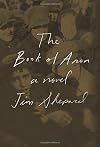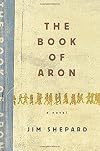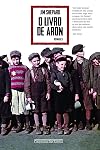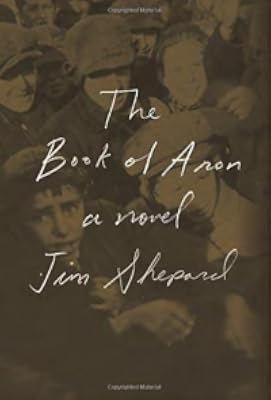
The Book of Aron
by Jim Shepard
On This Page
Description
Fiction. Literature. HTML:The acclaimed National Book Award finalist—“one of the United States’ finest writers,” according to Joshua Ferris, “full of wit, humanity, and fearless curiosity”—now gives us a novel that will join the short list of classics about children caught up in the Holocaust.Aron, the narrator, is an engaging if peculiar and unhappy young boy whose family is driven by the German onslaught from the Polish countryside into Warsaw and slowly battered by show more deprivation, disease, and persecution. He and a handful of boys and girls risk their lives by scuttling around the ghetto to smuggle and trade contraband through the quarantine walls in hopes of keeping their fathers, mothers, brothers, and sisters alive, hunted all the while by blackmailers and by Jewish, Polish, and German police, not to mention the Gestapo.
When his family is finally stripped away from him, Aron is rescued by Janusz Korczak, a doctor renowned throughout prewar Europe as an advocate of children’s rights who, once the Nazis swept in, was put in charge of the Warsaw orphanage. Treblinka awaits them all, but does Aron manage to escape—as his mentor suspected he could—to spread word about the atrocities?
Jim Shepard has masterfully made this child’s-eye view of the darkest history mesmerizing, sometimes comic despite all odds, truly heartbreaking, and even inspiring. Anyone who hears Aron’s voice will remember it forever. show less
Tags
Recommendations

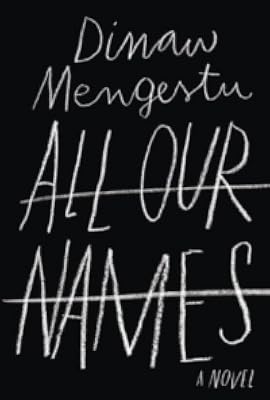
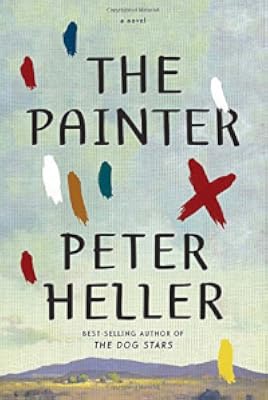
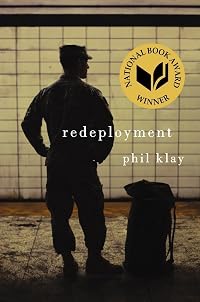
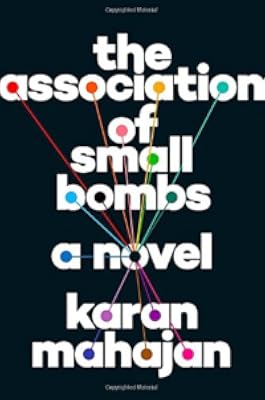


Member Recommendations
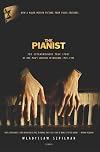
The Pianist: The Extraordinary True Story of One Man's Survival in Warsaw, 1939-1945 by Władysław Szpilman
cbl_tn Szpilman's memoir is a personal account of the Warsaw Ghetto written by one of its survivors.
Member Reviews
I usually avoid novels set in the Holocaust because however good and well written they may be, they just destroy me. It's hard to spend intimate time with such evil... "evil", which seems too mundane a word here, really. This book is no different. Doctor Korczak certainly deserves to be immortalized in fiction, however. The book somewhat reminds me of Louis Malle's film "Au Revoir Les Enfants", in being a simply but not simple told unsentimental story about children and then - boom - the Holocaust just kicks you in the gut.
So... thanks, Tournament of Books, for leading me to read this. I guess.
So... thanks, Tournament of Books, for leading me to read this. I guess.
For a reader, it’s inadvisable to invest too much emotional capital in a Holocaust novel because of the inevitable fate awaiting characters that we grow to care for. Recognizing this, Jim Shepard has written a Holocaust novel from the perspective of a boy who views life dispassionately, at an emotional distance from family and friends. For young Aron Rozycki the world is simply what it is and he doesn't feel one way or another about it. Aron’s family subsists in peasant squalor in a Polish village near the Lithuanian border. It's a life filled with casual brutality. For Aron and his family there is no hope of an improved existence, so when the Germans invade and start treating them like cattle, it’s just one more setback. Aron has show more no expectations of a positive outcome and never once considers his world or his fate in terms of right and wrong, justice and injustice: misery and every sort of discomfort followed by an early death are constants long before the Nazis move the Rozyckis along with their Jewish neighbours into a Warsaw ghetto. In the ghetto Aron the opportunist quickly adapts to his new surroundings. Along with a group of other children he begins smuggling goods to bring in extra money, taking huge risks daily and witnessing first-hand examples of Nazi retribution. Over time conditions in the ghetto worsen. Freedoms are restricted, more families are brought in, overcrowding adds to the misery. People start dying from typhus and other diseases. At a certain point, Aron is approached by a Jewish collaborator and pressured into becoming an informant, and without much internal debate gives up his best friend to the Gestapo. Left alone after his father and brothers are taken away for a work detail and his mother dies, he is living on the street and watching out for the friends he betrayed when he is taken into an orphanage. However, the safe haven is only temporary, and eventually the Nazis empty the orphanage and everyone is carted off to one of the death camps. Shepard’s novel does not sugar coat the dire situation of Aron, the other orphans, and the orphanage staff. It is the fact that Aron looks evil squarely in the eye and does not look away that gives his story its poignancy and its power. Aron never sets out to avoid his fate. He does not think long term. He has no time for sentiment or hope. The world he inhabits has made him what he is, and as far as he's concerned nothing outside his immediate sphere exists. Aron narrates his own story in prose that is flatly observant, recounting harrowing events without emotional embellishment. The sacrifice that Shepard makes telling the story in this fashion is that though we are often horrified, we are rarely touched, and this seems to be his intention. The book has a narrow focus and gives the reader no respite from the horrors it describes. Potent and bitter, like an elixir, The Book of Aron adds to Shepard’s reputation as one of the most adventurous and versatile fiction writers at work today. show less
The stories of the holocaust have been recounted in at least a few different ways. I've found those with the most objective narrators, e.g. Primo Levi's If This is a Man, to be the most moving and most literarily satisfying. As humans, it's only necessary to be shown hell, we all have enough experience with nightmares to make any author's pathos superfluous. That is why horror stories are so universally appreciated. Mr. Shepard tells us an historical story that we already know in detail. He tells the story through the eyes of a boy who says, "Whether I was happy or unhappy, I took things as I found them.", and who is the target of psychological projection by everyone around him. His constantly complaining mother and his callous smuggler show more friends all, in a philosophically absurd fashion, accuse him of being self-centered. The overall effect is that we seem to have been given an honest vision of these events, and the result is devastating. show less
I wasn't sure that I would like this book; admittedly, I've been a bit burned out on Holocaust novels. However, The Book of Aron quickly grabbed my attention, and I finished it in two days. Several factors make this story unique. First, instead of focusing on the horrors of life in the prison camps and the inevitable tragic ending, Shepherd sets his story mainly in the Warsaw ghetto and focuses on daily life and the struggle for survival. Second, his protagonist is a 12-year old boy. Aron's age and the fact that his life has been a struggle even before the Nazi invasion render him a more detached narrator than we see in most other Holocaust novels. He takes life as it comes: the sudden death of his younger brother, the lice that cake show more his head and body, the lack of food, the typhus epidemic, the sudden acts of violence, the disappearance of family and friends, the extra people that are moved into his already crowded home--all this just happen, and Aron moves on. He isn't an unfeeling boy; in fact, his friends tease him about his frequent tears. But they also have a phrase that they repeat about him: "Sh'maya only cares about himself." Sadly, this is the way a lot of people must have acted if they wanted to survive. Aron becomes good at scrounging and stealing, and he later joins up with a group of boys who smuggle items through a hole in the wall surrounding the ghetto. He even agrees to become an informer for an acquaintance who has joined the yellow police, a group of Jews working with the invaders.
But if there is one person Aron admires, it is Dr. Janusc Korczak, a real-life educator and children's advocate who became well know for his radio show, The Old Doc. Aron watches him from afar as he works to save as many children as possible, has a number of conversations with him in the street, and visits a performance by the children in his orphanage. Korczak becomes a major figure in the last half of the novel.
While not a happy read (what Holocaust novel is?), it kept my interest and made me aware of some of the harsher details of life for Poland's Jews outside of the prison camps. Despite the distance Aron maintains and some of the unpleasant things that he does, I was empathetic towards his struggle. show less
But if there is one person Aron admires, it is Dr. Janusc Korczak, a real-life educator and children's advocate who became well know for his radio show, The Old Doc. Aron watches him from afar as he works to save as many children as possible, has a number of conversations with him in the street, and visits a performance by the children in his orphanage. Korczak becomes a major figure in the last half of the novel.
While not a happy read (what Holocaust novel is?), it kept my interest and made me aware of some of the harsher details of life for Poland's Jews outside of the prison camps. Despite the distance Aron maintains and some of the unpleasant things that he does, I was empathetic towards his struggle. show less
I feel terrible saying this, but I actually think this was pretty forgettable. I've read quite a lot of Holocaust fiction, and I didn't think this was a particularly stellar example of it. The hard thing about Holocaust fiction is that once you have read a certain amount of it, it's hard to find a new perspective, something that does more than simply remind us that the Holocaust was awful. All the Light We Cannot See did that, as did Sarah's Key. The Book Thief and The Nightingale seem to stand out as well for many people. Time will tell, but for me I think this failed in that attempt.
Part of the problem is that I didn't care much about the main character. Even at the end, I didn't have a clear picture of who he was or what really show more motivated him. He didn't seem to care much about his friends or his family, but became desperately attached to someone later, which didn't ring quite true for me. For part of the book, I actually wondered if he was a bit mentally challenged and didn't understand what was happening, but nothing happened that was sufficient to confirm or to contradict that hypothesis. Anyway, it is hard to admit (even to myself) that I read a book about orphans and ghettos and families struggling to survive and shocking deaths and unimaginable choices, yet somehow remained largely unmoved; I think it's a reminder how important it is for authors to write characters that we care about.
Also, I hated the ending so much I gave this 2 stars at first. What a weird place to end it. show less
Part of the problem is that I didn't care much about the main character. Even at the end, I didn't have a clear picture of who he was or what really show more motivated him. He didn't seem to care much about his friends or his family, but became desperately attached to someone later, which didn't ring quite true for me. For part of the book, I actually wondered if he was a bit mentally challenged and didn't understand what was happening, but nothing happened that was sufficient to confirm or to contradict that hypothesis. Anyway, it is hard to admit (even to myself) that I read a book about orphans and ghettos and families struggling to survive and shocking deaths and unimaginable choices, yet somehow remained largely unmoved; I think it's a reminder how important it is for authors to write characters that we care about.
Also, I hated the ending so much I gave this 2 stars at first. What a weird place to end it. show less
The Short of It:
Based on true events, Shepard tells the story of a young boy and his family as they struggle to survive Germany’s occupation of the Warsaw Ghetto.
The Rest of It:
There are many books written about the Holocaust. Some are beautifully written and nearly all of them are pretty heavy in tone. This one is a little different. The story is told from a young boy’s point of view. A young boy who happens to be street smart and a bit of a wretch. Somehow, that makes the story he’s telling a little easier to digest.
Although not likable, Aron is a survivor and he comes in contact with many characters both young and old who directly impact him and his quality of life. Hunger, illness, lice outbreaks and the continued loss of show more personal property and loved ones, puts Aron on the street, and that is where he meets Dr. Janusz Korczak, a pediatrician , the true hero of this story.
As I said earlier, although fictionalized, the story is based on true events and when I turned that last page, I was eager to know more about Dr. Janusz Korczak (birthname Hersz Goldszmit). I think Shepard could have written the entire book about him.
All in all, The Book of Aron was a good book to discuss. The book club that I belong to had plenty to say about it. The pacing was a little slow in the beginning but it picked up about halfway through. I hesitate to say it but for a book with this subject matter, the tone felt lighter to me than most. It wasn’t particularly heavy until the end.
I’ve never read anything by Shepard before but now I am interested in reading his other book, Project X, about middle-school (another heavy topic),
Have you read The Book of Aron or Project X?
For more reviews, visit my blog: Book Chatter. show less
Based on true events, Shepard tells the story of a young boy and his family as they struggle to survive Germany’s occupation of the Warsaw Ghetto.
The Rest of It:
There are many books written about the Holocaust. Some are beautifully written and nearly all of them are pretty heavy in tone. This one is a little different. The story is told from a young boy’s point of view. A young boy who happens to be street smart and a bit of a wretch. Somehow, that makes the story he’s telling a little easier to digest.
Although not likable, Aron is a survivor and he comes in contact with many characters both young and old who directly impact him and his quality of life. Hunger, illness, lice outbreaks and the continued loss of show more personal property and loved ones, puts Aron on the street, and that is where he meets Dr. Janusz Korczak, a pediatrician , the true hero of this story.
As I said earlier, although fictionalized, the story is based on true events and when I turned that last page, I was eager to know more about Dr. Janusz Korczak (birthname Hersz Goldszmit). I think Shepard could have written the entire book about him.
All in all, The Book of Aron was a good book to discuss. The book club that I belong to had plenty to say about it. The pacing was a little slow in the beginning but it picked up about halfway through. I hesitate to say it but for a book with this subject matter, the tone felt lighter to me than most. It wasn’t particularly heavy until the end.
I’ve never read anything by Shepard before but now I am interested in reading his other book, Project X, about middle-school (another heavy topic),
Have you read The Book of Aron or Project X?
For more reviews, visit my blog: Book Chatter. show less
Aron is a young boy, a Polish Jew, whose family is barely hanging on in Warsaw's Jewish ghetto. Aron spends as much time on the streets as he does with his family. He is part of a network of street children who smuggle goods into the ghetto's black market. He is gradually coerced into acting as an informant for the Jewish Police; by the time he realizes what is happening, it seems that he no longer has a choice.
Despite the grim subject matter, many Holocaust memoirs and novels have an undercurrent of hope since the author/protagonist survived to tell their story. This one progresses relentlessly toward tragedy. At the time I listened to this book, I wasn't aware that Janusz Korczak was a real person and not just a character created for show more this novel. His attitude toward children (at least, the attitude portrayed in the novel) reminded me of Mr. Rogers. I would like to know more about this man who devoted himself to the care and comfort of Jewish orphans at such a dark time in history. I am on the lookout for a good biography. show less
Despite the grim subject matter, many Holocaust memoirs and novels have an undercurrent of hope since the author/protagonist survived to tell their story. This one progresses relentlessly toward tragedy. At the time I listened to this book, I wasn't aware that Janusz Korczak was a real person and not just a character created for show more this novel. His attitude toward children (at least, the attitude portrayed in the novel) reminded me of Mr. Rogers. I would like to know more about this man who devoted himself to the care and comfort of Jewish orphans at such a dark time in history. I am on the lookout for a good biography. show less
Members
- Recently Added By
Published Reviews
ThingScore 88
Shepard’s fidelity to the historical record is impressive, but what makes The Book of Aron a work of art is his obedience to the boy’s restricted perspective. ... by reclaiming an insignificant voice and deploying it to observe a great man [Janusz Korczak], Shepard turns hell into a testament of love and sacrifice. The Book of Aron is his best novel yet, a short and moving masterpiece.
added by pellethepoet
Korczak is, of course, a renowned historical figure: author, pediatrician, activist for the rights of the child and director of a Jewish orphanage in Warsaw that the Nazis ordered him to relocate within the walls of the ghetto. It is the relationship between Aron and Korczak that sits at the heart of the novel and, indeed, gives heart to this bleak story of loss, deprivation and betrayal.
added by ozzer
Lists

2016 Tournament of Books
17 works; 20 members

2016 Notable Books for Adults
26 works; 7 members

Kirkus Starred Fiction Reviews of Books Published in 2015
310 works; 6 members
International Dublin Literary Award Longlist 2017
147 works; 3 members

Dublin Literary Award Longlist 2017
147 works; 2 members

Books recommended by Calgary Public Library staff
1,588 works; 4 members

History: Holocaust
106 works; 1 member
Author Information

38+ Works 2,632 Members
Jim Shepard was born on December 29, 1956 in Bridgeport, Connecticut. He received a BA from Trinity College and a MFA from Brown University. He teaches creative writing and film at Williams College and in the Warren Wilson MFA program. He received the Guggenheim Fellowship for Creative Arts, US and Canada. His short story collection, Like You'd show more Understand, won the 2007 Story Prize. His other short story collections include Battling against Castro, Love and Hydrogen, and You Think That's Bad. He won the 2005 Massachusetts Book Award for his novel, Project X. His other novels include Flights, Paper Doll, Lights Out in the Reptile House, Kiss of the Wolf, Nosferatu, and The Book of Aron. (Bowker Author Biography) show less
Some Editions
Awards and Honors
Awards
Distinctions
Notable Lists
Common Knowledge
- Canonical title
- The Book of Aron
- Original publication date
- 2015
- People/Characters
- Janusz Korczak
- Important places
- Warsaw Ghetto
- Dedication
- For Ida
- First words
- My mother and father named me Aron, but my father said they should have named me What Have You Done, and my uncle told everyone they should have called me What Were You Thinking.
- Blurbers
- Michaels, Anne; Doyle, Roddy; Irving, John; Handler, Daniel
Classifications
Statistics
- Members
- 519
- Popularity
- 57,437
- Reviews
- 30
- Rating
- (3.78)
- Languages
- 7 — Dutch, English, French, German, Italian, Portuguese, Swedish
- Media
- Paper, Audiobook, Ebook
- ISBNs
- 26
- ASINs
- 7