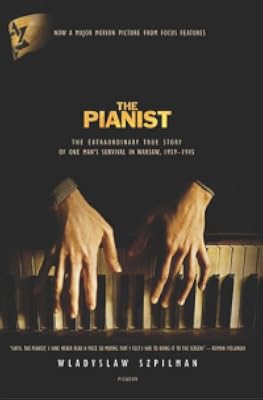
The Pianist: The Extraordinary True Story of One Man's Survival in Warsaw, 1939-1945
by Władysław Szpilman
On This Page
Description
The memoir that inspired Roman Polanski's Oscar-winning film, which won the Cannes Film Festival's most prestigious prize-the Palme d'Or. Named one of the Best Books of 1999 by the Los Angeles Times On September 23, 1939, Wladyslaw Szpilman played Chopin's Nocturne in C-sharp minor live on the radio as shells exploded outside-so loudly that he couldn't hear his piano. It was the last live music broadcast from Warsaw: That day, a German bomb hit the station, and Polish Radio went off the air. show more Though he lost his entire family, Szpilman survived in hiding. In the end, his life was saved by a German officer who heard him play the same Chopin Nocturne on a piano found among the rubble. Written immediately after the war and suppressed for decades, The Pianist is a stunning testament to human endurance and the redemptive power of fellow feeling. show lessTags
Recommendations


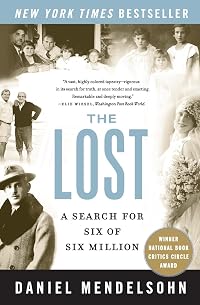
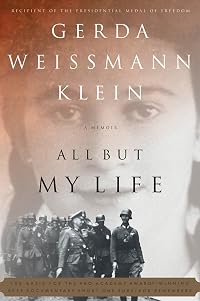

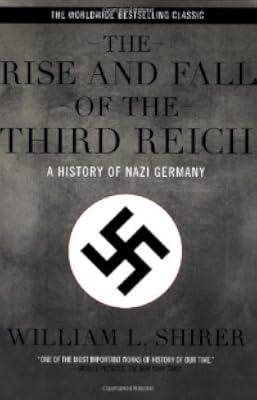
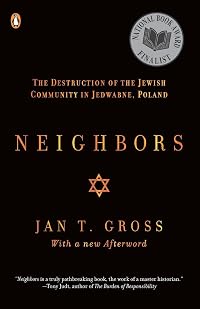







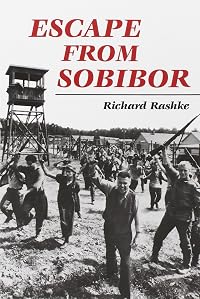

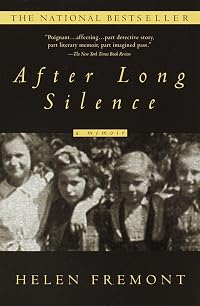
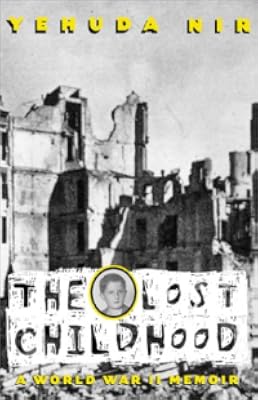
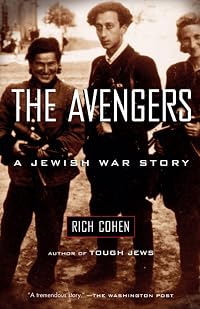
Member Recommendations
Member Reviews
The subtitle is all the synopsis anyone needs: The Extraordinary True Story of One man’s Survival in Warsaw, 1939-1945.
Szpilman was a pianist who performed on Polish radio. He was, in fact, playing Chopin’s Nocturne in C-sharp Minor, live on the radio on Sept 23, 1939, when shells exploded outside the station. It was the last live music broadcast from Warsaw that day; a German bomb hit the station, and Polish radio went off the air. Ultimately, the Nazi’s plan for extermination of the Jews would take all of his family, but Szpilman would manage – by luck, courage, tenacity, and the kindness of others – to stay hidden and survive. The most unlikely person to help him was a German officer who came across him in the ruins of a show more building scrounging for food.
He wrote his story shortly after the war was over, but it was suppressed for decades, finally being published in 1999, and even then, not in Poland. The edition I had included entries from the diary of Captain Wilm Hosenfeld, the German officer who saved Szpilman towards the end of the war.
Szpilman’s story is told in a very straightforward manner. He recounts the ever-increasing restrictions imposed by the government on Jews, the forbearance and belief that “this is bound to pass” among his family and others in the community, the terror and horror of witnessing (or being subject to) random acts of violence and death. And yet, there is a certain cool detachment. Almost as if he were witnessing someone else’s story rather than reliving those experiences himself. In the forward, his son Andrzej supposes that his father wrote the memoir “… for himself rather than humanity in general. It enabled him to work through his shattering wartime experiences and free his mind and emotions to continue with his life.”
I found it engaging and gripping. Even though I knew he survived, I simply could not stop reading.
The extraordinary memoir was adapted to film in 2002, starring Adrien Brody (who won the Oscar for his performance) and directed by Roman Polanski (Oscar for Best Director). show less
Szpilman was a pianist who performed on Polish radio. He was, in fact, playing Chopin’s Nocturne in C-sharp Minor, live on the radio on Sept 23, 1939, when shells exploded outside the station. It was the last live music broadcast from Warsaw that day; a German bomb hit the station, and Polish radio went off the air. Ultimately, the Nazi’s plan for extermination of the Jews would take all of his family, but Szpilman would manage – by luck, courage, tenacity, and the kindness of others – to stay hidden and survive. The most unlikely person to help him was a German officer who came across him in the ruins of a show more building scrounging for food.
He wrote his story shortly after the war was over, but it was suppressed for decades, finally being published in 1999, and even then, not in Poland. The edition I had included entries from the diary of Captain Wilm Hosenfeld, the German officer who saved Szpilman towards the end of the war.
Szpilman’s story is told in a very straightforward manner. He recounts the ever-increasing restrictions imposed by the government on Jews, the forbearance and belief that “this is bound to pass” among his family and others in the community, the terror and horror of witnessing (or being subject to) random acts of violence and death. And yet, there is a certain cool detachment. Almost as if he were witnessing someone else’s story rather than reliving those experiences himself. In the forward, his son Andrzej supposes that his father wrote the memoir “… for himself rather than humanity in general. It enabled him to work through his shattering wartime experiences and free his mind and emotions to continue with his life.”
I found it engaging and gripping. Even though I knew he survived, I simply could not stop reading.
The extraordinary memoir was adapted to film in 2002, starring Adrien Brody (who won the Oscar for his performance) and directed by Roman Polanski (Oscar for Best Director). show less
How do you review a memoir of the Holocaust? I've been looking for a way to start this review for 30 minutes and I am still not sure what a review should be.
Szpilman's story of his survival in Warsaw during WWII is heartbreaking and almost understated. It is almost as if he believe it was nothing special - that it just happened. And yet, he never got sent to a camp as most of the Warsaw Jews (partially due to luck, partially because of his own ingenuity), he did not get shot as a lot of the ones that somehow were left in the city, he never ended up in a prison or worse. But not because he sold out to the Germans - he lived in the Ghetto and refused to enter the police, he lived in hiding despite people cheating and people dying around show more him. And at the end, it was a German officer that made sure that he was clothed and fed enough to survive until the city was liberated.
The Warsaw Ghetto is one of the best known horror stories of the war - together with the camps and the gas chambers. But in most memoirs I had read, people end up out of Warsaw to survive. Szpilman never leaves the city - he hides and survives fire and cold; he even survives when his name is selected to be sent with one of the cattle carts that moved people out from the Ghetto. He lost his whole family and more than once he was ready to die - just to find a reason to live again.
The fall and liberation of Warsaw are bracketed by two renditions of Chopin's Nocturne in C sharp minor - the last thing to run on the radio before the broadcasting location was shelled; 6 years later, Szpilman is performing the same on the newly restarted Polish radio.
The story is written immediately after the war and one expects it to be bitter or disillusioned. But it is not - Szpilman sound almost detached from the horrors and the unspeakable tragedy he is describing. And somewhere in that story, there is also a German that saves him when everyone else had left.
The book contains not only the memoir of the Polish musician but also parts of the diary of that German, Wilm Hosenfeld, - showing that not everyone in Germany was part of the machine - even when they were part of the army. One of the tragedies of the times is that he was killed despite him helping more than one Jew - not in the war but in the Soviet POW camps after that, partially because they did not believe him.
It is a story of healing and acceptance. A way to exorcise the demons so the life can continue. Or a way to say everything that is in a man heart so space can be made for new and better memories. Whatever the reason, it is one of the memoirs that should be read.
The fact that the German officer had to be changed to an Austrian so it can be published in the new Poland after the war shows clearly that the war taught humanity nothing. The fact that it was pulled out soon after publishing and never republished until the times changed due to the Ukrainian and Baltic helpers of Germany being shown clearly is unfortunate and direct result of the split of the continent after the end of the war. (the afterword of that edition is more informative than usual). The war that should have united everyone ended up with the world split worse than ever. And humanity is still healing. But that is a different story. And not part of this book. show less
Szpilman's story of his survival in Warsaw during WWII is heartbreaking and almost understated. It is almost as if he believe it was nothing special - that it just happened. And yet, he never got sent to a camp as most of the Warsaw Jews (partially due to luck, partially because of his own ingenuity), he did not get shot as a lot of the ones that somehow were left in the city, he never ended up in a prison or worse. But not because he sold out to the Germans - he lived in the Ghetto and refused to enter the police, he lived in hiding despite people cheating and people dying around show more him. And at the end, it was a German officer that made sure that he was clothed and fed enough to survive until the city was liberated.
The Warsaw Ghetto is one of the best known horror stories of the war - together with the camps and the gas chambers. But in most memoirs I had read, people end up out of Warsaw to survive. Szpilman never leaves the city - he hides and survives fire and cold; he even survives when his name is selected to be sent with one of the cattle carts that moved people out from the Ghetto. He lost his whole family and more than once he was ready to die - just to find a reason to live again.
The fall and liberation of Warsaw are bracketed by two renditions of Chopin's Nocturne in C sharp minor - the last thing to run on the radio before the broadcasting location was shelled; 6 years later, Szpilman is performing the same on the newly restarted Polish radio.
The story is written immediately after the war and one expects it to be bitter or disillusioned. But it is not - Szpilman sound almost detached from the horrors and the unspeakable tragedy he is describing. And somewhere in that story, there is also a German that saves him when everyone else had left.
The book contains not only the memoir of the Polish musician but also parts of the diary of that German, Wilm Hosenfeld, - showing that not everyone in Germany was part of the machine - even when they were part of the army. One of the tragedies of the times is that he was killed despite him helping more than one Jew - not in the war but in the Soviet POW camps after that, partially because they did not believe him.
It is a story of healing and acceptance. A way to exorcise the demons so the life can continue. Or a way to say everything that is in a man heart so space can be made for new and better memories. Whatever the reason, it is one of the memoirs that should be read.
The fact that the German officer had to be changed to an Austrian so it can be published in the new Poland after the war shows clearly that the war taught humanity nothing. The fact that it was pulled out soon after publishing and never republished until the times changed due to the Ukrainian and Baltic helpers of Germany being shown clearly is unfortunate and direct result of the split of the continent after the end of the war. (the afterword of that edition is more informative than usual). The war that should have united everyone ended up with the world split worse than ever. And humanity is still healing. But that is a different story. And not part of this book. show less
I am quite surprised at how closely they adapted this book into the film! Down to the dialogue in the book they match it almost line for line because the book's narrative style lends itself so well to the action of the film format. The major strength that the book has though is that the reader gets much more inner thought from Szpilman (though the film does have some of it), so we are able to see his reasoning behind what seems like strange behavior.
Having read quite a few post-war chronicles about the Jewish experience during this time period I have to say that this one is definitely near the top of the list. Not only is it extremely readable, but it also has a singular honesty and unique sense of remembrance untinged by anger/revenge show more motifs that sets it apart from many of the other memoirs who often try to seek answers through examining the motives of the perpetrators or the victims, justify their individual behavior, or paint an extremely biased picture. Szpilan's memoir might seem cold and calculating in comparison to some of the more emotionally driven memoirs, but I feel that his detatchment from his own experience lends it an air of truth because he is generally able to prevent his narrative from being changed by anger or backshadowing, and the moments of emotional quality are that much more emphasized because of their rarity. show less
Having read quite a few post-war chronicles about the Jewish experience during this time period I have to say that this one is definitely near the top of the list. Not only is it extremely readable, but it also has a singular honesty and unique sense of remembrance untinged by anger/revenge show more motifs that sets it apart from many of the other memoirs who often try to seek answers through examining the motives of the perpetrators or the victims, justify their individual behavior, or paint an extremely biased picture. Szpilan's memoir might seem cold and calculating in comparison to some of the more emotionally driven memoirs, but I feel that his detatchment from his own experience lends it an air of truth because he is generally able to prevent his narrative from being changed by anger or backshadowing, and the moments of emotional quality are that much more emphasized because of their rarity. show less
An extraordinary record of how Szpilman survived WWII as a Polish Jew in Nazi-occupied Warsaw. Considering that he wrote this memoir in the immediate aftermath of the liberation, his recount is surprisingly-but-understandably measured and emotionally detached. This was also my first time reading and learning about the Warsaw ghetto, the portrait of which was brought to life with Szpilman's clear firsthand experiences.
I was struck most by Szpilman's willingness to portray people not as purely good or purely evil, but as just people caught up in machinations bigger than themselves and only given the opportunity to show their humanity in small personal interactions. It reminds me of a very good sentiment in an article I read recently: War show more takes us as it finds us; it doesn’t wait until we’ve perfected ourselves before it rips into our lives. I seem to have taken up Szpilman's intention of remaining emotionally unattached to the book events but rest assured, I was very moved by the book and I've learnt a lot from it as well.
On the emotionally unattached note, I wonder what it means to "rave" about a memoir of this type because what would the praises mean? That the story is good? It's a very painful record of very real suffering, it seems unfathomable to say that one "enjoyed" the story. That the prose is good? But does that mean Jewish memoirs of WWII experiences can somehow be deemed "unworthy" because it's not written to some "literary" expectations. At some point, we're not reading these memoirs with the intention of learning new things but to honour these memories by remembering them through reading. show less
I was struck most by Szpilman's willingness to portray people not as purely good or purely evil, but as just people caught up in machinations bigger than themselves and only given the opportunity to show their humanity in small personal interactions. It reminds me of a very good sentiment in an article I read recently: War show more takes us as it finds us; it doesn’t wait until we’ve perfected ourselves before it rips into our lives. I seem to have taken up Szpilman's intention of remaining emotionally unattached to the book events but rest assured, I was very moved by the book and I've learnt a lot from it as well.
On the emotionally unattached note, I wonder what it means to "rave" about a memoir of this type because what would the praises mean? That the story is good? It's a very painful record of very real suffering, it seems unfathomable to say that one "enjoyed" the story. That the prose is good? But does that mean Jewish memoirs of WWII experiences can somehow be deemed "unworthy" because it's not written to some "literary" expectations. At some point, we're not reading these memoirs with the intention of learning new things but to honour these memories by remembering them through reading. show less
The triumph of the human spirit, the strength of the human soul to find its way out of the darkness, the injustice, the never-ending nightmare, the ordeal of living in a world where absolute fear and beastly behaviour dictate everyone’s life.
This is the life of a man, an artist, who experienced persecution, confinement, famine, disease. A man whose strength and faith defeated monsters. A pianist whose talent touched the heart of the enemy, except this enemy was different from the others, a kind soul among the vilest of people. Wladyslaw Szpilman lost his family, his work, his dream of playing a music that becomes the exaltation of the soul. He lived like a caged animal for six years, because of a madman’s idea of a perfect world. show more And he survived. His writing communicates his soul without melodramatic sentences or shocking details. His works flow like a perfectly performed Nocturne….
Rating and reviewing lose every meaning and importance when we refer to books such as this. I wish we were in a position to say that we need to look back and vow to ourselves that the nightmare will never be awakened again. I wish we could claim such a thing and actually believe that it won’t be a void wish...But there is always someone, there is always a ‘’chosen’’ leader that turns the world into a toy to pass the time…
Szpilman’s ordeal and survival was depicted to perfection in the 2002 film by the great Roman Polanski, starring the impeccable Adrien Brody. They both won the Academy Awards in their respective categories. show less
This is the life of a man, an artist, who experienced persecution, confinement, famine, disease. A man whose strength and faith defeated monsters. A pianist whose talent touched the heart of the enemy, except this enemy was different from the others, a kind soul among the vilest of people. Wladyslaw Szpilman lost his family, his work, his dream of playing a music that becomes the exaltation of the soul. He lived like a caged animal for six years, because of a madman’s idea of a perfect world. show more And he survived. His writing communicates his soul without melodramatic sentences or shocking details. His works flow like a perfectly performed Nocturne….
Rating and reviewing lose every meaning and importance when we refer to books such as this. I wish we were in a position to say that we need to look back and vow to ourselves that the nightmare will never be awakened again. I wish we could claim such a thing and actually believe that it won’t be a void wish...But there is always someone, there is always a ‘’chosen’’ leader that turns the world into a toy to pass the time…
Szpilman’s ordeal and survival was depicted to perfection in the 2002 film by the great Roman Polanski, starring the impeccable Adrien Brody. They both won the Academy Awards in their respective categories. show less
Pianist Wladyslaw Szpilman was a Polish Jew who was the only member of his family to survive the Holocaust. As more and more Jews were transported from Warsaw's Ghetto to extermination camps, it was inevitable that Szpilman's family would be among them. At the last moment he was pulled from the train that took the rest of his family to their deaths. He spent the rest of the war in Warsaw and was perhaps the only Jew left in his sector of Warsaw at the end of the war. His survival came at a great cost. It was through this book that I discovered that Janusz Korczak, the champion of Warsaw's orphans who is a central figure in The Book of Aron, was a real person and not a fictional character. Most of the Holocaust memoirs I've read were show more written decades after the events, when their authors had some emotional distance from what must surely have been the most painful period of their lives. Szpilman's memoir was written shortly after the end of the war, when his emotions were still raw. As a result, it's much more intense than most of the other memoirs I've read. Highly recommended. show less
This is a far more special book than even its admirers give it credit for. Accounts by Jews in wartime are of course "survivors' accounts," but this book is a good deal more. Szpilman was a very famous and talented man and, at crucial moments in his life, certain people stepped forward at great personal risk to save him and his talent for the world. The reader easily misses this, not because Szpilman tries to hide what others did for him, but because he is very modest about his talent and the high esteem in which he was held by prewar Polish audiences. This is therefore not a standard "survivors' account" but also an account of the lengths some people will go to help a remarkable person.
Polanski directed a beautiful film, but he and his show more screenwriter utterly missed this unique story: a person who survived because the people around him couldn't bear to allow such an extraordinary talent to be lost. The German Hosenfeld is only the last of many people to be bowled over by Szpilman's playing. To the very end Polanski sticks to the "survivor's account," and where the book shows Hosenfeld to be helpful and contrite, and Szpilman to be grateful, Polanski opts for a kind of "degraded man can still play the piano" ending. A lost opportunity. show less
Polanski directed a beautiful film, but he and his show more screenwriter utterly missed this unique story: a person who survived because the people around him couldn't bear to allow such an extraordinary talent to be lost. The German Hosenfeld is only the last of many people to be bowled over by Szpilman's playing. To the very end Polanski sticks to the "survivor's account," and where the book shows Hosenfeld to be helpful and contrite, and Szpilman to be grateful, Polanski opts for a kind of "degraded man can still play the piano" ending. A lost opportunity. show less
Members
- Recently Added By
Lists

Best Autobiographies and Memoirs
370 works; 67 members
Books About World War II
102 works; 29 members

Top Five Books of 2018
802 works; 265 members

Top Five Books of 2015
811 works; 240 members

Page Turners
185 works; 11 members

1990s
309 works; 17 members

THE WAR ROOM
813 works; 24 members

Favorite Books in Translation
320 works; 133 members
Author Information

All Editions
Some Editions
Awards and Honors
Awards
Distinctions
Series
Belongs to Publisher Series
Rainbow pocketboeken (854)
Work Relationships
Has the adaptation
Is abridged in
Common Knowledge
- Canonical title*
- De pianist
- Original title
- Śmierć miasta
- Alternate titles*
- Het wonderbaarlijke overleven : herinneringen uit Warschau 1939-1945
- Original publication date
- 1999
- People/Characters
- Wladyslaw Szpilman (Władysław Szpilman); Wilm Hosenfeld; Rubenstein
- Important places
- Warsaw Ghetto; Warsaw, Poland; 223 Niepodległości Avenue, Warsaw, Poland
- Important events
- World War II (1939 | 1945); World War II, German Occupation of Poland (1939-09 | 1945-05)
- Related movies
- The Pianist (2002 | IMDb | Roman Polanski)
- Original language
- Polish
*Some information comes from Common Knowledge in other languages. Click "Edit" for more information.
Classifications
Statistics
- Members
- 2,562
- Popularity
- 7,484
- Reviews
- 42
- Rating
- (4.28)
- Languages
- 19 — Catalan, Chinese, Czech, Danish, Dutch, English, Finnish, French, German, Hungarian, Italian, Norwegian (Bokmål), Norwegian, Polish, Portuguese, Russian, Spanish, Swedish, Turkish
- Media
- Paper, Audiobook, Ebook
- ISBNs
- 77
- ASINs
- 13