On This Page
Description
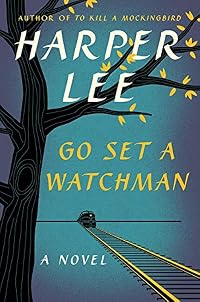
Performed by Reese Witherspoon#1 New York Times Bestseller
"Go Set a Watchman is such an important book, perhaps the most important novel on race to come out of the white South in decades." — New York Times
A landmark novel by Harper Lee, set two decades after her beloved Pulitzer Prize–winning masterpiece, To Kill a Mockingbird.
Twenty-six-year-old Jean Louise Finch—"Scout"—returns home to Maycomb, Alabama from New York City to visit her aging father, Atticus. Set against the show more backdrop of the civil rights tensions and political turmoil that were transforming the South, Jean Louise's homecoming turns bittersweet when she learns disturbing truths about her close-knit family, the town, and the people dearest to her. Memories from her childhood flood back, and her values and assumptions are thrown into doubt. Featuring many of the iconic characters from To Kill a Mockingbird, Go Set a Watchman perfectly captures a young woman, and a world, in painful yet necessary transition out of the illusions of the past—a journey that can only be guided by one's own conscience.
Written in the mid-1950s, Go Set a Watchman imparts a fuller, richer understanding and appreciation of the late Harper Lee. Here is an unforgettable novel of wisdom, humanity, passion, humor, and effortless precision—a profoundly affecting work of art that is both wonderfully evocative of another era and relevant to our own times. It not only confirms the enduring brilliance of To Kill a Mockingbird, but also serves as its essential companion, adding depth, context, and new meaning to an American classic.
. show less
Tags
Recommendations

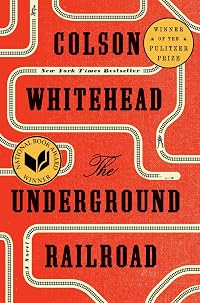

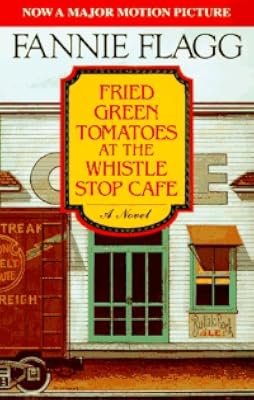
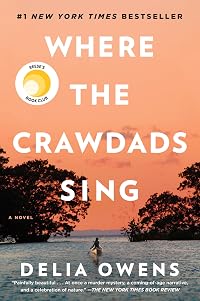
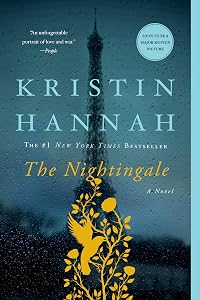
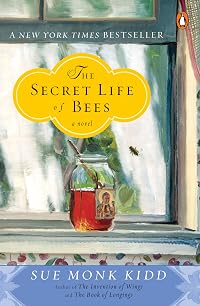
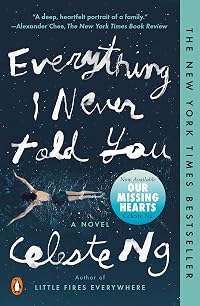
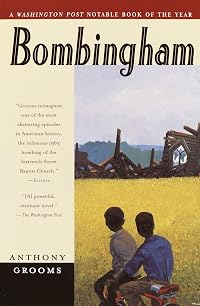
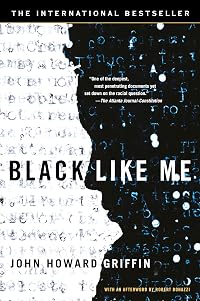



Member Recommendations
JuliaMaria Harper Lee hat nur zwei Bücher veröffentlicht. Das zweite - "Gehe hin, stelle einen Wächter" - erst mit 90 Jahren - auch wenn es schon früher geschrieben wurde. Es war die literarische Sensation des Jahres 2015.
KayCliff Go Set a Watchman is the sequel to To Kill a Mocking Bird
132
Cecrow Another story of the south by an author with similar background.
52
BookshelfMonstrosity Moving and bittersweet, these Southern Gothic novels portray women pushed to their emotional limits as they return home and re-establish old relationships. Both are literary and character-driven, with a thoughtful style that also references mid-twentieth-century events and attitudes.
20
BookshelfMonstrosity Although Go Set a Watchman takes a more humorous approach than Four Spirits, both novels, set in the mid-twentieth-century South, spotlight the effects of the Civil Rights Movement on individuals. They are captivating, character-driven cameos representing society as a whole.
andrewcorser Further insight into the Southern States
vwinsloe Southern values shortly before the civil rights era
Member Reviews
Controversy, speculation and hype heralded the publication of Harper Lee’s Go Set a Watchman. It was almost enough to put me off reading it. Almost, but not quite. And I’m so glad. This was a well-written and powerful book.
For anyone unfamiliar with the back story, Harper Lee submitted Go Set a Watchman to her publisher, and they asked her to rewrite it set 20 years earlier, when its main character, Jean Louise Finch, was a young girl nicknamed Scout. This is the book we all know and love, the classic To Kill a Mockingbird. The two books are similar in some respects: both deal with issues of race, as experienced by characters with the same names. But are the characters really the same people? That’s hard to say. Lee did not set show more out to publish two books. She didn’t intend to tell readers what happened after the events in TKAM. The best way to read these books are as companion pieces that allow the reader to consider similar issues through different lenses.
In Go Set a Watchman, Jean Louise makes her annual trip home to Maycomb, Alabama. She reconnects with family and her lifelong friend Henry Clinton, who clearly wants more than friendship this time around. And Jean Louise is not entirely opposed to that idea. Through Jean Louise’s eyes, Harper Lee gives us an ironic and sometimes amusing portrait of small town southern life; a chapter about the music in a Methodist worship service made me laugh out loud.
But then, Jean Louise discovers a pamphlet in her father’s house that sickens her.
She took the pamphlet by one of its corners, held it like she would hold a dead rat by the tail, and walked into the kitchen. She held the pamphlet in front of her aunt.
“What is this thing?” she said.
And by the end of this chapter,
The one human being she had ever fully and wholeheartedly trusted had failed her; the only man she had ever known to whom she could point and say with expert knowledge, “He is a gentleman, in his heart he is a gentleman,” had betrayed her, publicly, grossly, and shamelessly.
Then Harper Lee gets angry. Really angry. And Jean Louise is her voice, her “watchman”:
For thus hath the Lord said unto me,
Go, set a watchman, let him declare what he seeth.
~ Isaiah 21:6
I can understand why Lee’s publishers had her rewrite the book. It’s not because of the writing, or the anger; it’s because 1950s America was not ready for what she had to say. TKAM is a quieter book; Atticus’ crusade for equal rights more level-headed. But while both books were written in the 1950s, I was struck by how the racial aspects resonate today. And maybe today it’s time to be angry. show less
For anyone unfamiliar with the back story, Harper Lee submitted Go Set a Watchman to her publisher, and they asked her to rewrite it set 20 years earlier, when its main character, Jean Louise Finch, was a young girl nicknamed Scout. This is the book we all know and love, the classic To Kill a Mockingbird. The two books are similar in some respects: both deal with issues of race, as experienced by characters with the same names. But are the characters really the same people? That’s hard to say. Lee did not set show more out to publish two books. She didn’t intend to tell readers what happened after the events in TKAM. The best way to read these books are as companion pieces that allow the reader to consider similar issues through different lenses.
In Go Set a Watchman, Jean Louise makes her annual trip home to Maycomb, Alabama. She reconnects with family and her lifelong friend Henry Clinton, who clearly wants more than friendship this time around. And Jean Louise is not entirely opposed to that idea. Through Jean Louise’s eyes, Harper Lee gives us an ironic and sometimes amusing portrait of small town southern life; a chapter about the music in a Methodist worship service made me laugh out loud.
But then, Jean Louise discovers a pamphlet in her father’s house that sickens her.
She took the pamphlet by one of its corners, held it like she would hold a dead rat by the tail, and walked into the kitchen. She held the pamphlet in front of her aunt.
“What is this thing?” she said.
And by the end of this chapter,
The one human being she had ever fully and wholeheartedly trusted had failed her; the only man she had ever known to whom she could point and say with expert knowledge, “He is a gentleman, in his heart he is a gentleman,” had betrayed her, publicly, grossly, and shamelessly.
Then Harper Lee gets angry. Really angry. And Jean Louise is her voice, her “watchman”:
For thus hath the Lord said unto me,
Go, set a watchman, let him declare what he seeth.
~ Isaiah 21:6
I can understand why Lee’s publishers had her rewrite the book. It’s not because of the writing, or the anger; it’s because 1950s America was not ready for what she had to say. TKAM is a quieter book; Atticus’ crusade for equal rights more level-headed. But while both books were written in the 1950s, I was struck by how the racial aspects resonate today. And maybe today it’s time to be angry. show less
This book is controversial for two reasons. First, it's questionable whether Lee ever wanted it published and possible she was exploited in her infirmity and old age. Second, it presents Atticus Finch, one of the noble heroes of American literature, as an unrepentant racist.
Of course, this Atticus is not the same Atticus as in To Kill A Mockingbird, as Go Set A Watchman is not a sequel but an early draft of that novel that was heavily re-written and edited. Still this Atticus is a valuable character for a couple of reasons. First, it shows that white people who may have been considered equitable when Jim Crow was firmly in place became reactionary once the Civil Rights Movement started, and found ways to justify it to themselves. show more Second, it seems like each book has the Atticus that the readers of its time need. In the 1960s, the Atticus who was a model of a white person advocating for equality and justice. In the "colorblind" 2000s, we have white people who admire Atticus Finch but with no self-awareness will say things like "I'm not racist but..." or "all lives matter." A major plot point is that Atticus thinks Jean Louise needs to stop looking up to him for the answers and make up her own mind and that's probably a good lesson for the reader as well.
The novel starts with Jean Louise (aka Scout) Finch returning to visit Maycomb, Alabama from New York. There are some humorous bits as the unrepentant tomboy Jean Louise ponders just how much she doesn't fit in to the community she fled. There are also interesting and humorous flashbacks to her younger days (which an editor considered the best parts of the book, thus inspiring Lee to rewrite the book from the perspective of Scout as a child).
Then Jean Louise discovers that Atticus and her fiance Hank are attending the local Citizens Council meeting and she is shocked and disillusioned. Frankly, at this point the novel goes south as Jean Louise engages in unnatural conversations with several characters each a didactic representation of a Segregationist or States Rights point of view, while Jean Louise represents the Northern Liberal perspective (and frankly, Jean Louise is very weak as a proponent of equality and integration, although she may have seemed more radical in the 1950s).
This book is good for a couple of things. For one, it helps understand the writing process, giving a peak at an early draft of a great novel. Second, it's a snapshot of opinions of white Southerners on racial issues in the late 1950s. Sadly, what it is not is a good or well-written novel.
Favorite Passages:
Of course, this Atticus is not the same Atticus as in To Kill A Mockingbird, as Go Set A Watchman is not a sequel but an early draft of that novel that was heavily re-written and edited. Still this Atticus is a valuable character for a couple of reasons. First, it shows that white people who may have been considered equitable when Jim Crow was firmly in place became reactionary once the Civil Rights Movement started, and found ways to justify it to themselves. show more Second, it seems like each book has the Atticus that the readers of its time need. In the 1960s, the Atticus who was a model of a white person advocating for equality and justice. In the "colorblind" 2000s, we have white people who admire Atticus Finch but with no self-awareness will say things like "I'm not racist but..." or "all lives matter." A major plot point is that Atticus thinks Jean Louise needs to stop looking up to him for the answers and make up her own mind and that's probably a good lesson for the reader as well.
The novel starts with Jean Louise (aka Scout) Finch returning to visit Maycomb, Alabama from New York. There are some humorous bits as the unrepentant tomboy Jean Louise ponders just how much she doesn't fit in to the community she fled. There are also interesting and humorous flashbacks to her younger days (which an editor considered the best parts of the book, thus inspiring Lee to rewrite the book from the perspective of Scout as a child).
Then Jean Louise discovers that Atticus and her fiance Hank are attending the local Citizens Council meeting and she is shocked and disillusioned. Frankly, at this point the novel goes south as Jean Louise engages in unnatural conversations with several characters each a didactic representation of a Segregationist or States Rights point of view, while Jean Louise represents the Northern Liberal perspective (and frankly, Jean Louise is very weak as a proponent of equality and integration, although she may have seemed more radical in the 1950s).
This book is good for a couple of things. For one, it helps understand the writing process, giving a peak at an early draft of a great novel. Second, it's a snapshot of opinions of white Southerners on racial issues in the late 1950s. Sadly, what it is not is a good or well-written novel.
Favorite Passages:
She was a person who, when confronted with an easy way out, always took the hard way.show less
It had never fully occurred to Jean Louise that she was a girl: her life had been one of reckless, pummeling activity; fighting, football, climbing, keeping up with Jem, and besting anyone her own age in any contest requiring physical prowess. When she was calm enough to listen, she considered that a cruel practical joke had been played upon her: she must now go into a world of femininity, a world she despised, could not comprehend nor defend herself against, a world that did not want her.
There was a time, long ago, when the only peaceful moments of her existence were those from the time she opened her eyes in the morning until she attained full consciousness, a matter of seconds until when finally roused she entered the day’s wakeful nightmare
You are fascinated with yourself. You will say anything that occurs to you, but what I can’t understand are the things that do occur to you. I should like to take your head apart, put a fact in it, and watch it go its way through the runnels of your brain until it comes out of your mouth. We were both born here, we went to the same schools, we were taught the same things. I wonder what you saw and heard.
Blind, that’s what I am. I never opened my eyes. I never thought to look into people’s hearts, I looked only in their faces. Stone blind . . . Mr. Stone. Mr. Stone set a watchman in church yesterday. He should have provided me with one. I need a watchman to lead me around and declare what he seeth every hour on the hour. I need a watchman to tell me this is what a man says but this is what he means, to draw a line down the middle and say here is this justice and there is that justice and make me understand the difference. I need a watchman to go forth and proclaim to them all that twenty-six years is too long to play a joke on anybody, no matter how funny it is.
I’ll come down to you. I believed in you. I looked up to you, Atticus, like I never looked up to anybody in my life and never will again. If you had only given me some hint, if you had only broken your word with me a couple of times, if you had been bad-tempered or impatient with me—if you had been a lesser man, maybe I could have taken what I saw you doing. If once or twice you’d let me catch you doing something vile, then I would have understood yesterday. Then I’d have said that’s just His Way, that’s My Old Man, because I’d have been prepared for it somewhere along the line.
If a person were to write only two books in their lifetime of the calibre of Harper Lee's small canon, then they would have achieved something very great indeed.
While I realize there was much controversy surrounding Lee's sequel to To Kill a Mockingbird, which I first discovered and loved in English literature class in secondary school, for this devotee of literature I found no such need to listen to any debate.
From the first paragraph to the last, Lee proves herself a remarkable writer and consummate story-teller. Go Set a Watchman is a perfect completion of the story she published back in 1960, and although it is set 20 years later than To Kill a Mockingbird, in some ways the story also serves as a prequel, filling in some of the show more backstory around Atticus Finch and his raison d'etre.
Lee circles back to the reality of racial prejudice, and this time through the adult perception of Jean Louise Finch, who sees her father for the clever, amoral manipulator of law and justice that he is, seemingly serving the upholding of what is right and just, while in fact serving his uglier agenda of eliminating Black presence in his community and life.
It is a story about shattered faith and relationships, about the implacable nature of bigotry and religious conviction, and is told through simple, elegant prose.
This is a story worth reading, and a book worthy of space on your library shelves. show less
While I realize there was much controversy surrounding Lee's sequel to To Kill a Mockingbird, which I first discovered and loved in English literature class in secondary school, for this devotee of literature I found no such need to listen to any debate.
From the first paragraph to the last, Lee proves herself a remarkable writer and consummate story-teller. Go Set a Watchman is a perfect completion of the story she published back in 1960, and although it is set 20 years later than To Kill a Mockingbird, in some ways the story also serves as a prequel, filling in some of the show more backstory around Atticus Finch and his raison d'etre.
Lee circles back to the reality of racial prejudice, and this time through the adult perception of Jean Louise Finch, who sees her father for the clever, amoral manipulator of law and justice that he is, seemingly serving the upholding of what is right and just, while in fact serving his uglier agenda of eliminating Black presence in his community and life.
It is a story about shattered faith and relationships, about the implacable nature of bigotry and religious conviction, and is told through simple, elegant prose.
This is a story worth reading, and a book worthy of space on your library shelves. show less
As others have noted, Harper Lee’s Go Set a Watchman is very much a first draft of a first novel. When PBS aired an episode tag on the book’s publication one of the people interviewed said the manuscript was published “without changing a word.” This is wholly believable. The dialogue is choppy. The internal monologues (and most of the external ones) are didactic. Literary devices—like the tactic Lee uses of alternating between Jean Louise’s internal thoughts and her external conversations—feel forced, awkward, and indulgent.
Where Lee is at her best is exactly where you’d expect her to be: in the scenery, the atmosphere, the descriptions of the daily life of the quiet and not so quiet denizens of a small southern town. To show more the town of Maycomb itself she brings all her considerable powers to bear. Even if you are one of the eight people on this planet who have not read To Kill a Mockingbird (or one of the two who haven’t seen the movie), you know exactly what the courthouse looks like, and what parts of it smell like. You know what the ice cream shop looks like. What the clearing above the bluff and the steps down to the river look like. Lee has a talent for landscape and it is lovely to lose oneself in its shimmering clarity.
But was Lee really writing a eulogy for the small Southern town? If Go Set a Watchman was her first attempt to wrestle with the implications of the South’s cultural racism and the country’s movement towards modernism and desegregation, then readers owe that first editor a debt for derailing Lee from her intended path, challenging her instead to rewrite the story from Scout’s perspective. As an exploration of racism and modernism, the book is unbearably preachy—it is preachy about being preachy. There is a long digression into the misguided attempts of snobby Yankee church music directors to change or get rid of the old tried and true southern hymns. That’s how preachy it gets. Basically, whenever Lee has a point she wants to make, one of her characters launched into a speech.
To_Kill_a_MockingbirdBut the flashback scenes are pure imagination, by far the best part of the book, so we can be thankful they are also a significant part of the book. “Jean Louise” is an emotionally cramped and uncertain young woman, top-heavy with ideas of how the world should be. “Scout” is everything we’ve always known her to be: relatively unencumbered by expectations—other people’s or her own—and thus free to see how the world is. It’s always dangerous to speculate how much of the writer is in the character, but one wonders. It is illustrative, for example, to compare side-by-side Jean Louise’s visit to Calpurnia in Go Set a Watchman, and Scout’s intrusion into the scene in front of the jail in To Kill a Mockingbird. Both are beautifully described. Both scenes simmer with grief, violence and rage. But Scout walks into a crowd of angry men, protected only by her innocence, and sets the world to rights (at least for one night). Jean Louise walks into a crowd of grief-stricken, angry men and women wearing her obliviousness, and even though no one so much as raises their voice to her, she comes away with her world in ruins, questioning everything she has ever known.
For the people who have picked up Go Set a Watchman wanting to know “what happened” to some of their favorite characters in a favorite book, it is probably facile to suggest they stick to the flashback scenes, but it would be good advice. The water-tower episode, especially, is a marvel. A marvel. And the scene where the children play at “Revival” is impossible not to love, even for an unchurched Yankee. But the reader who picks this book up hoping to find a more coherent and mature exploration of cultural racism and the effects of desegregation in the South will be disappointed. A reader who hopes to find a good story will be disappointed. Lee was neither coherent nor mature as she struggled to write around these issues, and it shows. And the book is not a novel so much as a series of scenes and ideas for scenes strung together along the fragile question of whether or not one can go home again (you can and you can’t). In the end the story fizzles in the face of Lee’s own indecision. Jean Louise has lost a few idols, gained, perhaps, an understanding that even Atticus Finch must have feet of clay. But this is a pallid comfort that does nothing to assuage anyone’s feelings about the racist pamphlet Jean Louise discovered among her father’s books, or the way he tolerates the ugly diatribe given by a frothing-at-the-mouth speaker in his “Citizen’s Council.” Jean Louise learns she can still love the people she has always loved, even when they hold opinions she despises. But it’s noticeable that this revelation—which teaches her how to be reconciled, after a fashion, with her father and friends—does not reconcile her to Calpurnia.
All in all, I’m glad I read it, but even more glad that I read it unencumbered by any real nostalgia for To Kill a Mockingbird, book or movie. It is interesting from a literary standpoint to think about how this book evolved into the one almost everyone agrees you should read at some point in your life. And I think the questions the story asks are worth asking—such as how much of our identity is built upon, and therefore dependent on, racist principles, and what is the cost of keeping that identity? Or questions about the differences between ideas and action, between what we say and what we do. And even questions of what happens when we discover the people we love stand for everything we hate. All these, even if they are posed in language left a little raw, are well worth asking, and certainly worth discussing. If the book leaves us feeling uneasy and dissatisfied, that in itself is an improvement over the sense of benevolent tolerance and nostalgic complacency that we all seem prone to after reading To Kill a Mockingbird. (originally published at Like Fire on August 11, 2015 show less
Where Lee is at her best is exactly where you’d expect her to be: in the scenery, the atmosphere, the descriptions of the daily life of the quiet and not so quiet denizens of a small southern town. To show more the town of Maycomb itself she brings all her considerable powers to bear. Even if you are one of the eight people on this planet who have not read To Kill a Mockingbird (or one of the two who haven’t seen the movie), you know exactly what the courthouse looks like, and what parts of it smell like. You know what the ice cream shop looks like. What the clearing above the bluff and the steps down to the river look like. Lee has a talent for landscape and it is lovely to lose oneself in its shimmering clarity.
But was Lee really writing a eulogy for the small Southern town? If Go Set a Watchman was her first attempt to wrestle with the implications of the South’s cultural racism and the country’s movement towards modernism and desegregation, then readers owe that first editor a debt for derailing Lee from her intended path, challenging her instead to rewrite the story from Scout’s perspective. As an exploration of racism and modernism, the book is unbearably preachy—it is preachy about being preachy. There is a long digression into the misguided attempts of snobby Yankee church music directors to change or get rid of the old tried and true southern hymns. That’s how preachy it gets. Basically, whenever Lee has a point she wants to make, one of her characters launched into a speech.
To_Kill_a_MockingbirdBut the flashback scenes are pure imagination, by far the best part of the book, so we can be thankful they are also a significant part of the book. “Jean Louise” is an emotionally cramped and uncertain young woman, top-heavy with ideas of how the world should be. “Scout” is everything we’ve always known her to be: relatively unencumbered by expectations—other people’s or her own—and thus free to see how the world is. It’s always dangerous to speculate how much of the writer is in the character, but one wonders. It is illustrative, for example, to compare side-by-side Jean Louise’s visit to Calpurnia in Go Set a Watchman, and Scout’s intrusion into the scene in front of the jail in To Kill a Mockingbird. Both are beautifully described. Both scenes simmer with grief, violence and rage. But Scout walks into a crowd of angry men, protected only by her innocence, and sets the world to rights (at least for one night). Jean Louise walks into a crowd of grief-stricken, angry men and women wearing her obliviousness, and even though no one so much as raises their voice to her, she comes away with her world in ruins, questioning everything she has ever known.
For the people who have picked up Go Set a Watchman wanting to know “what happened” to some of their favorite characters in a favorite book, it is probably facile to suggest they stick to the flashback scenes, but it would be good advice. The water-tower episode, especially, is a marvel. A marvel. And the scene where the children play at “Revival” is impossible not to love, even for an unchurched Yankee. But the reader who picks this book up hoping to find a more coherent and mature exploration of cultural racism and the effects of desegregation in the South will be disappointed. A reader who hopes to find a good story will be disappointed. Lee was neither coherent nor mature as she struggled to write around these issues, and it shows. And the book is not a novel so much as a series of scenes and ideas for scenes strung together along the fragile question of whether or not one can go home again (you can and you can’t). In the end the story fizzles in the face of Lee’s own indecision. Jean Louise has lost a few idols, gained, perhaps, an understanding that even Atticus Finch must have feet of clay. But this is a pallid comfort that does nothing to assuage anyone’s feelings about the racist pamphlet Jean Louise discovered among her father’s books, or the way he tolerates the ugly diatribe given by a frothing-at-the-mouth speaker in his “Citizen’s Council.” Jean Louise learns she can still love the people she has always loved, even when they hold opinions she despises. But it’s noticeable that this revelation—which teaches her how to be reconciled, after a fashion, with her father and friends—does not reconcile her to Calpurnia.
All in all, I’m glad I read it, but even more glad that I read it unencumbered by any real nostalgia for To Kill a Mockingbird, book or movie. It is interesting from a literary standpoint to think about how this book evolved into the one almost everyone agrees you should read at some point in your life. And I think the questions the story asks are worth asking—such as how much of our identity is built upon, and therefore dependent on, racist principles, and what is the cost of keeping that identity? Or questions about the differences between ideas and action, between what we say and what we do. And even questions of what happens when we discover the people we love stand for everything we hate. All these, even if they are posed in language left a little raw, are well worth asking, and certainly worth discussing. If the book leaves us feeling uneasy and dissatisfied, that in itself is an improvement over the sense of benevolent tolerance and nostalgic complacency that we all seem prone to after reading To Kill a Mockingbird. (originally published at Like Fire on August 11, 2015 show less
Many people have told me that A. They don't want to read this book because Atticus is a racist or B. That they hated this book because Atticus was a racist. I'm sorry if you loved Atticus and this let you down, but I think that's the whole point. Atticus was perfect in the first book, almost unimaginably so. The first book is from Scout's point of view: a child. She's a child that thinks her father can do no wrong and she worships him. Scout is now an adult in this novel. Almost everyone has had the defining moment in their lives when they realized that their parents were human and fallible. This book is the same as that. The Atticus before was a child's imagining of perfect. In reality, he has faults and Scout has to come to terms with show more this in the book. In another way, the book is about coming to terms with our parents aging and inevitable death. Atticus is old now. His opinions are different than they were before. Or maybe he always held these racist views off but as an old man, he has succumb to radical ideas.
On a personal note, this series came to me at two perfect times in my life. I read To Kill a Mockingbird in 8th grade and it was one of my favorites. I read Go Set a Watchman at 19, a time where I needed to come to terms with similar things that Scout needed to in this book.
So recommendation? If you love Atticus so much and can't possibly believe he would ever be racist, you won't like the book. More importantly, you won't get it. If you have an open mind and understand the overall themes, read this book. It won't disappoint. show less
On a personal note, this series came to me at two perfect times in my life. I read To Kill a Mockingbird in 8th grade and it was one of my favorites. I read Go Set a Watchman at 19, a time where I needed to come to terms with similar things that Scout needed to in this book.
So recommendation? If you love Atticus so much and can't possibly believe he would ever be racist, you won't like the book. More importantly, you won't get it. If you have an open mind and understand the overall themes, read this book. It won't disappoint. show less
This book was a mixed experience. The thrill that it exists, the excitement of having new moments with classic characters, more of Lee’s writing style, and what-could-have-beens, as well as, the crash and burn when your favorite character, a hero for the ages, has morphed into a narrow-minded old man, fearful of change, on the wrong side of history.
It’s surreal. I feel like the Scout from “To Kill A Mockingbird” should wake up from a nightmare “Wizard of Oz” style and point to Atticus and say, “And you were there,” to Uncle Jack, “And you were there,” to Jem, “And you were kinda there,” and way over to Boo in corner, “And you weren’t there.”
Basically, you’ve probably already heard that readers travel down show more the rabbit hole when Scout returns to her hometown from the city to visit her aging father. While there, she reminisces about how the town has physically changed, her childhood, and teen years. There are some hilarious scenes about her further adventures with Jem and Dill, which ultimately make the book worth reading. However, the town and the people in it are also changing emotionally. Her high school crush is trying to press her into marriage, her heroes fall from grace, and she sees opposition to the rights of black citizens growing all around her. Scout is now an outsider, set like a watchman, as the people to whom she loves change.
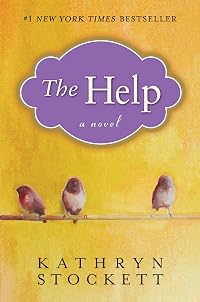
Overall, if the characters names were changed and Harper Lee’s name removed, it would be a good but flawed book, belonging on the shelf with “The Help.” I would say that the main character was annoyingly naïve about her dad. She looks at her father as a blameless, perfect man. Apparently, she has never been angry with him before or had reason to think he is not a saint. Then she uncovers a hateful secret about him, the blindfold is off, and she has a meltdown. Instead of acting on her anger right away, either by calling him out or running away, as I would imagine an educated, independent woman would do, she mopes and mopes. She had no problem arguing with her aunt or expressing herself to her would-be boyfriend, but her dad is off-limits. Of course, if you know her dad is Atticus Finch, the character we all consider blameless, it makes sense. Change the name and you have no idea why she worships her father so much.
It’s a brave book, about a setting that a lot of authors would never touch. Few people could really capture it. Although I hate Atticus’ morph, I agree with other reviews, that realistically, there were a lot of men just like him during this era. But I can see why the publisher wasn’t keen on the story at the time. Prior to the realty tv world we live in, people wanted characters who were idealized, heroes who were all good and villains who were all bad.
To me the flashbacks of Scout’s childhood really stand out and shine. I think the publisher made the right call asking for a novel about her childhood. “To Kill A Mockingbird” is still superior. I wanted a little more development and backstory of adult Scout and elder Atticus in “Go Set A Watchman.” If you haven’t read or seen “To Kill A Mockingbird,” I don’t know how well “Go Set A Watchman” would stand on its own. But it is a thought-provoking read and well worth your time. show less
It’s surreal. I feel like the Scout from “To Kill A Mockingbird” should wake up from a nightmare “Wizard of Oz” style and point to Atticus and say, “And you were there,” to Uncle Jack, “And you were there,” to Jem, “And you were kinda there,” and way over to Boo in corner, “And you weren’t there.”
Basically, you’ve probably already heard that readers travel down show more the rabbit hole when Scout returns to her hometown from the city to visit her aging father. While there, she reminisces about how the town has physically changed, her childhood, and teen years. There are some hilarious scenes about her further adventures with Jem and Dill, which ultimately make the book worth reading. However, the town and the people in it are also changing emotionally. Her high school crush is trying to press her into marriage, her heroes fall from grace, and she sees opposition to the rights of black citizens growing all around her. Scout is now an outsider, set like a watchman, as the people to whom she loves change.
Overall, if the characters names were changed and Harper Lee’s name removed, it would be a good but flawed book, belonging on the shelf with “The Help.” I would say that the main character was annoyingly naïve about her dad. She looks at her father as a blameless, perfect man. Apparently, she has never been angry with him before or had reason to think he is not a saint. Then she uncovers a hateful secret about him, the blindfold is off, and she has a meltdown. Instead of acting on her anger right away, either by calling him out or running away, as I would imagine an educated, independent woman would do, she mopes and mopes. She had no problem arguing with her aunt or expressing herself to her would-be boyfriend, but her dad is off-limits. Of course, if you know her dad is Atticus Finch, the character we all consider blameless, it makes sense. Change the name and you have no idea why she worships her father so much.
It’s a brave book, about a setting that a lot of authors would never touch. Few people could really capture it. Although I hate Atticus’ morph, I agree with other reviews, that realistically, there were a lot of men just like him during this era. But I can see why the publisher wasn’t keen on the story at the time. Prior to the realty tv world we live in, people wanted characters who were idealized, heroes who were all good and villains who were all bad.
To me the flashbacks of Scout’s childhood really stand out and shine. I think the publisher made the right call asking for a novel about her childhood. “To Kill A Mockingbird” is still superior. I wanted a little more development and backstory of adult Scout and elder Atticus in “Go Set A Watchman.” If you haven’t read or seen “To Kill A Mockingbird,” I don’t know how well “Go Set A Watchman” would stand on its own. But it is a thought-provoking read and well worth your time. show less
Once you recover from the shock that Atticus is a racist, you realize that this story is about Jean Louise’s going home and coming to terms with the truth about her father and the town she grew up in. Returning to Maycomb from New York City as a twenty six year old, Jean Louise expects to find things as she remembered them. What she finds instead is a town where there is no longer a place for her, and the father she once worshipped has betrayed her with his racist views.
The fact that it was written in the 50’s, doesn’t really make it any more palatable to hear Atticus’ racist pronouncements. It is even harder perhaps because, like Scout in Mockingbird, we may have idolized Attticus as a defender of African American people. I am show more worried that the existence of Watchman may taint the experience of reading Mockingbird. I hope that these revelations about Atticus do not invade the mind of students who are reading Mockingbird. show less
The fact that it was written in the 50’s, doesn’t really make it any more palatable to hear Atticus’ racist pronouncements. It is even harder perhaps because, like Scout in Mockingbird, we may have idolized Attticus as a defender of African American people. I am show more worried that the existence of Watchman may taint the experience of reading Mockingbird. I hope that these revelations about Atticus do not invade the mind of students who are reading Mockingbird. show less
Members
- Recently Added By
Published Reviews
ThingScore 43
Shockingly, in Ms. Lee’s long-awaited novel, “Go Set a Watchman” (due out Tuesday), Atticus is a racist who once attended a Klan meeting, who says things like “The Negroes down here are still in their childhood as a people.” Or asks his daughter: “Do you want Negroes by the carload in our schools and churches and theaters? Do you want them in our world?” The depiction of show more Atticus in “Watchman” makes for disturbing reading, and for “Mockingbird” fans, it’s especially disorienting. Scout is shocked to find, during her trip home, that her beloved father, who taught her everything she knows about fairness and compassion, has been affiliating with raving anti-integration, anti-black crazies, and the reader shares her horror and confusion. “Mockingbird” suggested that we should have compassion for outsiders like Boo and Tom Robinson, while “Watchman” asks us to have understanding for a bigot named Atticus. show less
added by rybie2
And so beneath Atticus’s style of enlightenment is a kind of bigotry that could not recognize itself as such at the time. The historical and human fallacies of the Agrarian ideology hardly need to be rehearsed now, but it should be said that these views were not regarded as ridiculous by intellectuals at the time. Indeed, Jean Louise/Lee herself, though passionately opposed to what her uncle show more and her father are saying, nevertheless accepts the general terms of the debate as the right ones. show less
added by danielx
Would it have been better for this earlier novel to have remained unpublished? Though it does not represent Harper Lee’s best work, it does reveal more starkly the complexity of Atticus Finch, her most admired character. “Go Set a Watchman” demands that its readers abandon the immature sentimentality ingrained by middle school lessons about the nobility of the white savior and the show more mesmerizing performance of Gregory Peck in the film adaptation of “To Kill a Mockingbird.” show less
added by rybie2
Lists

Historical Fiction
889 works; 91 members
Southern Fiction
212 works; 52 members

Female Author
1,235 works; 67 members

Recommend the 20 best books you've read in the last five years
2,168 works; 601 members

Unread books
1,063 works; 87 members

Top Five Books of 2015
811 works; 240 members

Bitter Southerner Summer Reading Roundup
198 works; 8 members

Books Read in 2015
3,299 works; 126 members

Books Read in 2023
5,547 works; 145 members

Phi Beta Kappa reading list
260 works; 8 members

Five star books
1,757 works; 107 members

Books Featured on Readers' Review of the Diane Rehm Show
161 works; 8 members

2016 Book Club Choices
52 works; 7 members
New Arrivals
3 works; 1 member

Books Read in 2016
6 works; 1 member

SHOULD Read Books!
354 works; 9 members
Books Read in 2016
4,666 works; 199 members
Overdue Podcast
806 works; 9 members
Books Set in Small Towns and Villages
278 works; 16 members

le donne raccontano
116 works; 1 member

Books With Complete Sentence Titles
374 works; 15 members

Historical Fiction Books
99 works; 5 members
Books Tagged Small Town
58 works; 1 member

Nov. 2015 new books
38 works; 1 member

The Worst Bestsellers Podcast
295 works; 5 members

Books Read in 2018
4,360 works; 110 members

Elaina's
183 works; 1 member

Books Read in 2026
1,929 works; 66 members

Books We Resisted Reading
178 works; 110 members

Best 21st Century Books (So Far)
670 works; 86 members
Talk Discussions
Past Discussions
Book that's like To Kill A Mockingbird but isn't that in Name that Book (April 2024)
Harper Lee's new release- Will you read it? in Girlybooks (February 2016)
Go Set a Watchman release day in Book talk (July 2015)
Recommendations on Go Set a Watchman? in Talk about LibraryThing (July 2015)
Author Information

56+ Works 104,070 Members
Nelle Harper Lee was born in Monroeville, Alabama on April 28, 1926. She studied law at the University of Alabama from 1945 to 1949, and spent a year as an exchange student in Oxford University, Wellington Square. She moved to New York where she worked as an airlines reservations clerk while pursuing a literary career. In 1959, she accompanied show more Truman Capote to Holcombe, Kansas, as a research assistant for Capote's novel In Cold Blood. Her first book, To Kill a Mockingbird, was published in 1960 and won the Pulitzer Prize for Fiction in 1961. The book was adapted as a feature film in 1962 and a London stage play in 1987. Her second book, Go Set a Watchman, was published in 2015. She died on February 19, 2016 at the age of 89. (Bowker Author Biography) show less
Some Editions
Awards and Honors
Awards
Distinctions
Notable Lists
Series

Belongs to Publisher Series
Work Relationships
Is contained in
Common Knowledge
- Canonical title
- Go Set a Watchman
- Original title
- Go Set a Watchman
- Original publication date
- 2015-07-14
- People/Characters
- Jean Louise "Scout" Finch; Atticus Finch; Henry Clinton (Hank); Alexandra Finch Hancock (Zandra); Calpurnia [in To Kill a Mockingbird]; Dr. John Hale Finch (Jack)
- Important places
- Maycomb, Alabama, USA
- Important events
- Civil Rights Movement, USA; Brown v. Board of Education of Topeka Kansas
- Dedication
- In memory of Mr. Lee and Alice
- First words
- Since Atlanta, she had looked out the dining-car window with a delight almost physical.
- Quotations
- "Every man's island, Jean Louise, every man's watchman, is his conscience." "There is no such thing as a collective conscious".
"Aunty," she said, cordially, "why don't you go pee in your hat?"
I need a watchman to lead me around and declare what he seeth every hour on the hour. I need a watchman to tell me this is what a man says but this is what he means, to draw a line down the middle and say here is this j... (show all)ustice and there is that justice and make me understand the difference. I need a watchman to go forth and proclaim to them all that twenty-six years is too long to play a joke on anybody, no matter how funny it is.
I was taught never to take advantage of anybody who was less fortunate than myself, whether he be less fortunate in brains, wealth, or social position; it meant anybody, not just Negroes. I was given to understand that the re... (show all)verse was to be despised. That is the way I was raised, by a black woman and a white man.
I detest the sound of it as much as its matter
A man can appear to be a part of something not-so-good on its face, but don't take it upon yourself to judge him unless you know his motives as well. A man can be boiling inside, but he knows a mild answer works better than s... (show all)howing his rage. A man can condemn his enemies, but it's wiser to know them.
It's bearable, Jean Louise, because you are your own person now.
... Mr. Stone rose and walked to the pulpit with Bible in hand. He opened it and said, "My text for today is taken from the twenty-first chapter of Isaiah, verse six: For thus hath the Lord said unto me, Go, set a watchma... (show all)n, let him declare what he seeth." Pg 95 - Last words
- (Click to show. Warning: May contain spoilers.)She went around the car, and as she slipped under the steering wheel, this time she was careful not to bump her head.
- Original language
- English
- Disambiguation notice
- This is a first draft of To Kill a Mockingbird that was published after Lee's death. The two books do not constitute a series nor is one a sequel to the other.
Classifications
Statistics
- Members
- 12,509
- Popularity
- 670
- Reviews
- 483
- Rating
- (3.33)
- Languages
- 27 — Arabic, Bosnian, Catalan, Chinese, Czech, Danish, Dutch, English, Estonian, Finnish, French, German, Hebrew, Italian, Korean, Lithuanian, Marathi, Norwegian (Bokmål), Norwegian, Polish, Portuguese, Romanian, Serbian, Slovenian, Spanish, Swedish, Turkish
- Media
- Paper, Audiobook, Ebook
- ISBNs
- 101
- ASINs
- 29