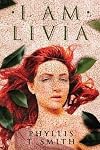
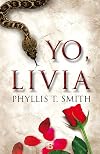
I Am Livia
by Phyllis T. Smith
On This Page
Description
Her life would be marked by scandal and suspicion, worship and adoration... At the tender age of fourteen, Livia Drusilla overhears her father and fellow aristocrats plotting the assassination of Julius Caesar. Proving herself an astute confidante, she becomes her father's chief political asset--and reluctantly enters into an advantageous marriage to a prominent military officer. Her mother tells her, "It is possible for a woman to influence public affairs," reminding Livia that--while she show more possesses a keen sense for the machinations of the Roman senate--she must also remain patient and practical. But patience and practicality disappear from Livia's mind when she meets Caesar's heir, Octavianus. At only eighteen, he displays both power and modesty. A young wife by that point, Livia finds herself drawn to the golden-haired boy. In time, his fortunes will rise as Livia's family faces terrible danger. But her sharp intellect--and her heart--will lead Livia to make an unbelievable choice: one that will give her greater sway over Rome than she could have ever foreseen. show lessTags
Recommendations















Member Reviews
I've never considered Livia, wife of Emperor Augustus, to be a very sympathetic figure. Popular culture tends to paint her as a cold, scheming woman but in Smith's hands, Livia is far more sympathetic, likable, and warm. As an enormous fan of Stephanie Dray's trilogy about Cleopatra's daughter, I pretty much thought I'd never like Livia. This book proves the power of a well-written novel: a reader, despite herself, can't resist a convincing main character and realistically articulated emotions and drama.
Opening in the 20s BC, I think, the novel is told by Livia at the end of her life. She begins with the event that shaped her life in many ways: the assassination of Julius Caesar. Her father marries her at 14 to a cousin to ensure his show more loyalty. And while Livia manages to make her marriage work, she is shocked by the attraction she feels for her family's enemy, Octavius -- Caesar's heir.
As Octavius wages a war of vengeance on those who betrayed his adoptive father, Livia struggles to hide her feelings for him. Still, they marry, under shocking circumstances, and Livia casts her lot with Octavius. As politically minded as he is, they make a powerful couple, and with her increased influence comes, unsurprisingly, controversy!
In Smith's hands, the complicated (and for me, unfamiliar) world of Roman politics and Octavius' reign becomes intimate, easy to understand, and deeply compelling. The Livia of cruel depravity and malicious machinations isn't seen here; instead, we have a young woman, deeply loyal to Rome and its citizens, passionate about improvement and urging her husband to be his best self.
This novel raced; Livia is a survivor, eyewitness to a tumultuous and violent time in Roman history. While the story isn't heavy with historical detail, there is a sense of place and era there, and Livia is an appealing heroine.
A great read; fans of ancient Rome will want this one, as well as those who are curious about Livia. This has some shocking drama and the promise of romance (without being an out-and-out romance), making it a lovely summer read -- deliciously escapist! show less
Opening in the 20s BC, I think, the novel is told by Livia at the end of her life. She begins with the event that shaped her life in many ways: the assassination of Julius Caesar. Her father marries her at 14 to a cousin to ensure his show more loyalty. And while Livia manages to make her marriage work, she is shocked by the attraction she feels for her family's enemy, Octavius -- Caesar's heir.
As Octavius wages a war of vengeance on those who betrayed his adoptive father, Livia struggles to hide her feelings for him. Still, they marry, under shocking circumstances, and Livia casts her lot with Octavius. As politically minded as he is, they make a powerful couple, and with her increased influence comes, unsurprisingly, controversy!
In Smith's hands, the complicated (and for me, unfamiliar) world of Roman politics and Octavius' reign becomes intimate, easy to understand, and deeply compelling. The Livia of cruel depravity and malicious machinations isn't seen here; instead, we have a young woman, deeply loyal to Rome and its citizens, passionate about improvement and urging her husband to be his best self.
This novel raced; Livia is a survivor, eyewitness to a tumultuous and violent time in Roman history. While the story isn't heavy with historical detail, there is a sense of place and era there, and Livia is an appealing heroine.
A great read; fans of ancient Rome will want this one, as well as those who are curious about Livia. This has some shocking drama and the promise of romance (without being an out-and-out romance), making it a lovely summer read -- deliciously escapist! show less
This novel is a fictional autobiography of Livia, the wife of Augustus Caesar. She looks back on her youth and her life as a young woman until the time when Augustus defeats Mark Antony and rules all of the Roman Empire. I don't know much about Roman history and this is the first novel of this kind that I have read, but I enjoyed it very much. I was never confused about it because although there is a lot of politics, the narration makes it easy to understand and there is a good flow.
I gather that many other books and the general reception make Livia into kind of a villain, but in this novel she is a sympathetic character most of the time. Although I did not agree with all of her actions, I understood her. Her relationships to the men in show more her life are important in this story, and I must say that I rooted for her and Augustus because their love was painted in a special, yet credible light. I wished the dialogue to be a bit more elaborate from time to time, and the middle part felt a bit lengthy to me, but I still loved this novel. show less
I gather that many other books and the general reception make Livia into kind of a villain, but in this novel she is a sympathetic character most of the time. Although I did not agree with all of her actions, I understood her. Her relationships to the men in show more her life are important in this story, and I must say that I rooted for her and Augustus because their love was painted in a special, yet credible light. I wished the dialogue to be a bit more elaborate from time to time, and the middle part felt a bit lengthy to me, but I still loved this novel. show less
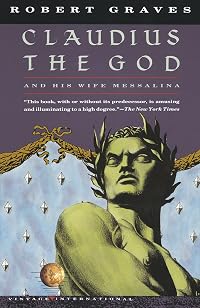
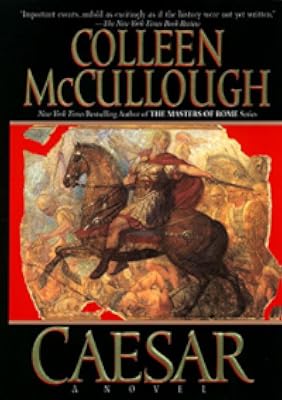
I downloaded I Am Livia as a part of the Kindle First program, and I read it immediately, finishing early this morning. I absolutely loved it. This is not surprising. I remember watching I Claudius with my parents in the 1970s, and later, when I read the books by Robert Graves, I loved them even more than the mini-series. I also devoured Colleen McCoullough's series of novels about ancient Rome. Livia has been much maligned in history, but I am not sure how much truth there is in these stories and how much is reactionary vilification toward a woman who lived outside the normal expectations for a woman of her age. This novel paints attempts to pain a more flattering portrait of a strong-willed and impetuous girl, a girl who has a sharp show more intelligence, a girl thrown into difficult circumstances, a girl who demands to be accepted for who she is without apology. It is not a difficult novel and I highly recommend it to people who like historical fiction with strong female characters. show less
Profoundly bland writing style matched with a dull heroine, this Livia is not for lovers of "I, Claudius" in either forms. Livia does not seem really of her time period--what Roman daughter of the time period would be surprised that her father was arranging her marriage?- but the anachronistic feel does not stop there but continues throughout the book. The author strips Livia of her cleverness and manipulative behavior and presents the reader with an uncritical portrait of Livia as the Mother of all Rome--not out any attempt, I feel, to present a revisionist view, or to craft a false narrative that will leave the reader guessing, but because such a surface portrayal is all the writer is capable of. When Livia and Octavius meet the book show more sinks even lower as their relationship is depicted in romance fiction terms of throbbing hearts (and other things) and golden curls. Despite all this the book still seems like a YA novel. show less
The day to day life and marriage of Livia to Octavian (Tavia) is conjecture; but the history of Rome, the Roman Civil Wars, and the foreign wars were very accurate. This is the 2nd account I have read of Livia, the first being I, Claudius many years ago. This novel paints Livia in a kinder, gentler light; although certainly no door mat. I do understand the machinations that took Rome from a republic to an empire better after this read. My only complaint is that the book informs readers that Octavia (Octavian's sister) raised the 3 surviving children of Antony and Cleopatra. Most historians agree that the oldest male, Alexander Helios was killed by Octavian very soon after parading him as a trophy in Rome. 391 pages 5 stars
As a lifelong fan of the BBC series I, Claudius, I have always thought of Livia (played by the incomparable Sian Phillips) as one of the most fascinating and complex women in history. I was very excited when I came across this book. But in this book Livia is just plain superficial. There's no great depth to her character, to her thinking, or to the dramatic story of the beginning of the Roman Empire. According to this novel she is NOT the deeply ambitious woman who poisons enough people to ensure her son becomes emperor. She's simply her husband's loving and chief helpmate. Even the dialog is dull and trite.
I much prefer the Livia of the Robert Graves books on which the series, I Claudius, was based. Now there's an intelligent woman who show more knew how to wield power.
Think of this book as a mildly interesting prequel if you want to know the story of Livia's early life and how she and Augustus met and married. As long as you don't really care that the book is not very well written, show less
I much prefer the Livia of the Robert Graves books on which the series, I Claudius, was based. Now there's an intelligent woman who show more knew how to wield power.
Think of this book as a mildly interesting prequel if you want to know the story of Livia's early life and how she and Augustus met and married. As long as you don't really care that the book is not very well written, show less
As a lifelong fan of the BBC series I, Claudius, I have always thought of Livia (played by the incomparable Sian Phillips) as one of the most fascinating and complex women in history. I was very excited when I came across this book. But in this book Livia is just plain superficial. There's no great depth to her character, to her thinking, or to the dramatic story of the beginning of the Roman Empire. According to this novel she is NOT the deeply ambitious woman who poisons enough people to ensure her son becomes emperor. She's simply her husband's loving and chief helpmate. Even the dialog is dull and trite.
I much prefer the Livia of the Robert Graves books on which the series, I Claudius, was based. Now there's an intelligent woman who show more knew how to wield power.
Think of this book as a mildly interesting prequel if you want to know the story of Livia's early life and how she and Augustus met and married. As long as you don't really care that the book is not very well written, show less
I much prefer the Livia of the Robert Graves books on which the series, I Claudius, was based. Now there's an intelligent woman who show more knew how to wield power.
Think of this book as a mildly interesting prequel if you want to know the story of Livia's early life and how she and Augustus met and married. As long as you don't really care that the book is not very well written, show less
Members
- Recently Added By
Lists

Books Read in 2020
4,379 works; 123 members
Author Information

2 Works 419 Members
Common Knowledge
- Canonical title
- I Am Livia
- Original publication date
- 2000-05-01
- People/Characters
- Livia Drusilla; Augustus Caesar; Tiberius Caesar, Roman Emperor; Sextus Pompeius; Mark Antony; Marcus Agrippa (show all 7); Cicero
- Important places
- Rome, Roman Empire; Rome, Italy; Naples, Campania, Italy; Sparta, Greece; Perugia, Umbria, Italy; Taranto, Apulia, Italy
- Important events
- Assassination of Julius Caesar; Reign of Augustus Caesar
- Original language
- English
Classifications
Statistics
- Members
- 351
- Popularity
- 90,302
- Reviews
- 25
- Rating
- (3.76)
- Languages
- English, Spanish
- Media
- Paper, Audiobook, Ebook
- ISBNs
- 7
- ASINs
- 3