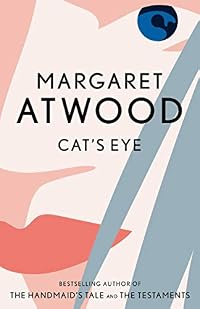
Cat's Eye
by Margaret Atwood
On This Page
Description
It is the story of Elaine Risley, a controversial painter who returns to the city of her youth for a retrospective of her art. Engulfed by vivid images of the past, she reminisces about a trio of girls who initiated her into the fierce politics of childhood and its secret world of friendship, longing, and betrayal. Elaine must come to terms with her own identity as a daughter, a lover, an artist, and a woman--but above all she must seek release from her haunting memories.Tags
Recommendations






Member Recommendations


Member Reviews
Cat's Eye is all about Elaine Risley and her passage through life. The opening sentences describe the structure the reader can expect from the book: "Time is not a line but a dimension, like the dimensions of space. If you can bend space you can bend time also, and if you knew enough and could move faster than light you could travel backward and exist in two places at once." We will exist in two places at once with Elaine - in her present-day trip to Toronto for a retrospective show of her paintings, and in another kind of retrospective: that of her life, beginning at about age 6. Child-Elaine has trouble navigating the world of friendships, and Adult-Elaine feels the reverberations even many years later.
It's a very quiet book - not show more that nothing happens, but they're the kinds of things that happen in ordinary lives. People are thrown together; people drift apart. Small joys touch us; larger tragedies do as well. But through all of it is Atwood's beautiful and engaging writing, and her statements of truth that sometimes sneak up on you just to connect with a thud. For me, the weakest part of the book was Elaine's time in her 20s, but it was more than made up for by the rest of the book. The parts about Elaine's early years particularly struck me, I assume because I recognized the feelings, if not the time period or specific events.
Recommended for: anyone who's ever had the uneasy feeling that they might not fit in with their friends, anyone who still smarts from remarks made years ago, people who know life is messy and complicated and sometimes hard to understand while you're living it.
Quote: "...I do of course have a real life. I sometimes have trouble believing in it, because it doesn't seem like the kind of life I could ever get away with, or deserve. This goes along with another belief of mine: that everyone else my age is an adult, whereas I am merely in disguise." show less
It's a very quiet book - not show more that nothing happens, but they're the kinds of things that happen in ordinary lives. People are thrown together; people drift apart. Small joys touch us; larger tragedies do as well. But through all of it is Atwood's beautiful and engaging writing, and her statements of truth that sometimes sneak up on you just to connect with a thud. For me, the weakest part of the book was Elaine's time in her 20s, but it was more than made up for by the rest of the book. The parts about Elaine's early years particularly struck me, I assume because I recognized the feelings, if not the time period or specific events.
Recommended for: anyone who's ever had the uneasy feeling that they might not fit in with their friends, anyone who still smarts from remarks made years ago, people who know life is messy and complicated and sometimes hard to understand while you're living it.
Quote: "...I do of course have a real life. I sometimes have trouble believing in it, because it doesn't seem like the kind of life I could ever get away with, or deserve. This goes along with another belief of mine: that everyone else my age is an adult, whereas I am merely in disguise." show less
Atwood is clever in describing typical friendships between girls with the simple line, "we think we are all friends". Young Elaine Risley has all the angst of a young girl growing up in the bullseye of bullying; something that haunts the adult Elaine when she returns back to her childhood city of Toronto to put on an art show. Elaine confronts the painful memories of the various traumas of her childhood with every passing landmark. Most prominent from her childhood are three girls who at turns tormented and loved Elaine with equal parts malice and warmth. As with all young friendships, Elaine was an easy target. She was desperate to please; bullied into thinking she was never good enough for the friendships she begged to have. One of show more the saddest moments for me was when Elaine contemplated suicide, not because she wanted to end her life, but because she knew how much her death would please an enemy.
As a teenager, Elaine discovered she had a sharp tongue which becomes her best defense and her most valuable weapon. Her enemies fall away not because they leave her, but because she lets them go.
As an adult, Elaine learns that the monsters of our youth can shrink to the harmless size of dust balls under the bed; their teeth and claws can dull upon adult scrutiny. But not all of them go away, especially when you do not want them to. show less
As a teenager, Elaine discovered she had a sharp tongue which becomes her best defense and her most valuable weapon. Her enemies fall away not because they leave her, but because she lets them go.
As an adult, Elaine learns that the monsters of our youth can shrink to the harmless size of dust balls under the bed; their teeth and claws can dull upon adult scrutiny. But not all of them go away, especially when you do not want them to. show less
I was pleased to discover this book at a book fair last year as it is one of Atwood's earlier novels. It has the ring of truth about it and I soon found that there is a common theme with the author's own life, especially the early years.
The book moves between two timelines. In the 1980's, Elaine Risley is returning to Toronto for the opening of her art exhibition. Now about 50, she is confronted with the memories of her childhood lived in this city. Her first 10 years were very transient as her father an entomologist spent much time in the wilderness researching and collecting samples for his studies. His family went with him, his wife, son and daughter. This reflects the author's own childhood. The mother home schooled the children and show more it wasn't until her father accepted a teaching post, at the university, that they lived in a house which was still in the process of being completed and attended school. The story looks at her overtures to be accepted by a group of girls but the reader soon realises, as does Elaine, that she is being manipulated and bullied. The story follows her development until she decides to become a painter. Her art reflects, in a surrealist style, several of her early relationships and like much in the 60's and 70's also has a growing feminist theme. I found myself wanting to see these pieces of art even though they would be imaginary.
I found in this book, a real connection, like other books of her early writing years. That sense when you return to the place you grew up after a long absence and everything has changed and it now only exists in your own memories. A very thought provoking book in so many ways. show less
The book moves between two timelines. In the 1980's, Elaine Risley is returning to Toronto for the opening of her art exhibition. Now about 50, she is confronted with the memories of her childhood lived in this city. Her first 10 years were very transient as her father an entomologist spent much time in the wilderness researching and collecting samples for his studies. His family went with him, his wife, son and daughter. This reflects the author's own childhood. The mother home schooled the children and show more it wasn't until her father accepted a teaching post, at the university, that they lived in a house which was still in the process of being completed and attended school. The story looks at her overtures to be accepted by a group of girls but the reader soon realises, as does Elaine, that she is being manipulated and bullied. The story follows her development until she decides to become a painter. Her art reflects, in a surrealist style, several of her early relationships and like much in the 60's and 70's also has a growing feminist theme. I found myself wanting to see these pieces of art even though they would be imaginary.
I found in this book, a real connection, like other books of her early writing years. That sense when you return to the place you grew up after a long absence and everything has changed and it now only exists in your own memories. A very thought provoking book in so many ways. show less
Before there was Mean GIrls, there was Cat's Eye. Trying to recapture her childhood, parents, and an era, the protagonist sets them free. Coming of age for postwar (Anglophile yet changing) girl inToronto ("I am happy as a clam: hard-shelled, firmly closed") during early stages of feminism and 'contemporary' art, showing we are products of our time in varying degrees but also exist independently of it. Cordelia/Elaine dynamic = interchangable effects between frenemies, it is not our friends who define us but our enemies. "I'm not afraid of seeing Cordelia. I'm afriad of being Cordelia. Because in some way we changed places, and I've forgotten when." Read this book to start the flow of one's own childhood memories: immediacy of tastes, show more sounds, smells, sights, sensations and feelings points to time-space continuum, both unnerving and comforting. "You don't look back along time but down through it, like water. Sometimes ths comes to the surface, sometimes that, sometimes nothing. Nothing goes away." Also the acquiesence/suprise of aging: "We thought we were running away from the grown-ups, and now we are the grown-ups: this is the crux of it." How can other people age and places change, while we think of ourselves as staying the same? show less
Cat’s Eye by Margaret Atwood was originally published in 1988 and is a story in which the main character, artist Elaine Risley looks back upon her childhood and growing up years with intensity and wit. As Elaine returns to Toronto to attend a retrospective of her work, her memories of growing up alongside her friend, Cordelia and her sharp observations about the city are vivid and evocative. We gradually become aware of her bitterness and pain as she delves into the complexity of this relationship, and how friendships can be layered, on one hand this is someone who understands you perfectly while on the other this is a person, who can dish out the emotional torment, and skewer you in your weak spots. There is a line in the book that show more goes, “ We have been shark to one another, but also lifeboat.” I think many women have had the experience of a relationship like this.
Cat’s Eye is a powerful character study that is doled out through glimpses of Elaine’s life through her vividly recounted memories. Atwood captures her subject perfectly, and the story has a feeling of becoming an introspective journey for both the author and the reader. This author has the skill and ability to deliver just the right amount of story, leaving much up to the reader to fill in, making her passages personal and meaningful to all.
Cat’s Eye is a book filled with imagery and reflections on women, their relationships and how they deal with life. For me this was an engaging and worthwhile read and while there are other Atwood books that I personally prefer, Cat’s Eye is memorable. show less
Cat’s Eye is a powerful character study that is doled out through glimpses of Elaine’s life through her vividly recounted memories. Atwood captures her subject perfectly, and the story has a feeling of becoming an introspective journey for both the author and the reader. This author has the skill and ability to deliver just the right amount of story, leaving much up to the reader to fill in, making her passages personal and meaningful to all.
Cat’s Eye is a book filled with imagery and reflections on women, their relationships and how they deal with life. For me this was an engaging and worthwhile read and while there are other Atwood books that I personally prefer, Cat’s Eye is memorable. show less
What are the long-term ramifications of being bullied as a child? Margaret Atwood’s brilliant literary fiction addresses this question from the viewpoint of an adult reflecting back on her life. Elaine Risley, an accomplished painter, has returned to her childhood home in Toronto for a retrospective exhibition of her artwork. When she was eight years old, she and her family settled in Toronto after living a nomadic life with her entomologist father and non-conformist mother, forming friendships with other girls for the first time. Elaine meets a trio of girls who, prompted by ringleader Cordelia, bully her relentlessly, causing lingering self-esteem issues. The first half of the book captures the intense pain of abuse by peers. The show more second half shows how this pain carries over into her adult relationships. Themes include memory, time, identity, pressure to conform, and the long-lasting impact of bullying. References to science, particularly biology and physics, add a layer of depth and meaning to those inclined to ponder the possible connections.
Atwood is adept at detailed descriptions of time (1940’s – 1980’s) and place (Vancouver and Toronto). The characters are well-drawn, believable, and evolve over time. She uses vivid language in the same manner an artist might uses vivid colors to evoke an emotional reaction. She has created a powerful narrative that conveys the importance of self-knowledge, avoiding pressures to conform (and to be liked), and making authentic connections to others. Unfortunately, children, and even young adults, often lack this self-insight and the ability to distinguish true friendships from abusive relationships. This novel spoke to me on a personal level. Content warnings include abortion, infidelity, self-harm, and emotional and physical abuse. Recommended to fans of literary fiction or character-driven novels that shed light on the human psyche. show less
Atwood is adept at detailed descriptions of time (1940’s – 1980’s) and place (Vancouver and Toronto). The characters are well-drawn, believable, and evolve over time. She uses vivid language in the same manner an artist might uses vivid colors to evoke an emotional reaction. She has created a powerful narrative that conveys the importance of self-knowledge, avoiding pressures to conform (and to be liked), and making authentic connections to others. Unfortunately, children, and even young adults, often lack this self-insight and the ability to distinguish true friendships from abusive relationships. This novel spoke to me on a personal level. Content warnings include abortion, infidelity, self-harm, and emotional and physical abuse. Recommended to fans of literary fiction or character-driven novels that shed light on the human psyche. show less
What it's about
"We are survivors of each other. We have been shark to one another, but also lifeboat. That counts for something."
The power of abusive friendships and relationships is the theme of this book, though not all the relationships are tainted, so it's not depressing and at times it's quite amusing (e.g. discerning the mysteries of puberty).
There is also a fair bit about art and artists, with a dash of early feminism.
Plot structure
Elaine is an artist in her late fifties/early sixties revisiting Toronto for the opening of a retrospective of her work. This brings back vivid memories of her childhood, teens and twenties. The sections set in the past are told chronologically, and interspersed by the contemporary story of a few show more days in Toronto. Gradually all the threads tie up, particularly near the end when contrasting a curator’s descriptions of Elaine’s works with her own explanations, many of which arise from incidents described earlier in the book. However, “I can no longer control these paintings, or tell them what to mean. Whatever energy they have came out of me. I’m what’s left over.”
Her early years were peripatetic but not unhappy: the family travel with her entomologist father. When she is seven, he takes a university post and they settle in the Toronto suburbs, but her family is rather eccentric, and she doesn't quite fit in, exacerbated by her being a tomboy and the fact she’s never really had the opportunity to make friends before, so doesn’t know the unspoken rules.
Perhaps inevitably, Elaine becomes the victim of bullying, and the first overt instance is very cruel, although it involves no physical pain or nasty words. There is nothing to tell. “I have no black eyes, no bloody noses to report: C does nothing physical.”
The pull of bullies
I’ve never really been bullied, but the thoughts and self-analysis sound plausible.
Like so many victims, Elaine feels drawn to the bully: she “is my friend. She likes me. She wants to help me, they all do. They are my friends… I have never had any before and I’m terrified of losing them. I want to please. Hatred would have been easier… I would have known what to do. Hatred is clear, metallic, one-handed, unwavering; unlike love.” She reasons, “I will have to do better. But better at what?... I think they [bully’s older sisters] would be my allies if only they knew. Knew what? Even to myself I am mute.” She even gives things to her tormentors because “in the moment just before giving, I am loved” even though she has no doubt about the love of her own family.
Coping strategies
Elaine develops various coping strategies. She self-harms in a minor way (“the pain gave me something definite to think about”), adopts a talisman (the eponymous cat’s eye marble and the luck of a royal visit to the city) and in some ways, victimhood builds strength and also empathy. “I can sniff out hidden misery in others now.” She also escapes through art, especially of foreign places and discovers that “Fainting is like stepping sideways, out of your own body, out of your own time or into another time. When you wake up it’s later. Time has gone on without you.”
The most important question is only occasionally made explicit: how should parents handle things? When Elaine’s mother realises something of what’s going on, she tells her daughter to toughen up, in part because she doesn’t know what else to suggest. The church-going mother of the main bully has a far more alarming attitude, based on the fact that Elaine is a heathen.
Eventually Elaine finds the inner strength to walk away, “I can hear the hatred but also the need. They need me for this and I no longer need them.” Nevertheless, although they sometimes go for years without contact, the connection continues, though balance of their relationship alters at different times.
Adult consequences
I don’t know if all victims have the potential to become bullies, but Elaine occasionally has flashes of it in adulthood, “It disturbs me to learn I have hurt someone unintentionally. I want all my hurts to be intentional.” She is always more relaxed around boys (she has an older brother), “boys are my secret allies”. Conversely, “I enjoy pestering the girls in this minor, trivial way: it shows I am not like them” and in a bar with boys from the university art class, “I expect nothing from them. In truth I expect a lot. I expect to be accepted.”
As an adult, Elaine is moderately happy and successful, yet her past taints all her relationships to some extent. She also fears passing on her anxieties to her own daughters, “I felt I had to protect them from certain things about myself… But they didn’t seem to need that protection.” As a teenager, she didn’t want to know too much family history, even about apparently trivial things, “All this is known, but unimaginable. I also wish I did not know it. I want my father to be just my father, the way he has always been, not a separate person with an earlier, mythological life of his own. Knowing too much about other people puts you in their power, they have a claim on you, you are forced to understand their reasons for doing things and then you are weakened.”
Lines I liked
* ”Clothes lines are strung with… a display of soiled intimacy, which they [mothers] have washed and rinsed, plunging their hands into the grey curdled water."
* About knowing about her brother’s secret girlfriend, “Knowing this secret… makes me feel important in a way. But it’s a negative importance. I can know because I don’t count.”
* “What they call a shopping complex, as if shopping were a psychic disease.”
* In a department store, “the air is saturated with the stink of perfumes at war”.
* “All fathers except mine are invisible in day time; day time is ruled by mothers. But fathers come out at night. Darkness brings home the fathers, with their real, unspeakable power. There is more to them than meets the eye.”
* On the difference between faith and knowledge: Elaine thought she had a vision, but next morning was less certain, “I’m not sure now, that it really was the Virgin Mary. I believe it but I no longer know it.”
* “Art is what you can get away with said somebody or other, which makes it sound like shop-lifting… A hijacking of the visual.”
* “My name has solidified around me, with time. I think of it as tough but pliable now, like a well-worn glove.”
* “Somehow the war never ended after all, it just broke up into pieces and got scattered, it gets in everywhere, you can’t shut it out.”
* On giving money to a beggar, “It’s obscene to have such power; also to feel so powerless.”
* “Craziness was considered funny, like all other things that were in reality frightening and profoundly shameful.”
* An antique shop has “one-time throwouts, recycled as money”.
* The angry sex of a disintegrating relationship: “We make love, if that is any longer the term for it. It’s not shaped like love, not coloured like it, but harsh, war-coloured, metallic. Things are being proved. Or repudiated.”
See also
A comment on my review of Zoe Heller's Notes on a Scandal (HERE), highlighting "toxic female friendship" made me realise the connection between the two books. show less
"We are survivors of each other. We have been shark to one another, but also lifeboat. That counts for something."
The power of abusive friendships and relationships is the theme of this book, though not all the relationships are tainted, so it's not depressing and at times it's quite amusing (e.g. discerning the mysteries of puberty).
There is also a fair bit about art and artists, with a dash of early feminism.
Plot structure
Elaine is an artist in her late fifties/early sixties revisiting Toronto for the opening of a retrospective of her work. This brings back vivid memories of her childhood, teens and twenties. The sections set in the past are told chronologically, and interspersed by the contemporary story of a few show more days in Toronto. Gradually all the threads tie up, particularly near the end when contrasting a curator’s descriptions of Elaine’s works with her own explanations, many of which arise from incidents described earlier in the book. However, “I can no longer control these paintings, or tell them what to mean. Whatever energy they have came out of me. I’m what’s left over.”
Her early years were peripatetic but not unhappy: the family travel with her entomologist father. When she is seven, he takes a university post and they settle in the Toronto suburbs, but her family is rather eccentric, and she doesn't quite fit in, exacerbated by her being a tomboy and the fact she’s never really had the opportunity to make friends before, so doesn’t know the unspoken rules.
Perhaps inevitably, Elaine becomes the victim of bullying, and the first overt instance is very cruel, although it involves no physical pain or nasty words. There is nothing to tell. “I have no black eyes, no bloody noses to report: C does nothing physical.”
The pull of bullies
I’ve never really been bullied, but the thoughts and self-analysis sound plausible.
Like so many victims, Elaine feels drawn to the bully: she “is my friend. She likes me. She wants to help me, they all do. They are my friends… I have never had any before and I’m terrified of losing them. I want to please. Hatred would have been easier… I would have known what to do. Hatred is clear, metallic, one-handed, unwavering; unlike love.” She reasons, “I will have to do better. But better at what?... I think they [bully’s older sisters] would be my allies if only they knew. Knew what? Even to myself I am mute.” She even gives things to her tormentors because “in the moment just before giving, I am loved” even though she has no doubt about the love of her own family.
Coping strategies
Elaine develops various coping strategies. She self-harms in a minor way (“the pain gave me something definite to think about”), adopts a talisman (the eponymous cat’s eye marble and the luck of a royal visit to the city) and in some ways, victimhood builds strength and also empathy. “I can sniff out hidden misery in others now.” She also escapes through art, especially of foreign places and discovers that “Fainting is like stepping sideways, out of your own body, out of your own time or into another time. When you wake up it’s later. Time has gone on without you.”
The most important question is only occasionally made explicit: how should parents handle things? When Elaine’s mother realises something of what’s going on, she tells her daughter to toughen up, in part because she doesn’t know what else to suggest. The church-going mother of the main bully has a far more alarming attitude, based on the fact that Elaine is a heathen.
Eventually Elaine finds the inner strength to walk away, “I can hear the hatred but also the need. They need me for this and I no longer need them.” Nevertheless, although they sometimes go for years without contact, the connection continues, though balance of their relationship alters at different times.
Adult consequences
I don’t know if all victims have the potential to become bullies, but Elaine occasionally has flashes of it in adulthood, “It disturbs me to learn I have hurt someone unintentionally. I want all my hurts to be intentional.” She is always more relaxed around boys (she has an older brother), “boys are my secret allies”. Conversely, “I enjoy pestering the girls in this minor, trivial way: it shows I am not like them” and in a bar with boys from the university art class, “I expect nothing from them. In truth I expect a lot. I expect to be accepted.”
As an adult, Elaine is moderately happy and successful, yet her past taints all her relationships to some extent. She also fears passing on her anxieties to her own daughters, “I felt I had to protect them from certain things about myself… But they didn’t seem to need that protection.” As a teenager, she didn’t want to know too much family history, even about apparently trivial things, “All this is known, but unimaginable. I also wish I did not know it. I want my father to be just my father, the way he has always been, not a separate person with an earlier, mythological life of his own. Knowing too much about other people puts you in their power, they have a claim on you, you are forced to understand their reasons for doing things and then you are weakened.”
Lines I liked
* ”Clothes lines are strung with… a display of soiled intimacy, which they [mothers] have washed and rinsed, plunging their hands into the grey curdled water."
* About knowing about her brother’s secret girlfriend, “Knowing this secret… makes me feel important in a way. But it’s a negative importance. I can know because I don’t count.”
* “What they call a shopping complex, as if shopping were a psychic disease.”
* In a department store, “the air is saturated with the stink of perfumes at war”.
* “All fathers except mine are invisible in day time; day time is ruled by mothers. But fathers come out at night. Darkness brings home the fathers, with their real, unspeakable power. There is more to them than meets the eye.”
* On the difference between faith and knowledge: Elaine thought she had a vision, but next morning was less certain, “I’m not sure now, that it really was the Virgin Mary. I believe it but I no longer know it.”
* “Art is what you can get away with said somebody or other, which makes it sound like shop-lifting… A hijacking of the visual.”
* “My name has solidified around me, with time. I think of it as tough but pliable now, like a well-worn glove.”
* “Somehow the war never ended after all, it just broke up into pieces and got scattered, it gets in everywhere, you can’t shut it out.”
* On giving money to a beggar, “It’s obscene to have such power; also to feel so powerless.”
* “Craziness was considered funny, like all other things that were in reality frightening and profoundly shameful.”
* An antique shop has “one-time throwouts, recycled as money”.
* The angry sex of a disintegrating relationship: “We make love, if that is any longer the term for it. It’s not shaped like love, not coloured like it, but harsh, war-coloured, metallic. Things are being proved. Or repudiated.”
See also
A comment on my review of Zoe Heller's Notes on a Scandal (HERE), highlighting "toxic female friendship" made me realise the connection between the two books. show less
Members
- Recently Added By
Lists

1001 Books You Must Read Before You Die
1,448 works; 1,131 members

The Guardian's 1000 Novels Everyone Must Read
1,005 works; 549 members

Best Contemporary Literary Fiction (Around the Last 30 Years)
388 works; 124 members
The Best of Canadian Literature
235 works; 32 members
Booker Prize
491 works; 62 members

Female Author
1,235 works; 65 members

Books Set in Canada
80 works; 16 members

Best Feminist Literature
188 works; 26 members

Recommend the 20 best books you've read in the last five years
2,167 works; 606 members

Favorite Coming of Age Novels.
164 works; 51 members
Female Protagonist
1,056 works; 56 members
20th Century Literature
1,161 works; 54 members
Booker Prize Shortlist: Titles Read
103 works; 10 members

Unread books
1,063 works; 86 members

Books I've Read More Than Once
602 works; 49 members

Best Psychological Fiction
81 works; 16 members
500 Great Books by Women
507 works; 60 members
Stream of Consciousness
87 works; 8 members
BBC Radio 4 Bookclub
304 works; 13 members

Dishonourable Mentions of 2013
189 works; 62 members

Women's Stories
88 works; 13 members
LibraryThingers' 1001 Books You Must Read Before You Die
442 works; 30 members

Blue Pyramid 1,276 Best Books of All Time
1,248 works; 32 members

A Novel Cure
742 works; 23 members
Literature About Women and Girls
391 works; 39 members
Books tagged favorites
390 works; 30 members

Books Read in 2014
2,341 works; 89 members
1980s
356 works; 23 members
Best First Lines
133 works; 8 members
Five star books
1,755 works; 107 members

Books Set in Canada
57 works; 10 members

One Book, Many Authors
441 works; 40 members

Man Booker Prize Longlist 1989
6 works; 2 members
Shannon's Read-Alikes List
71 works; 8 members

Contemporary Fiction
109 works; 7 members

Most Popular Books Tagged Ontario
35 works; 2 members

Mind Expanding Books by hackerkid
581 works; 8 members

Books Read in 2009
464 works; 11 members
Animals in the Title
498 works; 11 members

A's favorite novels
100 works; 3 members

Authors from Canada
18 works; 1 member

Most Popular Books Tagged Canada
34 works; 1 member

Books Read in 2026
1,665 works; 62 members

Books That Changed Our Perspective
423 works; 166 members

Mustich's 1000 Books to Read Before You Die: A Life Changing List
1,001 works; 18 members

AP Lit
363 works; 6 members
Best Books of the 20th Century
193 works; 5 members
Protagonists - Women
29 works; 2 members

Canada
42 works; 3 members

Women Writers
16 works; 2 members

Books About Girls
219 works; 17 members

Take Four Books
131 works; 1 member

You Couldn't Pay Me to Read That (Take 2)
203 works; 80 members
Talk Discussions
Past Discussions
1001 Group Read-March: Cat's Eye in 1001 Books to read before you die (March 2012)
Author Information

282+ Works 198,475 Members
Margaret Atwood was born on November 18, 1939 in Ottawa, Canada. She received a B.A. from Victoria College, University of Toronto in 1961 and an M.A. from Radcliff College in 1962. Her first book of verse, Double Persephone, was published in 1961 and was awarded the E. J. Pratt Medal. She has published numerous books of poetry, novels, story show more collections, critical work, juvenile work, and radio and teleplays. Her works include The Journals of Susanna Moodie, Power Politics, Cat's Eye, The Robber Bride, Morning in the Buried House, the MaddAdam trilogy, and The Heart Goes Last. She has won numerous awards including the Prince of Asturias Award for Literature, the Booker Prize in 2000 for The Blind Assassin, the Giller Prize and the Premio Mondello for Alias Grace, and the Governor General's Award in 1966 for The Circle Game and in 1986 for The Handmaid's Tale, which also won the very first Arthur C. Clarke Award in 1987. She won the PEN Pinter prize in 2016 for her political activism. She was awarded the 2016 PEN Pinter Prize for the outstanding literary merit of her body of work. (Bowker Author Biography) show less
Some Editions
Awards and Honors
Awards
Distinctions
Notable Lists
Series
Belongs to Publisher Series
Colecção Século XX (313)
Fischer Taschenbuch (11175)
Work Relationships
Is contained in
Has as a study
Has as a student's study guide
Common Knowledge
- Canonical title*
- Katteoog
- Original title
- Cat's Eye
- Original publication date
- 1988
- People/Characters
- Elaine Risley; Stephen; Ben; Jon; Cordelia; Grace Smeath (show all 14); Carol Campbell; Perdita "Perdie"; Miranda "Mirrie"; Miss Lumley; Mrs. Smeath; Mr. Smeath; Josef Hrbik; Mr. Banjeri
- Important places
- Toronto, Ontario, Canada; Vancouver, British Columbia, Canada
- Epigraph
- When the Tukanas cut off her head, the old woman collected her own blood in her hands and blew it towards the sun. "My soul enters you, too!" she shouted. Since then anyone who kills receives in his body, without wanting or k... (show all)nowing it, the soul of his victim.
—Eduardo Galeano
Memory of Fire: Genesis
Why do we remember the past, and not the future?
—Stephen W. Hawking
A Brief History of Time - Dedication
- This book is for S.
- First words
- Time is not a line but a dimension, like the dimensions of space.
- Quotations
- An eye for an eye only leads to more blindness.
Another belief of mine: that everyone else my age is an adult, whereas I am merely in disguise.
Little girls are cute and small only to adults. To one another they are not cute. They are life-sized. - Last words
- (Click to show. Warning: May contain spoilers.)It's old light, and there's not much of it. But it's enough to see by.
- Blurbers
- van Herk, Aritha
- Original language
- English
- Canonical DDC/MDS
- 813.54
- Canonical LCC
- PR9199.3.A8C38
*Some information comes from Common Knowledge in other languages. Click "Edit" for more information.
Classifications
Statistics
- Members
- 9,768
- Popularity
- 1,032
- Reviews
- 176
- Rating
- (3.94)
- Languages
- 21 — Catalan, Danish, Dutch, English, Estonian, Finnish, French, German, Hebrew, Hungarian, Italian, Norwegian (Bokmål), Norwegian, Polish, Romanian, Serbian, Slovak, Spanish, Swedish, Turkish, Portuguese (Portugal)
- Media
- Paper, Audiobook, Ebook
- ISBNs
- 103
- UPCs
- 1
- ASINs
- 27