Gödel’s Proof
by Ernest Nagel, James R. Newman (Author)
On This Page
Description
'Nagel and Newman accomplish the wondrous task of clarifying the argumentative outline of Kurt Godel's celebrated logic bomb.' - The GuardianIn 1931 the mathematical logician Kurt Godel published a revolutionary paper that challenged certain basic assumptions underpinning mathematics and logic. A colleague of physicist Albert Einstein, his theorem proved that mathematics was partly based on propositions not provable within the mathematical system. The importance of Godel's Proof rests upon show more its radical implications and has echoed throughout many fields show lessTags
Recommendations
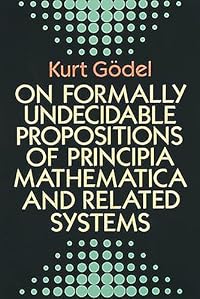
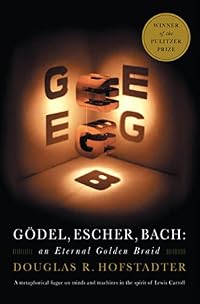
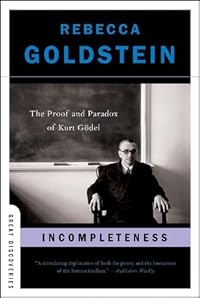





Member Recommendations
misericordia If you can understand Godel's proof "Life of PI" will be like a warm breeze on a shining ocean cruise.
03

The Annotated Gödel: A Reader's Guide to his Classic Paper on Logic and Incompleteness by Hal Prince
Kushagra_Sachan If one, upon having read Nagel and Newman's exposition now wishes to make an actual, deep dive into Gödel's original paper, Hal's book is probably the best place to do that.
Member Reviews
Nagel and Newman provide a nice, quick, and generally well written exposition of Godel's famous proof. This book can easily be read in an afternoon by anyone with the requisite background in logic.
They do a particularly nice job in their brief dissemination of the historical concerns that led up to the crisis in foundations in the late 19th and early 20th century. What's nice about this is that it puts Godel into context in a salient way. Godel without Hilbert is like Kant without Leibniz (and Wolff, I suppose). Given the narrow scope and short page count, Hilbert is covered well.
However, there are a couple of real problems with this book.
First, I do not believe that this book would really be that helpful for "the educated layman". show more Insofar as their target audience is concerned, the book is, perhaps, a failure. Why do I say this? Given its brevity, the authors are forced to introduce important bits of information without adequate exposition. For example, the notion of universal quantification makes its first appearance in the last twenty odd pages of the book and is explained in a sentence or two. This is fine for anyone that's had an intro logic course (and can recall what was covered) but is probably inadequate for the logical/mathematical novice. Furthermore, this example is just one case of something that occurs quite often throughout the book.
My second worry is that the actual mechanics of the proof are not presented lucidly. This is not altogether unexpected, but the fifteen pages or so that comprise the actual exposition of the proof seem to go by too quickly and sacrifice depth and clarity for readability and brevity. This may not be the authors' fault. I have doubts about whether or not one can successfully offer the sort of exegesis the authors are striving for. That is, I'm just not sure that anyone will ever pull off a lucid "Godel for Dummies". Similar problems plague Rebbecca Goldstein's attempt at this task in her recent Godel biography.
Final thought: I think this book would best serve the needs of a first year graduate student or advanced undergraduate in philosophy. For the student that has some background in logic (perhaps they've done a completeness proof for FOL or at least some proofs with quantifiers) but has yet to take a meta-logic course this book can provide a nicely structured overview of what the typical meta-logic course aims for. show less
They do a particularly nice job in their brief dissemination of the historical concerns that led up to the crisis in foundations in the late 19th and early 20th century. What's nice about this is that it puts Godel into context in a salient way. Godel without Hilbert is like Kant without Leibniz (and Wolff, I suppose). Given the narrow scope and short page count, Hilbert is covered well.
However, there are a couple of real problems with this book.
First, I do not believe that this book would really be that helpful for "the educated layman". show more Insofar as their target audience is concerned, the book is, perhaps, a failure. Why do I say this? Given its brevity, the authors are forced to introduce important bits of information without adequate exposition. For example, the notion of universal quantification makes its first appearance in the last twenty odd pages of the book and is explained in a sentence or two. This is fine for anyone that's had an intro logic course (and can recall what was covered) but is probably inadequate for the logical/mathematical novice. Furthermore, this example is just one case of something that occurs quite often throughout the book.
My second worry is that the actual mechanics of the proof are not presented lucidly. This is not altogether unexpected, but the fifteen pages or so that comprise the actual exposition of the proof seem to go by too quickly and sacrifice depth and clarity for readability and brevity. This may not be the authors' fault. I have doubts about whether or not one can successfully offer the sort of exegesis the authors are striving for. That is, I'm just not sure that anyone will ever pull off a lucid "Godel for Dummies". Similar problems plague Rebbecca Goldstein's attempt at this task in her recent Godel biography.
Final thought: I think this book would best serve the needs of a first year graduate student or advanced undergraduate in philosophy. For the student that has some background in logic (perhaps they've done a completeness proof for FOL or at least some proofs with quantifiers) but has yet to take a meta-logic course this book can provide a nicely structured overview of what the typical meta-logic course aims for. show less
The authors provide an overview of Kurt Gödel's 1931 proof regarding axiomatic demonstration in arithmetic. Gödel constructed his proof on the basis of Principia Mathematica by Whitehead and Russell, but this treatment does not presume a familiarity with that text. It does, however, place Gödel's work in the larger context of efforts to axiomatize arithmetic, an agenda notably defined by David Hilbert. The first five chapters set the stage for Gödel's proof in the history of mathematics and philosophy, while the fifth chapter discusses a critical idea underlying the operation of the proof. The long sixth chapter discusses the actual techniques and conclusions of the proof itself. A valuable final chapter outlines the larger show more implications and consequences, most especially and usefully discouraging misreadings which amount to "an invitation to despair or an excuse for mystery-mongering." (101) Interestingly, a secondary conclusion that they do support, is that algorithmic computers are unlikely ever to attain the equivalent of human consciousness. Gödel himself took his proof as support for a position of philosophical Realism, although it's not conclusive in that regard.
For anyone interested in the beauty of logic or the elegance of math, the mechanisms of Gödel's proof are impressive. This book by Nagel and Newman reads quickly--for a math book. The reader must be prepared to slow down and spend five to ten minutes on a page when getting into the thick of the mathematical concepts in use. The reward of doing so is an appreciation of an intellectual event that provided a turning-point in the philosophy of knowledge. show less
For anyone interested in the beauty of logic or the elegance of math, the mechanisms of Gödel's proof are impressive. This book by Nagel and Newman reads quickly--for a math book. The reader must be prepared to slow down and spend five to ten minutes on a page when getting into the thick of the mathematical concepts in use. The reward of doing so is an appreciation of an intellectual event that provided a turning-point in the philosophy of knowledge. show less
I remember my excitement when I read the first edition of this little gem back in 1999 (actually it was its Turkish translation). Being a young student of mathematics, it was impossible to resist reading a popular and clear account of maybe the most important theorem related to the fundamentals of axiomatic systems. After that came Hofstadter's "Gödel, Escher, Bach: An Eternal Golden Braid" which introduced more questions related to symbolic logical reasoning, artificial intelligence, cognitive science, and the consequences of Gödel's work in those ares. With that background and ten years after the second edition, it was truly an exciting second reading, a refresher that was both fun and putting lots of things into perspective. show more Hofstadter's foreword to this edition is a delight to read and ponder upon. On the other hand, I don't think this is a point strong enough to persuade most of the people who own the first edition anyway. But if you don't have the first edition and want a concise and clear explanation of what Gödel's work is all about then this book is definitely for you. show less
This is a non-formal, though still rigorous, presentation of the argument of Gödel's famous demonstration that will be accessible to anyone familiar with the basics of mathematical proof, logic, and number theory. By the end of the book, I acutally had the outline of Gödel's tricky self-referential argument all in my head at once, and though it faded quickly, I feel confident I could resurrect it with another reading. Nagel's description of the significance of the proof, as opposed to its mechanics, is less thorough, but that's a quibble. This slim book is a truly impressive feat of exposition.
A good followup to GEB, I am happy with the order I chose. I didn't realize how engaging GEB really was, with its intermittant stories, when I saw a drier version. But, drier is not really meant as an insult, I thought this book went more in depth and tried to formally explain a lot more. To me, after understanding GEB, I got a sense of amazement on the incompleteness proof and a feeling for the philosophical outcroppings. With this book, I feel like I was more ready to actually read the seminal paper and a understanding of the paper itself
What Gödel's Theorem really says is this: In a sufficiently rich FORMAL SYSTEM, which is strong enough to express/define arithmetic in it, there will always be correctly built sentences which will not be provable from the axioms. That, of course, means their contradictions will not be provable, either. So, in a word, the sentences, even though correctly built, will be INDEPENDENT OF the set of axioms. They are neither false nor true in the system. They are INDEPENDENT (cannot stress this enough). We want axioms to be independent of each other, for instance. That's because if an axiom is dependent on the other axioms, it can then be safely removed from the set and it'll be deduced as a theorem. The theory is THE SAME without it. Now, show more the continuum hypothesis, for instance, is INDEPENDENT of the Zermelo-Fraenkel axioms of the set theory (this was proved by Cohen). Therefore, it's OK to have two different set theories and they will be on an equal footing: the one with the hypothesis attached and the one with its contradiction. There'll be no contradictions in either of the theories precisely because the hypothesis is INDEPENDENT of the other axioms. Another example of such an unprovable Gödelian sentence is the 5. axiom of geometry about the parallel lines. Because of its INDEPENDENCE of the other axioms, we have 3 types of geometry: hyperbolic, parabolic and Euclidean. And this is the real core of The Gödel Incompleteness Theorem. By the way... What's even more puzzling and interesting is the fact that the physical world is not Euclidean on a large scale, as Einstein demonstrated in his Theory of Relativity. At least partially thanks to the works of Gödel we know that there are other geometries/worlds/mathematics possible and they would be consistent.
Without a clear and explicit reference to the concept of a formal system all that is said regarding Gödel's theorems is highly inaccurate, if not altogether wrong. For instance, if we say that Gödel's statement is true, after saying that Gödel's Theorem states that it can't be proved either true or false. Without adding "formally", that doesn't really make much sense. We'd only be only talking about axioms, which are only a part of a formal system, and totally neglecting talking about rules of inference, which are what the theorems really deal with.
By independent I mean 'logically independent', that is only a consequence of Gödel's theorem in first order languages, whose logic is complete. In second order arithmetic, the Peano axioms entail all arithmetical truths (they characterize up to isomorphism the naturals), so that no arithmetical sentence is logically independent of such axioms. It occurs, however, that second order logic is incomplete and there is no way to add to the axioms a set of inference rules able to recursively derive from the axioms all of their logical consequences. This is why Gödel's theorems holds in higher order languages too. In fact, this is how the incompleteness of higher order logic follows from Gödel's theorems.
What prompt me to re-read this so-called seminal book? I needed something to revive my memory because of Goldstein's book on Gödel lefting me wanting for more...I bet you were expecting Hofstadter’s book, right? Nah...Both Nagel’s & Newman’s along with Hofstadter’s are failed attempts at “modernising” what can’t be modernised from a mathematical point of view.
Read at your own peril. show less
Without a clear and explicit reference to the concept of a formal system all that is said regarding Gödel's theorems is highly inaccurate, if not altogether wrong. For instance, if we say that Gödel's statement is true, after saying that Gödel's Theorem states that it can't be proved either true or false. Without adding "formally", that doesn't really make much sense. We'd only be only talking about axioms, which are only a part of a formal system, and totally neglecting talking about rules of inference, which are what the theorems really deal with.
By independent I mean 'logically independent', that is only a consequence of Gödel's theorem in first order languages, whose logic is complete. In second order arithmetic, the Peano axioms entail all arithmetical truths (they characterize up to isomorphism the naturals), so that no arithmetical sentence is logically independent of such axioms. It occurs, however, that second order logic is incomplete and there is no way to add to the axioms a set of inference rules able to recursively derive from the axioms all of their logical consequences. This is why Gödel's theorems holds in higher order languages too. In fact, this is how the incompleteness of higher order logic follows from Gödel's theorems.
What prompt me to re-read this so-called seminal book? I needed something to revive my memory because of Goldstein's book on Gödel lefting me wanting for more...I bet you were expecting Hofstadter’s book, right? Nah...Both Nagel’s & Newman’s along with Hofstadter’s are failed attempts at “modernising” what can’t be modernised from a mathematical point of view.
Read at your own peril. show less
For a book that was supposed to simplify Godel's Proof it was exceptionally complex. No real thesis either; basically, the first 75% of the book is just setting up preliminaries and doesn't even deal directly with Godel's work. Reading this book gave me no further insights on Godel's challenging concepts. I recommend instead Godel, Escher, Bach, which is longer and only devotes a chapter's worth of study on the Proof, but does so in far simpler terms (the author of G.E.B. does the intro to this book.)
Members
- Recently Added By
Lists

Books to Recommend to My Niece/Nephew (The late teenage years)
29 works; 3 members

The Great Courses: An Introduction to Formal Logic
21 works; 1 member
Author Information

16+ Works 2,122 Members
Born in Czechoslovakia, Ernest Nagel emigrated to the United States and became a naturalized American citizen. In 1923 he graduated from the City College of New York, where he had studied under Morris Cohen, with whom he later collaborated to coauthor the highly successful textbook, An Introduction to Logic and Scientific Method (1934). Pursuing show more graduate studies at Columbia University, he received his Ph.D. in 1930. After a year of teaching at the City College of New York, he joined the faculty of Columbia University, where in 1955 he was named John Dewey Professor of Philosophy. In 1966 he joined the faculty of Rockefeller University. Nagel was one of the leaders in the movement of logical empiricism, conjoining Viennese positivism with indigenous American naturalism and pragmatism. In 1936 he published in the Journal of Philosophy the article "Impressions and Appraisals of Analytic Philosophy," one of the earliest sympathetic accounts of the works of Ludwig Wittgenstein, Moritz Schlick, and Rudolf Carnap intended for an American audience. Nagel was esteemed for his lucid exposition of the most recondite matters in logic, mathematics, and natural science, published in essays and book reviews for professional journals, scientific periodicals, and literary reviews. Two of his books, now out of print, consisted of collections of his articles, Sovereign Reason and Other Studies in the Philosophy of Science (1954) and Logic Without Metaphysics and Other Essays in the Philosophy of Science (1957). He also wrote a monograph, Principles of the Theory of Probability (1939) which appeared in the International Encyclopedia of Unified Science. In his major book-length work, The Structure of Science, Nagel directed his attention to the logic of scientific explanations. (Bowker Author Biography) show less

Some Editions
Series
Belongs to Publisher Series
Work Relationships
Common Knowledge
- Canonical title
- Gödel’s Proof
- Original title
- Gödels Proof
- Original publication date
- 2001
- People/Characters
- Kurt Gödel
- Dedication
- to
Bertrand Russell - First words
- In 1931 there appeared in a German scientific periodal a relatively short paper with the forbidding title “Über formal unentscheidbare Sätze der Principia Mathematica und verwandter Systeme” (“On formally undecideabl... (show all)e Propositions of Pricipia Mathematica and Related Systems”).
- Last words
- (Click to show. Warning: May contain spoilers.)The theorem does indicate that the structure and power of the human mind are far more complex and subtle than any non-living machine yet envisaged. Gödel’s own work is a remarakable example of such complexity and subtlety. It is an occasion, not for dejection, but for a renewed appreciation of the powers of creative reason.
Classifications
Statistics
- Members
- 1,597
- Popularity
- 14,156
- Reviews
- 15
- Rating
- (3.95)
- Languages
- 9 — Czech, Dutch, English, Estonian, French, German, Italian, Portuguese, Spanish
- Media
- Paper, Ebook
- ISBNs
- 46
- ASINs
- 26