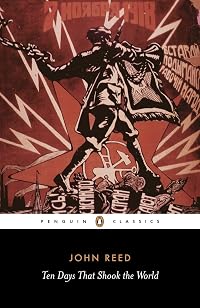
Ten Days that Shook the World
by John Reed
On This Page
Description
Ten Days that Shook the World is a first-hand account of Russia's October Revolution of 1917. Written in 1919 by the American journalist and socialist John Reed, it follows many of the prominent Bolshevik leaders of this time. Reed died the year after his book was finished and was buried in Moscow's Kremlin Wall Necropolis - one of the few Americans accorded this honor usually reserved for the Soviet's most prominent leaders..
Tags
Recommendations






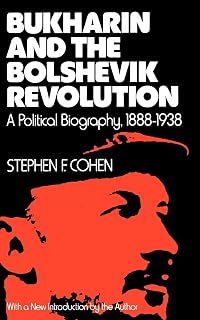
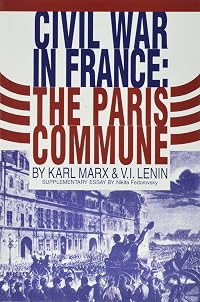
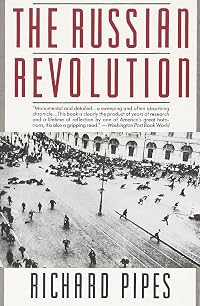








Member Recommendations
Member Reviews
This is a thrilling eyewitness account of the October Revolution in Russia in 1917. I’ll start with a vivid example of Reed’s writing:
“I went back to Petrograd riding on the front seat of an auto truck, driven by a workman and filled with Red Guards...
Across the horizon spread the glittering lights of the capital, immeasurably more splendid by night than by day, like a dike of jewels heaped on a barren plain.
The old workman who drove held the wheel in one hand, while with the other he swept the far-gleaming capital in an exultant gesture.
‘Mine!’ he cried, his face all alight. ‘All mine now! My Petrograd!’ ”
It is claimed by anti-Marxist historians that Lenin’s Bolshevik Party seized power against the wishes of the show more majority, and that this led directly to the horrors of Stalinism. But anyone who reads this book will see that this is not the case.
The bureaucratic tyranny of the Stalinist regime in Russia from the mid 1920s onwards, and of the later, similar regimes in Eastern Europe, China etc had/has nothing to do with genuine Marxism. These so-called “communist” states were/are actually state capitalist systems controlled by a ruling class of bureaucrats who betrayed the democratic aims of the 1917 Russian Revolution.
Reed writes that the Bolsheviks did NOT take power “by the organised violence of a small clique. If the masses all over Russia had not been ready for insurrection it must have failed.”
The February Revolution of 1917 had got rid of the Tsar, but it brought to power the Provisional Government which continued to take part in the bloodbath of World War One. Lenin argued for a new revolution, which eventually took place in October.
Lenin did not want to seize power in a coup by a small group. He wanted to win over the majority of the exploited and for THEM to take power. When Marx and Lenin talked about the “dictatorship of the proletariat”, they did not mean that Marxists would rule OVER the working class, they meant rule BY the working class. This workers’ state would then gradually be replaced by a classless society in which the state would “wither away”.
Marx’s model for a democratic workers’ state was the short-lived Paris Commune, where all officials were elected, subject to recall at any time, and paid only an average worker’s wage; and where the army and police were replaced by a workers’ militia. Lenin’s idea was that the soviets (workers’ councils) would also follow this highly democratic model. Reed's book shows how democratic the soviets were in their early days.
October would only have been just a "coup" if the Bolsheviks had taken power without majority support. In fact they only took power when they had won a majority on the soviets, with the previous majority of SRs and Mensheviks having been voted out. Even the Menshevik Martov admitted that the workers were solidly behind the Bolsheviks by October.
Lenin’s idea was that the Bolshevik party should compete with other parties on the soviets. The fact that the soviets later ended up as being a one-party system was a sign of the FAILURE of the revolution: it was not what Lenin had intended.
Lenin expected the Russian Revolution to spark off revolutions in other countries. (Indeed there was a failed revolution in Germany.) But the isolation of the Russian Revolution, the horrors of the Civil War initiated by the “Whites” and intervention by foreign powers in support of the White armies combined to destroy the foundations of the new regime.
It is claimed by anti-Marxist historians that Leninism led directly to Stalinism. But Stalin actually had to DESTROY the last vestiges of genuine Leninism in order to consolidate his counter-revolution. Incidentally, given that it was the isolation of the Russian Revolution which ultimately led to its demise under Stalin, it was not the politics of Lenin's Bolsheviks which led to Stalinism, it was the LACK of mass Leninist parties in other countries.
After Lenin’s death Trotsky kept alive the genuine Marxist idea that socialism means workers’ democracy, but unfortunately he clung to the idea that Russia had become a degenerated workers’ state, whereas in fact it had become under Stalin a bureaucratic state capitalist regime.
Marx argued that a revolution was necessary in order to achieve socialism for two reasons: firstly, because the ruling class would not give up power peacefully; and secondly, because it was by going through the experience of class struggle that the working class’s ideas would change on a mass scale and the majority would be won over to socialist ideas and become “fitted to found society anew.”
Reed’s book shows precisely this changing of ideas on a mass scale. No wonder Lenin wrote a Foreword for the book in 1919, stating: “Unreservedly do I recommend it to the workers of the world.” show less
“I went back to Petrograd riding on the front seat of an auto truck, driven by a workman and filled with Red Guards...
Across the horizon spread the glittering lights of the capital, immeasurably more splendid by night than by day, like a dike of jewels heaped on a barren plain.
The old workman who drove held the wheel in one hand, while with the other he swept the far-gleaming capital in an exultant gesture.
‘Mine!’ he cried, his face all alight. ‘All mine now! My Petrograd!’ ”
It is claimed by anti-Marxist historians that Lenin’s Bolshevik Party seized power against the wishes of the show more majority, and that this led directly to the horrors of Stalinism. But anyone who reads this book will see that this is not the case.
The bureaucratic tyranny of the Stalinist regime in Russia from the mid 1920s onwards, and of the later, similar regimes in Eastern Europe, China etc had/has nothing to do with genuine Marxism. These so-called “communist” states were/are actually state capitalist systems controlled by a ruling class of bureaucrats who betrayed the democratic aims of the 1917 Russian Revolution.
Reed writes that the Bolsheviks did NOT take power “by the organised violence of a small clique. If the masses all over Russia had not been ready for insurrection it must have failed.”
The February Revolution of 1917 had got rid of the Tsar, but it brought to power the Provisional Government which continued to take part in the bloodbath of World War One. Lenin argued for a new revolution, which eventually took place in October.
Lenin did not want to seize power in a coup by a small group. He wanted to win over the majority of the exploited and for THEM to take power. When Marx and Lenin talked about the “dictatorship of the proletariat”, they did not mean that Marxists would rule OVER the working class, they meant rule BY the working class. This workers’ state would then gradually be replaced by a classless society in which the state would “wither away”.
Marx’s model for a democratic workers’ state was the short-lived Paris Commune, where all officials were elected, subject to recall at any time, and paid only an average worker’s wage; and where the army and police were replaced by a workers’ militia. Lenin’s idea was that the soviets (workers’ councils) would also follow this highly democratic model. Reed's book shows how democratic the soviets were in their early days.
October would only have been just a "coup" if the Bolsheviks had taken power without majority support. In fact they only took power when they had won a majority on the soviets, with the previous majority of SRs and Mensheviks having been voted out. Even the Menshevik Martov admitted that the workers were solidly behind the Bolsheviks by October.
Lenin’s idea was that the Bolshevik party should compete with other parties on the soviets. The fact that the soviets later ended up as being a one-party system was a sign of the FAILURE of the revolution: it was not what Lenin had intended.
Lenin expected the Russian Revolution to spark off revolutions in other countries. (Indeed there was a failed revolution in Germany.) But the isolation of the Russian Revolution, the horrors of the Civil War initiated by the “Whites” and intervention by foreign powers in support of the White armies combined to destroy the foundations of the new regime.
It is claimed by anti-Marxist historians that Leninism led directly to Stalinism. But Stalin actually had to DESTROY the last vestiges of genuine Leninism in order to consolidate his counter-revolution. Incidentally, given that it was the isolation of the Russian Revolution which ultimately led to its demise under Stalin, it was not the politics of Lenin's Bolsheviks which led to Stalinism, it was the LACK of mass Leninist parties in other countries.
After Lenin’s death Trotsky kept alive the genuine Marxist idea that socialism means workers’ democracy, but unfortunately he clung to the idea that Russia had become a degenerated workers’ state, whereas in fact it had become under Stalin a bureaucratic state capitalist regime.
Marx argued that a revolution was necessary in order to achieve socialism for two reasons: firstly, because the ruling class would not give up power peacefully; and secondly, because it was by going through the experience of class struggle that the working class’s ideas would change on a mass scale and the majority would be won over to socialist ideas and become “fitted to found society anew.”
Reed’s book shows precisely this changing of ideas on a mass scale. No wonder Lenin wrote a Foreword for the book in 1919, stating: “Unreservedly do I recommend it to the workers of the world.” show less
Told by the young American social revolutionary on ground in Russia during the revolution this is probably as detailed book of the events taking place in Petrograd and Moscow during the crucial period of the revolution as we will ever have.
Rise of the Bolshevik's to power was not a clean cut by any means and we follow how various Socialist parties (Bolshevik's being on a a radical left end of the spectrum) fight for overall control of the army, navy and The Revolution. While it is very clear where the sympathies of John Reed are we are given views of the opposition (even conservatives and the ever "sneaky" and "backstabbing" bourgeoisie) although always with additional sarcastic comment or rather bad presentation of the speaker (bald, show more small in stature, horrible orator etc etc). But again we are given their views which is enormous contribution to narrative, especially considering that in today's political climate there is no way opposition would ever be given opportunity to say anything.
While underlying cause for the revolution were very difficult living conditions for more than three quarters of people in Imperial Russia nothing happened spontaneously (does anything?). It was not a unanimous rise of people and it took a while to get the correct direction and finally for Bolshevik's to take over everything.
As events progress there is no more place for compromise, enemies of the Bolshevik's are portrayed more and more like cartoon villains while Bolshevik's are portrayed as heroes for the people that are literary dropping tired off their feet but using superhuman strength to continuously push on 'til the ultimate victory.
And this would be my biggest issue with the book. But then again victors write history, right? I especially liked the author's faith in the fighters for the revolution (while clinging to the security pass in order not to be friendly fire casualty or forgotten casualty of conflict - in this remark very much like modern media but unlike them he truly believed in the cause and I understand him, you can never be too safe, right?).
That aside author manages to capture the hard living conditions of ordinary man, woman and child who are the true believers (and major victims int he entire process) here (politicians in this story (even through eyes of John Reed) are no different than politicians today - tyrants in disguise waiting for their chance to rule everyone else) - conditions under Tsar regime was horrendous for everyone not of noble origin and it was just matter of time when people will raise up in arms and bring everything down. When it comes to intelligentsia (or what we call today intellectuals) - they were as useful as they are today. Meaning they are not useful for anything but philosophizing and unable to do anything concrete. As a matter of fact when you think of politicians, intellectuals and so called experts (social or science) that are the loudest when situation is dire, we have exactly the same state today, right? Bunch of self-serving people that are only on the lookout for their own benefits and so disconnected from their very constituent that is sends chills through every sane men or women.
And this makes this book so sad and cautionary in retrospective. While reading it you cannot doubt the fire burning in John Reed and working class in general, their unwavering faith in Bolshevik party and their political goals. This makes it worse when one figures out that Bolsheviks will make a radical U turn in less than 20 years and defecate on all their ideals while doing it, even purging all the true believers, people aiming for true social justice and reforms, and finally ending up creating tyranny under the guise of democracy and democratic process.
This brings back events from the French Revolution, another revolution started due to outright atrocious conditions of life for lower classes that ate its own children in the end - deposed the King and his Court and somewhere in the process of passing power to the people (while using terror as everyday tool for solving political issues and venting out people that just did not get what they were promised) decided that Emperor is way to go and soon became all the opposite of what they fought for in the beginning.
As I see it only people benefiting from the revolution are people outside the countries where revolution takes place because governments decide that it is good thing to pay some attention to what is going on lower decks so same things do not happen in their own backyard.
Very important cautionary tale how noble intentions and reforms can very easily be overtaken by corrupting power-hungry forces. Again something to think about in these days, eh? Especially since economical division is becoming more and more visible even in our enlightened times.
Recommended to anyone interested in the period and inner events of the revolutionary process. show less
Rise of the Bolshevik's to power was not a clean cut by any means and we follow how various Socialist parties (Bolshevik's being on a a radical left end of the spectrum) fight for overall control of the army, navy and The Revolution. While it is very clear where the sympathies of John Reed are we are given views of the opposition (even conservatives and the ever "sneaky" and "backstabbing" bourgeoisie) although always with additional sarcastic comment or rather bad presentation of the speaker (bald, show more small in stature, horrible orator etc etc). But again we are given their views which is enormous contribution to narrative, especially considering that in today's political climate there is no way opposition would ever be given opportunity to say anything.
While underlying cause for the revolution were very difficult living conditions for more than three quarters of people in Imperial Russia nothing happened spontaneously (does anything?). It was not a unanimous rise of people and it took a while to get the correct direction and finally for Bolshevik's to take over everything.
As events progress there is no more place for compromise, enemies of the Bolshevik's are portrayed more and more like cartoon villains while Bolshevik's are portrayed as heroes for the people that are literary dropping tired off their feet but using superhuman strength to continuously push on 'til the ultimate victory.
And this would be my biggest issue with the book. But then again victors write history, right? I especially liked the author's faith in the fighters for the revolution (while clinging to the security pass in order not to be friendly fire casualty or forgotten casualty of conflict - in this remark very much like modern media but unlike them he truly believed in the cause and I understand him, you can never be too safe, right?).
That aside author manages to capture the hard living conditions of ordinary man, woman and child who are the true believers (and major victims int he entire process) here (politicians in this story (even through eyes of John Reed) are no different than politicians today - tyrants in disguise waiting for their chance to rule everyone else) - conditions under Tsar regime was horrendous for everyone not of noble origin and it was just matter of time when people will raise up in arms and bring everything down. When it comes to intelligentsia (or what we call today intellectuals) - they were as useful as they are today. Meaning they are not useful for anything but philosophizing and unable to do anything concrete. As a matter of fact when you think of politicians, intellectuals and so called experts (social or science) that are the loudest when situation is dire, we have exactly the same state today, right? Bunch of self-serving people that are only on the lookout for their own benefits and so disconnected from their very constituent that is sends chills through every sane men or women.
And this makes this book so sad and cautionary in retrospective. While reading it you cannot doubt the fire burning in John Reed and working class in general, their unwavering faith in Bolshevik party and their political goals. This makes it worse when one figures out that Bolsheviks will make a radical U turn in less than 20 years and defecate on all their ideals while doing it, even purging all the true believers, people aiming for true social justice and reforms, and finally ending up creating tyranny under the guise of democracy and democratic process.
This brings back events from the French Revolution, another revolution started due to outright atrocious conditions of life for lower classes that ate its own children in the end - deposed the King and his Court and somewhere in the process of passing power to the people (while using terror as everyday tool for solving political issues and venting out people that just did not get what they were promised) decided that Emperor is way to go and soon became all the opposite of what they fought for in the beginning.
As I see it only people benefiting from the revolution are people outside the countries where revolution takes place because governments decide that it is good thing to pay some attention to what is going on lower decks so same things do not happen in their own backyard.
Very important cautionary tale how noble intentions and reforms can very easily be overtaken by corrupting power-hungry forces. Again something to think about in these days, eh? Especially since economical division is becoming more and more visible even in our enlightened times.
Recommended to anyone interested in the period and inner events of the revolutionary process. show less
The Left Book Club hits the spot AGAIN!
This is a great read. It is partisan but its immediacy makes up for any faults. For those who do not know, this is an on the spot report of the Russian Revolution.
John Reed was an American reporter given almost unlimited access to all areas of the revolution. The book contains facsimiles of
handbills and many first hand descriptions of the events of the day. It is a first class historical document.
This is a great read. It is partisan but its immediacy makes up for any faults. For those who do not know, this is an on the spot report of the Russian Revolution.
John Reed was an American reporter given almost unlimited access to all areas of the revolution. The book contains facsimiles of
handbills and many first hand descriptions of the events of the day. It is a first class historical document.
Journalist John Reed’s first-hand account of the Russian revolution in part reads like a story out of Boy’s Own and in part through the eyes of one who becomes disillusioned by the excesses of the Bolsheviks.
A dedicated socialist in the US (and the only American to be buried in the walls of the Kremlin), Reed went to Russia to cover what would be the story of a lifetime and was up close and personal with most of the main players in that world-shaking event. While he stated that he aimed to write an impartial account of what transpired, Reed’s sympathies are clearly with the revolutionaries, but not necessarily with the Bolsheviks. As the book goes on, the reader can sense Reed’s disillusionment with the4 in-fighting and show more backstabbing among the various left-wing parties trying to set up a new government.
Overthrowing the tsar, it seems, was the easy part.
Even after 100 years, and long after, we know how the story really turns out. Reed’s journalist account reads like a fictional thriller. I quickly turned every page until I got to the end. show less
A dedicated socialist in the US (and the only American to be buried in the walls of the Kremlin), Reed went to Russia to cover what would be the story of a lifetime and was up close and personal with most of the main players in that world-shaking event. While he stated that he aimed to write an impartial account of what transpired, Reed’s sympathies are clearly with the revolutionaries, but not necessarily with the Bolsheviks. As the book goes on, the reader can sense Reed’s disillusionment with the4 in-fighting and show more backstabbing among the various left-wing parties trying to set up a new government.
Overthrowing the tsar, it seems, was the easy part.
Even after 100 years, and long after, we know how the story really turns out. Reed’s journalist account reads like a fictional thriller. I quickly turned every page until I got to the end. show less
WOW! This book was fantastic. It read like an adventure novel, plus put a bunch of meetings and voting all through it. As a parliamentary wonk I loved it, not sure how the general public would get into it.
I learned more about the Russian revolution just reading the publisher's introduction than I did in 16 years of school, including a BS in political science. School made it seem like the Communists overthrew the Czar in one fell swoop, except my one Conservative professor who frequently reminded us that the Communists overthrew a democratically elected government. Of course there were actually MANY Russian revolutions. This was of the last one, the "October" revolution that took Lenin to power.
Reed did what so few hisorical authors show more can do, make me want to read even more books about the subject because you made the subject so fascinating. show less
I learned more about the Russian revolution just reading the publisher's introduction than I did in 16 years of school, including a BS in political science. School made it seem like the Communists overthrew the Czar in one fell swoop, except my one Conservative professor who frequently reminded us that the Communists overthrew a democratically elected government. Of course there were actually MANY Russian revolutions. This was of the last one, the "October" revolution that took Lenin to power.
Reed did what so few hisorical authors show more can do, make me want to read even more books about the subject because you made the subject so fascinating. show less
One can't help think that ratings of this book are determined by political bias. Reed was there in person when all the major characters and meetings took place, and in the theatre of battle which was the very early stage of the civil war that followed the Russian revolution. In the simplistic version of history we get served up in the west this is framed as Mensheviks vs Bolsheviks, as Kerensky vs Lenin and Trotsky. Stalin is mentioned but seems to be a major figure in the background. But there are a lot of other characters and political parties in the drama, as well as various councils and newspapers that feature. I wouldn't be surprised if there are more characters here than in War and Peace which is much longer of course. Thankfully show more there is a good index and an introductory chapter that explains the political stance of all these. This is real non fiction drama.
Reed supports the Bolsheviks but the journalist in him gives due weight to all the factions. The meetings are rowdy and chaotic with ordinary workers/soldiers/peasants/sailors taking to the same platform as Trotsky, Lenin and the other main Bolsheviks in the same meeting.
My favourite passages are when Reed meets people outside of these meetings. There is one passage in a town near Petrograd where Reed had gone to witness the fighting where a young Red Army soldier, guarding a local Soviet HQ, is confronted by a crowd of students, shopkeepers etc. In answer to one sarcastic student, he simply repeats the idea that there are two kinds of people: the bourgeoisie and the proletariat and if you are in one group you can't be in the other. The situation he is in proves his point. The second one is on returning to Petrograd in the dark and seeing the beautiful lights of the city after victory over Kerensky, his driver says there is beautiful Petrograd, now my Petrograd, our Petrograd.
My edition has a useful map of Petrograd and Russia at the time. Petrograd is now St Petersburg. show less
Reed supports the Bolsheviks but the journalist in him gives due weight to all the factions. The meetings are rowdy and chaotic with ordinary workers/soldiers/peasants/sailors taking to the same platform as Trotsky, Lenin and the other main Bolsheviks in the same meeting.
My favourite passages are when Reed meets people outside of these meetings. There is one passage in a town near Petrograd where Reed had gone to witness the fighting where a young Red Army soldier, guarding a local Soviet HQ, is confronted by a crowd of students, shopkeepers etc. In answer to one sarcastic student, he simply repeats the idea that there are two kinds of people: the bourgeoisie and the proletariat and if you are in one group you can't be in the other. The situation he is in proves his point. The second one is on returning to Petrograd in the dark and seeing the beautiful lights of the city after victory over Kerensky, his driver says there is beautiful Petrograd, now my Petrograd, our Petrograd.
My edition has a useful map of Petrograd and Russia at the time. Petrograd is now St Petersburg. show less
The author's life is the basis for Reds and this memoir of the Bolshevik Revolution. On November 6 and 7, 1917 (or October 24 and 25 on the Julian calendar, which is why the event is often referred to as the "October Revolution"), leftist revolutionaries led by Bolshevik Party leader Lenin (who wrote an introduction here) launched a coup d'état against the Duma's provisional government. Reed chronicles that in multi-front detail which can be a but overwhelming. Steeping back, it feels to me like the militia-like Red Guards and other agitated peasants, workers, and soldiers felt they were in a hyper-democratic, anti-nationalist surge. At times they rejected Russian symbols as "nationalistic", marched to "Les Marseillais", and insisted show more on the right of self-determination in their promulgations. All said and done, Lenin and company nationalized all commerce and property and enacted a hyper-nationalistic, extremely centralized state-controlled economy. Thinking of the heady, idealistic lead up to the Soviet era it is easier to see how Reed or maybe many others could be caught up in the promise and excitement. show less
Members
- Recently Added By
Lists

Witness from the front: accounts of war, revolution, and strife
23 works; 5 members

Top Five Books of 2020
982 works; 348 members

Stories of War and Revolution
143 works; 54 members

Books about Russia and the former USSR
67 works; 12 members

r/History Recommended Reading List
603 works; 12 members

Het laatste woord
27 works; 1 member

All Things Russia
459 works; 11 members

Europe
205 works; 6 members

Trinity College Booklist (1951): Class Six, Biography
119 works; 4 members

New York Public Library's Books of the Century - All
170 works; 14 members

Folio Society
831 works; 53 members

Books Read in 2017
4,249 works; 130 members

20th Century Literature
1,161 works; 55 members

1910s
90 works; 16 members

Books set in Moscow
16 works; 1 member

Recommended Reading : 600 Classics Reviewed, Editors of Salem Press, 2015
634 works; 6 members

el
1,139 works; 1 member
Author Information

40+ Works 3,561 Members
John Reed (1887-1920) was a journalist, activist, poet, and author. In addition to chronicling the Russian Revolution, he reported on US labor strikes, the Mexican Revolution, World War I, and was a founder of and international delegate for the Communist Labor Party. He is buried at the Kremlin Wall in Moscow.
Some Editions
Awards and Honors
Series
Belongs to Publisher Series
Work Relationships
Is contained in
Has the adaptation
Common Knowledge
- Canonical title
- Ten Days that Shook the World
- Original title
- Ten Days That Shook the World
- Original publication date
- 1919 (1e édition originale américaine) (1e édition originale américaine); 1927 (1e traduction par Martin-Stahl, Editions sociales internationales) (1e traduction par Martin-Stahl, Editions sociales internationales); 1958 (Nouvelle édition avec une préface de Nadèjda Kroupskaja. Biographie de John Reed par Albert Rhys Williams, Éditions sociales) (Nouvelle édition avec une préface de Nadèjda Kroupskaja. Biographie de John Reed par Albert Rhys Williams, Éditions sociales); 1996-10-03 (Nouvelle traduction par Vladimir Pozner et édition française avec une préface d'Ewa Bérard, Seuil) (Nouvelle traduction par Vladimir Pozner et édition française avec une préface d'Ewa Bérard, Seuil)
- People/Characters
- Vladimir Lenin; Leon Trotsky; Alexander Kerensky; Lavr Kornilov; Lev Kamenev; Alexey Kaledin (show all 9); Nikolai Krylenko; Viktor Chernov; John Reed
- Important places
- Russia; Winter Palace, St. Petersburg, Russia; St. Petersburg, Russia; Smolny Institute, St. Petersburg, Russia; Moscow, Russia
- Important events
- Russian Revolution (1917); October Revolution; Bolshevik Revolution (1917)
- Related movies
- October (Ten Days that Shook the World | 1928 | IMDb); Reds (1981 | IMDb); Red Bells (aka Mexico in Flames, Insurgent Mexico, and Red Bells Part I: Mexico on Fire | 1982 | IMDb | )
- First words
- Preface: This book is a slice of intensified history - history as I saw it. It does not pretend to be anything but a detailed account of the November Revolution, when the Bolsheviki, at the head of the workers and soldiers, s... (show all)eized the state power of Russia and placed it in the hands of the Soviets.
- Last words
- (Click to show. Warning: May contain spoilers.)“The joint session of the Tsay-ee-kah and the Peasants’ Congress expresses its firm conviction that the union of workers, soldiers, and peasants, this fraternal union of all the workers and all the exploited, will consolidate the power conquered by them, that it will take all revolutionary measures to hasten the passing of the power into the hands of the working-class in other countries, and that it will assure in this manner the lasting accomplishment of a just peace and the victory of Socialism.”
- Original language
- English; Bengali (Tr.) (Tr.)
- Canonical DDC/MDS
- 947.0841
- Canonical LCC
- DK265.R38
Classifications
- Genres
- History, Nonfiction, General Nonfiction, Politics and Government, Biography & Memoir
- DDC/MDS
- 947.0841 — History & geography History of Europe Eastern European Counties and Russia Russian & Slavic History by Period 1855- 1917-1953 ; Communist period 1917-1924 (Kerensky, Lenin)
- LCC
- DK265 .R38 — History of Europe, Asia, Africa and Oceania Russia. Soviet Union. Former Soviet Republics – Poland History of Russia. Soviet Union. Former Soviet Republics History Revolution, 1917-1921
- BISAC
Statistics
- Members
- 2,861
- Popularity
- 6,322
- Reviews
- 43
- Rating
- (3.86)
- Languages
- 21 — Catalan, Czech, Danish, Dutch, English, Estonian, Finnish, French, German, Greek, Hungarian, Italian, Multiple languages, Norwegian (Bokmål), Polish, Portuguese, Russian, Slovenian, Spanish, Swedish, Turkish
- Media
- Paper, Audiobook, Ebook
- ISBNs
- 148
- ASINs
- 92