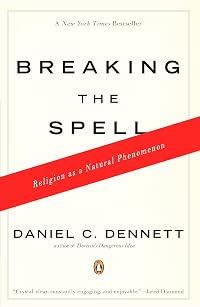
Breaking the Spell: Religion as a Natural Phenomenon
by Daniel C. Dennett
On This Page
Description
An innovative thinker tackles the controversial question of why we believe in God and how religion shapes our lives and our future. For a growing number of people, there is nothing more important than religion. It is an integral part of their marriage, child rearing, and community. In this daring new book, distinguished philosopher Dennett takes a hard look at this phenomenon and asks why. Where does our devotion to God come from and what purpose does it serve? Is religion a blind show more evolutionary compulsion or a rational choice? In a narrative that ranges widely through history, philosophy, and psychology, Dennett explores how organized religion evolved from folk beliefs and why it is such a potent force today. He contends that the "belief in belief" has fogged any attempt to rationally consider the existence of God and the relationship between divinity and human need.--From publisher description. show lessTags
Recommendations



Member Recommendations
Member Reviews
Dennett is much more readable than many of today's philosophers. He doesn't obscure his ideas behind a wall of abstruse language designed more to befuddle than illuminate. Maybe that's why he has become so controversial when other writers on the same topic have not: people can actually understand what he's saying. Dennett calls for a new paradigm that allows for the open, honest criticism of religion just as other fields of study are openly evaluated. I recommend this book for anyone; and I promise, you won't be struck by lightning if you read it (or at least, I wasn't. I don't actually control lightning, so maybe I should say it's improbable.)
The American philosopher Daniel Dennett, those ethos goes beyond philosophy 'per se' to also embrace science (from neurosciences to evolutionary biology) claims to attacks here a taboo: that according to which religion on the one hand, and the beliefs flowing out of religions on the other, are to be sheltered from scientifical, critical enquiry.
Mmh?
At this point, of course, we need to press the 'pause' button. It's been a long while (at least since David Hume!) that religion has been considered as a natural phenomenon, and, so, subjected to all sorts of rational, critical outlooks rooted in sciences to try and understand it as much as to explain it. Philosophers, anthropologists, sociologists, biologists and else -that he quotes at show more will- all had a contribution to make. Yes, but...
Yes but, the author targets here American readers. And in the USA indeed, a far more religious country than others even in the Western world, there seems to be a 'taboo' in seeing religious beliefs being put under a microscope to be analysed. It's a ridiculous mindset, of course, but that Dennett needs to demolish outright first and foremost. As such, the first few chapters will read, well, like door breaching an open door for those not in the US!
Once this out of the way, though, the book truly picks up, especially since its endeavour is to try and explain why such taboo is in the first place. For that, he goes back to the origins of religious beliefs, a product of evolutionary biology through natural selection. He, indeed, sees it as a necessity, born out of our need to understand our environment so as to better adapt ourselves to it. Religion, then, is like a meme, which has evolved to morph, over centuries, into the institutions we all know. Why, then, such a staunch defensive attitude when such outlook is being brought up? This is where he introduces his concept of 'belief in the belief'.
Being American, Dennett uses Christianity as an example. He constates, indeed, two things:
1- believers themselves struggle to define what they mean by 'God'; from the anthropomorphic God of the Old Testament to a vague, abstract concept influenced by pantheism and where even evolution can be accommodated,
2- believers are not only contradicting each other about what is 'God' but they, also, adhere to various churches of all sorts of denominations which, all, regardless of their differences, insist upon the benefits of faith.
He sees here something crucial: to him, it's not the belief or not in God, whatever one thinks of God, which matter. To him, what matters is the idea that believing is essential. Why? Well, according to those preaching it, because it is a source of morale, a weapon against nihilism, the roots to strong communities, a link between individuals, and a scaffold to social network. To preach faith, then, is perceived as a virtue, while to challenge faith is perceived as a threat to social order and morale. Put bluntly: beliefs are secondary; what matters is the belief in the belief that faith is good.
Now, of course, if religion really was the source from which flows our ethics and morale, our sense of right and wrong, then, yes, such taboo would be justified. The thing is: it isn't. Dennett, here, rightly reminds us that empathy is as natural as cruelty. The taboo, then, is absurd.
All in all, here's a book slow to start, and it will seem blatantly obvious to many readers not based in the USA. Yet, its core argument -'belief in the belief'- is striking indeed, and, I suspect, will get the approval even of many religious believers themselves. A must read. show less
Mmh?
At this point, of course, we need to press the 'pause' button. It's been a long while (at least since David Hume!) that religion has been considered as a natural phenomenon, and, so, subjected to all sorts of rational, critical outlooks rooted in sciences to try and understand it as much as to explain it. Philosophers, anthropologists, sociologists, biologists and else -that he quotes at show more will- all had a contribution to make. Yes, but...
Yes but, the author targets here American readers. And in the USA indeed, a far more religious country than others even in the Western world, there seems to be a 'taboo' in seeing religious beliefs being put under a microscope to be analysed. It's a ridiculous mindset, of course, but that Dennett needs to demolish outright first and foremost. As such, the first few chapters will read, well, like door breaching an open door for those not in the US!
Once this out of the way, though, the book truly picks up, especially since its endeavour is to try and explain why such taboo is in the first place. For that, he goes back to the origins of religious beliefs, a product of evolutionary biology through natural selection. He, indeed, sees it as a necessity, born out of our need to understand our environment so as to better adapt ourselves to it. Religion, then, is like a meme, which has evolved to morph, over centuries, into the institutions we all know. Why, then, such a staunch defensive attitude when such outlook is being brought up? This is where he introduces his concept of 'belief in the belief'.
Being American, Dennett uses Christianity as an example. He constates, indeed, two things:
1- believers themselves struggle to define what they mean by 'God'; from the anthropomorphic God of the Old Testament to a vague, abstract concept influenced by pantheism and where even evolution can be accommodated,
2- believers are not only contradicting each other about what is 'God' but they, also, adhere to various churches of all sorts of denominations which, all, regardless of their differences, insist upon the benefits of faith.
He sees here something crucial: to him, it's not the belief or not in God, whatever one thinks of God, which matter. To him, what matters is the idea that believing is essential. Why? Well, according to those preaching it, because it is a source of morale, a weapon against nihilism, the roots to strong communities, a link between individuals, and a scaffold to social network. To preach faith, then, is perceived as a virtue, while to challenge faith is perceived as a threat to social order and morale. Put bluntly: beliefs are secondary; what matters is the belief in the belief that faith is good.
Now, of course, if religion really was the source from which flows our ethics and morale, our sense of right and wrong, then, yes, such taboo would be justified. The thing is: it isn't. Dennett, here, rightly reminds us that empathy is as natural as cruelty. The taboo, then, is absurd.
All in all, here's a book slow to start, and it will seem blatantly obvious to many readers not based in the USA. Yet, its core argument -'belief in the belief'- is striking indeed, and, I suspect, will get the approval even of many religious believers themselves. A must read. show less
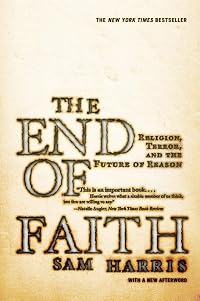
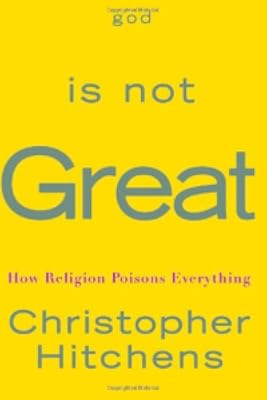
I found this book to be a refreshing take on the atheist argument in that Dennett focuses on the evolutionary function of religion within the human species. Dennett is not as "in your face" aggressive about the argument for atheism as say, Harris, Hitchens, or Dawkins. He is a bit kinder and just has a more methodical approach to his writing. As with the other "four horsemen" writers, I wonder what the intended audience is for these books. I am often left with the feeling that these books are written for the atheist as booster shots. They aren't, what I would call, atheist evangelism, or at least they aren't effective as such. If I had to pick one however, Dennett seems to be less focused on preaching to the choir and more interested in show more assuming the reader is a believer who is trying to give the atheist argument a fair shot. I tend to believe that if any meaningful dialog is going to come out of the believer/nonbeliever conflict, this type of approach is the only one that has any chance at working. I love reading Harris, Hitchens, or Dawkins because their tenacity is humorous, but they are polemical. I would never give one of their books to a Christian friend who was interested in understanding my point of view. I would consider giving them Dennett though. He explains that one is not stupid for having religious conviction, but there are measurable scientific ways of exploring why humans have those religious convictions and where they possibly came from in the first place. The idea that religious faith as a psychological element has certain evolutionary benefits makes some believers very uncomfortable. That's where Dennett's rubber meets the road. Once belief, even "belief in belief" as Dennett puts it, becomes testable than the magical thinking starts to wane. Believers begin to panic and we end up with a reason vs. unreason. Not a fun place to leave a friend when discussing this sensitive topic. I think this book helps on both sides a breaking down each chapter with summaries and self criticism. show less
In Breaking the Spell, Daniel Dennett attempts to engage religious believers in a discussion of the foundations of their belief, and hopes to convince them that religion can fruitfully be made the object of scientific inquiry. Dennett focuses his attention in particular on three potential scientific investigations. First, what is it about human minds and bodies that ensures the persistence of religion in human societies? Second, what were the plausible circumstances of past environments that shaped human minds and bodies in that manner? And third, have our environmental circumstances changed sufficiently so that the biological and cultural adaptations that favored religion—which formerly benefited us—now cause positive harm to our show more individual and/or collective well-being? Dennett ventures tentative and plausible answers to each of these questions, but he is intellectually honest enough to admit that his speculations could be disconfirmed by the scientific research that he exhorts his fellow academics to perform.
At least purportedly, this book's target audience is composed of religious believers. I don't personally fit the bill, so in order to evaluate whether Dennett satisfactorily met his aims, I had to put myself in the mind of a believer. In particular, I imagined what my mother would say if I placed this book in her hands.
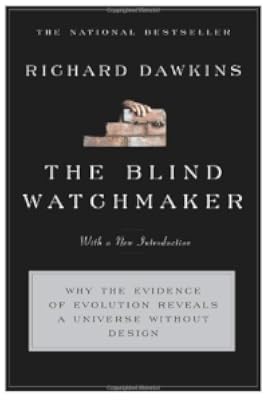
Well, as a general rule, Dennett's tone throughout is quite conciliatory towards believers, though he doesn't seek to hide his own atheism. He doesn't take Christopher Hitchens' path of piling up the corpses in religion's closet (the Crusades, etc.) for all to see. Nor does he follow Richard Dawkins in screeching about how irrational! religious beliefs are, as if that were helping matters. It is refreshing to see someone retire those old saws, and it reflects positively on Dennett's good faith in this project. On the other hand, even Dennett can get quite snippy and antagonistic in short bursts, particularly when he takes direct-address potshots at imagined stubborn believers in his readership. These ripostes are particularly common in the first three chapters, which seems to me to be a tactical error: chasing off potential readers before they have a chance to hear your good points is bad form.
Further, Dennett is perhaps not as careful with his language as would behoove him in this sort of work. There are plenty of places, particularly early on, where he makes a relatively innocuous point in language that can be foreseeably misinterpreted (whether innocently or willfully) in a manner that is either insulting to believers, or easily parried by believers. This is not a project in which I think it would be wise to rely too heavily upon the charitableness of one's audience.
My verdict is that, although it avoids many of the gaffes that left Hitchens and Dawkins preaching mostly to the choir, the early going in Breaking the Spell is still likely to scare off even those believers who might enjoy the rest of the work, which, while admittedly speculative, is worth thinking about seriously. If you find yourself recommending this book to friends who are believers, you may want to suggest that they start with Chapter 4. show less
At least purportedly, this book's target audience is composed of religious believers. I don't personally fit the bill, so in order to evaluate whether Dennett satisfactorily met his aims, I had to put myself in the mind of a believer. In particular, I imagined what my mother would say if I placed this book in her hands.
Well, as a general rule, Dennett's tone throughout is quite conciliatory towards believers, though he doesn't seek to hide his own atheism. He doesn't take Christopher Hitchens' path of piling up the corpses in religion's closet (the Crusades, etc.) for all to see. Nor does he follow Richard Dawkins in screeching about how irrational! religious beliefs are, as if that were helping matters. It is refreshing to see someone retire those old saws, and it reflects positively on Dennett's good faith in this project. On the other hand, even Dennett can get quite snippy and antagonistic in short bursts, particularly when he takes direct-address potshots at imagined stubborn believers in his readership. These ripostes are particularly common in the first three chapters, which seems to me to be a tactical error: chasing off potential readers before they have a chance to hear your good points is bad form.
Further, Dennett is perhaps not as careful with his language as would behoove him in this sort of work. There are plenty of places, particularly early on, where he makes a relatively innocuous point in language that can be foreseeably misinterpreted (whether innocently or willfully) in a manner that is either insulting to believers, or easily parried by believers. This is not a project in which I think it would be wise to rely too heavily upon the charitableness of one's audience.
My verdict is that, although it avoids many of the gaffes that left Hitchens and Dawkins preaching mostly to the choir, the early going in Breaking the Spell is still likely to scare off even those believers who might enjoy the rest of the work, which, while admittedly speculative, is worth thinking about seriously. If you find yourself recommending this book to friends who are believers, you may want to suggest that they start with Chapter 4. show less
The current resurgence of Christian and Muslim fundamentalism is a source of great worry and puzzlement to secularists (present reviewer included) who thought such beliefs would the wane in the face of a triumphant science. What's perhaps more surprising is how ineffective the kind of Darwinist/Rationalist counter-argument expounded by Richard Dawkins, Francis Wheen or Daniel Dennett is proving against this new strain of belief.
The pre-Socratic Greeks, Shakespeare, Nietzche, Freud all tell us, as if we didn't know already, that we're not primarily rational animals - if we were then belief in God could only be an error or even an illness that could be cured by scientific education, which is what Dennett appears to believe. It's no show more surprise that many people find this attitude patronising or even threatening. American evangelicals may reject Darwinism but they still drive cars and use the internet. Dennett distinguishes 'belief' from 'belief in belief': the former actually imagines a grey-haired father figure in the sky, while the latter merely thinks that believing in such a figure is a good idea because it makes people behave well. However he shrinks from following this to its conclusion, that religion is often politics in disguise. Running through the history of both Christianity and Islam is a millenarian streak of class revenge, the idea that while the rich might enjoy the privileges of this world, they will burn in hell in the next. US evangelicals rebel against the 1960s liberalism of the East and West Coast Media Elites, whose freedom loving lifestyle happens to coincide with a monopoly on the best-paid jobs; Islamic fundamentalists despair of justice for Palestine and invoke the Wrath of God because the Wraths of Nasserism and Baathism proved corrupt and impotent.
Dennett's brand of rationalism can barely scratch the surface of such passions, and the book disappoints on several levels: its Darwinian theme is too shallow to satisfy, and it's often soft on religion where it should be hardest but patronising where it ought to be understanding. show less
The pre-Socratic Greeks, Shakespeare, Nietzche, Freud all tell us, as if we didn't know already, that we're not primarily rational animals - if we were then belief in God could only be an error or even an illness that could be cured by scientific education, which is what Dennett appears to believe. It's no show more surprise that many people find this attitude patronising or even threatening. American evangelicals may reject Darwinism but they still drive cars and use the internet. Dennett distinguishes 'belief' from 'belief in belief': the former actually imagines a grey-haired father figure in the sky, while the latter merely thinks that believing in such a figure is a good idea because it makes people behave well. However he shrinks from following this to its conclusion, that religion is often politics in disguise. Running through the history of both Christianity and Islam is a millenarian streak of class revenge, the idea that while the rich might enjoy the privileges of this world, they will burn in hell in the next. US evangelicals rebel against the 1960s liberalism of the East and West Coast Media Elites, whose freedom loving lifestyle happens to coincide with a monopoly on the best-paid jobs; Islamic fundamentalists despair of justice for Palestine and invoke the Wrath of God because the Wraths of Nasserism and Baathism proved corrupt and impotent.
Dennett's brand of rationalism can barely scratch the surface of such passions, and the book disappoints on several levels: its Darwinian theme is too shallow to satisfy, and it's often soft on religion where it should be hardest but patronising where it ought to be understanding. show less
I can't recommend this highly enough. This is not an anti-religion screed at all, but comes at the topic of religion as a naturally emerging aspect of humanity in a thoughtful, funny, accessible way. It is "New Atheist" only in that it calls for open questioning and research of religion and its utility (and it's written by an atheist).
This was a challenge. I kept putting it aside after reading a few pages, picking it up and digesting a bit more, until about six years ago when I tucked it in my night stand for what I thought would only be a little while. Well...nearly five years ago we had a fire. This was one of maybe 19-20 books I salvaged out of our 5,800 books in our library that were damaged severely due to smoke and soot. After a couple of years of airing out, I let it sit still longer until I picked it up again last year. I had to start over, having most of the thoughts and memories shoved aside, though I kept my flags and my margin notes were intact.
I like Dennett. I think he made a lot of sense, but I also get the sense that this was not as rigorous as his show more other offerings. Still, I adjusted my perspective on religion years ago because of it (and another book by Pascal Boyer). While I still consider religions and associated beliefs irrational, I have come to an understanding that such is genetically encoded - humans are primed to believe in that which makes no rational sense. That helps me sleep better at night (cliche...I still suck at sleeping) - even if I still don't get it.
This is not a "review". Just a short observation of something that will take much more thought. I owe Dennett a full review, but I admit I'm not up to it right now. show less
I like Dennett. I think he made a lot of sense, but I also get the sense that this was not as rigorous as his show more other offerings. Still, I adjusted my perspective on religion years ago because of it (and another book by Pascal Boyer). While I still consider religions and associated beliefs irrational, I have come to an understanding that such is genetically encoded - humans are primed to believe in that which makes no rational sense. That helps me sleep better at night (cliche...I still suck at sleeping) - even if I still don't get it.
This is not a "review". Just a short observation of something that will take much more thought. I owe Dennett a full review, but I admit I'm not up to it right now. show less
Members
- Recently Added By
Published Reviews
ThingScore 50
He quotes himself (approvingly) as follows (p. 302): ‘‘Yes we have a soul; but it’s made of lots of tiny robots.’’ Thus, for Dennett, our beliefs reside not in our verbal and nonverbal behavioral patterns but in a set of mechanisms (the tiny robots) in our brains.... But, granted that no complete understanding of human behavior can be achieved without understanding internal show more mechanisms, if you knew everything there is to know about those tiny robots (and the tinier robots inside them, and those inside them) you would still not understand why people do the things they do and why they say the things they say. You will have ignored the most important scientific fact—the most important Darwinian fact— about those patterns (including religious patterns): their function in the person’s environment (including the social environment). show less
added by Lunar
Lists

Books That Changed Me
158 works; 47 members

Attaining Belief
14 works; 2 members
Atheism, humanism, freethought, &c. — Best nonfiction books in favour of
167 works; 14 members

Real Good Religion
32 works; 1 member
Author Information

43+ Works 17,421 Members
Daniel C. Dennett is a University Professor and Austin B. Fletcher Professor of Philosophy at Tufts University and the author of numerous books including Intuition Pumps and Other Tools for Thinking, Breaking the Spell, Darwin's Dangerous Idea, and Consciousness Explained.
Awards and Honors
Work Relationships
Common Knowledge
- Canonical title
- Breaking the Spell: Religion as a Natural Phenomenon
- Original title
- Breaking the Spell: Religion as a Natural Phenomenon
- Original publication date
- 2006
- Dedication
- FOR SUSAN
- First words
- Preface
Let me begin with an obvious fact: I am an American author, and this book is addressed in the first place to American readers. I shared drafts of this book with many readers, and most of my non-American readers fou... (show all)nd this fact not just obvious but distracting—even objectionable in some cases. Couldn't I make the book less provincial in outlook? Shouldn't I strive, as a philosopher, for the most universal target audience I could muster? No. Not in this case, and my non-American readers should consider what they can learn about the situation in America from what they find in this book. More compelling to me than the reaction of my non-American readers was the fact that so few of my American readers had any inkling of this bias—or, if they did, they didn't object. That is a pattern to ponder. It is commonly observed—both in America and abroad—that America is strikingly different from other First World nations in its attitudes to religion, and this book is, among other things, a sounding device intended to measure the depths of those differences.
Chapter One
Breaking Which Spell?
1 What's going on?
And he spoke many things unto them in parables, saying, Behold, a sower went forth to sow; And when he sowed, some seeds fell by the way side, and t... (show all)he fowls came and devoured them up. —Matthew 13:3-4
If "survival of the fittest" has any validity as a slogan, then the Bible seems a fair candidate for the accolade of the fittest of texts.—Hugh Pyper, "The Selfish Text: The Bible and Memetics"
You watch an ant in a meadow, laboriously climbing up a blade of grass, higher and higher until it falls, then climbs again, and again, like Sisyphus rolling his rock, always striving to reach the top. Why is the ant doing this? What benefit is it seeking for itself in this strenuous and unlikely activity? Wrong question, as it turns out. No biological benefit accrues to the ant. It is not trying to get a better view of the territory or seeking food or showing off to a potential mate, for instance. Its brain has been commandeered by a tiny parasite, a lancet fluke (Dicrocelium dendriticum), that needs to get itself into the stomach of a sheep or a cow in order to complete its reproductive cycle. This little brain worm is driving the ant into position to benefit its progeny, not the ant's. This is not an isolated phenomenon. Similarly manipulative parasites infect fish, and mice, among other species. These hitchhikers cause their hosts to behave in unlikely—even suicidal—ways, all for the benefit of the guest, not the host.¹ - Blurbers
- Diamond, Jared; Barash, David P.; Brand, Stewart
- Original language
- English
Classifications
Statistics
- Members
- 3,167
- Popularity
- 5,476
- Reviews
- 40
- Rating
- (3.80)
- Languages
- 8 — Dutch, English, Finnish, German, Italian, Polish, Spanish, Portuguese (Portugal)
- Media
- Paper, Audiobook, Ebook
- ISBNs
- 18
- UPCs
- 1
- ASINs
- 14