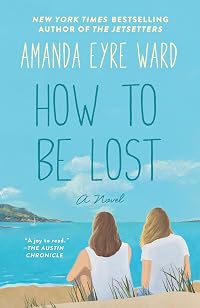
How to Be Lost
by Amanda Eyre Ward
On This Page
Description
Joseph and Isabelle Winters seem to have it all: a grand home in Holt, New York, a trio of radiant daughters, and a sense that they are safe in their affluent corner of America. But when five-year-old Ellie disappears, the fault lines within the family are exposed: Joseph, once a successful businessman, succumbs to his demons; Isabelle retreats into memories of her debutante days in Savannah; and Ellie’s bereft sisters grow apart–Madeline reluctantly stays home, while Caroline runs away. show more Fifteen years later, Caroline, now a New Orleans cocktail waitress, sees a photograph of a woman in a magazine. Convinced that it is Ellie all grown up, Caroline embarks on a search for her missing sister. Armed with copies of the photo, an amateur detective guide, and a cooler of Dixie beer, Caroline travels through the New Mexico desert, the mountains of Colorado, and the smoky underworld of Montana, determined to salvage her broken family. show lessTags
Recommendations

Member Reviews
I picked this novel up at a Friends of the Library book sale. When it actually came to reading it, I kept putting it off, thinking it would be depressing and sad. What it turned out to be was actually a study in hope. I like how the tale unfolded: back-story and two separate strands of current day. The story of three sisters, one of whom goes missing at age 5. Fifteen years later, the story starts again. It's also the story of choices and the way our live diverges every time we make one. It was a good book to cozy up with on a day when I really didn't feel like doing much besides reading.
Caroline Winters, wild child turned washed up New Orleans cocktail waitress, narrates this tale of a family torn asunder by the disappearance of her youngest sister Ellie. Ellie's disappearance dissolves the glue holding the already fragile Winters family together, as Caroline's guilt-stricken mother, Isabelle, dedicates all her resources to finding her missing daughter. Caroline and her sister Madeline, each believing they are somehow responsible for Ellie's disappearance slowly drift away from each other.
When Isabelle dies, Caroline sets out on a cross country trip determined to find her long missing sister. Through Caroline's trip, mysterious letters from the desk of one Agnes Fowler, and glimpses into Isabelle's past Ward reveals show more the secrets that run deep in the Winters family.
Ward's story reveals the answer to the mystery of Ellie's disappearance in bits and pieces from many different angles giving the impression that the reader is figuring out the mystery on their own instead of being handed it on a silver platter. Ward vividly portrays the effects of the disappearance that last far beyond the actual event and the toll taken on each member of the family from not knowing whether Ellie is alive or dead. With the loss of Ellie, the members of the family lost parts of themselves as well as the bond that held them together. Their journey back to themselves is beautifully rendered here and makes for a very rewarding read. show less
When Isabelle dies, Caroline sets out on a cross country trip determined to find her long missing sister. Through Caroline's trip, mysterious letters from the desk of one Agnes Fowler, and glimpses into Isabelle's past Ward reveals show more the secrets that run deep in the Winters family.
Ward's story reveals the answer to the mystery of Ellie's disappearance in bits and pieces from many different angles giving the impression that the reader is figuring out the mystery on their own instead of being handed it on a silver platter. Ward vividly portrays the effects of the disappearance that last far beyond the actual event and the toll taken on each member of the family from not knowing whether Ellie is alive or dead. With the loss of Ellie, the members of the family lost parts of themselves as well as the bond that held them together. Their journey back to themselves is beautifully rendered here and makes for a very rewarding read. show less
How to Be Lost by Amanda Eyre Ward is a lean, cinematic novel that can easily be read in one sitting. The novel is organized into a series of first-person narratives, letters, and flashbacks. There are multiple story lines with shifts in place and time. Ward’s writing is sparse: there are no unnecessary scenes. The telling is easy and captivating, but this can be deceptive. Ward’s clean, efficient prose demands attention.
In this story, we read about Joseph and Isabelle Winters, two parents sunk in despair, alcohol, and disappointment. They are lost to themselves, each other, and their children. The parents’ isolation has gut-wrenching effects on the lives of their three children: Caroline, Madeline and Ellie. Despite all the show more bad, there is enough good left in this family for each girl to thrive. When the girls are 16, 13 and 5, tragedy strikes. Ellie, the youngest child, disappears—probably abducted. This shatters the two remaining girls and further destroys what little remains of the parents’ lives.
The book begins 15 years later. Joseph has passed away and Isabelle is a mere shadow of the woman she could have been. The family is estranged. The girls reluctantly gather at their mother’s home for Christmas. Madeline’s psychologist has recommended that she “bring closure” to the disappearance of her little sister by pronouncing Ellie legally dead. The mother and Caroline are against it. They still hold hope that Ellie is alive. The mother compulsively combs through magazines looking for photographs that might reveal Ellie as a 20-year-old woman. One magazine snapshot in particular has Isabelle captivated, and she shows it to Caroline.
Eventually, Caroline takes off on a cross-country trip to find the woman in the photograph. Along the way, we meet more fascinating lost souls, and through flashbacks, letters, and dream sequences, we are whipsawed through mysterious, seemingly unrelated story lines dealing with other lost souls. The reader is propelled through the novel in ever-deepening suspense—always a little off-balance—trying to figure out where all these story lines are going. Eventually they converge in an ending that does not surprise as much as it unfolds—quietly promising and fully satisfying.
This is a book that you will keep remembering long after you put it down. The characters demand rethinking—some are mere outlines necessary for plot development; others are deeply drawn and achingly real. Virtually all are lost souls. I found that I really cared about these people, even the ones sketchily drawn. Long after I finished, I found my imagination on fire. Perhaps this is what the author intended—that the reader participate in the story telling by creating their own back-stories and futher plot resolutions. I like that—an author demanding the participation of the reader. I will definitely look for more work by this author in the future. show less
In this story, we read about Joseph and Isabelle Winters, two parents sunk in despair, alcohol, and disappointment. They are lost to themselves, each other, and their children. The parents’ isolation has gut-wrenching effects on the lives of their three children: Caroline, Madeline and Ellie. Despite all the show more bad, there is enough good left in this family for each girl to thrive. When the girls are 16, 13 and 5, tragedy strikes. Ellie, the youngest child, disappears—probably abducted. This shatters the two remaining girls and further destroys what little remains of the parents’ lives.
The book begins 15 years later. Joseph has passed away and Isabelle is a mere shadow of the woman she could have been. The family is estranged. The girls reluctantly gather at their mother’s home for Christmas. Madeline’s psychologist has recommended that she “bring closure” to the disappearance of her little sister by pronouncing Ellie legally dead. The mother and Caroline are against it. They still hold hope that Ellie is alive. The mother compulsively combs through magazines looking for photographs that might reveal Ellie as a 20-year-old woman. One magazine snapshot in particular has Isabelle captivated, and she shows it to Caroline.
Eventually, Caroline takes off on a cross-country trip to find the woman in the photograph. Along the way, we meet more fascinating lost souls, and through flashbacks, letters, and dream sequences, we are whipsawed through mysterious, seemingly unrelated story lines dealing with other lost souls. The reader is propelled through the novel in ever-deepening suspense—always a little off-balance—trying to figure out where all these story lines are going. Eventually they converge in an ending that does not surprise as much as it unfolds—quietly promising and fully satisfying.
This is a book that you will keep remembering long after you put it down. The characters demand rethinking—some are mere outlines necessary for plot development; others are deeply drawn and achingly real. Virtually all are lost souls. I found that I really cared about these people, even the ones sketchily drawn. Long after I finished, I found my imagination on fire. Perhaps this is what the author intended—that the reader participate in the story telling by creating their own back-stories and futher plot resolutions. I like that—an author demanding the participation of the reader. I will definitely look for more work by this author in the future. show less
In her second novel, Amanda Eyre Ward more than makes good on the promise of literary talent on display in 2003's Sleep Toward Heaven. It's rare that I'd put an author on a year-end "Best of" list two years in a row, but here's Ward making a repeat appearance with an engaging story populated by vibrant characters. Sticking with the theme of women on the verge of nervous revelations. In Sleep Toward Heaven, we read of a death row inmate, a widow of one of her victims and a prison doctor whose lives all converge as the hour of execution nears. Here, in How to Be Lost, we meet Caroline Winters on a quest to find her five-year-old sister who disappeared 15 years ago. Her search takes her from New Orleans to upstate New York to Montana as show more she gradually realizes that what she finds in the dingy barrooms of Missoula may not be what she bargained for. Ward subtly, skillfully shows us that even the most broken, tumultuous family can be healed over time. show less
What a wonderful book! LIke many other LTers, I read it in a day and almost wish it had a sequal.
This story takes place 15 years after the youngest of three sisters disappears without a trace. It's about relationships, about the lasting impacts of a traumatic event on a family. At the time of the abduction, Caroline (15) Madeleine (13) and Ellie (5) are very close with Caroline taking responsibility for her sisters since their father is an abusive alcoholic and their mother appears to be suffering from clinical depression. Fifteen years later, Caroline is a cocktail waitress, estranged from Madeleine; their mother is marginally functional and their father has died. Madeleine, now married and pregnant, wants to declare Ellie dead, but show more their mother is convinced Ellie is alive. Caroline decides to search for Ellie based on a photograph her mother has found in a magazine.
The story is very well written; the plot has depth that raises this well beyond "chick lit" status. Highly recommended. show less
This story takes place 15 years after the youngest of three sisters disappears without a trace. It's about relationships, about the lasting impacts of a traumatic event on a family. At the time of the abduction, Caroline (15) Madeleine (13) and Ellie (5) are very close with Caroline taking responsibility for her sisters since their father is an abusive alcoholic and their mother appears to be suffering from clinical depression. Fifteen years later, Caroline is a cocktail waitress, estranged from Madeleine; their mother is marginally functional and their father has died. Madeleine, now married and pregnant, wants to declare Ellie dead, but show more their mother is convinced Ellie is alive. Caroline decides to search for Ellie based on a photograph her mother has found in a magazine.
The story is very well written; the plot has depth that raises this well beyond "chick lit" status. Highly recommended. show less
It’s possible I read “Missing Mom” by Joyce Carol Oates too recently to judge “How to Be Lost” on its own merits. Both involve a family tragedy (and in the book’s main timeline) that leaves a mother on her own and leaves her daughters (the good daughter and the daughter who is adrift) trying to define their relationship with her and with each other.
The aspect of “How to be Lost” that was most powerful to me was the description of the three girls in their youth – trying to raise themselves and pretend as if they had parents. (They do – but the dad is an abusive alcoholic and the mom only dresses the part). My parents were divorced at an early age and as the oldest, I felt like I was raising my brother and sister show more sometimes. That responsibility and forced maturity of a child is powerfully described here and brought back some strong memories. This type of family situation creates a whole new bond with one’s siblings – which in my case has been a wonderful one. I’m not sure if I would say the same for Caroline’s situation.
Beyond that – I felt like the plot followed pretty standard lines – will the family ever truly start to heal, will Caroline be able to move forward in her life, will Ellie be found… and I wasn’t surprised by the ending. Still – I enjoyed Ward’s prose a great deal – I am not one for flowery descriptions. Also – I was lucky enough to read the book in one sitting – turning the pages faster as I reached the end.
Though I did like the way Ward uses flashbacks, letters and first person narrative to give more depth to the story – I felt like the book was strongest when the reader was hearing Caroline’s voice. The letters from Agnes never really rang true for me – I thought parts of them were cheesy and I just didn’t buy into the sexy pictures.
All in all – it was a good read. I enjoyed the book and was I ever going on a trip and wanted a good book to take on the plane – I would pick up one of Ward’s. show less
The aspect of “How to be Lost” that was most powerful to me was the description of the three girls in their youth – trying to raise themselves and pretend as if they had parents. (They do – but the dad is an abusive alcoholic and the mom only dresses the part). My parents were divorced at an early age and as the oldest, I felt like I was raising my brother and sister show more sometimes. That responsibility and forced maturity of a child is powerfully described here and brought back some strong memories. This type of family situation creates a whole new bond with one’s siblings – which in my case has been a wonderful one. I’m not sure if I would say the same for Caroline’s situation.
Beyond that – I felt like the plot followed pretty standard lines – will the family ever truly start to heal, will Caroline be able to move forward in her life, will Ellie be found… and I wasn’t surprised by the ending. Still – I enjoyed Ward’s prose a great deal – I am not one for flowery descriptions. Also – I was lucky enough to read the book in one sitting – turning the pages faster as I reached the end.
Though I did like the way Ward uses flashbacks, letters and first person narrative to give more depth to the story – I felt like the book was strongest when the reader was hearing Caroline’s voice. The letters from Agnes never really rang true for me – I thought parts of them were cheesy and I just didn’t buy into the sexy pictures.
All in all – it was a good read. I enjoyed the book and was I ever going on a trip and wanted a good book to take on the plane – I would pick up one of Ward’s. show less
(26) This was a quickly read novel about a family whose 5 year old daughter goes missing. We catch up to the family when the two other sisters are adults and their lives are damaged in predictable ways. Our protagonist, once a promising young pianist, is now a cocktail waitress in New Orleans. She returns home, age 30-something, for Christmas and events transpire to compel her to begin a search for her sister anew.
The novel is told in a series of flashbacks; which at first are pawned off as the daughter dreaming of the mother's young life - but then it just morphs into a second storyline told by a third person narrator, interspersed with a series of letters from a young woman writing to a strange man from a dating service. It all show more sounds mysterious, but actually, it was fairly easy to piece together and it seemed formulaic and predictable.
It was a quickly read airplane/beach read but not much beyond that. Old 'cold case' stories usually grab me, but this was just not particularly convincingly written. But entertaining and enjoyable in a light way despite the subject matter. show less
The novel is told in a series of flashbacks; which at first are pawned off as the daughter dreaming of the mother's young life - but then it just morphs into a second storyline told by a third person narrator, interspersed with a series of letters from a young woman writing to a strange man from a dating service. It all show more sounds mysterious, but actually, it was fairly easy to piece together and it seemed formulaic and predictable.
It was a quickly read airplane/beach read but not much beyond that. Old 'cold case' stories usually grab me, but this was just not particularly convincingly written. But entertaining and enjoyable in a light way despite the subject matter. show less
Members
- Recently Added By
Published Reviews
In this, Ward’s second novel, our heroine is a booze-soaked thirty-two-year-old cocktail waitress who works at the rotating bar at the top of the New Orleans World Trade Center and eats “hot dogs by choice.”
added by paradoxosalpha
Lists

to get
244 works; 2 members
Author Information

15+ Works 3,500 Members
Common Knowledge
- Canonical title
- How to Be Lost
- Original publication date
- 2004-10-07
- People/Characters
- Caroline Winters; Madeline Winters; Isabelle Winters; Ellie Winters; Ron; Anthony (show all 13); Agnes Fowler; Charlene; Daven; Johann; Roxie; Bernard; Joseph Winters
- Important places
- Holt, New York; New York, New York, USA; New Orleans, Louisiana, USA; Missoula, Montana, USA
- Dedication
- For Mary-Anne Westley, my mother and guiding star
- First words
- The afternoon before, I planned how I would tell her.
- Last words
- (Click to show. Warning: May contain spoilers.)"The door's open," I said, at last.
- Blurbers
- McPhee, Jenny; Greer, Andrew Sean; Leavitt, Caroline; Brandeis, Gayle
Classifications
Statistics
- Members
- 1,051
- Popularity
- 24,671
- Reviews
- 37
- Rating
- (3.56)
- Languages
- 9 — Dutch, English, Finnish, French, German, Italian, Norwegian (Bokmål), Norwegian, Spanish
- Media
- Paper, Audiobook, Ebook
- ISBNs
- 27
- ASINs
- 8