On This Page
Description
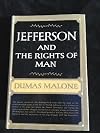
The second volume in this Pulitzer Prize-winning six-volume biography tells the story of the eventful middle years in the life of Thomas Jefferson: his ministry to France in the years just before the French Revolution and during the early stages of that conflict; his service as secretary of state in President George Washington's first cabinet; the crucial period of his first differences with Alexander Hamilton and the beginnings of his long struggle with the Federalists.Tags
Recommendations


















Member Reviews
I actually think that this volume was a lot more interesting than the last one, and I rarely ever found myself getting bored. This volume took a bit of a longer time to read than I desired, but that was mostly because of school and all of the tests it plaguing me with.
I'm nearly convinced that Dumas Malone used to lull himself to sleep every night thinking up of some sort of Jefferson scenario because the sheer amount of phrases like "Jefferson could not have failed to..." "Jefferson perhaps..." "Jefferson must have..." make it hard to believe otherwise. ALSO HE MENTIONS THAT JEFFERSON WAS "SENSITIVE" WAAAYYYYY TOO OFTEN.
Now, I actually don't really know much about Alexander Hamilton- so I can't really say anything about his portrayal show more here, but there was some interesting things written in the text that I certainly didn't know before. Unfortunately these things are somewhat marred with the knowledge that Malone's depiction of Hamilton is (almost always) unfailingly negative and most likely biased.
Contrarily, Malone seems to never cease with his onslaught of praise for Jefferson. Which is usually somewhat understandable (because nobody in their right mind would dedicate themselves to writing this much about a historical figure they don't like/care about) and I do find admittedly find it amusing for some odd reason- it can sometimes take me out of the narrative when he just suddenly starts eulogizing him.
OH AND AGAIN WITH THE UNSAVORY COMMENTS ABOUT NATIVE AMERICANS- IT'S SO UNNECESSARY! Dumas Malone also does this thing where he'll obviously throw shade at someone or something that he presumably doesn't like, so there's that as well.
All-in-all, the work itself is quite well structured, and I'm genuinely impressed with it as a whole. The author seems to be a man of considerable talent and skill. The citations in the book are again very helpful and rather invaluable, and I am certainly looking forward to reading the next installment of this series. show less
I'm nearly convinced that Dumas Malone used to lull himself to sleep every night thinking up of some sort of Jefferson scenario because the sheer amount of phrases like "Jefferson could not have failed to..." "Jefferson perhaps..." "Jefferson must have..." make it hard to believe otherwise. ALSO HE MENTIONS THAT JEFFERSON WAS "SENSITIVE" WAAAYYYYY TOO OFTEN.
Now, I actually don't really know much about Alexander Hamilton- so I can't really say anything about his portrayal show more here, but there was some interesting things written in the text that I certainly didn't know before. Unfortunately these things are somewhat marred with the knowledge that Malone's depiction of Hamilton is (almost always) unfailingly negative and most likely biased.
Contrarily, Malone seems to never cease with his onslaught of praise for Jefferson. Which is usually somewhat understandable (because nobody in their right mind would dedicate themselves to writing this much about a historical figure they don't like/care about) and I do find admittedly find it amusing for some odd reason- it can sometimes take me out of the narrative when he just suddenly starts eulogizing him.
OH AND AGAIN WITH THE UNSAVORY COMMENTS ABOUT NATIVE AMERICANS- IT'S SO UNNECESSARY! Dumas Malone also does this thing where he'll obviously throw shade at someone or something that he presumably doesn't like, so there's that as well.
All-in-all, the work itself is quite well structured, and I'm genuinely impressed with it as a whole. The author seems to be a man of considerable talent and skill. The citations in the book are again very helpful and rather invaluable, and I am certainly looking forward to reading the next installment of this series. show less
A well-structured book, divided nearly in half by two important phases of Jefferson's career, first as Franklin's successor as ambassador to France, and then his service as the first secretary of state in the newly-constituted United States. It doesn't, though, cover his entire service in that office, and ends with a bit of a cliff-hanger. Jefferson intended to retire to Monticello at the close of Washington's first term of office, and had privately informed his friends and officially notified the country's envoys. This intention was put off a year, and in the coming months the nation was riven by partisan feelings over the course of the French Revolution. But this is only intimated as Malone closes this volume.
The Paris years are show more characterized as Jefferson's ripening as a respected political philosopher. Although in this posting he performed valuable service to the newly-independent nation, as well as gaining a grounding in diplomacy that made him the most logical choice to serve at the head of the State Department, it did force his absence from the constitutional convention. He took lively interest in the proceedings, recorded in his correspondence, particularly with Madison, but his contribution was limited by the length of time it took in those days to exchange letters. It interested me to see his keenly felt need for a bill of rights, as well as for term limits on the presidency, pointing to the danger of a leader wildly popular with half of the voters staying in office for life, establishing a democratically-elected dictatorship. He didn't succeed on the latter issue, a constitutional amendment to that effect didn't come until nearly two centuries later, but in the event, Washington at least set a potent precedent by retiring after two terms.
The last fifth or so of the book traces the rising antagonism between Hamilton and Jefferson. Malone is at pains to clear his protagonist of the worst of the charges hurled by the brilliant and ambitious secretary of the treasury, but does this in a reasoned way. As in the first volume of this set, the author has researched meticulously. The result is an appealing portrait. show less
The Paris years are show more characterized as Jefferson's ripening as a respected political philosopher. Although in this posting he performed valuable service to the newly-independent nation, as well as gaining a grounding in diplomacy that made him the most logical choice to serve at the head of the State Department, it did force his absence from the constitutional convention. He took lively interest in the proceedings, recorded in his correspondence, particularly with Madison, but his contribution was limited by the length of time it took in those days to exchange letters. It interested me to see his keenly felt need for a bill of rights, as well as for term limits on the presidency, pointing to the danger of a leader wildly popular with half of the voters staying in office for life, establishing a democratically-elected dictatorship. He didn't succeed on the latter issue, a constitutional amendment to that effect didn't come until nearly two centuries later, but in the event, Washington at least set a potent precedent by retiring after two terms.
The last fifth or so of the book traces the rising antagonism between Hamilton and Jefferson. Malone is at pains to clear his protagonist of the worst of the charges hurled by the brilliant and ambitious secretary of the treasury, but does this in a reasoned way. As in the first volume of this set, the author has researched meticulously. The result is an appealing portrait. show less
This review applies to the entire series, Jefferson and His Times.
Anyone who wants to understand a fraction of Jefferson, needs to start here. This work is the source that most academicians use. It is thorough and depends upon Jefferson's correspondence, editorials, reports, day books, conversations and memories. What more could you ever need? Heavily footnoted, this series puts to shame all other works on this great American. Some popular authors have written of Jefferson suggesting what he may have thought, or he may have done (Brody, anyone?) Malone is authoritative and needs not speculate. Read the series and then ask yourself, "Is it more likely than not that Jefferson fathered Sally Hemming's children?" I can only conclude that he show more did not. I remember when Clinton was president and, when incidents arose which questioned his fidelity, suddenly this old rumor became current. Someone interviewed the descendants of Hemmings and guess what? They all believed they were related to him! Isn't that peculiar? NO! What does a reasonable man expect them to say? Is it not more impressive to be part of a family that was sired by one of the greatest Americans or his philandering nephew, Peter Carr. All resurrected in the hope of distracting the American public from a current political scandal. show less
Anyone who wants to understand a fraction of Jefferson, needs to start here. This work is the source that most academicians use. It is thorough and depends upon Jefferson's correspondence, editorials, reports, day books, conversations and memories. What more could you ever need? Heavily footnoted, this series puts to shame all other works on this great American. Some popular authors have written of Jefferson suggesting what he may have thought, or he may have done (Brody, anyone?) Malone is authoritative and needs not speculate. Read the series and then ask yourself, "Is it more likely than not that Jefferson fathered Sally Hemming's children?" I can only conclude that he show more did not. I remember when Clinton was president and, when incidents arose which questioned his fidelity, suddenly this old rumor became current. Someone interviewed the descendants of Hemmings and guess what? They all believed they were related to him! Isn't that peculiar? NO! What does a reasonable man expect them to say? Is it not more impressive to be part of a family that was sired by one of the greatest Americans or his philandering nephew, Peter Carr. All resurrected in the hope of distracting the American public from a current political scandal. show less
1481 Jefferson and the Rights of Man: Jefferson and His Time Volume Two, by Dumas Malone (25 Mar 1978) This volume takes Jefferson up to 1792. It is really well-done, even though very pro-Jefferson.
Ratings
Members
- Recently Added By
Lists

Books bought at library sales
98 works; 4 members

Thomas Jefferson Books
43 works; 1 member
Author Information

74 Works 4,198 Members
Awards and Honors
Awards
Distinctions
Series

Work Relationships
Common Knowledge
- Canonical title
- Jefferson and the Rights of Man
- Original publication date
- 1951
- People/Characters
- Thomas Jefferson
- Dedication
- This work as a whole is for
ELIZABETH GIFFORD MALONE
This Volume is for
PRINCETON UNIVERSITY
Home of the greatest edition of Jefferson's papers
and the Alma Mater of my son - Blurbers
- Schlesinger, Arthur, Jr.; Commager, Henry Steele; Nettels, Curtis; Bridenbaugh, Carl
Classifications
- Genres
- History, Biography & Memoir, Nonfiction, General Nonfiction
- DDC/MDS
- 973.460924 — History & geography History of North America United States Constitutional period (1789-1809) XYZ Affair, Quasi-War, Alien and Sedition Acts Biographies
- LCC
- E332 .M25 — History of the United States United States Revolution to the Civil War, 1775/1783-1861 By period 1789-1809. Constitutional period Jefferson's administrations, 1801-1809
- BISAC
Statistics
- Members
- 568
- Popularity
- 51,892
- Reviews
- 4
- Rating
- (3.93)
- Languages
- English
- Media
- Paper, Audiobook, Ebook
- ISBNs
- 11
- ASINs
- 22