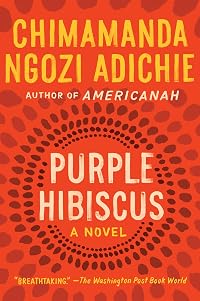
Purple Hibiscus
by Chimamanda Ngozi Adichie
On This Page
Description
Fifteen-year-old Kambili and her older brother Jaja lead a privileged life in Enugu, Nigeria. They live in a beautiful house, with a caring family, and attend an exclusive missionary school. They're completely shielded from the troubles of the world. Yet, as Kambili reveals in her tender-voiced account, things are less perfect than they appear. Although her Papa is generous and well respected, he is fanatically religious and tyrannical at home-a home that is silent and suffocating. As the show more country begins to fall apart under a military coup, Kambili and Jaja are sent to their aunt, a university professor outside the city, where they discover a life beyond the confines of their father's authority. Books cram the shelves, curry and nutmeg permeate the air, and their cousins' laughter rings throughout the house. When they return home, tensions within the family escalate, and Kambili must find the strength to keep her loved ones together. Purple Hibiscus is an exquisite novel about the emotional turmoil of adolescence, the powerful bonds of family, and the bright promise of freedom. show lessTags
Recommendations

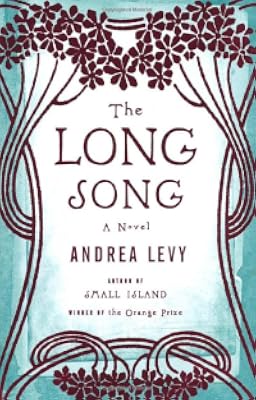
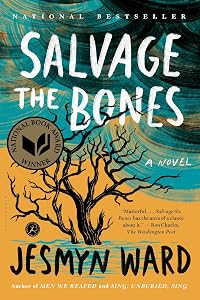
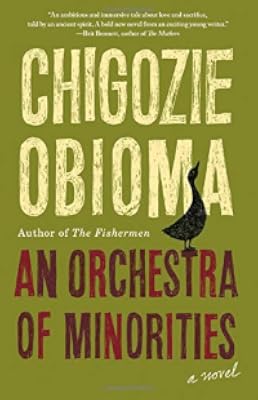
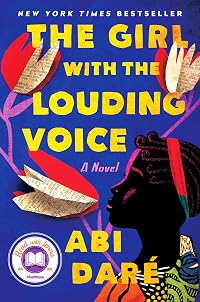
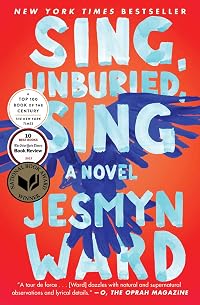

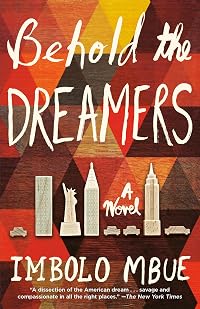
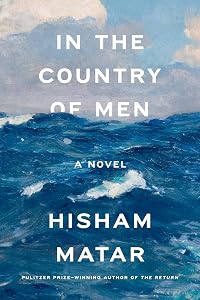
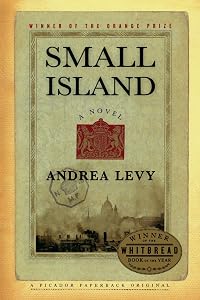



Member Recommendations
Member Reviews
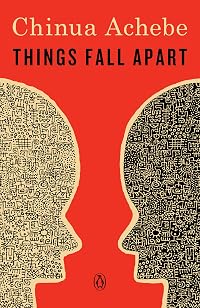
It’s clear from the opening sentence that Adichie intends for this book to build on Achebe’s Things Fall Apart:
Things started to fall apart at home when my brother, Jaja, did not go to communion and Papa flung his heavy missal across the room and broke the figurines on the etagere.
Adichie explores themes of colonialism and religion (traditional Igbo vs. Catholic Christianity, and European Catholicism vs. liturgical adaptation). These themes root the novel in a particular place and time. The coming-of-age and domestic violence themes have a universal appeal. Sadly, no part of the globe in any era has been immune to the kinds of violence that play out in this story.
I was enraptured by the first ten hours of this eleven-hour audiobook. show more Things fell apart in the last hour, as it seemed Adichie didn’t quite know what she wanted to do with the characters and situations she had so carefully created. show less
Things started to fall apart at home when my brother, Jaja, did not go to communion and Papa flung his heavy missal across the room and broke the figurines on the etagere.
Adichie explores themes of colonialism and religion (traditional Igbo vs. Catholic Christianity, and European Catholicism vs. liturgical adaptation). These themes root the novel in a particular place and time. The coming-of-age and domestic violence themes have a universal appeal. Sadly, no part of the globe in any era has been immune to the kinds of violence that play out in this story.
I was enraptured by the first ten hours of this eleven-hour audiobook. show more Things fell apart in the last hour, as it seemed Adichie didn’t quite know what she wanted to do with the characters and situations she had so carefully created. show less
Kambili is a fifteen year old Nigerian girl. Her devoutly Catholic father is a rich and enormously influential community leader, and everyone considers his family to be extremely fortunate. But behind closed doors, his wife and children cower in terror from his physical and emotional abuse. Kambili and her brother Jaja get a taste of freedom for the first time when they are allowed to visit their aunt and cousins for a week. Everything starts to change after that.
The depiction of abuse is so vivid and real. This book fucked me up; I walked around in a bit of a daze and cried over spilled milk the day I read it. It’s amazing - the family relationships (y’know, the non-abusive ones) are full of such love, and watching Kambili show more tentatively step outside her father’s shadow is wonderful - but, well, be warned. Warning for murder and mob violence too. And at once point it looks like something dodgy might happen between Kambili and her priest, but it’s OK, she has a crush but he never takes advantage. show less
The depiction of abuse is so vivid and real. This book fucked me up; I walked around in a bit of a daze and cried over spilled milk the day I read it. It’s amazing - the family relationships (y’know, the non-abusive ones) are full of such love, and watching Kambili show more tentatively step outside her father’s shadow is wonderful - but, well, be warned. Warning for murder and mob violence too. And at once point it looks like something dodgy might happen between Kambili and her priest, but it’s OK, she has a crush but he never takes advantage. show less
De forma sutil Adichie delineia a derrocada do patriarcado alinhando-a metaforicamente à sempre delicada situação política de seu país, a Nigéria - tudo isso sob a visão de uma adolescente que sente literalmente na pele o peso patriarcal e estatal.
“That night, I dreamed that I was laughing, but it did not sound like my laughter, although I was not sure what my laughter sounded like.”
Chimamanda Adichie uses one small family to tell a big story about the ills of religion and the effects of colonialism in Nigeria. Kambili is a 14 year old girl who lives in awe of her father - a “big man” who owns factories and an important newspaper and is revered by his home village, where they have made him a chief, despite his only visiting once a year. Kambili also lives in fear of her father, a devout Catholic who beats his wife and children for minor infractions, both real and perceived.
Much of the novel details Kambili’s conflict in admiring her father who does good things publicly show more - challenges government corruption, supports widows and children, is generous with food and money - but is a tyrant at home. She loves him and is terrified of him. A visit with an aunt and cousins shows her an alternative reality - a family that laughs together and challenges each other and makes the most of the little they have.
As Kambili experiences a different kind of family and a different kind of church in the form of a kind, young priest, we see her grow and begin to question what was once unquestionable. It’s a nuanced coming of age story with universal themes despite its specific (and wonderfully drawn) location that is unfamiliar to most Western readers.
This was my first experience with Adichie’s work, and I am glad to have three more waiting for me on my shelves.
4 stars show less
Chimamanda Adichie uses one small family to tell a big story about the ills of religion and the effects of colonialism in Nigeria. Kambili is a 14 year old girl who lives in awe of her father - a “big man” who owns factories and an important newspaper and is revered by his home village, where they have made him a chief, despite his only visiting once a year. Kambili also lives in fear of her father, a devout Catholic who beats his wife and children for minor infractions, both real and perceived.
Much of the novel details Kambili’s conflict in admiring her father who does good things publicly show more - challenges government corruption, supports widows and children, is generous with food and money - but is a tyrant at home. She loves him and is terrified of him. A visit with an aunt and cousins shows her an alternative reality - a family that laughs together and challenges each other and makes the most of the little they have.
As Kambili experiences a different kind of family and a different kind of church in the form of a kind, young priest, we see her grow and begin to question what was once unquestionable. It’s a nuanced coming of age story with universal themes despite its specific (and wonderfully drawn) location that is unfamiliar to most Western readers.
This was my first experience with Adichie’s work, and I am glad to have three more waiting for me on my shelves.
4 stars show less
After reading We Should All Be Feminists, I wanted to read more by Adichie so checked her first book out from the library. I was blown away by Purple Hibiscus, which is a nuanced and complex story of a family trying to survive with a controlling and abusive religious fanatic father. It is also the story of a teenage girl learning to find her voice. And it is also the story of a country that is coping with the aftermath of a military coup.
This was absolutely gorgeous and both heartbreaking and hopeful at the same time. The ending is a bit ambiguous - it doesn't really end, but that felt right because there isn't really an ending to these characters' stories. They just keep going because they have to.
This was absolutely gorgeous and both heartbreaking and hopeful at the same time. The ending is a bit ambiguous - it doesn't really end, but that felt right because there isn't really an ending to these characters' stories. They just keep going because they have to.
From a craft perspective, this is a very well-written book; it's vivid and visual, and the African spirituality adds elegant cultural appeal. At heart, it's a book about the axiom of domestic violence, family bonds, and emotional turmoil. That said, I struggled to complete it and wished that I could snatch Eugene from the pages and beat him senseless.
This book had been sat on my shelf for a while, making me feel guilty about not having read it. I finally too the plunge last week, and now I wish I hadn't waited so long!
The first 2/3 of the book in particular are superb. I couldn't put my finger on why I liked Kambili so much. When viewed objectively, she's actually a pretty sterile character, who we never really discover that much about. Somehow that doesn't seem to matter - I was totally caught up in her story, and the sights and smells of a Nigeria in the grips of a Military coup.
I did feel that the book tailed off towards the end, but having said that, I don't think there could have been and ending to this book that wouldn't have felt somewhat anti-climatic. Despite the ending, show more well worth reading, I'd definitely recommend it. show less
The first 2/3 of the book in particular are superb. I couldn't put my finger on why I liked Kambili so much. When viewed objectively, she's actually a pretty sterile character, who we never really discover that much about. Somehow that doesn't seem to matter - I was totally caught up in her story, and the sights and smells of a Nigeria in the grips of a Military coup.
I did feel that the book tailed off towards the end, but having said that, I don't think there could have been and ending to this book that wouldn't have felt somewhat anti-climatic. Despite the ending, show more well worth reading, I'd definitely recommend it. show less
Members
- Recently Added By
Lists

Favourite Women's Prize for Fiction, Orange & Bailey's Prize contenders
132 works; 52 members

Best African Books
126 works; 46 members
Best of World Literature
436 works; 52 members

Best Contemporary Literary Fiction (Around the Last 30 Years)
400 works; 124 members
Favourite Booker Prize contenders
73 works; 21 members

Best 21st Century Books (So Far)
679 works; 86 members

Female Author
1,234 works; 67 members
Booker Prize
491 works; 62 members

Black Authors
384 works; 32 members

Must-Read Books by Black Authors
114 works; 92 members

Childhood: Books for or about children in different cultures around the wor
345 works; 18 members

Literature About Women and Girls
394 works; 39 members
50 Books by Women Authors
50 works; 10 members

Top Five Books of 2016
795 works; 229 members

Religious Fiction
58 works; 13 members

Africa
109 works; 8 members
Best African and African diaspora books
111 works; 4 members

My E-Book Collection - Opinions Welcome
92 works; 10 members

Books with Colourful Titles
171 works; 8 members

A Novel Cure
742 works; 23 members

Books Read in 2015
3,299 works; 126 members

Man Booker Prize Longlist 2004
22 works; 2 members
First Novels
373 works; 17 members
Books Read in 2016
4,666 works; 197 members

Books Read in 2022
5,226 works; 115 members

Books Set In Africa
81 works; 4 members

Allie's Wishlist
217 works; 2 members
Most Popular Books Tagged Africa
35 works; 3 members

Books Read in 2021
5,361 works; 114 members

AP Lit
363 works; 6 members

Books With Our Favorite First Lines
168 works; 104 members

Books Read in 2019
4,052 works; 110 members

A Rainbow of Books: Colors in the Title
570 works; 24 members
Talk Discussions
Past Discussions
Purple Hibiscus, Chimamanda Ngozi Adichie in World Reading Circle (January 2014)
Author Information

71+ Works 34,360 Members
Chimamanda Ngozi Adichie was born in Enugu, Nigeria on September 15, 1977. She studied medicine and pharmacy at the University of Nigeria for a year and a half before moving to the United States, where she studied communication at Drexel University for two years. She received a bachelor's degree in communication and political science at Eastern show more Connecticut State University in 2001, a master's degree in creative writing at Johns Hopkins University, and a master's degree in African Studies from Yale University in 2008. Her first novel, Purple Hibiscus, was published in 2003 and received the Commonwealth Writers' Prize for Best First Book in 2005. Her other books include The Thing around Your Neck, Americanah, and We Should All Be Feminist. Half of a Yellow Sun won the Orange Prize in 2007. She was awarded the 2018 PEN Pinter Prize, for her body of work that shows 'outstanding literary merit'. (Bowker Author Biography) show less
Some Editions
Awards and Honors
Awards
Distinctions
Series
Belongs to Publisher Series
Work Relationships
Is contained in
Common Knowledge
- Canonical title
- Purple Hibiscus
- Original title
- Purple Hibiscus
- Original publication date
- 2003
- People/Characters
- Kambili Achike; Jaja Achike; Aunty Ifeoma; Eugene Achike; Beatrice Achike ; Father Amadi (show all 7); Amaka
- Important places
- Enugu, Nigeria; Nsukka, Nigeria; Abba, Nigeria
- Dedication
- For Professor James Nwoye Adichie and Mrs. Grace Ifeoma Adichie, my parents, my heroes, ndi o ga-adili mma
- First words
- Things started to fall apart at home when my brother, Jaja, did not go to communion and Papa flung his heavy missal across the room and broke the figurines on the etagere.
- Last words
- (Click to show. Warning: May contain spoilers.)The new rains will come down soon.
- Blurbers
- Cowley, Jason; Tervalon, Jervey; Coetzee, J.M.; Forster, Margaret
- Original language
- English
Classifications
Statistics
- Members
- 5,357
- Popularity
- 2,534
- Reviews
- 191
- Rating
- (4.03)
- Languages
- 16 — Catalan, Czech, Danish, Dutch, English, Finnish, French, German, Galician, Italian, Norwegian (Bokmål), Polish, Portuguese, Spanish, Swedish, Turkish
- Media
- Paper, Audiobook, Ebook
- ISBNs
- 93
- UPCs
- 1
- ASINs
- 28