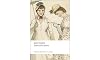
Selected Letters (Oxford World's Classics)
by Jane Austen
On This Page
Description
One of England's most popular novelists was also a prolific correspondent. Jane Austen's intimate, gossipy letters to family and friends offer unique insights into her life and work.Tags
Recommendations













Member Reviews
I got about 2/3 of the way through this (1985 edition) years ago and then put it down and forgot about it for some reason. I have absolutely no idea why, because Jane Austen's letters are extremely entertaining.
Mostly consisting of the minutiae of daily family life written to travelling/at home relatives (particularly her sister Cassandra and her niece Fanny), but (particularly latterly) also with tantalising glimpses of her thoughts on her books (her books were her children, she loved Lizzie Bennet, thought P&P better than MP, knew exactly what Mrs Bingley would look like and the reason why she couldn't find a decent portrait of Mrs Darcy etc). I will definitely have to find a full collection at some point.
What is interesting about show more this edition is that it was originally published in 1955 and it is clear to me that attitudes have changed considerably in this time. The introduction is interesting, but (largely) presents a common view of a completely different image of Jane Austen to that in my mind. R. W. Chapman feels the need to defend Jane Austen as when the letters were originally published, they caused uproar:
"The letters transgressed against the received notions of what a great writer's letters were like; more particularly, they were not what 'gentle Jane's' letters should have been like."
He goes on to defend this (her acerbic wit and the fact that these were not letters written for publication, unlike those of eg Scott, which definitely were) well, but at the same time with this image of a "gentle Jane" in mind.
What I can't understand is how anyone who has read Pride and Prejudice could possibly think of Jane Austen as "gentle". She was clearly a very intelligent, sharp woman - not unkind, but with a wicked sense of humour - and I'm very glad this is the case, or she really would be just "chick-lit" as some people (completely erroneously to my mind) try to describe her.
There are, oh, so many things I'd like to quote, but the one thing that I will is this (in response to her niece, who had made someone read her Aunt's books and he didn't like them):
"Do not oblige him to read any more. Have mercy on him, tell him the truth & make him an apology. He & I should not in the least agree of course, in our ideas of Novels and Heroines; pictures of perfection as you know make me sick & wicked - but there is some very good sense in what he says, & I particularly respect him for wishing to think well of all young Ladies; it shews an amiable & a delicate mind"
I'm so glad I read this!
I have read Jane Austen more often than any other author, (bar Diana Wynne Jones) and her letters truly do bring her more to life (while at the same time supporting my idea that her personality seems to shine through everything she's written) - what a shame (and yet how completely understandable) that Cassandra burnt so many (and all of the more personal ones).
One big nit-pick I have with this collection is the notes, which are abysmal - very few and far between and seemingly completely randomly picked - one apparently obscure thing will be explained, while another will not. I think this edition could seriously do with updating!*
*ETA: and am glad to see from the other review that it has been! show less
Mostly consisting of the minutiae of daily family life written to travelling/at home relatives (particularly her sister Cassandra and her niece Fanny), but (particularly latterly) also with tantalising glimpses of her thoughts on her books (her books were her children, she loved Lizzie Bennet, thought P&P better than MP, knew exactly what Mrs Bingley would look like and the reason why she couldn't find a decent portrait of Mrs Darcy etc). I will definitely have to find a full collection at some point.
What is interesting about show more this edition is that it was originally published in 1955 and it is clear to me that attitudes have changed considerably in this time. The introduction is interesting, but (largely) presents a common view of a completely different image of Jane Austen to that in my mind. R. W. Chapman feels the need to defend Jane Austen as when the letters were originally published, they caused uproar:
"The letters transgressed against the received notions of what a great writer's letters were like; more particularly, they were not what 'gentle Jane's' letters should have been like."
He goes on to defend this (her acerbic wit and the fact that these were not letters written for publication, unlike those of eg Scott, which definitely were) well, but at the same time with this image of a "gentle Jane" in mind.
What I can't understand is how anyone who has read Pride and Prejudice could possibly think of Jane Austen as "gentle". She was clearly a very intelligent, sharp woman - not unkind, but with a wicked sense of humour - and I'm very glad this is the case, or she really would be just "chick-lit" as some people (completely erroneously to my mind) try to describe her.
There are, oh, so many things I'd like to quote, but the one thing that I will is this (in response to her niece, who had made someone read her Aunt's books and he didn't like them):
"Do not oblige him to read any more. Have mercy on him, tell him the truth & make him an apology. He & I should not in the least agree of course, in our ideas of Novels and Heroines; pictures of perfection as you know make me sick & wicked - but there is some very good sense in what he says, & I particularly respect him for wishing to think well of all young Ladies; it shews an amiable & a delicate mind"
I'm so glad I read this!
I have read Jane Austen more often than any other author, (bar Diana Wynne Jones) and her letters truly do bring her more to life (while at the same time supporting my idea that her personality seems to shine through everything she's written) - what a shame (and yet how completely understandable) that Cassandra burnt so many (and all of the more personal ones).
One big nit-pick I have with this collection is the notes, which are abysmal - very few and far between and seemingly completely randomly picked - one apparently obscure thing will be explained, while another will not. I think this edition could seriously do with updating!*
*ETA: and am glad to see from the other review that it has been! show less
The Selected Letters of Jane Austen is preceded by a 35-page introduction of the editor trying to convince readers that reading the letters is worthwhile, however, it remains a fact that to the general reader, the letters are of little interest. Jane Austen may have written some 3,000 letters in her lifetime, but only 160 remain. For anyone with an interest in Jane Austen it is truly worthwhile to read Claire Harman's book Jane's fame. How Jane Austen conquered the world. In this book Harman shows that veneration of authors is a phenomenon that only came into being long after Jane Austen had passed away. In earlier times people did mot hold on to every relic or piece of autograph by a writer. Jane Austen's family throught she would soon show more be forgotten, and they did not care to preserve her letters and other memorabilia. At that time people would keep letters while correspondents were still alive, but after their death they would burn letters as a way of protecting their mutual privacy. Thus, very few of Jane Austen's letters have survived.
It is fully the OUP edition is titled "Selected Letters" because not that many are left out. Of 161 letters, 97 are included in this selection. 95 of the 161 letters were addressed to her sister Cassandra Austen. Two years ago, I tremendously enjoyed reading Selected letters of Charlotte Brontë. Those letters, carefully selected, gave a succinct and fine impression of Charlotte Brontë's life and development as a writer. But Jane Austen's letters offer none of that. They are gossipy and chatty, as probably there was no need for the two sisters to explain of clarify to each other, they being so familiar. So there is a lot to read, but you don't get any wiser about Jane Austen.
Bottomline: I wouldn't recommend reading them. show less
It is fully the OUP edition is titled "Selected Letters" because not that many are left out. Of 161 letters, 97 are included in this selection. 95 of the 161 letters were addressed to her sister Cassandra Austen. Two years ago, I tremendously enjoyed reading Selected letters of Charlotte Brontë. Those letters, carefully selected, gave a succinct and fine impression of Charlotte Brontë's life and development as a writer. But Jane Austen's letters offer none of that. They are gossipy and chatty, as probably there was no need for the two sisters to explain of clarify to each other, they being so familiar. So there is a lot to read, but you don't get any wiser about Jane Austen.
Bottomline: I wouldn't recommend reading them. show less
Jane Austen scholars and superfans will enjoy this collection of letters written by the noted author to family and friends. She discusses a multitude of things from the local gossip to gardening to her books. Two letters written during her final illness appear at the end along with a letter written by Jane's sister Cassandra to one of Jane's frequent correspondents. As with most collections of this nature, some letters appeal more than others. Scholars will find this more useful than casual readers as they seek to support points in their own Austen research.
unfortunately pretty boring
This is so pretty. I want it.
Ratings
Members
- Recently Added By
Lists

unread and uncatalogued
48 works; 1 member
Author Information

699+ Works 316,623 Members
Jane Austen's life is striking for the contrast between the great works she wrote in secret and the outward appearance of being quite dull and ordinary. Austen was born in the small English town of Steventon in Hampshire, and educated at home by her clergyman father. She was deeply devoted to her family. For a short time, the Austens lived in the show more resort city of Bath, but when her father died, they returned to Steventon, where Austen lived until her death at the age of 41. Austen was drawn to literature early, she began writing novels that satirized both the writers and the manners of the 1790's. Her sharp sense of humor and keen eye for the ridiculous in human behavior gave her works lasting appeal. She is at her best in such books as Pride and Prejudice (1813), Mansfield Park (1814), and Emma (1816), in which she examines and often ridicules the behavior of small groups of middle-class characters. Austen relies heavily on conversations among her characters to reveal their personalities, and at times her novels read almost like plays. Several of them have, in fact, been made into films. She is considered to be one of the most beloved British authors. (Bowker Author Biography) show less
Some Editions
Series
Belongs to Publisher Series
Common Knowledge
- People/Characters
- Jane Austen
Classifications
Statistics
- Members
- 332
- Popularity
- 95,405
- Reviews
- 5
- Rating
- (3.72)
- Languages
- English, Polish
- Media
- Paper, Ebook
- ISBNs
- 6
- ASINs
- 7