Bandersnatch: C.S. Lewis, J.R.R. Tolkien, and the Creative Collaboration of the Inklings
by Diana Glyer 
On This Page
Description
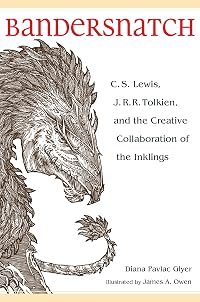
"C.S. Lewis, J.R.R. Tolkien, and the other members of the Inklings met each week to read and discuss each other's work-in-progress, offering both encouragement and blistering critique. How did these conversations shape the books they were writing? How does creative collaboration enhance each individual talent? And what can we learn from their example? Beautifully illustrated by James A. Owen, Bandersnatch offers an inside look at the Inklings of Oxford - and a seat at their table at The show more Eagle and Child pub. It shows how encouragement and criticism made all the difference in The Lord of the Rings, the Chronicles of Narnia, and dozens of other books written by members of this literary circle. You'll learn what made these writers tick and more : inspired by their example, you'll discover how collaboration can help your own creative process and lead to genius breakthroughs in whatever work you do"--Back cover. show lessTags
Recommendations



Member Reviews
I'm on a kick of Tolkien and Tolkien-adjacent stuff these days. This is an exploration, geared toward a lay audience, of the specific ways the Inklings influenced one another in their work. A nice listen on audio, but I understand that Glyer did a more academic version of this work and I think I may need to put my hands on a print copy of that. Because natch. Recommended if you're interested in Tolkien or Lewis or the Inklings as a whole.
As a teenager, Diana Pavlac Glyer became fascinated by the Inklings, and how this group of accomplished writers may have influenced each other's work. Unfortunately, she found a great deal about the Inklings generally and as individuals, and almost nothing about how the Inklings may have engaged in mutual criticism and collaboration. Reading every published work about the group and its members brought her no closer, and at last she plunged into the primary sources--the letters, journals, and other papers left behind by the Inklings.
Few writing groups become famous, and the Inklings are among the most famous. Aside from writing and residence in or around Oxford, the Inklings were a diverse group, of varied professions, backgrounds, and show more interests. As Glyer lays it out, this very diversity is one of the reasons for their success: They each had something to learn and something to teach; they challenged each other, and reacted to challenges from the others; they had sparked new ideas and new directions from encounters with new ideas and perspectives.
Each chapter examines one aspect of how the Inklings worked together and contributed to each other's success. Mutual encouragement, criticism, editing, collaboration, and providing mutual accountability with their weekly meetings and readings of works in progress all played a role. In addition, they met frequently outside those formal meetings, informally, in twos and threes, taking walking tours, and other activities. Tolkien's first audience was the youngest and last of the Inklings, his own son Christopher, who became a formal member of the Inklings at age twenty.
This is a fascinating look at this important literary group, aimed at reaching a popular audience and at extracting from the Inklings' experience lessons that may help nascent writers' groups become useful to and supportive of their members. For all the practical lessons to be found, though, it's also just an absorbing look at some of the most important and interesting figures in 20th century fantasy literature.
Recommended.
I received a free copy of this book from the author in exchange for an honest review. show less
Few writing groups become famous, and the Inklings are among the most famous. Aside from writing and residence in or around Oxford, the Inklings were a diverse group, of varied professions, backgrounds, and show more interests. As Glyer lays it out, this very diversity is one of the reasons for their success: They each had something to learn and something to teach; they challenged each other, and reacted to challenges from the others; they had sparked new ideas and new directions from encounters with new ideas and perspectives.
Each chapter examines one aspect of how the Inklings worked together and contributed to each other's success. Mutual encouragement, criticism, editing, collaboration, and providing mutual accountability with their weekly meetings and readings of works in progress all played a role. In addition, they met frequently outside those formal meetings, informally, in twos and threes, taking walking tours, and other activities. Tolkien's first audience was the youngest and last of the Inklings, his own son Christopher, who became a formal member of the Inklings at age twenty.
This is a fascinating look at this important literary group, aimed at reaching a popular audience and at extracting from the Inklings' experience lessons that may help nascent writers' groups become useful to and supportive of their members. For all the practical lessons to be found, though, it's also just an absorbing look at some of the most important and interesting figures in 20th century fantasy literature.
Recommended.
I received a free copy of this book from the author in exchange for an honest review. show less
Inklings, C.S. Lewis, Tolkien
Ratings
Members
- Recently Added By
Author Information

12 Works 488 Members
Diana Glyer is a LibraryThing Author, an author who lists their personal library on LibraryThing.
All Editions
Classifications
- Genres
- Literature Studies and Criticism, Fiction and Literature
- DDC/MDS
- 820.9 — Literature & rhetoric English & Old English literatures English and Old English (Anglo-Saxon) literatures History, description, critical appraisal of works in more than one form
- LCC
- PR478 .I54 .G59 — Language and Literature English English Literature By period Modern 20th century
- BISAC
Statistics
- Members
- 263
- Popularity
- 122,690
- Reviews
- 3
- Rating
- (4.38)
- Languages
- English
- Media
- Paper, Audiobook, Ebook
- ISBNs
- 3
- ASINs
- 2