

Hothouse
by Brian W. Aldiss
On This Page
Description
A classic, about a far-future Earth dominated by gargantuan plants and the few humans who remain Millions of years beyond our time, our Earth has long since stopped spinning-and giant flora have taken over the sunlit half of the motionless world. Here humans are among the very few animal species that still exist, struggling to survive against enormous odds, but they have become small and weak, and their numbers have dwindled to almost nothing. When the aging leader of Gren's tribe decrees it show more is time for the old ones to go "Up," the younger are left to make their own way below. Although the journey will not be an easy one for young Gren, he sets off on an odyssey across a perilous world populated by carnivorous plants and other evolved vegetation. But any knowledge to be gained at the terminator-the forbidding boundary between the day world and the night-might well prove worthless for the boy and the companions he amasses along the way when the expanding sun goes nova and their Earth is no more. A thrilling parable of courage, discovery, and survival, Hothouse is among Grand Master Brian W. Aldiss's most beloved and enduring works. Ingeniously inventive, richly detailed, and breathtakingly lush and vibrant, the doomed world and people that Aldiss creates will live forever in the minds of all those who enter this remarkable realm. show lessTags
Recommendations

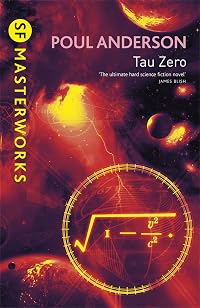

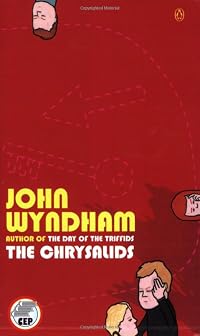
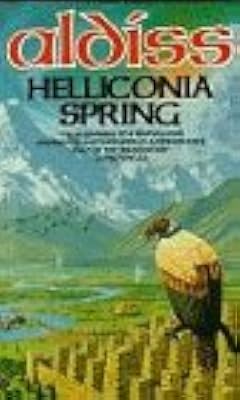
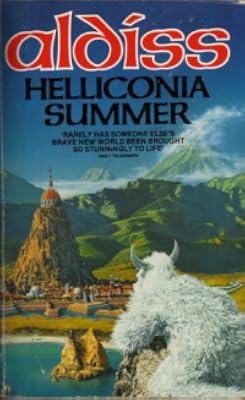








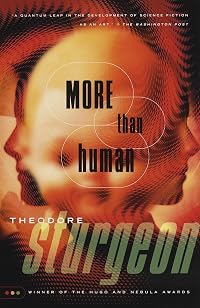

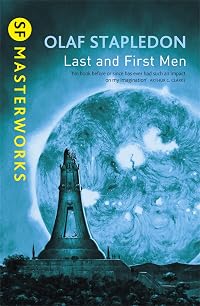

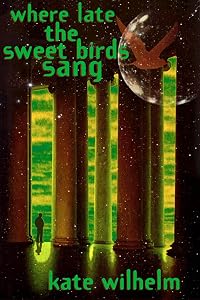
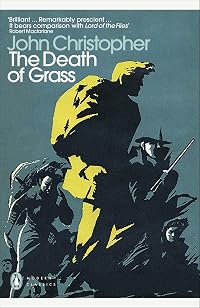


Member Recommendations


Cecrow Science fiction art collection, including a (creepy!) portion envisioning the world of Hothouse.

Member Reviews
Practically all the virtue of 'Hothouse', short of its place in Hugo history, arises from the overwhelming force of its world-building. The sun is completing its lifespan, billions of years from now. Earth has ceased to rotate and the moon is in a locked position, the two webbed together by interstellar-travelling spiders. A banyan tree has expanded to encompass the entire continent (Eurasia?) where most of the action takes place, only limited by the planet's dark side and its oceans. All the land and coastlines are teeming with half-sentient vegetation that has supplanted most of the animal kingdom, humans and a few breeds of insects being the major exceptions. Vegetables have come a long way: now the nettlemoss wants to ensnare you, show more the tigerflies want to lay eggs in you, the wiltmilt will slurp you up, trappersnappers will drag you to the forest floor - a place you never want to go. That's only the start of a long list of entrapments. Human history has been erased and we've shrunk to a fifth our former size. Technology is stripped away, and our thinking has turned fuzzy at its edges. We've only instinct and our reduced ingenuity left to turn more innocuous surroundings to advantage: termights to travel alongside of, suckerbirds to attack for food, dumblers to transport us, fuzzypuzzles to shelter us, burnurns to deliver us to the afterlife on the backs of the oblivious, monstrous traversers.
If only it had a plot as creative to match, and - more tragically - didn't steer the story away from this incredible environment. These, and the sometimes obvious sewn-together nature of the novel (it was originally a series of short stories) detract from what this novel might have been. But just for that horrific glimpse of an oppressive jungle Earth designed by nature to kill you mindlessly and mercilessly in myriad ways - the same one the novel's characters incredibly desire to return to when they are led away and astray - this is worth picking up for an old-fashioned futuristic shiver or two. show less
If only it had a plot as creative to match, and - more tragically - didn't steer the story away from this incredible environment. These, and the sometimes obvious sewn-together nature of the novel (it was originally a series of short stories) detract from what this novel might have been. But just for that horrific glimpse of an oppressive jungle Earth designed by nature to kill you mindlessly and mercilessly in myriad ways - the same one the novel's characters incredibly desire to return to when they are led away and astray - this is worth picking up for an old-fashioned futuristic shiver or two. show less
I'm really impressed with this 1962 classic. I was fully prepared to assume it would be outdated and skimpy on the characters, but what I actually got was a thought-provoking tale that was so heavy on the worldbuilding that the worldbuilding was more like three or four characters in its own right.
I mean, you know its some serious science fiction if we're transported a billion years in the future, where men and women are a fifth our current size, where the earth and the moon are locked to constantly face the sun and the world had devolved and mixed and blurred lines between animals and vegetables. The prose was more than strong enough to prevent such a monstrosity of a novel from collapsing, filled with tantalizing images of truly odd show more creatures and situations I can barely guess at.
I only had a few issues with some of the characters. Some of the species of man were really dumb, and that was kind of the point, but I just couldn't believe that they'd have no sense of self-preservation. That point irked me. But other than that, I understood why the main characters didn't get much of a chance to grow or change. It was an outright adventure novel, exploring new lands, trying to survive while being driven by the mortal enemy of mankind.... his brain.
My god, that aspect of this novel was pretty damn cool. Mankind entered into a contract with a parasite that gave us our intelligence in the deep past. A fungus that, when combined with another living creature, makes it smarter. With time, it moved from being a crown of spongy fungus that looked like a brain to inhabit the slowly enlarged cavity of our modern heads, until all man thought this was the natural order. When the sun aged and became deadly to the fungus, mankind fell into the state of beasts again.
To have a hardy and evolved fungus drop upon you in the middle of the jungle to give you heightened intelligence, you'd think that would be a good thing, right?
Intelligence is overrated. :)
What a mess it caused for Gren.
The world was fantastic, spanning from spiderwebs that spanned between the earth and the moon, twilight zones where wolfmen roam, trees that shoot fire, and fishmen that rise up from the waters to preach about civilization and the coming nova of our sun. Too cool.
There's one more thing. These stories were written in 1961 before they were put together as one novel the next year. As I was reading it, I kept thinking to myself that this novel was the inspiration for Dune. The Morel could access our genetic memories into the deep past. The ecological concerns were breathtaking and very well thought out and developed, whether or not they're inaccurate. There were so many links and ties between the two novels that I had to put it down and do a little research. I kept assuming that this was a homage to Dune, for heaven's sake. Nope. It came out 4 years before Dune, and does an awesome job at outperforming Dune in these ways.
Is that high praise? Yes. Do I see why one of the short stories that made up this novel won the Hugo in '62? Yes. Can I imagine that during the 5 year time that Frank Herbert was writing Dune, he got inspired while reading the magazines these stories were published? Yes.
What a fantastic coincidence. :) show less
I mean, you know its some serious science fiction if we're transported a billion years in the future, where men and women are a fifth our current size, where the earth and the moon are locked to constantly face the sun and the world had devolved and mixed and blurred lines between animals and vegetables. The prose was more than strong enough to prevent such a monstrosity of a novel from collapsing, filled with tantalizing images of truly odd show more creatures and situations I can barely guess at.
I only had a few issues with some of the characters. Some of the species of man were really dumb, and that was kind of the point, but I just couldn't believe that they'd have no sense of self-preservation. That point irked me. But other than that, I understood why the main characters didn't get much of a chance to grow or change. It was an outright adventure novel, exploring new lands, trying to survive while being driven by the mortal enemy of mankind.... his brain.
My god, that aspect of this novel was pretty damn cool. Mankind entered into a contract with a parasite that gave us our intelligence in the deep past. A fungus that, when combined with another living creature, makes it smarter. With time, it moved from being a crown of spongy fungus that looked like a brain to inhabit the slowly enlarged cavity of our modern heads, until all man thought this was the natural order. When the sun aged and became deadly to the fungus, mankind fell into the state of beasts again.
To have a hardy and evolved fungus drop upon you in the middle of the jungle to give you heightened intelligence, you'd think that would be a good thing, right?
Intelligence is overrated. :)
What a mess it caused for Gren.
The world was fantastic, spanning from spiderwebs that spanned between the earth and the moon, twilight zones where wolfmen roam, trees that shoot fire, and fishmen that rise up from the waters to preach about civilization and the coming nova of our sun. Too cool.
There's one more thing. These stories were written in 1961 before they were put together as one novel the next year. As I was reading it, I kept thinking to myself that this novel was the inspiration for Dune. The Morel could access our genetic memories into the deep past. The ecological concerns were breathtaking and very well thought out and developed, whether or not they're inaccurate. There were so many links and ties between the two novels that I had to put it down and do a little research. I kept assuming that this was a homage to Dune, for heaven's sake. Nope. It came out 4 years before Dune, and does an awesome job at outperforming Dune in these ways.
Is that high praise? Yes. Do I see why one of the short stories that made up this novel won the Hugo in '62? Yes. Can I imagine that during the 5 year time that Frank Herbert was writing Dune, he got inspired while reading the magazines these stories were published? Yes.
What a fantastic coincidence. :) show less
What a luxury to read a book where a child dies horribly in the first couple of pages, where the earth’s temperature has risen to the point where almost all mammals are extinct and small groups of humans cling to a precarious existence, where women lead those human groups and the men are protected and pampered because reproduction depends on their survival, and where none of these things is weighed down by real-life concerns about child protection, anthropogenic global warming or hegemonic patriarchy. Hothouse was first published in 1962 (and a year earlier as a five-part serial in a science fiction magazine), when gender politics and ecological anxieties were dots on the horizon for most people, and it was possible to approach in a show more spirit of joyful play subjects that are now matters for earnest, urgent and often acrimonious discussion. show less
It's not just pulp fiction - it's vegetable-pulp fiction!
Long aeons in Earth's future, an Age of Plants has risen. Dangerous, carnivorous plants are everywhere - some species are even mobile hunters! The remaining humans are a dwarfed, shrunken species. With greatly reduced intelligence and a simple, tribal lifestyle, they struggle to stay alive long enough to maintain their population.
It's an interesting premise... sadly, the execution is, quite frankly, terrible. The writing is clunky. The plot, practically non-existent. The characters are (at times, quite literally) interchangeable, with no depth or even an attempt at giving them individual personalities. Basically, there's a group of these future humans, and they wander around, show more encountering one monster or other hazard after another, and gradually getting picked off.
The main raison-d'etre of the book is to imaginatively describe these alien organisms, one after another. They're created from a purely fantastic perspective, not an actual 'scientific speculation' attempt. Nothing about the world described makes any logical sense. That's fine - except nothing about the book is strong enough to carry it as a fantasy, either.
It's also quite offensively sexist. Not in the way of many golden-age SF books, with nubile alien slave girls and sexy sorceresses - I love those! No, it's more of an insidious and constant flow of: every time an incident is portrayed, the female characters are less intelligent, less assertive, more timid, unable to come up with their own ideas, shown as interchangeable as lovers. Hey, they're good at 'giving comfort' though. Even though the future society, we are told, is matriarchal, it's the male characters that have to take charge in every situation and are the main 'do-ers' throughout. It is very clear that Aldiss never even considered that a woman might bother to read his book.
The content here was originally published in five installments in The Magazine of Fantasy & Science Fiction in 1961. Unbelievably, they were collectively awarded a Hugo for 'Best Short Fiction.' An abridged version was previously published as 'The Long Afternoon of Earth.' show less
In 1962, Brian Aldiss won the Hugo Award for Best Short Fiction for the "Hothouse" sequence of stories. 1959 had seen categories for Best Short Story and Best Novelette, but from 1960 to 1966, there was just a singular Best Short Fiction category. Even beyond that, the rules didn't work the way they work now; the five "Hothouse" stories have a collective wordcount in the novel range, and thus if the sequence was nominated as a unit these days, it would have to be in Best Novel. The same year Aldiss won the Hugo (there is a funny story about this in my Penguin Modern Classics edition), the five stories were published as a fix-up.
I both can and cannot see why this won. There definitely are arresting, interesting images. Though not the show more earliest by far, Hothouse is still a pretty early example of the climate apocalypse subgenre. The warming of Earth (from natural causes) has caused a massive proliferation and evolution of plant life, and thus the downfall of the human race, which exists only in isolated pockets of depressed intelligence. The book follows one human as he journeys across his world, often at the behest of a superintelligent morel, and encounters different aspects of the amazing ecosystem. I would say the world was the best part, but I actually found reading the worldbuilding and scene-setting a bit of a slog. There is some neat stuff here, but it feels buried in a dull, aimless travelogue about dull, aimless people, and the exposition itself was often dull and aimless too; I was rarely excited to pick the book back up, and it took me a while to read despite being only 250 pages. I've liked some of Aldiss's short fiction that I've read, and he made good editorial choices in his Galactic Empires anthologies, but this is the first of his novels that I've picked up (for certain definitions of "novel") and it doesn't make me want to read another one. Not bad per se... but it never clicked with me. I kind of feel like I'd rather look at some illustrations of the world that Aldiss created! show less
I both can and cannot see why this won. There definitely are arresting, interesting images. Though not the show more earliest by far, Hothouse is still a pretty early example of the climate apocalypse subgenre. The warming of Earth (from natural causes) has caused a massive proliferation and evolution of plant life, and thus the downfall of the human race, which exists only in isolated pockets of depressed intelligence. The book follows one human as he journeys across his world, often at the behest of a superintelligent morel, and encounters different aspects of the amazing ecosystem. I would say the world was the best part, but I actually found reading the worldbuilding and scene-setting a bit of a slog. There is some neat stuff here, but it feels buried in a dull, aimless travelogue about dull, aimless people, and the exposition itself was often dull and aimless too; I was rarely excited to pick the book back up, and it took me a while to read despite being only 250 pages. I've liked some of Aldiss's short fiction that I've read, and he made good editorial choices in his Galactic Empires anthologies, but this is the first of his novels that I've picked up (for certain definitions of "novel") and it doesn't make me want to read another one. Not bad per se... but it never clicked with me. I kind of feel like I'd rather look at some illustrations of the world that Aldiss created! show less
I'm finding this book difficult to review having read it in one form or another three times over 40 years or so. First as a short story, which covers the first episode in the full book, then the whole novel a few years later, and finally re-reading it many years on. The impressions it left are very different.
What's consistent about my feeling after each reading is the originality of the premise. On a far-future Earth, the sun has begun to swell as it approaches red-giant stage (or perhaps nova; I'm not sure Aldiss really made his mind up about this) and the result has been an explosion of the plant world and the virtual elimination of animal life. There are a few exceptions, among them very primitive humans, shrunk to monkey-like show more proportions, who eke out a perilous existence amongst fast-moving carnivorous and poisonous plants of many forms. This world is well-portrayed in the early chapters and is captivating.
On my first readings, that feeling stayed with me throughout; I almost wonder now whether I read a different version. Because I now feel somewhat let down by the way the book plays out, and feel that the author wasted a fantastic premise which could have been explored in many ways and instead ended up with a lacklustre adventure story with characters that one doesn't feel sympathy for. The later reading also revealed a lack of consistency in the portrayal of this future world that spoils it. For instance, at one point a human group emerging from the forest for the first time sees what we must guess is some future evolution of the termite mound. They exclaim that it looks 'just like a castle' and wonder who built it. But these are humans who for thousands of generations have known a world with no buildings of any sort and who have no history. Why would they even have a word for 'castle' or know the concept of 'building'? There are other similar incidents that jar.
But despite these flaws, there are some ideas that are wondrous. The transporters, giant vegetable vessels kilometers long that travel between Earth and moon laying spider-like webs as they do so are one such. There are others. Read the book for these alone, and if you get frustrated as the ideas get fewer, leave it be. It's not at all like me to suggest you leave a book unfinished, but this is one time when it might be worth it. But do try to finish; it's a slim volume. show less
What's consistent about my feeling after each reading is the originality of the premise. On a far-future Earth, the sun has begun to swell as it approaches red-giant stage (or perhaps nova; I'm not sure Aldiss really made his mind up about this) and the result has been an explosion of the plant world and the virtual elimination of animal life. There are a few exceptions, among them very primitive humans, shrunk to monkey-like show more proportions, who eke out a perilous existence amongst fast-moving carnivorous and poisonous plants of many forms. This world is well-portrayed in the early chapters and is captivating.
On my first readings, that feeling stayed with me throughout; I almost wonder now whether I read a different version. Because I now feel somewhat let down by the way the book plays out, and feel that the author wasted a fantastic premise which could have been explored in many ways and instead ended up with a lacklustre adventure story with characters that one doesn't feel sympathy for. The later reading also revealed a lack of consistency in the portrayal of this future world that spoils it. For instance, at one point a human group emerging from the forest for the first time sees what we must guess is some future evolution of the termite mound. They exclaim that it looks 'just like a castle' and wonder who built it. But these are humans who for thousands of generations have known a world with no buildings of any sort and who have no history. Why would they even have a word for 'castle' or know the concept of 'building'? There are other similar incidents that jar.
But despite these flaws, there are some ideas that are wondrous. The transporters, giant vegetable vessels kilometers long that travel between Earth and moon laying spider-like webs as they do so are one such. There are others. Read the book for these alone, and if you get frustrated as the ideas get fewer, leave it be. It's not at all like me to suggest you leave a book unfinished, but this is one time when it might be worth it. But do try to finish; it's a slim volume. show less
Written in 1962, Brian Aldiss' Hothouse is similar to works like [a:Jack Vance|5376|Jack Vance|http://photo.goodreads.com/authors/1207604643p2/5376.jpg]'s "Dying Earth" series and [a:Gene Wolfe|23069|Gene Wolfe|http://photo.goodreads.com/authors/1207670073p2/23069.jpg]'s Book of the New Sun. In most novels of this dying earth genre, the world is gasping under the weight of civilization; a million years of customs and artifacts, countless empires risen and fallen, cities piled upon cities. In Hothouse, it's nature, not culture which dominates the last days of Man.Far in the future, under a swollen red sun, the Earth and Moon have long since dragged each other to a halt, leaving one side of Earth permanently lit and the other in permanent show more darkness. Under the plentiful radiation on the lit side, plants have become the primary inhabitants of the land, diversifying into thousands of forms to fill every available ecological niche. Of the animal kingdom, only a few species remain: one or two insect-like predators, and a much-altered humanity. These humans are tribal hunter-gatherers, living in the canopy of a continent-spanning forest.The novel follows Gren, who is forced out of his tribe (for, essentially, excessive cleverness) and so begins a journey to seek a new home. Actually, "journey" is perhaps too charitable. Gren is more often driven from place to place by forces he can't control. Early in the novel, he is infected by a parasitic, sentient fungus which slowly takes control of his mind and plans to use Gren to conquer the world. Over the course of the book, Gren travels to the dark side of the Earth, meets a variety of strange creatures, is helped and threatened to various degrees, manages to free himself from the fungus, returns with the fungus--now as a sort of advisory partner--to the light side, is given the choice to flee the first stages of the sun's explosion by riding to the stars inside an interstellar spider-plant, and chooses ultimately to return to the jungle and make babies because--hey--he'll be dead by the time the s**t hits the fan in any case.We see much of this strange world through Gren's eyes, and he knows no more than any of his race. Many things he encounters during his journey remain mysterious, though some of human history is glimpsed in flashback as the mushroom probes (somewhat improbably) through Gren's racial memories, and at times it is possible to guess at the possible origins of species or artifacts.In addition to being delightfully strange, Hothouse takes full advantage of the philosophical possibilities of the Dying Earth setting. The fungus, perhaps, stands in for one part of contemporary human nature: though it is clearly base, cruel, selfish, perhaps even evil--it ultimately is the key to whatever salvation humanity is offered. Our hero, too, is no noble Odysseus; he is often petty, mean, or irresponsible. Yet for all that, or perhaps because of it, he seems more human than his companions--who are generally either passive or completely incomprehensible. The nature of time is also explored: the end of the world is an intellectual threat to the fungus, merely one more incomprehensible event to Gren, who wants mostly to find a good tree and settle down with a woman or two. The end of time, while tragic and romantic, is also suggested as a kind of rebirth. The "green streamers…." escaping from the planet as it dies are beautiful, and it's hard not to read hope into them. As one phase passes, so another begins.These are not particularly profound observations, although they do place the book in the realm of "cerebral" SF. But for me, the greatest achievement of Hothouse is in its depiction of a nature "green in tooth and claw" as Aldiss puts it in the book. Science fiction does not lack for scary monsters; many-tentacled aliens are a dime a dozen. But the biological horror of a relentless, vegetal Earth is something memorable. I find Venus Flytraps slightly unsettling, and a little malevolent. Hothouse takes that feeling and multiplies it to fill a planetary landscape. show less
Members
- Recently Added By
Lists

Best Post-Apocalyptic Stories
143 works; 88 members

Truly alien aliens (SF)
42 works; 3 members

David Pringle's Science Fiction: The 100 Best Novels
101 works; 9 members

AbeBooks: 50 essential science fiction books
50 works; 6 members
Author Information

563+ Works 27,381 Members
Brian W. Aldiss was born in Dereham, United Kingdom on August 18, 1925. In 1943, he joined the Royal Signals regiment, and saw action in Burma. After World War II, he worked as a bookseller at Oxford University. His first book, The Brightfount Diaries, was published in 1955. His first science fiction novel, Non-Stop (Starship in the United show more States), was published in 1958. He wrote more than 80 books including Hothouse, Greybeard, The Helliconia Trilogy, The Squire Quartet, Frankenstein Unbound, The Malacia Tapestry, Walcot, and Mortal Morning. His short story Super-Toys Last All Summer Long was the basis for the film A.I. Artificial Intelligence. He has received numerous awards for his work including two Hugo Awards, the Nebula Award, the John W. Campbell Memorial Award, and an OBE for services to literature. He was also an anthologist and an artist. He was the editor of 40 anthologies including Introducing SF, The Penguin Science Fiction Omnibus, Space Opera, Space Odysseys, Galactic Empires, Evil Earths, and Perilous Planets. He was an abstract artist and his first solo exhibition, The Other Hemisphere, was held in Oxford in August-September 2010. He died on August 19, 2017 at the age of 92. (Bowker Author Biography) show less
Some Editions
Awards and Honors
Series
Belongs to Publisher Series
Galaxy Scifi (7)
Work Relationships
Is contained in
Contains
Is abridged in
Inspired
Common Knowledge
- Canonical title*
- Földburok
- Original title
- Hothouse
- Alternate titles*
- Am Vorabend der Ewigkeit
- Original publication date
- 1962
- People/Characters
- Gren; Lily-yo; Band Appa Bondi; Poyly; The morel; Yattmur (show all 27); Laren; Sodal Ye; Bain; The Chief Captive; Clat; Daphe; Driff; Fay; Flor; Haris; Hutweer; Hy; Iccall; Ivin; Jury; May; Poas; Toy; Veggy; Y Coyin; Yellow Whisker
- Important places
- Hothouse Earth
- Dedication
- Particularly for Charles and Timmy Parr
- First words
- Obeying an inalienable law, things grew, growing rioutous and strange in their impulse for growth.
- Last words
- (Click to show. Warning: May contain spoilers.)They did not look back as the traverser with its passengers rose slowly, floated from the jungle up into the green-flecked sky, and headed for the solemn blues of space.
- Publisher's editor*
- Réti, Attila
- Original language
- English
- Canonical DDC/MDS
- 823.0876222
- Disambiguation notice
- The Long Afternoon of Earth is a slight abridgment of the original five novellas. The full versions were later published as Hothouse. Do not combine Hothouse and any books with Long Afternoon of Earth in the title.
*Some information comes from Common Knowledge in other languages. Click "Edit" for more information.
Classifications
- Genres
- Science Fiction, Fiction and Literature
- DDC/MDS
- 823.0876222 — Literature & rhetoric English & Old English literatures English fiction By type Genre fiction Adventure fiction Speculative fiction Science fiction Post-apocalypse Environmental apocalypse
- LCC
- PR6051 .L3 .H68 — Language and Literature English English Literature 1961-2000
- BISAC
Statistics
- Members
- 1,294
- Popularity
- 18,712
- Reviews
- 33
- Rating
- (3.49)
- Languages
- 14 — Czech, Danish, Dutch, English, Finnish, French, German, Hungarian, Italian, Japanese, Lithuanian, Polish, Spanish, Swedish
- Media
- Paper, Audiobook, Ebook
- ISBNs
- 43
- ASINs
- 25