
On This Page
Description
Adrian Tchaikovksy's award-winning novel Children of Time, is the epic story of humanity's battle for survival on a terraformed planet. Who will inherit this new Earth? The last remnants of the human race left a dying Earth, desperate to find a new home among the stars. Following in the footsteps of their ancestors, they discover the greatest treasure of the past age - a world terraformed and prepared for human life. But all is not right in this new Eden. In the long years since the planet show more was abandoned, the work of its architects has borne disastrous fruit. The planet is not waiting for them, pristine and unoccupied. New masters have turned it from a refuge into mankind's worst nightmare. Now two civilizations are on a collision course, both testing the boundaries of what they will do to survive. As the fate of humanity hangs in the balance, who are the true heirs of this new Earth? show lessTags
Recommendations
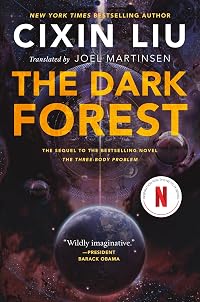
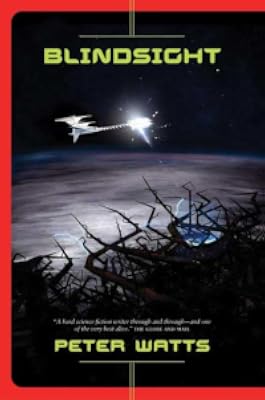
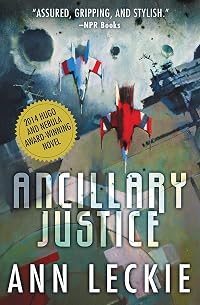

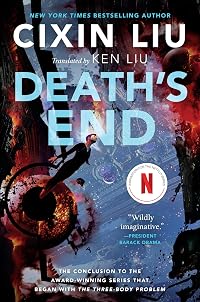
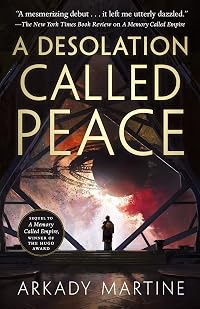
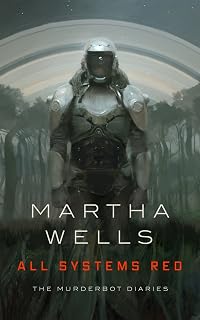

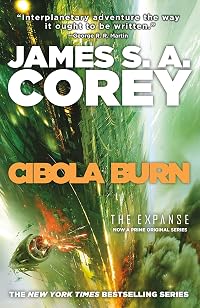
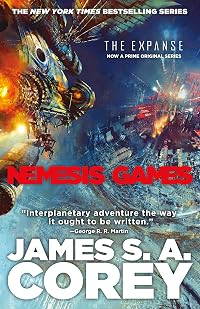
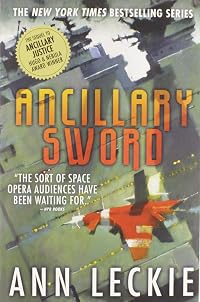
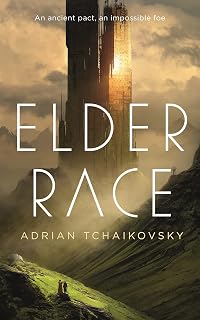

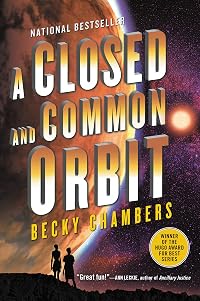
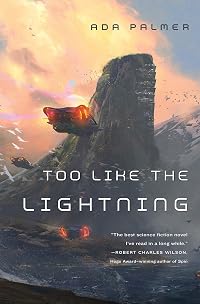
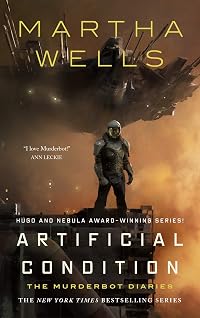
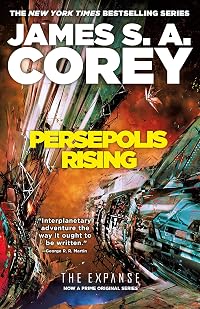
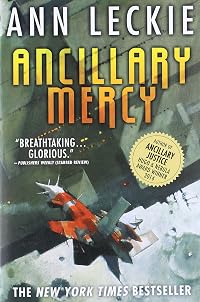
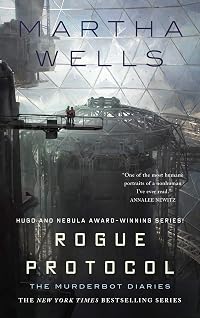
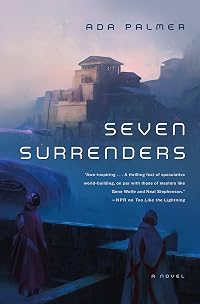

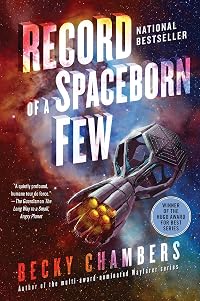
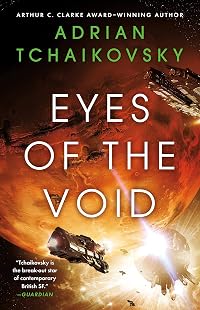
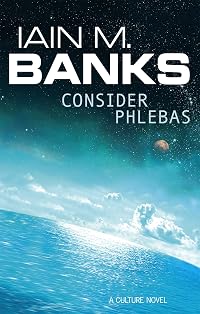
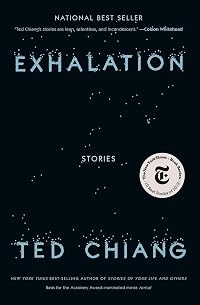
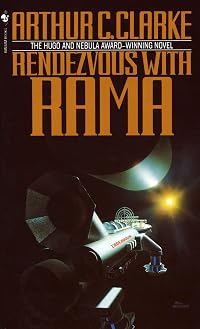
Member Recommendations
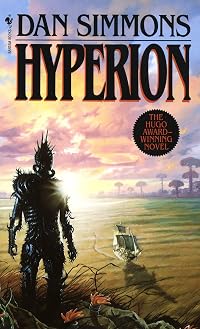
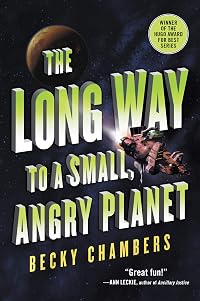
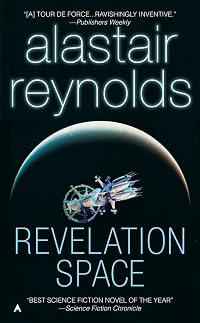
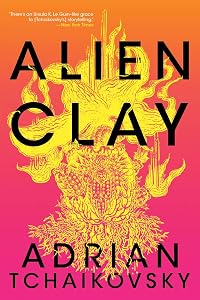
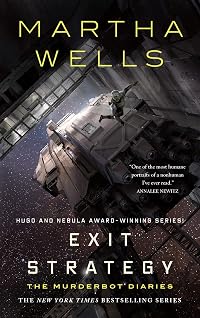
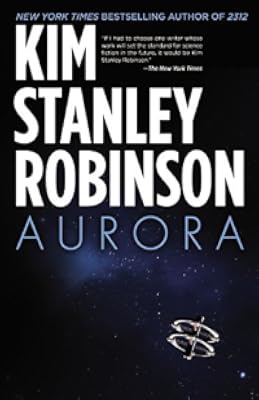
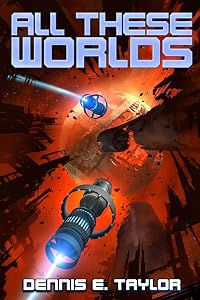
Jayeless Both are thoughtful tales of far-future humanity colonising distant worlds, dealing with crumbling technology, and running into conflict with well-developed non-human civilisations.
20


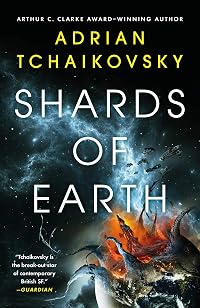
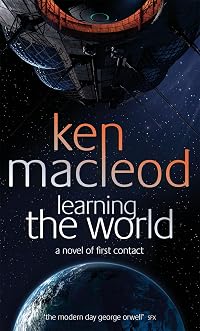
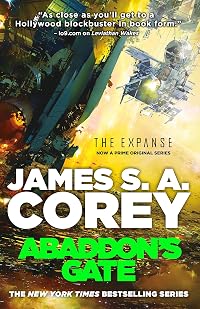
espertus The books have similar themes (evolution of intelligent life and the development of religious belief) and styles (human and alien societies approaching each other in the first part of the book and meeting in the second).
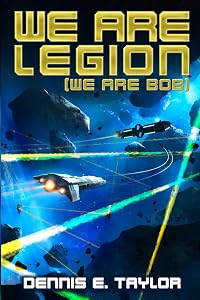
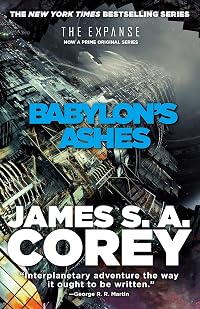
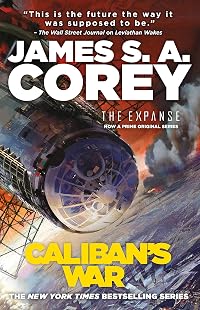
librarianMN A morally ambiguous multi-generational tale about evolutionary disruption by a supposedly benevolent race, but in Butler's trilogy, humans are the subjects of the experiment by an alien race.

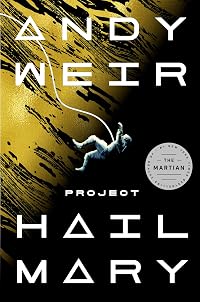
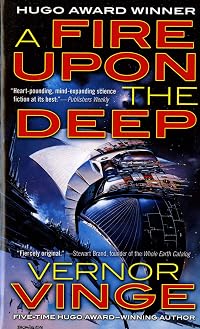
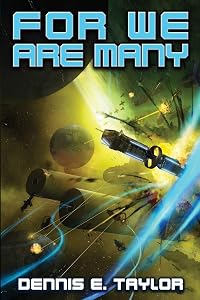
Aquila The similarity here is obvious, uplifted animals replacing humanity.
Member Reviews
Dying Earth, nano-virus, terraforming, arkship, non-human intelligence, a crazy scientist, AI, human-AI mix, crazy ship captain and a few millennia of history. It sounds like a checklist of what can be added to a science fiction series, doesn't it?
For his debut science fiction novel (but not his debut novel by a lot), Tchaikovsky did not just pick one thing from the list. Or 2. Or 5. He used all of them - and added even more. And then he decided that this will be a standalone story and wrapped the story in 600 pages. It should not have worked. And yet, it is one of the best SF novels I had read in a long time.
It all started with the uplift project (ran by the Brin Habitat of course - how else could it have been called?) - a project to show more terraform a string of planets, add monkeys and a nano-virus to allow them to reach intelligence a lot faster and see what will happen. It should have been the biggest success of the human race. But that being humanity after all, the things do not go as planned and the slightly crazy scientist Dr. Kern ends up overseeing her own project - minus the monkeys. And while the planet is evolving with the help of the virus (but without the recipients for it), humanity destroys Earth in more than one way (and lives through an ice age just to make it really messy) and ends up on an arkship, trying to follow a map everyone had forgotten for millennia. And that's where the story really starts.
The planet, Kern's World, now has a living population - of big intelligent spiders (at least it was not cockroaches - that would have been logical but would not have worked - Tchaikovsky knows his animals and picked the one that actually could pull off a success). The protection inside of the virus that was supposed to protect the monkeys from competition, does its job rendering all vertebrae animals stupid. But everyone forgot the other members of the animal family - and the green planet is more of a nightmare. And humanity is coming.
Add a few battles, a shifting story (we have one chapter with the humans, one with the spiders) and evolution on a scale that noone had ever seen (time passes and the nano-virus helps as well), more than one reversal of fortune (for both species), the titular crazy scientist getting crazier and causing a lot of the issues on both sides and an end that was so logical but also so unexpected that I did not see it coming. And it is a perfect end of a story about intelligence and beliefs.
But it is not just a story of battle and survival - because Tchaikovsky builds his evolution story step by step - through the dark ages and the religious dark times (and it is almost logical that the first time the spiders go on a war against each other, it is because of a human); through innovation and progress. It is a success story, even if the monkeys never made it on the planet - and at the end, the evolution wins against stupidity.
A wonderful story (as long as you are not afraid of spiders) and I am not surprised at all that it won the Arthur C. Clarke award - it is a reimaged story from the past but told in a new way. show less
For his debut science fiction novel (but not his debut novel by a lot), Tchaikovsky did not just pick one thing from the list. Or 2. Or 5. He used all of them - and added even more. And then he decided that this will be a standalone story and wrapped the story in 600 pages. It should not have worked. And yet, it is one of the best SF novels I had read in a long time.
It all started with the uplift project (ran by the Brin Habitat of course - how else could it have been called?) - a project to show more terraform a string of planets, add monkeys and a nano-virus to allow them to reach intelligence a lot faster and see what will happen. It should have been the biggest success of the human race. But that being humanity after all, the things do not go as planned and the slightly crazy scientist Dr. Kern ends up overseeing her own project - minus the monkeys. And while the planet is evolving with the help of the virus (but without the recipients for it), humanity destroys Earth in more than one way (and lives through an ice age just to make it really messy) and ends up on an arkship, trying to follow a map everyone had forgotten for millennia. And that's where the story really starts.
The planet, Kern's World, now has a living population - of big intelligent spiders (at least it was not cockroaches - that would have been logical but would not have worked - Tchaikovsky knows his animals and picked the one that actually could pull off a success). The protection inside of the virus that was supposed to protect the monkeys from competition, does its job rendering all vertebrae animals stupid. But everyone forgot the other members of the animal family - and the green planet is more of a nightmare. And humanity is coming.
Add a few battles, a shifting story (we have one chapter with the humans, one with the spiders) and evolution on a scale that noone had ever seen (time passes and the nano-virus helps as well), more than one reversal of fortune (for both species), the titular crazy scientist getting crazier and causing a lot of the issues on both sides and an end that was so logical but also so unexpected that I did not see it coming. And it is a perfect end of a story about intelligence and beliefs.
But it is not just a story of battle and survival - because Tchaikovsky builds his evolution story step by step - through the dark ages and the religious dark times (and it is almost logical that the first time the spiders go on a war against each other, it is because of a human); through innovation and progress. It is a success story, even if the monkeys never made it on the planet - and at the end, the evolution wins against stupidity.
A wonderful story (as long as you are not afraid of spiders) and I am not surprised at all that it won the Arthur C. Clarke award - it is a reimaged story from the past but told in a new way. show less
~100 pages in, we have one story line about giant spiders, one about a colony ship, and one about an insane AI tying them together. And it's all played very hard sci-fi/seriously. As in: it's the reasons and causality behind the giant spider that are cool, not the fact that they are giant spiders.
Update: Finished:
This is fantastic. It is all the things I want in sci-fi.
It is all the best of a deep-dive into 'what if' without getting lost in the technical weeds or failing develop any emotional attachments.
It is reminiscent of classic epics from Niven or Heinlein - that perfect balance of supposition and adventure - but without all the slide rules and chauvinism.
It is the imagination of Charlie Stross, but with a coherent, driving show more plot.
It is that rush of novelty you get from a short story, filled out to a satisfying meal without feeling bloated with padding or stretched too thin to support itself.
It raises disturbing philosophical questions organically, without whacking you over the head with them or feeling like a sermon.
to paraphrase it's main character it is getting awfully close to answering "that impossible question every historian longs to ask: 'what is it like to be you' " for some incredibly interesting perspectives.
The ending is not quite as good as the tension leading up to it, but that's really just more praise for how amazing that tension was.
Anyway, I love it all the way.
Best book. show less
Update: Finished:
This is fantastic. It is all the things I want in sci-fi.
It is all the best of a deep-dive into 'what if' without getting lost in the technical weeds or failing develop any emotional attachments.
It is reminiscent of classic epics from Niven or Heinlein - that perfect balance of supposition and adventure - but without all the slide rules and chauvinism.
It is the imagination of Charlie Stross, but with a coherent, driving show more plot.
It is that rush of novelty you get from a short story, filled out to a satisfying meal without feeling bloated with padding or stretched too thin to support itself.
It raises disturbing philosophical questions organically, without whacking you over the head with them or feeling like a sermon.
to paraphrase it's main character it is getting awfully close to answering "that impossible question every historian longs to ask: 'what is it like to be you' " for some incredibly interesting perspectives.
The ending is not quite as good as the tension leading up to it, but that's really just more praise for how amazing that tension was.
Anyway, I love it all the way.
Best book. show less
CW: SPIDERS
This is one of the most unique and damn near perfect books I have ever read.
I am just too flaring and empty headed to properly review this right now. Suffice to say, I have felt all the emotions, genuinely laughed, cried a few times, including the most I've cried at a book in a while.
Breathtaking and brilliant with big ideas pulled off with style, but a wonderfully understated way. It's hard to describe, but the the tone and sensibility of this book are so much more unassuming than the massive things it contains, which truly allows them to shine. Truly spectacular and singular work.
This is truly something else and anyone with any interest in science fiction, even in the slightest, owes it to themselves to check this out. I'm show more so very excited to check the other two in this series out and then just everything else Tchaikovsky that I haven't already read! show less
This is one of the most unique and damn near perfect books I have ever read.
I am just too flaring and empty headed to properly review this right now. Suffice to say, I have felt all the emotions, genuinely laughed, cried a few times, including the most I've cried at a book in a while.
Breathtaking and brilliant with big ideas pulled off with style, but a wonderfully understated way. It's hard to describe, but the the tone and sensibility of this book are so much more unassuming than the massive things it contains, which truly allows them to shine. Truly spectacular and singular work.
This is truly something else and anyone with any interest in science fiction, even in the slightest, owes it to themselves to check this out. I'm show more so very excited to check the other two in this series out and then just everything else Tchaikovsky that I haven't already read! show less
This book is a perennial favorite on the /r/printSF subreddit, so I've long been curious about it. The basic premise of the book is that in the far future, a human attempt to elevate life on an alien planet to sapience goes awry, causing a spider civilization to be uplifted. Generations later, some of the last humans in existence come to the same planet seeking a refuge, and finding much more than they bargained for.
Children of Time mostly consists of two parallel narratives. One spans generation upon generation as the sapient spiders evolve and build their civilization; the other follows the last humans on their ark ship, especially one particular character, a "classicist" who gets woken up because he knows the languages and procedures show more of the humans of the era that seeded the spider planet.
I think there are a lot of neat ideas in this book but I felt like they were not told in the way that I find most compelling in my science fiction. Tchaikovsky has very clearly thought through the spider civilization, and that's probably the book's triumph. But—as I am always saying around here—the pleasure of sf is that it's a mystery, but the world itself is a mystery. By beginning at the beginning of the spider civilization and carrying you along with its development, the book circumvents that; you understand their society exactly because you see it grow step by step. I think I would have rather 1) just began the spider perspective sections at the end of their development, so that you as the reader had to work to understand this society from the perspective of one of its members, or even 2) not had any spider perspective sections at all, and get the human characters to have meaningful interaction with the spiders sooner, so that you as the reader come to understand this society along with the human characters. To me, the clash of cultures was the thing I was most interested it, but it's only at the very end of the book, and we don't get very much of it.
This isn't to say I didn't enjoy it. But I think what I enjoyed about the book—the "rationalized alienation" that Tchaikovsky put into the development of spider society, and actually also (and this I feel like doesn't go commented on enough in discourse around the book) the way the human society on the ark ship also changed over time—could have been maximized more with a different approach. show less
Children of Time mostly consists of two parallel narratives. One spans generation upon generation as the sapient spiders evolve and build their civilization; the other follows the last humans on their ark ship, especially one particular character, a "classicist" who gets woken up because he knows the languages and procedures show more of the humans of the era that seeded the spider planet.
I think there are a lot of neat ideas in this book but I felt like they were not told in the way that I find most compelling in my science fiction. Tchaikovsky has very clearly thought through the spider civilization, and that's probably the book's triumph. But—as I am always saying around here—the pleasure of sf is that it's a mystery, but the world itself is a mystery. By beginning at the beginning of the spider civilization and carrying you along with its development, the book circumvents that; you understand their society exactly because you see it grow step by step. I think I would have rather 1) just began the spider perspective sections at the end of their development, so that you as the reader had to work to understand this society from the perspective of one of its members, or even 2) not had any spider perspective sections at all, and get the human characters to have meaningful interaction with the spiders sooner, so that you as the reader come to understand this society along with the human characters. To me, the clash of cultures was the thing I was most interested it, but it's only at the very end of the book, and we don't get very much of it.
This isn't to say I didn't enjoy it. But I think what I enjoyed about the book—the "rationalized alienation" that Tchaikovsky put into the development of spider society, and actually also (and this I feel like doesn't go commented on enough in discourse around the book) the way the human society on the ark ship also changed over time—could have been maximized more with a different approach. show less
As Earth tears itself apart, scientists and engineers are terraforming other planets, until the unrest reaches even them. Experimental worlds are left untended, leading to the evolution of at least one world with multiple sentient societies. We watch the spider society evolve over millennia. In parallel, human refugees come across the experimental planet and are sent away by its tender, until they can't stay away any longer.
This book has all the makings of something I'd love (sci fi, science, religion, AI, languages), but it just didn't do it for me. The premise is intriguing but I found the execution to plod -- 600 pages, minimal dialogue, uncompelling characters across the board, predictable plot, a lot of social evolution of the show more emerging society seems to just be inverting human society rather than building anew, no surprising ideas surfaced. I actually think it would have worked extremely well distilled to a short story that only has time to wave at its themes rather than getting bogged down in clarifying all of them. show less
This book has all the makings of something I'd love (sci fi, science, religion, AI, languages), but it just didn't do it for me. The premise is intriguing but I found the execution to plod -- 600 pages, minimal dialogue, uncompelling characters across the board, predictable plot, a lot of social evolution of the show more emerging society seems to just be inverting human society rather than building anew, no surprising ideas surfaced. I actually think it would have worked extremely well distilled to a short story that only has time to wave at its themes rather than getting bogged down in clarifying all of them. show less
It's a very odd thing to find someone writing more compelling chapters about spider society and gender politics than they do human ark ship politics. Yet here we are.
Tchaikovsky manages to cram enough sci fi building blocks into one book to cover a season of Star Trek, from inconsistent technology levels, luddite rebellions, AI and mind uploading, terraforming new worlds, gene seeding, genetic memory; it's really quite a quite rich stew. Unfortunately the weakest aspects of the novel come from the human characters, perhaps necessarily so as they're nearly all undercut by the time skips present in the novel, constantly floundering or disappearing from the narrative, whereas the spider characters get a much more compelling arc through show more the book.
The best moments in the book are from the nascent spider civilization, and makes me wonder if someone would have the guts to commit entirely to write that story without the safety net of anchoring it in a story about humans at all. Mostly good, sometimes great, and manages to tell a satisfying self contained story despite branching out into further sequels. show less
Tchaikovsky manages to cram enough sci fi building blocks into one book to cover a season of Star Trek, from inconsistent technology levels, luddite rebellions, AI and mind uploading, terraforming new worlds, gene seeding, genetic memory; it's really quite a quite rich stew. Unfortunately the weakest aspects of the novel come from the human characters, perhaps necessarily so as they're nearly all undercut by the time skips present in the novel, constantly floundering or disappearing from the narrative, whereas the spider characters get a much more compelling arc through show more the book.
The best moments in the book are from the nascent spider civilization, and makes me wonder if someone would have the guts to commit entirely to write that story without the safety net of anchoring it in a story about humans at all. Mostly good, sometimes great, and manages to tell a satisfying self contained story despite branching out into further sequels. show less
5 stars
After a war to end all wars *snicker* the Earth's population was mostly wiped out. Once they started rebuilding and reclaiming what their forefathers had done (and reversing the ice age), Earth started dying from all the poisons being released. With nowhere else to go, humans took to the skies in technology that was a facsimile of original technology in the hopes of finding a habitable planet, since there were whispers that the original Earth inhabitants had started trying to create new habitable planets so that humans could reside there. They finally reach one such planet, only to discover that it is protected by a satellite. When they manage to land anyway, they find out that the planet is not uninhabited... or helpless.
This show more was SO good. SO GOOD! I loved it. I liked the world building and the characters and the story and the writing. I liked seeing what each generation (of spiders) learned from the previous generation. The humans were... well, human. And I don't really mean that in a good way. They kind of showcased the worst of the human race, while the spiders showcased the best. (Weird, I know.) I'm definitely Team Spider. And I don't even like arachnids all that much. But when contrasted with the humans? They were infinitely superior in their approach to problems and solutions. They did what they meant to do to survive and stay alive, but they did it without prejudice and with kindness and understanding. And, yes, the males were mistreated for a long time. (Biting my tongue on this one.) But they came around slowly but surely and everyone worked together, depending on their strengths, not dependent on supposed places in society. I mean, there was a period of time, when they were following the god, that they were acting more like humans with hierarchal society. What I really liked about the spiders is that they learned and adapted and changed when they got new information, they didn't just ignore it.
And now for the humans. Well... they were human. And not a great representation of humanity. Whenever there was an opportunity to choose a different route, to change their base reaction to things, they didn't. Even the guy who was lamenting the fact that maybe they shouldn't have tried to follow in the footsteps of the forebearers, maybe they should have tried to do better, chose the same old attack without mercy when it came down to it. He didn't listen to his gut saying maybe he should try to figure out what the spiders were saying or communicating. They were megalomaniacs and human is right all the way, because no lesser being could ever best them. (Go, Spiders!) Even Kern, once she realized what the spiders actually were, and adapted her way of communicating and expectations based on that knowledge, was of a scorched earth mentality instead of trying to find another way.
Seriously. Is there a spider's nest of these spiders that I can crawl into? I think I'd rather belong to that race and society. And honestly, I kept singing Ronnie Dunn's "We All Bleed Red" the entire time I was reading this book. It's good. I love it. I'm still in that world with that advanced understanding and compassion. I will definitely read more by this author. show less
After a war to end all wars *snicker* the Earth's population was mostly wiped out. Once they started rebuilding and reclaiming what their forefathers had done (and reversing the ice age), Earth started dying from all the poisons being released. With nowhere else to go, humans took to the skies in technology that was a facsimile of original technology in the hopes of finding a habitable planet, since there were whispers that the original Earth inhabitants had started trying to create new habitable planets so that humans could reside there. They finally reach one such planet, only to discover that it is protected by a satellite. When they manage to land anyway, they find out that the planet is not uninhabited... or helpless.
This show more was SO good. SO GOOD! I loved it. I liked the world building and the characters and the story and the writing. I liked seeing what each generation (of spiders) learned from the previous generation. The humans were... well, human. And I don't really mean that in a good way. They kind of showcased the worst of the human race, while the spiders showcased the best. (Weird, I know.) I'm definitely Team Spider. And I don't even like arachnids all that much. But when contrasted with the humans? They were infinitely superior in their approach to problems and solutions. They did what they meant to do to survive and stay alive, but they did it without prejudice and with kindness and understanding. And, yes, the males were mistreated for a long time. (Biting my tongue on this one.) But they came around slowly but surely and everyone worked together, depending on their strengths, not dependent on supposed places in society. I mean, there was a period of time, when they were following the god, that they were acting more like humans with hierarchal society. What I really liked about the spiders is that they learned and adapted and changed when they got new information, they didn't just ignore it.
And now for the humans. Well... they were human. And not a great representation of humanity. Whenever there was an opportunity to choose a different route, to change their base reaction to things, they didn't. Even the guy who was lamenting the fact that maybe they shouldn't have tried to follow in the footsteps of the forebearers, maybe they should have tried to do better, chose the same old attack without mercy when it came down to it. He didn't listen to his gut saying maybe he should try to figure out what the spiders were saying or communicating. They were megalomaniacs and human is right all the way, because no lesser being could ever best them. (Go, Spiders!) Even Kern, once she realized what the spiders actually were, and adapted her way of communicating and expectations based on that knowledge, was of a scorched earth mentality instead of trying to find another way.
Seriously. Is there a spider's nest of these spiders that I can crawl into? I think I'd rather belong to that race and society. And honestly, I kept singing Ronnie Dunn's "We All Bleed Red" the entire time I was reading this book. It's good. I love it. I'm still in that world with that advanced understanding and compassion. I will definitely read more by this author. show less
Members
- Recently Added By
Published Reviews
ThingScore 100
The concept of “uplift” has been around for a while; in this version, humans have destroyed Earth, and are making a last ditch effort to terraform a new home planet. The last stage of the terraforming includes uplifting some apes to serve as slaves for colonists via a nanovirus.
Alas for the humans, things do not go as planned. They accidentally create a planet of sentient spiders.
Alas for the humans, things do not go as planned. They accidentally create a planet of sentient spiders.
added by private library
Lists

NPR Summer 2021: 50 Favorite Sci-Fi And Fantasy Books Of The Past Decade
50 works; 8 members

2016 Hugo Eligible Novels
90 works; 31 members

Generation Ship
28 works; 7 members

Top Five Books of 2020
982 works; 350 members

Top Five Books of 2018
802 works; 264 members

Top Five Books of 2019
387 works; 111 members

Arthur C. Clarke Award Winners and Shortlisted Books
219 works; 14 members

Schisms in transhumanity - SF
34 works; 1 member

Vlogbrothers Book Recommendations
307 works; 4 members

Kindle Fantasy/Science Fiction Re-Read
151 works; 1 member

Favorite Science Fiction
456 works; 218 members

Post Apocalyptic Novels
41 works; 1 member

Top Five Books of 2025
954 works; 303 members

Up Next
4 works; 1 member

Fantasy TBR
17 works; 1 member

Book Worlds We'd Like To Visit
322 works; 158 members

Favorite Animal Fiction
359 works; 156 members
Books We Couldn't Put Down
443 works; 197 members

DG hard and slightly less hard science fiction
12 works; 1 member

Books Read in 2023
5,547 works; 145 members

Recommended Science-Fiction Books
40 works; 3 members

al.vick-wishlist-scifi-fant
181 works; 2 members

Books Read in 2020
4,379 works; 124 members

Books Read in 2019
4,052 works; 110 members

To Read
617 works; 7 members

Books Read in 2018
4,360 works; 110 members

An evolving science fiction novel canon
50 works; 2 members
Author Information

Adrian Tchaikovsky is a British fantasy and science fiction author, born on June 14, 1972 in Woodhall Spa, Lincolnshire. He studied Zoology and Psychology at the University of Reading. His career focus changed to law and has worked as a Legal Executive in both Reading and Leeds. He's the author of the Shadows of the Apt series, and his standalone show more novel Children of Time is the winner of the 2016 Arthur C Clarke Award for Best Science Fiction Novel. (Bowker Author Biography) show less
Some Editions
Awards and Honors
Awards
Distinctions
Notable Lists
Series

Belongs to Publisher Series
Gallimard, Folio SF (641)
Work Relationships
Is contained in
Common Knowledge
- Canonical title*
- Die Kinder der Zeit
- Original title
- Children of Time
- Original publication date
- 2015-06-04
- Dedication
- To Portia
- First words
- There were no windows in the Brin 2 facility - rotation meant that 'outside' was always 'down', underfoot, out of mind.
- Quotations
- Little focuses the collective mind more decisively than the threat of utter extinction.
Life is not perfect, individuals will always be flawed, but empathy -- the sheer inability to see those around them as anything other than people too -- conquers all, in the end. - Last words
- (Click to show. Warning: May contain spoilers.)After all the years, the wars, the tragedies and the loss, the spiders and the monkeys are returning to the stars to seek their inheritance.
- Original language
- English
*Some information comes from Common Knowledge in other languages. Click "Edit" for more information.
Classifications
Statistics
- Members
- 5,503
- Popularity
- 2,423
- Reviews
- 215
- Rating
- (4.17)
- Languages
- 11 — Czech, Dutch, English, French, German, Hungarian, Italian, Polish, Portuguese, Spanish, Turkish
- Media
- Paper, Audiobook, Ebook
- ISBNs
- 39
- ASINs
- 12