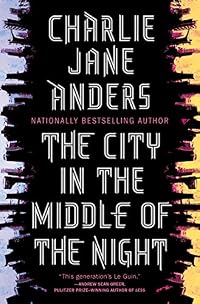
The City in the Middle of the Night
by Charlie Jane Anders
On This Page
Description
Sophie serves coffee at an underground cafe. She stays in the shadows and listens to the troubles of the parlor guests, but does not draw attention to herself for one simple reason: Sophie is supposed to be dead. When a nationalistic revolution forces Sophie from her safe haven, she must make a dangerous journey to a new city, one that revels in hedonism and chaos. After joining up with a band of smugglers, she finds herself on a long and treacherous path that will lead her far closer to the show more truth of her entire world--and to the dangers that lurk even in the light of day. show lessTags
Recommendations

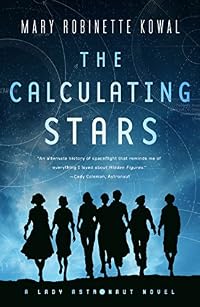
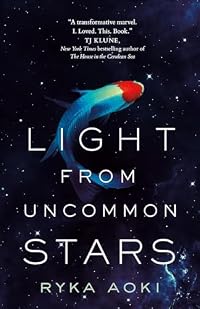
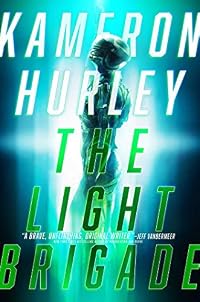
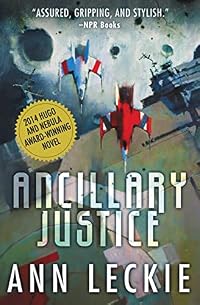
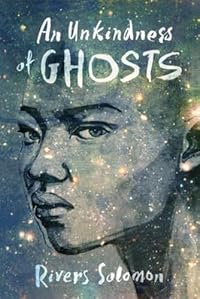
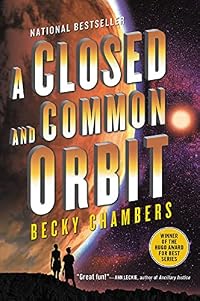
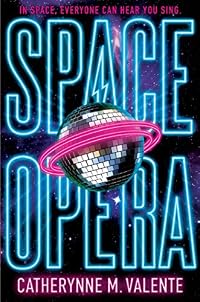
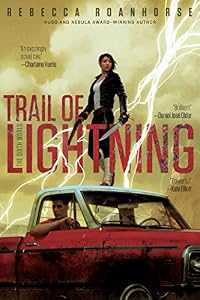

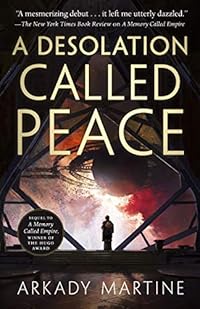
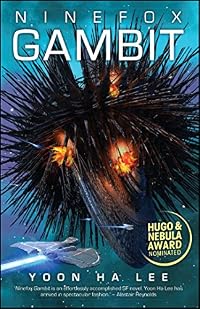


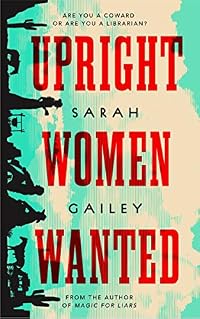
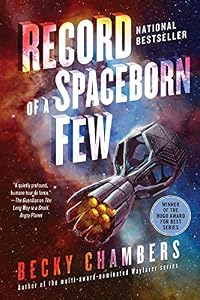

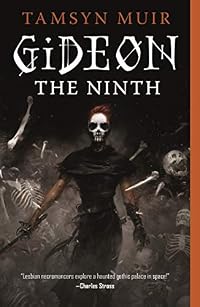
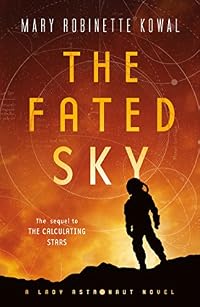
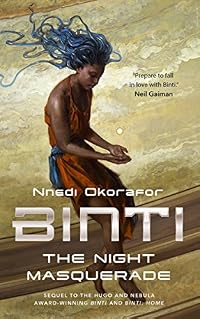
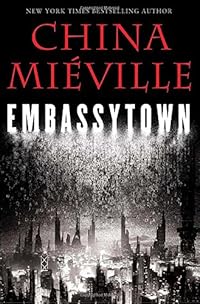
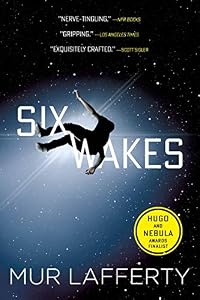
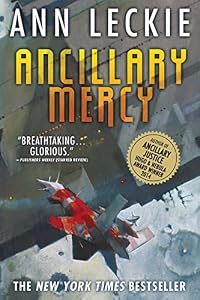
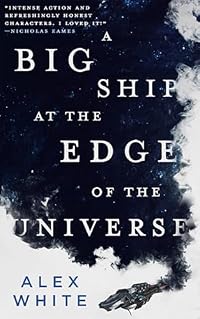
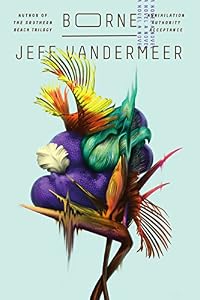
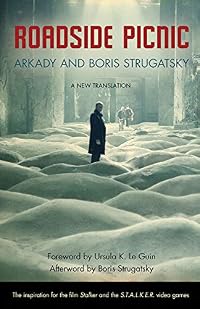
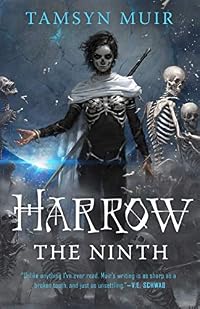
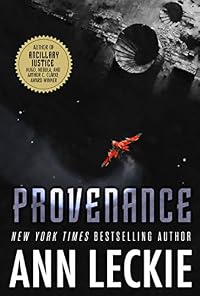
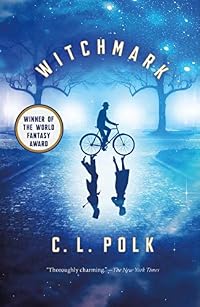
Member Recommendations

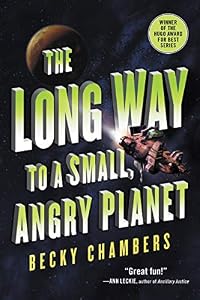
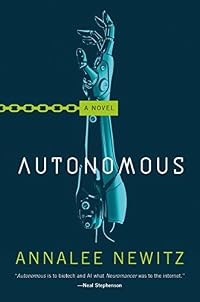
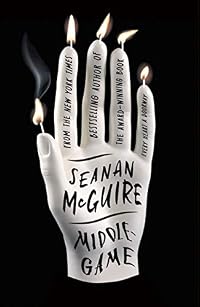
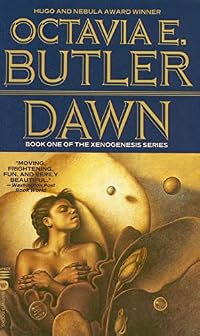
Jayeless Both are thoughtful tales of far-future humanity colonising distant worlds, dealing with crumbling technology, and running into conflict with well-developed non-human civilisations.
Member Reviews
The City in the Middle of the Night feels highly reminiscent of Ursula K. LeGuin with its analysis of alien culture, colonialism, and even the meaning of language, though with a grittier, modern edge. It's not simply a book on social issues, though--the characterizations are deep and realistic. This is a book that makes you think and feel.
The book follows two viewpoints: Sophie, a quiet student with a hopeless crush on her manic, popular university roommate, and Mouth, the hard-edged only survivor of a roaming culture that was obliterated by the harsh environment of the planet January. Humans have been on the world for centuries struggle to survive in massive cities that exist largely in isolation.
The worldbuilding truly blew me away show more here. This is hard scifi across disciplines, but the cultural aspect is what I loved most. I didn't find this to be a fast read-the tension has a slow build, but it was interesting all the way through. show less
The book follows two viewpoints: Sophie, a quiet student with a hopeless crush on her manic, popular university roommate, and Mouth, the hard-edged only survivor of a roaming culture that was obliterated by the harsh environment of the planet January. Humans have been on the world for centuries struggle to survive in massive cities that exist largely in isolation.
The worldbuilding truly blew me away show more here. This is hard scifi across disciplines, but the cultural aspect is what I loved most. I didn't find this to be a fast read-the tension has a slow build, but it was interesting all the way through. show less
The front cover blurb on my copy reads, "This generation's Le Guin," which made me scoff. I mean, I enjoyed All the Birds in the Sky, but it read to me like an above-average YA novel in many ways-- not a piece of genre-defining fiction. But I did read The City in the Middle of the Night about a month after reading The Left Hand of Darkness for the third time, and I can see it. City in the Middle won't redefine the genre, but it is working squarely within the genre as Le Guin redefined it; like Ancillary Justice, you can see very clearly how Anders is following in the footsteps of her predecessor. Like Left Hand, this is a story about societies and how they shape us, and how we reach across the barriers. Like Left Hand, there's a focus show more on two different societies, one more rigid, one seemingly more flexible. Like Left Hand, it's about how histories define both self and world. Like Left Hand, it's about how we fail to reach across the barriers. Like Left Hand, it's about how exploration is about redefining the self. And like Left Hand (and Ancillary Justice!), it's got a long, cold journey on a sled in it.
The novel is set on a tidally locked planet, in human colonies in the planet's tiny habitable zone. Thus "day" and "night" are directions, not times, and there is no natural timekeeping system for the planet to adopt. We primarily see two different cities, one where a consistent time system is rigidly enforced, one where there is a complete absence of consistent time from person to person. I loved the worldbuilding, especially in Xiosphant, the rigid city. But like the best science fiction, it's not all about the world; it's also about the people, people who both feel like totally a product of their world and like people you could actually know. Following the adventures of Sophie and Mouth tells you something about their world, and something about yourself. The book has a real emotional truth that impressed me a lot, especially after reading the complete lack of truthful characterization (or worldbuilding, come to think of it) in Gideon the Ninth. Near the end, the worldbuilding feels less important, which was disappointing; I wanted more of human culture on the planet January than we ultimately got.
But this book feels real throughout, in terms of character and in terms of world. It does what great sf does: explores an idea both literally and metaphorically. I have four more Best Novel finalists to read, but this feels to me like the one to beat. show less
The novel is set on a tidally locked planet, in human colonies in the planet's tiny habitable zone. Thus "day" and "night" are directions, not times, and there is no natural timekeeping system for the planet to adopt. We primarily see two different cities, one where a consistent time system is rigidly enforced, one where there is a complete absence of consistent time from person to person. I loved the worldbuilding, especially in Xiosphant, the rigid city. But like the best science fiction, it's not all about the world; it's also about the people, people who both feel like totally a product of their world and like people you could actually know. Following the adventures of Sophie and Mouth tells you something about their world, and something about yourself. The book has a real emotional truth that impressed me a lot, especially after reading the complete lack of truthful characterization (or worldbuilding, come to think of it) in Gideon the Ninth. Near the end, the worldbuilding feels less important, which was disappointing; I wanted more of human culture on the planet January than we ultimately got.
But this book feels real throughout, in terms of character and in terms of world. It does what great sf does: explores an idea both literally and metaphorically. I have four more Best Novel finalists to read, but this feels to me like the one to beat. show less
Anders is a very clever writer, with fabulous use of language, and immersive world-building. Unfortunately, I loathe their characters. Well written, but just horrible people, and I spend so much time not wanting to be anywhere near them that this book took me months to read.
Tidally-locked planetary romance! Also, timely environmental fiction about how we manage change in our societies and personal lives. Also also, a science fiction novel about unusual and complicated relationships between women.
This novel flows in an organic way that I found very pleasing, although it may not be to all tastes. I loved the worldbuilding, particularly Xiosphant, a byzantine city-state that reads like a mid-century dystopian novel come to three-dimensional life (and in the process, losing some of its horror).
I loved, loved, loved Mouth, a nomad with a tragic past and a chip on her shoulder who, in the theater of my mind, is played by Frances McDormand with a mohawk. She is a beautiful, utterly unique character and the show more emotional heart of this novel. (Also, someone please write crossover fic where she hangs out with Jaeger to bitch about the evils of sedentary living.)
I loved the Gelet and getting to spend time in a society organized around such a radically different experience of empathy. Sophie's connection with the Gelet was more compelling to me than her hopeless love for Bianca. Bianca's an elusive character without (seemingly) much there there, which is probably the point, but their relationship didn't resonate as much with me as, say, Mouth's and Alyssa's.
Finally, I want to give Charlie Jane Anders props for giving her colony world a history rooted in real Earth cultures, which is a necessary antidote to how white American science fiction writers have historically written about space civilizations. She talks about her writing process on her podcast with Annalee Newitz, Our Opinions Are Correct - it's worth a listen. show less
This novel flows in an organic way that I found very pleasing, although it may not be to all tastes. I loved the worldbuilding, particularly Xiosphant, a byzantine city-state that reads like a mid-century dystopian novel come to three-dimensional life (and in the process, losing some of its horror).
I loved, loved, loved Mouth, a nomad with a tragic past and a chip on her shoulder who, in the theater of my mind, is played by Frances McDormand with a mohawk. She is a beautiful, utterly unique character and the show more emotional heart of this novel. (Also, someone please write crossover fic where she hangs out with Jaeger to bitch about the evils of sedentary living.)
I loved the Gelet and getting to spend time in a society organized around such a radically different experience of empathy. Sophie's connection with the Gelet was more compelling to me than her hopeless love for Bianca. Bianca's an elusive character without (seemingly) much there there, which is probably the point, but their relationship didn't resonate as much with me as, say, Mouth's and Alyssa's.
Finally, I want to give Charlie Jane Anders props for giving her colony world a history rooted in real Earth cultures, which is a necessary antidote to how white American science fiction writers have historically written about space civilizations. She talks about her writing process on her podcast with Annalee Newitz, Our Opinions Are Correct - it's worth a listen. show less
This book was a crazy ride through an unrecognizable world. I kept being totally shocked by the things that happened but nothing ever felt out of place. Strangely, my favorite thing was the use of words whose meanings had changed after hundreds of years. Something would be mentioned like "lemonade" and then the person would be served a glass of green liquid with weeds in it that tasted slightly sour. I thought about language for days after finishing this book! I didn't think about tidally-locked planets because those are apparently horrifying and I am glad I will never have to migrate to one.
*.5
A disappointing read. There are some interesting ideas, but rather than explore them we instead are subjected to endless descriptions of the characters feelings and emotions about whatever is happening. They could be eating lunch, taking a nap, or in the middle of a life-and-death struggle with pirates on the high seas, it doesn't matter. The action will come to a screeching halt, in order for the author to make sure that the reader is fully cognizant of the insecurities and mental state of the character. Many lives may be at stake, but that's nothing compared to the importance of petty jealousy or a grudge over a perceived slight. It's not quite Ann Leckie levels of tedious trivialities trumping all, but it's dangerously close, and show more extremely off-putting. To make it worse, the tone is very YA-ish. These are college kids, concerned about drinking and partying and fitting in with a clique. Even as they participate in a bloody revolution, team up with smugglers, or risk their lives on a wild adventure, nothing will ever achieve the importance of whether the person they have a crush on reciprocates their feelings. Which of course they are too scared to express. It's essentially a teenage melodrama, dressed up as sci-fi.
The pacing is also terrible. Aside from the lengthy expositions about the characters' mental states, there is endless prattling dialogue. It can take six pages for a character to go to the market and purchase a peach, because every interaction is scrupulously documented, down to the haggling over the price of the peach and the counting out of the change. Which would be ok if it added flavour, or expanded our understanding of the society or the economy or the agricultural system, but no it's all so mundane and unnecessary.
Despite not really enjoying the book, I stuck with it in the hopes that the various tantalizing tidbits would coalesce into a crescendo, that there would be some sort of satisfying conclusion. Alas, such was not to be. The characters continue to be annoying idiot assholes until the end, and nothing is resolved. Very frustrating. show less
A disappointing read. There are some interesting ideas, but rather than explore them we instead are subjected to endless descriptions of the characters feelings and emotions about whatever is happening. They could be eating lunch, taking a nap, or in the middle of a life-and-death struggle with pirates on the high seas, it doesn't matter. The action will come to a screeching halt, in order for the author to make sure that the reader is fully cognizant of the insecurities and mental state of the character. Many lives may be at stake, but that's nothing compared to the importance of petty jealousy or a grudge over a perceived slight. It's not quite Ann Leckie levels of tedious trivialities trumping all, but it's dangerously close, and show more extremely off-putting. To make it worse, the tone is very YA-ish. These are college kids, concerned about drinking and partying and fitting in with a clique. Even as they participate in a bloody revolution, team up with smugglers, or risk their lives on a wild adventure, nothing will ever achieve the importance of whether the person they have a crush on reciprocates their feelings. Which of course they are too scared to express. It's essentially a teenage melodrama, dressed up as sci-fi.
The pacing is also terrible. Aside from the lengthy expositions about the characters' mental states, there is endless prattling dialogue. It can take six pages for a character to go to the market and purchase a peach, because every interaction is scrupulously documented, down to the haggling over the price of the peach and the counting out of the change. Which would be ok if it added flavour, or expanded our understanding of the society or the economy or the agricultural system, but no it's all so mundane and unnecessary.
Despite not really enjoying the book, I stuck with it in the hopes that the various tantalizing tidbits would coalesce into a crescendo, that there would be some sort of satisfying conclusion. Alas, such was not to be. The characters continue to be annoying idiot assholes until the end, and nothing is resolved. Very frustrating. show less
I loved this book from the first page, but it still took me a while to finish. It isn't one of those intense reads that you have to finish to find out what happens, it's more like you keep going back to it because the world is interesting and you want to spend more time there.
It reminds me of Ursula LeGuin or Margaret Atwood. The kind of SF that's mostly about building a world, not with one or two wild facts, but in painstaking, delicate detail. The city where it opens has no days or nights, because the planet is tidally locked: that's a fact. The detail is all in how this has affected the culture, how obsessed with keeping track of time everyone is. Because when there's no time, you have to create time. (Relatable to me, reading this show more in late March 2020, with no work or school to break up the days. Suddenly I'm desperate to remind myself of the date and time, because I can't subconsciously know, like I can when I'm on the clock.) But that time obsession ends up being a kind of slavery, so there's also a cafe where everyone has to check their watches at the door and try to be apart from time for a little while. There's also a city with no time at all, later on in the book, and nobody knows when to go to sleep. And, of course, the alien creatures are the most interesting thing. It's a whole world in sharp-edged detail.
There is a plot, or several plots. Characters are working through their problems and eventually, they work through those problems in large enough ways to affect the whole world. But . . . none of that really felt like the point. The plotline I cared about was a single relationship, one that seemed doomed from the start. The whole time I kept hoping and hoping I was wrong. But so afraid I was right, I had to keep taking breaks from the book.
This is good stuff, highly recommend. It's not the usual thing, though. It's not an action novel, although there's a little action (mainly to set up heartfelt confessions). It's about cultures, mainly, what they mean to us and what they make us into. show less
It reminds me of Ursula LeGuin or Margaret Atwood. The kind of SF that's mostly about building a world, not with one or two wild facts, but in painstaking, delicate detail. The city where it opens has no days or nights, because the planet is tidally locked: that's a fact. The detail is all in how this has affected the culture, how obsessed with keeping track of time everyone is. Because when there's no time, you have to create time. (Relatable to me, reading this show more in late March 2020, with no work or school to break up the days. Suddenly I'm desperate to remind myself of the date and time, because I can't subconsciously know, like I can when I'm on the clock.) But that time obsession ends up being a kind of slavery, so there's also a cafe where everyone has to check their watches at the door and try to be apart from time for a little while. There's also a city with no time at all, later on in the book, and nobody knows when to go to sleep. And, of course, the alien creatures are the most interesting thing. It's a whole world in sharp-edged detail.
There is a plot, or several plots. Characters are working through their problems and eventually, they work through those problems in large enough ways to affect the whole world. But . . . none of that really felt like the point. The plotline I cared about was a single relationship, one that seemed doomed from the start. The whole time I kept hoping and hoping I was wrong. But so afraid I was right, I had to keep taking breaks from the book.
This is good stuff, highly recommend. It's not the usual thing, though. It's not an action novel, although there's a little action (mainly to set up heartfelt confessions). It's about cultures, mainly, what they mean to us and what they make us into. show less
Members
- Recently Added By
Published Reviews
This is a long novel, and it’s not in a hurry to get where it’s going. Anders’s plotting isn’t thin, exactly; it’s just that storyline isn’t what she finds most interesting. Instead she draws the reader into the socio-political detail of her imagined world ... This is a millennial’s novel, featuring young people trying to make their way through an uncaring, corrupt and show more intermittently violent world. If this middle-aged reviewer found it sometimes hard to like the dramatis personae, that doubtless says more about the gap between real-world generations than about the novel. Though sometimes judgmental and self-righteous, Anders’s characters are also emotionally sophisticated and passionate, and this is heartfelt and absorbing fiction. show less
added by Lemeritus
Anders... has given us an original protagonist in the awkward and open Sophie, who feels an otherness to her core. Her love for Bianca is as pure as it is misplaced. Readers will recognize their own Biancas in this story, as well as their own personal tragedies. The City in the Middle of the Night may be set light-years away, but it’s likely to hit too close to home.
added by Lemeritus
I never thought I would describe a book as painting a story entirely in different shades of anxiety, but Anders nails the feelings of claustrophobia, fear of acceptance, inferiority and loss of identity all in the span of 360 pages ... The City in the Middle of the Night does not end cleanly, and perhaps it’s fitting that a story so well grounded in realistic and relatable protagonists ends show more with such an unsatisfying tilt. In this novel, Anders has lovingly crafted a unique world, and finishes with a wild twist that left me endlessly interested in the next book of the series. show less
added by Lemeritus
Lists

Favorite Science Fiction by Women Authors
737 works; 202 members

2020 Hugo Eligible Novels
71 works; 12 members

Recommend the 20 best books you've read in the last five years
2,168 works; 606 members

Locus Award for Best Novel/SF Novel
53 works; 6 members

Dystopian and Apocalyptic Literature
350 works; 74 members

Diversity in Fantasy and Science Fiction
219 works; 32 members

Science Fiction by female authors
43 works; 4 members

Top Five Books of 2020
982 works; 348 members
Recommended Speculative Fiction by Women and People of Color
298 works; 45 members

Top Five Books of 2019
387 works; 111 members

Female Author
1,235 works; 67 members
LGBTQ+ Speculative Fiction
819 works; 51 members

Kirkus Starred Fiction Reviews of Books Published in 2019
411 works; 12 members

2023 Update: The Best Twenty Books You've Read in the Past Five Years
40 works; 3 members

Books We Couldn't Put Down
443 works; 197 members
Books That Made Us Cry
278 works; 145 members

Best Lesbian Fiction (And Narrative Non-Fiction)
155 works; 36 members

hypatian_kat to-read
429 works; 3 members

Books Mentioned in the A+ Autostraddle Pop Up Discords Nov 2022 & Dec 2022
223 works; 3 members

Books Read in 2019
4,052 works; 108 members

Arthur C. Clarke Award Winners and Shortlisted Books
219 works; 14 members

Favorite Science Fiction
452 works; 216 members
Author Information

72+ Works 7,681 Members
All Editions
Some Editions
Awards and Honors
Awards
Common Knowledge
- Original publication date
- 2019-02-12
- Important places
- January (fictional planet); Xiosphant; Argelo; Sea of Murder; Old Mother, the (mountain)
- Dedication
- For my mom, who taught me about colonialism, and my dad, who taught me about human nature.
- First words
- Bianca walks toward me, under too much sky.
- Quotations
- To join with others to shape a future is the holiest act.
Mouth took a deep, miraculous breath. “When I thought you were dead, I was planning one hell of a wake. I was going to get so drunk I’d never see straight again.” Alyssa snorted. “I never got a chance to drink to you ... (show all)being dead either. Your wake was going to be incredible: those gross cakes you always liked, fancy high-end liquor, plus maybe some little kids who could sing and pretend to be sad.” “Your wake would have been way better than that,” Mouth said. “I was going to set a few dozen firebombs all over town, in honor of your career as a child arsonist. Heaps of food. Including those disgusting cactus-pork crisps. Liters of swamp vodka. The whole town would have passed out.” “Fuck off. Your wake would have been the best wake in the history of wakes.” Alyssa poked Mouth’s leg. “Flowers and parades and flamethrowers, and I would have given a whole speech about how you were too dumb to live, but too fuck-faced to die of stab wounds or gunshots, like everyone else.” As she spoke, Alyssa leaned forward and put one arm around Mouth’s uninjured shoulder and leaned on her chest, with care. Mouth heard a sigh of almost unbearable tenderness. “Your wake would have ended with a thousand more people dead,” Mouth said. “Pffft. Your wake would have been an extinction-level event.” Alyssa moved closer, until all of Mouth’s uninjured parts were swathed in arms and legs. “But now I guess we’ll just have to drink to being alive, like boring people.” They fell asleep tangled in each other, like old times. - Last words
- (Click to show. Warning: May contain spoilers.)Her eyes are so wet they look like silver.
- Publisher's editor
- Weinberg, Miriam
- Blurbers
- Greer, Andrew Sean; Lepucki, Edan; Niffenegger, Audrey; Sloan, Robin; Rapp, Anthony; Diggs, Daveed
- Original language
- English, US
- Canonical DDC/MDS
- 813.6
- Canonical LCC
- PS3601.N428
Classifications
Statistics
- Members
- 1,488
- Popularity
- 15,516
- Reviews
- 42
- Rating
- (3.65)
- Languages
- English
- Media
- Paper, Audiobook, Ebook
- ISBNs
- 14
- ASINs
- 3