On This Page
Description
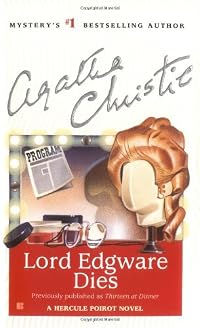
When Lord Edgware Dies a most unnatural death, detective Hercule Poirot must solve a most confounding conundrum: if the obvious killer, the slain peer's spiteful wife, didn't do it, who did? A classic from the queen of mystery, Agatha Christie. When Lord Edgware is found murdered the police are baffled. His estranged actress wife was seen visiting him just before his death and Hercule Poirot himself heard her brag of her plan to "get rid" of him. But how could she have stabbed Lord Edgware show more in his library at exactly the same time she was seen dining with friends? It's a case that almost proves to be too much for the great Poirot. show lessTags
Recommendations

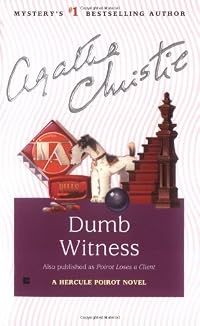
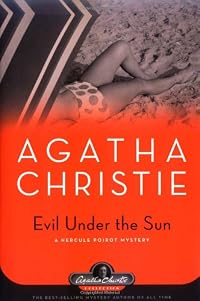




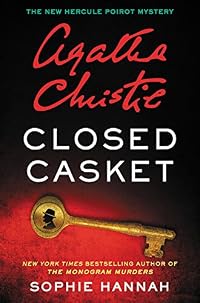
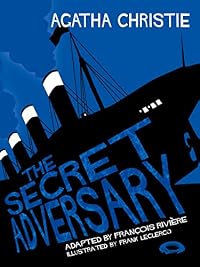
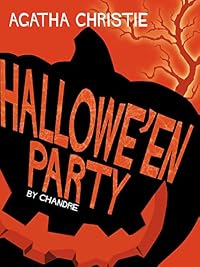
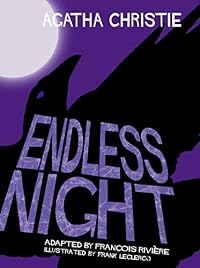


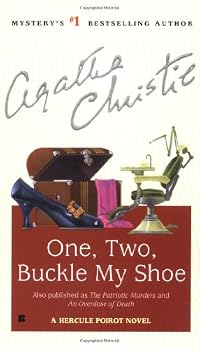


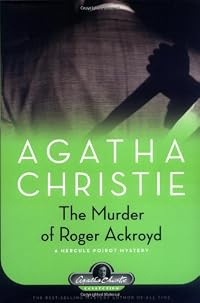
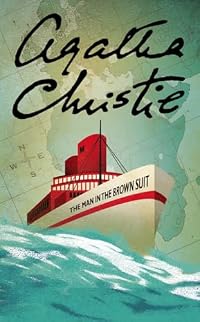
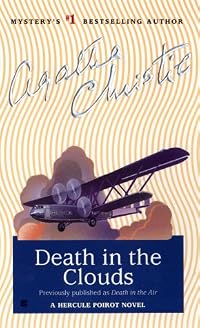
Member Recommendations
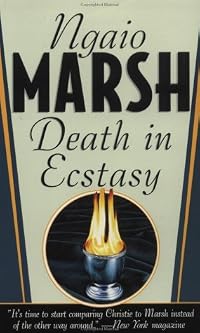
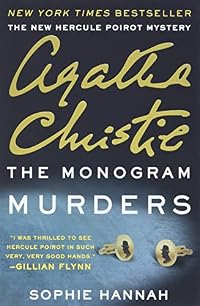
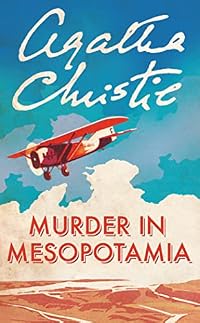
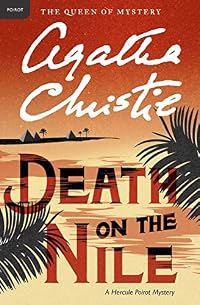
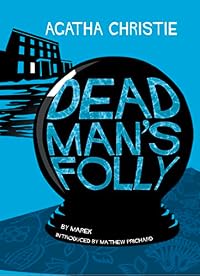
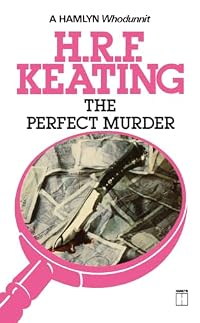
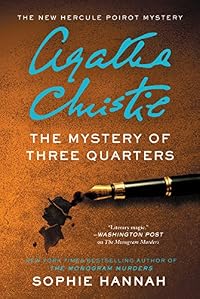
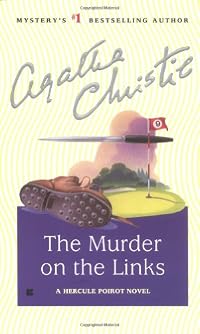
MissBrangwen Both of these Christie mysteries feature an elegant dinner party - and for each of them, the number of guests and a missing one are significant.
Member Reviews
''Lord Edgware Dies' is a Poirot novel that I had a lot of fun with. It's accomplished, clever, mischievous and seems to me to be ahead of its' time.
The plot kept me guessing (wrongly most of the time) and was very clever (well, cleverer than me anyway). It was also quite action-packed with more than one death and a slightly frenetic pace at times. About a quarter of the way through I was sure I had the whole thing figured out. I was utterly wrong of course. I found myself suddenly less critical of the hapless Hasting's than usual as I realised that Madame Christie had been leading me by the nose since the first page and I had followed along as if I were the one choosing the path.
In my defence, there was a very rich suspect pool, most show more of whom on only slightly more likeable than the 'got-what-he-deserved' murder victim, Lord Edgware.
The relationship between Hastings and Poirot is beautifully choreographed in this book. Hasting plays Watson to Poirot's Holmes. Poirot displayed more passion and more humour than usual. This time he was more than a gnomic aéé-will-be-revealed-in-good-time plot device. He was engaged with the people around him and even his habitual baiting of Hastings was done with what seemed like real affection.
I liked the fact that we saw Poirot in a social setting with all the soon-to-be-suspects before anyone was killed. The mission he was given before Lord Edgware's death changed his relationship to all the players and powered some of the passion that he brought to solving the case.
There was quite a lot of humour as the story went along. Small observations of the oddities of the English Class system at the time and some playfulness from Poirot who, at one point, shares a children's riddle with Hastings and then enacts it by summoning a superfluous person to the big reveal.
There were a few things about the book that felt ahead of its time or, at least, made me reconsider what I thought I knew about England in the 1930s. There was the casual acknowledgement of Lord Edgware's kinks. These were well known and while not seen as mainstream, not seen as surprising in the English aristocracy either. Then there was the one-woman-show on the West End. This has become popular again recently and I was fascinated to see that it was a way for a woman to break through as an entertained back then. The thing that seemed most ahead of its time was the depiction of the sociopathy of the killer. The final chapter is a letter from the killer to Poirot which made Hannibal Lecter seem like a wannabe. I could easily imagine it as a soliloquy to camera in the TV adaptation. It had a strong shudder factor.
I listened to the audiobook version which was delivered by Hugh Fraser with his usual flair. Click on the SoundCloud link below to hear a sample.
https://soundcloud.com/harpercollinspublishers/lord-edgware-dies-by-agatha show less
A solid mystery in the Poirot canon with some really excellent red herrings that fooled me. Christie again crafts characters so brilliantly and leads the reader a merry chase as Poirot investigates. I appreciated how meta the book gets in one spot, with a line in which they say that Lord Edgware Dies would make an excellent title and look very good in a book stall. Be warned, however, that this book is decidedly a product of its time (1933) and there is a passage where a character uses a multitude of racial slurs in short succession.
This is, with a couple of exceptions, a decent mystery. For a Christie fan, this is worth reading if you can put up with Hastings (exception one)--who is a little less obnoxious here than usual, but still very much his usual annoying self.
Exception two is the anti-Semitism and racism. I know these books have to be read in the context of the time in which they were written, but some of the throwaway remarks and assertions about Jewish characters make for highly uncomfortable reading.
If you can get through that, this can be worth reading just to see how the mystery is constructed. If you can't--well, you're not missing much. It's a decent mystery, but not Christie at her most stellar. If you're just starting out, I recommend passing this show more one and picking up something like "Death on the Nile" or "The Mirror Crack'd". show less
Exception two is the anti-Semitism and racism. I know these books have to be read in the context of the time in which they were written, but some of the throwaway remarks and assertions about Jewish characters make for highly uncomfortable reading.
If you can get through that, this can be worth reading just to see how the mystery is constructed. If you can't--well, you're not missing much. It's a decent mystery, but not Christie at her most stellar. If you're just starting out, I recommend passing this show more one and picking up something like "Death on the Nile" or "The Mirror Crack'd". show less
Solid entry into the Christie Cannon.
This one had so many twists and turns that Poirot doubted himself, Hastings was confused, and I was reeling about thinking any of these characters could have been the murder! I would recommend taking notes, making a flow chart, and consulting some tea leaves if you plan on trying to solve this one.
Christie was certainly strong on plot, but occasionally she delved into the criminal mindset, which she does in this one, almost as an aside. There is an afterward here (an addendum of sorts) that is absolutely chilling.
Enjoy. 4 stars. Would probably be higher if by someone else, but with Christie I compare to her masterpieces just to keep perspective toward her total body of work and her stature as the show more Queen of Crime. show less
This one had so many twists and turns that Poirot doubted himself, Hastings was confused, and I was reeling about thinking any of these characters could have been the murder! I would recommend taking notes, making a flow chart, and consulting some tea leaves if you plan on trying to solve this one.
Christie was certainly strong on plot, but occasionally she delved into the criminal mindset, which she does in this one, almost as an aside. There is an afterward here (an addendum of sorts) that is absolutely chilling.
Enjoy. 4 stars. Would probably be higher if by someone else, but with Christie I compare to her masterpieces just to keep perspective toward her total body of work and her stature as the show more Queen of Crime. show less
I enjoyed this book more than many of the Poirot books with Captain Hastings in them... I think in part because he wasn't mooning over some girl in this one. There was still mention of women being beautiful, of course. Hastings is still Hastings, after all. But he wasn't trying to save any of the beauties for once, and it was a nice change of pace.
The mystery itself was nice and twisty, and I appreciated that this is one of the ones where Poirot was more stumped than most. I was really amused by the part where Poirot tells Hastings that he's helpful because he falls for the criminal's deceptions, and so Poirot can use what Hastings thinks as an example of what the killer wanted people to think.
There's too many twists for me to really show more talk about the plot, but I liked that this one had plenty of characters for us to speculate about. It was also fun to see Inspector Japp again. show less
The mystery itself was nice and twisty, and I appreciated that this is one of the ones where Poirot was more stumped than most. I was really amused by the part where Poirot tells Hastings that he's helpful because he falls for the criminal's deceptions, and so Poirot can use what Hastings thinks as an example of what the killer wanted people to think.
There's too many twists for me to really show more talk about the plot, but I liked that this one had plenty of characters for us to speculate about. It was also fun to see Inspector Japp again. show less
Sometimes when you think you’ve gotten one up on Agatha Christie, you realise she has tricked you. I felt sure that trying to drop in “Dina” as a contraction for Geraldine was going to be of significance; I should have realised, when she did it a second time, that that’s what she wanted us to think. I was also taken in by Hastings saying he never saw a certain character again, thereby signalling they had left the story never to return. But of course that was a trick too. Overall an enjoyable Hercule Poirot mystery.
Also known as Mr. Edgegrave dies.
This one isn't as good as most of Christie's other books are, especially with Hercule Poirot as the detective, but it is readable. It is told through the narrative of Hastings, of whom I'm only a mild fan. He is a typical sidekick similar to Watkins, where he gets much wrong, but he doesn't have much about him that stands out.
Poirot and Hastings are brought together to an actress who fully admits she'd kill her husband, and seeks their help on getting a divorce so she can marry even higher up the social ladder. Clearly not a likeable type of sort, I enjoyed Poirot's observations about character types and mapping out their actions from that. The mystery begins when the husband IS murdered, but Poirot is show more further confused when he finds out that the husband had completely agreed to give the suspect a divorce and that she had no reason to enlist their help in the first place.
As a mystery it works because there are surprises that don't add up for the story and how it unravels, there are multiple red herrings to cast suspicious light on, and the characters personalities are not the traditional sorts so it's like a hollywood type drama. On the other hand its a bit laggy compared to some of her other stuff, and I felt further detached because of the viewpoint it was told through. A lot the story was told through back and forth conversation and not as much internal monologue.
The ending was a small surprise and I enjoyed it, but I grew restless in other parts. It was cool this was a slice of 1930's London and the rich, glitzy, everyone-has-a-servant side of things. Even if the buildup was a little mediocre at times, the ending was a whopper of cleverness which makes it completely worth a read.
As a funny thing, Poirot does drop a racist remark:
"You observed without doubt that she is a Jewess? . . . Love of money might lead such a one from the prudent and cautious path."
Was this from Agatha's perspective, the time it was written, the time she came from, or to paint another unusual brush of Poirot's somewhat out there personality? show less
This one isn't as good as most of Christie's other books are, especially with Hercule Poirot as the detective, but it is readable. It is told through the narrative of Hastings, of whom I'm only a mild fan. He is a typical sidekick similar to Watkins, where he gets much wrong, but he doesn't have much about him that stands out.
Poirot and Hastings are brought together to an actress who fully admits she'd kill her husband, and seeks their help on getting a divorce so she can marry even higher up the social ladder. Clearly not a likeable type of sort, I enjoyed Poirot's observations about character types and mapping out their actions from that. The mystery begins when the husband IS murdered, but Poirot is show more further confused when he finds out that the husband had completely agreed to give the suspect a divorce and that she had no reason to enlist their help in the first place.
As a mystery it works because there are surprises that don't add up for the story and how it unravels, there are multiple red herrings to cast suspicious light on, and the characters personalities are not the traditional sorts so it's like a hollywood type drama. On the other hand its a bit laggy compared to some of her other stuff, and I felt further detached because of the viewpoint it was told through. A lot the story was told through back and forth conversation and not as much internal monologue.
The ending was a small surprise and I enjoyed it, but I grew restless in other parts. It was cool this was a slice of 1930's London and the rich, glitzy, everyone-has-a-servant side of things. Even if the buildup was a little mediocre at times, the ending was a whopper of cleverness which makes it completely worth a read.
As a funny thing, Poirot does drop a racist remark:
"You observed without doubt that she is a Jewess? . . . Love of money might lead such a one from the prudent and cautious path."
Was this from Agatha's perspective, the time it was written, the time she came from, or to paint another unusual brush of Poirot's somewhat out there personality? show less
Members
- Recently Added By
Lists

Crime and Mysteries to Read
746 works; 31 members

British Mystery
469 works; 14 members

Agatha Christie Poirot
43 works; 2 members

Books About Murder
313 works; 7 members

Books mentioned in Julian Symons’ Bloody Murder
438 works; 6 members

Detective Stories
343 works; 5 members

20th Century Literature
1,161 works; 54 members

Books Read in 2023
5,547 works; 144 members

TBR
77 works; 1 member
Must Read Detective Stories (Nick Fuller)
278 works; 2 members

Agatha Christie Chronology
93 works; 1 member
Author Information

One of the most successful and beloved writer of mystery stories, Agatha Mary Clarissa Christie was born in 1890 in Torquay, County Devon, England. She wrote her first novel, The Mysterious Affair at Styles, in 1920, launching a literary career that spanned decades. In her lifetime, she authored 79 crime novels and a short story collection, 19 show more plays, and six novels written under the name of Mary Westmacott. Her books have sold over a billion copies in the English language with another billion in 44 foreign languages. Some of her most famous titles include Murder on the Orient Express, Mystery of the Blue Train, And Then There Were None, 13 at Dinner and The Sittaford Mystery. Noted for clever and surprising twists of plot, many of Christie's mysteries feature two unconventional fictional detectives named Hercule Poirot and Miss Jane Marple. Poirot, in particular, plays the hero of many of her works, including the classic, The Murder of Roger Ackroyd (1926), and Curtain (1975), one of her last works in which the famed detective dies. Over the years, her travels took her to the Middle East where she met noted English archaeologist Sir Max Mallowan. They married in 1930. Christie accompanied Mallowan on annual expeditions to Iraq and Syria, which served as material for Murder in Mesopotamia (1930), Death on the Nile (1937), and Appointment with Death (1938). Christie's credits also include the plays, The Mousetrap and Witness for the Prosecution (1953; film 1957). Christie received the New York Drama Critics' Circle Award for 1954-1955 for Witness. She was also named Dame Commander of the Order of the British Empire in 1971. Christie died in 1976. (Bowker Author Biography) show less
Some Editions
Awards and Honors
Notable Lists
Series

Belongs to Publisher Series
SaPo (1)
Goldmann Rote Krimi (66)
The Albatross Crime Club (No. 115)
Nova terra (82)
Weltbild SammlerEditionen (848007)
Fontana (31)
Dell Mystery (60)
Collins Crime Club (White Circle No. 41)
Colecção Vampiro (122)
Penguin Books (684)
Work Relationships
Is contained in
Agatha Christie: Five Complete Hercule Poirot Novels - Murder on the Orient Express / Thirteen at Dinner / The ABC Murders / Cards on the Table / Death on the Nile by Agatha Christie
Agatha Christie Crime Collection: 4:50 from Paddington, Lord Edgware Dies, Murder In Mesopotamia by Agatha Christie
Murder for Christmas and Three Other Great Mysteries: The Hollow, Murder in Retrospect, Thirteen At Dinner by Agatha Christie
4.50 From Paddington / Murder in Mesopotamia / A Pocket Full of Rye / Lord Edgware Dies by Agatha Christie
Has the adaptation
Is abridged in
Common Knowledge
- Canonical title
- Lord Edgware Dies
- Original title
- Lord Edgware Dies
- Alternate titles
- Thirteen at Dinner
- Original publication date
- 1933-09-01
- People/Characters
- Carlotta Adams; Jenny Driver; Lord Edgware; Arthur Hastings; James Japp; Geraldine Marsh (show all 14); Ronald Marsh; Bryan Martin; the Duke of Merton; Hercule Poirot; Jane Wilkinson (Lady Edgware); Donald Ross; Ellis; Miss Carroll
- Important places
- London, England, UK
- Related movies
- Lord Edgware Dies (1934 | IMDb); Thirteen at Dinner (1985 | IMDb); Agatha Christie's Poirot: Lord Edgware Dies (2000 | IMDb)
- Dedication
- To Dr. and Mrs. Campbell Thompson
- First words
- The memory of the public is short.
- Last words
- (Click to show. Warning: May contain spoilers.)P.S. Do you think they will put me in Madame Tussaud's?
- Original language
- English
- Disambiguation notice
- aka Thirteen at dinner
Classifications
Statistics
- Members
- 4,318
- Popularity
- 3,462
- Reviews
- 95
- Rating
- (3.74)
- Languages
- 32 — Bulgarian, Catalan, Chinese, Czech, Danish, Dutch, English, Estonian, Finnish, French, German, Greek, Hindi, Hungarian, Indonesian, Italian, Japanese, Lithuanian, Norwegian (Bokmål), Norwegian, Polish, Romanian, Russian, Serbian, Croatian, Slovenian, Spanish, Swedish, Tamil, Thai, Turkish, Portuguese (Portugal)
- Media
- Paper, Audiobook, Ebook
- ISBNs
- 179
- UPCs
- 9
- ASINs
- 117