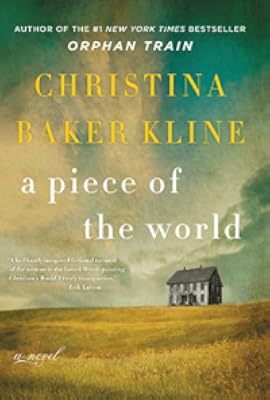
A Piece of the World
by Christina Baker Kline
On This Page
Description
From the #1 New York Times bestselling author of the smash bestseller Orphan Train, a stunning and atmospheric novel of friendship, passion, and art, inspired by Andrew Wyeth's mysterious and iconic painting Christina's World."Later he told me that he'd been afraid to show me the painting. He thought I wouldn't like the way he portrayed me: dragging myself across the field, fingers clutching dirt, my legs twisted behind. The arid moonscape of wheatgrass and timothy. That dilapidated house show more in the distance, looming up like a secret that won't stay hidden."
To Christina Olson, the entire world was her family's remote farm in the small coastal town of Cushing, Maine. Born in the home her family had lived in for generations, and increasingly incapacitated by illness, Christina seemed destined for a small life. Instead, for more than twenty years, she was host and inspiration for the artist Andrew Wyeth, and became the subject of one of the best known American paintings of the twentieth century.
As she did in her beloved smash bestseller Orphan Train, Christina Baker Kline interweaves fact and fiction in a powerful novel that illuminates a little-known part of America's history. Bringing into focus the flesh-and-blood woman behind the portrait, she vividly imagines the life of a woman with a complicated relationship to her family and her past, and a special bond with one of our greatest modern artists.
Told in evocative and lucid prose, A Piece of the World is a story about the burdens and blessings of family history, and how artist and muse can come together to forge a new and timeless legacy.
. show less
Tags
Recommendations




















Member Reviews
In A Piece of the World, Kline imagines the life of the subject of one of Andrew Wyeth's paintings, Christina's World. My heart broke for proud Christina, crippled at a young age by polio, whose determination not to give into the pains of her failing body leaves her unwilling to accept help or pity but also desperately limited by the path she has chosen. This isn't a cheery book. It's hard to look at a character whose lot in life is often frustration, humiliation, and heartbreak as the able bodied people in her life come and go while she is consigned to a life of difficulty, a life that misses out on so much a "normal" life would offer. Kline's talent in making me care so much for this proud, sometimes selfish, sometimes downright show more ornery character imprisoned by a world both of her own and her disability's making, is what makes this book shine.
A few times during the reading, I found myself worrying over the ending. How can this end without doing a disservice to the character and the rest of the story? How can it end without being too trite or just too depressing? I need not have worried. The ending strikes the most pitch perfect of notes between bitter and sweet, revealing a life that is so much more than the sum of its parts and inspiring that much more love for both the painter and his subject. show less
A few times during the reading, I found myself worrying over the ending. How can this end without doing a disservice to the character and the rest of the story? How can it end without being too trite or just too depressing? I need not have worried. The ending strikes the most pitch perfect of notes between bitter and sweet, revealing a life that is so much more than the sum of its parts and inspiring that much more love for both the painter and his subject. show less
This was so good, I could have read 500 pages more.
Each character leapt off the page, and I felt by the end of the book that I knew Christina, Al, Andy, Gertrude and the rest of the characters personally, like my next door neighbors who I can just pop round to see whenever I'd like. Each was flawed, but each somehow struck sympathy within me, and made me feel for them.
Christina, though. I grew to love her almost instantly. So strong, hard-headed, selfless, proud, yet full of self-doubt and fear. She was human, and I so enjoyed going through all her struggles and successes with her. She was so real, I feel as if I know her personally. As if I could visit her in her house, in her world, if I just take the time to visit Maine.
I want to see show more this painting now, to see Christina's World, and to just stare at it for a while. To take it in, and relive the book, relive Christina's life in the way that Christina Baker Kline so masterfully portrayed it and portrayed Christina.
I didn't know a single thing about this painting, Andrew Wyeth or Christina, before reading this. Now I can't wait to learn more. show less
Each character leapt off the page, and I felt by the end of the book that I knew Christina, Al, Andy, Gertrude and the rest of the characters personally, like my next door neighbors who I can just pop round to see whenever I'd like. Each was flawed, but each somehow struck sympathy within me, and made me feel for them.
Christina, though. I grew to love her almost instantly. So strong, hard-headed, selfless, proud, yet full of self-doubt and fear. She was human, and I so enjoyed going through all her struggles and successes with her. She was so real, I feel as if I know her personally. As if I could visit her in her house, in her world, if I just take the time to visit Maine.
I want to see show more this painting now, to see Christina's World, and to just stare at it for a while. To take it in, and relive the book, relive Christina's life in the way that Christina Baker Kline so masterfully portrayed it and portrayed Christina.
I didn't know a single thing about this painting, Andrew Wyeth or Christina, before reading this. Now I can't wait to learn more. show less
Christina's World is one of Andrew Wyeth's most well-known paintings. It is stark and evocative, and one can't help wondering about the woman and the landscape in which she appears. Christina Baker Kline combined historical sources and her own creativity to tell the story of Christina Olson and her life on a farm in rural Maine. Christina had a degenerative condition which limited her mobility and eventually led to a reclusive life, cared for by her brother in the house they grew up in. Wyeth spent his summers in Maine and used rooms in Christina’s house as his studio. He figures prominently in the story but is definitely a secondary character.
Kline brought both Christina and rural Maine to life. While the painting depicts a vast show more landscape, Christina’s world actually became quite small. She faced her disability with courage, resisting opportunities to meet with doctors and refusing to use a wheelchair throughout her life. She stared down those who judged her or demonstrated excessive pity. But behind her tough exterior was a woman with ambitions and desires which often conflicted with family loyalty. For Christina, loyalty was paramount -- she gave herself to caring for her parents and running the farm and expected the same from her brother. As the novel draws to a close, it’s clear Christina’s world is only getting smaller, and yet this bittersweet novel was still satisfying. show less
Kline brought both Christina and rural Maine to life. While the painting depicts a vast show more landscape, Christina’s world actually became quite small. She faced her disability with courage, resisting opportunities to meet with doctors and refusing to use a wheelchair throughout her life. She stared down those who judged her or demonstrated excessive pity. But behind her tough exterior was a woman with ambitions and desires which often conflicted with family loyalty. For Christina, loyalty was paramount -- she gave herself to caring for her parents and running the farm and expected the same from her brother. As the novel draws to a close, it’s clear Christina’s world is only getting smaller, and yet this bittersweet novel was still satisfying. show less
The author of the very popular Orphan Train tackles the backstory of Andrew Wyeth's famous painting, "Christina's World." Personally, I love the idea of using artwork as a premise of a book, and one of the high points of the novel is its historical accuracy. Kline clearly does her homework (perhaps too well; more on that later), and she's excellent at description, so the house in the picture can be well imagined by the reader including all the amount of work it took for its upkeep.
Unfortunately, you know if I'm pointing out that the descriptions of chores is a highlight, that's not a good sign.
Kline sacrifices almost every modicum of suspense in her storytelling to historical accuracy and character development. Unfortunately, her show more leading character, Christina, is basically depressed, ill, and boring and stubborn and often selfish. She's really the only character that is fully realized, and she's pitiable, but not likable. Kline attempts to somehow talk the reader into seeing Christina differently at the end of the story, but 10 chapters are hard to erase with some poetic uplifting language at the end. I'm not a person who needs to like a character to enjoy a book, but I do need the character to evolve somehow and/or do something interesting. Christina does neither.
Other than a romance between Christina and Harvard student, Walton, which was nicely done and by far the highlight of the book, there's nothing to the plot. If Christina wants something (other than Walton) it's not articulated, nor does she go after it. Granted, she is ill and crippled, so going after much of anything is difficult, but still. Wyeth was more interesting to me as he struggles to capture his subjects, but his story is a fraction of the tale, and mostly consists of he painted this, then he tried to paint that. There's no tension. The lack of tension is not helped by Kline's love of going back and forth in historical time chapter by chapter. This kinda worked in Orphan Train. I didn't think it worked here, and it made a slow plot even slower.
There is an interesting theme in the book about our own self perception versus the perception others have of us. I think this makes a good topic for book discussion groups, and is a redeeming feature of the story.
Kline really does her homework, and she articulates exactly what is true (lots) and what is not, but she also is a writer who feels the need to include everything she has learned in the story. This lead to a very boring first quarter of the book . . .that was barely relevant to anything going forward.
All in all, this book has its redeeming qualities: strong historical research, a viable romance, and some beautifully descriptive writing. But to me, it was so boring that I just couldn't like it (and believe me, I was trying because I think I'm the only person in the world giving it two stars). If you can't wait for a book to end, it's pretty hard to give it anything higher.
p.s. If you loved this book, please forgive me. I'm definitely in a minority! Not sure what's going on, but I feel like my taste has really diverged from the mainstream in the past few years . . .and it is actually annoying to me! I want to like what others enjoy so I can share in that delight. Lately, it just hasn't been happening. show less
Unfortunately, you know if I'm pointing out that the descriptions of chores is a highlight, that's not a good sign.
Kline sacrifices almost every modicum of suspense in her storytelling to historical accuracy and character development. Unfortunately, her show more leading character, Christina, is basically depressed, ill, and boring and stubborn and often selfish. She's really the only character that is fully realized, and she's pitiable, but not likable. Kline attempts to somehow talk the reader into seeing Christina differently at the end of the story, but 10 chapters are hard to erase with some poetic uplifting language at the end. I'm not a person who needs to like a character to enjoy a book, but I do need the character to evolve somehow and/or do something interesting. Christina does neither.
Other than a romance between Christina and Harvard student, Walton, which was nicely done and by far the highlight of the book, there's nothing to the plot. If Christina wants something (other than Walton) it's not articulated, nor does she go after it. Granted, she is ill and crippled, so going after much of anything is difficult, but still. Wyeth was more interesting to me as he struggles to capture his subjects, but his story is a fraction of the tale, and mostly consists of he painted this, then he tried to paint that. There's no tension. The lack of tension is not helped by Kline's love of going back and forth in historical time chapter by chapter. This kinda worked in Orphan Train. I didn't think it worked here, and it made a slow plot even slower.
There is an interesting theme in the book about our own self perception versus the perception others have of us. I think this makes a good topic for book discussion groups, and is a redeeming feature of the story.
Kline really does her homework, and she articulates exactly what is true (lots) and what is not, but she also is a writer who feels the need to include everything she has learned in the story. This lead to a very boring first quarter of the book . . .that was barely relevant to anything going forward.
All in all, this book has its redeeming qualities: strong historical research, a viable romance, and some beautifully descriptive writing. But to me, it was so boring that I just couldn't like it (and believe me, I was trying because I think I'm the only person in the world giving it two stars). If you can't wait for a book to end, it's pretty hard to give it anything higher.
p.s. If you loved this book, please forgive me. I'm definitely in a minority! Not sure what's going on, but I feel like my taste has really diverged from the mainstream in the past few years . . .and it is actually annoying to me! I want to like what others enjoy so I can share in that delight. Lately, it just hasn't been happening. show less
Author Christina Baker Kline offers readers an interesting concept in A PIECE OF THE WORLD. Who is the women lying in the farm field in Artist Andrew Wyeth's famous painting "Christina's World"?
The novel is a blend of deep research (described in the author's Afterword) and creative license. Because the woman in Wyeth's painting was real. She was Christina Olson, who lived in Maine where Wyeth spent many summers. Originally friends with the woman who would later become Wyeth's wife, Christina ultimately became one of Wyeth's muses. And he spent a great deal of time with her, at her farm, sketching and painting a variety of nearby rustic scenes.
Christina's back story is not a happy one. An unusually intelligent and perceptive person, she show more is nevertheless limited by restrictions imposed on all women in the 20th century, when marriage and children were the essential measures of a successful life. Christina is further limited by a degenerative nerve disease, though that does not seem in any way to alter her family's expectations. And so, Christina's life is defined by years of physically-difficult and endless household drudgery.
Moving forward and back through time to piece together Christina's story (and her evolving relationship with Wyeth), the author shows snapshots of missed opportunities, social slights, and self-imposed constrictions that shape Christina's character. Along with her remarkable determination not to give in to her failing body.
It all sounds very powerful and dramatic, doesn't it? But, unfortunately, I felt it came up short. I did not wind up liking Christina very much, though I certainly understood the reasons behind many of the resentments she carried. And though I believe the author was trying to show parallels between the way Christina and Wyeth saw the world, it didn't quite work for me. So, not my favorite from this author. show less
The novel is a blend of deep research (described in the author's Afterword) and creative license. Because the woman in Wyeth's painting was real. She was Christina Olson, who lived in Maine where Wyeth spent many summers. Originally friends with the woman who would later become Wyeth's wife, Christina ultimately became one of Wyeth's muses. And he spent a great deal of time with her, at her farm, sketching and painting a variety of nearby rustic scenes.
Christina's back story is not a happy one. An unusually intelligent and perceptive person, she show more is nevertheless limited by restrictions imposed on all women in the 20th century, when marriage and children were the essential measures of a successful life. Christina is further limited by a degenerative nerve disease, though that does not seem in any way to alter her family's expectations. And so, Christina's life is defined by years of physically-difficult and endless household drudgery.
Moving forward and back through time to piece together Christina's story (and her evolving relationship with Wyeth), the author shows snapshots of missed opportunities, social slights, and self-imposed constrictions that shape Christina's character. Along with her remarkable determination not to give in to her failing body.
It all sounds very powerful and dramatic, doesn't it? But, unfortunately, I felt it came up short. I did not wind up liking Christina very much, though I certainly understood the reasons behind many of the resentments she carried. And though I believe the author was trying to show parallels between the way Christina and Wyeth saw the world, it didn't quite work for me. So, not my favorite from this author. show less
"’Don’t tell me too much,’ Henry James is supposed to have said, when some anecdote vibrated him to the prospect of a story. ‘Don't tell me too much!’”— Wallace Stegner, “Angle of Repose”
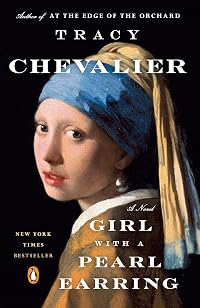
Like Tracy Chevalier's novel “Girl with a Pearl Earring” (1999), Christina Baker Kline's “A Piece of the World” (2017) offers a fictional exploration of the story behind a famous painting. Both novels are exceptional, but there is one essential difference in the writing of the two books.
Nothing is known about the girl in Johannes Vermeer's famous painting. Chevalier made up virtually the entire story, except for some historical details known about Vermeer himself and the Dutch city of Delft in the 17th century. “Christina's show more World,” on the other hand, was painted by Andrew Wyeth in the mid-1940s. Much is known about Wyeth, about Christina Olson, the woman in the painting, and about the house in the background where most of Kline's story takes place.
So which author faced the greater challenge, Chevalier who knew next to nothing about her painting or Kline who started writing with the outline of a story already in place? Kline had the advantage of a place to start, the disadvantage of having so many possible plot options closed off to her. Chevalier had the advantage of being able to take her story in any direction she chose, the disadvantage of not having any story at all when she began her work. From the comment by Henry James that Wallace Stegner gives us in his own novel “Angle of Repose,” we see that he would have favored a middle position, knowing just enough of a story to fire his imagination, but not so much that it would stifle that imagination.
As I indicated, both novels impress me, but my subject here is Kline's novel. It begins with a young Andrew Wyeth being drawn to the old house on a Maine hill where Christina lives with her brother Al. He sets up a studio in the house, where he returns each summer. At the novel's end he unveils his painting of Christina on that hill. In between, however, the main focus of the novel is Christina's life, lived under the curse of a hereditary disease that gradually weakens her limbs until eventually she can only crawl from one place to another, up and down stairs.
There's an unhappy love affair and strained relationships with family members and neighbors. What others see as kindness, she rejects it as pity. She is too proud even to sit in a wheelchair, too stubborn to seek medical care. Her brother stays by her, though with his own reasons for anger and resentment.
Christina loves Emily Dickinson poetry and finds many of the poet's lines meaningful to her. Kline gives Christina, our narrator, some meaningful lines of her own as she tells her story. For example, "This life of ours can feel an awful lot like waiting." Or, "The older I get, the more I believe that the greatest kindness is acceptance." Much of her life she seems to spend waiting for Andrew Wyeth and Betsy, her former neighbor who becomes his wife. And then their acceptance brightens her little piece of the world. show less
Like Tracy Chevalier's novel “Girl with a Pearl Earring” (1999), Christina Baker Kline's “A Piece of the World” (2017) offers a fictional exploration of the story behind a famous painting. Both novels are exceptional, but there is one essential difference in the writing of the two books.
Nothing is known about the girl in Johannes Vermeer's famous painting. Chevalier made up virtually the entire story, except for some historical details known about Vermeer himself and the Dutch city of Delft in the 17th century. “Christina's show more World,” on the other hand, was painted by Andrew Wyeth in the mid-1940s. Much is known about Wyeth, about Christina Olson, the woman in the painting, and about the house in the background where most of Kline's story takes place.
So which author faced the greater challenge, Chevalier who knew next to nothing about her painting or Kline who started writing with the outline of a story already in place? Kline had the advantage of a place to start, the disadvantage of having so many possible plot options closed off to her. Chevalier had the advantage of being able to take her story in any direction she chose, the disadvantage of not having any story at all when she began her work. From the comment by Henry James that Wallace Stegner gives us in his own novel “Angle of Repose,” we see that he would have favored a middle position, knowing just enough of a story to fire his imagination, but not so much that it would stifle that imagination.
As I indicated, both novels impress me, but my subject here is Kline's novel. It begins with a young Andrew Wyeth being drawn to the old house on a Maine hill where Christina lives with her brother Al. He sets up a studio in the house, where he returns each summer. At the novel's end he unveils his painting of Christina on that hill. In between, however, the main focus of the novel is Christina's life, lived under the curse of a hereditary disease that gradually weakens her limbs until eventually she can only crawl from one place to another, up and down stairs.
There's an unhappy love affair and strained relationships with family members and neighbors. What others see as kindness, she rejects it as pity. She is too proud even to sit in a wheelchair, too stubborn to seek medical care. Her brother stays by her, though with his own reasons for anger and resentment.
Christina loves Emily Dickinson poetry and finds many of the poet's lines meaningful to her. Kline gives Christina, our narrator, some meaningful lines of her own as she tells her story. For example, "This life of ours can feel an awful lot like waiting." Or, "The older I get, the more I believe that the greatest kindness is acceptance." Much of her life she seems to spend waiting for Andrew Wyeth and Betsy, her former neighbor who becomes his wife. And then their acceptance brightens her little piece of the world. show less
This was a "quiet" book that I just couldn't put down. Poetically written, on the surface it is a character study from 1890's-1940's of a spinster with a debilitating physical illness who lives in a remote farmhouse with her brother. Not a lot of action. But on another level it is a brilliantly imagined fictional memoir of the woman in the famed Andrew Wyeth painting, Christina's World. This is a beautifully written and well-researched book that transported me to another time and place. The story is told from the perspective of a brave and stubborn woman who would not compromise. At the end of the novel, after Christina has seen for the first time the now famous portrait of her painted by Wyeth, she tells him "You showed what no one show more else could see." The novel then concludes with this haunting explanation, "To see her life from a distance, as clear as a photograph, as mysterious as a fairy tale...what she wants most - what she truly yearns for - is what any of us want: to be seen. And look. She is." show less
Members
- Recently Added By
Published Reviews
ThingScore 75
In her lyrical new novel, “A Piece of the World,” Christina Baker Kline uncovers Ms. Olson’s diamond-sharp mind and flawed heart, which longs for someone to rescue her from a life circumscribed by hardship and geography.....
added by vancouverdeb
Christina Baker Kline has taken this powerfully creepy icon of American art and fleshed out the real-life story behind it, using the historical figures of Wyeth and his model Christina Olson as two of her characters and following their story so closely as to be barely fiction at all. Kline's portrait of her main character is moving in an unsentimental way as she evokes the New England show more landscape, the torment of crippling disease, and the piece of history embodied in Olson's story.... show less
added by vancouverdeb
Christina Baker Kline sets herself a stark challenge in her new novel — giving flesh to the back story of the woman who crawls across a desolate field in Andrew Wyeth’s iconic painting, “Christina’s World.”...Christina Baker Kline sets herself a stark challenge in her new novel — giving flesh to the back story of the woman who crawls across a desolate field in Andrew Wyeth’s show more iconic painting, “Christina’s World.” show less
added by vancouverdeb
Lists

Must-Read Maine
146 works; 91 members

Favorite Literary Love Stories
182 works; 101 members

a picture or a thousand words
39 works; 5 members

2021 Christmas Gifts
66 works; 13 members

Fiction: Historical
288 works; 3 members

Books I have Recommended
208 works; 1 member

To Read
617 works; 7 members

Troublesome bodies
110 works; 7 members

Books Read in 2021
5,361 works; 114 members

Ten Books Inspired By Paintings
11 works; 2 members

Books Read in 2024
4,727 works; 128 members
Author Information

19+ Works 11,670 Members
Christina Baker Kline was born in 1964 in Cambridge, England. She received a BA in English from Yale University, a MA in literature from Cambridge University, and a MFA from the University of Virginia. Her essays and articles have appeared in several periodicals including The San Francisco Chronicle, the Literarian, Coastal Living, More, and show more Psychology Today. Kline served as Writer-in-Residence at Fordham University from 2007 to 2011, where she taught graduate and undergraduate creative writing and literature. She also teaches in the Fordham-in-London program at the University of London, Heythrop College. She has taught literature and creative writing at Yale Univeristy, NYU, the University of Virginia, and Drew University, and has served as Writer-in-Residence at the Virginia Center for the Creative Arts. She is the author of several novels including Sweet Water, Desire Lines, The Way Life Should Be, Bird in Hand, Orphan Train, and A Piece of the World. She is also the co-editor, with Anne Burt, of About Face: Women Write about What They See When They Look in the Mirror and the co-author, with Christina L. Baker, of The Conversation Begins: Mothers and Daughters Talk about Living Feminism. She has edited three other anthologies: Child of Mine, Room to Grow, and Always Too Soon. (Bowker Author Biography) show less
Awards and Honors
Awards
Distinctions
Common Knowledge
- Canonical title
- A Piece of the World
- Original title
- A Piece of the World
- Original publication date
- 2017-02-21
- People/Characters
- Christina Olson; Alvaro Olson; Andrew Wyeth; Betsy James Wyeth; Tryphena Hathorn (Mamey); Samuel Olson (show all 19); John Olson (Johan Olauson); Katie Hathorn Olson; Fred Olson; Lora Olson; Mary Olson; Nicholas Wyeth; Ramona Jane Carle; Walton Hall; Gertrude Gibbons; John William Olson; Sadie Hamm; Estelle Bartlett; Jamie Wyeth
- Important places
- Cushing, Maine, USA; Boston, Massachusetts, USA
- Epigraph
- "There was a very strange connection. One of those odd collisions that happen. We were a little alike; I was an unhealthy child that was kept at home. So there was an unsaid feeling between us that was wonde... (show all)rful, an utter naturalness. We'd sit for hours and not say a word, and then she'd say something and I'd answer her. A reporter once asked her what we talked about. She said, 'Nothing foolish.'"
---Andrew Wyeth - Dedication
- For my father, who showed me the world
- First words
- Later he told me he'd been afraid to show me the painting.
- Quotations
- "It is a terrible thing to find the love of your life,
Christina, " she says. "You know too well what you're missing when it's gone."
Even in the midst if a pleasurable outing I'm aware of how ephemeral it is. The water is warm but will cool. The ocean is a sheet if glass, but wind is picking up, far across the horizon. The bonfire is roar... (show all)ing but will dwindle. Walton is beside me, his arm around my shoulder, but all too soon he will be gone.
Hours accumulate like snow, recede like the tide. - Last words
- (Click to show. Warning: May contain spoilers.)And look. She is.
- Blurbers
- Larson, Erik; Chabon, Michael; King, Lily; Hill, Nathan; Kristin Hannah
Classifications
Statistics
- Members
- 1,497
- Popularity
- 15,537
- Reviews
- 86
- Rating
- (3.87)
- Languages
- English, German, Italian, Spanish
- Media
- Paper, Audiobook, Ebook
- ISBNs
- 31
- ASINs
- 5