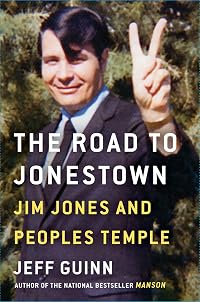
Road to Jonestown: Jim Jones and Peoples Temple
by Jeff Guinn
On This Page
Description
2018 Edgar Award Finalist—Best Fact Crime"A thoroughly readable, thoroughly chilling account of a brilliant con man and his all-too vulnerable prey" (The Boston Globe)—the definitive story of preacher Jim Jones, who was responsible for the Jonestown Massacre, the largest murder-suicide in American history, by the New York Times bestselling author of Manson.
In the 1950s, a young Indianapolis minister named Jim Jones preached a curious blend of the gospel and Marxism. His congregation show more was racially mixed, and he was a leader in the early civil rights movement. Eventually, Jones moved his church, Peoples Temple, to northern California, where he got involved in electoral politics and became a prominent Bay Area leader. But underneath the surface lurked a terrible darkness.
In this riveting narrative, Jeff Guinn examines Jones's life, from his early days as an idealistic minister to a secret life of extramarital affairs, drug use, and fraudulent faith healing, before the fateful decision to move almost a thousand of his followers to a settlement in the jungles of Guyana in South America. Guinn provides stunning new details of the events leading to the fatal day in November, 1978 when more than nine hundred people died—including almost three hundred infants and children—after being ordered to swallow a cyanide-laced drink.
Guinn examined thousands of pages of FBI files on the case, including material released during the course of his research. He traveled to Jones's Indiana hometown, where he spoke to people never previously interviewed, and uncovered fresh information from Jonestown survivors. He even visited the Jonestown site with the same pilot who flew there the day that Congressman Leo Ryan was murdered on Jones's orders. The Road to Jonestown is "the most complete picture to date of this tragic saga, and of the man who engineered it...The result is a disturbing portrait of evil—and a compassionate memorial to those taken in by Jones's malign charisma" (San Francisco Chronicle). show less
Tags
Recommendations

































Member Reviews
The Road to Jonestown: Jim Jones and the People’s Temple by Jeff Guinn is a 2017 Simon & Schuster publication.
Thoroughly chilling…
While I was only in my early teens in 1978, I still recall the news footage of the “Jonestown Massacre”. I understood on some level what had happened, but I couldn’t fully digest it. I tried not to watch the news reports and steered clear of conversations about it because it made me extremely uncomfortable. It was too much for me to cope with, and in all honesty, I still can’t wrap my head around it.
Part of me wanted to read this book, in hopes of garnering some understanding of how something like this happened. But, another part of me didn’t want to relive that horrible piece of history where show more over nine hundred people lost their lives.
But, the outstanding reviews convinced me to read it and while I still find these events quite upsetting, I am glad I read the book.
To say this was a comprehensive account of Jim Jones’ life is an understatement of epic proportions. This book is an exacting, well researched, serious and non-biased, look at one of the most monstrous cult leaders of all time.
We all know how this will end. The question is- How did it begin?
I won’t make this into a book report, if I can help it, but I did want to touch on some of the impressions I was left with.
One of the weirdest things about all this, is that it didn’t start out as being all that different from many fundamentalist church doctrines or beliefs. Jim’s wife was zealously religious and the couple did present themselves as believing in God and practiced the core Christian values most of us are familiar with. It is easy to see how Jim ingratiated himself into the ministry profession, and why he experienced praise for his genuine service and help to those in need. He was particularly sensitive to the black community and freely welcomed them and worshipped alongside them in a time when such actions raised eyebrows.
However, he quickly shucked off any semblance of being a true believer and began working the tent revival circuit, faked healings, and performed 'miracles' including raising people from the dead. But, there was an audience for that sort of thing, especially in that era of time, and he was hardly the only one out there working that particular con.
But, religion and doing good deeds were not the cult’s only draw. I was amazed at how political it was. Jones was an ardent socialist, and I think many people joined his ‘church’ because these ideals, without embracing any ‘religious’ worship of God.
This book took me on stunning and harrowing journey, step by horrifying step, as he morphed into an actual cult leader and managed to mesmerize his followers into doing anything he wanted them to.
I won’t go into the details because I want you to see for yourself how vile, narcissistic, cruel, contradictory, and sick he really was. It is an incredible profile of a man who conned, swayed, manipulated, lied, and corrupted so many people, yet managed to amass wealth, while rubbing elbows with celebrities, and politicians, who often praised him for his good deeds!!
As the book progresses, we see how as his psychosis deepened, and as his power increased so did his ego, and his darker tendencies completely took over, fueled by his paranoia need for control and by his use of drugs. So, the closer I came to the climactic events in “Jonestown”, I began to dread having to read it in such graphic details.
The phrase, ‘ don’t drink the Koolaid’ (it wasn’t really the trademarked “Koolaid”, but ‘Flavor-aid- a cheaper, generic brand), is a familiar one, used to insult anyone exhibiting a certain level of gullibility, and became a common pop culture saying.
"The Jonestown deaths quickly became renowned not as grandly defiant revolutionary gesture, but that ultimate example of human gullibility”
Cults didn’t go away after the Jonestown massacre. There were still headline grabbing standoffs and more mass suicides, although nothing that ever came close to topping Jonestown. But, it SEEMED that maybe with a more enlightened, educated, progressive majority in America, these charismatic charlatans may have finally lost their appeal or ability to lure mass followings, as we began to hear less and less about religious cults.
"Demagogues recruit by uniting a disenchanted element against an enemy, then promising to use religion or politics or a combination of the two to bring about rightful change.”
While I swore to myself I would not go here, I could not help but notice parallels between Jim Jones’ personality traits, such as his inability to delegate or share or his penchant to lash out, deflect, punish, seek restitution, and refuse any hint of apology or compromise, but still managed to lure in folks, knowing just what they needed and wanted to hear, thus securing an almost unshakable loyalty, are traits that are noticeably prevalent in other prominent ‘leaders’ who have come into power. The resemblance was so eerily uncanny at times I still get chills down my spine thinking about it.
‘The less he was recognized and appreciated by the outside world, the grander he proclaimed himself to the followers remaining to him.’
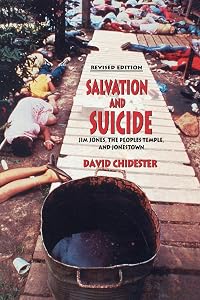
One of the most gruesome pictures included in this book is a photo depicting many of the deceased lying face down in what looked like a grass hut pavilion with a sign hanging on the wall, directly above Jones’ personal chair, that stated:
Those who fail to learn from history are doomed to repeat it.
Even though I did remember the events that took place in Guyana in 1978, I never sought to learn more about Jim Jones than was necessary. So, most of what was detailed here I was largely unaware of. I have to tell you, it’s pretty shocking. Jim Jones is one of the strangest people I’ve ever read about! He was crazy, but smart, did kind and compassionate things for people in need, was incredible charismatic, but could turn on someone in an instant, meting out horrific punishments, both physical and psychological. He could switch from mean to incredibly nice in an instant. He was delusional, believing himself to be God, and expected unquestionable loyalty from his followers, and he usually got it. But it started to unravel and disillusionment did start to set in, with some questioning his decisions or outright refusing to obey. Yet, as we all know, many remained enthralled right up to the bitter end.
I can’t praise the author enough for the clear, concise layout used here. The book is organized, well -constructed, is presented chronologically, and reads like a true crime novel in many ways. I was riveted, glued to the pages, still unable to grapple with the reality of Jones’ life and the path he ultimately took to Guyana.
There may always be a part of my heart and mind that can’t accept that over 900 people drank cyanide laced punch at his behest, including children. This book, though, left me with no place to hide, forcing me to accept these events as a gruesome, hideous, and incredibly tragic part of America’s history.
My fervent hope is that history never repeats itself. show less
Thoroughly chilling…
While I was only in my early teens in 1978, I still recall the news footage of the “Jonestown Massacre”. I understood on some level what had happened, but I couldn’t fully digest it. I tried not to watch the news reports and steered clear of conversations about it because it made me extremely uncomfortable. It was too much for me to cope with, and in all honesty, I still can’t wrap my head around it.
Part of me wanted to read this book, in hopes of garnering some understanding of how something like this happened. But, another part of me didn’t want to relive that horrible piece of history where show more over nine hundred people lost their lives.
But, the outstanding reviews convinced me to read it and while I still find these events quite upsetting, I am glad I read the book.
To say this was a comprehensive account of Jim Jones’ life is an understatement of epic proportions. This book is an exacting, well researched, serious and non-biased, look at one of the most monstrous cult leaders of all time.
We all know how this will end. The question is- How did it begin?
I won’t make this into a book report, if I can help it, but I did want to touch on some of the impressions I was left with.
One of the weirdest things about all this, is that it didn’t start out as being all that different from many fundamentalist church doctrines or beliefs. Jim’s wife was zealously religious and the couple did present themselves as believing in God and practiced the core Christian values most of us are familiar with. It is easy to see how Jim ingratiated himself into the ministry profession, and why he experienced praise for his genuine service and help to those in need. He was particularly sensitive to the black community and freely welcomed them and worshipped alongside them in a time when such actions raised eyebrows.
However, he quickly shucked off any semblance of being a true believer and began working the tent revival circuit, faked healings, and performed 'miracles' including raising people from the dead. But, there was an audience for that sort of thing, especially in that era of time, and he was hardly the only one out there working that particular con.
But, religion and doing good deeds were not the cult’s only draw. I was amazed at how political it was. Jones was an ardent socialist, and I think many people joined his ‘church’ because these ideals, without embracing any ‘religious’ worship of God.
This book took me on stunning and harrowing journey, step by horrifying step, as he morphed into an actual cult leader and managed to mesmerize his followers into doing anything he wanted them to.
I won’t go into the details because I want you to see for yourself how vile, narcissistic, cruel, contradictory, and sick he really was. It is an incredible profile of a man who conned, swayed, manipulated, lied, and corrupted so many people, yet managed to amass wealth, while rubbing elbows with celebrities, and politicians, who often praised him for his good deeds!!
As the book progresses, we see how as his psychosis deepened, and as his power increased so did his ego, and his darker tendencies completely took over, fueled by his paranoia need for control and by his use of drugs. So, the closer I came to the climactic events in “Jonestown”, I began to dread having to read it in such graphic details.
The phrase, ‘ don’t drink the Koolaid’ (it wasn’t really the trademarked “Koolaid”, but ‘Flavor-aid- a cheaper, generic brand), is a familiar one, used to insult anyone exhibiting a certain level of gullibility, and became a common pop culture saying.
"The Jonestown deaths quickly became renowned not as grandly defiant revolutionary gesture, but that ultimate example of human gullibility”
Cults didn’t go away after the Jonestown massacre. There were still headline grabbing standoffs and more mass suicides, although nothing that ever came close to topping Jonestown. But, it SEEMED that maybe with a more enlightened, educated, progressive majority in America, these charismatic charlatans may have finally lost their appeal or ability to lure mass followings, as we began to hear less and less about religious cults.
"Demagogues recruit by uniting a disenchanted element against an enemy, then promising to use religion or politics or a combination of the two to bring about rightful change.”
While I swore to myself I would not go here, I could not help but notice parallels between Jim Jones’ personality traits, such as his inability to delegate or share or his penchant to lash out, deflect, punish, seek restitution, and refuse any hint of apology or compromise, but still managed to lure in folks, knowing just what they needed and wanted to hear, thus securing an almost unshakable loyalty, are traits that are noticeably prevalent in other prominent ‘leaders’ who have come into power. The resemblance was so eerily uncanny at times I still get chills down my spine thinking about it.
‘The less he was recognized and appreciated by the outside world, the grander he proclaimed himself to the followers remaining to him.’
One of the most gruesome pictures included in this book is a photo depicting many of the deceased lying face down in what looked like a grass hut pavilion with a sign hanging on the wall, directly above Jones’ personal chair, that stated:
Those who fail to learn from history are doomed to repeat it.
Even though I did remember the events that took place in Guyana in 1978, I never sought to learn more about Jim Jones than was necessary. So, most of what was detailed here I was largely unaware of. I have to tell you, it’s pretty shocking. Jim Jones is one of the strangest people I’ve ever read about! He was crazy, but smart, did kind and compassionate things for people in need, was incredible charismatic, but could turn on someone in an instant, meting out horrific punishments, both physical and psychological. He could switch from mean to incredibly nice in an instant. He was delusional, believing himself to be God, and expected unquestionable loyalty from his followers, and he usually got it. But it started to unravel and disillusionment did start to set in, with some questioning his decisions or outright refusing to obey. Yet, as we all know, many remained enthralled right up to the bitter end.
I can’t praise the author enough for the clear, concise layout used here. The book is organized, well -constructed, is presented chronologically, and reads like a true crime novel in many ways. I was riveted, glued to the pages, still unable to grapple with the reality of Jones’ life and the path he ultimately took to Guyana.
There may always be a part of my heart and mind that can’t accept that over 900 people drank cyanide laced punch at his behest, including children. This book, though, left me with no place to hide, forcing me to accept these events as a gruesome, hideous, and incredibly tragic part of America’s history.
My fervent hope is that history never repeats itself. show less
Guinn's approach to this history of Rev. Jim Jones and the People's Temple displays compassion for the Temple's followers; but is highly critical of Jones himself. The compassion is most apparent in the absence of the word "cult" anywhere in this book. Guinn's mission is to impart the value in critically analyzing our demagogues in order to recognize them as they arise and keep each other safe from them. Jones was one of the most dangerous demagogues because he appealed to the best in human nature--that people want to be good, more than they want to be rich and powerful. A former follower, looking back on the Temple's mission claims, "we failed, but we tried." The truth is that his people didn't fail: Jones failed his people.
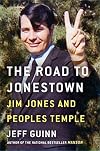
I’ve read a lot of disturbing books, but this one takes the cake. I feel like I just finished a demented Stephen King novel—only I know the events were real, and Jim Jones is still staring at me through the perfectly creepy cover.
Guinn excellently portrays Jim’s descent into madness and gradual decline of Jonestown. I always questioned how people could even join cults in the first place, until now. I think I have been permanently unsettled.
5/5 deplorable, heinous, abhorrent, and shamefully entertaining stars.
Guinn excellently portrays Jim’s descent into madness and gradual decline of Jonestown. I always questioned how people could even join cults in the first place, until now. I think I have been permanently unsettled.
5/5 deplorable, heinous, abhorrent, and shamefully entertaining stars.
The horror! Can you imagine what it must have been like to discover the bodies of over 900 people, at Jonestown, the total including over 300 infants and children? It was reported that they were stacked several deep and had to request snow shovels. The last pages of this terrific and meticulously researched bio, burned right into my brain.
Like many Americans, I always found the story of James Walker Jones, fascinating, haunting and completely disturbing and I was interested in reading something in depth on this puzzling and horrific subject. Boy, did I get it here.
Guinn goes deep, covering Jim's dysfunctional childhood, in Indiana. His launch into becoming a young Methodist preacher, trumpeting his strong ideals of integration and show more socialism and then the slow decline into madness and demagoguery, which of course led Jones to move his Peoples Temple, from northern California to the jungles of Guyana in South America and then the events that led up to that fateful day in November, 1978.
I had not read Guinn before but he definitely writes my kind of nonfiction. I will be seeking out his other work. show less
Like many Americans, I always found the story of James Walker Jones, fascinating, haunting and completely disturbing and I was interested in reading something in depth on this puzzling and horrific subject. Boy, did I get it here.
Guinn goes deep, covering Jim's dysfunctional childhood, in Indiana. His launch into becoming a young Methodist preacher, trumpeting his strong ideals of integration and show more socialism and then the slow decline into madness and demagoguery, which of course led Jones to move his Peoples Temple, from northern California to the jungles of Guyana in South America and then the events that led up to that fateful day in November, 1978.
I had not read Guinn before but he definitely writes my kind of nonfiction. I will be seeking out his other work. show less
Most of us are guilty of using the phrase "Don't drink the Kool-Aid." The punchline conceals the horror of the last act of Jim Jones Peoples Temple, a mass suicide which claimed 918 lives (including the ambush of Congressman Leo Ryan's party) in the jungles of Guyana. This book traces how a boy from small town Indiana became a preacher, a prophet, and then engineered a mass suicide. It's a fascinating journey, and Guinn does it with as little judgement as possible.
The young Jim Jones was a boy apart. His mother was an ardent noncomformist who believed that her son was destined for the great things she never accomplished. His father was a gassed veteran of WW1, tragically weak. Jim's mother raised him to believe in radical socialism, and show more his own importance. His peers from around Lynn, Indiana remembered a strange boy, fascinated by itinerant preachers, holding funerals for dead animals, and yet oddly manipulative and cruel.
In his early 20s, Jim started his ministry in Indianapolis, focusing on the black minority. The Peoples Temple (the name comes from the former synagogue building that served as its first home) focused on pragmatic matters, helping parishioners deal with bills, the courts, and an uncaring white world. Jones also hit the gospel circuit as well, 'prophesying' with the techniques of cold reading, and graduating to 'healings' where confederates pretending to pass "tumors" (actually rotten chicken offal).
The contradiction was at the heart of Jones's career. On the one hand, he was sincere in his belief in integration and socialism at a time when these things were wildly unpopular in America. The Peoples Temple provided real services for people, and really integrated themselves. On the other hand, for Jones the means justified the end, and chicanery and even Christianity themselves were tools to be used to further his true ends.
As Jones moved from Indiana to California, those ends became less about the mission, and more about himself. Always energetic and unwilling to delegate, Jones became increasingly authoritarian and paranoid. He urged members to 'go communal', turning over their property to the Temple. As he preached abstinence, he began taking mistresses from the faithful, and abusing amphetamines and barbiturates. A series of defections from highly placed lieutenants, including the Stoerns (Tim was Jones lawyer, Grace the mother of one of his children) made Jones paranoid.
He'd long dreamed of promised land, outside American jurisdiction, but the custody fight over the Stoerns' child prompted an immediate exodus to Guyana. The Guyanese government thought a settlement of Americans could act as a buffer against expansionist Venezuela on their remote frontier. Jones thought that the settlement could serve as a socialist utopia.
At this point, Jones really was under attack, from muckraking journalists and the Concerned Relatives, but he saw himself as at the epicenter of a massive conspiracy, involving the CIA, FBI, and shadowy mercenaries. As the Peoples Temple struggled to carve fields and homes out of the jungle, Jones degenerated further, seeing enemies everywhere, his once inspirational sermons degenerating into rants broadcast throughout the complex on speakers, and staging terrifying 'White Nights', where he rehearsed his plan for mass suicide, a final act of revolutionary martyrdom.
Guinn does his best to write without passing judgement, but from my perspective, it's impossible to separate the good Jones from the bad Jones. The same energy and self-assurance required to integrate in Indiana in 1961 are the qualities that lead him to see enemies everywhere. The bravery to fight social convention was in this one case, a slippery slope that started with false miracles and ended with demanding mass death. Jones appeal to peoples' better natures, but he couldn't defeat the darkness within. show less
The young Jim Jones was a boy apart. His mother was an ardent noncomformist who believed that her son was destined for the great things she never accomplished. His father was a gassed veteran of WW1, tragically weak. Jim's mother raised him to believe in radical socialism, and show more his own importance. His peers from around Lynn, Indiana remembered a strange boy, fascinated by itinerant preachers, holding funerals for dead animals, and yet oddly manipulative and cruel.
In his early 20s, Jim started his ministry in Indianapolis, focusing on the black minority. The Peoples Temple (the name comes from the former synagogue building that served as its first home) focused on pragmatic matters, helping parishioners deal with bills, the courts, and an uncaring white world. Jones also hit the gospel circuit as well, 'prophesying' with the techniques of cold reading, and graduating to 'healings' where confederates pretending to pass "tumors" (actually rotten chicken offal).
The contradiction was at the heart of Jones's career. On the one hand, he was sincere in his belief in integration and socialism at a time when these things were wildly unpopular in America. The Peoples Temple provided real services for people, and really integrated themselves. On the other hand, for Jones the means justified the end, and chicanery and even Christianity themselves were tools to be used to further his true ends.
As Jones moved from Indiana to California, those ends became less about the mission, and more about himself. Always energetic and unwilling to delegate, Jones became increasingly authoritarian and paranoid. He urged members to 'go communal', turning over their property to the Temple. As he preached abstinence, he began taking mistresses from the faithful, and abusing amphetamines and barbiturates. A series of defections from highly placed lieutenants, including the Stoerns (Tim was Jones lawyer, Grace the mother of one of his children) made Jones paranoid.
He'd long dreamed of promised land, outside American jurisdiction, but the custody fight over the Stoerns' child prompted an immediate exodus to Guyana. The Guyanese government thought a settlement of Americans could act as a buffer against expansionist Venezuela on their remote frontier. Jones thought that the settlement could serve as a socialist utopia.
At this point, Jones really was under attack, from muckraking journalists and the Concerned Relatives, but he saw himself as at the epicenter of a massive conspiracy, involving the CIA, FBI, and shadowy mercenaries. As the Peoples Temple struggled to carve fields and homes out of the jungle, Jones degenerated further, seeing enemies everywhere, his once inspirational sermons degenerating into rants broadcast throughout the complex on speakers, and staging terrifying 'White Nights', where he rehearsed his plan for mass suicide, a final act of revolutionary martyrdom.
Guinn does his best to write without passing judgement, but from my perspective, it's impossible to separate the good Jones from the bad Jones. The same energy and self-assurance required to integrate in Indiana in 1961 are the qualities that lead him to see enemies everywhere. The bravery to fight social convention was in this one case, a slippery slope that started with false miracles and ended with demanding mass death. Jones appeal to peoples' better natures, but he couldn't defeat the darkness within. show less
Jeff Guinn pens what has a very real argument to be the definitive text on Jim Jones, the Peoples Temple, and Jonestown. I say this having not read Tim Reiterman's similarly acclaimed book 'Raven', and intend to read this soon, and based on other reviews I believe the two books probably combine to tell this story as good as it will probably ever be told.
Guinn's book 'The Road to Jonestown' tracks Jim Jones from his birth (more realistically, from his parents' lives first) through his childhood, lucidly building his background through his rather troubled upbringing owing to his parents. One could make a case in saying that his mother planted many of the seeds that eventually brought Jim Jones to become who he is - I found this to be one show more of many fascinating parts of this book.
The author makes extensive note of the genuinely good works that Jones and the Peoples Temple did. Common knowledge states that Jim Jones was a fanatical church leader who drove almost a thousand followers to suicide in the middle of Guyana, but Guinn does a really great job in showing that the Temple really did good works during its existence. Jim Jones really did care about helping and uplifting the disenfranchised, and it is possible - indeed, it is necessary - to agree that he was a paranoid demagogue as well as someone who materially helped (if not saved) many, many people through Peoples Temple.
This book charts Jones and the Temple all the way through Jonestown and the mass suicide. We are afforded intriguing looks at how the Guyanese government reacted during Jonestown's existence and thereafter, as well as some occasionally damning evidence of the U.S. Embassy in Guyana not performing nearly their best in this situation. I'll leave other fellow readers to draw their own conclusions on this matter, but it provided a very intriguing angle to the broader, complicated Jonestown matter.
Five stars for a book that illuminated Jim Jones as a person, how he worked in the temple, and how everything fell apart. I enjoyed learning about the genuinely good works the Temple did, and finally understand the processes that led Jones to become a paranoid, drug-addicted mess that brought his followers to suicide. This book, importantly, also explains how over 900 people committed mass suicide, something the average person likely is bewildered at but makes total sense after reading. Well done to Jeff Guinn, this was a pleasure and a page-turner! show less
Guinn's book 'The Road to Jonestown' tracks Jim Jones from his birth (more realistically, from his parents' lives first) through his childhood, lucidly building his background through his rather troubled upbringing owing to his parents. One could make a case in saying that his mother planted many of the seeds that eventually brought Jim Jones to become who he is - I found this to be one show more of many fascinating parts of this book.
The author makes extensive note of the genuinely good works that Jones and the Peoples Temple did. Common knowledge states that Jim Jones was a fanatical church leader who drove almost a thousand followers to suicide in the middle of Guyana, but Guinn does a really great job in showing that the Temple really did good works during its existence. Jim Jones really did care about helping and uplifting the disenfranchised, and it is possible - indeed, it is necessary - to agree that he was a paranoid demagogue as well as someone who materially helped (if not saved) many, many people through Peoples Temple.
This book charts Jones and the Temple all the way through Jonestown and the mass suicide. We are afforded intriguing looks at how the Guyanese government reacted during Jonestown's existence and thereafter, as well as some occasionally damning evidence of the U.S. Embassy in Guyana not performing nearly their best in this situation. I'll leave other fellow readers to draw their own conclusions on this matter, but it provided a very intriguing angle to the broader, complicated Jonestown matter.
Five stars for a book that illuminated Jim Jones as a person, how he worked in the temple, and how everything fell apart. I enjoyed learning about the genuinely good works the Temple did, and finally understand the processes that led Jones to become a paranoid, drug-addicted mess that brought his followers to suicide. This book, importantly, also explains how over 900 people committed mass suicide, something the average person likely is bewildered at but makes total sense after reading. Well done to Jeff Guinn, this was a pleasure and a page-turner! show less
4.5 stars
There are two services this book provides you. The first is that it lays out, very clearly, the entirety of Jim Jones and his career from start to finish. The information presented is through and incisive. You will come away with all the facts you need, which is all that most nonfiction books aspire to.
But the truly important thing this book does is it helps you to understand the members of the Peoples Temple. You see what there was in Jones's offerings that drew people in, and you understand why they stayed. I even found myself thinking, at several points in the book, that the community they created was accomplishing exactly what I want to accomplish politically and spiritually: they really were feeding the hungry, they show more really were helping the poorest of the poor, they really were creating a group that was committed to overcoming racism. They did a lot of good for the communities they were in, and it's easy to see why outsiders, especially San Fransisco political figures, accepted them for what they appeared to be on the surface.
But then of course there's all the other stuff Jones mixed in with that. The faked faith "healings," the degree of control he had over the members, the punishments and the sacrifices he demanded, the sexual abuse of the women in the church, the terrible way he treated his ever-faithful wife. A lot of it is horrifying, and yet I understood for the first time why people stayed anyway. I could imagine how they justified it all to themselves even as I was horrified by the things they went through. The book recreates Jones's paranoid worldview to the point that the mass suicide does seem like a natural outgrowth of everything that came before. It's all disturbing and all so human. show less
There are two services this book provides you. The first is that it lays out, very clearly, the entirety of Jim Jones and his career from start to finish. The information presented is through and incisive. You will come away with all the facts you need, which is all that most nonfiction books aspire to.
But the truly important thing this book does is it helps you to understand the members of the Peoples Temple. You see what there was in Jones's offerings that drew people in, and you understand why they stayed. I even found myself thinking, at several points in the book, that the community they created was accomplishing exactly what I want to accomplish politically and spiritually: they really were feeding the hungry, they show more really were helping the poorest of the poor, they really were creating a group that was committed to overcoming racism. They did a lot of good for the communities they were in, and it's easy to see why outsiders, especially San Fransisco political figures, accepted them for what they appeared to be on the surface.
But then of course there's all the other stuff Jones mixed in with that. The faked faith "healings," the degree of control he had over the members, the punishments and the sacrifices he demanded, the sexual abuse of the women in the church, the terrible way he treated his ever-faithful wife. A lot of it is horrifying, and yet I understood for the first time why people stayed anyway. I could imagine how they justified it all to themselves even as I was horrified by the things they went through. The book recreates Jones's paranoid worldview to the point that the mass suicide does seem like a natural outgrowth of everything that came before. It's all disturbing and all so human. show less
Members
- Recently Added By
Lists

Top Five Books of 2017
757 works; 231 members

Books Read in 2018
4,360 works; 110 members

Simon & Schuster
136 works; 4 members

Top Five Books of 2023
767 works; 317 members

Gen X Library
245 works; 4 members

Extremism
31 works; 1 member

Weirdo Nonfiction
138 works; 3 members
Author Information

26 Works 4,747 Members
Jeff Guinn is the bestselling author of several books of fiction and nonfiction, including Manson: The Life and Times of Charles Manson, The Last Gunfight and Go Down Together, which was a finalist for an Edgar Award in 2010. Guinn is formerly an award-winning investigative journalist and now a frequent guest on national radio and TV programs. show more (Bowker Author Biography) show less
Awards and Honors
Awards
Distinctions
Common Knowledge
- Canonical title
- The Road to Jonestown: Jim Jones and Peoples Temple; Road to Jonestown: Jim Jones and Peoples Temple
- Original title
- The Road to Jonestown: Jim Jones and Peoples Temple
- Original publication date
- 2017-04-11
- People/Characters
- Jim Jones
- Important places
- Guyana; Jonestown, Guyana; Georgetown, Guyana; Redwood Valley, California, USA; Ukiah, California, USA
- Important events
- Jonestown Massacre (1978)
- Dedication
- For Bob Bender and Johanna Li
- First words
- During the late afternoon on Saturday, November 18, 1978, garbled radio messages began reaching Georgetown, the capital city of Guyana on the South American coast. (Prologue)
The way Lynetta Putnam Jones chose to remember it, she began life in privileged circumstances, was married only once to a handicapped veteran of World War I, was terribly mistreated by him and his cruel family, gave birth to ... (show all)a baby boy after a near-death mystic vision, faced down Depression-era bankers and backwoods religious charlatans, reformed a state prison system, unionized mistreated plant workers, and raised the world's greatest man, who was in fact more god than human thanks almost entirely to the constant nurturing of his devoted mother. - Last words
- (Click to show. Warning: May contain spoilers.)Bodies everywhere, seemingly too many to count, innumerable heaps of the dead. (Prologue)
(Click to show. Warning: May contain spoilers.)Just as demagogues lead their well-intentioned followers into tragedy, so the jungle inevitably reclaims its own. - Blurbers
- Jones, Jr., Jim
- Canonical DDC/MDS
- 289.9
- Canonical LCC
- BP605.P46
Classifications
- Genres
- General Nonfiction, Religion & Spirituality, History, Nonfiction, Biography & Memoir
- DDC/MDS
- 289.9 — Religion Christian denominations Other denominations and sects Minor Christian Sects
- LCC
- BP605 .P46 — Philosophy, Psychology and Religion Islam. Bahaism. Theosophy, etc. Islam. Bahai Faith. Theosophy, etc. Other beliefs and movements
- BISAC
Statistics
- Members
- 862
- Popularity
- 31,615
- Reviews
- 37
- Rating
- (4.06)
- Languages
- English, Polish
- Media
- Paper, Audiobook, Ebook
- ISBNs
- 13
- ASINs
- 5