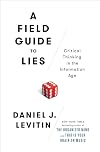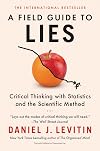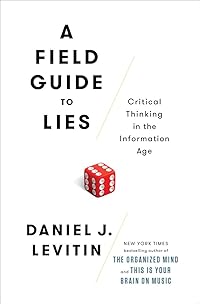
A Field Guide to Lies: Critical Thinking in the Information Age
by Daniel J. Levitin
On This Page
Description
From The New York Times bestselling author of THE ORGANIZED MIND and THIS IS YOUR BRAIN ON MUSIC, a primer to the critical thinking that is more necessary now than ever.We are bombarded with more information each day than our brains can process—especially in election season. It's raining bad data, half-truths, and even outright lies. New York Times bestselling author Daniel J. Levitin shows how to recognize misleading announcements, statistics, graphs, and written reports revealing the show more ways lying weasels can use them.
It's becoming harder to separate the wheat from the digital chaff. How do we distinguish misinformation, pseudo-facts, distortions, and outright lies from reliable information? Levitin groups his field guide into two categories—statistical infomation and faulty arguments—ultimately showing how science is the bedrock of critical thinking. Infoliteracy means understanding that there are hierarchies of source quality and bias that variously distort our information feeds via every media channel, including social media. We may expect newspapers, bloggers, the government, and Wikipedia to be factually and logically correct, but they so often aren't. We need to think critically about the words and numbers we encounter if we want to be successful at work, at play, and in making the most of our lives. This means checking the plausibility and reasoning—not passively accepting information, repeating it, and making decisions based on it. Readers learn to avoid the extremes of passive gullibility and cynical rejection. Levitin's charming, entertaining, accessible guide can help anyone wake up to a whole lot of things that aren't so. And catch some lying weasels in their tracks!
*Includes a Bonus PDF with Supplemental Graphics. show less
Tags
Recommendations
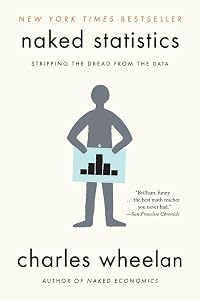
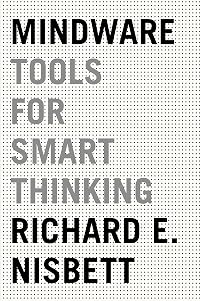
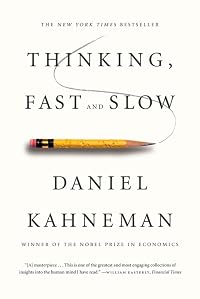
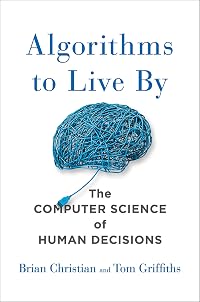
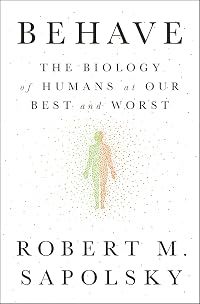
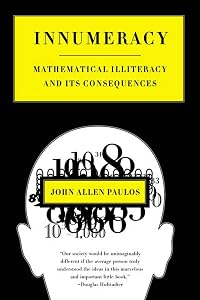

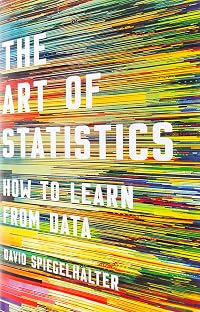
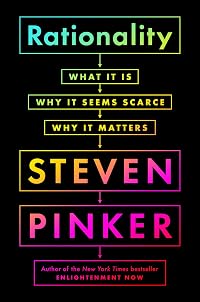



Member Recommendations
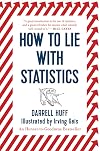
PuddinTame Daniel J. Levitin said that his book was inspired by Huff's, a book he had read several times and appreciated more with each reading.
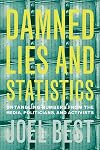
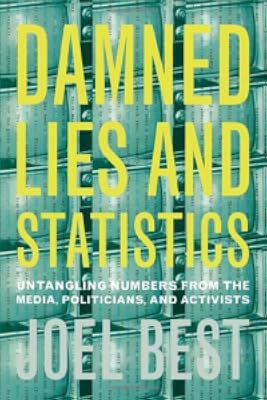
Damned Lies and Statistics: Untangling Numbers from the Media, Politicians, and Activists by Joel Best
PuddinTame Daniel J. Levitan particularly recommended this book in his own.
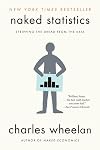
PuddinTame Daniel J. Levitan particularly recommended this book in his own.

themulhern For a counter-argument about the reliability of peer-reviewed journals, at least medical ones.
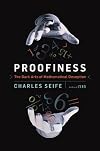
themulhern If you like the subject, but would like to read a better, clearer, more insightful, and funnier book.
themulhern Better book, similar subject.

Probability and Statistics for Everyman: How to Understand and Use the Laws of Chance by Irving Adler
themulhern If you are actually interested in understanding probability, try this instead.
Member Reviews
A very accessible read on how to spot the most common fallacies when it comes to interpret data. At a time when statistics are being churned out for anything and everything, especially in our medias where most journalists are (like the rest of us) unlikely to be trained or qualified to assess them, this book is obviously highly relevant. The last chapters are no less interesting, as they not only remind us of what the scientific method truly is, but, also, warn us against how it can be easily flouted in a digital age coupled with a culture centred on profit-making. For example, I personally found his advices on how to assess whether an outlet is scientific or, on the contrary, merely an open access journal (which doesn't make it bogus show more per se, just far less reliable...) particularly useful.
It's not a bad book at all. It's highly needed in our days and age. And it definitely is engaging and easy to read (the author having a sense of humour makes some of his arguments even more memorable). The thing is, I had read Calling Bullshit: The Art of Skepticism in a Data-Driven World prior to pick this, and both books are quite similar in their approach and argumentation. As a result, I didn't learn much after that. Nevertheless, it deserves to be on the shelf of anyone valuing critical thinking. show less
It's not a bad book at all. It's highly needed in our days and age. And it definitely is engaging and easy to read (the author having a sense of humour makes some of his arguments even more memorable). The thing is, I had read Calling Bullshit: The Art of Skepticism in a Data-Driven World prior to pick this, and both books are quite similar in their approach and argumentation. As a result, I didn't learn much after that. Nevertheless, it deserves to be on the shelf of anyone valuing critical thinking. show less
As if I need any more book suggestions, I have a couple of feeds I've voluntarily signed up for and this popped up on one of them some time ago and I've just now gotten around to reading it. I eat up the good stuff on critical thinking and this just appealed. Sure, there were few revelations for me, but the composition was refreshing and even though Levitin seems to churn out variations on a theme, this is my first by him, so gets a good nod from me. It gets an extra star because I like his coverage.
Levitin covers a lot. And he covers it well. His writing makes for easy reading and easier digesting if you've never read anything on the subject. for those who have, it's a nicely packaged compendium with quotable sound bites. He addresses show more the usual numbers game, ... and also words. Lies, damn lies and...
On authority, he also advises (obviously) sagely:
On things like Academy Awards - something I question when I actually take an interest - he makes a very good observation that
There's a lot more here. I made a lot of electronic highlights and notes (that I should remember to save in event of another device glitch...) and though I like James Morrow's "Science has all the answers. We just don't have all the science", Levitin notes, "Science doesn’t present us with certainty, only probabilities." I might need to adjust my thinking.
Highly recommended for the beginner and veteran. show less
Levitin covers a lot. And he covers it well. His writing makes for easy reading and easier digesting if you've never read anything on the subject. for those who have, it's a nicely packaged compendium with quotable sound bites. He addresses show more the usual numbers game, ... and also words. Lies, damn lies and...
Statistics are not facts. They are interpretations.All right. Important safety tip. (and spot on). And when he talks about infographics? ("...often used by lying weasels to shape public opinion" [my emphasis]) He's also spot on that "they [the weasels] rely on the fact that most people won't study what they've done too carefully." Rather disparaging to the much maligned weasels, similizing the ilk to them. Advising the reader, wisely, when encountering just about any claim: "...ask yourself: How could anyone know such a thing?" Intuitively obvious to the most casual observer? Well, of course, but equally obvious...advise so needed and ignored.
On authority, he also advises (obviously) sagely:
The first thing to do when evaluating a claim by some authority is to ask who or what established their authority. If the authority comes from having been a witness to some event, how credible a witness are they?And in a discussion later in the book he notes that "Experience is Typically Narrow" I recalled a discourse I had on The Petition Project...appeals to an "authority" beg the question as to the source of the authority; does the authprity have any pedigree at all on the subject in question? (Great pop culture reference in mind is the television show West Wing's character President Bartlet eviscerating a sham talk radio host for masquerading her PhD in English as some authority in divinity or psychology...)
On things like Academy Awards - something I question when I actually take an interest - he makes a very good observation that
The award system is generally biased toward ensuring that every winner is deserving, which is not the same as saying that every deserving person is a winner.Important distinction.
There's a lot more here. I made a lot of electronic highlights and notes (that I should remember to save in event of another device glitch...) and though I like James Morrow's "Science has all the answers. We just don't have all the science", Levitin notes, "Science doesn’t present us with certainty, only probabilities." I might need to adjust my thinking.
Highly recommended for the beginner and veteran. show less
A Field Guide to Lies by Daniel J. Levitin reads like an updated version of How to Lie With Statistics by Darrell Huff. Although that is the face value of it, A Field Guide to Lies goes a step further. While How to Lie With Statistics dealt with statistics only, this book covers all of the ways that someone can lie to you. So it tells you how to use Bayesian reasoning, how to assess logical arguments and how to use your basic understanding of the world to tell whether or not something seems plausible.
The book is split into three major sections. The first covers numbers and all the ways they can be used. The second covers words and the ways that they are used. The third section covers the world in general and how to understand it in some show more small way.
The idea of the first section is this; the problem with numbers is that people, in general, are ill-equipped to understand them intuitively. Even with something as simple as a percentage, if it is manipulated properly, it can become confusing. For example, let’s say you earned $1000, just to make the numbers easy. If you got a 50% pay-cut you would then have $500. If you were to get a 50% pay increase from that $500, you would only get $750 because 50% of 500 is 250. The same thing goes for the average. It depends on how you represent data rather than what that data is. So there are three different types of average; the mean, the median, and the mode. This allows for better accuracy in what you want to show. It also shows how to calculate probabilities and how to use Bayesian reasoning to make decisions.
The second section is all about how words can be used to confuse and befuddle. We as a species are storytellers, easily swayed by the opinions of others. There are ways to know things, but most of the things we know are told to us by others. As the author puts it, “I have never seen an atom of Oxygen or a molecule of water, but there is a body of literature describing meticulously conducted experiments that lead me to believe they exist.” In the same vein, I didn’t actually conduct the experiment demonstrating that the speed of light is such and such a value, I read about it in a book. Someone with expertise told me such things, and I have to trust what they say or conduct my own research. Since those experts are human also though, they can be wrong. Since they have experience with what they do, we assume they have less of a chance to make a mistake, but that isn’t foolproof. Take the GUI for computers for example. Xerox PARC came up with the idea but didn’t do anything with it; while Steve Jobs, a young man with no business experience at the time, saw the potential in the idea.
The third section discusses how science works and how to apply logic to problems. There are induction and deduction which people use all the time whether they realize it or not. For example, if you have a brother that does a repair job at your house, but the item breaks again, what are the chances that you are going to go with him again? This final section also talks about logical fallacies and how to avoid them. Take the safety of air travel. After the 9/11 attacks, people decided to not fly as often, even though air travel remained the safest form of travel. This caused traffic accidents to increase dramatically.
Anyway, this book was really well done and interesting. show less
The book is split into three major sections. The first covers numbers and all the ways they can be used. The second covers words and the ways that they are used. The third section covers the world in general and how to understand it in some show more small way.
The idea of the first section is this; the problem with numbers is that people, in general, are ill-equipped to understand them intuitively. Even with something as simple as a percentage, if it is manipulated properly, it can become confusing. For example, let’s say you earned $1000, just to make the numbers easy. If you got a 50% pay-cut you would then have $500. If you were to get a 50% pay increase from that $500, you would only get $750 because 50% of 500 is 250. The same thing goes for the average. It depends on how you represent data rather than what that data is. So there are three different types of average; the mean, the median, and the mode. This allows for better accuracy in what you want to show. It also shows how to calculate probabilities and how to use Bayesian reasoning to make decisions.
The second section is all about how words can be used to confuse and befuddle. We as a species are storytellers, easily swayed by the opinions of others. There are ways to know things, but most of the things we know are told to us by others. As the author puts it, “I have never seen an atom of Oxygen or a molecule of water, but there is a body of literature describing meticulously conducted experiments that lead me to believe they exist.” In the same vein, I didn’t actually conduct the experiment demonstrating that the speed of light is such and such a value, I read about it in a book. Someone with expertise told me such things, and I have to trust what they say or conduct my own research. Since those experts are human also though, they can be wrong. Since they have experience with what they do, we assume they have less of a chance to make a mistake, but that isn’t foolproof. Take the GUI for computers for example. Xerox PARC came up with the idea but didn’t do anything with it; while Steve Jobs, a young man with no business experience at the time, saw the potential in the idea.
The third section discusses how science works and how to apply logic to problems. There are induction and deduction which people use all the time whether they realize it or not. For example, if you have a brother that does a repair job at your house, but the item breaks again, what are the chances that you are going to go with him again? This final section also talks about logical fallacies and how to avoid them. Take the safety of air travel. After the 9/11 attacks, people decided to not fly as often, even though air travel remained the safest form of travel. This caused traffic accidents to increase dramatically.
Anyway, this book was really well done and interesting. show less
"Steve Jobs delayed treatment for his pancreatic cancer while he followed the advice (given in books and websites) that a change in diet could provide a cure. By the time he realized the diet wasn’t working, the cancer had progressed too far to be treated." (125)
In the times of the "Ministry of Truth," this is an excellent book to read. In analyzing carefully the information we receive, the author uses many examples, from Fox News to tricks used by magicians. Like the example I quote above, some are tragic and fateful cases, all based on misleading information.
In the times of the "Ministry of Truth," this is an excellent book to read. In analyzing carefully the information we receive, the author uses many examples, from Fox News to tricks used by magicians. Like the example I quote above, some are tragic and fateful cases, all based on misleading information.
‘All I know is what’s on the Internet’ – Donald Trump
And there is A LOT on the Internet. How do you pick out the Truth from selective facts or outright lies? Award-winning neuroscientist Dr. Daniel Levithin offers strategies for unmasking deceptions and helping you navigate your way through all the (mis)information available today. Entertaining and informative.
I received a free digital copy of this book from the publisher.
And there is A LOT on the Internet. How do you pick out the Truth from selective facts or outright lies? Award-winning neuroscientist Dr. Daniel Levithin offers strategies for unmasking deceptions and helping you navigate your way through all the (mis)information available today. Entertaining and informative.
I received a free digital copy of this book from the publisher.
A good introduction to critical thinking that gives examples and methods to help people learn how to think critically about the things they read, hear, etc. It is not a book to debunk specific ideas, but it does use some of those ideas as examples of how to examine claims for the possibility of fraud, lies, or just plain mistakes. It is definitely one that I will include on the reading list for my students.
Underwhelming. Some good refreshers on fallacies, among other things, but I kept waiting for a chapter on climate science and denialism that never came. At times the author's writing style conveys a sort of flip arrogance I found off-putting rather than humorous, as I think was intended. The topic deserved a weightier, more ambitious effort.
Members
- Recently Added By
Lists

Check Library
177 works; 1 member

Career
86 works; 1 member
Author Information

15 Works 8,984 Members
Daniel J. Levitin was born on December 27, 1957 in San Francisco, California. He studied electrical engineering at the Massachusetts Institute of Technology and music at the Berkley College of Music before dropping out of college to become a record producer and professional musician. He returned to school in his thirties, where he studied show more cognitive psychology/cognitive science, receiving a B.A. from Stanford University in 1992 and a M.Sc. in 1993 and Ph.D. in 1996 from the University of Oregon. He is a cognitive psychologist, neuroscientist, and author. He runs the Levitin Laboratory for Musical Perception, Cognition, and Expertise at McGill University. He has published extensively in scientific journals and music trade magazines such as Grammy and Billboard. He is also the author of several books including This Is Your Brain on Music, The World in Six Songs, and The Organized Mind: Thinking Straight in the Age of Information Overload. (Bowker Author Biography) show less
Awards and Honors
Awards
Distinctions
Notable Lists
Series
Belongs to Publisher Series
Elav teadus (Argo) (10)
Common Knowledge
- Original title
- A Field Guide to Lies: Critical Thinking in the Information Age
- Alternate titles
- Weaponized Lies: How to Think Critically in the Post-truth Era; A Field Guide to Lies: Critical Thinking With Statistics and the Scientific Method
- Original publication date
- 2016
- Dedication
- To Shari,
whose inquisitive mind made me a better thinker - First words
- This is a book about how to spot problems with the facts you encounter, problems that may lead you to draw the wrong conclusions. (Introduction)
Statistics, because they are numbers, appear to us to be cold, hard facts. - Quotations
- We're far better off knowing a moderate number of things with certainty than a large number of things that might not be so. (Conclusion: Discovering Your Own, p. 254 {Dutton, 2016})
- Last words
- (Click to show. Warning: May contain spoilers.)Following the steps in the Field Guide to evaluate the myriad claims that we encounter is how we stay two steps ahead of the millions of lies that are out there on the Web, and ahead of the liars and just plain incompetents who perpetuate them.
- Publisher's editor
- Morrow, Stephen; Maines, Becky
- Blurbers
- Duhigg, Charles; Wheelan, Charles; Cheng, Edward K.; Olitsky, Morris; Rine, Jasper; Lazic, Stan (show all 9); Bajeux-Besnainou, Isabelle; Gascon, Gregg; Martin, Patrick
Classifications
Statistics
- Members
- 813
- Popularity
- 34,068
- Reviews
- 19
- Rating
- (3.72)
- Languages
- 7 — Chinese, Dutch, English, Estonian, German, Portuguese (Portugal), Spanish
- Media
- Paper, Audiobook, Ebook
- ISBNs
- 35
- ASINs
- 9