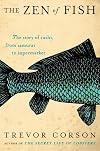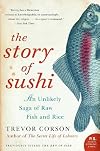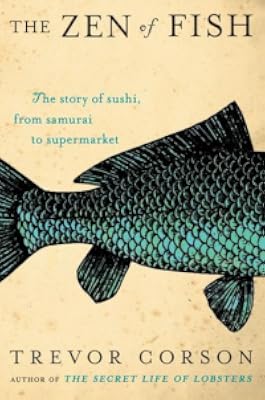
The Zen of Fish
by Trevor Corson 
On This Page
Description
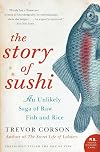
A New York Times Editors ChoiceEverything you never knew about sushi-- its surprising origins, the colorful lives of its chefs, and the bizarre behavior of the creatures that compose itTrevor Corson takes us behind the scenes at Americas first sushi-chef training academy, as eager novices strive to master the elusive art of cooking without cooking. He delves into the biology and natural history of the edible creatures of the sea, and tells the fascinating story of an Indo-Chinese meal show more reinvented in nineteenth-century Tokyo as a cheap fast food. He reveals the pioneers who brought sushi to the United States and explores how this unlikely meal is exploding into the American heartland just as the long-term future of sushi may be unraveling.The Story of Sushi is at once a compelling tale of human determination and a delectable smorgasbord of surprising food science, intrepid reporting, and provocative cultural history. show lessTags
Recommendations










Member Reviews
I'm the kind of person who has Opinions about sushi; Expensive opinions which are best described by the omakase course at Sushi Tsujita on Sawtelle in Los Angeles. So a book about sushi is very much my style. Corson frames the past, present, and science of sushi around the 12-week course at the California Sushi Academy (operated by legendary chef Toshi Sugiura, once sushi chef to the stars).
The history is fascinating. Sushi evolved from a dish of fish fermented in a box of rice for months to a form prizing freshness and bite-sized perfect that we'd recognize in 19th century Japan. The word itself refers to the rice, not the fish. Tokyo-style sushi got a major boost during the post-war occupation, when MacArthur's occupational government show more approved a standardized plan which allowed sushi stalls to prepare meals using people's limited rice rations. Entrepreneurs in the 80s, including Toshi, found a way to translate exotic raw seafood to American tastes, though not without a lot of editing of the Japanese sushi tradition. Giant rolls drenched in spicy mayo and crunchy tempura bits would be anathema to traditionalists. In Japan, sushi bars are an ultra-masculine place defined by the relationships between the chef and the regulars. America has pioneered innovations like 'all you can eat', sushi boats, and the Rainbow Roll. To meet demand for trained sushi chefs, and to hold back the absolute vestiges of spicy tuna roll barbarity, Toshi compressed the multiyear apprenticeship into a 12 week course open to anyone.
We follow Kate, a 20 year old white girl from San Diego, as she ventures into the very male and very Japanese world of the sushi chef. I'll admit that I didn't much care for Kate initially; she's afraid of her knives, and seems to be a bit of flake. But she preservers, graduates, and gets a job as a chef. Meanwhile, we learn all about the messy process of cleaning meats, the magic of the perfect nigiri, and the science of why fish on rice tastes so good, and why under no circumstances should you make a paste of wasabi and soy sauce and smash your sushi in it.
Corson touches on the problems of overfishing, fish farming, and the problems of rising demand for sushi and falling standards of production. I think a world where more people are eating sushi is a better world, and Corson gives a sense of how even Des Moines can have good sushi. show less
The history is fascinating. Sushi evolved from a dish of fish fermented in a box of rice for months to a form prizing freshness and bite-sized perfect that we'd recognize in 19th century Japan. The word itself refers to the rice, not the fish. Tokyo-style sushi got a major boost during the post-war occupation, when MacArthur's occupational government show more approved a standardized plan which allowed sushi stalls to prepare meals using people's limited rice rations. Entrepreneurs in the 80s, including Toshi, found a way to translate exotic raw seafood to American tastes, though not without a lot of editing of the Japanese sushi tradition. Giant rolls drenched in spicy mayo and crunchy tempura bits would be anathema to traditionalists. In Japan, sushi bars are an ultra-masculine place defined by the relationships between the chef and the regulars. America has pioneered innovations like 'all you can eat', sushi boats, and the Rainbow Roll. To meet demand for trained sushi chefs, and to hold back the absolute vestiges of spicy tuna roll barbarity, Toshi compressed the multiyear apprenticeship into a 12 week course open to anyone.
We follow Kate, a 20 year old white girl from San Diego, as she ventures into the very male and very Japanese world of the sushi chef. I'll admit that I didn't much care for Kate initially; she's afraid of her knives, and seems to be a bit of flake. But she preservers, graduates, and gets a job as a chef. Meanwhile, we learn all about the messy process of cleaning meats, the magic of the perfect nigiri, and the science of why fish on rice tastes so good, and why under no circumstances should you make a paste of wasabi and soy sauce and smash your sushi in it.
Corson touches on the problems of overfishing, fish farming, and the problems of rising demand for sushi and falling standards of production. I think a world where more people are eating sushi is a better world, and Corson gives a sense of how even Des Moines can have good sushi. show less
I love this book! Corson doesn’t just write about sushi—he shows you how it traveled, transformed, and embedded itself into global culture. If you’ve ever closed your eyes on a perfect bite of uni and thought, how did this miracle make its way to my plate?—this book answers that. Corson deep dives into sushi’s history and evolution while following students training to become sushi chefs (equal parts inspiring and mildly terrifying). He makes the backstory of raw fish not just digestible but downright addictive. A great blend of history, culture, and kitchen grit.
Quite possibly the best nonfiction I've read this year. Corson uses as the base of his story, the experiences of students in a three month course during 2005, on becoming a sushi chef at the California Sushi Academy in the L.A. area. He includes stories of the various teachers and the restaurant where the academy is housed. In amongst that story, are histories of sushi making, natural histories of the many ingredients used in making sushi and general cultural knowledge of those who have fallen in love with eating sushi. This was a drama of lives, but not in the Iron Chef or reality TV show formula.
It was instructive, and inspiring and frustrating. Instructive and inspiring in that it helped me understand some of the Japanese ways of show more flavor (in fact, inspired by this book, I made the best sole I've ever managed last night, broiled after a light marinade in sake, soy sauce, rice vinegar, chili oil and sugar - then I used the marinade to pour over my broccoli which I then roasted in the oven. Delicious!), and the possibilities of making sushi for myself. Although it is not a cookbook and contains no recipes, there are good references at the end for those who want to go further with it. Frustrating in that it makes you want to rush out to the nearest decent sushi bar and have the experience of eating well made sushi. I don't think there is one closer than 90 miles away from me, so that won't be happening soon. When I do go though, I will go with a much better understanding of the experience and food. show less
It was instructive, and inspiring and frustrating. Instructive and inspiring in that it helped me understand some of the Japanese ways of show more flavor (in fact, inspired by this book, I made the best sole I've ever managed last night, broiled after a light marinade in sake, soy sauce, rice vinegar, chili oil and sugar - then I used the marinade to pour over my broccoli which I then roasted in the oven. Delicious!), and the possibilities of making sushi for myself. Although it is not a cookbook and contains no recipes, there are good references at the end for those who want to go further with it. Frustrating in that it makes you want to rush out to the nearest decent sushi bar and have the experience of eating well made sushi. I don't think there is one closer than 90 miles away from me, so that won't be happening soon. When I do go though, I will go with a much better understanding of the experience and food. show less
I really really wanted to love this book...but:
I'm sure that Kate Murray is a lovely and intelligent woman. It is unfortunate that Corson's attempt to interweave personal documentary and history is such a miserable failure. I enjoyed half of this book--the part that really did seem to be "the story of sushi" rather than the "chauvinist story of Kate the sushi chef."
First, let me address the writing. A good portion of the narrative is written in "See Spot run" style. I'm not sure if that was supposed to be charming, but I don't pick up a history of sushi and expect a nostalgic look at my primary school reader. Not only did this lack of syntactical variety make the book a bore to read (in places), but it really infantilized Kate (in show more addition to far more egregious errors). I had no respect for her as a "character" in the "story" of sushi. This is how Corson believes we will connect to Kate's story:
"Kate was reasonably happy until partway into her senior year, when she broke her index finger. The injury prevented her from playing soccer. Without soccer, Kate got depressed. She stopped going to school. Then she got sick."
Kate got depressed. Huh. We go on to learn that "She lost a lot of weight" and it was sushi that set her on the road back to health. Seems like a good narrative arc, until the rest of the book spends time on Kate's fear of gross fish guts, sharp knives, and a preference for Monster Energy drinks over Red Bull (just one instance of gratuitous detail, page 197).
There are more interesting characters at the California Sushi Academy! We get a reasonable glimpse of Zoran, the instructor and source of Kate's fear and trembling. Takumi and Marcos make token appearances so that we can remember there are other members of the class, but doubtless they would not have provided the narrative opportunities that Kate did. Witness:
"When she'd finished, she changed into tight jeans and a tank top..." (212)
"The top of her pink thong underwear showed above the waistline of her pants." (212)
"She sailed off to the ladies' room and slipped out of her uniform into a pair of pants and a tight shirt." (269)
But Corson's fixation on Kate's apparel isn't the only problem. Pages 281-2 seem to make a point that sushi chefs are perverts, with discussions of female customers with "ample bosom[s]"...Toshi tells us that "Working at the sushi bar really is the ideal angle for viewing breasts." The discussion of breasts fills up a page. This section is completely gratuitous and serves absolutely no purpose except to show that Toshi likes to oggle and objectify women. Super--I'm glad I learned that as part of "The story of SUSHI."
What frustrates me is that I'd love to keep roughly half the book as a reference. There's a lot of good stuff there, and Corson's actual FOOD and history writing is far more fluid and interesting than his portrayal of the humans in the story. If I'm being charitable, I think he bit off too much (pun intended) here--the history and sociology of food are enough without the soap opera. Corson makes several references to Jiro Ono, the master sushi chef made famous in the 2011 documentary Jiro Dreams of Sushi. It is a shame that this book predates the documentary, because Corson no doubt would have learned a lot about how to honor a documentary subject without sensationalizing. show less
I'm sure that Kate Murray is a lovely and intelligent woman. It is unfortunate that Corson's attempt to interweave personal documentary and history is such a miserable failure. I enjoyed half of this book--the part that really did seem to be "the story of sushi" rather than the "chauvinist story of Kate the sushi chef."
First, let me address the writing. A good portion of the narrative is written in "See Spot run" style. I'm not sure if that was supposed to be charming, but I don't pick up a history of sushi and expect a nostalgic look at my primary school reader. Not only did this lack of syntactical variety make the book a bore to read (in places), but it really infantilized Kate (in show more addition to far more egregious errors). I had no respect for her as a "character" in the "story" of sushi. This is how Corson believes we will connect to Kate's story:
"Kate was reasonably happy until partway into her senior year, when she broke her index finger. The injury prevented her from playing soccer. Without soccer, Kate got depressed. She stopped going to school. Then she got sick."
Kate got depressed. Huh. We go on to learn that "She lost a lot of weight" and it was sushi that set her on the road back to health. Seems like a good narrative arc, until the rest of the book spends time on Kate's fear of gross fish guts, sharp knives, and a preference for Monster Energy drinks over Red Bull (just one instance of gratuitous detail, page 197).
There are more interesting characters at the California Sushi Academy! We get a reasonable glimpse of Zoran, the instructor and source of Kate's fear and trembling. Takumi and Marcos make token appearances so that we can remember there are other members of the class, but doubtless they would not have provided the narrative opportunities that Kate did. Witness:
"When she'd finished, she changed into tight jeans and a tank top..." (212)
"The top of her pink thong underwear showed above the waistline of her pants." (212)
"She sailed off to the ladies' room and slipped out of her uniform into a pair of pants and a tight shirt." (269)
But Corson's fixation on Kate's apparel isn't the only problem. Pages 281-2 seem to make a point that sushi chefs are perverts, with discussions of female customers with "ample bosom[s]"...Toshi tells us that "Working at the sushi bar really is the ideal angle for viewing breasts." The discussion of breasts fills up a page. This section is completely gratuitous and serves absolutely no purpose except to show that Toshi likes to oggle and objectify women. Super--I'm glad I learned that as part of "The story of SUSHI."
What frustrates me is that I'd love to keep roughly half the book as a reference. There's a lot of good stuff there, and Corson's actual FOOD and history writing is far more fluid and interesting than his portrayal of the humans in the story. If I'm being charitable, I think he bit off too much (pun intended) here--the history and sociology of food are enough without the soap opera. Corson makes several references to Jiro Ono, the master sushi chef made famous in the 2011 documentary Jiro Dreams of Sushi. It is a shame that this book predates the documentary, because Corson no doubt would have learned a lot about how to honor a documentary subject without sensationalizing. show less
This is a fantastic book. It contains a little bit of fiction in the way of students attending a sushi course at the American Sushi Academy. Through their daily lessons at the academy, we are introduced to the history of sushi, its evolution from fish stored in fermented rice to the food that we are familiar with today.
We get lessons in mold, its importance to the Japanese chefs as far back as 1200 years ago, how bonito flakes are made, the role that kelp plays in creating a Japanese broth known as dashi, why the human tongue savors glutamate, the biology of different marine life commonly used as nigiri sushi toppings, why some fish are considered delicacies and others snubbed, the introduction of shellfish and mollusks, and what do we show more really know about the green condiment that comes in a little pyramid on a sushi plate?
From how to wrap sushi, how to cut different kinds of fish, slice squid and why sushi chefs slap geoducks before serving, this book has all the intricate details together told in a most conversational style. The author includes cultural notes on how to eat sushi, what the pickled garlic really is for, how sushi chefs look at their clients before deciding how to form the sushi that will fit the client's style, and why they have the green leaves.
The fiction adds rather than detracts from the book, and actually forms really good segue points from one topic to another in the ongoing saga of the world of sushi.
I found this completely fascinating. It's given me a great insight into the food that I enjoy eating and now that I know some inside information into sushi, I am better informed now as to what I should be and should not be eating. show less
We get lessons in mold, its importance to the Japanese chefs as far back as 1200 years ago, how bonito flakes are made, the role that kelp plays in creating a Japanese broth known as dashi, why the human tongue savors glutamate, the biology of different marine life commonly used as nigiri sushi toppings, why some fish are considered delicacies and others snubbed, the introduction of shellfish and mollusks, and what do we show more really know about the green condiment that comes in a little pyramid on a sushi plate?
From how to wrap sushi, how to cut different kinds of fish, slice squid and why sushi chefs slap geoducks before serving, this book has all the intricate details together told in a most conversational style. The author includes cultural notes on how to eat sushi, what the pickled garlic really is for, how sushi chefs look at their clients before deciding how to form the sushi that will fit the client's style, and why they have the green leaves.
The fiction adds rather than detracts from the book, and actually forms really good segue points from one topic to another in the ongoing saga of the world of sushi.
I found this completely fascinating. It's given me a great insight into the food that I enjoy eating and now that I know some inside information into sushi, I am better informed now as to what I should be and should not be eating. show less
The Zen of Fish is an appropriate title. Like small decorative servings of visually appealing sushi, Trevor Corson playfully dishes out many short chapters full of descriptive appeal, encyclopedic knowledge and witty banter, a written "documentary" of the sushi experience in easily digestible portions. The variety of information about sushi is varied, but like the ubiquitous bed of white rice it is served on, a consistent human-interest narrative holds everything together, popping one short satisfying chapter down after the next. Reams of encyclopedic information are interesting, but when wrapped around a person and a story, it becomes an unforgettable experience.
Gratefully, Corson has added an appendix on how to go about ordering and show more eating Sushi "correctly", and he covers at least a dozen different fish types that make knowing what to order beyond the standards easier. Fun and educational book, highly recommended. show less
Gratefully, Corson has added an appendix on how to go about ordering and show more eating Sushi "correctly", and he covers at least a dozen different fish types that make knowing what to order beyond the standards easier. Fun and educational book, highly recommended. show less
In terms of recorded history, the emergence of sushi as a culinary delight in the United States is still a relatively recent phenomenon. Sushi's surging popularity has propelled it from hot spot metropolitan sake bars into local grocery store cooling bins. The story of sushi, however, reaches back much further than the freshest milk.
In The Zen of Fish, Trevor Corson carefully wraps morsels of history and humor into bite sized chapters that taken together tell "the story of sushi, from samurai to supermarket." From the procurement of the freshest ingredients in the early morning fish markets to the fostering and attentive care given by each chef to their personal set of knives, Corson prepares a delicious and enlightening tome. The show more author's mastery of description spices the mind with the dancelike movements of sushi chefs as they prepare meals for the enthusiastic sake toasting guests lining the Hama Hermosa bar in Hermosa Beach, California. During the morning hours, the back room of the restaurant plays host to the California Sushi Academy, where we follow the trials of aspiring sushi chefs through a semester of training at the hands of their demanding instructor, Zoran. Most prominent among these characters is Kate, whose spunk and wit will have you rooting for her as an underdog amongst a handful of finely captured characters, each with their own substory.
A wonderful read The Zen of Fish entertains and educates. show less
In The Zen of Fish, Trevor Corson carefully wraps morsels of history and humor into bite sized chapters that taken together tell "the story of sushi, from samurai to supermarket." From the procurement of the freshest ingredients in the early morning fish markets to the fostering and attentive care given by each chef to their personal set of knives, Corson prepares a delicious and enlightening tome. The show more author's mastery of description spices the mind with the dancelike movements of sushi chefs as they prepare meals for the enthusiastic sake toasting guests lining the Hama Hermosa bar in Hermosa Beach, California. During the morning hours, the back room of the restaurant plays host to the California Sushi Academy, where we follow the trials of aspiring sushi chefs through a semester of training at the hands of their demanding instructor, Zoran. Most prominent among these characters is Kate, whose spunk and wit will have you rooting for her as an underdog amongst a handful of finely captured characters, each with their own substory.
A wonderful read The Zen of Fish entertains and educates. show less
Members
- Recently Added By
Published Reviews
The book's real strength is Corson's skill at making the science of sushi interesting, presenting details in a playful and unintimidating manner for those of us without backgrounds in marine biology. He provides fascinating detail of a number of the most popular sushi toppings, imbuing his descriptions with just enough scientific trivia to capture the fascination of his mass-market target show more audience yet not give the impression he is watering down his presentations. Throughout the book, he covers topics such as the biology of tuna (which are, believe it or not, a warm-blooded fish); the composition of various types of muscles in fish and their differing flavor profiles; the anti-bacterial characteristics of sushi garnishes, such as shredded radish and perilla (shiso 紫蘇) leaves; and the (truly fascinating) life-cycle of eels. show less
added by sgump
Author Information

2+ Works 1,465 Members
Trevor Corson worked aboard commercial lobster boats for two years and has written on subjects as diverse as organ transplants, Japanese Buddhism, and Chinese politics. His writing has appeared in the Atlantic Monthly, the New York Times, the Los Angeles Times, and the Boston Globe. He lives in Boston, Massachusetts
Trevor Corson is a LibraryThing Author, an author who lists their personal library on LibraryThing.
Common Knowledge
- Canonical title
- The Zen of Fish
- Original title
- The Zen of Fish: The Story of Sushi, from Samurai to Supermarket
- Alternate titles
- The Story of Sushi: An Unlikely Saga of Raw Fish and Rice
- Original publication date
- 2007
- People/Characters
- Kate Murray; Marcos Wisner; Takumi Nishio; Fie Kruse; Zoran Lekic; Toshi Sugiura
- Important places
- Los Angeles, California, USA; Hermosa Beach, California, USA
- Epigraph
- I am a fish, cuisine is my sea.
- First words
- Kate Murray's alarm clock went off at 5:30 a.m.
- Last words
- (Click to show. Warning: May contain spoilers.)The sound soared across the room, like a flying fish breaking the surface of the sea.
Classifications
- Genres
- Nonfiction, General Nonfiction, Food & Cooking, History, Science & Nature
- DDC/MDS
- 641.692 — Applied science & technology Home economics & family management Food, Cooking & Recipes / Meals, Picnics Cooking specific materials Cooking game, seafood, miscellaneous foods Fish
- LCC
- TX747 .C772 — Technology Home economics Home economics Cooking
- BISAC
Statistics
- Members
- 599
- Popularity
- 48,872
- Reviews
- 30
- Rating
- (3.86)
- Languages
- English
- Media
- Paper, Audiobook, Ebook
- ISBNs
- 5
- ASINs
- 7