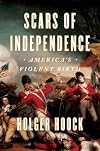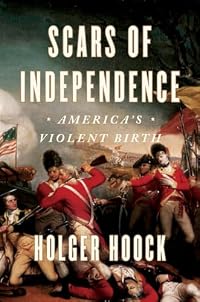
Scars of Independence: America's Violent Birth
by Holger Hoock
On This Page
Description
"The American Revolution is often portrayed as an orderly, restrained rebellion, with brave patriots defending their noble ideals against an oppressive empire. It's a stirring narrative, and one the founders did their best to encourage after the war. But as historian Holger Hoock shows in this ... account of America's founding, the Revolution was not only a high-minded battle over principles, but also a profoundly violent civil war--one that shaped the nation, and the British Empire, in ways show more we have only begun to understand"--Amazon.com. "The American Revolution is often portrayed as an orderly, restrained rebellion, with brave patriots defending their noble ideals against an oppressive empire. It's a stirring narrative, and one the founders did their best to encourage after the war. But as historian Holger Hoock shows in this deeply researched and elegantly written account of America's founding, the Revolution was not only a high-minded battle over principles, but also a profoundly violent civil war--one that shaped the nation, and the British Empire, in ways we have only begun to understand. In Scars of Independence, Hoock writes the violence back into the story of the Revolution. American Patriots persecuted and tortured Loyalists. British troops massacred enemy soldiers and raped colonial women. Prisoners were starved on disease-ridden ships and in subterranean cells. African-Americans fighting for or against independence suffered disproportionately, and Washington's army waged a genocidal campaign against the Iroquois. In vivid, authoritative prose, Hoock's new reckoning also examines the moral dilemmas posed by this all-pervasive violence, as the British found themselves torn between unlimited war and restraint toward fellow subjects, while the Patriots documented war crimes in an ingenious effort to unify the fledgling nation. For two centuries we have whitewashed this history of the Revolution. Scars of Independence forces a more honest appraisal, revealing the inherent tensions between moral purpose and violent tendencies in America's past. In so doing, it offers a new origins story that is both relevant and necessary--an important reminder that forging a nation is rarely bloodless."--Jacket. show lessTags
Recommendations






Member Recommendations

Member Reviews
Hoock aims to tell the story of the American Revolution by using violence as his central analytical and narrative focus. He argues that the story of the revolution has been subject to “whitewashing and selective remembering and forgetting.” Americans have chosen to portray the revolution as “an uplighting, heroic tale, as a triumph of high-minded ideas….” But as Hoock ably demonstrates from his well-researched account, the reality was much messier, marked by violence “in ways we don’t remember, and perhaps can’t even imagine, because they have been downplayed - if not written out of the conventional telling altogether.”
Why was this so? In all wars, narratives of one-sided violence (that is, violence by the “other” show more side) help to mobilize allegiance and support. Having a “moral” claim helps legitimize a nation both at home and abroad. And of course, with Americans averring that their primary interest was freedom, they needed a compelling message to counter the many ways their hypocrisy could be exposed - not only because of their enslavement of blacks and treatment of Natives, but because of the way the Patriots terrorized the Loyalists. Anglican churches and clergymen were singled out for even more abuse, because they prayed for the British king. Churches were smashed and priests tarred and feathered or covered with excrement. Some were killed, including one who was lynched by a mob in Charleston, South Carolina with his body subsequently burned on a bonfire. (Hoock writes that different regions in America “specialized” in different types of abuse.)
One of the worst places to be punished for Loyalist leanings was in Connecticut, where the accused could be taken to an underground prison located in a converted copper mine. This hell on earth (or in earth, as it was 60-80 feet underground) was dark, damp, squalid, with limited air circulation, and exceedingly unsanitary. Prisoners could not stand upright, and the political prisoners were mixed in with dangerous felons. Many of them went mad. As Hoock observes: “Psychological torment and physical violence played a far greater role in suppressing dissent during America’s first civil war than is commonly acknowledged.”
There were also “political” punishments. Hoock reports on extralegal Patriot “committees of safety” that policed members of their own towns, encouraging neighbor to turn against neighbor, and not discouraging vigilante and/or mob violence. Other Patriot actions against Loyalists included enactment of treason laws, confiscation and banishment acts, test laws (to test loyalty), and the banning of Loyalists from voting, holding office, practicing their professions, trading, serving on juries, acquiring property, inheriting land, or even traveling at will.
Confiscation of property affected tens of thousands of Loyalists during the war, allowing the states to accrue assets and condemn traitors to a social death without engaging in widespread executions.
But the Patriots in general, and George Washington in particular, were well aware that “in order to win the war on the moral front, with both American and international audiences watching, [they] must out-civilize the enemy.” Thus, not only were stories of American violence suppressed, but stories of barbarity by the British, while rare - particularly at the beginning of the war, became pivotal pieces of the Patriot atrocity narrative: “In their print media, the Patriots presented such atrocities as part of a broader pattern of British excessive violence.”
The American Congress published numerous reports of any British atrocity in order to persuade the population of “Britain’s moral inferiority and the righteous urgency of America’s cause.” The most effective propaganda took the form of charges of sexual predation. As Hoock observes, “The high proportion of references to girls and teenagers being raped does not correspond to verifiable data…” But of course, as he admits, “As is the case in most wars, and in most societies, the incidence of rape in the Revolutionary War is impossible to quantify.” Rape victims were intimidated by threats, social ostracizing, and humiliation. They lacked witnesses to corroborate their stories.
Regardless, the “Americans deployed rape as a political tool to discredit the British Empire…” (Sadly, Hoock points out, narratives of rape from the period highlight the injured reputation of dishonored fathers and husbands, and were said to symbolize the violation of the body politic. The abused women themselves didn’t seem to matter as much.)
Hoock also devotes a considerable amount of time to the problems of prisoners of war. Observing the conventions related to prisoners created a dilemma for the British: if they called captured combatants thusly, and agreed to be bound by conventions re prisoners, they would ipso facto be recognizing the U.S. as a sovereign state. [Lincoln faced the same issue during the Civil War vis-a-vis captured Confederates.] It is estimated that between 16,500 and 19,000 American prisoners died in British captivity - roughly half of all the Patriots under arms who died in the war.
Hoock also shows the way racism fed the violence of the war, not only against blacks, but against Native Americans. America used the mobilization of the war to wage a simultaneous campaign against the Iroquois Confederation. Washington himself laid out the Continental Army’s objective in the campaign against the Six Nations to Major General John Sullivan as “the total destruction and devastation of their settlements and the capture of as many prisoners of every age and sex as possible. It will be essential to ruin their crops now in the ground and prevent their planting more.” ….. As Hoock remarks, “Today we would consider this a form of genocide.”
Finally, Hoock reports on the period after the war was over, when treatment of former Loyalists was quite punitive. While 60,000 or so white Loyalists went into permanent exile after the war, several hundred thousand wished to stay in their homes. But animosity ran deep, and violence was often employed against them.
Alexander Hamilton realized that while the physical fighting was ended, the war for hearts and minds was not over. He urged tolerance, warning of “the diplomatic, political, economic, and moral costs of persecuting the Loyalists.”
To that end, Americans “scrubbed” their own Revolutionary war record, which they celebrated as “untarnished with a single blood-speck of inhumanity.” For their part, Loyalists remaining in the States had no choice but to hide their trauma, or there would be severe repercussions. In any event, no American publisher would spread their version of events. The Patriots controlled the history.
Discussion: Hoock uses multiple lenses to ferret out the real story of the American Revolution without the obfuscation of socially-constructed myth. In addition to accounts of American Patriots, he examines those of American Loyalists, the British, Native Americans, Black Americans, and German mercenaries. He also illustrates the ways in which the history of of the American Revolution was interpreted - first of all to serve the social and political agendas of the combatants at the time, and second, to readjust the understanding of the conflict in light of WWI, when it became especially important to minimize the legacy of violence between “kindred Anglo-Saxon peoples…”.
Hoock’s emphasis on the historical reconstruction of the war - i.e., the deliberate formation of the collective memory of the war - is critical to an understanding of how narrative was used by America to reshape what happened into a suitable foundation story. Not only do “the victors write the history,” but they tend to do so in a way that is more self-serving than accurate.
Evaluation: This book is a much-needed corrective to the many histories of the founding of America that only show the “noble” aspects of the struggle. It contains details of many violent incidents of the war that haven't made it into other accounts. As historian James Young famously observed, “Memory is never shaped in a vacuum; the motives of history are never pure.” As we now combat the divisions of the country after an election that emphasizes our divides rather than our commonality, we would do well to remember how easy it has been for this country to succumb to violence, discrimination, and cruelty, and then use "alternative facts" to cover it up. show less
Why was this so? In all wars, narratives of one-sided violence (that is, violence by the “other” show more side) help to mobilize allegiance and support. Having a “moral” claim helps legitimize a nation both at home and abroad. And of course, with Americans averring that their primary interest was freedom, they needed a compelling message to counter the many ways their hypocrisy could be exposed - not only because of their enslavement of blacks and treatment of Natives, but because of the way the Patriots terrorized the Loyalists. Anglican churches and clergymen were singled out for even more abuse, because they prayed for the British king. Churches were smashed and priests tarred and feathered or covered with excrement. Some were killed, including one who was lynched by a mob in Charleston, South Carolina with his body subsequently burned on a bonfire. (Hoock writes that different regions in America “specialized” in different types of abuse.)
One of the worst places to be punished for Loyalist leanings was in Connecticut, where the accused could be taken to an underground prison located in a converted copper mine. This hell on earth (or in earth, as it was 60-80 feet underground) was dark, damp, squalid, with limited air circulation, and exceedingly unsanitary. Prisoners could not stand upright, and the political prisoners were mixed in with dangerous felons. Many of them went mad. As Hoock observes: “Psychological torment and physical violence played a far greater role in suppressing dissent during America’s first civil war than is commonly acknowledged.”
There were also “political” punishments. Hoock reports on extralegal Patriot “committees of safety” that policed members of their own towns, encouraging neighbor to turn against neighbor, and not discouraging vigilante and/or mob violence. Other Patriot actions against Loyalists included enactment of treason laws, confiscation and banishment acts, test laws (to test loyalty), and the banning of Loyalists from voting, holding office, practicing their professions, trading, serving on juries, acquiring property, inheriting land, or even traveling at will.
Confiscation of property affected tens of thousands of Loyalists during the war, allowing the states to accrue assets and condemn traitors to a social death without engaging in widespread executions.
But the Patriots in general, and George Washington in particular, were well aware that “in order to win the war on the moral front, with both American and international audiences watching, [they] must out-civilize the enemy.” Thus, not only were stories of American violence suppressed, but stories of barbarity by the British, while rare - particularly at the beginning of the war, became pivotal pieces of the Patriot atrocity narrative: “In their print media, the Patriots presented such atrocities as part of a broader pattern of British excessive violence.”
The American Congress published numerous reports of any British atrocity in order to persuade the population of “Britain’s moral inferiority and the righteous urgency of America’s cause.” The most effective propaganda took the form of charges of sexual predation. As Hoock observes, “The high proportion of references to girls and teenagers being raped does not correspond to verifiable data…” But of course, as he admits, “As is the case in most wars, and in most societies, the incidence of rape in the Revolutionary War is impossible to quantify.” Rape victims were intimidated by threats, social ostracizing, and humiliation. They lacked witnesses to corroborate their stories.
Regardless, the “Americans deployed rape as a political tool to discredit the British Empire…” (Sadly, Hoock points out, narratives of rape from the period highlight the injured reputation of dishonored fathers and husbands, and were said to symbolize the violation of the body politic. The abused women themselves didn’t seem to matter as much.)
Hoock also devotes a considerable amount of time to the problems of prisoners of war. Observing the conventions related to prisoners created a dilemma for the British: if they called captured combatants thusly, and agreed to be bound by conventions re prisoners, they would ipso facto be recognizing the U.S. as a sovereign state. [Lincoln faced the same issue during the Civil War vis-a-vis captured Confederates.] It is estimated that between 16,500 and 19,000 American prisoners died in British captivity - roughly half of all the Patriots under arms who died in the war.
Hoock also shows the way racism fed the violence of the war, not only against blacks, but against Native Americans. America used the mobilization of the war to wage a simultaneous campaign against the Iroquois Confederation. Washington himself laid out the Continental Army’s objective in the campaign against the Six Nations to Major General John Sullivan as “the total destruction and devastation of their settlements and the capture of as many prisoners of every age and sex as possible. It will be essential to ruin their crops now in the ground and prevent their planting more.” ….. As Hoock remarks, “Today we would consider this a form of genocide.”
Finally, Hoock reports on the period after the war was over, when treatment of former Loyalists was quite punitive. While 60,000 or so white Loyalists went into permanent exile after the war, several hundred thousand wished to stay in their homes. But animosity ran deep, and violence was often employed against them.
Alexander Hamilton realized that while the physical fighting was ended, the war for hearts and minds was not over. He urged tolerance, warning of “the diplomatic, political, economic, and moral costs of persecuting the Loyalists.”
To that end, Americans “scrubbed” their own Revolutionary war record, which they celebrated as “untarnished with a single blood-speck of inhumanity.” For their part, Loyalists remaining in the States had no choice but to hide their trauma, or there would be severe repercussions. In any event, no American publisher would spread their version of events. The Patriots controlled the history.
Discussion: Hoock uses multiple lenses to ferret out the real story of the American Revolution without the obfuscation of socially-constructed myth. In addition to accounts of American Patriots, he examines those of American Loyalists, the British, Native Americans, Black Americans, and German mercenaries. He also illustrates the ways in which the history of of the American Revolution was interpreted - first of all to serve the social and political agendas of the combatants at the time, and second, to readjust the understanding of the conflict in light of WWI, when it became especially important to minimize the legacy of violence between “kindred Anglo-Saxon peoples…”.
Hoock’s emphasis on the historical reconstruction of the war - i.e., the deliberate formation of the collective memory of the war - is critical to an understanding of how narrative was used by America to reshape what happened into a suitable foundation story. Not only do “the victors write the history,” but they tend to do so in a way that is more self-serving than accurate.
Evaluation: This book is a much-needed corrective to the many histories of the founding of America that only show the “noble” aspects of the struggle. It contains details of many violent incidents of the war that haven't made it into other accounts. As historian James Young famously observed, “Memory is never shaped in a vacuum; the motives of history are never pure.” As we now combat the divisions of the country after an election that emphasizes our divides rather than our commonality, we would do well to remember how easy it has been for this country to succumb to violence, discrimination, and cruelty, and then use "alternative facts" to cover it up. show less
 This review was written for LibraryThing Early Reviewers.
I was lucky enough to recently receive an advanced reader's edition of Holger Hoock's new non-fiction work, Scars of Independence: America's Violent Birth. I have so many unread books in my own library that I haven't been reading any advanced reader's copies for quite a while now. I made an exception with Scars of Independence because of its subject matter. I'm glad I did.
It's very easy for us as Americans, over 200 years removed from the events of the Revolution, to romanticize the battles, the war, the patriotism, the very Revolution itself and to place the events all in tiny little boxes all lined up in chronological order ready for us to memorize and recite any time we want to sound like we know what it was like for the show more Revolutionary generation. That isn't how history, how life, how revolution, how war, works, though. It certainly isn't how the American Revolution worked. You might not believe it if you only read high school history textbooks (or even college textbooks) but the American Revolution was a real, honest-to-goodness war where people fought and lost their lives and their fortunes, homes, and families. It was a civil war where brothers turned against brothers, children against parents. It was a revolution where those loyal to the crown fought their lifelong neighbors who now wanted to be free of the king once and for all.
The antiseptic stories we've been told our whole lives are just that, stories scrubbed clean of anything that might offend sensitive ears. But the truth of what happened to create the America that won its freedom from England was far from antiseptic and far from easy.
The author chose for himself a daunting task. He chose to tell the stories of the violence that was a necessary part of the birth of the United States of America. While other authors have spent the past 200 years sugar coating the violence and omitting the atrocities, Mr. Hoock lays bare what it meant for the American colonists to cast off the chains of the king's rule and what it took to make it happen.
While reading the text I was at times both fascinated and appalled. Reading about violent details that aren't normally mentioned is fascinating and really makes the stories and people seem real. However, it's hard to not be appalled by the way the colonists, many of them family or neighbors, treated one another. The author does a great job of presenting an unbiased examination of the various events but the facts and details themselves are an indictment against the perpetrators.
I highly recommend Scars of Independence to any history lover or American history enthusiast. The details of the profound violence and human suffering that both sides suffered in the American Revolution bring the story of the creation of the United States to life in a way that no other history book ever has. show less
It's very easy for us as Americans, over 200 years removed from the events of the Revolution, to romanticize the battles, the war, the patriotism, the very Revolution itself and to place the events all in tiny little boxes all lined up in chronological order ready for us to memorize and recite any time we want to sound like we know what it was like for the show more Revolutionary generation. That isn't how history, how life, how revolution, how war, works, though. It certainly isn't how the American Revolution worked. You might not believe it if you only read high school history textbooks (or even college textbooks) but the American Revolution was a real, honest-to-goodness war where people fought and lost their lives and their fortunes, homes, and families. It was a civil war where brothers turned against brothers, children against parents. It was a revolution where those loyal to the crown fought their lifelong neighbors who now wanted to be free of the king once and for all.
The antiseptic stories we've been told our whole lives are just that, stories scrubbed clean of anything that might offend sensitive ears. But the truth of what happened to create the America that won its freedom from England was far from antiseptic and far from easy.
The author chose for himself a daunting task. He chose to tell the stories of the violence that was a necessary part of the birth of the United States of America. While other authors have spent the past 200 years sugar coating the violence and omitting the atrocities, Mr. Hoock lays bare what it meant for the American colonists to cast off the chains of the king's rule and what it took to make it happen.
While reading the text I was at times both fascinated and appalled. Reading about violent details that aren't normally mentioned is fascinating and really makes the stories and people seem real. However, it's hard to not be appalled by the way the colonists, many of them family or neighbors, treated one another. The author does a great job of presenting an unbiased examination of the various events but the facts and details themselves are an indictment against the perpetrators.
I highly recommend Scars of Independence to any history lover or American history enthusiast. The details of the profound violence and human suffering that both sides suffered in the American Revolution bring the story of the creation of the United States to life in a way that no other history book ever has. show less
This review was written for LibraryThing Early Reviewers.The quaint, romanticized version of the American Revolution that many have grown up with through popular history and school curriculum is not the real life story that those living during those years experienced. In Scars of Independence, Holger Hoock looks past the good versus bad and underdog narratives so prevalent today to reveal the multifaceted struggle and very violent history of the American Revolutionary War from all its participants.
Hoock frames the American Revolution as not just a colonial rebellion, but first and foremost a civil war in which the dividing line of loyalties split family. The Patriot-Loyalist violence, either physical or political, began long before and lasted long after the military conflict. Once the show more fighting actually began, both the Americans and the British debated amongst themselves on the appropriate use of the acceptable violence connected to 18th century warfare and on the treatment of prisoners. While both sides thought about their conduct to those in Europe, the Native Americans were another matter and the violence they were encouraged to inflict or was inflicted upon them was some of the most brutal of the war. But through all of these treads, Hoock emphasizes one point over and over, that the American Patriots continually won the “propaganda” war not only in the press on their side of the Atlantic but also in Europe and even Great Britain.
One of the first things a reader quickly realizes is that Hoock’s descriptions of some of the events of the American Revolution remind us of “modern-day” insurgencies and playbooks of modern terrorists, completely shattering the popular view of the nation’s birth. Hoock’s writing is gripping for those interested in popular history and his research is thought-provoking for scholars. Another point in Hoock’s favor is his birth outside the Anglo-American historical sphere in Germany, yet his background in British history and on-off research fellowships in the United States has given him a unique perspective to bring this piece of Anglo-American history out to be consumed, debated, and thought upon.
Scars of Independence: America’s Violent Birth is a fascinating, intriguing, thought-provoking book on the under-reported events of the American Revolutionary War in contrast to the view of the war from popular history. Holger Hoock gives his readers an easy, yet detailed filled book that will help change their perspective on the founding of the United States by stripping the varnish away to reveal the whole picture. show less
Hoock frames the American Revolution as not just a colonial rebellion, but first and foremost a civil war in which the dividing line of loyalties split family. The Patriot-Loyalist violence, either physical or political, began long before and lasted long after the military conflict. Once the show more fighting actually began, both the Americans and the British debated amongst themselves on the appropriate use of the acceptable violence connected to 18th century warfare and on the treatment of prisoners. While both sides thought about their conduct to those in Europe, the Native Americans were another matter and the violence they were encouraged to inflict or was inflicted upon them was some of the most brutal of the war. But through all of these treads, Hoock emphasizes one point over and over, that the American Patriots continually won the “propaganda” war not only in the press on their side of the Atlantic but also in Europe and even Great Britain.
One of the first things a reader quickly realizes is that Hoock’s descriptions of some of the events of the American Revolution remind us of “modern-day” insurgencies and playbooks of modern terrorists, completely shattering the popular view of the nation’s birth. Hoock’s writing is gripping for those interested in popular history and his research is thought-provoking for scholars. Another point in Hoock’s favor is his birth outside the Anglo-American historical sphere in Germany, yet his background in British history and on-off research fellowships in the United States has given him a unique perspective to bring this piece of Anglo-American history out to be consumed, debated, and thought upon.
Scars of Independence: America’s Violent Birth is a fascinating, intriguing, thought-provoking book on the under-reported events of the American Revolutionary War in contrast to the view of the war from popular history. Holger Hoock gives his readers an easy, yet detailed filled book that will help change their perspective on the founding of the United States by stripping the varnish away to reveal the whole picture. show less
This review was written for LibraryThing Early Reviewers.SCARS OF INDEPENDENCE by Holger Hoock is what I'd call "an important book." He often refers to America's Revolutionary War as "America's first civil war." That seemed laughable to me at first, but the more I read, the more I had to agree with that name for the war. Late in the book, he states that more Americans were killed by other Americans than by the British or their allies. Loyalists (those who were still loyal to Britain and the king) were hounded and killed by the Patriots unmercifully and the Loyalists returned the "favor" though they got much the worst of it. Indeed, the war between the Loyalists and the Patriots went on for a year or more after Cornwallis surrendered at Yorktown. Hoock shows just how bloody the war was.
This show more book brought home to this senior citizen the fact that, as a country, we have always been quick to turn to violence to get what we want and often use a false morality to justify it. show less
This show more book brought home to this senior citizen the fact that, as a country, we have always been quick to turn to violence to get what we want and often use a false morality to justify it. show less
This review was written for LibraryThing Early Reviewers.This book shatters the conventional image of the American Revolution: a war of liberation against an imperialist oppressor, fought in a gentlemanly manner. In that view, the good guys and the bad guys (white hats and red coats) are distinct, and the whole thing ended at Yorktown. It didn't, of course, and Holger Hoock's research shows that the conflict was far more violent and far more internally divisive than is generally realized. He refers to it as America's first civil war, which is convincing when you learn how large the Loyalist component really was, and how harsh the treatment of Loyalists before, during and after the war. He also stresses the role of Native Americans and of African Americans, both groups with strong motivation show more to fight for the British. This book makes the Revolution seem more like other wars -- nasty, brutish, and far too long. Warning: some of the reading is difficult, detailing as it does the cruelties that both sides inflicted. Also, the narrative isn't always compelling; this is not a page turner. Still, the change that this made in my perception of the Revolution was powerful, and that makes it worth five starts. show less
I didn't think I would like this book at first. I was afraid it would be somewhat anti-American as it implied that much of the horror of the American Revolution has been whitewashed, with the traditional focus being more on the political struggles than the evils of war. I was also not particularly looking forward to graphic descriptions of torture, rape, destruction, etc. I was wrong on my assumptions...
I found "Scars of Independence" to be very interesting mostly because it doesn't cover the same ground as most books on this time period. Sure, luminaries like Washington, Jefferson, Adams, and Franklin are referenced, but the bulk of the book covers the less well-known instances of animosity between Patriots and Loyalists, the wanton show more destruction of property (in some cases, by the Patriots who then accused the British of the destruction for propaganda purposes), etc.
My only real complaint may not ultimately be valid: I received an advance reader's edition via Library Thing's Early Reviewer program and I found the images in the book to be too small to really enjoy. This may be taken care of in the "real" edition. But I would like to have been able to read some of the broadsides and cartoons.
If you're a fan of this time period, I feel strongly that much of this book will be new to you. show less
I found "Scars of Independence" to be very interesting mostly because it doesn't cover the same ground as most books on this time period. Sure, luminaries like Washington, Jefferson, Adams, and Franklin are referenced, but the bulk of the book covers the less well-known instances of animosity between Patriots and Loyalists, the wanton show more destruction of property (in some cases, by the Patriots who then accused the British of the destruction for propaganda purposes), etc.
My only real complaint may not ultimately be valid: I received an advance reader's edition via Library Thing's Early Reviewer program and I found the images in the book to be too small to really enjoy. This may be taken care of in the "real" edition. But I would like to have been able to read some of the broadsides and cartoons.
If you're a fan of this time period, I feel strongly that much of this book will be new to you. show less
This review was written for LibraryThing Early Reviewers.Scars of Independence is rich in historical detail not typically presented in grade school history curriculum. Hoock does a great job reframing how many Americans were taught to view the Revolutionaries versus the British in the War for Independence. Hoock reminds us that the beginning of the United States was a revolution like any other.
Scars of Independence is a compelling book that tells the story through extensive investigation into first hand reports and images from the time period.
The one drawback is that despite the eye-opening perspective, the book is dense, which makes for a long and slow read.
Scars of Independence is a compelling book that tells the story through extensive investigation into first hand reports and images from the time period.
The one drawback is that despite the eye-opening perspective, the book is dense, which makes for a long and slow read.
This review was written for LibraryThing Early Reviewers.Members
- Recently Added By
Lists

Chronological 2017
30 works; 1 member
Author Information

4+ Works 408 Members
The American Revolution is often portrayed as an orderly, restrained rebellion, with brave patriots defending their noble ideals against an oppressive empire. It's a stirring narrative, and one the founders did their best to encourage after the war. But as historian Holger Hoock shows in this deeply researched and elegantly written account of show more America's founding, the Revolution was not only a high-minded battle over principles, but also a profoundly violent civil war-one that shaped the nation, and the British Empire, in ways we have only begun to understand. In Scars of Independence, Hoock writes the violence back into the story of the Revolution. In so doing, he offers a new origins story that is both relevant and necessary-an important reminder that forging a nation is rarely bloodless. show less
Common Knowledge
- Original publication date
- 2017–05-09
- People/Characters
- George Washington; George III, King of the United Kingdom; William Howe; Richard Howe; John Burgoyne; George Germain (show all 16); John Murray, 4th Earl of Dunmore; Henry Clinton; Charles Cornwallis; Benjamin Franklin; Banastre Tarleton; Nathanael Greene; John Adams; Charles Grey (General); Edmund Burke; Alexander Hamilton
- Important places
- Boston, Massachusetts, USA; London, England, UK; New York, New York, USA; Charleston, South Carolina, USA; Philadelphia, Pennsylvania, USA
- Important events
- Boston Massacre; Declaration of Independence; Battle of Camden; Battle of Cowpens; Battle of Germantown; Battle of Guilford Courthouse (show all 14); Battle of Kings Mountain; Battle of Long Island; Battle of Monmouth; Battle of Princeton and Trenton; Battle of Saratoga; Treaty of Versailles; Battle of Wyoming; American Revolution
- Dedication
- For Helen and Florian Frederick
- First words
- After nightfall on Monday, March 5, 1770, small groups of Bostonians armed with lead-weighted clubs, cudgels, and cutlasses started accosting lone British officers and soldiers in the city's streets. (Introduction)
- Last words
- (Click to show. Warning: May contain spoilers.)If Americans let go of their last great romance with war, the whitewashing and strategic forgetting of Revolutionary-era violence may yield to a candid reckoning and honest remembering--one that allows both for proud, grateful celebration and for frank reflection on the ambiguities and the contradictory legacies of the nation's violent birth.
- Blurbers
- Meecham, Jon; Jasanoff, Maya; Philbrick, Nathaniel; Pinker, Steven; DuVal, Kathleen; Rakove, Jack (show all 9); O'Shaughnessy, Andrew; Ferling, John; Conway, Steven
- Original language
- English
Classifications
Statistics
- Members
- 361
- Popularity
- 86,721
- Reviews
- 49
- Rating
- (3.82)
- Languages
- English
- Media
- Paper, Audiobook, Ebook
- ISBNs
- 6
- ASINs
- 3