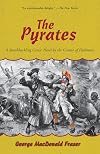
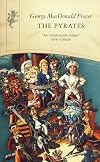
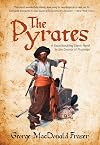
The Pyrates
by George MacDonald Fraser
On This Page
Description
In THE PYRATES, the author of the celebrated Flashman novels pays tongue-in-cheek homage to the swashbuckling books and movies that have always stirred his imagination. In these rollicking pages you'll find tall ships and desert islands; impossibly gallant adventurers and glamorous heroines; devilishly sinister cads and ghastly dungeons; improbably acrobatic duels and hair's-breadth escapes; and more plot twists than you can shake a rapier at. A deliriously entertaining combination of Errol show more Flynn action-adventure and Naked Gun pastiche, in a new package geared to the legions of Flashman fanatics. show lessTags
Recommendations
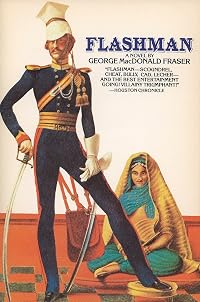
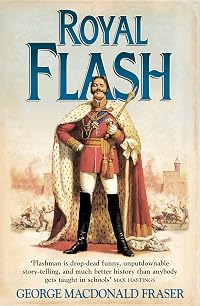
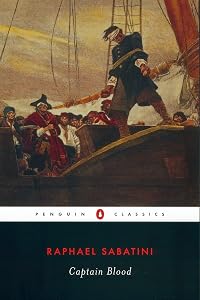
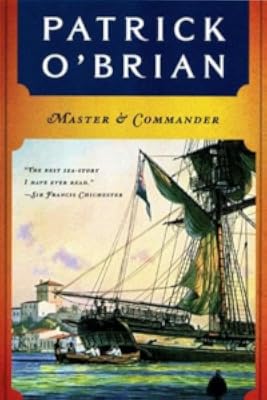
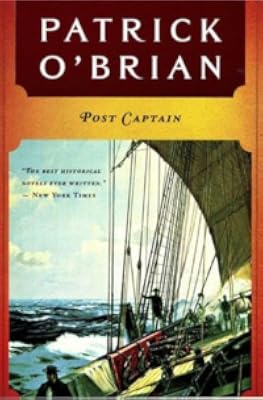
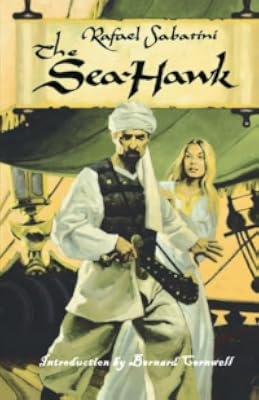
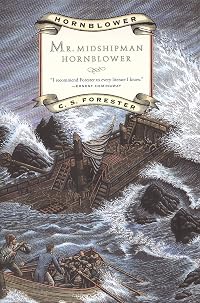
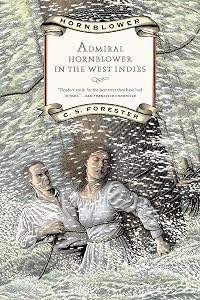
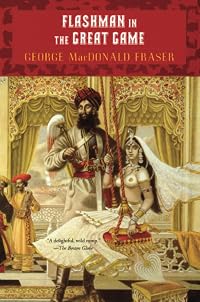
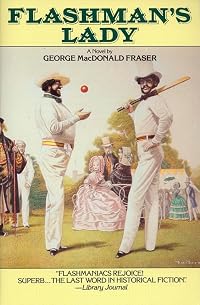




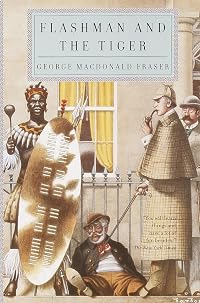
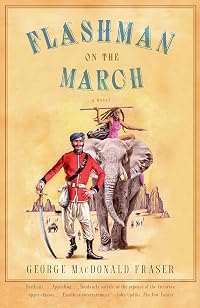
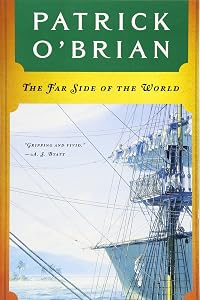

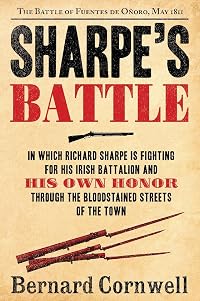




Member Recommendations
Member Reviews
Right from the off, when author George MacDonald Fraser announces 'BOOK THE FIRST' in gloriously bombastic capital letters, The Pyrates is an absurdly over-the-top anachronistic comedy-adventure romp in the vein of Monty Python, Terry Pratchett and the Carry On films (though Fraser's book predates Pratchett, whose first Discworld book was published in the same year). Stiff-upper-lipped English heroes shouting 'sa-ha!', roguish scoundrels on the make, damsels-in-distress (bosom-heaving distress, mark you), swarthy pirates, sea battles, swashbuckling… it's all here and then some. Whether it's a metatextual imploration to get on with it and 'skip the tourist stuff' when eloquently setting the scene (pg. 334), a fiery maiden's wrath show more "dissolving like an election pledge" (pg. 323) or a swarthy pirate's curved scimitar "ideal for thrusting round corners in a crafty Oriental way" but no match for straight British steel (pp125-6), every line contains a joke or an aside or a sly reference. And in such a fertile terrain as pirate fiction, the accomplished Fraser allows his imagination free rein. It doesn't compare to the Flashman Papers, of course – nothing does – but it is still joyous.
Like his later novel The Reavers, a similarly-styled romp, the pace can drag despite its seemingly short length, and The Pyrates requires more effort and application from its reader than many will deem it warrants. It can, admittedly, be hard to stay afloat in the sheer tsunami of tropes and jokes and dialects. But Fraser's enthusiasm is infectious, and it seems churlish to complain about a book being too rich and bounteous. Not every story has to be a lean, mean plot-driven machine. The Pyrates is a bulky treasure-room filled with gold and rubies and other assorted baubles, and the effect is that it can sometimes be hard to focus the eye on any one dazzling thing. As Fraser says – quoting the real-life pirate Francis Drake – on page 118: "We shall bring ye to the Treasure House o' the World, and… blame yourselves if ye go away empty-handed." That should sum up your approach to this book. show less
Like his later novel The Reavers, a similarly-styled romp, the pace can drag despite its seemingly short length, and The Pyrates requires more effort and application from its reader than many will deem it warrants. It can, admittedly, be hard to stay afloat in the sheer tsunami of tropes and jokes and dialects. But Fraser's enthusiasm is infectious, and it seems churlish to complain about a book being too rich and bounteous. Not every story has to be a lean, mean plot-driven machine. The Pyrates is a bulky treasure-room filled with gold and rubies and other assorted baubles, and the effect is that it can sometimes be hard to focus the eye on any one dazzling thing. As Fraser says – quoting the real-life pirate Francis Drake – on page 118: "We shall bring ye to the Treasure House o' the World, and… blame yourselves if ye go away empty-handed." That should sum up your approach to this book. show less
Anyone who has read Fraser’s Flashman series can’t help but relish the prospect of his taking on the pirate genre. Nor does Fraser disappoint. Armed with a seemingly encyclopedic knowledge* of all things piratical – and I do mean all things: real pirate lore, Hollywood pirates, literary pirates, Disney pirates, etc. – Fraser concocts a frothy, hilarious parody of the whole pirate genre. (* By the way, “encyclopedic knowledge” isn’t a hyperbole in this case: Fraser helpfully includes an extensive bibliography at the end of the tale.)
In this version, our impossibly perfect hero, Captain Avery*, finds himself pitted against not one but seven pirates, each a burlesque of one or more familiar/beloved pirate archetypes (Captain show more Blood = dashing but entirely untrustworthy rogue; Firebeard = William “Blackbeard” Teach; Calico Jack= Captain Blood, Happy Dan Pew=Captain Hook, etc.) . As the action plunges from England to Tortuga, from Octopus Island to Madagascar, Fraser stitches together a tale that includes all the prerequisites of the genre – sea battles, swordfights, beautiful damsels in distress, dastardly Spanish dons, deserted islands, rum, treasure, dungeons, torture, wenches, rum, mutinies, swashing, buckling, a plentitude of pirate patois … and did I mention rum? - the satire unashamedly broad and self-aware without ever lapsing into disrespect.
(*”In short, Captain Avery was the young Errol Flynn, only more so, with a dash of Power and Redford thrown in; the answer to a maiden’s prayer, and between ourselves, rather a pain in the neck. For besides being gorgeous, he had a starred First from Oxford, could do the hundred in evens, played the guitar to admiration, helped old women across the street, kept his finger-nails clean, said his prayers, read Virgil and Aristophanes for fun, and generally made the Admirable Crichton look like an illiterate slob. However, he is vital if you are to get the customers in …” – a description that should give you an idea both of Captain Avery and Fraser’s narrative style.)
Perhaps this ground has been trodden before (Pirates of the Caribbean comes to mind), but never – to my mind - so thoroughly or with so much wit. This is one of those lampoons that, rather than making you embarrassed for enjoying the somewhat dubious source material, invites you to celebrate every beloved caricature, hyperbole and extreme. A great read anytime but perfect for the beach: arm yourself with a tankard of ale, deploy your beach chair in a shady spot, and prepare to be thoroughly entertained! show less
In this version, our impossibly perfect hero, Captain Avery*, finds himself pitted against not one but seven pirates, each a burlesque of one or more familiar/beloved pirate archetypes (Captain show more Blood = dashing but entirely untrustworthy rogue; Firebeard = William “Blackbeard” Teach; Calico Jack= Captain Blood, Happy Dan Pew=Captain Hook, etc.) . As the action plunges from England to Tortuga, from Octopus Island to Madagascar, Fraser stitches together a tale that includes all the prerequisites of the genre – sea battles, swordfights, beautiful damsels in distress, dastardly Spanish dons, deserted islands, rum, treasure, dungeons, torture, wenches, rum, mutinies, swashing, buckling, a plentitude of pirate patois … and did I mention rum? - the satire unashamedly broad and self-aware without ever lapsing into disrespect.
(*”In short, Captain Avery was the young Errol Flynn, only more so, with a dash of Power and Redford thrown in; the answer to a maiden’s prayer, and between ourselves, rather a pain in the neck. For besides being gorgeous, he had a starred First from Oxford, could do the hundred in evens, played the guitar to admiration, helped old women across the street, kept his finger-nails clean, said his prayers, read Virgil and Aristophanes for fun, and generally made the Admirable Crichton look like an illiterate slob. However, he is vital if you are to get the customers in …” – a description that should give you an idea both of Captain Avery and Fraser’s narrative style.)
Perhaps this ground has been trodden before (Pirates of the Caribbean comes to mind), but never – to my mind - so thoroughly or with so much wit. This is one of those lampoons that, rather than making you embarrassed for enjoying the somewhat dubious source material, invites you to celebrate every beloved caricature, hyperbole and extreme. A great read anytime but perfect for the beach: arm yourself with a tankard of ale, deploy your beach chair in a shady spot, and prepare to be thoroughly entertained! show less
Hilarious! Every piratical stereotype is covered - and covered well. The action is non-stop and the laughs come by the treasure chest full. A book that I, personally, could not put down - and often found myself laughing aloud - much to the chargrin of those around me.
After having read the twelve Flashman novels and enjoying them immensely, I order this book along with Black Ajax and Mr. American, penned by the same author.
As the name implies, it is primarily involved with following a crew of 17th century Caribbean pirates, as they battle the Spanish and English navies. The chief protagonist is a British naval officer, Captain Avery, who is something of a comic book hero, a handsome, dashing caricature. In addition to a collection of pirate captains, a Colonel Blood sets off nicely against Avery, because he is very much in the Harry Flashman mold, venal, cowardly, and very much out for himself.
While starting off mildly entertaining, the book soon bogged down into a never-ending adventure that show more seemingly goes on forever. There were a number of clever asides, mixing contemporary references with period activities, and a healthy dose of magical realism, but not enough to keep this monstrosity afloat.
Certainly not the equal of the Flashman series, or even Black Ajax and Mr. American. Can’t recommend. show less
As the name implies, it is primarily involved with following a crew of 17th century Caribbean pirates, as they battle the Spanish and English navies. The chief protagonist is a British naval officer, Captain Avery, who is something of a comic book hero, a handsome, dashing caricature. In addition to a collection of pirate captains, a Colonel Blood sets off nicely against Avery, because he is very much in the Harry Flashman mold, venal, cowardly, and very much out for himself.
While starting off mildly entertaining, the book soon bogged down into a never-ending adventure that show more seemingly goes on forever. There were a number of clever asides, mixing contemporary references with period activities, and a healthy dose of magical realism, but not enough to keep this monstrosity afloat.
Certainly not the equal of the Flashman series, or even Black Ajax and Mr. American. Can’t recommend. show less
"The Pyrates" is a sassy and loving sendup of pretty much every old swashbuckling movie and novel ever made or written. The author clearly knows his background material and enjoys making fun of it, too. Aye, but don't worry, me hearties. There be as much buckling of swash and there be laughs and you may lay to that. So thrill with us now to the tale of Long Ben Avery, Lady Vanity, the dashing, but wicked Tom Blood, the pirate queen Black Sheba and a shipload of daring cutthroats as ever sailed the Seven Seas.
I read this book many years ago, so while I do not remember the plot very clearly, I do remember the book fondly for the way that it pulled me in to the story and made me laugh. I also remember quoting lines from the book for years after, but I don't think I'll try to remember those quotes now. What I do know is that this book is long overdue for a re-read from me. :)
A deliberately pseudo-historical novel -- set, as the blurb says, "in the seventeenth century sort of" --adventures intended as a broad parody of Sabatini's pirate novels and the like. The opening is wonderful but somehow the rest is not as much fun as I hoped.
Members
- Recently Added By
Published Reviews
ThingScore 100
The only thing remotely like it is William Goldman's "The Princess Bride", and I hardly know how to praise a book more.
added by MissWatson
Lists

Michael Dirda's 100 Best Comic Novels
100 works; 1 member
Author Information

48+ Works 19,703 Members
Author George MacDonald Fraser was born April 2, 1925 in Carlisle. He was refused entrance to the medical faculty of Glasgow University, so he joined the army in 1943. He served as an infantryman with the 17th Indian Division of the XIVth Army in Burma, a lance corporal and was commissioned in the Gordon Highlanders. After the war, he became a show more sports reporter with the Carlisle Journal; and during this time, he met and married Kathleen Hetherington, a reporter from another paper. He worked as a reporter and sub-editor on the Cumberland News and then moved to Glasgow, in 1953, where he worked at the Glasgow Herald as a features editor and deputy editor. Fraser's first novel was "Flashman" (1969), which was followed by nine sequels, so far, that deal with different venues of the 19th century ranging from Russia, Borneo and China to the Great Plains of the America West. Some of the other titles in the Flashman Papers are "Royal Flash" (1970), "Flashman in the Great Game" (1975), "Flashman and the Redskins" (1982), and "Flashman and the Angel of the Lord" (1994). Some of his non-fiction work includes "The Steel Bonnets" (1971), which is a factual study of the Anglo-Scottish border thieves in the seventeenth century, and "Quartered Safe Out Here" (1992). Fraser has also written a number of screenplays that include "The Three Musketeers" (1973), "Royal Flash" (1975), "Octopussy" (1983), and "Return of the Musketeers" (1989). He has also written a series of short stories about Private McAuslan whose titles include "The General Danced at Dawn" (1970), "McAuslan in the Rough" (1974), and "The Sheik and the Dustbin and other McAuslan Stories" (1988). He died of cancer on January 2, 2008. (Bowker Author Biography) show less
Series
Belongs to Publisher Series
Harvill (176)
Work Relationships
Is contained in
Common Knowledge
- Canonical title
- The Pyrates
- Original publication date
- 1983
- People/Characters
- Captain Ben Avery; John “Calico Jack” Rackham; Captain Blood; Anne Bonney; Vanity Rooke
- Dedication
- In Memory of the Most Reverend and Right Honourable Lancelot Blackburne (1658 - 1743) Archbishop of York and buccaneer
- First words
- It began in the old and golden days of England, in a time when all the hedgerows were green and the roads dusty, when hawthorn and wild roses bloomed, when big-bellied landlords brewed rich October ale at a penny a pint for r... (show all)akish high-footed cavaliers with jingling spurs and long rapiers, when squires ate roast beef and belched and damned the Dutch over their claret while their faithful hounds slumbered on the rushes by the hearth, when summers were long and warm and drowsy, with honeysuckle and hollyhocks by cottage walls, when winter nights were clear and sharp with frost-rimmed moons shining on the silent snow, and Claud Duval and Swift Nick Nevison lurked in the bosky thickets, teeth gleaming beneath their masks as they heard the rumble of caches bearing paunchy well-lined nabobs and bright-eyed ladies with powdered hair who would gladly tread a measure by the wayside with the gallant tobyman, and bestow a kiss to save their husbands' guineas; an England where good King Charles lounges amiably on his throne, and scandalised Mr Pepys (or was it Mr Evelyn?) by climbing walls to ogle Pretty Nell; where gallants roistered and diced away their fathers' fortunes; where beaming yokels in spotless smocks made hay in the sunshine and ate bread and cheese and quaffed foaming tankards fit to do G.K. Chesterton's heart good; where threadbare pedlars with sharp eyes and long noses shared their morning bacon with weary travellers in dew-pearled woods and discoursed endlessly of 'Hudibras' and the glories of nature; where burly earringed smugglers brought their stealthy sloops into midnight coves, and stowed their hard-run cargoes of Hollands and Brussels and fragrant Virginia in clammy caverns; where the poachers of Lincolnshire lifted hares and pheasants by the bushel and buffeted gamekeepers and jumped o'er everywhere . . .
- Last words
- (Click to show. Warning: May contain spoilers.)And for all I know, they may be singing still.
- Blurbers
- Waugh, Auberon
- Original language
- English UK
Classifications
Statistics
- Members
- 595
- Popularity
- 49,082
- Reviews
- 14
- Rating
- (3.76)
- Languages
- English, German
- Media
- Paper, Audiobook, Ebook
- ISBNs
- 15
- UPCs
- 1
- ASINs
- 9