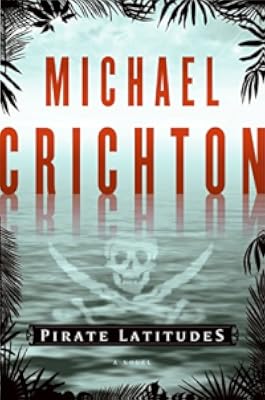
Pirate Latitudes
by Michael Crichton
On This Page
Description
The Caribbean, 1665. Pirate captain Charles Hunter, with backing from a powerful ally, assembles a crew of ruffians to take the Spanish galleon, "El Trinidad," guarded by the bloodthirsty Cazalla, a favorite commander of the Spanish king himself.Tags
Recommendations


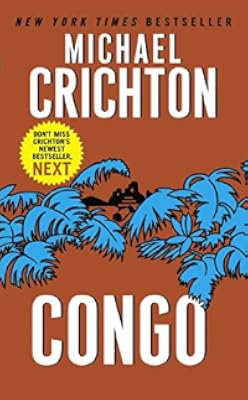
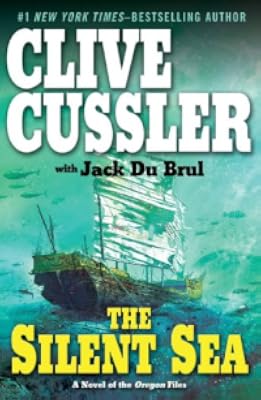
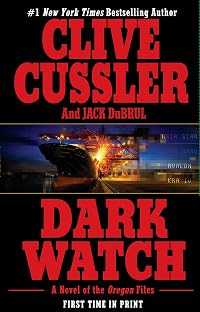
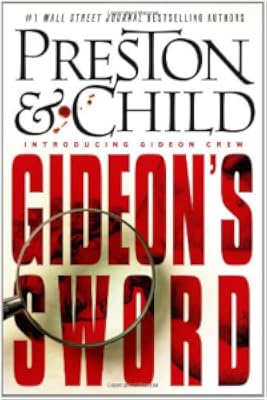
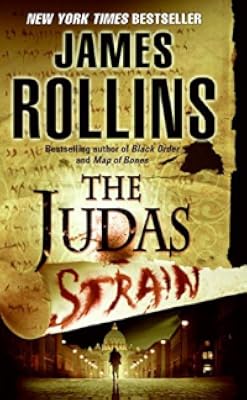
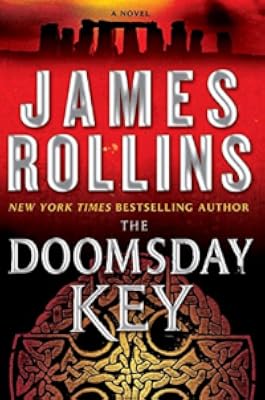
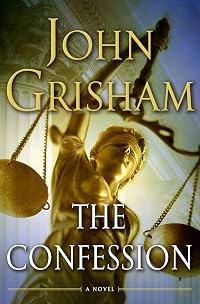
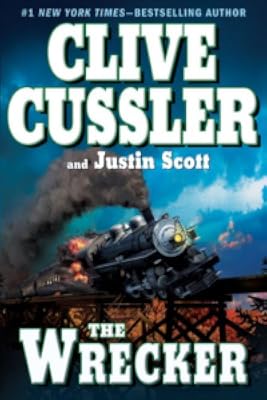

Member Recommendations
PghDragonMan Treasure, treachery, betrayal and Arrgh, matey, lots o' rum!
by VetaTorres

walkernot If you liked the cleverness of Captain Hunter, you'll love Dan Parkinson's Dalton.
Member Reviews
I greatly enjoyed this book; in fact, among the seven Crichton novels that I've read, I ranked it second only to The Great Train Robbery, to which I awarded a rare 5 stars. I am impressed with the research the author must have done to write such a story, in particular with regard to tactical maneuvers involving conflict between ships of various kinds, not to mention the historical backdrop of the tale. It’s a story of piracy in the Caribbean in the 1660s – as a British privateer, Cptn. Charles Hunter seeks to capture a treasure-laden Spanish ship as it awaits repairs in the harbor of a small island. The island (Matanceros) is well- fortified, and of course most of the Caribbean is under Spanish control (Jamaica excepted).
The result show more is a rollicking adventure, full of sea battles, crafty intrigue, courage, violence, kidnapped damsels, double- crossing rogues, and even a sea monster. The characters are memorable – Hunter himself; the female pirate Lazue (who dresses and acts like a man); and the duplicitous Mr. Hacklett (who assumes governorship of Jamaica and seeks to have Hunter and his crew hanged as pirates, so that he can grab the treasure) . And of course there are the fair and grateful ladies rescued by Hunter.
This work is written in the spirit and tradition of works by Rafael Sabatini and Robert Louis Stevenson, but with a contemporary perspective in which some sexual frankness is manifested. Further, unlike those works, this story is imbued with fun. The author seems to have enjoyed himself immensely in writing it, and the non-judgmental reader who allows himself is carried along for the ride. The "fun" aspect even explains the book’s one clear departure from credibility -- the "sea monster,” a giant squid that the privateers label a “kraken”. When Crichton has the squid follow and then attack the ship (and reach its tentacles through a porthole to grab the captain, marring his flesh with huge sucker marks), the author has entirely sacrificed believability for the sake of amusement. Further, as a literary device, the episode gives a respectful nod towards Jules Verne and also towards the ancient maritime legends in which in which encounters with sea monsters are frequent occurrences.
The epilogue of this book reveals that the story was taken loosely from the memoirs of the historical Charles Hunter, titled “Life Among the Privateers of the Caribbean Sea”. The epilogue also reveals that most of the major characters of the book – like Hunter himself-- were taken from real, historical figures, as were the events described. In this respect, Pirate Latitudes is similar to The Great Train Robbery, another Crichton novel that was accurately based on past history.
Pirate Latitudes was published posthumously, having been found intact in the author’s files after his death. We can only speculate as to Crichton's intentions for it. Some critics have argued that the work appears unfinished, although I observed no evidence for that perspective.
I was glad to find a map of the Caribbean in the frontispiece of the book as it allows the reader to follow action that traverses much the length and breadth of that body of water. I wish the book had also included a map of the island of Matanceros (where much of the action takes place); apparently such a map is included in some editions.
Overall, I greatly enjoyed this book, and would recommend it to readers who are willing to suspend judgment in accepting a bit of the fantastic along with otherwise realistic, historically - based fiction. I always read reviews here and at Amazon to gain insights into other perspectives and open my mind to aspects that I may have missed. The negative reviews at both places find the story unrealistic and cliché ridden, the characters less than fully developed, and the novel itself unfinished and not ready for publication. I disagree with these negative perspectives and think that the critics are taking the work too seriously. But more importantly, I don’t much care to what extent such claims may be defensible. I read this work for pure enjoyment, and it brought me plenty. show less
The result show more is a rollicking adventure, full of sea battles, crafty intrigue, courage, violence, kidnapped damsels, double- crossing rogues, and even a sea monster. The characters are memorable – Hunter himself; the female pirate Lazue (who dresses and acts like a man); and the duplicitous Mr. Hacklett (who assumes governorship of Jamaica and
This work is written in the spirit and tradition of works by Rafael Sabatini and Robert Louis Stevenson, but with a contemporary perspective in which some sexual frankness is manifested. Further, unlike those works, this story is imbued with fun. The author seems to have enjoyed himself immensely in writing it, and the non-judgmental reader who allows himself is carried along for the ride. The "fun" aspect even explains the book’s one clear departure from credibility -- the "sea monster,” a giant squid that the privateers label a “kraken”. When Crichton has the squid follow and then attack the ship (and reach its tentacles through a porthole to grab the captain, marring his flesh with huge sucker marks), the author has entirely sacrificed believability for the sake of amusement. Further, as a literary device, the episode gives a respectful nod towards Jules Verne and also towards the ancient maritime legends in which in which encounters with sea monsters are frequent occurrences.
The epilogue of this book reveals that the story was taken loosely from the memoirs of the historical Charles Hunter, titled “Life Among the Privateers of the Caribbean Sea”. The epilogue also reveals that most of the major characters of the book – like Hunter himself-- were taken from real, historical figures, as were the events described. In this respect, Pirate Latitudes is similar to The Great Train Robbery, another Crichton novel that was accurately based on past history.
Pirate Latitudes was published posthumously, having been found intact in the author’s files after his death. We can only speculate as to Crichton's intentions for it. Some critics have argued that the work appears unfinished, although I observed no evidence for that perspective.
I was glad to find a map of the Caribbean in the frontispiece of the book as it allows the reader to follow action that traverses much the length and breadth of that body of water. I wish the book had also included a map of the island of Matanceros (where much of the action takes place); apparently such a map is included in some editions.
Overall, I greatly enjoyed this book, and would recommend it to readers who are willing to suspend judgment in accepting a bit of the fantastic along with otherwise realistic, historically - based fiction. I always read reviews here and at Amazon to gain insights into other perspectives and open my mind to aspects that I may have missed. The negative reviews at both places find the story unrealistic and cliché ridden, the characters less than fully developed, and the novel itself unfinished and not ready for publication. I disagree with these negative perspectives and think that the critics are taking the work too seriously. But more importantly, I don’t much care to what extent such claims may be defensible. I read this work for pure enjoyment, and it brought me plenty. show less
In Pirate Latitudes, Michael Crichton filters just about every pirate adventure trope going, and it makes for a fast-moving and enjoyable – if pulpy – read. Indeed, so much is crammed in that it often moves too fast: character, dialogue and even the savour of action are surrendered for the sake of hitting plot points.
The book was published posthumously, and they said Crichton had already completed it, but I have my doubts. There is evidence that he had been working on it here and there since the 1970s, and I suspect the manuscript was finished but he knew it wasn't good enough yet, and perhaps never would be. It has little of the zest – and none of the originality – of classic pirate adventures like Treasure Island and Captain show more Blood. There is a lot of bawdiness, and the content is a bit darker than you would perhaps expect, but aside from that, it doesn't stand out. This book wouldn't have made waves if it were not for the Crichton brand.
That said, it is a solid pirate adventure, and who doesn't love a pirate adventure? Crichton can tell a story, and the book is good for a lazy afternoon or two. show less
The book was published posthumously, and they said Crichton had already completed it, but I have my doubts. There is evidence that he had been working on it here and there since the 1970s, and I suspect the manuscript was finished but he knew it wasn't good enough yet, and perhaps never would be. It has little of the zest – and none of the originality – of classic pirate adventures like Treasure Island and Captain show more Blood. There is a lot of bawdiness, and the content is a bit darker than you would perhaps expect, but aside from that, it doesn't stand out. This book wouldn't have made waves if it were not for the Crichton brand.
That said, it is a solid pirate adventure, and who doesn't love a pirate adventure? Crichton can tell a story, and the book is good for a lazy afternoon or two. show less
I was so disappointed to hear of Crichton's death a couple of years ago. He's written some tremendous books, and "Pirate Latitudes" is one of them. One of the great things about Crichton is that every book is different. I enjoy recurring characters (Reilly's Scarecrow; Preston/Child's Pendergast; DeMille's Corey) but Crichton can continue to create interesting characters, describe vivid locales, and develop superb plotlines like no one else.
This book should be especially enjoyable since the "Pirates of the Caribbean" franchise is so popular. The book tells of a plan to have English "privateers" capture a Spanish galleon. Fantastic sea battles, double-crosses, and plenty of drinking and whoring ensue. "Pirate Latitudes" isn't the best show more Crichton, but it's not far off. In this case, dead men do tell tales...and this one is tremendous! show less
This book should be especially enjoyable since the "Pirates of the Caribbean" franchise is so popular. The book tells of a plan to have English "privateers" capture a Spanish galleon. Fantastic sea battles, double-crosses, and plenty of drinking and whoring ensue. "Pirate Latitudes" isn't the best show more Crichton, but it's not far off. In this case, dead men do tell tales...and this one is tremendous! show less
This was an unfinished novel found in Crichton's computer files after his death. You can tell.
I don't hate it as much as a lot of the reviewers here seem to, probably because the caribbean age of piracy is a personal interest, but it's no Treasure Island or On Stranger Tides. It's rough, missing characterization, bare-bones, and the writing needs a couple punch-up passes. Plus, Surprise Pedophilia. That the preteen in question is absolutely wanton to a cartoonish degree makes it worse.
I don't hate it as much as a lot of the reviewers here seem to, probably because the caribbean age of piracy is a personal interest, but it's no Treasure Island or On Stranger Tides. It's rough, missing characterization, bare-bones, and the writing needs a couple punch-up passes. Plus, Surprise Pedophilia. That the preteen in question is absolutely wanton to a cartoonish degree makes it worse.
Nothing to see here. Move along. This isn't the pirate book you're looking for. You want action. You want colorful characters. You want thrills and suspense. That's all stuff that Michael Crichton can provide. We've read it and seen it before, in The Andromeda Strain, Jurassic Park, ER, and others. But this book doesn't deliver the same goods.
Instead, we have a bare-bones plot filled with stereotyped characters and pedestrian writing. The entire time I read it, I kept wondering when the wonder would kick in and it never did. I'm convinced that Mr. Crichton never intended for this version to be published and would be sadly disappointed that it was (or as murph wrote on his behalf, "If only I'd have encrypted my hard drive...."). Well show more researched, but woefully under-executed, you're better off watching Pirates of the Caribbean for the 14th time or reading the non-fiction [b:The Republic of Pirates: Being the True and Surprising Story of the Caribbean Pirates and the Man Who Brought Them Down|442239|The Republic of Pirates Being the True and Surprising Story of the Caribbean Pirates and the Man Who Brought Them Down|Colin Woodard|http://photo.goodreads.com/books/1174806634s/442239.jpg|2082467]. show less
Instead, we have a bare-bones plot filled with stereotyped characters and pedestrian writing. The entire time I read it, I kept wondering when the wonder would kick in and it never did. I'm convinced that Mr. Crichton never intended for this version to be published and would be sadly disappointed that it was (or as murph wrote on his behalf, "If only I'd have encrypted my hard drive...."). Well show more researched, but woefully under-executed, you're better off watching Pirates of the Caribbean for the 14th time or reading the non-fiction [b:The Republic of Pirates: Being the True and Surprising Story of the Caribbean Pirates and the Man Who Brought Them Down|442239|The Republic of Pirates Being the True and Surprising Story of the Caribbean Pirates and the Man Who Brought Them Down|Colin Woodard|http://photo.goodreads.com/books/1174806634s/442239.jpg|2082467]. show less
Pirate Latitudes by Michael Crichton
★★ ½
When you think of a swashbuckling adventure with pirate and treasure, do you think of the author Michael Crichton? I sure don’t. After Crichton passed away in 2009, Pirate Latitudes was found on his PC, was deemed “complete” and published. I have always been a huge fan of the author’s work and I could be wrong but I feel that this was a side project that he was having fun with that he never planned for the public to see. Some say he had been playing around with it since the 1970s. This was an ok book but not up to standards for what you would expect of a Crichton book. I had a much easier time if I pulled it away from the association of what you would expect out of this author show more normally.
For the most part this just felt like an unfinished book. It was fairly predictable. The normals of what could go wrong did and it all seemed fairly rushed. Details were lacking, especially in the characters. It seemed as if elements were added but not always explain fully. There was potential here but it seems like nothing more than an outline. If you are looking for classic Crichton, you won’t find it here. Disconnect yourself from that idea and it may be worth the read but even then, it’s not the most impressive work of adventure and action out there. show less
★★ ½
When you think of a swashbuckling adventure with pirate and treasure, do you think of the author Michael Crichton? I sure don’t. After Crichton passed away in 2009, Pirate Latitudes was found on his PC, was deemed “complete” and published. I have always been a huge fan of the author’s work and I could be wrong but I feel that this was a side project that he was having fun with that he never planned for the public to see. Some say he had been playing around with it since the 1970s. This was an ok book but not up to standards for what you would expect of a Crichton book. I had a much easier time if I pulled it away from the association of what you would expect out of this author show more normally.
For the most part this just felt like an unfinished book. It was fairly predictable. The normals of what could go wrong did and it all seemed fairly rushed. Details were lacking, especially in the characters. It seemed as if elements were added but not always explain fully. There was potential here but it seems like nothing more than an outline. If you are looking for classic Crichton, you won’t find it here. Disconnect yourself from that idea and it may be worth the read but even then, it’s not the most impressive work of adventure and action out there. show less
This may have been Crichton's posthumously published manuscript found among his papers, but I'll have to confess it is the first Crichton novel that I have read. I found the tale of piracy and privateering in the Caribbean during the 17th century to be a very captivating and entertaining read.
Members
- Recently Added By
Published Reviews
ThingScore 13
Not surprisingly, Crichton’s book is at least halfway to being a film: indeed, it is more interesting to read as an extended film treatment than as a book in its own right. It is in effect the "novelization" of an (as yet) unmade film, leaving language as the temporary incarnation of a work intended for the eye rather than the page.
added by Shortride
Crichton’s devoted readers knew how taut and exciting his books could be and how much fascinating minutiae he could deliver. They won’t mistake “Pirate Latitudes” for one of his best. Its posthumous publication is bittersweet, and no amount of “Smart there with the jib!” talk can disguise that. The Crichton reputation and legacy are based on works far heartier than this.
added by Shortride
It may make a dandy movie but, as a novel, it's forgettable, and then some.
added by Shortride
Lists

Best Historical Fiction
620 works; 261 members

Books Read in 2013
1,630 works; 51 members

Books featured on I Don't Even Own a Television
167 works; 3 members
Author Information

John Michael Crichton, known as Michael Crichton, was born on October 28, 1942 in Chicago, Illinois. He wrote novels while attending Harvard University and Harvard Medical School to help pay the tuition. One of these, The Andromeda Strain, which was published in 1969, became a bestseller. After graduating summa cum laude, he was a postdoctoral show more fellow at the Salk Institute in California before becoming a full-time writer and film director. His carefully researched novels included Eaters of the Dead, The Terminal Man, The Great Train Robbery, Congo, Sphere, Jurassic Park, Rising Sun, Disclosure, The Lost World, Airframe, and Micro. He also wrote non-fiction works including Five Patients: The Hospital Explained, Jasper Johns, and Travels. In the late 1960s, he also wrote under the pen names Jeffrey Hudson and John Lange. He has received several awards including Writer of the Year in 1970 from the Association of American Medical Writers and two Edgar Awards in 1968 and in 1979. Many of his novels have been made into highly successful films, six of which he directed. He was also the creator and executive producer of the Emmy Award-winning television series ER. In addition to his writing and directorial success, his expertise in information science enabled him to run a software company and develop a computer game. He died of cancer on November 4, 2008 at the age of 66. (Bowker Author Biography) show less
Some Editions
Awards and Honors
Distinctions
Common Knowledge
- Canonical title
- Pirate Latitudes
- Original title
- Pirate latitudes
- Original publication date
- 2009
- People/Characters
- Sir James Almont; LeClerc; Robert Hacklett; Emily Hacklett; Commander Scott; Richards (show all 21); Charles Morton; John Cruikshank; Charlotte Bixby; Laura Peale; Anne Sharpe; Charles Hunter; Levasseur; Whisper; Lazue; Trenchard; Cazalla; Sarah Almont; Sanson; Bassa; Mr. Enders
- Important places
- Caribbean Region; Jamaica; Matanceros; Monkey Bay; Port Royal, Jamaica
- First words
- Sir James Almont, appointed by His Majesty Charles II Governor of Jamaica, was habitually an early riser.
- Quotations
- The woman obviously thought he was a barbarian—or, worse, a Puritan. He smiled in the darkness at the thought. In fact, Hunter was an educated man.
- Last words
- (Click to show. Warning: May contain spoilers.)The stone is nearly worn smooth, yet it can still be read:
HERE LYES CHAS. HUNTER. CAPT. 1627-1670 Honest Adventurer and Seaman Beloved of His Countrymen in the New World VINCIT - Original language
- English
Classifications
- Genres
- Fiction and Literature, Suspense & Thriller, Historical Fiction, General Fiction
- DDC/MDS
- 813.54 — Literature & rhetoric American literature in English American fiction in English 1900-1999 1945-1999
- LCC
- PS3553 .R48 .P57 — Language and Literature American literature American literature Individual authors 1961-
- BISAC
Statistics
- Members
- 5,229
- Popularity
- 2,612
- Reviews
- 192
- Rating
- (3.34)
- Languages
- 16 — Czech, Danish, Dutch, English, Finnish, French, German, Greek, Hebrew, Hungarian, Indonesian, Italian, Korean, Portuguese, Croatian, Spanish
- Media
- Paper, Audiobook, Ebook
- ISBNs
- 66
- ASINs
- 28