On This Page
Description
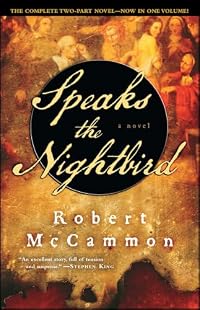
Came the time when the two travelers knew night would catch them, and shelter must be found. God and Satan are at war in the colonial Carolina town of Fount Royal, and even the citizens suspect that a witch is behind the tragedies that have plagued the town. The chief suspect is the beautiful and haunted widow Rachel. Traveling judge Isaac Woodward and his bright young clerk Matthew Corbett arrive to conduct a trial-and uncover the true evil at work in Fount Royal.Tags
Recommendations





Member Recommendations
Member Reviews
The first few chapters of Speaks the Nightbird had me hooked. For the most part, the plot is interesting and kept me puzzled until the end; the characters were full of life and personality. Albeit, most of these people have a horrible personality. Where I got lost is the amount of superfluous descriptions about food, anachronisms, and repetitive language. (The witch must burn, she's beautiful but burn she must, the witch must swing, the witch will die.) Okay, yes, I hear ya.
Speaks the Nightbird felt long, and I enjoy getting lost in large books, but this dragged throughout the middle/towards the end. It took me nearly 3 weeks to read (rare for me), I kept putting it aside for other worlds. At times, the plot felt complex solely for the show more sake of being complex. Events in the last half seemed contrived and implausible. I also felt some of the characters did not remain true to themselves for the sake of the plot. Would Bidwell have immediately set out to Charles Town to find Smythe after reading the letter? Would Green have been so quick to receive Matthew regardless of what was said? And not just received him but cowered to him! I didn't get the feeling these quick-to-judgment townspeople would have been willing to admit they were wrong. Why the dramatic multiple chapter confrontation with Johnstone?
Some of the scenes throughout seemed McCammon had a depravity in mind that he wanted to include in the book and worked from there, forcing it into the plot. After finishing the book, there were a few scenes that I scratched my head at, wondering why they were included at all.
THE RATS! OH MY GOD, THE RATS! Ewwwww. The descriptions of the rats were intense. show less
Speaks the Nightbird felt long, and I enjoy getting lost in large books, but this dragged throughout the middle/towards the end. It took me nearly 3 weeks to read (rare for me), I kept putting it aside for other worlds. At times, the plot felt complex solely for the show more sake of being complex. Events in the last half seemed contrived and implausible. I also felt some of the characters did not remain true to themselves for the sake of the plot.
Some of the scenes throughout seemed McCammon had a depravity in mind that he wanted to include in the book and worked from there, forcing it into the plot. After finishing the book, there were a few scenes that I scratched my head at, wondering why they were included at all.
THE RATS! OH MY GOD, THE RATS! Ewwwww. The descriptions of the rats were intense. show less
I read a reasonable amount of historical fiction, and I like the depiction of past eras to be gritty and even grim, in a matter-of-fact sort of way. If I'm reading about a housewife in Elizabethan England, I want to see her lifting up her skirts to step over the rivelets of ooze in the street if she is running an errand near the shambles, and I want to see any sailors, towards the end of a long period at sea, to be knocking the weevils out of their hardtack; heck, they should just ignore the wriggling creatures and go ahead and eat the biscuits; they are, after all, good protein. I also hope that my authors will strive to be as true as they can to the period they are writing about; I prefer the details to be correct. At the same time, show more however, I realize that authors of historical fiction can't be spending all of their time in research libraries; errors will creep in, or new discoveries will be made, no matter how conscientious the writer may be. The novel has to be written, in the end.
I understand, too, that there is disagreement on how much people have changed throughout the centuries. Are the mind-sets of people from other times so altered from the modern era? I happened to think that they were very different, so when I read a work from a author such as Robert McCammon, who states in his interview here http://www.robertmccammon.com/interviews/rm-2007-10-15-1.html that he doesn't really believe people have changed very much, I am probably going to find his characters rather anachronistic; or at least, not accurate depictions of what I can only imagine long vanished people to be. Fair enough. I can't really criticize an author's decision to go in that direction. It is, after all, only a guess.
I can, however, call him to account for inexcusably sloppy research, and for a fascination for the foul and vile that borders on the lurid. I get it--past times were none too clean, epecially out on the frontier; people stank, clothing reeked, and houses crawled with insects and were choked with smoke. McCammon's seemingly new-found discovery of these not very interesting facts (history isn't stuffy! he exclaims over and over in the previously cited interview) is like a little boy who has skewered a pile of dog poop and goes waving his stick gleefully in front of the grown-ups. "Lookee here what I have found! Isn't it COOL!" (Actually, I should have written "skewered a rat" instead; so many rodents are pitch-forked, crushed, drowned, smashed, that at times I thought I had wandered into a William and Mary era whack-a-rat game show; McCammon seemed to have just tossed in another rodent death when he was at a loss for ideas, which was often.) All of this endless description, which slows down the pace to a crawl, serves no real purpose, especially as it is often not really accurate.
I almost stopped the book at page 75, when he made his first really big historical boo-boo. (I'll pass over the highly unlikely conversations the two main characters, the magistrate Woodward and his clerk Matthew, on their way to try a witch at the town of Fount Royal, have with the slimy innkeeper, but the manner in which sexual details are disclosed is beyond ridiculous.) McCammon describes the home of Bidwell, chief mover-and-shaker of the fledging town, as having a dining room that would serve as the centerpiece of an English castle. I'm sorry, but that is absurd. Here is Bacon's Castle, one of the most imposing homes of the time, located in Tidewater Virginia, one of the most highly developed regions of the early colonial era, constructed just before this period of this book:
(It was actually less grand at the end of the 17th century, since the service wing was rebuilt and the roof was raised a floor much later.) And here are two English houses of the same time period, which I also visited during my years living in England. (The first one, Wimpole Hall, once every season as it has an excellent home farm which kept my toddlers busy):
And Belton Hall, just up the road an hour or so from my home, which I include as it was constructed during the same decade as Bidwell's imagined mansion:
It's pretty clear that nothing constructed during the colonial era (or until the times of the robber barons) would be judged worthy of being the centerpiece of an English manor house. So McCammon's just taking a bit of artistic license, right? He just wants to contrast the opulent home, with the barely beaten back nature in the form of incessant insects buzzing around, with the wretched hovels. All right, but then he has Magistrate Woodward, who is portrayed as a decent, mild man, condemning young, pretty white Rachel to burn at the stake, for the crime of witchcraft, and for petty treason for supposedly killing her husband.
Guess how many white women in America were burned at the stake through judicial process during the colonial period? None. That's right: zero, nada, zip. There are NO adequately documented cases of a white woman being executed by this method in the colonies. English Common Law of the time period sentenced a person judged guilty of witchcraft to the gallows, as anyone even casually familiar with the Salem Witch Trials knows. And petty treason, though technically punishable by death by fire, was NEVER enforced on a white woman.* Clearly, if you were a black slave, man or woman, who dared to be involved in a slave uprising, or a white man who had the audacity to help in a revolt, you might very well be condemned to the stake. But a woman and her white skin was safe from the flames.**
So is Rachel's sentence an anachronism? A sloppy bit of research by the author? So what if Woodward--and by proxy the author--condemns her to the most gruesome and dreaded of executions--death is death, right? But I do think it matters, particularly as this barbaric custom is part of the story of slavery, and not of colonial white America. You have to decide how important this distortion is to you. I can only view McCammon's plot twist as the sensationalistic misreading of the historical record by a third-rate writer who is willing--even eager--to put a tawdry spin on everything. Why do I think this? Well, after starting to skim through the salacious and vulgar depositions (thorny cocks! blood dripping from female parts!) and the tedious descriptions of the thought processes of every single character that serves only to bloat an all ready deadly slow narrative, I was no longer terribly interested in the fates of the cartoonishly nasty characters (all the inhabitants of Fount Royal except the beautiful--of course!--young witch) and the Scooby-Doo-ish eager young Matthew. (Rachel herself is as wooden as the stake the townspeople want to lash her to; only Woodward was a well-defined creation who held my attention.) I kept going, however, as it was a buddy read, despite my suspicions that the author was revelling in the gross details. I stopped even skimming when I came upon the utterly out of place drawn out account of a blacksmith's sexual assault upon a mare--complete with the love words whispered to the unwilling beast and an elaborate description of the mechanism designed to carry out such a foul encounter AND WHICH IS COMPLETELY IRRELEVANT TO THE PLOT AS WE HAVE ALL READY BEEN HIT ON THE HEAD THAT THE BLACKSMITH IS A DISTURBED INDIVIDUAL. There is also a sniggering insinuation that the horse enjoyed it. . What's more, McCammon defends this disgusting and extraneous episode by saying that such events are part of the historical record. Very convenient of him to be suddenly concerned about historical authenticity, wouldn't you say? http://www.robertmccammon.com/interviews/02jan.html
No, I did not finish the book. But I don't have to finish a bowl of stew, either, to know that something putrid lurks within it. (I did peek to the end of the book just to confirm my guess as to who the villain was; it was obvious when s/he first stepped onto the stage, so it wasn't even a good mystery.) Suffice to say that I was no longer feeling charitable enough to overlook the author having his characters using matches, envelopes, eating stewed tomatoes, using pounds instead of stones to describe human weight, referring to "tricorn" hats when the correct usage for the time would have been "cocked" hats, the use of "Violet"--a Victorian invention--as a proper name, or the countless other errors that showed that the author didn't even care to do more than a modicum of research. Just throw in another dead rat seemed to be his philosophy.
Not surprisingly, there wasn't even the consolation of interesting language to pull the reader along. McCammon's flat, leaden prose-- without style or grace--is as uninventive as his facts are made up. His sentences are just words slapped one after another like bricks upon mortar. But at least, at the end of the day, a mason might build something useful, like a wall. This book, on the other hand, is a poorly-constructed, ersatz fake that reminds me of nothing so much as:
http://www.nytimes.com/2012/02/12/magazine/dickens-world.html?pagewanted=all&...
DICKENS WORLD--COMPLETE WITH PIZZA HUT
If you are an uninspired author, you can pretend to bring the past to life, much as the theme park Dickens World pretends to bring back the Victorian era by releasing a few chemical smells in the air from strategically placed "smell pots". By focusing on the nasty and the reeking, and by conveniently ignoring the truth, you can sketch a shadow of the past for an unwary audience. But in the end, the unlucky reader of this book is not transported to another time, but just trapped in a modern warehouse, just like the ticket-holders of Dickens World. An affront to the serious reader of historical fiction, a tiresome slog for the seeker of some escapist fun, and an insult to horses everywhere, this book is to be avoided at all costs. In the spirit of the author's own words: eschew this turgid turd.
.5 Stars
************************************************************
* The author of [b:Women's Life and Work in the Southern Colonies|3221423|Women's Life and Work in the Southern Colonies|Julia Cherry Spruill|http://d.gr-assets.com/books/1348709293s/3221423.jpg|3255450], whose work remain the cornerstone of women's studies for Colonial Williamsburg--where McCammon did his research--states categorically that she could find no case in the South in which a woman was burned at the stake for petit treason.
** For an overview of the history of execution in the colonies, here's an interesting bit of research from a fascinating web-site, "Before the Needles." http://web.archive.org/web/20080403115807/http://users.bestweb.net/~rg/execution... 1608 - 1708.htm
************************************************************
This is my review, and my complaints are my own. Any tisk-tisking over my request that historical fiction remain somewhat true to the times (as if a less demanding reader is somehow more worldly wise in the ways of fiction) will be, depending on the tone of the comment and my mood at the time, either not responded to--or deleted. show less
I understand, too, that there is disagreement on how much people have changed throughout the centuries. Are the mind-sets of people from other times so altered from the modern era? I happened to think that they were very different, so when I read a work from a author such as Robert McCammon, who states in his interview here http://www.robertmccammon.com/interviews/rm-2007-10-15-1.html that he doesn't really believe people have changed very much, I am probably going to find his characters rather anachronistic; or at least, not accurate depictions of what I can only imagine long vanished people to be. Fair enough. I can't really criticize an author's decision to go in that direction. It is, after all, only a guess.
I can, however, call him to account for inexcusably sloppy research, and for a fascination for the foul and vile that borders on the lurid. I get it--past times were none too clean, epecially out on the frontier; people stank, clothing reeked, and houses crawled with insects and were choked with smoke. McCammon's seemingly new-found discovery of these not very interesting facts (history isn't stuffy! he exclaims over and over in the previously cited interview) is like a little boy who has skewered a pile of dog poop and goes waving his stick gleefully in front of the grown-ups. "Lookee here what I have found! Isn't it COOL!" (Actually, I should have written "skewered a rat" instead; so many rodents are pitch-forked, crushed, drowned, smashed, that at times I thought I had wandered into a William and Mary era whack-a-rat game show; McCammon seemed to have just tossed in another rodent death when he was at a loss for ideas, which was often.) All of this endless description, which slows down the pace to a crawl, serves no real purpose, especially as it is often not really accurate.
I almost stopped the book at page 75, when he made his first really big historical boo-boo. (I'll pass over the highly unlikely conversations the two main characters, the magistrate Woodward and his clerk Matthew, on their way to try a witch at the town of Fount Royal, have with the slimy innkeeper, but the manner in which sexual details are disclosed is beyond ridiculous.) McCammon describes the home of Bidwell, chief mover-and-shaker of the fledging town, as having a dining room that would serve as the centerpiece of an English castle. I'm sorry, but that is absurd. Here is Bacon's Castle, one of the most imposing homes of the time, located in Tidewater Virginia, one of the most highly developed regions of the early colonial era, constructed just before this period of this book:
(It was actually less grand at the end of the 17th century, since the service wing was rebuilt and the roof was raised a floor much later.) And here are two English houses of the same time period, which I also visited during my years living in England. (The first one, Wimpole Hall, once every season as it has an excellent home farm which kept my toddlers busy):
And Belton Hall, just up the road an hour or so from my home, which I include as it was constructed during the same decade as Bidwell's imagined mansion:
It's pretty clear that nothing constructed during the colonial era (or until the times of the robber barons) would be judged worthy of being the centerpiece of an English manor house. So McCammon's just taking a bit of artistic license, right? He just wants to contrast the opulent home, with the barely beaten back nature in the form of incessant insects buzzing around, with the wretched hovels. All right, but then he has Magistrate Woodward, who is portrayed as a decent, mild man, condemning young, pretty white Rachel to burn at the stake, for the crime of witchcraft, and for petty treason for supposedly killing her husband.
Guess how many white women in America were burned at the stake through judicial process during the colonial period? None. That's right: zero, nada, zip. There are NO adequately documented cases of a white woman being executed by this method in the colonies. English Common Law of the time period sentenced a person judged guilty of witchcraft to the gallows, as anyone even casually familiar with the Salem Witch Trials knows. And petty treason, though technically punishable by death by fire, was NEVER enforced on a white woman.* Clearly, if you were a black slave, man or woman, who dared to be involved in a slave uprising, or a white man who had the audacity to help in a revolt, you might very well be condemned to the stake. But a woman and her white skin was safe from the flames.**
So is Rachel's sentence an anachronism? A sloppy bit of research by the author? So what if Woodward--and by proxy the author--condemns her to the most gruesome and dreaded of executions--death is death, right? But I do think it matters, particularly as this barbaric custom is part of the story of slavery, and not of colonial white America. You have to decide how important this distortion is to you. I can only view McCammon's plot twist as the sensationalistic misreading of the historical record by a third-rate writer who is willing--even eager--to put a tawdry spin on everything. Why do I think this? Well, after starting to skim through the salacious and vulgar depositions (thorny cocks! blood dripping from female parts!) and the tedious descriptions of the thought processes of every single character that serves only to bloat an all ready deadly slow narrative, I was no longer terribly interested in the fates of the cartoonishly nasty characters (all the inhabitants of Fount Royal except the beautiful--of course!--young witch) and the Scooby-Doo-ish eager young Matthew. (Rachel herself is as wooden as the stake the townspeople want to lash her to; only Woodward was a well-defined creation who held my attention.) I kept going, however, as it was a buddy read, despite my suspicions that the author was revelling in the gross details. I stopped even skimming when I came upon the utterly out of place
No, I did not finish the book. But I don't have to finish a bowl of stew, either, to know that something putrid lurks within it. (I did peek to the end of the book just to confirm my guess as to who the villain was; it was obvious when s/he first stepped onto the stage, so it wasn't even a good mystery.) Suffice to say that I was no longer feeling charitable enough to overlook the author having his characters using matches, envelopes, eating stewed tomatoes, using pounds instead of stones to describe human weight, referring to "tricorn" hats when the correct usage for the time would have been "cocked" hats, the use of "Violet"--a Victorian invention--as a proper name, or the countless other errors that showed that the author didn't even care to do more than a modicum of research. Just throw in another dead rat seemed to be his philosophy.
Not surprisingly, there wasn't even the consolation of interesting language to pull the reader along. McCammon's flat, leaden prose-- without style or grace--is as uninventive as his facts are made up. His sentences are just words slapped one after another like bricks upon mortar. But at least, at the end of the day, a mason might build something useful, like a wall. This book, on the other hand, is a poorly-constructed, ersatz fake that reminds me of nothing so much as:
http://www.nytimes.com/2012/02/12/magazine/dickens-world.html?pagewanted=all&...
DICKENS WORLD--COMPLETE WITH PIZZA HUT
If you are an uninspired author, you can pretend to bring the past to life, much as the theme park Dickens World pretends to bring back the Victorian era by releasing a few chemical smells in the air from strategically placed "smell pots". By focusing on the nasty and the reeking, and by conveniently ignoring the truth, you can sketch a shadow of the past for an unwary audience. But in the end, the unlucky reader of this book is not transported to another time, but just trapped in a modern warehouse, just like the ticket-holders of Dickens World. An affront to the serious reader of historical fiction, a tiresome slog for the seeker of some escapist fun, and an insult to horses everywhere, this book is to be avoided at all costs. In the spirit of the author's own words: eschew this turgid turd.
.5 Stars
************************************************************
* The author of [b:Women's Life and Work in the Southern Colonies|3221423|Women's Life and Work in the Southern Colonies|Julia Cherry Spruill|http://d.gr-assets.com/books/1348709293s/3221423.jpg|3255450], whose work remain the cornerstone of women's studies for Colonial Williamsburg--where McCammon did his research--states categorically that she could find no case in the South in which a woman was burned at the stake for petit treason.
** For an overview of the history of execution in the colonies, here's an interesting bit of research from a fascinating web-site, "Before the Needles." http://web.archive.org/web/20080403115807/http://users.bestweb.net/~rg/execution... 1608 - 1708.htm
************************************************************
This is my review, and my complaints are my own. Any tisk-tisking over my request that historical fiction remain somewhat true to the times (as if a less demanding reader is somehow more worldly wise in the ways of fiction) will be, depending on the tone of the comment and my mood at the time, either not responded to--or deleted. show less
For the first time in years, I feel that I have discovered a favorite author and favorite book series and all of the makings of a true classic. This was my introduction to both the writing of McCammon and the Matthew Corbett series. I cannot wait to read the rest of this series! This book has everything, starting with absolutely wonderful writing and historical detail that is obviously well researched. The atmosphere and character development are to the degree that you feel as if you have stepped into the setting alongside the characters, and that you have known them quite well in real life.
Magistrate Isaac Woodward and his clerk Matthew Corbett immedately run into a life threatening situation at a remote inn on their way to Fount show more Royal, where the magistrate is to try a witch. Not long after the opening scene, harrowing action ensues. Woodward and Matthew barely escape with their lives, and nothing else and make their way through treacherous wilderness and harsh weather conditions to their destination. There they are met by the founder of this recent township along wtih sundry other townsfolk that we are introduced to in full detail as events unfold.
This book is truly a masterpiece. The description of life in Colonial America is very detailed. The central mysteries of the story are built up superbly. The atmosophere is one worthy of the Headless Horseman himself. Magistrate Woodward conducts his trial, even though he is suffering a grievous life threatening illness, which is worsened by his insistence on continuing his duties. Matthew, his clerk, is a very bright young man, who is not bound by the religious fervour affecting most of the inhabitants of the town. He is constantly observing, and is brilliant at piecing things together, asking questions and coming to conclusions. His mission becomes saving the beautiful woman on trial for witchcraft, Rachel. It doesn't seem like there's any hope of success, but the suspense is beyond belief.
There is violence aplenty as extremely violent and blood filled murders continue to plague Fount Royal and Matthew is convinced Satan is not responsible for them. He is, however, determined to find out who is.
At the risk of repeating myself, again, this book is simply a masterpiece. It has left me nearly speechless. I'm appalled that it has taken me this long to come across McCammon's writing, and in particular, this series. I urge you to read this book, immediately, if you have not already. This is the type of writing and book, and series, that you come across very few times over the years.
When I read a bit about McCammon's background, I was horrified and dismayed that the major publishers turned down this book, causing McCammon to withdraw from writing and publshing for years. What an absolute travesty. And how can that happen? If they read the book, that simply seems impossible. It has lessened my views of publishers immensely, I must say. Also I must thank the author for his perseverance and the small publishing house in Alabama that ultiimately published this book and this series. show less
Magistrate Isaac Woodward and his clerk Matthew Corbett immedately run into a life threatening situation at a remote inn on their way to Fount show more Royal, where the magistrate is to try a witch. Not long after the opening scene, harrowing action ensues. Woodward and Matthew barely escape with their lives, and nothing else and make their way through treacherous wilderness and harsh weather conditions to their destination. There they are met by the founder of this recent township along wtih sundry other townsfolk that we are introduced to in full detail as events unfold.
This book is truly a masterpiece. The description of life in Colonial America is very detailed. The central mysteries of the story are built up superbly. The atmosophere is one worthy of the Headless Horseman himself. Magistrate Woodward conducts his trial, even though he is suffering a grievous life threatening illness, which is worsened by his insistence on continuing his duties. Matthew, his clerk, is a very bright young man, who is not bound by the religious fervour affecting most of the inhabitants of the town. He is constantly observing, and is brilliant at piecing things together, asking questions and coming to conclusions. His mission becomes saving the beautiful woman on trial for witchcraft, Rachel. It doesn't seem like there's any hope of success, but the suspense is beyond belief.
There is violence aplenty as extremely violent and blood filled murders continue to plague Fount Royal and Matthew is convinced Satan is not responsible for them. He is, however, determined to find out who is.
At the risk of repeating myself, again, this book is simply a masterpiece. It has left me nearly speechless. I'm appalled that it has taken me this long to come across McCammon's writing, and in particular, this series. I urge you to read this book, immediately, if you have not already. This is the type of writing and book, and series, that you come across very few times over the years.
When I read a bit about McCammon's background, I was horrified and dismayed that the major publishers turned down this book, causing McCammon to withdraw from writing and publshing for years. What an absolute travesty. And how can that happen? If they read the book, that simply seems impossible. It has lessened my views of publishers immensely, I must say. Also I must thank the author for his perseverance and the small publishing house in Alabama that ultiimately published this book and this series. show less
There's deviltry and witchcraft afoot in a remote colonial outpost. Murders and fires and curses and dreadful satanic visions are causing an exodus of the good ctizens trying to establish a thriving port. Enter a magistrate to try the witch and his young clerk, Corbett, who sniffs out oddities, inconsistencies, and impossibilities and keeps asking annoying questions and getting into various troubles. Can he save the doomed witch-woman? Or has she cast him (lol) under her spell? Fun historical mystery, full of gothic and the macabre elements that presumably come from McCammon's horror roots. This was the book he got into trouble for writing, publisher wise, as he wanted to branch out into other genres, but this wouldn't have been a hard show more sell to his horror audience, so, that seems a pity. Anyway, it finally got published, the Corbett series was born, and McCammon, pesumably, gets the last laugh show less
Speaks the Nightbird is McCammon's first book after a ten-year layoff from writing. He was fed up with the publishing industry and how they handled his previous two novels, Boy's Life and Gone South. McCammon was a horror writer. He helped found the organization, Horror Writers of America, and his publisher didn't want him straying from the genre. It made them money and so they resisted when Bob wanted to write about something else. Anyone that has had the pleasure of hearing McCammon speak quickly realizes that he is not only an interesting individual, but he prides himself as a writer that is constantly growing. He doesn't want to rehash the same old tired story and, unfortunately, his publisher didn't support his desire to pursue show more writing about anything but horror. Instead of fighting what appeared to be a losing battle, McCammon chose to leave writing behind and spend time with his family. While I applaud his integrity to do what was right and to focus his attention toward his family, the fan in me missed his prose for a decade. If you've followed any of my reviews, you know that I crow to anyone that will listen (and to many that don't want to) about the talent that is Robert McCammon. His writing speaks to me like no other. His characters and dialogue are so realistic and vibrant that it feels like you've known them for much longer than it took to read his stories. Speaks the Nightbird is a perfect example.
Speaks the Nightbird is the first in a series of colonial America novels that feature his character Matthew Corbett. Matthew is the 20-year-old clerk for Magistrate Woodward who is summoned to Fount Royal, a start-up city on the swampy Carolina coast, to try the case of Rachel Howarth, a woman accused of killing the town minister and her husband while also being a witch. Corbett has been under the magistrate's tutelage ever since he rescued him from an orphanage five years prior and they have developed a father/son type of relationship. The young clerk is extremely inquisitive and has a penchant for solving puzzles.
After running afoul of trouble on the road to Fount Royal, they arrive with only the clothes on their backs to the town. They are welcomed inside the city gates and into the mansion of the the town's founder, Robert Bidwell. What they find in Fount Royal is a town gripped in panic and chaos. It seems that there have been two grisly murders, homes burned, crops dying, and the suspected witch causing all of the evil doings locked up. With three eyewitnesses with wildly fantastic stories and the town's population beginning to move away in fear, the remaining citizens are convinced of the witch's guilt and want her quickly condemned to death so that their lives may return to normalcy.
Ah, but things are not as they appear and here McCammon unfurls a wonderful tale of mystery in front of us all. Matthew Corbett is like a colonial Sherlock Holmes in a town that doesn't want to be swayed that the witch might possibly be innocent. McCammon writes with such rich detail of the period and the character development is amazing. Corbett is a character that you'll quickly identify with, as well as all of the towns people, and they immediately feel like people you already know. If you're a McCammon fan, Speaks the Nightbird is an absolute must. If you haven't experienced his writing yet, pick up a copy of this immediately. I can't stress enough how good this story is and how it'll be hard to put down. show less
Speaks the Nightbird is the first in a series of colonial America novels that feature his character Matthew Corbett. Matthew is the 20-year-old clerk for Magistrate Woodward who is summoned to Fount Royal, a start-up city on the swampy Carolina coast, to try the case of Rachel Howarth, a woman accused of killing the town minister and her husband while also being a witch. Corbett has been under the magistrate's tutelage ever since he rescued him from an orphanage five years prior and they have developed a father/son type of relationship. The young clerk is extremely inquisitive and has a penchant for solving puzzles.
After running afoul of trouble on the road to Fount Royal, they arrive with only the clothes on their backs to the town. They are welcomed inside the city gates and into the mansion of the the town's founder, Robert Bidwell. What they find in Fount Royal is a town gripped in panic and chaos. It seems that there have been two grisly murders, homes burned, crops dying, and the suspected witch causing all of the evil doings locked up. With three eyewitnesses with wildly fantastic stories and the town's population beginning to move away in fear, the remaining citizens are convinced of the witch's guilt and want her quickly condemned to death so that their lives may return to normalcy.
Ah, but things are not as they appear and here McCammon unfurls a wonderful tale of mystery in front of us all. Matthew Corbett is like a colonial Sherlock Holmes in a town that doesn't want to be swayed that the witch might possibly be innocent. McCammon writes with such rich detail of the period and the character development is amazing. Corbett is a character that you'll quickly identify with, as well as all of the towns people, and they immediately feel like people you already know. If you're a McCammon fan, Speaks the Nightbird is an absolute must. If you haven't experienced his writing yet, pick up a copy of this immediately. I can't stress enough how good this story is and how it'll be hard to put down. show less
This book was outright amazing, the only comparison I can draw for this novel would be something like Law & Order: Witch Trials. Thereby seeing the first lines of the novel indicating the location in the Carolinas, I hear the distinctive DUN! DUN! in my head just thinking about it. There is definitely some shady dealings going on in the town of Fount Royal where an accused witch is on trial and the one and only penalty for cavorting with the Devil is death by flames. For a town that deems itself holy and wants nothing more but to purge it's self from the presence of evil, nearly everyone in the town seems to be guilty of something. But down the rabbit hole Robert McCammon takes us, who is to blame for the atrocities that have been show more committed in this town? Did the accused truly murder her husband and the Reverend? Is the owner of the town a silent schemer? Does the Dr. in the town have ulterior motives? Does the new Reverend that arrives to the town care too much about lustful ideals than saving souls? What's up with all the rain? Why does my stomach hurt right now? All but the last two questions get answered in this epic book. This book is really long, and I mean REALLY long, but it is extremely enrapturing. This book isn't for the feint of heart, if you are the occasional reader this may not fit the bill for your wants and desires, but if you like to be kept guessing the whole time, it is sure to please.
Robert McCammon makes every detail matter and I sopped it up like I was eating biscuits and gravy. Sometimes picking out details that I would read knowing that there was an obvious reason why it was mentioned, but having to wait a while until the answer comes to fruition. I'm very glad to know that Matthew Corbett makes an appearance in 3 more novels! I'm already ready to crack open the next volume in the series. I read this book right after finishing Wolf's Hour by McCammon, but this book was a completely different animal. Robert paints pictures in your mind that you can't help but see clear as day, and the dialogue is also quite amazing, as his attention to detail in the character's speech, and talking style is painstakingly rendered. I can only imagine how long it must have been for the author to craft this masterpiece. Also, I'll give a nod to Robert for not including so much detail to the main character being quite the slut that Michael Galatin from the Wolf's Hour was. I have to give McCammon a lot of credit on this novel, and I don't feel guilty in the slightest from awarding this book 5 stars, which is not something I do all willy nilly! show less
Robert McCammon makes every detail matter and I sopped it up like I was eating biscuits and gravy. Sometimes picking out details that I would read knowing that there was an obvious reason why it was mentioned, but having to wait a while until the answer comes to fruition. I'm very glad to know that Matthew Corbett makes an appearance in 3 more novels! I'm already ready to crack open the next volume in the series. I read this book right after finishing Wolf's Hour by McCammon, but this book was a completely different animal. Robert paints pictures in your mind that you can't help but see clear as day, and the dialogue is also quite amazing, as his attention to detail in the character's speech, and talking style is painstakingly rendered. I can only imagine how long it must have been for the author to craft this masterpiece. Also, I'll give a nod to Robert for not including so much detail to the main character being quite the slut that Michael Galatin from the Wolf's Hour was. I have to give McCammon a lot of credit on this novel, and I don't feel guilty in the slightest from awarding this book 5 stars, which is not something I do all willy nilly! show less
Robert McCammon is a name I have heard tossed around for years but never got around (until now) to reading his material. A friend recommended the Matthew Corbett Series…so here we are. Set at the turn of the century nearly a hundred years before US independence, this story takes place in the Eastern Southern Colonies. The author vividly puts in a time frame that is slowly receding from the fog of Puritan mania and a time when new ideas regarding law, social etiquette clash. Witchery is still a superstition latched onto by some and laughed at by others. Our Protagonist Matthew Corbett finds himself in the company of many colorful and odd people in the Fledgling colony of Fount Royal and in the midst of murderers and witches. A well show more written and very atmospheric story which gives a peek into a time nearly forgotten. The time placing of this story is unique in the send that it would have been easy to place it in either the early 1600’s or the late 1700s but instead it is
at the turn of the century. Speaks the Nightbird is a rum-a-tumble mixt of elevated ideas and action and personal sacrifice. Highly recommended. show less
at the turn of the century. Speaks the Nightbird is a rum-a-tumble mixt of elevated ideas and action and personal sacrifice. Highly recommended. show less
Members
- Recently Added By
Lists

Majkia's Mystery/ Thriller TBR
86 works; 3 members

Noriu perskaityti
33 works; 1 member
Talk Discussions
Past Discussions
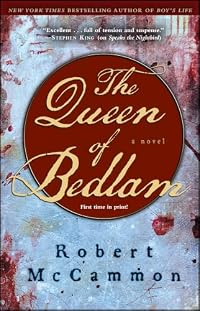
Robert McCammon's Speaks the Nightbird/The Queen of Bedlam in Thing(amabrarian)s That Go Bump in the Night (July 2008)
Author Information

100+ Works 20,666 Members
Robert R. McCammon is a popular horror fiction writer. He was born in 1952 in Birmingham, Alabama and attended the University of Alabama. After college he spent a number of years working in advertising for bookstores in Birmingham, where he still lives. McCammon's first novel, "Baal," was published in 1978. He quickly joined the group of horror show more writers that includes Stephen King, Dean R. Koontz, and Anne Rice, who write suspenseful stories with modern-day settings. He has published over two dozen books to date. With the publication of "Boy's Life" in 1991, McCammon left behind the horror genre, noting that he finds real life horrifying enough these days. While there are some aspects of the supernatural in "Boy's Life," it is more a story of growing up in a small Southern town. (Bowker Author Biography) show less
Some Editions
Awards and Honors
Awards
Distinctions
Series

Work Relationships
Common Knowledge
- Canonical title
- Speaks the Nightbird
- Original publication date
- 2002
- People/Characters
- Matthew Corbett; Issac Woodward; Rachel Howarth; Exodus Jerusalem
- Epigraph
- Think where man's glory most begins and ends
And say that my glory was I had such friends. -William Butler Yeats - Dedication
- To Hunter Goatley
- First words
- Came the time when the two travellers knew night would catch them, and shelter must be found.
- Last words
- (Click to show. Warning: May contain spoilers.)Then he turned his mount, his face, and his mind toward the century of wonders.
- Blurbers
- King, Stephen
- Disambiguation notice
- This book was also re-published in two paperback volumes: Vol. 1: Judgment of the Witch and ... (show all) rel="nofollow" target="_new">Vol. 2: Evil Unveiled.
Classifications
Statistics
- Members
- 1,122
- Popularity
- 22,418
- Reviews
- 40
- Rating
- (4.03)
- Languages
- English, Polish, Russian
- Media
- Paper, Audiobook, Ebook
- ISBNs
- 12
- ASINs
- 11