On This Page
Description
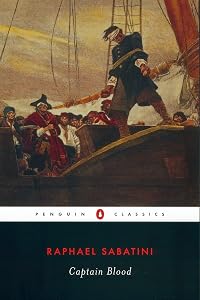
Captain Blood is an adventure story set during the end of the seventeenth century. Dr. Peter Blood is an ex-soldier and sailor whose work as a physician on the battlefield sees him convicted for treason and sent as a slave to the Caribbean. Blood's talents are soon recognized, though he doesn't remain on the plantation for long. When the Spanish attack, Blood is among a group of ex-slaves who capture their ship and become some of the most feared buccaneers of the Caribbean..
Tags
Recommendations





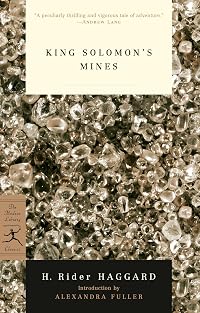
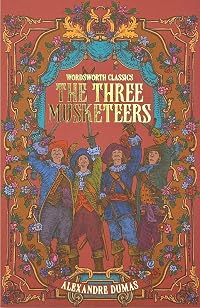
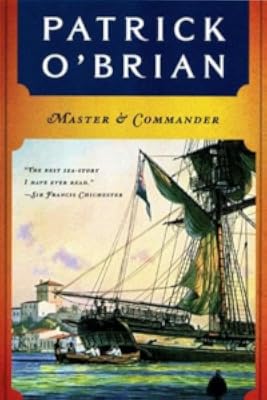
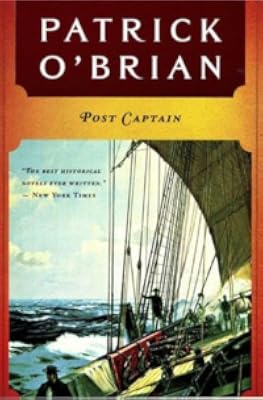





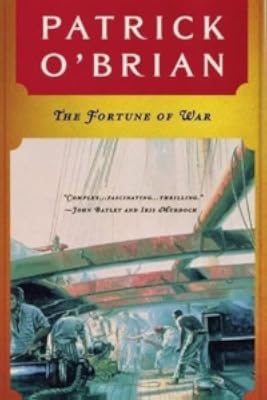







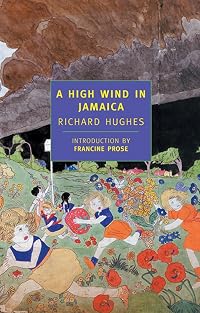



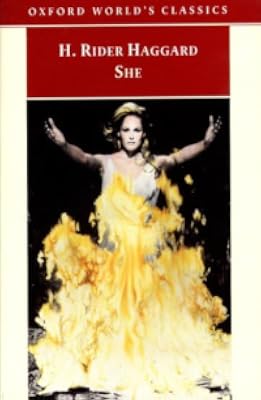
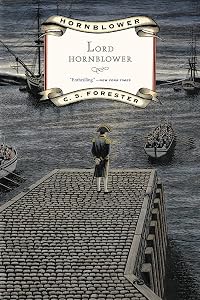




Member Recommendations
avalon_today pirates and romance. captain blood was more pirates than romance :-)
20


Member Reviews
Written in 1922, Captain Blood is truly a classic adventure story. We meet Dr. Peter Blood as he is tending to his garden on the very morning of the Battle of Sedgemoor. Wanting no part in the rebellion taking place, he nonetheless tends to the wounded, and is promptly arrested. During his trial, h is convicted of treason on the grounds that "if any person be in actual rebellion against the King, and another person—who really and actually was not in rebellion—does knowingly receive, harbour, comfort, or succour him, such a person is as much a traitor as he who indeed bore arms."
However, instead of being hanged to death, he, along with other convicts is sent to Caribbean to be sold into slavery. Upon his arrival in Barbados, he is show more bought by Colonel Bishop, who initially hires him to work in the plantation, but 'promotes' him as his personal physician, seeing the complete incompetence of the local doctors. Bishop immediately becomes Blood's enemy, and remains as such throughout the book. Complicating matters is the presence of Bishop's niece, Arabella. Given their respective social status, and the changing situations they find themselves in, their mutual attraction never really goes further than that.
Blood and a few others eventually find freedom, but at a price. Since they are slaves, they have no other choice but to adopt the pirate life, which is by no means easy. And that's when the real adventure starts.
The book really is a fun swashbuckling adventure, fast-paced swashbuckling with a hint of romance without being too cheesy. Some events may fly by too quickly, and some more might be qualified as fortuitous coincidences, but as a whole Sabitini succeeds in writing a good story.
Blood himself is a chivalrous man, true to himself, even when he does become an outlaw in the middle of the Caribbean. He draws his own line between right and wrong, and remains a true gentleman throughout the whole novel.
While some characters could have been more fleshed out and some scenes could have been written in more detail, the fun factor alone is enough to compensate for the few shortcomings in this novel.
Besides, I devoured the thing in a matter of days.
4.5/5 show less
However, instead of being hanged to death, he, along with other convicts is sent to Caribbean to be sold into slavery. Upon his arrival in Barbados, he is show more bought by Colonel Bishop, who initially hires him to work in the plantation, but 'promotes' him as his personal physician, seeing the complete incompetence of the local doctors. Bishop immediately becomes Blood's enemy, and remains as such throughout the book. Complicating matters is the presence of Bishop's niece, Arabella. Given their respective social status, and the changing situations they find themselves in, their mutual attraction never really goes further than that.
Blood and a few others eventually find freedom, but at a price. Since they are slaves, they have no other choice but to adopt the pirate life, which is by no means easy. And that's when the real adventure starts.
The book really is a fun swashbuckling adventure, fast-paced swashbuckling with a hint of romance without being too cheesy. Some events may fly by too quickly, and some more might be qualified as fortuitous coincidences, but as a whole Sabitini succeeds in writing a good story.
Blood himself is a chivalrous man, true to himself, even when he does become an outlaw in the middle of the Caribbean. He draws his own line between right and wrong, and remains a true gentleman throughout the whole novel.
While some characters could have been more fleshed out and some scenes could have been written in more detail, the fun factor alone is enough to compensate for the few shortcomings in this novel.
Besides, I devoured the thing in a matter of days.
4.5/5 show less
The archetypal pirate story. Treasure Island might have given us all of the iconic images we know and love in popular culture – the parrots and peglegs and pieces-of-eight – but Rafael Sabatini's Captain Blood is the sort of rich, all-encompassing pirate adventure you lived for when you were a kid. There are sea battles and broadsides, cutthroats and 'repel all boarders', pirate ports like Tortuga and intimidating forts like Port Royal and Hispaniola, feckless governors and bosom-heaving governors' daughters, villainous Spaniards and disdainful Frenchmen, piratical tricks and roguery, victory from the jaws of defeat, rapier-like dialogue and verbal jousting, cutlasses and gunsmoke and plunder.
Even more importantly, Captain Blood is show more the book which presented most convincingly the image of the romantic, noble pirate (in Treasure Island, the pirates – led by Long John Silver – are definitely the bad guys). Blood himself is a gentleman, an escaped slave imprisoned for a crime he did not commit, who still has "some rags of honour… remaining me from better days" (pg. 105). Furthermore, in Blood, the sea is "free to all, and particularly alluring to those who feel themselves at war with humanity" (pg. 87). The influence on the likes of Pirates of the Caribbean is strong, almost overpowering (as a small criticism, some of the flavour of the story can be lost in how familiar it has become). Young boys with their rubber eyepatches and cardboard cutlasses are, in their adventures, more likely imitating noble Blood than the ruffian Long John Silver, even if they do not know it.
I was also fascinated to note the book's influence on my favourite writer, George MacDonald Fraser, author of Flashman. GMF swore by it – and by Sabatini – and if the only dedicated pirate stories he wrote were the comical fluff The Pyrates and the posthumous manuscript Captain in Calico, then Captain Blood's style is nevertheless clearly felt in all his prose. For Sabatini's prose is rich and colourful, that rare sort of book where you gorge yourself on the words without becoming bogged down in them. Captain Blood has those two ingredients essential for a crowd-pleasing cracker – pace and spicy dialogue – in spades, and plenty more besides. Character, plot and setting are all top-drawer. If you "would like to see an action fought at sea as an action should be fought, this is your opportunity" (pg. 206). show less
Even more importantly, Captain Blood is show more the book which presented most convincingly the image of the romantic, noble pirate (in Treasure Island, the pirates – led by Long John Silver – are definitely the bad guys). Blood himself is a gentleman, an escaped slave imprisoned for a crime he did not commit, who still has "some rags of honour… remaining me from better days" (pg. 105). Furthermore, in Blood, the sea is "free to all, and particularly alluring to those who feel themselves at war with humanity" (pg. 87). The influence on the likes of Pirates of the Caribbean is strong, almost overpowering (as a small criticism, some of the flavour of the story can be lost in how familiar it has become). Young boys with their rubber eyepatches and cardboard cutlasses are, in their adventures, more likely imitating noble Blood than the ruffian Long John Silver, even if they do not know it.
I was also fascinated to note the book's influence on my favourite writer, George MacDonald Fraser, author of Flashman. GMF swore by it – and by Sabatini – and if the only dedicated pirate stories he wrote were the comical fluff The Pyrates and the posthumous manuscript Captain in Calico, then Captain Blood's style is nevertheless clearly felt in all his prose. For Sabatini's prose is rich and colourful, that rare sort of book where you gorge yourself on the words without becoming bogged down in them. Captain Blood has those two ingredients essential for a crowd-pleasing cracker – pace and spicy dialogue – in spades, and plenty more besides. Character, plot and setting are all top-drawer. If you "would like to see an action fought at sea as an action should be fought, this is your opportunity" (pg. 206). show less
"Captain Blood paced the poop of his ship alone in the tepid dusk, and the growing golden radiance of the great poop lantern in which a seaman had just lighted the three lamps"
Tell me you didn't snicker a little bit reading that sentence.
So, right off the bat, there are some pretty glaring things one needs to overlook as an anarchist reading this book:
The protagonist is assumed to be a better pirate for his professional-class upbringing: he is without the trappings of a more proletarian pirate who might be swayed by animal urges of barbarism. He keeps his class signifiers by shaving and wearing the finest silks and etc. Furthermore, Peter Blood is consistently praised for his absolute control over the more proletarian elements of his show more fleet with a lot of talk about their utter submission to his will. Peter Blood then parlays his pirating gig into the governorship of an important colony to the English crown. So Peter Blood merely dabbles in brigandage, and returns after only a couple of years to his position of privilege.
The only woman mentioned in the book is the love interest, who, though described as tomboyish and irreverent to female expectation, swoons and pouts and acts almost exclusively in the proscribed literary feminine role. In contrast to the main character and many others throughout the book, Arabelle is one-dimensional.
There are mentions of black people throughout the book, but they are referred to exclusively as slaves, and often with wince-worthy blood quota language: "her octaroon" for example. The chattel slaves are never given more than a passing mention, despite sometimes playing important roles in battles (I'm thinking here of the de Riverarol raid on Cartagena). They often announce the presence of other characters, rather than have a presence themselves. This is disappointing, too.
If you ignore the white supremacist capitalist patriarchy of the book, however (ha ha), this was a great swashbuckling pirate tale, a good escape book. The scenes of battle are riveting if sometimes confusing to a landlubber. The best parts are Peter Blood's quick tongue and knack for putting those in power out of it, and never compromising. Pretty much every tin-pot governor and admiral is given a choice to go against his will and die a horrible death, or be allowed to live by Peter Blood's generosity. It makes for fantastic reading. show less
Tell me you didn't snicker a little bit reading that sentence.
So, right off the bat, there are some pretty glaring things one needs to overlook as an anarchist reading this book:
The protagonist is assumed to be a better pirate for his professional-class upbringing: he is without the trappings of a more proletarian pirate who might be swayed by animal urges of barbarism. He keeps his class signifiers by shaving and wearing the finest silks and etc. Furthermore, Peter Blood is consistently praised for his absolute control over the more proletarian elements of his show more fleet with a lot of talk about their utter submission to his will. Peter Blood then parlays his pirating gig into the governorship of an important colony to the English crown. So Peter Blood merely dabbles in brigandage, and returns after only a couple of years to his position of privilege.
The only woman mentioned in the book is the love interest, who, though described as tomboyish and irreverent to female expectation, swoons and pouts and acts almost exclusively in the proscribed literary feminine role. In contrast to the main character and many others throughout the book, Arabelle is one-dimensional.
There are mentions of black people throughout the book, but they are referred to exclusively as slaves, and often with wince-worthy blood quota language: "her octaroon" for example. The chattel slaves are never given more than a passing mention, despite sometimes playing important roles in battles (I'm thinking here of the de Riverarol raid on Cartagena). They often announce the presence of other characters, rather than have a presence themselves. This is disappointing, too.
If you ignore the white supremacist capitalist patriarchy of the book, however (ha ha), this was a great swashbuckling pirate tale, a good escape book. The scenes of battle are riveting if sometimes confusing to a landlubber. The best parts are Peter Blood's quick tongue and knack for putting those in power out of it, and never compromising. Pretty much every tin-pot governor and admiral is given a choice to go against his will and die a horrible death, or be allowed to live by Peter Blood's generosity. It makes for fantastic reading. show less
When I was growing up, my companions were Karl May, Mayne Reid and Emilio Salgari. Their tales of adventure made me a reader in a lot of ways. Rafael Sabatini should have been in that list but the Bulgarian edition was in 4 hardcover volumes, with white covers (so not books you want to carry in a backpack) and they looked a bit more like the books I was not ready for yet (that changed one summer when I decided to investigate and discovered Captain Blood but I never read any of them more than once as I was doing with the other 3 authors. Add another year and I discovered Science Fiction and the rest as they say is history).
What I did not appreciate back then is how much closer Sabatini was keeping to the actual history compared to the show more other 3. I did not care really - I was reading them for the adventures and it took me awhile to start looking at novels for their historical background.
The story starts in 1685 in England during the last acts of the Monmouth Rebellion. Peter Blood, an ex-soldier and current doctor, decides to behave like a human being (and a doctor) and helps an wounded man. Unfortunately for him, the man is a rebel and the current laws make Blood a rebel as well so he is arrested and eventually shipped to Barbados as a slave (which may or may not have been an improvement - as he tells the reader, had he been tried a day earlier, he would have been executed). As it is, he ends up in the hands of one of the English governors who believe everyone else to be under them. Peter Blood finds his way - he may be a slave but he is also a doctor and he even falls in love. Then the Spanish show up, things get a bit complicated and he ends up a captain of a pirate ship and his adventures continue at sea before ending up back on Barbados for the end of the novel - although not in a way anyone expects. And I am happy that Sabatini did not decide to give our captain a fairy tale ending - it would not have fit the narrative. He did leave it open enough though.
The novel works both as an adventure novel and as a historical one (if you don't have issues with reading about the battles). It ties together the story of England between the Monmouth Rebellion and the Glorious Revolution 3 years later and the story of the Caribbean islands exploitation and the pirates that spawned at the time. Most of the characters are invented by some are the real people who lived and even most of the invented ones are based on actual people - changed, merged, split or otherwise manipulated but the read like 17th century people. I read a non-fiction book about the Caribbean pirates a few years ago (Buccaneers of the Caribbean: How Piracy Forged an Empire by Jon Latimer) so I had a bit of a background which helped but Sabatini's story covered the same ground in a lot better way in places despite being fiction. Which does not happen often.
Sabatini never continued the story - what is considered a continuation by some is actually a set of stories set during the pirate years of Peter Blood. That leaves the whole Peter Blood story spanning a bit over 3 years (although we hear a lot about the years before that as well). And despite the somewhat open (or unhappy if you want to call it that) ending, I think that was the right choice. show less
What I did not appreciate back then is how much closer Sabatini was keeping to the actual history compared to the show more other 3. I did not care really - I was reading them for the adventures and it took me awhile to start looking at novels for their historical background.
The story starts in 1685 in England during the last acts of the Monmouth Rebellion. Peter Blood, an ex-soldier and current doctor, decides to behave like a human being (and a doctor) and helps an wounded man. Unfortunately for him, the man is a rebel and the current laws make Blood a rebel as well so he is arrested and eventually shipped to Barbados as a slave (which may or may not have been an improvement - as he tells the reader, had he been tried a day earlier, he would have been executed). As it is, he ends up in the hands of one of the English governors who believe everyone else to be under them. Peter Blood finds his way - he may be a slave but he is also a doctor and he even falls in love. Then the Spanish show up, things get a bit complicated and he ends up a captain of a pirate ship and his adventures continue at sea before ending up back on Barbados for the end of the novel - although not in a way anyone expects. And I am happy that Sabatini did not decide to give our captain a fairy tale ending - it would not have fit the narrative. He did leave it open enough though.
The novel works both as an adventure novel and as a historical one (if you don't have issues with reading about the battles). It ties together the story of England between the Monmouth Rebellion and the Glorious Revolution 3 years later and the story of the Caribbean islands exploitation and the pirates that spawned at the time. Most of the characters are invented by some are the real people who lived and even most of the invented ones are based on actual people - changed, merged, split or otherwise manipulated but the read like 17th century people. I read a non-fiction book about the Caribbean pirates a few years ago (Buccaneers of the Caribbean: How Piracy Forged an Empire by Jon Latimer) so I had a bit of a background which helped but Sabatini's story covered the same ground in a lot better way in places despite being fiction. Which does not happen often.
Sabatini never continued the story - what is considered a continuation by some is actually a set of stories set during the pirate years of Peter Blood. That leaves the whole Peter Blood story spanning a bit over 3 years (although we hear a lot about the years before that as well). And despite the somewhat open (or unhappy if you want to call it that) ending, I think that was the right choice. show less
Where have all the good men gone?!
Our protagonist Peter Blood is definitely a product of the the late 19th and early 20th centuries: a too-clever and too-handsome gentlemen rogue whose only real weakness is his need to be liked.
And the thing is: I welcome this stoicism— as I consume today’s media in other forms where we are swimming in morally ambiguous anti-heroes, I find myself beaten down by the onslaught of grey- or sepia-toned worlds. Peter Blood’s unyielding need to be liked by a woman, and his unwavering patience in his mission of making “evil” men-in-power pay is refreshing. Even if it might seem boring in summation.
Captain Blood is a fast-paced swashbuckling adventure that doesn’t waste a lot of time on things that show more don’t matter. You’re not stuck learning about the politics of the 17th century or how a frigate operates for whole chapters— at least, you’re not being forced to work for it— the narrator of the story is there to help you bridge those gaps within the course of his re-telling. show less
Our protagonist Peter Blood is definitely a product of the the late 19th and early 20th centuries: a too-clever and too-handsome gentlemen rogue whose only real weakness is his need to be liked.
And the thing is: I welcome this stoicism— as I consume today’s media in other forms where we are swimming in morally ambiguous anti-heroes, I find myself beaten down by the onslaught of grey- or sepia-toned worlds. Peter Blood’s unyielding need to be liked by a woman, and his unwavering patience in his mission of making “evil” men-in-power pay is refreshing. Even if it might seem boring in summation.
Captain Blood is a fast-paced swashbuckling adventure that doesn’t waste a lot of time on things that show more don’t matter. You’re not stuck learning about the politics of the 17th century or how a frigate operates for whole chapters— at least, you’re not being forced to work for it— the narrator of the story is there to help you bridge those gaps within the course of his re-telling. show less
Some books provide pure pleasure from beginning to end, and this is one of them. Sabatini is a brilliant storyteller, and this is surely the ultimate pirate tale. Except that Peter Blood is no pirate. Rather, he is a man unjustly made a slave, who, despite the continuing injustices done him by the English, Spanish, and French, remains true to an inner code of honor that even extends itself to alter the natures of the predominately motley crew who serve under him. After reading this, the surface joys of watching Johnny Depp as a pirate seem absurd. While Sabatini's characters fit mostly into neat stereotypes, he fleshes them out through brilliantly rendered action scenes and superb, delicious dialogue so that the whole story takes on a show more real life and provides a whole world for the reader to revel in. There are no dull moments, just a series of cascading pleasures as the story draws to an immensely satisfying conclusion. show less
I am of an age that remembers spending Saturday afternoons at my local movie theater with a bag of popcorn and a box of milk duds and a coke that in total cost me about a dollar. The movies (and there were always two of them----with a cartoon just to get you going) were 50 cents. Those hours were magical and movies have never been better. They say you can't go back home again; but reading Captain Blood took me right back to being 10 years old. The hero is larger than life, as good with his brains, and his rapier wit, as with his sword. The villains are nothing short of despicable. I can hear the chorus of 10 year old cat-calls and jeers at their every appearance. Captain Blood may be the perfect adventure novel. Seriously. Get yourself show more some popcorn, a quiet place to read, and be prepared to be entertained. show less
Members
- Recently Added By
Lists

The Guardian's 1000 Novels Everyone Must Read
1,005 works; 551 members

Recommend the 20 best books you've read in the last five years
2,168 works; 602 members

Top Five Books of 2013
1,562 works; 715 members

Read the book and saw the movie
1,170 works; 192 members

Best Adventure Stories
66 works; 15 members
Great Pirate Books
39 works; 21 members

1920s
141 works; 6 members

Books about pirates
29 works; 10 members
Works Referenced in The League of Extraordinary Gentlemen
122 works; 6 members

Blue Pyramid 1,276 Best Books of All Time
1,248 works; 32 members

Unshelved Book Clubs
579 works; 5 members

Page Turners
185 works; 11 members

Books Read in 2018
4,360 works; 110 members

Michael Dirda's Desert Island Books
62 works; 5 members

Mustich's 1000 Books to Read Before You Die: A Life Changing List
1,001 works; 20 members

Books in The Club Dumas
72 works; 1 member

Top Five Books of 2024
795 works; 264 members

European fiction, prose
2 works; 1 member
Author Information

160+ Works 7,570 Members
Rafael Sabatini was born April 29, 1875 in Jesi, Italy. At a young age, Rafael was exposed to many languages, and attending school in Portugal and, as a teenager, in Switzerland. By the time he was seventeen, when he went to England to live permanently, he could speak five languages. He quickly added English and chose to write in his adopted show more language, because, he said, "all the best stories are written in English." After a brief stint in the business world, Sabatini went to work as a writer. He wrote short stories in the 1890s, and his first novel came out in 1902. It took Sabatini almost a quarter of century before he attained success with Scaramouche in 1921. It became an international best-seller. Captain Blood followed in 1922 and was equally as successful. Sabatini was a prolific writer; he produced a new book approximately every year. While he would never achieve the success of Scaramouche and Captain Blood, Sabatini still maintained a great deal of popularity with the reading public through the decades that followed. By the 1940s, illness forced the writer to slow his prolific method of composition. However, he did write several additional works even during that time. His body of work consists of 31 novels, 8 short story colections and 6 books of poetry. He died February 13, 1950 in Switzerland. He is buried at Adelboden, Switzerland. (Bowker Author Biography) show less
Some Editions
Awards and Honors
Notable Lists
Series

Belongs to Publisher Series
Work Relationships
Is contained in
Has the adaptation
Common Knowledge
- Canonical title
- Captain Blood
- Original title
- Captain Blood
- Alternate titles
- The Odissey of Captain Blood
- Original publication date
- 1922
- People/Characters
- Peter Blood (Captain); Colonel Bishop; Cahusac; Jeremy Pitt
- Important places
- Barbados; Bridgwater, Somerset, England, UK; Bridgetown, Barbados; Caribbean Region; Caribbean Sea; Somerset, England, UK (show all 8); Maracaibo, Venezuela; Cartagena, Colombia
- Important events
- Monmouth Rebellion
- Related movies
- Captain Blood (1935 | IMDb); Captain Blood (1924 | IMDb); Fortunes of Captain Blood (1950 | IMDb); Odisseya Kapitana Blada (1992 | IMDb)
- First words
- Peter Blood, bachelor of medicine and several other things besides, smoked a pipe and tended the geraniums boxed on the sill of his window above Water Lane in the town of Bridgewater.
- Last words
- (Click to show. Warning: May contain spoilers.)'Id is fery boedigal!' he said, his blue eyes twinkling, 'Cabdain Blood is fond of boedry - you remember de abble-blossoms. So? Ha, ha!'
- Blurbers
- Mailer, Norman
- Original language
- English
Classifications
Statistics
- Members
- 1,898
- Popularity
- 11,303
- Reviews
- 61
- Rating
- (4.17)
- Languages
- 19 — Czech, Dutch, English, Estonian, French, German, Hungarian, Italian, Japanese, Latvian, Norwegian (Bokmål), Norwegian, Polish, Portuguese, Romanian, Russian, Spanish, Swedish, Ukrainian
- Media
- Paper, Audiobook, Ebook
- ISBNs
- 184
- UPCs
- 1
- ASINs
- 69