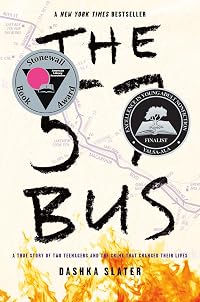
The 57 Bus
by Dashka Slater
On This Page
Description
"One teenager in a skirt. One teenager with a lighter. One moment that changes both of their lives forever. If it weren't for the 57 bus, Sasha and Richard never would have met. Both were high school students from Oakland, California, one of the most diverse cities in the country, but they inhabited different worlds. Sasha, a white teen, lived in the middle-class foothills and attended a small private school. Richard, a black teen, lived in the crime-plagued flatlands and attended a large show more public one. Each day, their paths overlapped for a mere eight minutes. But one afternoon on the bus ride home from school, a single reckless act left Sasha severely burned, and Richard charged with two hate crimes and facing life imprisonment. The case garnered international attention, thrusting both teenagers into the spotlight."-- show lessTags
Recommendations






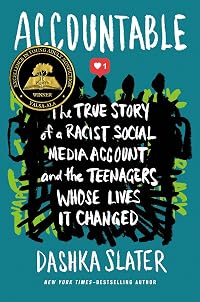
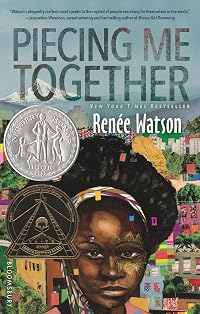

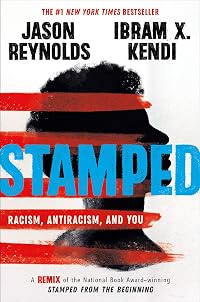
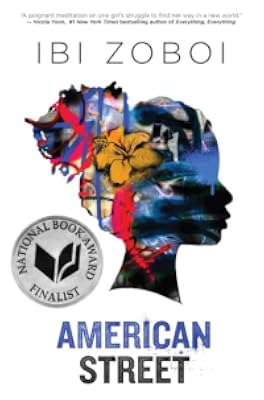













Member Reviews
This book is an excellent read. It uses narrative nonfiction techniques and perspective brilliantly. By providing a factual account of two teenagers' lives and how they intersected via a terrible crime, the author helps to broaden the reader's own perspective and understanding without being heavy-handed. This is a book that I feel can open minds and would do well to be read by many of us. There are so many social issues addressed here: racism, mass incarceration, gender, sexual identification, gender nonconformity, poverty, social class, disability...it's all here. And treated with both a discerning, factual eye and with empathy. I found this book both moving and informative.
This book raises huge questions without overtly answering show more them:
What is justice?
Can basically good people commit heinous acts and if they do how should they be punished? Punishment vs. rehabilitation?
What is a hate crime and should it be treated differently?
How does poverty impact success? How does trauma impact success?
What does trauma look like? How does it impact individuals?
What does it mean to be male/female/trans/ambiguous? Does it matter? Should it?
What does it meant to be targeted for how you look?
What does it mean to be part of a community? How does that effect individuals?
Should teenagers be held accountable for their actions as adults?
What does forgiveness look like and what is its significance?
Those are off the top of my head and poorly worded and there's more there.
The 57 Bus would do well to be included in adult reading lists and for middle and high school students when they explore nonfiction and social issues. show less
This book raises huge questions without overtly answering show more them:
What is justice?
Can basically good people commit heinous acts and if they do how should they be punished? Punishment vs. rehabilitation?
What is a hate crime and should it be treated differently?
How does poverty impact success? How does trauma impact success?
What does trauma look like? How does it impact individuals?
What does it mean to be male/female/trans/ambiguous? Does it matter? Should it?
What does it meant to be targeted for how you look?
What does it mean to be part of a community? How does that effect individuals?
Should teenagers be held accountable for their actions as adults?
What does forgiveness look like and what is its significance?
Those are off the top of my head and poorly worded and there's more there.
The 57 Bus would do well to be included in adult reading lists and for middle and high school students when they explore nonfiction and social issues. show less
Thought-provoking, insightful examination of a crime committed against an agender teen by a black teen in Oakland, California in 2013. Journalist Dashka Slater goes beyond the common media angles to probe current social issues such as gender identity, adolescent impulsivity, racial bias, and the criminal justice system. The author explores questions that could be useful in youth discussion groups or food-for-thought for anyone:
• What separates a hate crime from an impulsive, reckless decision?
• Should juveniles be tried and sentenced as adults? What are the potential impacts?
• How did the expression of gender identity influence the behavior of others? How did the expressions of support change this behavior?
• How can show more understanding of differences increase tolerance and acceptance?
• How does news reporting and social media influence public opinion? How does this book attempt to go further than the surface treatment of this case?
• What roles do remorse and forgiveness play in the outcome?
The book is divided into four sections: Sasha, Richard, the Fire, and Justice. Chapters are short and riveting. Up-to-date gender terminology is conveyed. We get to know the families and background of those involved, and I cared about what happened to them. It would be nice to see an addition to the book at some point in the future to find out each of these two fares later in life.
Recommended to readers who wish to become more informed about gender identity issues, juvenile crime, and criminal justice concerns. Book clubs may also be interested, as it challenges many commonly-held assumptions and includes lots of room for debate. Contains language and graphic descriptions the results of a person being set on fire. I received this book as a Goodreads Giveaway. show less
• What separates a hate crime from an impulsive, reckless decision?
• Should juveniles be tried and sentenced as adults? What are the potential impacts?
• How did the expression of gender identity influence the behavior of others? How did the expressions of support change this behavior?
• How can show more understanding of differences increase tolerance and acceptance?
• How does news reporting and social media influence public opinion? How does this book attempt to go further than the surface treatment of this case?
• What roles do remorse and forgiveness play in the outcome?
The book is divided into four sections: Sasha, Richard, the Fire, and Justice. Chapters are short and riveting. Up-to-date gender terminology is conveyed. We get to know the families and background of those involved, and I cared about what happened to them. It would be nice to see an addition to the book at some point in the future to find out each of these two fares later in life.
Recommended to readers who wish to become more informed about gender identity issues, juvenile crime, and criminal justice concerns. Book clubs may also be interested, as it challenges many commonly-held assumptions and includes lots of room for debate. Contains language and graphic descriptions the results of a person being set on fire. I received this book as a Goodreads Giveaway. show less
For real, this is the best book I've read in a year, probably longer. Do you want to have conversations about [b:The New Jim Crow: Mass Incarceration in the Age of Colorblindness|6792458|The New Jim Crow Mass Incarceration in the Age of Colorblindness|Michelle Alexander|https://images.gr-assets.com/books/1328751532s/6792458.jpg|6996712] and non-binary gender and modern segregation and the school-to-prison pipeline and restorative justice and intersectionality, and you want to do all of it based on reading one short book that neither you nor your teenagers will be able to put down? I'm not sure how, but Dashka Slater has managed to make this possible. I gulped the whole thing down on the train from Boston to New York, and then panicked show more because I'd only brought the one book and still had another 4 hours to DC. Everybody over the age of, say, 14 in America should read this book. show less
The true story of a black teenager who set a non-binary person's skirt on fire. The author is a journalist and there is definitely a news story feel to it. What I thought was fantastic though was how the author was able to provide the reader with both sides of the story in a very genuine way and I empathized with the perpetrator as much as the victim. The book also takes a look at brain development, how California laws have changed over the last 40 years (often not for the better), the effect of trauma on future actions, and how the judicial system is much more about punishment than rehabilitation, especially if juveniles are sent to adult prison.
True story. Agender teenager Sasha was on a bus in Oakland California in Fall 2013 and fell asleep. When they woke up, they were on fire. Another teenager on the bus, Richard, saw a “boy” in a skirt and decided to light his lighter to the skirt, thinking it would just peter out, but it didn’t. Sasha had terrible burns to their legs. The author looks at both their lives leading up to the incident, and their lives during the aftermath.
The author set up the background of both Sasha and Richard – that is, their lives up to that point. Richard was a black boy, poor and though, ultimately, a good person, he hung around with a bad crowd. Next came the ride on the bus that resulted in Sasha’s being burned and Richard charged as an show more adult because it was a violent crime (although Sasha and their parents would have preferred he be tried as a juvenile).
There is a lot for people to learn in this book, particularly about Sasha and how they felt in their skin, initially as a boy, but then coming out as agender with their friends and parents. Sasha had been accepted and supported and didn’t have bad experiences due to their agender-ness, up until the incident on the bus. I had a (much) harder time feeling badly for Richard, despite studies about how teenagers’ brains are wired and although they know right from wrong, they can still be compelled to do things they know are wrong and do feel badly for afterward. I still had (have) a hard time getting past what Richard did, while knowing it was wrong. The book is aimed toward a YA audience, but I think there is so much in this book (particularly about gender) that adults can (and maybe should) learn, too. It’s an eye-opening book, for sure, and well worth reading. show less
The author set up the background of both Sasha and Richard – that is, their lives up to that point. Richard was a black boy, poor and though, ultimately, a good person, he hung around with a bad crowd. Next came the ride on the bus that resulted in Sasha’s being burned and Richard charged as an show more adult because it was a violent crime (although Sasha and their parents would have preferred he be tried as a juvenile).
There is a lot for people to learn in this book, particularly about Sasha and how they felt in their skin, initially as a boy, but then coming out as agender with their friends and parents. Sasha had been accepted and supported and didn’t have bad experiences due to their agender-ness, up until the incident on the bus. I had a (much) harder time feeling badly for Richard, despite studies about how teenagers’ brains are wired and although they know right from wrong, they can still be compelled to do things they know are wrong and do feel badly for afterward. I still had (have) a hard time getting past what Richard did, while knowing it was wrong. The book is aimed toward a YA audience, but I think there is so much in this book (particularly about gender) that adults can (and maybe should) learn, too. It’s an eye-opening book, for sure, and well worth reading. show less
I remember when I heard the author of The 57 Bus speak at YALSA. Dashka Slater had done her due diligence with researching this book and she made an interesting point while speaking. She said "what I wanted to do was write a book where just as the case was gray, so I wanted it to be for the audience. I wanted to portray all sides of the individuals--not just who was guilty and who was innocent. This case had so many layers to it. It cannot easily be broken down."
Now having read the book for myself, I can attest that that was achieved.
It follows Sasha, an agender teenager and Richard, a heterosexual black teenager. Sasha's skirt is set on fire while on the 57 Bus and Richard, who held the lighter in his hands, is charged with the crime. show more This story really introduces both individuals to the reader. We learn about Sasha and their coming into their sexuality. We learn about Richard's checkered past and how he was trying to do something better with his life. We learn about the criminal justice system. We learn about LGBTQ issues. It's an eye opening book.
No, it isn't an easy book. But it is a book that starts a dialogue. On MANY fronts. show less
Now having read the book for myself, I can attest that that was achieved.
It follows Sasha, an agender teenager and Richard, a heterosexual black teenager. Sasha's skirt is set on fire while on the 57 Bus and Richard, who held the lighter in his hands, is charged with the crime. show more This story really introduces both individuals to the reader. We learn about Sasha and their coming into their sexuality. We learn about Richard's checkered past and how he was trying to do something better with his life. We learn about the criminal justice system. We learn about LGBTQ issues. It's an eye opening book.
No, it isn't an easy book. But it is a book that starts a dialogue. On MANY fronts. show less
The 57 Bus is the story of Sasha and Richard: two Oakland teenagers whose paths crossed on the 57 bus in November 2013. Richard, egged on by his friends, lights Sasha's skirt on fire, which bursts into flames and results in 3rd degree burns. Richard is charged with a hate crime because Sasha identifies as agender, and the DA decides to try him as an adult over the objections of Sasha's family. This is a harrowing look at gender identity and the juvenile justice system, organized in short easily digestible chapters. A few are even in verse. I found this book to be as engrossing as any novel, leaving me with many things to reflect on. I recommend it!
Members
- Recently Added By
Lists

Relationships: LGTBQ
40 works; 2 members

Bibliography.com Summer Reading Challenge 2022
3 works; 1 member

Bibliotherapy: Family and Personal Social Issues
174 works; 5 members

2000s: America
25 works; 1 member

Books for 2020 Book Club
53 works; 3 members

Kansas Book Ban List
29 works; 1 member

School library books removed after TX state legislator inquiry
429 works; 6 members

Florida's Book Bans and Challenges
311 works; 4 members

The Best LGBTQ Nonfiction
222 works; 73 members
Author Information

22+ Works 2,984 Members
Some Editions
Awards and Honors
Awards
Distinctions
Notable Lists
Common Knowledge
- Canonical title
- The 57 Bus
- Alternate titles
- The 57 Bus: A True Story of Two Teenagers and the Crime That Changed Their Lives
- Original publication date
- 2017
- People/Characters
- Sasha Fleischman; Richard Thomas; Andrew; Cherie (friend of Richard); Kaprice Wilson; Keith Fleischman (show all 10); Debbie Fleischman; Jasmine; Nancy O'Malley (prosecutor); William Du Bois (Richard's lawyer)
- Important places
- Oakland, California, USA
- Dedication
- For Cliff
- First words
- By four-thirty in the afternoon, the first mad rush of passengers has come and gone.
- Last words
- (Click to show. Warning: May contain spoilers.)"That's probably the best answer I can give."
- Publisher's editor
- Peskin, Joy
- Canonical DDC/MDS
- 364.1555092279466
- Canonical LCC
- HV6618
- Disambiguation notice
- Originally an article for the The New York Times Magazine
Classifications
- Genres
- LGBTQ+, Nonfiction, Teen
- DDC/MDS
- 364.1555092279466 — Society, government, & culture Social problems and social services Crime Criminal offenses Offenses against the person Other violent offenses against the person Assault and battery
- LCC
- HV6618 — Social sciences Social pathology. Social and public welfare. Criminology Social pathology. Social and public welfare. Criminology Crimes and offenses
- BISAC
Statistics
- Members
- 1,439
- Popularity
- 16,440
- Reviews
- 62
- Rating
- (4.16)
- Languages
- English, German, Spanish
- Media
- Paper, Audiobook, Ebook
- ISBNs
- 22
- ASINs
- 6