

Resurrection
by Leo Tolstoy
On This Page
Description
This masterful novel is a religious fable of sorts, written by the gifted Russian author Leo Tolstoy as a means of shedding light on the hypocrisy inherent in many aspects of organized religion in the nineteenth century. The book follows the plight of Russian aristocrat Dmitri Ivanovich Nekhlyudov as he seeks absolution—both in the church and in his own psyche—for a sin he committed years earlier..
Tags
Recommendations










Member Reviews
Inspired by the orthodox repression of the Dukhobors, one of the many christian sects opposing the catholic orthodoxy at the time of the Russian Empire, Tolstoy writes Resurrection intending to aid in the emigration of the dissidents. It's important to bear in mind that this novel comes after Tolstoy's own illumination episode, and as such it is filled with a new moral charge that presents itself as the main narrative line. You can clearly see from the first page an enraged Tolstoy writing in protest against a hypocrite society that strayed away from Christ's teachings.
This novel also aims to be an encyclopedic novel, encompassing every sphere in the russian society, akin to War and Peace. But here we see these spheres as show more disfunctional. Not a breath is spared to enumerate every issue he sees, and as we walk through every institution we see the author raise discussions about issues such as the pressing need for a land reform in favor of the rural proletariat, the tribunals and the prison system, where innocents are thrown because of administrative errors and political pression, and the hypocrisy of the religious sphere, which praises symbols before charity, which should be the pillar of catholicism.
But perhaps what's most interesting in the novel is a psychological aspect hidden between the lines. The protagonist undergoes a moral resurrection that mirrors Tolstoy's own, the same Tolstoy to whom it is amazing how everything is profoundly wrong, but nobody seems to notice or care. The main point here is an epiphany. It's only at the cost of his own ego that Nekhliudov is able to be reborn morally, but the fuse is only lit when he faces the last consequences of his errors. Before that happens, he finds approval in the society he finds himself in. All the people seem to be in a similar state of moral numbness, compacting with the systematic abuse because, to put it simple, this is just how reality is.
That said, what Tolstoy postulates is something like the noble savage, where it is society that corrupts the good man. Moral degradation comes when the protagonist "stops believing in himself and starts believing in others", in a long process of moral blunting. Elevation, on the other hand, comes in sudden awakenings, where their effect must be cultivated conscientiously through time. But the matter of fact is that society and the political establishment incentivizes the moral torpor in favor of prestige and the pleasures of flesh. As such, a system where "no one is guilty, and yet people were murdered, and murdered exactly by those people who are not guilty of such deaths" is created. Only when it gets personal it is possible for someone to grow aware of such processes.
Furthermore, it's important to remember that many of the problems discussed in the book are still issues today, such as the land reform. Systematic issues require drastic, revolutionary solutions, but such a revolution must start with a personal resurrection for it to have a clarity of purpose. show less
This novel also aims to be an encyclopedic novel, encompassing every sphere in the russian society, akin to War and Peace. But here we see these spheres as show more disfunctional. Not a breath is spared to enumerate every issue he sees, and as we walk through every institution we see the author raise discussions about issues such as the pressing need for a land reform in favor of the rural proletariat, the tribunals and the prison system, where innocents are thrown because of administrative errors and political pression, and the hypocrisy of the religious sphere, which praises symbols before charity, which should be the pillar of catholicism.
But perhaps what's most interesting in the novel is a psychological aspect hidden between the lines. The protagonist undergoes a moral resurrection that mirrors Tolstoy's own, the same Tolstoy to whom it is amazing how everything is profoundly wrong, but nobody seems to notice or care. The main point here is an epiphany. It's only at the cost of his own ego that Nekhliudov is able to be reborn morally, but the fuse is only lit when he faces the last consequences of his errors. Before that happens, he finds approval in the society he finds himself in. All the people seem to be in a similar state of moral numbness, compacting with the systematic abuse because, to put it simple, this is just how reality is.
That said, what Tolstoy postulates is something like the noble savage, where it is society that corrupts the good man. Moral degradation comes when the protagonist "stops believing in himself and starts believing in others", in a long process of moral blunting. Elevation, on the other hand, comes in sudden awakenings, where their effect must be cultivated conscientiously through time. But the matter of fact is that society and the political establishment incentivizes the moral torpor in favor of prestige and the pleasures of flesh. As such, a system where "no one is guilty, and yet people were murdered, and murdered exactly by those people who are not guilty of such deaths" is created. Only when it gets personal it is possible for someone to grow aware of such processes.
Furthermore, it's important to remember that many of the problems discussed in the book are still issues today, such as the land reform. Systematic issues require drastic, revolutionary solutions, but such a revolution must start with a personal resurrection for it to have a clarity of purpose. show less
Prince Dmitri Nekhlyudov discovers that the girl he once seduced and abandoned, and who was later compelled to take up a life of prostitution, is being unjustly tried for murder and he happens to be on the jury. What follows is a spiritual reawakening of Nekhlyudov as he reflects and retrospects his life choices, his privilege, and his apathy towards other people, specifically the downtrodden. Haunted by his guilt of wronging the woman, and holding himself responsible for nudging her towards a path of shame and derision, he attempts to help her against all odds. While fighting the system, he discovers the hollow nature of the revered institutions of judiciary, the church, moral complacency of aristocracy, and dehumanising nature of show more prisons. Some of these points still stand relevant to our present society.
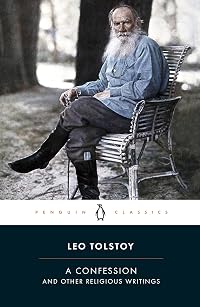
Those who have read up on Leo Tolstoy’s life, know about the “spiritual reawakening” that he experienced during the later stages of his life. His A Confession would be a good work to explore his burgeoning spirituality. A member of nobility, he advocated the idea of renouncing material excess, and rejecting the institutional religion. He professed the belief of improving oneself through self-reflection, and instead of relying on the institutions for our moral and spiritual well being, an individual should take responsibility of their own life. All of his spiritual understanding was condensed into his last major novel - Resurrection. Nekhlyudov undergoes the process of spiritual evolution that is not unlike Tolstoy’s and Tolstoy uses Nekhlyudov as his stand-in to express his disillusionment with the crumbling Russian institutions, which merely present a facade of grandiose but whose foundations are riddled with moral corruption and depravity. A significant portent of events to follow: the 1905 Russian Revolution born out of mass unrest among the intelligentsia and peasants.
The polemical nature of Tolstoy’s prose in this novel differs from the seemingly steady nature of his writing in the relatively earlier works of Anna Karenina, and War and Peace. You can sense that the Tolstoy writing this is not the same man, but a changed person deeply critical of what he sees as a degenerate and selfish society of privileged. And unlike his previous works which meander and digress at every opportunity, Resurrection is tighter and direct (which also makes it shorter than the other two). show less
Those who have read up on Leo Tolstoy’s life, know about the “spiritual reawakening” that he experienced during the later stages of his life. His A Confession would be a good work to explore his burgeoning spirituality. A member of nobility, he advocated the idea of renouncing material excess, and rejecting the institutional religion. He professed the belief of improving oneself through self-reflection, and instead of relying on the institutions for our moral and spiritual well being, an individual should take responsibility of their own life. All of his spiritual understanding was condensed into his last major novel - Resurrection. Nekhlyudov undergoes the process of spiritual evolution that is not unlike Tolstoy’s and Tolstoy uses Nekhlyudov as his stand-in to express his disillusionment with the crumbling Russian institutions, which merely present a facade of grandiose but whose foundations are riddled with moral corruption and depravity. A significant portent of events to follow: the 1905 Russian Revolution born out of mass unrest among the intelligentsia and peasants.
The polemical nature of Tolstoy’s prose in this novel differs from the seemingly steady nature of his writing in the relatively earlier works of Anna Karenina, and War and Peace. You can sense that the Tolstoy writing this is not the same man, but a changed person deeply critical of what he sees as a degenerate and selfish society of privileged. And unlike his previous works which meander and digress at every opportunity, Resurrection is tighter and direct (which also makes it shorter than the other two). show less
Tolstoy takes his readers on a journey through a Russia that is sinking under the weight of a conservative administration led by Tsar Alexander III in the last decade of the 19th century. We view it through the eyes of Prince Nekhlyudov, (but many believe it is Tolstoy himself). It is virtually a police state where the vast majority are peasants barely released from serfdom controlled by a system that can lock up, deport or murder anybody that agitates against it. The landowning elite have authority that seems self perpetuating and live a life that can completely disregard those that are under their power. Prince Nekhlyudov is one of those landowners who having served in the army has become corrupted because as Tolstoy says Military show more service always corrupts a man, placing him in conditions of complete idleness . But Nekhlyudov has a conscience and it is beginning to stir, he is concerned about his affair with a woman married to one of his friends in society and is thinking of extricating himself so that he can marry the young Princess Korchagina. He gets a summons to do jury service and to his horror recognises one of the accused as a servant of his family, who he had seduced when on leave from the army. Katusha Maslova is on trial for the suspected poisoning of a client and we learn that since her dismissal from service with Nekhlyudov's family she has become a prostitute. Nekhlyudov begins to see that Katusha's downfall is his responsibility and when her conviction is a result of a mal administration that he could have stopped he feels doubly responsible and vows to put things right.
Nekhlyudov's position in society and his family's influence gains him entrance to the upper echelons of the government and judiciary that serves the Tsarist regime. he becomes frustrated and then angry with the self serving people with whom he meets in their official capacity; he follows due process but even with the best lawyers he is unable to squash the conviction and sentence of hard labour in Siberia, he therefore plans to follow Katusha to Siberia and marry her, if necessary, in an effort to offer her his protection. When he finally gains access to the prison he finds that Katusha is no longer the innocent girl he seduced and she sees him initially as a nuisance then a meal ticket as he struggles to gain her trust. Part one of the novel takes us through the workings of the judiciary system and Tolstoy's acute observations pins the corruption and mal practice squarely on the shoulders of those who serve within it. We witness the lifestyle of the rich as Nekhlyudov becomes increasingly uncomfortable in their presence, because his eyes are opened by their complacency and misuse of power. When he gains entry to the prisons themselves we witness the appalling conditions under which the prisoners are held, but human spirit manages to survive. We see the same thing when Nekhlyudov visits his estates and attempts to free the peasants by giving them rights to the land. They are immured in the system and they resent any change, rather like some of the prisoners.
In this first half of the book; Tolstoy's writing and observations are full of interest and he bring the scenes he depicts to life, while at the same time doing a hatchet job on the church, on evangelism, on the legal system, corruption in high places and the landowning elite. However I find the character and actions of Nekhlyudov more problematic, I am not entirely convinced by his conversion to the lot of the poor and underprivileged and he comes across more of a sponge or even a cypher, soaking up everything around him, I feel his isolation and increasing discomfort, but am surprised at his resolution which seems a little out of character. This changes in the second and third parts of the novel which portrays the prisoners enforced journey to Siberia. The novel seems to breathe once the prisoners are led out of their fetid prison with Nekhyludov following as best he can; it is a sort of exodus and as horrific as the journey is and the conditions of the halting stations are, on the three thousand mile journey, there is less pessimism and more time for Nekhyludov to come to terms with his guilt and for Tolstoy to convince his readers. The relationship with Katusha deepens and broadens and the concentration on the plight of the political and criminal prisoners gives the novel a storyline and coherence that contrasts with the machinations of the first part which takes place in the claustrophobic city. This is an epic novel and it needs the vastness of the Russia landscape in which to work it's magic.
Tolstoy's [Resurrection] is a ringing indictment of Alexander III's Russia. It is also the story of one man's and probably one woman's redemption from a life led for purely selfish reasons. Along the way it eschews the benefits of socialism. but is profoundly pessimistic that such a system could work because human nature would always work against it. Hope of salvation is for individuals to come to understand in their own terms the words of Christ at the Sermon on the Mount in the Gospel according to St Mathew. The journey for Nekhyludov ends with him finding peace and liberation:
"And it happened to Nekhlyudov as it often happens to people living a spiritual life. The thought that at first had appeared so strange so paradoxical, laughable even, ever more frequently finding confirmation in life, suddenly appeared to him as the simplest incontrovertible truth......................The answer that he had been unable to find was the same that Christ gave to Peter: to forgive everyone always, forgive an endless number of times, because there was no man living who was guiltless and therefore able to punish or reform."
Some readers of [Resurrection] have found it too preachy, but I think this is missing the point. Tolstoy is concerned with setting out the wrongs of his world and the role that people play in it, but his message is that it is up to the individual to find their own redemption, however they can. Resurrection is a word that immediately evokes a religious connotation and it is no accident that Tolstoy should choose it as a title for his novel, however it is only in the final few pages that this is made explicit.
[Resurrection] is not a quick read but then it is nowhere near the length of [War and Peace]. The writing is superb throughout and if the first part was a little slow to get going by the time the prisoners started their trek to Siberia and Tolstoy embarked on one of his grand set pieces then I was hooked. This is a classic and I am sure it would benefit from a re-read, but as I found it uneven this time round, a four star read. show less
Nekhlyudov's position in society and his family's influence gains him entrance to the upper echelons of the government and judiciary that serves the Tsarist regime. he becomes frustrated and then angry with the self serving people with whom he meets in their official capacity; he follows due process but even with the best lawyers he is unable to squash the conviction and sentence of hard labour in Siberia, he therefore plans to follow Katusha to Siberia and marry her, if necessary, in an effort to offer her his protection. When he finally gains access to the prison he finds that Katusha is no longer the innocent girl he seduced and she sees him initially as a nuisance then a meal ticket as he struggles to gain her trust. Part one of the novel takes us through the workings of the judiciary system and Tolstoy's acute observations pins the corruption and mal practice squarely on the shoulders of those who serve within it. We witness the lifestyle of the rich as Nekhlyudov becomes increasingly uncomfortable in their presence, because his eyes are opened by their complacency and misuse of power. When he gains entry to the prisons themselves we witness the appalling conditions under which the prisoners are held, but human spirit manages to survive. We see the same thing when Nekhlyudov visits his estates and attempts to free the peasants by giving them rights to the land. They are immured in the system and they resent any change, rather like some of the prisoners.
In this first half of the book; Tolstoy's writing and observations are full of interest and he bring the scenes he depicts to life, while at the same time doing a hatchet job on the church, on evangelism, on the legal system, corruption in high places and the landowning elite. However I find the character and actions of Nekhlyudov more problematic, I am not entirely convinced by his conversion to the lot of the poor and underprivileged and he comes across more of a sponge or even a cypher, soaking up everything around him, I feel his isolation and increasing discomfort, but am surprised at his resolution which seems a little out of character. This changes in the second and third parts of the novel which portrays the prisoners enforced journey to Siberia. The novel seems to breathe once the prisoners are led out of their fetid prison with Nekhyludov following as best he can; it is a sort of exodus and as horrific as the journey is and the conditions of the halting stations are, on the three thousand mile journey, there is less pessimism and more time for Nekhyludov to come to terms with his guilt and for Tolstoy to convince his readers. The relationship with Katusha deepens and broadens and the concentration on the plight of the political and criminal prisoners gives the novel a storyline and coherence that contrasts with the machinations of the first part which takes place in the claustrophobic city. This is an epic novel and it needs the vastness of the Russia landscape in which to work it's magic.
Tolstoy's [Resurrection] is a ringing indictment of Alexander III's Russia. It is also the story of one man's and probably one woman's redemption from a life led for purely selfish reasons. Along the way it eschews the benefits of socialism. but is profoundly pessimistic that such a system could work because human nature would always work against it. Hope of salvation is for individuals to come to understand in their own terms the words of Christ at the Sermon on the Mount in the Gospel according to St Mathew. The journey for Nekhyludov ends with him finding peace and liberation:
"And it happened to Nekhlyudov as it often happens to people living a spiritual life. The thought that at first had appeared so strange so paradoxical, laughable even, ever more frequently finding confirmation in life, suddenly appeared to him as the simplest incontrovertible truth......................The answer that he had been unable to find was the same that Christ gave to Peter: to forgive everyone always, forgive an endless number of times, because there was no man living who was guiltless and therefore able to punish or reform."
Some readers of [Resurrection] have found it too preachy, but I think this is missing the point. Tolstoy is concerned with setting out the wrongs of his world and the role that people play in it, but his message is that it is up to the individual to find their own redemption, however they can. Resurrection is a word that immediately evokes a religious connotation and it is no accident that Tolstoy should choose it as a title for his novel, however it is only in the final few pages that this is made explicit.
[Resurrection] is not a quick read but then it is nowhere near the length of [War and Peace]. The writing is superb throughout and if the first part was a little slow to get going by the time the prisoners started their trek to Siberia and Tolstoy embarked on one of his grand set pieces then I was hooked. This is a classic and I am sure it would benefit from a re-read, but as I found it uneven this time round, a four star read. show less
I certainly admire Tolstoy's relentless pursuit of truth and his courage in standing up to both the Russian government and the Church over the latter part of his life.
He advocated for the poor and while I don't particularly agree with all of the fundamentalist views he increasingly took (e.g. chastity, refraining from alochol, socialism, non-resistance to evil by force), his aim was to improve himself and ultimately mankind through his writing.
Unfortunately I think the combination of essentially preaching through his works and his advancing age negatively impacted the quality and artistry of his writing; at 70 as he was authoring "Resurrection" (20+ years after Anna Karenina), I believe he was past his prime.
There are still flashes of show more brilliance here (including the very first paragraph of the first chapter), and it is still Tolstoy after all, but I think "Resurrection" is probably a book only a Tolstoy fanatic would love. show less
He advocated for the poor and while I don't particularly agree with all of the fundamentalist views he increasingly took (e.g. chastity, refraining from alochol, socialism, non-resistance to evil by force), his aim was to improve himself and ultimately mankind through his writing.
Unfortunately I think the combination of essentially preaching through his works and his advancing age negatively impacted the quality and artistry of his writing; at 70 as he was authoring "Resurrection" (20+ years after Anna Karenina), I believe he was past his prime.
There are still flashes of show more brilliance here (including the very first paragraph of the first chapter), and it is still Tolstoy after all, but I think "Resurrection" is probably a book only a Tolstoy fanatic would love. show less
In his youth, Prince Dmitri Nekhlyudov fell in love with Katusha Maslova, an orphan girl raised by his aunts. Unbeknownst to him, their brief affair resulted in pregnancy and Katusha was turned out of the house and left to find her way in the world. Many years later, Dmitri finds himself on a jury where Katusha is one of three accused of a crime. He learns Katusha turned to prostitution to survive. He is so worried their relationship will be discovered that he fails to advocate for her during jury deliberations, and she is sentenced to penal servitude in Siberia.
This experience has a strong effect on Dmitri. He feels at fault both for Katusha’s life circumstances and the sentence. He is also disillusioned by the court system, and show more shocked at the plight of the lower classes. Dmitri intercedes on Katusha’s behalf, working on legal appeals to reduce her sentence. He also believes he should marry her to improve her lifestyle (never mind whether Katusha wants this …). He puts his affairs in order and prepares to accompany Katusha to Siberia, while also advocating for other prisoners who have been unjustly convicted.
Published in 1899, Resurrection was Leo Tolstoy’s last novel, and through Dmitri he describes a dramatic shift in his own views on social issues of the day. As a treatise, it was probably quite effective. As a novel, I found it lacking in both plot and pacing. Dmitri saw himself as noble, but was actually weak and cowardly. Katusha is the stronger person, and I wish she had figured even more prominently in the novel. The ending is downright preachy, as Dmitri has a kind of “born again” experience and finds new purpose in life. Meh. show less
This experience has a strong effect on Dmitri. He feels at fault both for Katusha’s life circumstances and the sentence. He is also disillusioned by the court system, and show more shocked at the plight of the lower classes. Dmitri intercedes on Katusha’s behalf, working on legal appeals to reduce her sentence. He also believes he should marry her to improve her lifestyle (never mind whether Katusha wants this …). He puts his affairs in order and prepares to accompany Katusha to Siberia, while also advocating for other prisoners who have been unjustly convicted.
Published in 1899, Resurrection was Leo Tolstoy’s last novel, and through Dmitri he describes a dramatic shift in his own views on social issues of the day. As a treatise, it was probably quite effective. As a novel, I found it lacking in both plot and pacing. Dmitri saw himself as noble, but was actually weak and cowardly. Katusha is the stronger person, and I wish she had figured even more prominently in the novel. The ending is downright preachy, as Dmitri has a kind of “born again” experience and finds new purpose in life. Meh. show less
Come molti dei libri dell'età più matura di Tolstoj, anche questo esprime una forma di decadenza, una specie di mania depressiva che ha colto il grande scrittore e che lo ha fossilizzato nella categorizzazione dei rapporti, in special modo quelli tra i due sessi. E in effetti tutta la prima parte, quella in cui il protagonista riconosce la sua colpa nei confronti della povera Maslova, ha dei punti forzati, stereotipati, noiosi, così come ne ha la descrizione della vita della grande società moscovita e pietroburghese.
Ma poi, come un soffio d'aria fresca, irrompe la riflessione morale e filosofica sulla giustizia, sul senso di giustizia, sulla bontà della rivoluzione, sul diritto dell'uomo sull'uomo e tutto il libro diventa non solo show more interessante, ma necessario.
Peccato per l'antiquata, scandalosissima traduzione, e per i frequenti errori di stampa dell'edizione in mio possesso. show less
Ma poi, come un soffio d'aria fresca, irrompe la riflessione morale e filosofica sulla giustizia, sul senso di giustizia, sulla bontà della rivoluzione, sul diritto dell'uomo sull'uomo e tutto il libro diventa non solo show more interessante, ma necessario.
Peccato per l'antiquata, scandalosissima traduzione, e per i frequenti errori di stampa dell'edizione in mio possesso. show less
"Resurrection" arrived on my reading pile at just the right time. I had just been disappointed by Goncharov's "Malinovka Heights". Tolstoy's work restored my faith in the Russian literary tradition. "Resurrection" is an entertaining portrait of one man's journey to address the consequences of morally questionable behaviors earlier in his life. Along the way we get a detailed picture of the Russian penal system of the time and it's impact on the lives of the Russian people.
The novel lays out struggles with morally ambiguous personal and societal situations. Clearly, Tolstoy has an agenda. However, he presents it in an appealing and non-pedantic fashion. The novel is well-written and an enjoyable read.
The novel lays out struggles with morally ambiguous personal and societal situations. Clearly, Tolstoy has an agenda. However, he presents it in an appealing and non-pedantic fashion. The novel is well-written and an enjoyable read.
Members
- Recently Added By
Lists

Russian Literature
184 works; 35 members

Best of World Literature
431 works; 51 members

Fiction Set Primarily in a Prison
52 works; 24 members

Favourite 19th century fiction
257 works; 62 members

Legal Stories
84 works; 12 members

Books about Russia and the former USSR
67 works; 12 members

Russian Literature Sequence
28 works; 1 member

Llibres que he llegit el 2019
42 works; 1 member

Tonikat reading completed on Librarything journals
329 works; 2 members

Books Referenced by Izetbegovic's Islam Between East and West
233 works; 2 members
Talk Discussions
Past Discussions
TonyH reads in 2012 in Club Read 2012 (January 2013)
Author Information

2,494+ Works 129,377 Members
Count Lev Nikolayevich Tolstoy was born on September 9, 1828 in Russia. He is usually referred to as Leo Tolstoy. He was a Russian author who is regarded as one of the greatest authors of all time. Leo Tolstoy is best known for his novels War and Peace (1869) and Anna Karenina (1877). Tolstoy's fiction includes dozens of short stories and several show more novellas such as The Death of Ivan Ilyich, Family Happiness, and Hadji Murad. He also wrote plays and numerous philosophical essays. Tolstoy had a profound moral crisis and spiritual awakening in the 1870's which he outlined in his work, A Confession. His literal interpretation of the ethical teachings of Jesus, centering on the Sermon on the Mount, caused him to become a fervent Christian anarchist and pacifist. His ideas of nonviolent resistance which he shared in his works The Kingdom of God is Within You, had a profund impact on figures such as Mohandas Gandhi and Martin Luther King, Jr. On September 23, 1862 Tolstoy married Sophia Andreevna Behrs. She was the daughter of a court physician. They had 13 children, eight of whom survived childhood. Their early married life allowed Tolstoy much freedom to compose War and Peace and Anna Karenina with his wife acting as his secretary and proofreader. The Tolstoy family left Russia in the aftermath of the Russian Revolution and the subsequent establishment of the Soviet Union. Leo Tolstoy's relatives and descendants moved to Sweden, Germany, the United Kingdom, France and the United States. Tolstoy died of pneumonia at Astapovo train station, after a day's rail journey south on November 20, 1910 at the age of 82. (Bowker Author Biography) Count Leo Tolstoy was born in 1828 on the family estate of Yasnaya Polyana in the Tula province. He married in 1862 & was the father of 13 children. Tolstoy managed the estate of Yasnaya Polyana & ran its peasant schools, while writing his great novels, "War & Peace" (1869) & "Anna Karenina" (1877). He died in 1910. (Publisher Provided) show less
Some Editions
Awards and Honors
Notable Lists
Series
Belongs to Publisher Series
Amstelboeken (14-15)
Hviezdoslavova knižnica (111)
Gli struzzi [Einaudi] (268)
The World's Classics (209)
A tot vent (238)
Penguin Classics (L184)
Work Relationships
Is contained in
I capolavori (Anna Karenina - Guerra e pace - La morte di Ivan Il'ič- Resurrezione - La sonata a Kreutzer e altri racconti) (Italian Edition) by Lev Tolstoj
90 Masterpieces You Must Read (Vol.1): Novels, Poetry, Plays, Short Stories, Essays, Psychology & Philosophy by Various (indirect)
Is abridged in
Common Knowledge
- Canonical title
- Resurrection
- Original title
- Воскресение; Resurrection; Рассказы
- Alternate titles
- The Awakening
- Original publication date
- 1899
- People/Characters
- Dmitri Ivanovich Nekhlyudov
- Important places*
- Russland; Sibirien, Russland; Sankt Petersburg, Russland
- Related movies
- Resurrection (1968 | IMDb); Resurrection, United Artists, 1927
- Epigraph
- Then came Peter, and said to him, Lord, how oft shall my brother sin against me, and I forgive him? until seven times? Jesus saith unto him, I say not unto three, Until seven times: but, Until seventy times seven.- Matt. 18:2... (show all)1-2.
And why beholdest thou the mote that is in thy brother's eye, but considerest not the beam that is in thine own eye? - Matt. 7:3
He that is without sin among you, let him first cast a stone at her. - John 8:7
The disciple is not above his master: but every one when he is perfected shall be as his master. - Luke 6:40. - First words
- Nors žmonės, susibūrę keli šimtai tūkstančių į vieną nedidelę vietą, visaip stengėsi subiauroti žemę, kurioje jie grūdosi, nors visaip gringė akmenimis žemę, kad niekas neaugtų, nors visaip ravėjo kiekvie... (show all)ną prasikalusią žolelę, nors visaip dūmijo akmens anglim ir nafta, nors visaip genėjo medžius ir gujo lauk kiekvieną gyvulį bei paukštį,- pavasaris buvo pavasaris net ir mieste.
- Last words
- (Click to show. Warning: May contain spoilers.)How this period of his life will end, time alone will prove.
(Click to show. Warning: May contain spoilers.)...cuanto hizo, tuvo a sus ojos distinta significación que en el pasado, - Original language
- Russian
*Some information comes from Common Knowledge in other languages. Click "Edit" for more information.
Classifications
- Genres
- Fiction and Literature, General Fiction
- DDC/MDS
- 891.733 — Literature & rhetoric Asian Literature East Indo-European and Celtic literatures Russian and East Slavic languages Russian fiction 1800–1917
- LCC
- PG3366 .V7 — Language and Literature Slavic languages and literatures. Baltic languages. Albanian language Slavic. Baltic. Albanian Russian literature Individual authors and works 1800-1870 Tolstoi
- BISAC
Statistics
- Members
- 3,553
- Popularity
- 4,611
- Reviews
- 46
- Rating
- (3.85)
- Languages
- 26 — Catalan, Chinese, Czech, Danish, Dutch, English, Estonian, Finnish, French, German, Greek, Hebrew, Hungarian, Italian, Japanese, Norwegian (Bokmål), Polish, Romanian, Russian, Croatian, Slovak, Slovenian, Spanish, Swedish, Turkish, Portuguese (Portugal)
- Media
- Paper, Audiobook, Ebook
- ISBNs
- 260
- UPCs
- 1
- ASINs
- 151