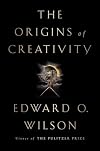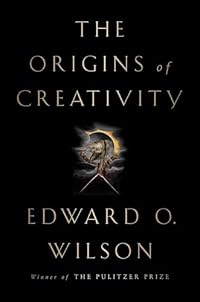
The Origins of Creativity
by Edward O. Wilson
On This Page
Description
"Creativity is the unique and defining trait of our species; and its ultimate goal, self-understanding," begins Edward O. Wilson's sweeping examination of the humanities and its relationship to the sciences. By studying fields as diverse as paleontology, evolutionary biology, and neuroscience, Wilson demonstrates that human creativity began not 10,000 years ago, as we have long assumed, but over 100,000 years ago in the Paleolithic Age. Chronicling the evolution of creativity from primates show more to humans, Wilson shows how the humanities, in large part spurred on by the invention of language, have played a previously unexamined role in defining our species. Exploring a surprising range of creative endeavors-the instinct to create gardens, the use of metaphors and irony in speech, the power of music and song- Wilson proposes a transformational "Third Enlightenment" in which the blending of science and humanities will enable a deeper understanding of the human condition and how it ultimately originated.. show less
Tags
Recommendations



Member Reviews
As with other Wilson contributions, this was a good book, a thought provoking exposition in the need for the Humanities.
The last couple of decades have seen a major shift in the regard people hold for Science and Technology. Booth together and individually, they command the lion’s share of grant funding and of university budgets (of course, athletics get a lot of money, too). The Humanities see budget cuts, dwindling university interest and even elimination from university course offerings. Wilson argues that this is a catastrophe waiting to happen. The Humanities enrich our lives offering beauty and insights Science cannot hope to offer. They are also the vehicle through which the Sciences convey meaning and purpose for the show more discoveries and innovations they bring.
Like “In Defense of a Liberal Education” and, to some extent, “Sapiens,” Wilson posits that the Humanities actually provide the lifeblood and foundation for Science. It is through the Humanities that we learn our values and morals, the values and morals absolutely necessary to both enrich and restrain Science.
Wilson has produced many powerful and insightful books. His strength is his ability to make even the most obtuse and difficult concepts and principles accessible to the lay reader.
It is wonderful to note, additionally, that this book was published in 2017 when Wilson was 88 years old. His great mind had lost none of its capacity to elevate readers to new levels of understanding and perception. show less
The last couple of decades have seen a major shift in the regard people hold for Science and Technology. Booth together and individually, they command the lion’s share of grant funding and of university budgets (of course, athletics get a lot of money, too). The Humanities see budget cuts, dwindling university interest and even elimination from university course offerings. Wilson argues that this is a catastrophe waiting to happen. The Humanities enrich our lives offering beauty and insights Science cannot hope to offer. They are also the vehicle through which the Sciences convey meaning and purpose for the show more discoveries and innovations they bring.
Like “In Defense of a Liberal Education” and, to some extent, “Sapiens,” Wilson posits that the Humanities actually provide the lifeblood and foundation for Science. It is through the Humanities that we learn our values and morals, the values and morals absolutely necessary to both enrich and restrain Science.
Wilson has produced many powerful and insightful books. His strength is his ability to make even the most obtuse and difficult concepts and principles accessible to the lay reader.
It is wonderful to note, additionally, that this book was published in 2017 when Wilson was 88 years old. His great mind had lost none of its capacity to elevate readers to new levels of understanding and perception. show less
Entomologist Edward O. Wilson examines the relationship between the humanities and the sciences. He traces the origins of human creativity, which he defines as “the innate quest for originality,” back one hundred thousand years. Wilson proposes that humankind needs “a third enlightenment,” a new philosophy that unites arts and sciences to achieve a more meaningful existence. The book begins with history – the development of language, abstract thinking, intelligence, and cooperation. He explains the factors that allowed homo sapiens to thrive. He then moves into some of the challenges faced by the separate branches of humanities and sciences, before moving into his final argument of the need for a combined approach.
This book show more reads like a script for a documentary. The scientific sections may be dry for those without a keen interest. Wilson occasionally ventures off topic, but these diversions expanded my knowledge. He includes appealing anecdotes on literary works, metaphors, archetypes, music, great films, and the natural world. “The grail to be sought is the nature of consciousness, and how it originated.”
Wilson introduces a number of thought-provoking questions, but I do not think his intent is to provide all the answers. In fact, he suggests we do not yet have the answers and that by combining forces, in the humanities and the sciences, we can leap forward, breaking through current barriers and advancing civilization. Definitely worth the time. show less
This book show more reads like a script for a documentary. The scientific sections may be dry for those without a keen interest. Wilson occasionally ventures off topic, but these diversions expanded my knowledge. He includes appealing anecdotes on literary works, metaphors, archetypes, music, great films, and the natural world. “The grail to be sought is the nature of consciousness, and how it originated.”
Wilson introduces a number of thought-provoking questions, but I do not think his intent is to provide all the answers. In fact, he suggests we do not yet have the answers and that by combining forces, in the humanities and the sciences, we can leap forward, breaking through current barriers and advancing civilization. Definitely worth the time. show less
As with other Wilson contributions, this was a good book, a thought provoking exposition in the need for the Humanities.
The last couple of decades have seen a major shift in the regard people hold for Science and Technology. Booth together and individually, they command the lion’s share of grant funding and of university budgets (of course, athletics get a lot of money, too). The Humanities see budget cuts, dwindling university interest and even elimination from university course offerings. Wilson argues that this is a catastrophe waiting to happen. The Humanities enrich our lives offering beauty and insights Science cannot hope to offer. They are also the vehicle through which the Sciences convey meaning and purpose for the show more discoveries and innovations they bring.
Like “In Defense of a Liberal Education” and, to some extent, “Sapiens,” Wilson posits that the Humanities actually provide the lifeblood and foundation for Science. It is through the Humanities that we learn our values and morals, the values and morals absolutely necessary to both enrich and restrain Science.
Wilson has produced many powerful and insightful books. His strength is his ability to make even the most obtuse and difficult concepts and principles accessible to the lay reader.
It is wonderful to note, additionally, that this book was published in 2017 when Wilson was 88 years old. His great mind had lost none of its capacity to elevate readers to new levels of understanding and perception. show less
The last couple of decades have seen a major shift in the regard people hold for Science and Technology. Booth together and individually, they command the lion’s share of grant funding and of university budgets (of course, athletics get a lot of money, too). The Humanities see budget cuts, dwindling university interest and even elimination from university course offerings. Wilson argues that this is a catastrophe waiting to happen. The Humanities enrich our lives offering beauty and insights Science cannot hope to offer. They are also the vehicle through which the Sciences convey meaning and purpose for the show more discoveries and innovations they bring.
Like “In Defense of a Liberal Education” and, to some extent, “Sapiens,” Wilson posits that the Humanities actually provide the lifeblood and foundation for Science. It is through the Humanities that we learn our values and morals, the values and morals absolutely necessary to both enrich and restrain Science.
Wilson has produced many powerful and insightful books. His strength is his ability to make even the most obtuse and difficult concepts and principles accessible to the lay reader.
It is wonderful to note, additionally, that this book was published in 2017 when Wilson was 88 years old. His great mind had lost none of its capacity to elevate readers to new levels of understanding and perception. show less
I always enjoy Wilson's writing; even when I don't necessarily buy every implication of his argument, it's neat to see how his mind works and the interesting connections he draws.
I have argued more than once that the advice to “write what you know” is not very sound. After all, where would science fiction be if everyone followed that rule? When it comes to nonfiction, though, I think it applies. Edward O. Wilson is an esteemed scientist and deservedly so. He has written over thirty books and hundreds of papers and he knows a lot, but nonetheless, in The Origins of Creativity he clearly wanders far past his expertise and it shows in the somewhat shambolic organization and meandering arguments.
As someone who loves the humanities, who studied literature and history and loves art and music, I am happy that such a renowned scientist wants to defend the humanities in this era of retrenchment. Wilson certainly does show more a good job of showing how terribly the humanities are neglected and devalued, comparing funding for humanities to funding for science, technology, engineering and math, the STEM discliplines. The STEM vs. humanities facts are dismal and depressing. I am glad Wilson wants to step forward to defend the humanities, though I wonder if he has never heard of STEAM.
However, Wilson’s deep regard for the humanities comes across as damning with fulsome praise. We need the humanities, they are the locus of creativity which is what makes us human, he argues. So why are the humanities under-valued? According to Wilson, they are too anthropocentric–too much about humanity. Worse, the humanities do not look to biology and evolutionary science to explain human behavior and causation. They are trapped in human sensory experience. I get the idea he thinks there is too much humanity in the humanities. His entire complaint with the humanities is distilled into the simple fact they are not science.
He wants a fusion of science and the humanities which he believes could touch off a new enlightenment. If only practitioners of the arts would incorporate his “Big Five” fields: paleontology, anthropology, psychology, evolutionary biology, and neurobiology then a new day would dawn and the fullness of the arts would blossom.
I struggled with The Origins of Creativity, not because it is difficult to understand but because it irritated me. I had to walk away, put it down and come back after venting a bit. Of course, that it irritated me speaks to Wilson’s ability to engage. That he does! This book had me calling up a friend of mine to vent. (She’s been on a Wilson-hiatus since Consilience.) There’s something to be said for books that get you worked up, even if what they do is make you angry.
There’s a falsity to a scientist emphasizing the importance of the humanities while simultaneously arguing that the humanities need to stop being what they are and be more like science. The humanities are too anthropocentric, he argues, which made me wonder what they should be called then.
However, I think this book fails in the end because Wilson merely asserts; he does not back up what he asserts. Are the humanities too anthropocentric? Maybe. Wilson says so, but why should I take his word for it? By what measure? What would humanities be if not centered on humanity?
Wilson seems to be out over his skis. He’s well-read and has a grasp of fine art, poetry, music, and literature, but that does not make him a good prescriber for the humanities. Strangely, why does he not talk about neuroaesthetics, the relatively new science that seeks to understand what underlies aesthetic perception?
The Origins of Creativity also fails because it does not tell us what the origins of creativity are. In fact, that focus is quickly dropped as Wilson moves on damning the humanities with faint praise. The book wanders, turns, repeats, stumbling back over itself as though it were just written off the top of his head–though that would be impressive given the many long quotes. But to give an example, he writes about the Big Five sciences and then later in the book, writes about them again with the same explanation as though it were the first time they came up. This speaks to disorganization which might be why so many of his assertions rely on “because I said so” instead of evidence.
I received an e-galley of The Origins of Creativity from the publisher through NetGalley.
The Origins of Creativity at W. W. Norton & Company
Edward O. Wilson at E. O. Wilson Biodiversity Foundation
https://tonstantweaderreviews.wordpress.com/2017/12/24/9781631493188/ show less
As someone who loves the humanities, who studied literature and history and loves art and music, I am happy that such a renowned scientist wants to defend the humanities in this era of retrenchment. Wilson certainly does show more a good job of showing how terribly the humanities are neglected and devalued, comparing funding for humanities to funding for science, technology, engineering and math, the STEM discliplines. The STEM vs. humanities facts are dismal and depressing. I am glad Wilson wants to step forward to defend the humanities, though I wonder if he has never heard of STEAM.
However, Wilson’s deep regard for the humanities comes across as damning with fulsome praise. We need the humanities, they are the locus of creativity which is what makes us human, he argues. So why are the humanities under-valued? According to Wilson, they are too anthropocentric–too much about humanity. Worse, the humanities do not look to biology and evolutionary science to explain human behavior and causation. They are trapped in human sensory experience. I get the idea he thinks there is too much humanity in the humanities. His entire complaint with the humanities is distilled into the simple fact they are not science.
He wants a fusion of science and the humanities which he believes could touch off a new enlightenment. If only practitioners of the arts would incorporate his “Big Five” fields: paleontology, anthropology, psychology, evolutionary biology, and neurobiology then a new day would dawn and the fullness of the arts would blossom.
I struggled with The Origins of Creativity, not because it is difficult to understand but because it irritated me. I had to walk away, put it down and come back after venting a bit. Of course, that it irritated me speaks to Wilson’s ability to engage. That he does! This book had me calling up a friend of mine to vent. (She’s been on a Wilson-hiatus since Consilience.) There’s something to be said for books that get you worked up, even if what they do is make you angry.
There’s a falsity to a scientist emphasizing the importance of the humanities while simultaneously arguing that the humanities need to stop being what they are and be more like science. The humanities are too anthropocentric, he argues, which made me wonder what they should be called then.
However, I think this book fails in the end because Wilson merely asserts; he does not back up what he asserts. Are the humanities too anthropocentric? Maybe. Wilson says so, but why should I take his word for it? By what measure? What would humanities be if not centered on humanity?
Wilson seems to be out over his skis. He’s well-read and has a grasp of fine art, poetry, music, and literature, but that does not make him a good prescriber for the humanities. Strangely, why does he not talk about neuroaesthetics, the relatively new science that seeks to understand what underlies aesthetic perception?
The Origins of Creativity also fails because it does not tell us what the origins of creativity are. In fact, that focus is quickly dropped as Wilson moves on damning the humanities with faint praise. The book wanders, turns, repeats, stumbling back over itself as though it were just written off the top of his head–though that would be impressive given the many long quotes. But to give an example, he writes about the Big Five sciences and then later in the book, writes about them again with the same explanation as though it were the first time they came up. This speaks to disorganization which might be why so many of his assertions rely on “because I said so” instead of evidence.
I received an e-galley of The Origins of Creativity from the publisher through NetGalley.
The Origins of Creativity at W. W. Norton & Company
Edward O. Wilson at E. O. Wilson Biodiversity Foundation
https://tonstantweaderreviews.wordpress.com/2017/12/24/9781631493188/ show less
Lyrical is just another word for rambling in this case. Self-indulgent, but excellent writing does not save this book.
Dr. Wilson has made a second career for himself over the past 10 years or so authoring several works that are written in language and terms that allow them to be easily accessible and comprehended by a wide range of readers in the public space.
Again, he has come out with a reasoned appeal and explanation for embracing the human condition within the scope of natural phenomena.
I'd give this 5 stars, but it left me wanting more. Fortunately he provides a bibliography of additional reading materials that look to be well worth the time to seek them out (I've had one of them in my possession for probably over 20 years but have never read it... "The Discoverers" by Daniel Boorstin.)
Again, he has come out with a reasoned appeal and explanation for embracing the human condition within the scope of natural phenomena.
I'd give this 5 stars, but it left me wanting more. Fortunately he provides a bibliography of additional reading materials that look to be well worth the time to seek them out (I've had one of them in my possession for probably over 20 years but have never read it... "The Discoverers" by Daniel Boorstin.)
Members
- Recently Added By
Lists

TLS 6010
39 works; 1 member
Author Information

72+ Works 17,976 Members
He was born in Birmingham, Alabama, in 1929. He is currently Pellegrino University Research Professor & Honorary Curator in Entomology of the Museum of Comparative Zoology at Harvard. He is on the Board of Directors of the Nature Conservancy, Conservation International & the American Museum of Natural History. He lives in Lexington, Massachusetts. show more (Bowker Author Biography) show less
Common Knowledge
- Original publication date
- 2017-10-03
Classifications
- Genres
- Nonfiction, Science & Nature, General Nonfiction, Philosophy, Art & Design
- DDC/MDS
- 153.3 — Philosophy and Psychology Psychology Conscious mental processes and intelligence Creativity And Visualization
- LCC
- BF408 .W554 — Philosophy, Psychology and Religion Psychology Psychology Consciousness. Cognition
- BISAC
Statistics
- Members
- 339
- Popularity
- 93,057
- Reviews
- 9
- Rating
- (3.10)
- Languages
- English, Italian, Portuguese, Spanish
- Media
- Paper, Audiobook, Ebook
- ISBNs
- 15
- ASINs
- 5