On This Page
Description
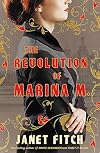
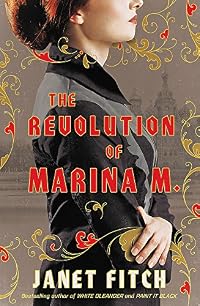
From the mega-bestselling author of White Oleander and Paint It Black, a sweeping historical saga of the Russian Revolution, as seen through the eyes of one young woman.St. Petersburg, New Year's Eve, 1916. Marina Makarova is a young woman of privilege who aches to break free of the constraints of her genteel life, a life about to be violently upended by the vast forces of history. Swept up on these tides, Marina will join the marches for workers' rights, fall in love with a radical young show more poet, and betray everything she holds dear, before being betrayed in turn.
As her country goes through almost unimaginable upheaval, Marina's own coming-of-age unfolds, marked by deep passion and devastating loss, and the private heroism of an ordinary woman living through extraordinary times. This is the epic, mesmerizing story of one indomitable woman's journey through some of the most dramatic events of the last century. show less
Tags
Recommendations

















Member Reviews
Marina Dmitrievna Makarova, as old as the century in 1916, can’t wait to break free of her constrained, privileged existence in Petrograd — or thinks that’s what she wants. Change is in the air, and desperation grips Russia, an empire bleeding its life away in a world war practically nobody supports, except her parents. Refusing to accept their rules or blandishments, she has a love affair or two, one with a fellow poet; marches on behalf of oppressed workers; and glories when the revolution topples the tsar. You can guess that this family will soon fracture even more.
But though Marina has been true to herself, she pays a terrible price. What the revolutionaries promise bears no relation to what happens in reality, and this show more passionate young woman, whose motto seems to be, “Act first, think afterward,” finds out the hard way. To name just two problems, it’s difficult to tell which threat is worse, famine or the Cheka, the Bolshevik secret police.
As a bourgeoise, Marina’s already an enemy of the state and can’t be too careful, constantly having to prove herself despite who she is, a direct opposite to the advantages she enjoyed in her youth. Taking care doesn't entirely square with her impulsive nature, but she’s also a quick study and finds she has more inner resources and survival skills than she knew.
The novel opens in California, 1932, so there’s no question she survives the revolution. As my regular readers know, I detest prologues, but there’s a practical reason for this one. The current volume is only the first of a series; the author has apparently decided not to leave the reader hanging at the end, and I think she’s right. Further, the journey’s more about how and why than where, and Marina covers a lot of ground, emotionally and physically.
Throughout, however, Fitch realizes the Russian atmosphere, be it Petrograd or rural peasantdom, with bold, lush strokes and complete authority. With unflagging attention to detail, she renders the idealism and mercilessness that suffuses the air, and gives you back alleys, great houses, and a Cheka prison.
Like the Russian novels Marina M. evokes, this one has much more to it than a sweeping lens and epic events — it’s the characters who count the most. Marina takes center stage, but her lovers come through with brilliant clarity, as do her mother, younger brother, and a radical revolutionary friend. You understand what motivates these people, all of whom have inner lives for the reader to navigate. So much happens that it seems our heroine has lived a full lifetime by her nineteenth birthday, but that weight never feels like a burden, even at over eight hundred pages. That’s because Fitch keeps you in touch with the feelings of the moment.
Much of the novel revolves around Marina’s sexual awakening, mirroring her political cognizance, as she learns more about attraction and sex as power. Though she enjoys men as lovers, she seldom loses her perspective on who gets to make decisions and who has to follow them; who gives the orders; and who does the work. This is particularly trenchant, because the revolution that was supposed to honor all work and eliminate the roles of master and servant clearly hasn’t touched relations between men and women.
Once, when she witnesses a peasant wife completely efface herself before her husband, Marina observes privately that Marx may have believed that power belongs to those who control the means of production, but this mother, who has produced four children, is her husband's chattel.
Marina M. is also about betrayal, involving parents, children, lovers, ideals, or merely the greed and envy of the comrade listening at the keyhole. Marina, both victim and perpetrator, wants what she wants and won’t be denied. If at times she seems excessively larger than life or has an insight perhaps more convenient than earned, these are minor blemishes on an otherwise exceptional, engrossing novel. show less
But though Marina has been true to herself, she pays a terrible price. What the revolutionaries promise bears no relation to what happens in reality, and this show more passionate young woman, whose motto seems to be, “Act first, think afterward,” finds out the hard way. To name just two problems, it’s difficult to tell which threat is worse, famine or the Cheka, the Bolshevik secret police.
As a bourgeoise, Marina’s already an enemy of the state and can’t be too careful, constantly having to prove herself despite who she is, a direct opposite to the advantages she enjoyed in her youth. Taking care doesn't entirely square with her impulsive nature, but she’s also a quick study and finds she has more inner resources and survival skills than she knew.
The novel opens in California, 1932, so there’s no question she survives the revolution. As my regular readers know, I detest prologues, but there’s a practical reason for this one. The current volume is only the first of a series; the author has apparently decided not to leave the reader hanging at the end, and I think she’s right. Further, the journey’s more about how and why than where, and Marina covers a lot of ground, emotionally and physically.
Throughout, however, Fitch realizes the Russian atmosphere, be it Petrograd or rural peasantdom, with bold, lush strokes and complete authority. With unflagging attention to detail, she renders the idealism and mercilessness that suffuses the air, and gives you back alleys, great houses, and a Cheka prison.
Like the Russian novels Marina M. evokes, this one has much more to it than a sweeping lens and epic events — it’s the characters who count the most. Marina takes center stage, but her lovers come through with brilliant clarity, as do her mother, younger brother, and a radical revolutionary friend. You understand what motivates these people, all of whom have inner lives for the reader to navigate. So much happens that it seems our heroine has lived a full lifetime by her nineteenth birthday, but that weight never feels like a burden, even at over eight hundred pages. That’s because Fitch keeps you in touch with the feelings of the moment.
Much of the novel revolves around Marina’s sexual awakening, mirroring her political cognizance, as she learns more about attraction and sex as power. Though she enjoys men as lovers, she seldom loses her perspective on who gets to make decisions and who has to follow them; who gives the orders; and who does the work. This is particularly trenchant, because the revolution that was supposed to honor all work and eliminate the roles of master and servant clearly hasn’t touched relations between men and women.
Once, when she witnesses a peasant wife completely efface herself before her husband, Marina observes privately that Marx may have believed that power belongs to those who control the means of production, but this mother, who has produced four children, is her husband's chattel.
Marina M. is also about betrayal, involving parents, children, lovers, ideals, or merely the greed and envy of the comrade listening at the keyhole. Marina, both victim and perpetrator, wants what she wants and won’t be denied. If at times she seems excessively larger than life or has an insight perhaps more convenient than earned, these are minor blemishes on an otherwise exceptional, engrossing novel. show less
I was touched and rather incredulous as to what extent this American born author absorbed the most intimate details and nuances of Russian culture, and what's more - not a contemporary culture but from the time just before the revolution (narration starts in 1916) and through the stormy first years after it - this first volume finishes in 1919.
We follow an exhilarated, sensitive, curious, rebellious, unstoppable, precocious heroine Marina, a girl of just 16 at the start of the novel, an emerging poet, from a bourgeois family, as she experiences life to the fullest (not the least of it on the intimate front...). A poignant history lesson, with horrific events - through the eyes of this young romantic who has no choice but to mature much show more too fast in these 3 years of her life: seeing where life takes her is almost incomprehensible...
Very well written, not at all predictable (even though I know this period in Russian history quite well), this first part of Marina's agonizing quest (as well as Russia's calamity) kept me turning the pages - all 800 of them!... On to the next volume!... show less
We follow an exhilarated, sensitive, curious, rebellious, unstoppable, precocious heroine Marina, a girl of just 16 at the start of the novel, an emerging poet, from a bourgeois family, as she experiences life to the fullest (not the least of it on the intimate front...). A poignant history lesson, with horrific events - through the eyes of this young romantic who has no choice but to mature much show more too fast in these 3 years of her life: seeing where life takes her is almost incomprehensible...
Very well written, not at all predictable (even though I know this period in Russian history quite well), this first part of Marina's agonizing quest (as well as Russia's calamity) kept me turning the pages - all 800 of them!... On to the next volume!... show less
In this historical fiction that takes place starting in 1916, in St. Petersburg, Marina M. is a 16-year-old girl from a beourgois family. The tsar is about to abdicate, and the Bolsheviks ready to take power. Marina is a survivor, who loses her family and suffers much through the innocence and cocoon of her upbringing. Revolution brings much hardship, and it's a shock to her to learn to live like the poor, working all day and standing in a breadline all night, lugging a pail of water from the communal pump up a "thousand steps." She's powerfully attracted to certain men, but they badly use her.
In this first of a two-volume novel, the reader will learn much about life in the original capital of Russia during the time of the first world show more war. Fitch's vivid characterizations bring this to life, and you might find yourself thinking that a revolution might not be such a good thing, as it's the devil you don't know. show less
In this first of a two-volume novel, the reader will learn much about life in the original capital of Russia during the time of the first world show more war. Fitch's vivid characterizations bring this to life, and you might find yourself thinking that a revolution might not be such a good thing, as it's the devil you don't know. show less
At times I felt bogged down in this story which takes place after the Russian Revolution, but then it is a Russian novel with lots of angst. In fact, because of the length and detail of Marina’s life and connection with the Communists I understand MUCH more about the internal turmoils of the new government. The filth, the violence, the search for love and meaning in a cold, grey period of history is to be continued in another book. I’m not sure I’m ready for that one. I hope there is more hope in it.
Well, this was everything I was hoping for, based on the synopsis. I really enjoyed following Marina M's journey through life with the backdrop of the disintegration of the Russian monarchy and the challenges in living in a new Russia. Her passion for communism and how that conflicted with the roll out of the new governmental structure was a compelling thread to follow. It seems like the material is so timely. The characters were well constructed, the backdrop was so vivid and the pace was good. I was not aware that this was the first of what will be a series, so I kept wondering how the author would wrap it up as I kept flipping the pages. I look forward to getting the next installment. And thank you to Little, Brown and Company for show more the advanced copy in exchange for my honest review. show less
I couldn't help but be impressed by this novel, which chronicles the adventures of a highborn young woman during the Russian Revolution. Initially enthusiastic about the possibilities the revolution offers, Marina Markova slowly becomes disillusioned as she is caught up in the rapid changes undergoing her country. Clearly the author did her research, as each stage of the revolution is described in detail and the characters often express the range of opinions held by Russians during this period. I was excited to learn that this is just the beginning of a series and I'm looking forward to the next book!
A special thank you to NetGalley and Little, Brown and Company for an ARC in exchange for an honest review.
Fitch amazed me with Paint in Black. I listened to the audiobook that was read by Jennifer Jason Leigh and it was mesmerizing—Audible cast this book perfectly, Leigh was brilliant and her delivery was flawless and was exactly what the character embodied. I also read and thoroughly enjoyed White Oleander when it was the Oprah's Book Club selection. Fitch is a powerful and poignant writer and has such purpose and thought throughout her novels.
This was quite the undertaking at 816 pages and it took several attempts to not only get into it, but to stick with it. Hear me out... Fitch did an extraordinary job in her research and show more retelling of the Russian Revolution but at times this was the only redemption. I struggled with the main character, she was completely void of depth and was surprisingly underdeveloped for such an intricate story.
The last almost quarter of the book was completely unnecessary—I'm not even going to try to understand why it was included, it should have been edited out. Especially because this is apparently volume one of two.
The beginning was the best part, and then...it's like Fitch had to include every single detail and every bit of research and it's not necessary. Is she looking for validation for her years of work? The story then just becomes a linear piece of writing which begs the question, should this have not been a historical fiction book but rather an actual book on the Russian Revolution? I think so. show less
Fitch amazed me with Paint in Black. I listened to the audiobook that was read by Jennifer Jason Leigh and it was mesmerizing—Audible cast this book perfectly, Leigh was brilliant and her delivery was flawless and was exactly what the character embodied. I also read and thoroughly enjoyed White Oleander when it was the Oprah's Book Club selection. Fitch is a powerful and poignant writer and has such purpose and thought throughout her novels.
This was quite the undertaking at 816 pages and it took several attempts to not only get into it, but to stick with it. Hear me out... Fitch did an extraordinary job in her research and show more retelling of the Russian Revolution but at times this was the only redemption. I struggled with the main character, she was completely void of depth and was surprisingly underdeveloped for such an intricate story.
The last almost quarter of the book was completely unnecessary—I'm not even going to try to understand why it was included, it should have been edited out. Especially because this is apparently volume one of two.
The beginning was the best part, and then...it's like Fitch had to include every single detail and every bit of research and it's not necessary. Is she looking for validation for her years of work? The story then just becomes a linear piece of writing which begs the question, should this have not been a historical fiction book but rather an actual book on the Russian Revolution? I think so. show less
Members
- Recently Added By
Lists

Books Read in 2017
4,249 works; 129 members
Author Information

7+ Works 14,222 Members
Series

Common Knowledge
- Canonical title
- The Revolution of Marina M.
- Original publication date
- 2017
Classifications
Statistics
- Members
- 479
- Popularity
- 63,130
- Reviews
- 12
- Rating
- (3.72)
- Languages
- English
- Media
- Paper, Audiobook, Ebook
- ISBNs
- 13
- ASINs
- 3