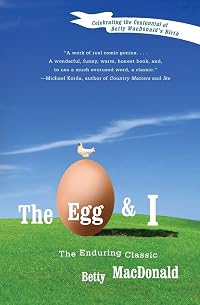
On This Page
Description
When Betty MacDonald married a marine and moved to a small chicken farm on the Olympic Peninsula in Washington State, she was largely unprepared for the rigors of life in the wild. With no running water, no electricity, a house in need of constant repair, and days that ran from four in the morning to nine at night, the MacDonalds had barely a moment to put their feet up and relax. And then came the children. Yet through every trial and pitfall-through chaos and catastrophe-this indomitable show more family somehow, mercifully, never lost its sense of humor. show lessTags
Recommendations










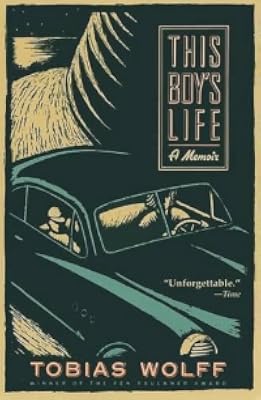
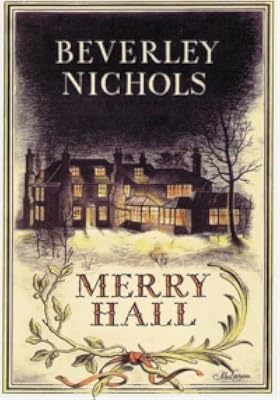
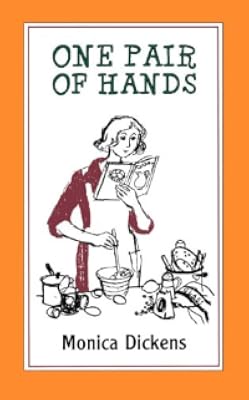

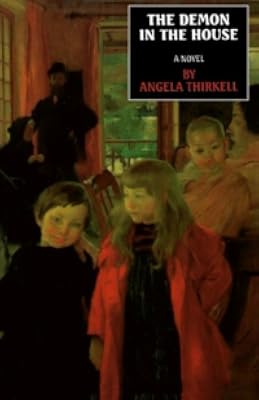











Member Recommendations

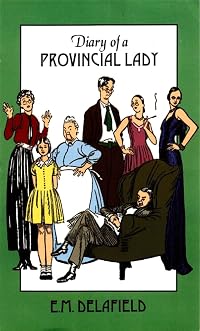
Bjace Seems odd, but both Delafield and MacDonald were city gals transplanted to country situations and their reactions and sense of humor were similar.

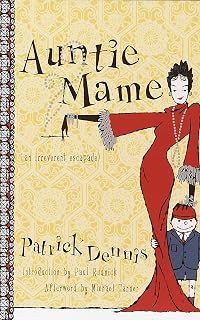
RidgewayGirl A similar humor imbues this fiction novel.
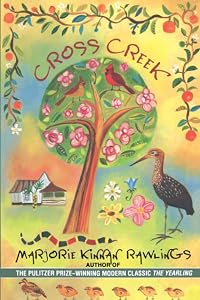
RidgewayGirl City girl transplanted to the country with hilarious results.
Member Reviews
And then winter settled down and I realized that defeat, like morale, is a lot of little things.
Betty MacDonald remembers the first two years of her marriage, in which she and her husband create and run a chicken ranch located in the wilds of Washington state. Originally published in 1945, the writing style reminded me of Jean Webster (who wrote Daddy-Long-Legs), with its mix of charm and dry wit. MacDonald finds the humor in any situation and is as willing to poke fun at herself as she is at the people around her. She has to fight to adjust to rural living and to the hardships and constant work involved, but she's game.
There is one aspect that mars this outrageously delightful memoir; MacDonald mixes in a large helping of racism aimed show more at the local Native Americans, which culminates in her being glad that their land was being taken from them. Even her husband asks her to take it down a notch, and given that the flaws she sees in them are exactly the same flaws she sees in many of the men around her, it's surprising that she never notices that she only sees white people as individually flawed. I'd like to give her the benefit of simply being a product of her own time, but as her own husband asks her to take it down a notch, it seems she was bigoted even by the standards of her time.
I loved this book until I didn't. I can see why it's been allowed to sink into obscurity and at the same time I'm sorry about that -- it's such a vivid, insightfully rendered picture of a specific time and place. show less
Betty MacDonald remembers the first two years of her marriage, in which she and her husband create and run a chicken ranch located in the wilds of Washington state. Originally published in 1945, the writing style reminded me of Jean Webster (who wrote Daddy-Long-Legs), with its mix of charm and dry wit. MacDonald finds the humor in any situation and is as willing to poke fun at herself as she is at the people around her. She has to fight to adjust to rural living and to the hardships and constant work involved, but she's game.
There is one aspect that mars this outrageously delightful memoir; MacDonald mixes in a large helping of racism aimed show more at the local Native Americans, which culminates in her being glad that their land was being taken from them. Even her husband asks her to take it down a notch, and given that the flaws she sees in them are exactly the same flaws she sees in many of the men around her, it's surprising that she never notices that she only sees white people as individually flawed. I'd like to give her the benefit of simply being a product of her own time, but as her own husband asks her to take it down a notch, it seems she was bigoted even by the standards of her time.
I loved this book until I didn't. I can see why it's been allowed to sink into obscurity and at the same time I'm sorry about that -- it's such a vivid, insightfully rendered picture of a specific time and place. show less
I adored Betty MacDonald’s four Mrs. Piggle-Wiggle books when I was a child — so much so that I tracked them down to read to my own children when they came along. So I was ready to laugh uproariously with MacDonald’s famous memoir The Egg and I.
And don’t get me wrong: Parts of the book are hilarious: her paternal grandmother Gammy, the travails of the chicken ranch, and the plight of being the intellectual but plain younger sister. But modern-day readers will be taken aback by the antiquated expectations for wives and the acceptable level of racism toward Native Americans in the 1920s. It’s easy to forget how widespread the beliefs were that wives should kowtow to their husbands’ every whim — no matter how imprudent or show more disastrous — and that a proud people that whites had slaughtered and conquered were shifty and lazy.
So in a way, The Egg and I serves as a time capsule that reveals how far we’ve come. And it provides a glimmer of hope that, in 90 years, Americans will have evolved sufficiently that they will be dumbstruck that mass school shootings or gunning down a black young man in the back with impunity or poisoning the water supply of an entire city or sending Auschwitz-themed tweets to Jewish journalists or threatening to rape and murder female journalists could ever have been possible. show less
And don’t get me wrong: Parts of the book are hilarious: her paternal grandmother Gammy, the travails of the chicken ranch, and the plight of being the intellectual but plain younger sister. But modern-day readers will be taken aback by the antiquated expectations for wives and the acceptable level of racism toward Native Americans in the 1920s. It’s easy to forget how widespread the beliefs were that wives should kowtow to their husbands’ every whim — no matter how imprudent or show more disastrous — and that a proud people that whites had slaughtered and conquered were shifty and lazy.
So in a way, The Egg and I serves as a time capsule that reveals how far we’ve come. And it provides a glimmer of hope that, in 90 years, Americans will have evolved sufficiently that they will be dumbstruck that mass school shootings or gunning down a black young man in the back with impunity or poisoning the water supply of an entire city or sending Auschwitz-themed tweets to Jewish journalists or threatening to rape and murder female journalists could ever have been possible. show less
The Egg and I by Betty MacDonald was published in 1945 and is meant to be a humorous memoir of the author’s experiences as a young wife on a chicken farm set on the Olympic Peninsula of Washington State. Unfortunately I was put off very early in the book by the author’s attitude and comments regarding both her neighbours and the Indigenous population. I realize that her “educated whites are superior” attitude wasn’t all that unusual for the day, but nevertheless I lost all sympathy I might have had for her especially when she started to sprinkle her writing with french phrases to show how educated she was.
The author paints a vivid picture of how unprepared she was for the rigours of raising chickens. Living in a run-down show more house, with no running water or electricity, in an area that was considered remote in those days, she gives us a light-hearted account of the pitfalls and family chaos that became her life.
I am quite familiar with the Olympic Peninsula, having visited there numerous times so I was very interested in her descriptions of this lush and beautiful place and she was well able to pass on a sense of the scenic delights to be found there. As I mentioned above, her mean-spirited bigotry cut into her humor and her observations did little to tickle my funny bone. I believe that this is a book that has not stood the test of time very well and perhaps should have stayed in the past. show less
The author paints a vivid picture of how unprepared she was for the rigours of raising chickens. Living in a run-down show more house, with no running water or electricity, in an area that was considered remote in those days, she gives us a light-hearted account of the pitfalls and family chaos that became her life.
I am quite familiar with the Olympic Peninsula, having visited there numerous times so I was very interested in her descriptions of this lush and beautiful place and she was well able to pass on a sense of the scenic delights to be found there. As I mentioned above, her mean-spirited bigotry cut into her humor and her observations did little to tickle my funny bone. I believe that this is a book that has not stood the test of time very well and perhaps should have stayed in the past. show less
Betty MacDonald (author of the Mrs. Piggle-Wiggle series) tells the story of her early, disastrous marriage to a chicken farmer. She has a great narrative voice, a fabulous sense of humor, and a way with an anecdote.
Annnnnnd she's also racist as hell. Which pretty much ruins a lot of the book. So, FYI: interesting, funny memoir of a way of farming that is now totally gone, in a part of the country not many people write about. With a giant helping of open, unapologetic racism, of the Native-Americans-are-actually-subhuman variety. Read with caution.
Annnnnnd she's also racist as hell. Which pretty much ruins a lot of the book. So, FYI: interesting, funny memoir of a way of farming that is now totally gone, in a part of the country not many people write about. With a giant helping of open, unapologetic racism, of the Native-Americans-are-actually-subhuman variety. Read with caution.
Betty MacDonald is by all accounts just a housewife. A housewife with a wicked sense of humor and the ability to transfer that humor to paper. In The Egg and I she tells of the time in her life when soon after getting married she follows her new husband from Butte Montana to the Olympia mountains to start up, of all things, an egg farm. From a young age her mother had always drilled it into her head to support her husband's chosen vocation and while chickens and their subsequent eggs weren't Betty's thing she dutifully packs her bags and with great determination tries to become a chicken-farming, egg-picking, hard-working housewife. Hilarity ensues.
Betty MacDonald’s “memoir” of her life as a newlywed on a chicken ranch in the Olympic Penninsula area of Washington was a runaway bestseller when it first appeared in 1945. It was made into a movie which also did well at the box office. And MacDonald went on to write additional books.
I remember hearing my mother’s laughter as she read this book when I was a young girl. And I remember watching the “old” Ma & Pa Kettle movies on TV as well. (The characters were a spin off from MacDonald’s book.) I’ve had this book on my TBR since I was a young teen, I think.
But I was highly disappointed in the book. I do not at all like the way MacDonald portrays the local people, especially the Kettles, and really dislike the way she show more portrays the Native American population. To hear her tell it, they are all “drunk, lazy Indians,” and she isn’t shy about saying how much she dislikes them.
I have to give her credit for making a life “in the wilderness” with the man she loves, despite her own background of relative privilege. She endured a house with no indoor plumbing, a cranky “Stove,” extremes of weather, few modern conveniences. But she was young, fit and intent on supporting her husband’s dream. I loved the descriptions of the excellent food they enjoyed, harvesting from their own garden and from the natural world (clams, fish, game, etc.).
In a forward to the paperback edition, reissued in 1987, her daughters write that MacDonald would probably treat the Native Americans differently “today.” They state that she was just trying to make the best of a situation she found frightening, and that humor was a way to do that. Well, I know times were different then, but I don’t find denigrating others funny or charming or even excusable. show less
I remember hearing my mother’s laughter as she read this book when I was a young girl. And I remember watching the “old” Ma & Pa Kettle movies on TV as well. (The characters were a spin off from MacDonald’s book.) I’ve had this book on my TBR since I was a young teen, I think.
But I was highly disappointed in the book. I do not at all like the way MacDonald portrays the local people, especially the Kettles, and really dislike the way she show more portrays the Native American population. To hear her tell it, they are all “drunk, lazy Indians,” and she isn’t shy about saying how much she dislikes them.
I have to give her credit for making a life “in the wilderness” with the man she loves, despite her own background of relative privilege. She endured a house with no indoor plumbing, a cranky “Stove,” extremes of weather, few modern conveniences. But she was young, fit and intent on supporting her husband’s dream. I loved the descriptions of the excellent food they enjoyed, harvesting from their own garden and from the natural world (clams, fish, game, etc.).
In a forward to the paperback edition, reissued in 1987, her daughters write that MacDonald would probably treat the Native Americans differently “today.” They state that she was just trying to make the best of a situation she found frightening, and that humor was a way to do that. Well, I know times were different then, but I don’t find denigrating others funny or charming or even excusable. show less
The book I read was a lovingly worn, hardcover library copy which was published in 1945. The pages were yellowed and it had the musty, nostalgic smell of a book that had survived the shelves for 75 years. This humorous collection of Betty MacDonald's experiences on a rustic chicken ranch in the Pacific Northwest which she owned with her husband in the early 1940's, was written in a witty and sarcastic style that was entertaining yet dated. By today's standards she was racist, smoked a million cigarettes, and was sharply critical. But if you can put today's standards in perspective you will find much to laugh about as she amusingly describes the weather, her work on the farm, the animals, her neighbors, traveling salesmen, and show more moonshiners. While this was entertaining, it just got to be too much of a good thing. These experiences would have been more enjoyable to read intermittently as articles in the New Yorker instead of an entire book. Her writing style exaggerated her experiences and although her descriptions were cleverly funny, a little went a long way. David Sedaris and Roz Chast are both successful and entertaining modern day humorists who carry on MacDonald's legacy of understated sarcasm. If you are lucky enough to happen across The Egg and I, I recommend you read at least a few chapters because even though I've been critical, you will definitely be entertained. show less
Members
- Recently Added By
Lists

Best Biographies, Autobiographies and Memoirs
465 works; 160 members

Satori Smiles Children's Book List
262 works; 7 members

Books Read in 2016
4,666 works; 199 members

Female Author
1,235 works; 67 members

Set in the Pacific Northwest
136 works; 7 members

Books whose title names an object usually found in the kitchen
171 works; 14 members

Publisher's Weekly NON-Fiction list - 1912 - 1975
486 works; 4 members
Author Information

Some Editions
Awards and Honors
Distinctions
Series

Belongs to Publisher Series
Work Relationships
Has the adaptation
Common Knowledge
- Canonical title
- The Egg and I
- Original title
- The Egg and I
- Original publication date
- 1945-10-03
- People/Characters
- Betty MacDonald; Betty MacDonald (Heskett); Bob MacDonald; Bob Heskett; Mrs. Kettle; Sharkey (show all 7); Paw Kettle
- Related movies
- The Egg and I (1947 | IMDb)
- Epigraph
- [Part One]
Such duty as the subject owes the prince,
Even such a woman oweth to her husband.
—Shakespeare
[Part Two]
No sun -- no moon -- no morn -- no noon,
No dawn -- no dusk -- no proper time of day,
No warmth -- no cheerfulness -- no healthful ease,
No road, no street, no t'other side of the way,
No comfortable... (show all) feel in any member--
No shade, no shine, no butterflies, no bees,
No fruits, no flowers, no leaves, no birds, November!
--Hood
[Part Three]
Hear ye not the hum of mighty workings!
--Keats
[Part Four]
Man works from dawn to setting sun
But woman's work is never done.
[Part Five]
I saw old Autumn in the misty morn
Stand shadowless like silence, listening
To silence.
--Hood - Dedication
- To my sister Mary, who has always believed that I can do anything she puts her mind to.
- First words
- Along with teaching us that lamb must be cooked with garlic and that a lady never scratches her head or spits, my mother taught my sister and me that it is a wife's bounden duty to see that her husband is happy in his work.
Kromě toho, že se jehněčí peče na česneku a že se dáma nikdy nedrbe na hlavě a neplivá na podlahu, vštěpovala maminka mým sestrám i mně, že svatosvatou povinností ženy je dbát a pečovat, aby její manžel... (show all) byl spokojený ve své práci a ve svém povolání. - Quotations
- Each time I looked out of a window or stepped out of doors, I was confronted by great, white, haughty peaks staring just above my head and doing their chilly best to make me realize that that was once a very grand neighbourho... (show all)od and it was curdling their blood to have to accept 'trade'. We were there with our ugly little buildings and livestock, but, by God, they didn't have to associate with us or make us welcome. They, no doubt, would have given half their timer if they could have changed the locale to Switzerland and brushed us off with a nice big avalanche.
In case you are wondering why I didn't take a good book, settle down by the stove and shut-up, I would like to explain that Stove, as we called him, had none of the warm, friendly qualities ordinarily associated with the name... (show all). In the first place he was too old and, like some terrible old man, he had a big strong frame, a lusty appetite and no spirit of co-operation. - Last words
- (Click to show. Warning: May contain spoilers.)The hen is the boss.
(Click to show. Warning: May contain spoilers.)A to jenom dokazuje, že slepičí podnikatel není v žádném případě svým vlastním pánem. Šéfuje mu slepice. - Original language
- English US
Classifications
Statistics
- Members
- 1,367
- Popularity
- 17,440
- Reviews
- 49
- Rating
- (3.76)
- Languages
- 8 — Czech, Danish, Dutch, English, French, German, Italian, Swedish
- Media
- Paper, Audiobook, Ebook
- ISBNs
- 33
- ASINs
- 57