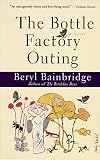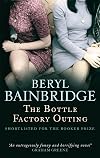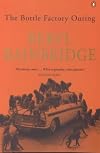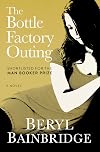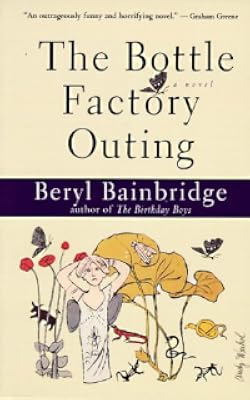
The Bottle Factory Outing
by Beryl Bainbridge
On This Page
Description
"Freda and Brenda spend their days working in an Italian-run wine-bottling factory. A work outing offers promise for Freda, and terror for Brenda, passions run high on that chilly day of freedom, and life after the outing never returns to normal."Tags
Recommendations
























Member Reviews
The author shovels dreary characters onto dreary jobs in a dreary setting without giving them the slightest awareness that might save them from any normal indignity, but what happens is not just normal and the black humor of the resulting scramble is at least more lively than the earlier narrative.
Very English black comedy, the sort of book in which social embarrassment can be more serious in its consequences than violent death. Slight and insubstantial at first sight, but when you start to look at it more closely, there are some very penetrating little insights into the bizarre way the English still thought in the 1970s (like Brenda having been taught as a middle-class child that "it was rude to say no, unless she didn't mean it"). I loved the "Nelson touch" in the ending, too. But it does feel more like a screenplay for a Willy Russell film than a novel (in the event, it was Alan Plater who adapted it for the screen, of course).
This was one of the five Beryl Bainbridge books that got on to the Booker shortlist at different show more times, without ever winning: this one lost out to Stanley Middleton and Nadine Gordimer (who shared the 1974 prize). show less
This was one of the five Beryl Bainbridge books that got on to the Booker shortlist at different show more times, without ever winning: this one lost out to Stanley Middleton and Nadine Gordimer (who shared the 1974 prize). show less
This is a brilliantly plotted black comedy set in an Italian-owned wine-bottling factory in London. Most of the workers are Italian, but Freda and Brenda, the two main protagonists who share a flat and an uneasy friendship, are English, and there is also an Irish porter.
The feisty, outgoing and confrontational Freda organises an outing, largely in order to further her tentative relationship with Vittorio, one of the Italian workers. Meanwhile Brenda, who has left her Northern farmer husband and wants to fit in quietly, is being harassed by Rossi, the deputy manager.
The first half of the book is largely comic, but the outing takes a macabre turn, which I won't spoil. The whole thing builds to a very satisfying conclusion, and is a show more pleasure to read.
This is the first of 21 books I hope to read for next year's Mookse Madness (see The Mookse and The Gripes group for more details), in which 16 of the writers who have multiple Booker shortlistings are represented by 4 books each. I really enjoyed this book, so I am looking forward to the rest even more. show less
The feisty, outgoing and confrontational Freda organises an outing, largely in order to further her tentative relationship with Vittorio, one of the Italian workers. Meanwhile Brenda, who has left her Northern farmer husband and wants to fit in quietly, is being harassed by Rossi, the deputy manager.
The first half of the book is largely comic, but the outing takes a macabre turn, which I won't spoil. The whole thing builds to a very satisfying conclusion, and is a show more pleasure to read.
This is the first of 21 books I hope to read for next year's Mookse Madness (see The Mookse and The Gripes group for more details), in which 16 of the writers who have multiple Booker shortlistings are represented by 4 books each. I really enjoyed this book, so I am looking forward to the rest even more. show less
Friends Freda and Brenda are living together in a small flat and working in a wine bottling factory in North London in the 1970s. Their work consists of applying labels to wine bottles. Freda is single, outgoing, and assertive. Brenda is separated from her husband. She is an introvert who tries to get along with everyone. The factory owners are Italian. The majority of the workers are Italian immigrants, plus one Irishman. Freda is seeking to develop a romance with the factory owner’s son. Brenda must fend off advances from one of the (married) factory managers. The main event is a picnic for the workers. When this outing finally occurs, it takes a tragic turn.
This story is a combination of gallows humor, sexism, and classism. The show more characters and settings are well drawn. The prose is elegant. Primary themes are loneliness, power, and fears of immigrants at being blamed for whatever has gone wrong. It was published in 1974 and nominated for the Booker Prize. Dark humor is obviously going to be appreciated by some readers more than others. I enjoyed the writing style and plan to read more from this author. show less
This story is a combination of gallows humor, sexism, and classism. The show more characters and settings are well drawn. The prose is elegant. Primary themes are loneliness, power, and fears of immigrants at being blamed for whatever has gone wrong. It was published in 1974 and nominated for the Booker Prize. Dark humor is obviously going to be appreciated by some readers more than others. I enjoyed the writing style and plan to read more from this author. show less
The Bottle Factory Outing by Beryl Bainbridge peels back the covers and takes an in-depth look at the lives of two very different women who happen to share lodgings and work together at a wine bottling factory in London during the 1970s. I can’t say that I liked or identified with either woman as Brenda was very shy, afraid to speak up for herself and constantly casts herself in the victim role, she also has trouble both telling and facing up to the plain truth. Loud and brassy Freda, on the other hand, is bossy, lives on the dreams in her head, bullies Brenda and likes to be in control at all times. As the story opens Freda has planned an outing for all the employees at the factory. Brenda is dreading the outing hoping she can avoid show more the lecherous advances of Rossi, the manager, while Freda, sees this as an opportunity to further her plans to snare the bosses’ nephew, Vittorio. Things take a dark twist on the outing which to my mind changed the book from a farcical romp to more of a black comedy. I should probably point out here that many people fail to see the funny side of this book, so perhaps it only appeals to those of us who like to snicker at inappropriate times.
What a strange book. Highly readable, both funny and painful in equal measure. The author exhibits an acidic tongue as she describes the dynamics of the love/hate relationship that these two women share. From broken toilets to a tea leaf reading, seductions in the cellar and a trip to Winsor Castle, it was amazing how much story the author was able to pack into a book of less than 200 pages. The Bottle Factory Outing was a read that I really enjoyed, it’s grim, gritty and yes, made me giggle a time or two as well. show less
What a strange book. Highly readable, both funny and painful in equal measure. The author exhibits an acidic tongue as she describes the dynamics of the love/hate relationship that these two women share. From broken toilets to a tea leaf reading, seductions in the cellar and a trip to Winsor Castle, it was amazing how much story the author was able to pack into a book of less than 200 pages. The Bottle Factory Outing was a read that I really enjoyed, it’s grim, gritty and yes, made me giggle a time or two as well. show less
Surreal
By sally tarbox on 21 Feb. 2012
Format: Paperback
This starts out fairly tamely; two young women share a grotty bedsit. Their personalities could not be more different- loud, assertive, overweight Freda and self-effacing Brenda who has just escaped an unhappy marriage. They work in a bottling plant otherwise staffed almost entirely by Italians who are devoted to the boss, Mr Paganotti, whom we never actually meet, but whose influence shapes events.
Freda arranges a staff outing which goes horribly wrong from the first moment; this part of the story transports the reader from the merely shabby and mundane to an almost dreamlike and surreal scenario.
What should be a tragic ending to the book is somehow more of a black comedy. The show more death of a certain character felt less sad than some of the events in her life.
'Perhaps she was the lucky one, to go quickly and so young. For himself, years hence, there might be disease- pain: like an olive on the ground he would wither and turn black.' show less
By sally tarbox on 21 Feb. 2012
Format: Paperback
This starts out fairly tamely; two young women share a grotty bedsit. Their personalities could not be more different- loud, assertive, overweight Freda and self-effacing Brenda who has just escaped an unhappy marriage. They work in a bottling plant otherwise staffed almost entirely by Italians who are devoted to the boss, Mr Paganotti, whom we never actually meet, but whose influence shapes events.
Freda arranges a staff outing which goes horribly wrong from the first moment; this part of the story transports the reader from the merely shabby and mundane to an almost dreamlike and surreal scenario.
What should be a tragic ending to the book is somehow more of a black comedy. The show more death of a certain character felt less sad than some of the events in her life.
'Perhaps she was the lucky one, to go quickly and so young. For himself, years hence, there might be disease- pain: like an olive on the ground he would wither and turn black.' show less
A very, very dark comedy that takes place in the dull, grey middle-to-lower class England of the nineteen seventies. Bainbridge's real accomplishment here is her creation of the novel's two main characters: Freda and Joanna. The the first a willful, dramatic, and perhaps not particularly likable theatrical hanger-on, the second one of those passive, introverted, insecure women that many people would probably forget after meeting. The fact that the author doesn't turn Freda into a women's-movement caricature and makes Joanna register as a real character in her own right is really a testament to her skill as a writer: I get the feeling that their characters would have been a mishandled by a less talented writer. Here, they come off as show more real people, and one is forced to take their aspirations, ridiculous and unlikely as they sometimes are, seriously.
Everything, including the outing that gives the novel its title, ends both tragically and farcically for everyone involved, though Bainbridge's interest in theater does show through: two of the book's extended episodes slowly and inexorably devolve to high comic absurdity without seeming overwrought or unrealistic. Well-constructed and funny, if ultimately despairing and genuinely somber, this one's specially recommended to anglophiles and fans of half-forgotten BBC comedy series. show less
Everything, including the outing that gives the novel its title, ends both tragically and farcically for everyone involved, though Bainbridge's interest in theater does show through: two of the book's extended episodes slowly and inexorably devolve to high comic absurdity without seeming overwrought or unrealistic. Well-constructed and funny, if ultimately despairing and genuinely somber, this one's specially recommended to anglophiles and fans of half-forgotten BBC comedy series. show less
Members
- Recently Added By
Lists

The Guardian's 1000 Novels Everyone Must Read
1,004 works; 552 members

The Guardian's 100 greatest novels of all time
100 works; 16 members

Booker Prize
491 works; 62 members
Booker Prize Shortlist: Titles Read
103 works; 10 members

Books Read in 2014
2,344 works; 86 members

Man Booker Prize Longlist 1974
5 works; 1 member

Allie's List of Books I Want To Read
93 works; 1 member

Books Read in 2019
4,052 works; 108 members

Books by Jewish Authors
68 works; 5 members

Canon de la narrativa universal del s. XX (cicutadry)
499 works; 3 members

LRB 40(11)
12 works; 1 member
Author Information

41+ Works 6,789 Members
Beryl Bainbridge was born on November 21, 1934, in Liverpool, England. She became an actress at a young age and worked in English repertory theatres and on the radio. Her work contains dark, somber subject matter, deftly mixed with humor. Her writing acts as an outlet for her childhood frustrations, and frequently deals with family relations. In show more her novels, she recalls memories of disappointment and of a bad-tempered, brooding father. During her lifetime, she wrote 18 novels including A Weekend with Claude, Another Part of the Wood, The Bottle Factory Outing, The Birthday Boys, According to Queeney, and Young Adolf. She adapted many of her novels, such as An Awfully Big Adventure, Sweet William, and The Dressmaker, for film. She has received numerous awards and honors including the Whitbread Award in 1977 for Injury Time and in 1996 for Every Man for Himself; the James Tait Black Memorial Prize for fiction in 1998 for Master Georgie; a Guardian Fiction Award, and the David Cohen Prize for Literature in 2003. She was made a dame by Queen Elizabeth II in 2000. She died from cancer on July 2, 2010 at the age of 77. (Bowker Author Biography) show less
Awards and Honors
Awards
Series
Belongs to Publisher Series
Work Relationships
Common Knowledge
- Canonical title
- The Bottle Factory Outing
- Original publication date
- 1974
- People/Characters*
- Brenda, Freda
- Important places
- London, England, UK; Windsor Castle, Windsor, Berkshire, England, UK; Windsor Great Park, Windsor, Berkshire, England, UK
- Dedication
- For Pauline
- First words
- The hearse stood outside the block of flats, waiting for the old lady.
- Last words
- (Click to show. Warning: May contain spoilers.)"She's going," cried Maria, and the engine started and the vehicle slid away from the bay, the plastic tulip lolling in the wind.
*Some information comes from Common Knowledge in other languages. Click "Edit" for more information.
Classifications
Statistics
- Members
- 604
- Popularity
- 48,671
- Reviews
- 23
- Rating
- (3.35)
- Languages
- 6 — Dutch, English, French, German, Spanish, Swedish
- Media
- Paper, Audiobook, Ebook
- ISBNs
- 26
- ASINs
- 7