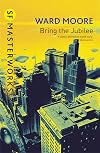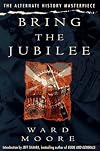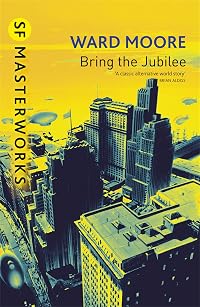
Bring the Jubilee
by Ward Moore
On This Page
Description
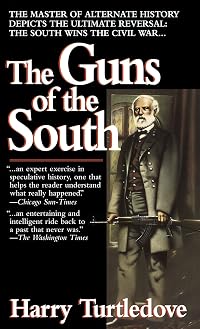
The landmark alternate history novel by "one of the best American writers" (Ray Bradbury). In the world of this novel, said to be an inspiration for Philip K. Dick's The Man in the High Castle, the Confederacy has triumphed and become an imperialist nation. What is left of the United States has been drained of its resources and is trapped in a depression. Hodge, a young man living in a village in rural New York with his parents, decides to head to the city to escape his otherwise inevitable show more future of poverty and indentured servitude. But the specter of war between the Confederacy and the other great global power, the German Union, haunts the entire region, and a nationalist terrorist group has other plans for Hodge. Before long, he is swept up in the politics of the day and becomes involved with a beautiful physicist who is working on a machine intended to change his fate-and the fate of the world. Long before Harry Turtledove's The Guns of the South, Bring the Jubilee was the first novel to pose the question "What if the South had won the Civil War?" A counterfactual classic, it was included in renowned science fiction editor David Pringle's list of the 100 Best Science Fiction Novels. This ebook features an illustrated biography of Ward Moore including rare images from the author's estate. show lessTags
Recommendations








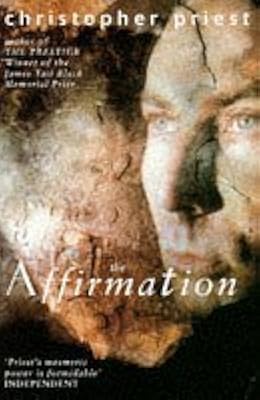


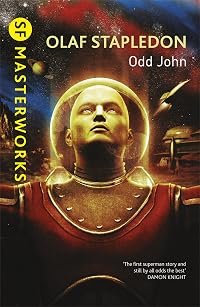



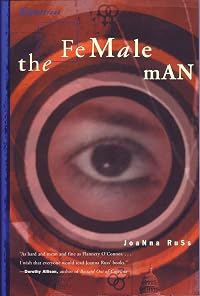



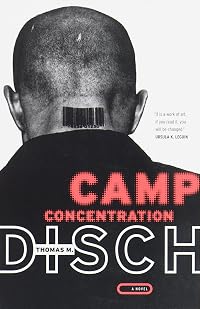





Member Recommendations
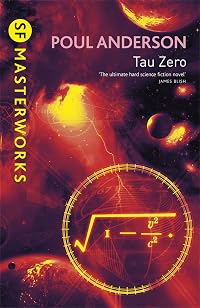
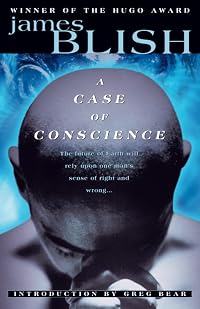
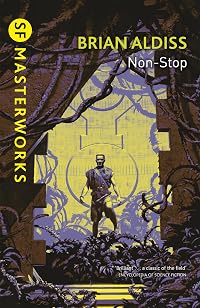
stevetempo Another approach on the civil war alteration.
Member Reviews
Published in 1952 this novel has been collected in the SF Masterwork series. I have read that it is the earliest book in the alternative history sub genre, but whatever its claims it is a very good novel and excellent science fiction.
“Although I am writing this in the year 1877, I was not born until 1921. Neither the dates nor the tenses are error - let me explain:”
So Hodgins Backmaker starts the account of his extraordinary life. During his adolescence he lives in a small rural community in the United States - United States with just 13 member states because the Union lost the American Civil war. The Confederacy agreed to the union keeping much of its territory but extracted a huge indemnity that beggared the Union for the show more foreseeable future. This has not only resulted in the United States becoming a third world country, but also hindered the development of science and engineering on a world wide scale. There are still no aeroplanes and no electricity and many of its citizens are indentured to international companies, there are repatriation schemes for the black population and the country suffers not only from poverty, but also from mean spiritedness. Hodgins must find his own way in a difficult world and at 17 years old starts his four day walk to New York.
The story continues with a lucky encounter in the big city and he gets a position working in a book store. He is fascinated by books and wants to learn and so agrees to work for bed and board for a little pocket money and free access to the books. The book store is also a front for the rebel Grand Army and Hodgins faces a steep learning curve involving his education, life in the city, romance and steering clear of trouble. His studying leads to a dream of an academic life, he wants to be a historian, but there are no worthwhile academic centres in the Union, however he manages to become involved in a self supporting academic community who live out in the countryside, where he continues his education and becomes a leading historian specialising in the American Civil war.
Ward Moore writes well and easily, his characters are particularly well drawn and the novel for much of its length is a very good bildungsroman. It switches smoothly between its story telling to being a novel of ideas and a tableau of an alternative world. The world building itself is not attempted in any detail, but just enough to create a fascinating backdrop for the story. This is not anything like a typical male oriented 1950’s science fiction, it has an egalitarian undertow that sets it apart from much science fiction and probably much popular writing of that era.
It builds to a good climax and I was interested enough to do a bit of research on the battle of Gettysburg before the final denouement. Of course any member of the reading community would guess the ending, but it might have been different in 1952 when this book was published. No matter there is plenty enough in this novel even for non science fiction readers to enjoy. A bit of a gem this one and so 4 stars. show less
“Although I am writing this in the year 1877, I was not born until 1921. Neither the dates nor the tenses are error - let me explain:”
So Hodgins Backmaker starts the account of his extraordinary life. During his adolescence he lives in a small rural community in the United States - United States with just 13 member states because the Union lost the American Civil war. The Confederacy agreed to the union keeping much of its territory but extracted a huge indemnity that beggared the Union for the show more foreseeable future. This has not only resulted in the United States becoming a third world country, but also hindered the development of science and engineering on a world wide scale. There are still no aeroplanes and no electricity and many of its citizens are indentured to international companies, there are repatriation schemes for the black population and the country suffers not only from poverty, but also from mean spiritedness. Hodgins must find his own way in a difficult world and at 17 years old starts his four day walk to New York.
The story continues with a lucky encounter in the big city and he gets a position working in a book store. He is fascinated by books and wants to learn and so agrees to work for bed and board for a little pocket money and free access to the books. The book store is also a front for the rebel Grand Army and Hodgins faces a steep learning curve involving his education, life in the city, romance and steering clear of trouble. His studying leads to a dream of an academic life, he wants to be a historian, but there are no worthwhile academic centres in the Union, however he manages to become involved in a self supporting academic community who live out in the countryside, where he continues his education and becomes a leading historian specialising in the American Civil war.
Ward Moore writes well and easily, his characters are particularly well drawn and the novel for much of its length is a very good bildungsroman. It switches smoothly between its story telling to being a novel of ideas and a tableau of an alternative world. The world building itself is not attempted in any detail, but just enough to create a fascinating backdrop for the story. This is not anything like a typical male oriented 1950’s science fiction, it has an egalitarian undertow that sets it apart from much science fiction and probably much popular writing of that era.
It builds to a good climax and I was interested enough to do a bit of research on the battle of Gettysburg before the final denouement. Of course any member of the reading community would guess the ending, but it might have been different in 1952 when this book was published. No matter there is plenty enough in this novel even for non science fiction readers to enjoy. A bit of a gem this one and so 4 stars. show less
Brilliant. I did struggle a bit through the bulk of it, the alternate history, but all the details of politics, economics, technological development, cultural mores, philosophies, etc. were fascinating & plausible.
I loved watching the different characters' development. Hodge, especiallly, learns & matures as we watch him grow from a callow youth to a somewhat wiser young man who knows that he doesn't have any answers and can't make any judgements.
The time travel bit is brief but important - in a way one can say that the whole front of the book built towards the theme that was revealed to Hodge (and to us) by his travel in time.
A bit of an understanding of the course of the American Civil War would be helpful, but is not necessary. It show more may help one understand the title - I do not know what it meant by 'Bring the Jubilee' - but again, the book can be thoroughly enjoyed without that understanding. show less
I loved watching the different characters' development. Hodge, especiallly, learns & matures as we watch him grow from a callow youth to a somewhat wiser young man who knows that he doesn't have any answers and can't make any judgements.
The time travel bit is brief but important - in a way one can say that the whole front of the book built towards the theme that was revealed to Hodge (and to us) by his travel in time.
A bit of an understanding of the course of the American Civil War would be helpful, but is not necessary. It show more may help one understand the title - I do not know what it meant by 'Bring the Jubilee' - but again, the book can be thoroughly enjoyed without that understanding. show less
This is a strangely compelling and powerful alternate history novel, where the South has won the American Civil War. It has a leisurely pace, spending time developing the lead character, a historian named Hodge Backmaker. He is a not-entirely likeable character, and a rather passive one, which may turn off some readers. However, his character traits are essential to the novel's conclusion, which is extremely, but quietly, powerful.
This classic alternative world/time travel novel, which I last read over forty years ago, begins with one of sf's classic sentences: "Although I am writing this in the year 1877, I was not born until 1921" (p1). This is possible because, to begin with, our narrator was born into a world where the South won the Civil War; where he dwells is in an economically backward 26-state United States, the rump of the Union, which can only envy the good fortune and prosperity of the Confederate States.
Young Hodge Backmaker, restless in back-end-of-nowhere Wappinger Falls, sets off to New York to seek his fortune. There he soon falls in with and is employed by the bookseller Tyss, seemingly an enlightened man but in fact doing much covert work to show more support the violently terrorist Grand Army, which seeks to . . . well, as with many Liberation Fronts, the aims of the Grand Army are not entirely clear. Hodge keeps his nose clean of this clandestine activity as much as he can during his eight years with Tyss, during which he devours practically every book in the shop and decides his vocation in life is to be a historian; his ambitions are focused by his friendship with the Haitian ambassador, Enfandin, a man of enormous intellectual ability, knowledge and sagacity who's nonetheless sneered at as Sambo and Rastus by most of New York's populace: the people of the Confederate States are beginning to move out from under the shadow of racism but those of the US, blaming the slaves for having caused the ruinous war, are still in the full throes of the racist atavism. Hodge fires off application letters to all the universities he can think of, hoping for a place to read history; but the only response he gets is from Haggershaven, a strange, utopian community of scholars. He is summoned there by Barbara Haggerwells, daughter of the man who runs the place. She proves to be quite seriously psychologically damaged, yet a brilliant physicist; once at Haggershaven Hodge enters into a semi-destructive, almost masochistic off-on relationship with her that will last for years. But, while traveling to Haggershaven, Hodge rescued from a murderous gang a young Spanish girl, Catalina, and as she grows up she captures his heart -- a development disliked by the paranoidly jealous Barbara.
Barbara succeeds in building a functioning time machine. Various Haggershavenians take trips into the past, always obeying as near as possible Barbara's strict instructions that they should do nothing to change things in the world of the past. When it comes to Hodge's turn, he chooses to go back to witness the Battle of Gettysburg to determine at first hand if the historians are right about the precise wrinkle of chance that won the battle -- and the war -- for the Southrons. As Barbara throws the lever:
The expression on her face was the strangest I'd ever seen her wear. I could not, then or now, quite interpret it. Doubt, malice, suffering, vindictiveness, entreaty, love, were all there as her hand moved the switch. (p173)
Needless to say, Hodge inadvertently alters the course of the battle and brings into existence the timeline we know. And, in a delicious irony, it seems not to occur to him -- despite the sentence cited above -- that Barbara knew all along something like this would happen, and that she was in effect murdering her world, herself included, as vengeance against the man she perceived to have spurned her.
The bulk of this novel concerns Hodge's life in the world into which he was born; by the time he makes the trip back to Gettysburg we're just twenty pages or so from the end. I've seen people complain about this: that the book's boring because nothing much happens until the last few pages. All I can really say is that such critics should hang up their spectacles and go do something else more commensurate with their talents, like listening to Britney Spears. Although he has an annoying tic of missing out apostrophes from some but not all contracted words (with no rhyme or reason that I can see: it's "can't" but "couldnt", for example), and although I could have done without the various cutesy references to major figures in our own timeline having minor roles in the alternative US, Moore is a fine enough writer that he makes Hodge's tale an absolutely absorbing one . . . to the point that I was actually pretty fed up when the time-travel stuff started: I could have gone on reading about Hodge, Catalina and Haggershaven for a long while yet. This is one of those rare and precious books that really does transcend genres. I'd feel happy recommending it to people who'd normally shy away from a piece of sf; at the same time, devoted skiffers who've not read this classic should definitely make the effort -- if only because this must be among the three or four best-written novels of sf's (late) Golden Age. show less
Young Hodge Backmaker, restless in back-end-of-nowhere Wappinger Falls, sets off to New York to seek his fortune. There he soon falls in with and is employed by the bookseller Tyss, seemingly an enlightened man but in fact doing much covert work to show more support the violently terrorist Grand Army, which seeks to . . . well, as with many Liberation Fronts, the aims of the Grand Army are not entirely clear. Hodge keeps his nose clean of this clandestine activity as much as he can during his eight years with Tyss, during which he devours practically every book in the shop and decides his vocation in life is to be a historian; his ambitions are focused by his friendship with the Haitian ambassador, Enfandin, a man of enormous intellectual ability, knowledge and sagacity who's nonetheless sneered at as Sambo and Rastus by most of New York's populace: the people of the Confederate States are beginning to move out from under the shadow of racism but those of the US, blaming the slaves for having caused the ruinous war, are still in the full throes of the racist atavism. Hodge fires off application letters to all the universities he can think of, hoping for a place to read history; but the only response he gets is from Haggershaven, a strange, utopian community of scholars. He is summoned there by Barbara Haggerwells, daughter of the man who runs the place. She proves to be quite seriously psychologically damaged, yet a brilliant physicist; once at Haggershaven Hodge enters into a semi-destructive, almost masochistic off-on relationship with her that will last for years. But, while traveling to Haggershaven, Hodge rescued from a murderous gang a young Spanish girl, Catalina, and as she grows up she captures his heart -- a development disliked by the paranoidly jealous Barbara.
Barbara succeeds in building a functioning time machine. Various Haggershavenians take trips into the past, always obeying as near as possible Barbara's strict instructions that they should do nothing to change things in the world of the past. When it comes to Hodge's turn, he chooses to go back to witness the Battle of Gettysburg to determine at first hand if the historians are right about the precise wrinkle of chance that won the battle -- and the war -- for the Southrons. As Barbara throws the lever:
The expression on her face was the strangest I'd ever seen her wear. I could not, then or now, quite interpret it. Doubt, malice, suffering, vindictiveness, entreaty, love, were all there as her hand moved the switch. (p173)
Needless to say, Hodge inadvertently alters the course of the battle and brings into existence the timeline we know. And, in a delicious irony, it seems not to occur to him -- despite the sentence cited above -- that Barbara knew all along something like this would happen, and that she was in effect murdering her world, herself included, as vengeance against the man she perceived to have spurned her.
The bulk of this novel concerns Hodge's life in the world into which he was born; by the time he makes the trip back to Gettysburg we're just twenty pages or so from the end. I've seen people complain about this: that the book's boring because nothing much happens until the last few pages. All I can really say is that such critics should hang up their spectacles and go do something else more commensurate with their talents, like listening to Britney Spears. Although he has an annoying tic of missing out apostrophes from some but not all contracted words (with no rhyme or reason that I can see: it's "can't" but "couldnt", for example), and although I could have done without the various cutesy references to major figures in our own timeline having minor roles in the alternative US, Moore is a fine enough writer that he makes Hodge's tale an absolutely absorbing one . . . to the point that I was actually pretty fed up when the time-travel stuff started: I could have gone on reading about Hodge, Catalina and Haggershaven for a long while yet. This is one of those rare and precious books that really does transcend genres. I'd feel happy recommending it to people who'd normally shy away from a piece of sf; at the same time, devoted skiffers who've not read this classic should definitely make the effort -- if only because this must be among the three or four best-written novels of sf's (late) Golden Age. show less
Surprisingly well-written Alternative History/SciFi set in a brutish and blunted USA decades after the Confederate States won the War of Southron Independence. There are trenchant ruminations on the historian’s task, a Spinozan steampunk time machine, and a twist at the end. Good fun.
Rogue Yellow Snow IPA
Strike Porter
Rogue Yellow Snow IPA
Strike Porter
Here's a nice kind of a novel, strangely built as, there's no action per se -indeed, it all fasten only in the last pages, the rest being mostly based on descriptions of a different America, one where the Confederate won the battle of Gettysburg. What it lacks in plot though, is made up by these striking descriptions of such a world. North America has been colonised by the independent South, technological progress is based on gas and steam (not electricity) and, the squalid poverty of the people strikes as familiar to societies built on cheap labour (slavery, indenture). Thus, if the famous twist in the end is great in itself (how the narrator will change the course of events) such a detailed and clever portrait of an alternate world show more makes for a thoughtful read. At least, such food for though compensates for its shortness and overall lack of action! show less
Interesting novel. I've wanted to read this science fiction classic for some time. The beginning of the book paints a quite dreary picture of a New York and environs in a world where the Confederacy won the American Civil War and the north essentially fell into ruin and decay and back into a colonial state. The novel appeared in 1953, having been expanded from a renowned novella from 1952. This is a world where the combustion engine was never invented. Nor the telephone and many other inventions. The descriptive storytelling is great, and the setting fairly steampunkish in truth. Clockwork mechanisms, a few steam powered cars (minibiles) and balloon transport. Everyone communicates via telegraph or pneumatic tubes. Lots of horse power show more is used as well.
This is an alternate history and a time travel story. The time travel doesn't happen until near the very end of the book. Almost the entire story takes place in the 1930's and 1940's of an alternate timeline up until 1952, the year the original story was published. A lot of setup here we have to take for granted. We aren't told and can't really see why the southern states became a world power. They abolished slavery (making negroes and all other non-whites subjects and non-citizens). We are told bits of why the north decayed but still, one just has to accept that the north lost and collapsed and the south rose and prospered. Moore works under the assumption that the loser of a war is doomed I think - The South goes on to conquer Mexico and then South America. History was very different in Europe as well.
The main part of our story begins in the 1930's with a young man, our protaganist Hodge, leaving home at 17 and journeying to New York 4 days walk away (about 80 miles). He has dreams of being a scholar and attending college. After some years in New York, Hodge manages to find a haven in the dreary world, in Pennsylvania, where he lives and loves and slowly becomes a well regarded Civil War historian. So we have a coming of age tale. I thought the book dragged a bit in several parts of the middle but the last quarter and endgame of the novel was very good and rewards the journey to it. This book really seems to stand up near the higher end of science fiction novels of the 50's, certainly in the quality of the writing. The book has aged fairly well, and one can see many parallels between then and now. show less
This is an alternate history and a time travel story. The time travel doesn't happen until near the very end of the book. Almost the entire story takes place in the 1930's and 1940's of an alternate timeline up until 1952, the year the original story was published. A lot of setup here we have to take for granted. We aren't told and can't really see why the southern states became a world power. They abolished slavery (making negroes and all other non-whites subjects and non-citizens). We are told bits of why the north decayed but still, one just has to accept that the north lost and collapsed and the south rose and prospered. Moore works under the assumption that the loser of a war is doomed I think - The South goes on to conquer Mexico and then South America. History was very different in Europe as well.
The main part of our story begins in the 1930's with a young man, our protaganist Hodge, leaving home at 17 and journeying to New York 4 days walk away (about 80 miles). He has dreams of being a scholar and attending college. After some years in New York, Hodge manages to find a haven in the dreary world, in Pennsylvania, where he lives and loves and slowly becomes a well regarded Civil War historian. So we have a coming of age tale. I thought the book dragged a bit in several parts of the middle but the last quarter and endgame of the novel was very good and rewards the journey to it. This book really seems to stand up near the higher end of science fiction novels of the 50's, certainly in the quality of the writing. The book has aged fairly well, and one can see many parallels between then and now. show less
Members
- Recently Added By
Lists

Best Alternate History
111 works; 60 members

Best Science Fiction Novels
816 works; 427 members

Bibliography for Among Others
159 works; 15 members

S.F. Masterworks (Complete)
229 works; 15 members

David Pringle's Science Fiction: The 100 Best Novels
101 works; 9 members

SF Masterworks
193 works; 8 members
Survey of Classic Science Fiction
171 works; 48 members
Author Information

27+ Works 1,452 Members
Some Editions
Awards and Honors
Series
Belongs to Publisher Series
Work Relationships
Is an expanded version of
Inspired
Common Knowledge
- Canonical title*
- Der große Süden
- Original title
- Bring the Jubilee
- Original publication date
- 1953
- People/Characters
- Hodge Backmaker; George Pondible; Roger Tyss; Tirzah Vame; Monsieur Rene Enfandin; Barbara Haggerwells (show all 13); Asa 'Ace' Dorn; Catalina Garcia; Colonel Tolliburr; Thomas Haggerwells; Hiro Agati; Oliver Midbin; Kimi Agati
- Important places
- USA; CSA; New York, New York, USA
- Important events
- American Civil War (1861 | 1865)
- Epigraph
- What he will he does, and does so much
That proof is call'd impossibility
-TROILUS AND CRESSIDA
It is always the puzzle of the nature of time that brings our thoughts to a standstill. And if time is so fundamen... (show all)tal that an understanding of the true nature is for ever beyond our reach, then so in all probability is a decision in the age-long controversy between determination and free will. -THE MYSTERIOUS UNIVERSE BY JAMES JEANS - Dedication
- For Tony Boucher and Mick McComas who liked this story
- First words
- Although I am writing this in the year 1877, I was not born until 1921.
- Quotations
- The short walk to the river was through streets lacking the glamour of those of the day before. The tenements were smoke-streaked, with steps between the parting bricks where mortar had fallen out; great hunks of wall were k... (show all)ept in place only by the support of equally crazy ones abutting. The wretched things I wore were better suited than Pondible's to this neighbourhood, though his would have marked him tramp and vagrant in Wappinger Falls.
I recalled Tyss's, "You are a spectator type, Hodgins." And once I had called him out of my memory I couldn't escape his familiar, interminable, sardonic argument. Why are you fussing yourself, Hodgins? What is the point o... (show all)f all this introspective debate? Don't you know your choice has already been made? And that you have acted according to it an infinite number of times and will do so an infinte number of times again? Relax, Hodgins; you have nothing to worry about. Free will is an illusion; you cannot alter what you are about to decide under the impression that you have decided.
It was Catty's first excursion away from Haggershaven since the night I brought her there. Looking at the world outside through her perceptions, at once insulated and made hypersensitive by her new status, I was shocked afre... (show all)sh at the harsh indifference, the dull poverty, the fear, brutality, frenzy and cynicism highlighting the strange resignation to impending fate which characterised our civilisation. It was not a case of eat, drink, be merry, for tomorrow we die; rather it was, let us live meanly and trust to luck - tomorrow's luck is bound to be worse. - Last words
- (Click to show. Warning: May contain spoilers.)It was an error with momentous consequences.
- Original language
- English
- Disambiguation notice
- This edition is the full length novel that was expanded from the original novella.
*Some information comes from Common Knowledge in other languages. Click "Edit" for more information.
Classifications
Statistics
- Members
- 955
- Popularity
- 27,792
- Reviews
- 30
- Rating
- (3.59)
- Languages
- 5 — English, French, German, Italian, Spanish
- Media
- Paper, Audiobook, Ebook
- ISBNs
- 32
- UPCs
- 1
- ASINs
- 26