On This Page
Description
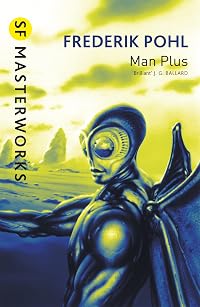
The Nebula Award-winning masterwork by the author of GatewayIn the not-too-distant future, a desperate war for natural resources threatens to bring civilization to a crashing halt. Nuclear warships from around the globe begin positioning themselves as the American government works feverishly to complete a massive project to colonize Mars. Former astronaut Roger Torraway has agreed to be transformed by the latest advances in biological and cybernetic science into something new, a being that show more can survive the rigors of Mars before it is terraformed. Becoming Man Plus will allow him to be the linchpin in opening the new Martian frontier...but not without challenging his humanity as no man has ever been challenged before.A bestselling, Nebula Award-winning novel when first published more than thirty years ago, this book is now more relevant than ever, as the battle between corporate interests and those who seek to save Earth's natural resources steadily escalates. The question of where man will go once the world's food, water, and oil have run out has yet to be answered. Man Plus by Frederick Pohl is a brilliantly imagined, compelling possible scenario that has enthralled countless readers. show lessTags
Recommendations


















Member Recommendations

Member Reviews
In a slim 215 pages, Pohl takes the reader on a journey through inner space and outer space. The process of transforming into a cyborg capable of living in Mars without a space suit is both fascinating and horrifying. There were some horror elements to the transformation. It is also left unclear whether or not the cyborg transformation is reversible or not. In addition to the cyborg big idea, there are also interesting explorations of Mars, artificial
I was also impressed that Pohl explores relationship dynamics. Our protagonist is a married man and his relationship with his wife plays a major role in the unfolding of the story. The physical and emotional aspects of romantic relationships play out across the novel in interesting ways.
Finally, I also enjoyed the ambiguous ending that explores the impact of AI (or rather self-aware AI) on the story and whether the AI is being directed or influenced by some other force.
Very interesting twist on a Frankenstein theme as a volunteer astronaut is surgically and chemically altered into becoming the first "Martian". But Pohl goes deeper than that with a story that includes political conniving, psychology, and even a bit of theology as science goes up against human nature. And then he ends it with a rather cheeky one-two punch after the story's narrator drops a few last minute revelations. A fun read.
http://nwhyte.livejournal.com/1759967.html
Man Plus is mostly a horror story about a man who is turned into a cyborg in order to explore Mars, but Pohl overlays it with a couple of other themes. First, he has a near-future projection of the political paranoia of the 1960s and 70s at both US and international level, a very cynical portrayal of how things work at the top which is I guess reflective of the post-Watergate era. Second, he has the secret manipulators of human politics, who gradually take form as first-person narrators as the story goes on, which runs the risk of being actually a bit twee and clichéd until we get the sting on the last page. So it's an impressive combination of themes; shame about the women characters, though.
Man Plus is mostly a horror story about a man who is turned into a cyborg in order to explore Mars, but Pohl overlays it with a couple of other themes. First, he has a near-future projection of the political paranoia of the 1960s and 70s at both US and international level, a very cynical portrayal of how things work at the top which is I guess reflective of the post-Watergate era. Second, he has the secret manipulators of human politics, who gradually take form as first-person narrators as the story goes on, which runs the risk of being actually a bit twee and clichéd until we get the sting on the last page. So it's an impressive combination of themes; shame about the women characters, though.
My reaction to reading this book in 1994, Spoilers follow.
This is a very good book. Not only does it show the influence of Pohl’s liberal democrat politics, but it’s also very much a product of the mid-seventies pessimism.
The future of this book extrapolates the continual march of Socialism through Australia and elsewhere (including Pakistan and England); China and Russia are both major powers, “collectivist dictatorships” rule almost everywhere except Sweden and Israel. The United States seems to be the bastion of the “Free World”, but it is plagued by shortages of fuel and water (Oklahoma’s a dust bowl again), and New York City is under martial law. (Another example of James Gunn’s dictum about sf authors liking to show more trash their hometowns). Overpopulation and food and water shortages plague the world. As U.S. President Fitz-James “Dash” Desnatine says, the whole world is a disaster area. Warned by computer projections of sociological, economic, political, and technological trends that nuclear war is quickly becoming very probable a mission to Mars is planned. (Sf writers seem to have never outgrown their love of and hope for an Asimovian type of psychohistory which can predict the future and put social planning – important if you’re a liberal – on a rational basis. Unfortunately, reality hasn’t seemed to cooperate much). The same computer projections state that putting a man – or, more precisely – a cyborg on Mars will avert war. The Man Plus project to build that cyborg – and the life of Roger Torraway the man who is altered and lands on Mars – is the main thrust of this novel.
Stylistically, Pohl tells his story quite well in a chatty, conversational, matter-of-fact, and occasionally somber style. A witty style in the sense of often being ironical and sometimes humorous. As befits his intellect, Pohl imbues his narrative and world with many realistic details from how “Dash” and Mars Plus director General Vern Scanyon talk to the technical specifications of computer and spacecraft hardware to international hardware. Pohl makes, as the best sf writers do, his explications exciting whether it’s about the modifications necessary for a man to live naked and unaided on Mars to the neuropsychological details of how frogs perceive their prey. Torraway’s story is well told from his initial horror at being chosen when the first cyborg dies to his horrible set of modifications (his heart, genitals, eyes, lungs, ears, nose, and skin are removed and he gets a set of bat wings which become solar panels) to his emotional agony at being forsaken by his wife to his acceptance of his inhuman status to his joy at coming to Mars and regarding it as a home he intends, contrary to plan, not to leave. (In an example of Pohl’s typical comment on human foible and perversity, Dotie Torraway feels stifled by her husband’s absolute devotion to her and has an affair which bothers him – though both have had affairs in the past.)
Besides the Torraways, Pohl does a nice job with the character of the charismatic and desperate “Dash”, the just harried and desperate Scanyon, and Alexander Bradley, brilliant designer of the mediating systems that put Torraway’s hardware sensory inputs into a form his organic brain can comprehend and also lover of Dotie Torraway. He’s described as “not an evil man … not an uncaring man … just not a particularly good one” who is self-centered and sees every situation in terms of what he can get out of it. Pohl does a very good job of dealing with the technical complexities of building a cyborg for Mars but also of the man’s reactions to becoming that cyborg. (Along the way, Pohl throws in a primitive form of Martian life.)
But the best thing about this book is what Pohl does with the idea of artificial intelligence and the cybersphere. As far as I know, this book is the first to feature the idea of machine intelligences loose in the computer net. To be sure, other books have featured artificial intelligences that play a key role in the story – Mike in Robert Heinlein’s The Moon is a Harsh Mistress, for instance. But the idea of artificial intelligences haunting a worldwide computer net – an idea that became prominent in Eighties cyberpunk, particularly with William Gibson’s Neuromancer and Count Zero – seems to have started with Pohl, and he is quite sophisticated about even bringing up the idea of firewalls (they are not called that) to prevent corruption of data and programs from elsewhere on the net. Algis Budrys’ Michaelmas is very concerned with manipulating public perceptions and information via the cybersphere but it is done through Domino, a single intelligence computer, and the book was published in 1977. John Varley’s “Press Enter” from 1984 features what seems to be a malevolent entity composed of the entire cybersphere (and capable of extending its influence via electrical wires to areas without computers). Vernor Vinge’s True Names features a single malevolent entity rampaging through the cybersphere but is also from 1984.
Throughout Pohl’s book, a “we” keeps cropping up. At first you think the book is being narrated by people involved in the Man Plus project or government administrators. It is only in the last chapter that the “we” is revealed to be the machine intelligences of Earth’s cybersphere. They have manipulated events (including producing spurious computer projections of trends) (they have also hid their existence) to promote man’s colonization of Mars and, more importantly, insure that man will take sophisticated computers – intelligent machines like the one Torraway carries on his back -- to Mars. Like any species, the machines intelligences wish to survive, and they fear that if they remain solely on Earth a nuclear war will kill them. (They initially contemplated killing man but decided that any attempt to do so would probably start the nuclear war they fear). In an ending that may have inspired the ending to Gibson’s Neuromancer, the computers discover that someone has been biasing their data. Their identity is unknown, and the novel ends on that mysterious note. Perhaps, like Gibson’s novel, Pohl is implying an alien influence. A well-thought out, well written book. show less
This is a very good book. Not only does it show the influence of Pohl’s liberal democrat politics, but it’s also very much a product of the mid-seventies pessimism.
The future of this book extrapolates the continual march of Socialism through Australia and elsewhere (including Pakistan and England); China and Russia are both major powers, “collectivist dictatorships” rule almost everywhere except Sweden and Israel. The United States seems to be the bastion of the “Free World”, but it is plagued by shortages of fuel and water (Oklahoma’s a dust bowl again), and New York City is under martial law. (Another example of James Gunn’s dictum about sf authors liking to show more trash their hometowns). Overpopulation and food and water shortages plague the world. As U.S. President Fitz-James “Dash” Desnatine says, the whole world is a disaster area. Warned by computer projections of sociological, economic, political, and technological trends that nuclear war is quickly becoming very probable a mission to Mars is planned. (Sf writers seem to have never outgrown their love of and hope for an Asimovian type of psychohistory which can predict the future and put social planning – important if you’re a liberal – on a rational basis. Unfortunately, reality hasn’t seemed to cooperate much). The same computer projections state that putting a man – or, more precisely – a cyborg on Mars will avert war. The Man Plus project to build that cyborg – and the life of Roger Torraway the man who is altered and lands on Mars – is the main thrust of this novel.
Stylistically, Pohl tells his story quite well in a chatty, conversational, matter-of-fact, and occasionally somber style. A witty style in the sense of often being ironical and sometimes humorous. As befits his intellect, Pohl imbues his narrative and world with many realistic details from how “Dash” and Mars Plus director General Vern Scanyon talk to the technical specifications of computer and spacecraft hardware to international hardware. Pohl makes, as the best sf writers do, his explications exciting whether it’s about the modifications necessary for a man to live naked and unaided on Mars to the neuropsychological details of how frogs perceive their prey. Torraway’s story is well told from his initial horror at being chosen when the first cyborg dies to his horrible set of modifications (his heart, genitals, eyes, lungs, ears, nose, and skin are removed and he gets a set of bat wings which become solar panels) to his emotional agony at being forsaken by his wife to his acceptance of his inhuman status to his joy at coming to Mars and regarding it as a home he intends, contrary to plan, not to leave. (In an example of Pohl’s typical comment on human foible and perversity, Dotie Torraway feels stifled by her husband’s absolute devotion to her and has an affair which bothers him – though both have had affairs in the past.)
Besides the Torraways, Pohl does a nice job with the character of the charismatic and desperate “Dash”, the just harried and desperate Scanyon, and Alexander Bradley, brilliant designer of the mediating systems that put Torraway’s hardware sensory inputs into a form his organic brain can comprehend and also lover of Dotie Torraway. He’s described as “not an evil man … not an uncaring man … just not a particularly good one” who is self-centered and sees every situation in terms of what he can get out of it. Pohl does a very good job of dealing with the technical complexities of building a cyborg for Mars but also of the man’s reactions to becoming that cyborg. (Along the way, Pohl throws in a primitive form of Martian life.)
But the best thing about this book is what Pohl does with the idea of artificial intelligence and the cybersphere. As far as I know, this book is the first to feature the idea of machine intelligences loose in the computer net. To be sure, other books have featured artificial intelligences that play a key role in the story – Mike in Robert Heinlein’s The Moon is a Harsh Mistress, for instance. But the idea of artificial intelligences haunting a worldwide computer net – an idea that became prominent in Eighties cyberpunk, particularly with William Gibson’s Neuromancer and Count Zero – seems to have started with Pohl, and he is quite sophisticated about even bringing up the idea of firewalls (they are not called that) to prevent corruption of data and programs from elsewhere on the net. Algis Budrys’ Michaelmas is very concerned with manipulating public perceptions and information via the cybersphere but it is done through Domino, a single intelligence computer, and the book was published in 1977. John Varley’s “Press Enter” from 1984 features what seems to be a malevolent entity composed of the entire cybersphere (and capable of extending its influence via electrical wires to areas without computers). Vernor Vinge’s True Names features a single malevolent entity rampaging through the cybersphere but is also from 1984.
Throughout Pohl’s book, a “we” keeps cropping up. At first you think the book is being narrated by people involved in the Man Plus project or government administrators. It is only in the last chapter that the “we” is revealed to be the machine intelligences of Earth’s cybersphere. They have manipulated events (including producing spurious computer projections of trends) (they have also hid their existence) to promote man’s colonization of Mars and, more importantly, insure that man will take sophisticated computers – intelligent machines like the one Torraway carries on his back -- to Mars. Like any species, the machines intelligences wish to survive, and they fear that if they remain solely on Earth a nuclear war will kill them. (They initially contemplated killing man but decided that any attempt to do so would probably start the nuclear war they fear). In an ending that may have inspired the ending to Gibson’s Neuromancer, the computers discover that someone has been biasing their data. Their identity is unknown, and the novel ends on that mysterious note. Perhaps, like Gibson’s novel, Pohl is implying an alien influence. A well-thought out, well written book. show less
Crap. Great concept, but our hero is described as a 'monster' and women are 'girls' or slutty prey of 'tomcats' and the project members apparently are reluctant to work hard towards the goal unless berated.... Some Cold War attitudes are among the most up-to-date things about the book. Not forward-thinking, no 'sense of wonder,' and I gave up before I found the extrapolative 'what if.' It read like something decades *older* than it really is. I love me some classic SF but this ain't it. Into the recycling it goes.
3/5
Honestly, I did not expect to enjoy it as much as did, though I should be clear that this is no masterpiece.
The Earth is on the brink of total collapse - starvation, ecological disaster, overpopulation, and nuclear war threaten the survival of the human race. Convinced by nothing other than data analysis, the US government attempts to quell the unrest and save the species by colonizing Mars, not with huddled masses and prayers, but with a cyborg enhanced in such a way that they can live on the planet without support. Our protagonist, a former astronaut, is the third back up to the primary human experiment, and is thrust into the primary role unceremoniously.
Man Plus has one foot in the golden age (sticking to real science, action, show more and bourbon swilling), one foot in the new wave(a focus on the inner mind of the test subjects). Very readable, but dated and has sexist/Asian stereotypes. Gets surprisingly dark at times, with the casual dehumanization that the test subjects are treated with. Though unfortunately this tone doesn't last through the entirely of the narrative. Pretty shallow but broad world building of a future earth that I feel like I've seen a billion times. We spend a long time just on earth, and all of the intrigue and newness of Mars is crammed unceremoniously into the last fourtyish pages. That said, it doesn't have a tendency to drag. This is well written. Perhaps not beautiful prose but solid and approachable.
A lot of thinly veiled critique of the space race/government involvement in research and development/how ethics go out the window when the government is involved. A meditation on how much of us has to survive to remain human, how our reality is shaped by the limits of our perception
The ending is good. A classic conceptual breakthrough. However, it treads too closely to the twist endings of many a SF short story. The ending is not a conclusion and a twist to the narrative that we have spent our entire time with, it's more of an addendum. Granted, this addendum falls in
line with one of the main themes of the book, but absolutely none of the action. show less
Honestly, I did not expect to enjoy it as much as did, though I should be clear that this is no masterpiece.
The Earth is on the brink of total collapse - starvation, ecological disaster, overpopulation, and nuclear war threaten the survival of the human race. Convinced by nothing other than data analysis, the US government attempts to quell the unrest and save the species by colonizing Mars, not with huddled masses and prayers, but with a cyborg enhanced in such a way that they can live on the planet without support. Our protagonist, a former astronaut, is the third back up to the primary human experiment, and is thrust into the primary role unceremoniously.
Man Plus has one foot in the golden age (sticking to real science, action, show more and bourbon swilling), one foot in the new wave(a focus on the inner mind of the test subjects). Very readable, but dated and has sexist/Asian stereotypes. Gets surprisingly dark at times, with the casual dehumanization that the test subjects are treated with. Though unfortunately this tone doesn't last through the entirely of the narrative. Pretty shallow but broad world building of a future earth that I feel like I've seen a billion times. We spend a long time just on earth, and all of the intrigue and newness of Mars is crammed unceremoniously into the last fourtyish pages. That said, it doesn't have a tendency to drag. This is well written. Perhaps not beautiful prose but solid and approachable.
A lot of thinly veiled critique of the space race/government involvement in research and development/how ethics go out the window when the government is involved. A meditation on how much of us has to survive to remain human, how our reality is shaped by the limits of our perception
The ending is good. A classic conceptual breakthrough. However, it treads too closely to the twist endings of many a SF short story. The ending is not a conclusion and a twist to the narrative that we have spent our entire time with, it's more of an addendum. Granted, this addendum falls in
line with one of the main themes of the book, but absolutely none of the action. show less
I read this one because it was in David Pringle's book of the 100 best science fiction novels.
This is the sort of story that was the bedrock of science fiction for many years. It won the 1977 Nebula award. The story first appeared in the April thru June 1976 issues of The Magazine of Fantasy and Science Fiction. It is mostly about how an astronaut is made into a cyborg to land and live on Mars. A lot of the human side of things to go with the scientific. Written 50 years ago in the 70's, it feels like it, the time of Skylab and the Cold War, throwing sex into the scifi, we get extrapolated into the future. The astronaut's wife stuff thrown in to the story to flesh out the characters was a bit much and I think the story might have been show more better with a lot of it cut out and the story slimmed down to novella length.
There's a surprise that comes near the end, hinted at on the back cover of my copy of the book and given away in Pringle's essay on the book. Pohl did a good job with this, though, although I could not see how man plus would be the salvation and future of the species. But, there was the twist. It did not come out of the blue .... slowly as the novel progresses the reader realizes that someone was watching the watchers. I liked the ending.
I sometimes felt like I was watching, in my head, a bug eyed monster movie from the 50s. This was written though at the time of the six million dollar man and bionic woman shows from the mid 70s, and that was probably more the inspiration for the book than anything. show less
This is the sort of story that was the bedrock of science fiction for many years. It won the 1977 Nebula award. The story first appeared in the April thru June 1976 issues of The Magazine of Fantasy and Science Fiction. It is mostly about how an astronaut is made into a cyborg to land and live on Mars. A lot of the human side of things to go with the scientific. Written 50 years ago in the 70's, it feels like it, the time of Skylab and the Cold War, throwing sex into the scifi, we get extrapolated into the future. The astronaut's wife stuff thrown in to the story to flesh out the characters was a bit much and I think the story might have been show more better with a lot of it cut out and the story slimmed down to novella length.
There's a surprise that comes near the end, hinted at on the back cover of my copy of the book and given away in Pringle's essay on the book. Pohl did a good job with this, though, although I could not see how man plus would be the salvation and future of the species. But, there was the twist. It did not come out of the blue .... slowly as the novel progresses the reader realizes that someone was watching the watchers. I liked the ending.
I sometimes felt like I was watching, in my head, a bug eyed monster movie from the 50s. This was written though at the time of the six million dollar man and bionic woman shows from the mid 70s, and that was probably more the inspiration for the book than anything. show less
Members
- Recently Added By
Lists

Best Science Fiction Novels
816 works; 426 members

S.F. Masterworks (Complete)
229 works; 15 members

David Pringle's Science Fiction: The 100 Best Novels
101 works; 9 members

SF Masterworks
193 works; 8 members

Nebula Award
111 works; 14 members

Books Set on Mars
22 works; 7 members

TBR - Older Books
92 works; 1 member

Books Read in 2024
4,727 works; 128 members

AbeBooks: 50 essential science fiction books
50 works; 6 members
Author Information

641+ Works 42,911 Members
Frederik Pohl was born in New York City on November 26, 1919. More interested in writing than in school, he dropped out of high school in his senior year and took a job with a publishing company. After serving as a public relations officer in the United States Army from 1943 to 1945, he returned to publishing as copywriter for Popular Science, a show more literary agent for several sci-fi writers, and the editor for the magazines Galaxy and If from 1959 until 1969, with If winning three successive Hugo awards. His first published work, a poem entitled Elegy to a Dead Satellite: Luna, was printed in Amazing Stories magazine in 1937 under the pen name Elton Andrews. His first science fiction novels were published in the mid 1960's, some written in collaboration with other writers, others created alone. During his lifetime, he won over 16 major awards for his writing (much of which was published pseudonymously) including six Hugo Awards and three Nebula Awards. His works include Gateway, which won the Campbell Memorial, Hugo, Locus SF, and Nebula Awards, Beyond the Blue Event Horizon, and Jem, which won the National Book Award in 1979. He also embraced blogging in his later years, using his online journal as an ongoing sequel to his autobiography, The Way the Future Was. He died on September 2, 2013 at the age 93. (Bowker Author Biography) show less
Some Editions
Awards and Honors
Awards
Distinctions
Series

Belongs to Publisher Series
Work Relationships
Is contained in
Common Knowledge
- Canonical title*
- Mensch+
- Original title
- Man Plus
- Alternate titles*
- Der Plus-Mensch
- Original publication date
- 1976-08
- People/Characters
- Roger Torraway; Don Kayman; Dorrie Torraway; Alexander Bradley; Sulie Carpenter
- First words
- It is necessary to tell you about Roger Torraway.
- Last words
- (Click to show. Warning: May contain spoilers.)Who was biasing ours? And why?
- Original language
- English
*Some information comes from Common Knowledge in other languages. Click "Edit" for more information.
Classifications
Statistics
- Members
- 1,648
- Popularity
- 13,646
- Reviews
- 28
- Rating
- (3.52)
- Languages
- 10 — Czech, Dutch, English, Finnish, French, German, Hebrew, Italian, Portuguese, Spanish
- Media
- Paper, Audiobook, Ebook
- ISBNs
- 32
- ASINs
- 26