On This Page
Description
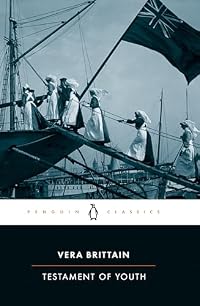
In 1914 Vera Brittain was eighteen and, as war was declared, she was preparing to study at Oxford. Four years later her life - and the life of her whole generation - had changed in a way that was unimaginable in the tranquil pre-war era. TESTAMENT OF YOUTH, one of the most famous autobiographies of the First World War, is Brittain's account of how she survived the period; how she lost the man she loved; how she nursed the wounded and how she emerged into an altered world. A passionate record show more of a lost generation, it made Vera Brittain one of the best-loved writers of her time. show lessTags
Recommendations



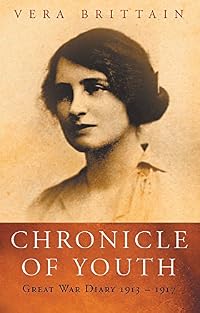











Member Recommendations
cushlareads Testament of Youth is Vera Brittain's very moving autobiography of her life and loss of loved ones in World War One. The Ghost at the Wedding is about Jessie Walker, born in Australia in 1899, and numerous family members who went off to fight in World War One and later Two. Both books were great.

jigarpatel Testament of Youth is almost required reading for Testament of Friendship. The former a memoir of Vera Brittain, the latter a biography of her closest friend Winifred Holtby. Although focusing on individuals and their relationships, they also powerfully describe the "state of the times". In particular, causes such as feminism, pacifism and racial equality are brought to life through the eyes of the protagonists.

bjappleg8 Both books describe the decimation of a generation of young men as seen close up: from WWI in Testament of Youth and in The Great Believers the ravages of AIDS in the 1980s.
charlie68 Similar vibe an autobiographical account but also a commentary on contemporary society.
charlie68 A Fictional account of a coal town and the birth of the labor movement.

susanbooks 2 memoirs about good Victorian-era girls who grew into women while nursing during WW1
Member Reviews
In 1933, Vera's Brittain's memoir of her life before, during, and immediately after WWI was published. The book is an incredibly moving account of what it was like to come of age during the Great War. There are three parts to the book. The first part tells about life for a young woman growing up in a Victorian household, and all of the pressures, expectations, and naivety that came along with it. It also sets the stage for Brittain's relationships with four young men, including her brother and her later fiancé, all of whom would serve in the war. In the second section, Vera enlists as a nurse. She works several places: London, Malta, and France. She shares many details of the work, the conditions, and the emotional and physical toll. show more This section vividly depicts what it was like to repeatedly "say goodbye" to loved ones and the stress of waiting to hear if friends and family had survived each battle. The third section is about the immediate aftermath of the war: how she deals with the losses she suffers, her views on international politics, and whether she desires to try to balance her work with marriage and children.
I really loved this book. Brittain's writing is honest and she doesn't shy away from sharing her grief or her opinions. She writes with great emotion without being overly dramatic, even in dramatic circumstances. I was sucked right in to her world. I particularly loved the first and second sections. The third lost a little momentum for me, with the views on world politics. It felt less personal. I also read in the afterward that the man she ended up marrying didn't want to be as big a part of the book as she wanted him to be. So that probably made it harder to write with the honestly and poignancy that she achieved in the first sections.
I put off reading this book for quite a few years because it is long, but I found it very readable and I'm glad I finally got to it. It's an important viewpoint of a woman who served in WWI. show less
I really loved this book. Brittain's writing is honest and she doesn't shy away from sharing her grief or her opinions. She writes with great emotion without being overly dramatic, even in dramatic circumstances. I was sucked right in to her world. I particularly loved the first and second sections. The third lost a little momentum for me, with the views on world politics. It felt less personal. I also read in the afterward that the man she ended up marrying didn't want to be as big a part of the book as she wanted him to be. So that probably made it harder to write with the honestly and poignancy that she achieved in the first sections.
I put off reading this book for quite a few years because it is long, but I found it very readable and I'm glad I finally got to it. It's an important viewpoint of a woman who served in WWI. show less
To me and my contemporaries, with our cheerful confidence in the benignity of fate, War was something remote, unimaginable, its monstrous destructions and distresses safely shut up, like the Black Death and the Great Fire, between the covers of history books. ... What really mattered were not these public affairs, but the absorbing incidents of our own private lives -- and now, suddenly, the one had impinged upon the other, and public events and private lives had become inseparable. (p. 98)
For those who read this memoir, War will never more be "something remote, unimaginable." It will be real, searingly painful, ineffective and so obviously wrong. When World War I broke out in 1914, Vera Brittain was only 18 and had recently overcome show more tremendous odds to be admitted to Oxford. When her fiancé Roland, her brother Edward, and two good friends all joined the Army, Brittain left her studies to become a nurse. She served first in London, later in Malta, and finally at the front in France before returning to England.
Brittain was an early feminist; every decision she made went against the norm, something she was keenly aware of:
Probably no ambitious girl who has lived in a family which regards the subservience of women as part of the natural order of creation ever completely recovers from the bitterness of her early emotions. Perhaps it is just as well; women have still a long way to travel before their achievements are likely to be assessed without irrelevant sex considerations entering in to bias the judgment of the critic ... (p. 59)
She was driven, but also understood the "frivolity" of pursuing a degree in wartime. Her nursing experience forms the heart of this book, and is also the most emotional. Brittain describes each hospital's harsh and inadequate conditions, and some of the soldiers under her care. When she is assigned to a ward for German prisoners, the reader begins to understand that "the enemy" also have mothers, wives, and families who love them. And, while Brittain is "doing her bit," she experiences tremendous personal loss as those she loves lose their lives in the conflict. I found myself holding back tears, and cautiously turning the pages, fearing the next death.
After the war, Brittain found that not only had her country changed, but so had she:
Only the permanence of my fondest ambitions, and the strange and growing likeness of my son to Edward, reminds me that I am still the individual who went to Uppingham Speech Day in 1914, for although I was a student at Oxford in both my lives, it was not the same Oxford and I was not the same student. (p. 495)
Her experience left permanent emotional scars, and she struggled to cope with being part of "the lost generation." Still, she was able to return to Oxford, and obtained her degree shortly after the university began awarding them to women. Brittain became a regular lecturer with the League of Nations Union. She returned to Europe, touring several countries to understand the impact and aftermath of the war; this once again brought home the pointlessness of it all.
This is one of the most moving and powerful books I've ever read. If all you know of war is strategy, tactics, good guys and bad guys, then you must read this book. Brittain has left us an important legacy. In her words:
Perhaps, after all, the best that we who were left could do was refuse to forget, and to teach our successors what we remembered in the hope that they, when their own day came, would have more power to change the state of the world than this bankrupt, shattered generation. (p.646) show less
For those who read this memoir, War will never more be "something remote, unimaginable." It will be real, searingly painful, ineffective and so obviously wrong. When World War I broke out in 1914, Vera Brittain was only 18 and had recently overcome show more tremendous odds to be admitted to Oxford. When her fiancé Roland, her brother Edward, and two good friends all joined the Army, Brittain left her studies to become a nurse. She served first in London, later in Malta, and finally at the front in France before returning to England.
Brittain was an early feminist; every decision she made went against the norm, something she was keenly aware of:
Probably no ambitious girl who has lived in a family which regards the subservience of women as part of the natural order of creation ever completely recovers from the bitterness of her early emotions. Perhaps it is just as well; women have still a long way to travel before their achievements are likely to be assessed without irrelevant sex considerations entering in to bias the judgment of the critic ... (p. 59)
She was driven, but also understood the "frivolity" of pursuing a degree in wartime. Her nursing experience forms the heart of this book, and is also the most emotional. Brittain describes each hospital's harsh and inadequate conditions, and some of the soldiers under her care. When she is assigned to a ward for German prisoners, the reader begins to understand that "the enemy" also have mothers, wives, and families who love them. And, while Brittain is "doing her bit," she experiences tremendous personal loss as those she loves lose their lives in the conflict. I found myself holding back tears, and cautiously turning the pages, fearing the next death.
After the war, Brittain found that not only had her country changed, but so had she:
Only the permanence of my fondest ambitions, and the strange and growing likeness of my son to Edward, reminds me that I am still the individual who went to Uppingham Speech Day in 1914, for although I was a student at Oxford in both my lives, it was not the same Oxford and I was not the same student. (p. 495)
Her experience left permanent emotional scars, and she struggled to cope with being part of "the lost generation." Still, she was able to return to Oxford, and obtained her degree shortly after the university began awarding them to women. Brittain became a regular lecturer with the League of Nations Union. She returned to Europe, touring several countries to understand the impact and aftermath of the war; this once again brought home the pointlessness of it all.
This is one of the most moving and powerful books I've ever read. If all you know of war is strategy, tactics, good guys and bad guys, then you must read this book. Brittain has left us an important legacy. In her words:
Perhaps, after all, the best that we who were left could do was refuse to forget, and to teach our successors what we remembered in the hope that they, when their own day came, would have more power to change the state of the world than this bankrupt, shattered generation. (p.646) show less
I think this is the only non-fiction book that I have ever voluntarily picked up, let alone finished. Does anything else really need to be said about it?
This is an amazing book and should be used in schools in place of all that dry history junk that we are forced to endure. On the one hand this is an autobiography, but on the other it's a discussion of politics during and after the first world war. It's an interesting mix because the author herself didn't really have an interest in politics until after all of her experiences during the war.
My biggest annoyance with history is that it cuts out all the people involved. We learn about dates and leaders and wars and catastrophes, but it's always second hand and always from afar; there are show more no people in history and thus I find it hard to care about what's going on. Ms. Brittain's story is first and foremost about herself; her academic ambitions, her relationships to friends and family, the losses she suffered, the lessons she learned, the interests and skills she developed. And in her descriptions of these things we learn about the historical events that caused them. As she says, national and international events have a frustrating tendency to force their way into personal events.
For this reason, I found it very easy to sympathize with her story and in doing so, my interest in the things that she became interested/involved in grew with hers. I'm now finding myself wanting to search out the memoirs and literary works of her contemporaries which she mentions in several places throughout the book.
Definitely a recommended read. show less
This is an amazing book and should be used in schools in place of all that dry history junk that we are forced to endure. On the one hand this is an autobiography, but on the other it's a discussion of politics during and after the first world war. It's an interesting mix because the author herself didn't really have an interest in politics until after all of her experiences during the war.
My biggest annoyance with history is that it cuts out all the people involved. We learn about dates and leaders and wars and catastrophes, but it's always second hand and always from afar; there are show more no people in history and thus I find it hard to care about what's going on. Ms. Brittain's story is first and foremost about herself; her academic ambitions, her relationships to friends and family, the losses she suffered, the lessons she learned, the interests and skills she developed. And in her descriptions of these things we learn about the historical events that caused them. As she says, national and international events have a frustrating tendency to force their way into personal events.
For this reason, I found it very easy to sympathize with her story and in doing so, my interest in the things that she became interested/involved in grew with hers. I'm now finding myself wanting to search out the memoirs and literary works of her contemporaries which she mentions in several places throughout the book.
Definitely a recommended read. show less
The world can thank Vera Brittain for keeping a detailed diary during World War I. Through her writings, Brittain is able to not only give a personal account of how the war changed her life, but the impact the conflict had on the world at large around her. When she says the war "smashed her youth" and "interrupted her personal plans" you get the sense of the level of personal destruction the violence left in its wake. She led a sheltered life in England, never leaving the country until she was twenty-one. She had both a brother and a fiancé serve in the war. Through their letters and poems, how they were affected by the conflict represents how a good majority of the soldiers coped with battle. In order to feel closer to her brother and show more fiancé, Vera volunteered to darn socks, but as the war dragged on, the desire to "do something more" led her to sign up as a probationer in a hospital. There she had an up close and personal view of war's terrible price. show less
Vera Brittain tells the story of her young adulthood, which coincided with the outbreak of World War I. I don't think I fully comprehended the description "lost generation" until I read this book. How could these young people, raised in such seemingly sunny conditions and then thrust into the horror and loss that were World War I, come out on the other side anything other than lost?
Brittain lived a privileged existence, and was able to go to Oxford even if her parents didn't quite see the point in it; how would she ever get married if she spent these years getting an education? Aside from the loss of time, who would want her after she'd been doing something as unfeminine as attending university? It all turned out to be a moot point when show more the war starts, however, and as every man she knows (including the object of her affections, Roland, and her brother Edward) joins the army, she decides she can't see the point of continuing to while away her time occupied by academics and volunteers for nursing duty.
Her observations on life and war are pointed and profound; her writing is beautiful. The fact that she wrote this with seventeen years' distance from the War, but before the outbreak of the Second World War adds a feeling of wistfulness for the modern reader. If she had only known what was coming (although she did seem to have some ideas, at least). Once the war is over, she slowly regains some sense of equilibrium, although she realizes her generation is set apart from its contemporaries, although they may be only a couple of years younger. Her generation seems to be simultaneously old and young, and they aren't sure how to reconcile that or the new world they live in. Brittain does some political work, gets involved with lecturing through the League of Nations, and works for the cause of women's rights. These later sections of the book were not as absorbing as the first part for me, but on the other hand, they were also not as unrelentingly tragic.
I lingered over this book, partially because some of it was so sad that it was best to absorb it in small doses and partially because I wanted to contemplate some of the things she wrote. Brittain's voice came through loud and clear; it felt sometimes like I was listening to the story rather than reading it.
Recommended for: people who want a World War I account from a different point of view, feminists
Quote: "He neither hated the Germans nor loved the Belgians; the only possible motive for going was "heroism in the abstract," and that didn't seem a very logical reason for risking one's life." show less
Brittain lived a privileged existence, and was able to go to Oxford even if her parents didn't quite see the point in it; how would she ever get married if she spent these years getting an education? Aside from the loss of time, who would want her after she'd been doing something as unfeminine as attending university? It all turned out to be a moot point when show more the war starts, however, and as every man she knows (including the object of her affections, Roland, and her brother Edward) joins the army, she decides she can't see the point of continuing to while away her time occupied by academics and volunteers for nursing duty.
Her observations on life and war are pointed and profound; her writing is beautiful. The fact that she wrote this with seventeen years' distance from the War, but before the outbreak of the Second World War adds a feeling of wistfulness for the modern reader. If she had only known what was coming (although she did seem to have some ideas, at least). Once the war is over, she slowly regains some sense of equilibrium, although she realizes her generation is set apart from its contemporaries, although they may be only a couple of years younger. Her generation seems to be simultaneously old and young, and they aren't sure how to reconcile that or the new world they live in. Brittain does some political work, gets involved with lecturing through the League of Nations, and works for the cause of women's rights. These later sections of the book were not as absorbing as the first part for me, but on the other hand, they were also not as unrelentingly tragic.
I lingered over this book, partially because some of it was so sad that it was best to absorb it in small doses and partially because I wanted to contemplate some of the things she wrote. Brittain's voice came through loud and clear; it felt sometimes like I was listening to the story rather than reading it.
Recommended for: people who want a World War I account from a different point of view, feminists
Quote: "He neither hated the Germans nor loved the Belgians; the only possible motive for going was "heroism in the abstract," and that didn't seem a very logical reason for risking one's life." show less
Vera Brittain's memoir is as much heartfelt plea for pacifism and feminism as passionate indictment of war and misogyny. It establishes a link between pacifism and feminism in an engaging style which avoids the pitfalls of moralism and academia. Readers with expectations of war-related non-fiction need to keep an open mind: this is more about the psyche of a nation rather than military action on the front line. What makes Testament of Youth so powerful is you know how it will end, yet the twists and turns draw you into a world, private and public, never known since the Great War. Publishing this volume 15 years after Armistice, Brittain strikes an attractive balance between perspective and emotion.
The narrative begins with a description show more of Vera's provincial middle-class upbringing: how the beginnings of war did little to disturb her sheltered life, closely supervised and restricted, the company of her brother one of her few comforts. She becomes influenced by feminists of the time and bemoans her family's reluctance to encourage her further education. Securing admission to Oxford, she talks of the impossible struggle of women to assert themselves as equals of men. She has interests in poetry, drama, debate, tennis and, of course, the growing women's suffrage movement. Amidst all this, she becomes close with Edward's friends: Victor Richardson, Geoffrey Thurlow and future fiancé Roland Leighton. A disillusioned Roland Leighton, the first to begin active service, describes his experiences at the front as "a mere trade". Tragedy strikes.
The second part delves into the psychology of the young soldier driven by duty and honour whose world view is shattered by the realities of trench warfare. Vera, meanwhile, cannot fathom an academic life while her closest friends risk their lives, and becomes a Voluntary Aid Detachment (VAD) nurse, taking positions in London, Malta and France. Her exertions help her face recent shocks while fuelling her pacifism. She is particularly affected by her spell nursing German prisoners of war, and describes in detail the challenging conditions, only worsened by the uneasy relationship between VADs and professional nurses. This section includes poignant excerpts from her diary and correspondence with her closest friends. Further tragedy strikes.
The final part dwells on her return to Oxford, political developments, and her activism. In particular, equal work opportunities for women and their enfranchisement become a hot topic. I recall my headmaster claiming the greatest tragedy of the Great War was that it was the very best who were first sent to the front and lost to the world. Yet Vera observes that whether or not one received a medal was as much a matter of chance as of individual merit: whether a soldier survived the countless and senseless avenues to death for the opportunity to exhibit their bravery. The gaping hole nonetheless left in post-war Britain, a figurative lost generation, was only slowly and partially filled via recognition of the active part women could play in the nation's recovery. Vera returns to Oxford, graduating in History instead of English in an attempt to better understand what had happened. She befriends fellow aspiring author Winifred Holtby, with whom she tours occupied Germany and Austria.
Despite the losses she feels so deeply, Vera finds ways to live but not forget. Indeed, to live and be active in life is a way for the "war generation" to give purpose to those who perished. Beautifully crafted, I have read few books, fiction or non-fiction, which capture so vividly young people's attitudes to war. show less
The narrative begins with a description show more of Vera's provincial middle-class upbringing: how the beginnings of war did little to disturb her sheltered life, closely supervised and restricted, the company of her brother one of her few comforts. She becomes influenced by feminists of the time and bemoans her family's reluctance to encourage her further education. Securing admission to Oxford, she talks of the impossible struggle of women to assert themselves as equals of men. She has interests in poetry, drama, debate, tennis and, of course, the growing women's suffrage movement. Amidst all this, she becomes close with Edward's friends: Victor Richardson, Geoffrey Thurlow and future fiancé Roland Leighton. A disillusioned Roland Leighton, the first to begin active service, describes his experiences at the front as "a mere trade". Tragedy strikes.
The second part delves into the psychology of the young soldier driven by duty and honour whose world view is shattered by the realities of trench warfare. Vera, meanwhile, cannot fathom an academic life while her closest friends risk their lives, and becomes a Voluntary Aid Detachment (VAD) nurse, taking positions in London, Malta and France. Her exertions help her face recent shocks while fuelling her pacifism. She is particularly affected by her spell nursing German prisoners of war, and describes in detail the challenging conditions, only worsened by the uneasy relationship between VADs and professional nurses. This section includes poignant excerpts from her diary and correspondence with her closest friends. Further tragedy strikes.
The final part dwells on her return to Oxford, political developments, and her activism. In particular, equal work opportunities for women and their enfranchisement become a hot topic. I recall my headmaster claiming the greatest tragedy of the Great War was that it was the very best who were first sent to the front and lost to the world. Yet Vera observes that whether or not one received a medal was as much a matter of chance as of individual merit: whether a soldier survived the countless and senseless avenues to death for the opportunity to exhibit their bravery. The gaping hole nonetheless left in post-war Britain, a figurative lost generation, was only slowly and partially filled via recognition of the active part women could play in the nation's recovery. Vera returns to Oxford, graduating in History instead of English in an attempt to better understand what had happened. She befriends fellow aspiring author Winifred Holtby, with whom she tours occupied Germany and Austria.
Despite the losses she feels so deeply, Vera finds ways to live but not forget. Indeed, to live and be active in life is a way for the "war generation" to give purpose to those who perished. Beautifully crafted, I have read few books, fiction or non-fiction, which capture so vividly young people's attitudes to war. show less
Testament of Youth is Vera Brittain’s memoir of her years just prior to, during, and shortly after World War I. It is a unique look at the war from the perspective of a woman who gave up her studies at Oxford to serve as a nurse in France and Malta. Like so many of her fellows, she lost all the important young men in her life: her brother, Edward; he fiance, Roland; and two close friends Gregory and Victor. When the war years had passed, she was alone and bereft and struggling to think what life could possibly have to offer.
There seemed to be nothing left in the world, for I felt that Roland had taken with him all my future and Edward all my past.
The book is not perfect. There are sections, particularly those after the war when she show more deals with her feminist activities and her work to further the League of Nations, that go on far too long and with detail that can have little or no interest to the reader. That can easily be forgiven, however, in the face of the genuine and heartfelt account, particularly of the war years, a section in which I hung on every word.
I cried for these young men, whose lives were thrown away so cavalierly by the governments who refused to solve their disagreements without loss of life. So much of the book is based on actual correspondence with them, their poems, their letters. How intelligent and expressive, how young and promising, so much to live for and so little opportunity to reach the potential they exhibited. Vera Brittain’s daughter said she never recovered from the loss of her lover, Roland Leighton. I can understand that. He was eternally young for her, he was always handsome and ready to step into the world and conquer it. He never became old or disappointing.
What revelations I had about the women of this era. The extent of her independent spirit and her ambitions seemed so modern to me. It was hard for me to imagine this woman as a product of the late 1800’s and not the 20th Century. Having recently read All Quiet on the Western Front, which was written from the perspective of a young German soldier, I felt this memoir provided yet a wider view of the war and another important perspective, that of a woman.
I loved that the book was peppered with poems, both those of Vera Brittain and Roland Leighton and those that are more widely known of Rupert Brooke and Wilfred Owen and Alan Seeger. For me, they added to the atmosphere of loss that must be felt when you consider that this is the story of a vanished generation.
I have a rendezvous with Death by Alan Seeger (who kept his rendezvous in 1916)
I have a rendezvous with Death
At some disputed barricade,
When Spring comes back with rustling shade
And apple-blossoms fill the air—
I have a rendezvous with Death
When Spring brings back blue days and fair.
It may be he shall take my hand
And lead me into his dark land
And close my eyes and quench my breath—
It may be I shall pass him still.
I have a rendezvous with Death
On some scarred slope of battered hill,
When Spring comes round again this year
And the first meadow-flowers appear.
God knows 'twere better to be deep
Pillowed in silk and scented down,
Where Love throbs out in blissful sleep,
Pulse nigh to pulse, and breath to breath,
Where hushed awakenings are dear ...
But I've a rendezvous with Death
At midnight in some flaming town,
When Spring trips north again this year,
And I to my pledged word am true,
I shall not fail that rendezvous. show less
There seemed to be nothing left in the world, for I felt that Roland had taken with him all my future and Edward all my past.
The book is not perfect. There are sections, particularly those after the war when she show more deals with her feminist activities and her work to further the League of Nations, that go on far too long and with detail that can have little or no interest to the reader. That can easily be forgiven, however, in the face of the genuine and heartfelt account, particularly of the war years, a section in which I hung on every word.
I cried for these young men, whose lives were thrown away so cavalierly by the governments who refused to solve their disagreements without loss of life. So much of the book is based on actual correspondence with them, their poems, their letters. How intelligent and expressive, how young and promising, so much to live for and so little opportunity to reach the potential they exhibited. Vera Brittain’s daughter said she never recovered from the loss of her lover, Roland Leighton. I can understand that. He was eternally young for her, he was always handsome and ready to step into the world and conquer it. He never became old or disappointing.
What revelations I had about the women of this era. The extent of her independent spirit and her ambitions seemed so modern to me. It was hard for me to imagine this woman as a product of the late 1800’s and not the 20th Century. Having recently read All Quiet on the Western Front, which was written from the perspective of a young German soldier, I felt this memoir provided yet a wider view of the war and another important perspective, that of a woman.
I loved that the book was peppered with poems, both those of Vera Brittain and Roland Leighton and those that are more widely known of Rupert Brooke and Wilfred Owen and Alan Seeger. For me, they added to the atmosphere of loss that must be felt when you consider that this is the story of a vanished generation.
I have a rendezvous with Death by Alan Seeger (who kept his rendezvous in 1916)
I have a rendezvous with Death
At some disputed barricade,
When Spring comes back with rustling shade
And apple-blossoms fill the air—
I have a rendezvous with Death
When Spring brings back blue days and fair.
It may be he shall take my hand
And lead me into his dark land
And close my eyes and quench my breath—
It may be I shall pass him still.
I have a rendezvous with Death
On some scarred slope of battered hill,
When Spring comes round again this year
And the first meadow-flowers appear.
God knows 'twere better to be deep
Pillowed in silk and scented down,
Where Love throbs out in blissful sleep,
Pulse nigh to pulse, and breath to breath,
Where hushed awakenings are dear ...
But I've a rendezvous with Death
At midnight in some flaming town,
When Spring trips north again this year,
And I to my pledged word am true,
I shall not fail that rendezvous. show less
Members
- Recently Added By
Lists

Best Autobiographies and Memoirs
370 works; 67 members

1001 Books You Must Read Before You Die
1,445 works; 1,131 members

Best Biographies, Autobiographies and Memoirs
464 works; 156 members

Women in War
148 works; 30 members

Books about World War I
80 works; 14 members

World War I books
32 works; 6 members

Favourite Non-Fiction
24 works; 1 member

My TBR
371 works; 3 members

Female Author
1,183 works; 66 members

Books Set in London
49 works; 3 members

Favourite Books
50 works; 1 member

Best Books of 1926-1935
403 works; 10 members

20th Century Literature
1,161 works; 55 members

1,001 BYMRBYD Concensus
723 works; 27 members

Five star books
1,755 works; 108 members

1930s
262 works; 5 members

Pleasant Surprises: Books That Exceeded Our Expectations
418 works; 143 members

THE WAR ROOM
813 works; 24 members

Best Biographies of Notable Women
277 works; 101 members
Favourite books by Female Authors
43 works; 4 members

LibraryThingers' 1001 Books You Must Read Before You Die
442 works; 30 members

Books Read in 2016
4,666 works; 197 members

Best books read in 2011
200 works; 50 members

I Can't Finish This Book
189 works; 22 members

Blue Pyramid 1,276 Best Books of All Time
1,248 works; 32 members
Books mentioned in The Diary of a Provincial Lady
59 works; 4 members
Books referenced in A Very Great Profession: The Woman's Novel 1914-39
199 works; 6 members

My favourite books
96 works; 3 members
Best Books of the 20th Century
193 works; 5 members
500 Great Books by Women
507 works; 60 members

War Literature
101 works; 19 members

Non-Fiction Worth Reading
1,015 works; 253 members
Female Protagonist
1,056 works; 56 members

Allie's Favourite 150 Books
145 works; 3 members
Favourite Books
1,817 works; 316 members

Books We Love to Reread
688 works; 296 members
Talk Discussions
Past Discussions
Group Read, November 2014: Testament of Youth in 1001 Books to read before you die (November 2014)
Testament of Youth - Part 1 in Group Reads - Literature (July 2013)
Author Information

42+ Works 4,136 Members
Some Editions
Awards and Honors
Awards
Notable Lists
Series

Belongs to Publisher Series
Virago Modern Classics (562)
Common Knowledge
- Canonical title
- Testament of Youth
- Original title
- Testament of Youth
- Original publication date
- 1933
- People/Characters
- Vera Brittain; Roland Leighton
- Important places
- Etaples, Pas-de-Calais, Hauts-de-France, France; France; Derbyshire, England, UK; University of Oxford, Oxford, Oxfordshire, England, UK
- Important events
- World War I (1914 | 1918)
- Related movies
- Testament of Youth (1979 | TV miniseries | IMDb); Testament of Youth (2012 | IMDb); Testament of Youth (2014)
- Epigraph
- And some there be, which have no memorial; who are perished, as though they had never been; and are become as though they had never been born; and their children after them. But those were merciful men, whose righteousness ha... (show all)th not been forgotten... Their bodies are buried in peace; but their name liveth for evermore. The people will tell of their wisdom, and the congregation will shew forth their praise.
--Ecclesiastes 44 - Dedication
- To
R.A.L. and E.H.B.
In Memory - First words
- When the Great War broke out, it came to me not as a superlative tragedy, but as an interruption of the most exasperating kind to my personal plans.
- Quotations
- The impulse to put what I felt into verse -- a new impulse which had recently begun both to fascinate and torment me -- sprang up with overwhelming compulsion.
Absorbed in Unseen Translations and the Binomial Theorem, eagerly looking forward to seeing Roland once more at Uppingham, and mitigating the interval by a heartless retrospective flirtation with my would-be suitor of the pre... (show all)vious summer, I entirely failed to notice in the daily papers of June 29th an account of the assassination, on the previous morning, of a European potentate whose name was unknown to me, in a Balkan town of which I had never heard. (pg 85/661)
Whenever I think of the weeks that followed the news of Roland's death, a series of pictures, disconnected but crystal clear, unroll themselves like a kaleidoscope through my mind. - Last words
- (Click to show. Warning: May contain spoilers.)And as I went up to him and took his hands, I felt that I had made no mistake; and although I knew that, in a sense which could never be true of him, I was linked with the past that I had yielded up, inextricably and for ever, I found it not inappropriate that the years of frustration and grief and loss, of work and conflict and painful resurrection, should have led me, through their dark and devious ways to this new beginning.
- Blurbers
- Holtby, Winifred
- Original language*
- Inglese
*Some information comes from Common Knowledge in other languages. Click "Edit" for more information.
Classifications
- Genres
- Biography & Memoir, Nonfiction, History
- DDC/MDS
- 828.91209 — Literature & rhetoric English & Old English literatures English miscellaneous writings English miscellaneous writings 1900- English miscellaneous writings 1900-1999 English miscellaneous writings 1900-1945 Individual authors not limited to or chiefly identified with one specific form.
- LCC
- PR6003 .R385 .Z479 — Language and Literature English English Literature 1900-1960
- BISAC
Statistics
- Members
- 2,405
- Popularity
- 8,057
- Reviews
- 54
- Rating
- (4.14)
- Languages
- 6 — Dutch, English, German, Italian, Russian, Spanish
- Media
- Paper, Audiobook, Ebook
- ISBNs
- 31
- UPCs
- 3
- ASINs
- 34