
Mark Bostridge
Author of Letters From a Lost Generation
About the Author
Works by Mark Bostridge
Associated Works
Tagged
Common Knowledge
- Birthdate
- 1960
- Gender
- male
- Education
- University of Oxford (St Anne's College)
Westminster School, London - Occupations
- writer
critic - Nationality
- UK
- Associated Place (for map)
- UK
Members
Reviews
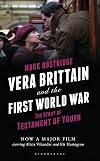
A biography of an (auto)biography is a strange, if nonsensical, concept. But such is the power of Testament of Youth that there are doubtless others like me who wish to delve deeper into its development.
I measure this work by what it adds to Testament of Youth. Naturally, it is factual and investigative in nature. First, it dispels several exaggerations. Vera Brittain's struggle to continue her studies isn't as desperate as it appears, given the positive feminist role models around her. The show more "Lost Generation" is an emotive term which applies more to the schools and colleges with military links than to the wider population. Moreover, VADs (voluntary nurses) and non-professional officers were in the Great War predominantly from middle-class backgrounds, again not representative of Britain's efforts as a whole.
Second, it picks up on nuances which many readers may have missed. For example, initially Brittain is ignorant of worldly affairs, admitted as such in the opening lines: "...it came not to me as a superlative tragedy, but as an interruption of an exasperating kind...". But it takes a long while before she becomes a true, ingrained pacifist. Roland Leighton is probably not as anti-war as Brittain makes out. Contrasting Roland's famous words "Modern warfare is merely a trade" are letters from Roland to Vera which represent the front line as surprisingly idyllic.
Third, it adds new insight which may disappoint readers who hold Vera and her brother Edward in the highest light. Who would think it is Vera who persuades Edward to join the military so soon against his wishes? Separately, the Afterword details an investigation which reveals the disturbing truth behind Edward's demise.
I skipped the last chapter on the development of the movie. Partly because I haven't seen the movie, but more because a book about a movie derived from a book is too much for me to handle. All in all, this is a good short read for those who enjoyed Testament of Youth, but little more: under no circumstances should one read this before Testament of Youth. show less
I measure this work by what it adds to Testament of Youth. Naturally, it is factual and investigative in nature. First, it dispels several exaggerations. Vera Brittain's struggle to continue her studies isn't as desperate as it appears, given the positive feminist role models around her. The show more "Lost Generation" is an emotive term which applies more to the schools and colleges with military links than to the wider population. Moreover, VADs (voluntary nurses) and non-professional officers were in the Great War predominantly from middle-class backgrounds, again not representative of Britain's efforts as a whole.
Second, it picks up on nuances which many readers may have missed. For example, initially Brittain is ignorant of worldly affairs, admitted as such in the opening lines: "...it came not to me as a superlative tragedy, but as an interruption of an exasperating kind...". But it takes a long while before she becomes a true, ingrained pacifist. Roland Leighton is probably not as anti-war as Brittain makes out. Contrasting Roland's famous words "Modern warfare is merely a trade" are letters from Roland to Vera which represent the front line as surprisingly idyllic.
Third, it adds new insight which may disappoint readers who hold Vera and her brother Edward in the highest light. Who would think it is Vera who persuades Edward to join the military so soon against his wishes? Separately, the Afterword details an investigation which reveals the disturbing truth behind Edward's demise.
I skipped the last chapter on the development of the movie. Partly because I haven't seen the movie, but more because a book about a movie derived from a book is too much for me to handle. All in all, this is a good short read for those who enjoyed Testament of Youth, but little more: under no circumstances should one read this before Testament of Youth. show less
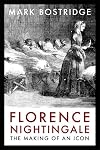
I read this biography in the hopes of shedding the cliche Florence Nightingale has inadvertently become in my mind. The very name conjures up a saintly figure of epic kindness. A woman with angel wings and endless patience. Someone with a glowing halo and endless caring calm. I wanted Bostridge's biography to turn an otherwise glossy icon into flesh and bone with faults and no-so-saintly feelings. It turns out, the public did a lot to add to the "lady with the lamp" mythology for when the show more desperate attach an attribute like hope to a person, the image becomes angelic. Such was the desperation of soldiers during the Crimean War. The lamp Nightingale often carried beat back the darkness (and encroaching fear of death) with its soothing soft glow. Elizabeth Gaskell called her a saint. John Davies implied she was a goddess with a magic touch.
Tidbits of interesting not-so-saintly information I enjoyed learning: from an early age Nightingale wanted to care for the sick. She was not shy about voicing her criticism regarding hospital conditions: defective ventilation and horrid sanitation practices. She didn't get along well with others as her persistence for improved conditions irked administrators far and wide. Through and despite all that, like a modern day celebrity craze, there was a insatiable demand for her likeness. Portraits of her cropped up everywhere. People were writing music about her. By 1855 people were naming boats and buildings after her.
Trivial details: Nightingale traveled through Egypt to Cairo with budding author Gustave Flaubert by sheer coincidence. She made Elizabeth Gaskell's acquaintance. She had a sister who lost her identity in the shadow of Florence's greatness. Florence made unusual animals her pets, a cicada and and owl.
There is no doubt Florence Nightingale: the Making of an Icon is the result of meticulous research. show less
Tidbits of interesting not-so-saintly information I enjoyed learning: from an early age Nightingale wanted to care for the sick. She was not shy about voicing her criticism regarding hospital conditions: defective ventilation and horrid sanitation practices. She didn't get along well with others as her persistence for improved conditions irked administrators far and wide. Through and despite all that, like a modern day celebrity craze, there was a insatiable demand for her likeness. Portraits of her cropped up everywhere. People were writing music about her. By 1855 people were naming boats and buildings after her.
Trivial details: Nightingale traveled through Egypt to Cairo with budding author Gustave Flaubert by sheer coincidence. She made Elizabeth Gaskell's acquaintance. She had a sister who lost her identity in the shadow of Florence's greatness. Florence made unusual animals her pets, a cicada and and owl.
There is no doubt Florence Nightingale: the Making of an Icon is the result of meticulous research. show less
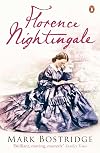
This biography of Nightingale focuses on the health care reform work that occupied the last 50 years of her long life. Administrative reform isn't the most romantic subject, but the case is easily made that Nightingale saved many more lives through her tireless promotion of the proper nursing education, of rational hospital design, and most of all of the importance of hygiene (and preventative medicine in general) than she did in the nursing work she performed during the Crimean war which show more was to bring her so much fame. This warts-and-all portrayal show her to be a far more fascinating figure than the saintly caregiver fetishised by 19th century sentimentalists—fiercely intelligent; a tireless lobbyist; a pragmatist and empiricist when it came to nursing education and hospital design, with little time for theory; an enthusiastic promoter of social statistics and data visualisation—all of these sides to Nightingale would seem to me to be more attractive to modern readers than to her 19th century contemporaries whose concept of the feminine ideal was that of a wife and mother. show less
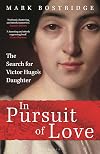
The life of Adele Hugo, the famous writer’s youngest daughter, is stranger than fiction. She fell in love with a British soldier and followed him across the world. She spent her last days in an asylum. Was her love ever returned, or was she an obsessed and unwanted stalker?
Mark Bostridge obsessively traveled across the world to track down Adele, hoping to discover the truth. He was able to dredge up new documents and photographs and insights.
Adele’s beloved older sister’s death was a show more shock her father never recovered from. The beautiful Adele was pursued, but she rejected marriage. Victor Hugo was forced to leave his beloved homeland, taking the family (and his mistress!) to the Channel Islands. Hugo was larger than life in his fame as a novelist–and for his sexual appetite.
Adele fell for the handsome British officer Albert Andrew Pinson. They had a love affair. She followed him from post to post, but they never married, although a marriage license has been found. In fact, he married another woman, but remained concerned for Adele’s welfare.
Bostridge story of his search for Adele mirrors Adele’s obsession. Drawing from Adele’s journal, family stories and photographs, and historical records, Bostridge teases out a story that confirms that the mysteries of the human heart are unsolvable.
Thanks to the publisher for a free book. show less
Mark Bostridge obsessively traveled across the world to track down Adele, hoping to discover the truth. He was able to dredge up new documents and photographs and insights.
Adele’s beloved older sister’s death was a show more shock her father never recovered from. The beautiful Adele was pursued, but she rejected marriage. Victor Hugo was forced to leave his beloved homeland, taking the family (and his mistress!) to the Channel Islands. Hugo was larger than life in his fame as a novelist–and for his sexual appetite.
Adele fell for the handsome British officer Albert Andrew Pinson. They had a love affair. She followed him from post to post, but they never married, although a marriage license has been found. In fact, he married another woman, but remained concerned for Adele’s welfare.
Bostridge story of his search for Adele mirrors Adele’s obsession. Drawing from Adele’s journal, family stories and photographs, and historical records, Bostridge teases out a story that confirms that the mysteries of the human heart are unsolvable.
Thanks to the publisher for a free book. show less
Lists
Awards


You May Also Like


Associated Authors
Statistics
- Works
- 10
- Also by
- 3
- Members
- 629
- Popularity
- #40,057
- Rating
- 4.1
- Reviews
- 14
- ISBNs
- 34