
Gillian Gill
Author of We Two: Victoria and Albert: Rulers, Partners, Rivals
About the Author
Works by Gillian Gill
Nightingales: The Extraordinary Upbringing and Curious Life of Miss Florence Nightingale (2004) 303 copies, 1 review
Tagged
Common Knowledge
- Canonical name
- Gill, Gillian
- Other names
- Scobie, Gillian (birth name)
- Birthdate
- 1942-06-12
- Gender
- female
- Education
- University of Cambridge (PhD|French Literature|1972)
University of Cambridge (BA first-class honours|French. Italian, and Latin) - Occupations
- university professor
scholar of feminist theory
scholar of French literature
translator - Organizations
- Harvard University
Northeastern University
Wellesley College
Yale University - Nationality
- UK
- Birthplace
- Cardiff, Wales, UK
- Map Location
- UK
Members
Reviews
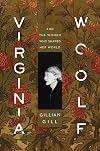
I have complicated feelings about this one! This is a gossipy, fun, frustrating, engaging, and readable book that doesn't entirely live up to the promise of its title. Gill tells us she is going to explore the life of Virginia Woolf by looking at the women in her life -- her ancestors, her immediate family, her friends, and her contemporaries -- but the women we hear the most about are the most flamboyant and racy, we end up hearing nearly as much about the men in Woolf's life, and there are show more big holes in exploring influences that seem more germane to Woolf's life in preference for a good anecdote or sensational story.
Gill starts way back in Woolf's family tree with her great-great grandparents, a French aristocrat living in colonial northern India and his beautiful Franco-Indian wife. Gill gets a lot of mileage out of the inherited beauty of the de L'etang / Pattle / Jackson / Stephen family, and dwells a little too much on racially-based dissection of family portraits for evidence of Indian ancestry. She dips a little into the French and English colonial oppression of India but, for the most part, appears to be pretty wowed by anyone who has an aristocratic background. Still, there are some great stories here and a pattern of extremely strong women and weak, flawed, and forgettable husbands, at least the way Gill tells it. There is a lot of living India for France and England, starting over, and (not unusual for the time) working to secure upwardly mobile marriages for all these beautiful daughters.
A great deal of time is given to "Pattledom" -- the artistic and literary home of Virginia Woolf's great aunts, particularly Julia Cameron, who is well known for her artistic photographic portraits of friends and family, including Woolf's mother, Julia Jackson and her children. Julia Cameron's sister, Maria Jackson, however, is hardly delved into at all, despite her living for years in the home with Virginia Woolf and her having probably a great deal to do with the psychology of Woolf's mother. Julia Jackson Duckworth Stephen is a fascinating character and she is given a lot of book time, although she is difficult to pin down. She marries for love, loses her husband to a sudden illness when she has three small children, takes care of business as a single mother, known for her philanthropy and self-sacrifice, and then, to the surprise of everyone, marries the grumpy, old, and pretty poor (but very devoted) Leslie Stephen and starts a new family, including Virginia, her sister Vanessa, and her two brothers.
And, of course, there is Bloomsbury. After the untimely death of their mother and the long-awaited/feared death of their father, the Stephen siblings drew a non-conforming, artistic, gay, literary, sexual, snobby, and ever-growing crowd of (mostly male) friends and lovers. Virginia Woolf, however, was always a little outside of this group -- because of her mental health, her caustic wit, her Jewish husband, and, probably most of all, the dramatic and overwhelming orbit of beloved older sister, Vanessa Bell. I'm not going to get into the ins and outs of Bloomsbury, but it is fascinating and covered here in great detail, but with much more of an emphasis on Vanessa than Virginia.
Gill's delight in anecdotes, armchair psychology, speculation, and cutesy phrasing means that she frequently appears to mock or belittle issues of mental health, sexual abuse, and familial dysfunction. She then tries to right that boat by overcompensating with preachy judgment on the topics that she had earlier rolled into a delightful turn of phrase. This gets a little old. I also don't see how you can have a subject like Woolf, who is such a beautiful, prolific, and revealing writer, and quote so little from her books, letters, and diaries. The final slim chapter and epilogue, which talk about Virginia Woolf's marriage and her relationship with her niece and nephews, shows a hard-working, brilliant woman in a love-filled marriage of two flawed but well-matched people, who has a playful, insightful, and close relationship with her family members. You would not think this was the case from the flippant discussions of "madness" and intimate speculation on Woolf's sexuality. Gill also shoehorns in references to her own other biographies willy nilly, regardless of their relationship to Woolf (get ready for a lot of references to Agatha Christie, Queen Victoria, and Florence Nightingale). And she cites movies like they are academic works!
I will admit, I still loved reading this book. I am not above enjoying some sexy gossip, family skeletons, and hidden affairs. This is super readable and gives a very specific and flawed, but engaging, view on Woolf's world. Honestly, even if you don't like Virginia Woolf, lovers of British history, Bloomsbury in general, or popular biography may get a thrill from this one. show less
Gill starts way back in Woolf's family tree with her great-great grandparents, a French aristocrat living in colonial northern India and his beautiful Franco-Indian wife. Gill gets a lot of mileage out of the inherited beauty of the de L'etang / Pattle / Jackson / Stephen family, and dwells a little too much on racially-based dissection of family portraits for evidence of Indian ancestry. She dips a little into the French and English colonial oppression of India but, for the most part, appears to be pretty wowed by anyone who has an aristocratic background. Still, there are some great stories here and a pattern of extremely strong women and weak, flawed, and forgettable husbands, at least the way Gill tells it. There is a lot of living India for France and England, starting over, and (not unusual for the time) working to secure upwardly mobile marriages for all these beautiful daughters.
A great deal of time is given to "Pattledom" -- the artistic and literary home of Virginia Woolf's great aunts, particularly Julia Cameron, who is well known for her artistic photographic portraits of friends and family, including Woolf's mother, Julia Jackson and her children. Julia Cameron's sister, Maria Jackson, however, is hardly delved into at all, despite her living for years in the home with Virginia Woolf and her having probably a great deal to do with the psychology of Woolf's mother. Julia Jackson Duckworth Stephen is a fascinating character and she is given a lot of book time, although she is difficult to pin down. She marries for love, loses her husband to a sudden illness when she has three small children, takes care of business as a single mother, known for her philanthropy and self-sacrifice, and then, to the surprise of everyone, marries the grumpy, old, and pretty poor (but very devoted) Leslie Stephen and starts a new family, including Virginia, her sister Vanessa, and her two brothers.
And, of course, there is Bloomsbury. After the untimely death of their mother and the long-awaited/feared death of their father, the Stephen siblings drew a non-conforming, artistic, gay, literary, sexual, snobby, and ever-growing crowd of (mostly male) friends and lovers. Virginia Woolf, however, was always a little outside of this group -- because of her mental health, her caustic wit, her Jewish husband, and, probably most of all, the dramatic and overwhelming orbit of beloved older sister, Vanessa Bell. I'm not going to get into the ins and outs of Bloomsbury, but it is fascinating and covered here in great detail, but with much more of an emphasis on Vanessa than Virginia.
Gill's delight in anecdotes, armchair psychology, speculation, and cutesy phrasing means that she frequently appears to mock or belittle issues of mental health, sexual abuse, and familial dysfunction. She then tries to right that boat by overcompensating with preachy judgment on the topics that she had earlier rolled into a delightful turn of phrase. This gets a little old. I also don't see how you can have a subject like Woolf, who is such a beautiful, prolific, and revealing writer, and quote so little from her books, letters, and diaries. The final slim chapter and epilogue, which talk about Virginia Woolf's marriage and her relationship with her niece and nephews, shows a hard-working, brilliant woman in a love-filled marriage of two flawed but well-matched people, who has a playful, insightful, and close relationship with her family members. You would not think this was the case from the flippant discussions of "madness" and intimate speculation on Woolf's sexuality. Gill also shoehorns in references to her own other biographies willy nilly, regardless of their relationship to Woolf (get ready for a lot of references to Agatha Christie, Queen Victoria, and Florence Nightingale). And she cites movies like they are academic works!
I will admit, I still loved reading this book. I am not above enjoying some sexy gossip, family skeletons, and hidden affairs. This is super readable and gives a very specific and flawed, but engaging, view on Woolf's world. Honestly, even if you don't like Virginia Woolf, lovers of British history, Bloomsbury in general, or popular biography may get a thrill from this one. show less
Nightingales: The Extraordinary Upbringing and Curious Life of Miss Florence Nightingale by Gillian Gill
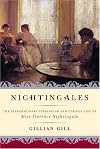
A terrific biography of Florence Nightingale and her family, from a feminist perspective. It’s the kind of detailed biography I love, with little side trips into politics of the day, family history, and military detail.
At the age of 17 FN had a religious experience that convinced her she was to have a life of service to God. From that point, she sought to be trained as a nurse or in the administration of an institution like a hospital.
As one would expect, her upper middle class family show more tried to keep her at home and close within the family circle. Much of this book is about Florence’s power struggles with her parents and with other members of her large extended family. For a young woman of her class to become a nurse Just Quite Simply Wasn't Done. But by the time she had taken charge of a home for retired governesses, and then was asked by the government to lead a party of nurses to the army hospital in Turkey, her parents and sister were proud of her, and continued to support her in extraordinary ways for the rest of her life. Her father supported her financially so that she could live independently, unusual for the time even among well to do people. Unmarried daughters were expected to live with their parents.
Because her family was wealthy and socially popular, when she went to the Crimea she had the ears of many powerful men. Eventually it was her skill at organization, more so than her nursing skill (which was considerable) that enabled her to make changes in the way the wounded in the Crimea were treated, and in how the Army dealt with its casualties.
She spend two years in the Army hospital, then for the next fifty two years was virtually a recluse, rarely leaving her home. But during that time she was busy writing, advising, influencing. That is her true legacy.
She had many close women friends but made women enemies, too; she could be clumsy at leading women. Gill makes the interesting observation that most women in this era had little experience of working in collaboration and tended to identify themselves as individuals rather than colleagues. “Discipline, collegiality, and team spirit were not qualities society asked of its women.”
The author is British and gets in some good snarky remarks. “History, as opposed to imaginative literature, is based on evidence, and no one has produced any evidence that Florence Nightingale ever engaged in sexual relations with women. This I assume to be the standard working definition of a lesbian.” About Richard Monckton Milnes, said to have been the man who Florence loved but sacrificed to her vocation (Gill refutes this): “In Turkey, Milnes was invited to a pasha’s dinner party at which the guests were entertained by Greek dancing boys dressed as women. In a letter to his mother, Richard noted that the dance became increasingly ‘lascivious and violent.’ [Biographer] Pope-Hennessy summarizes: ‘The dance ended with the Turkish guests getting thoroughly involved with the Greek dancing boys. Milnes who had had too much to eat said he dropped off to sleep.’ As a fellow biographer, I can only admire the delicacy of the expression ‘thoroughly involved’ and the positioning of the word ‘said.’”
She’s written biographies of Mary Baker Eddy and Agatha Christie and just did a book about Victoria and Albert. I’ll be looking for these. show less
At the age of 17 FN had a religious experience that convinced her she was to have a life of service to God. From that point, she sought to be trained as a nurse or in the administration of an institution like a hospital.
As one would expect, her upper middle class family show more tried to keep her at home and close within the family circle. Much of this book is about Florence’s power struggles with her parents and with other members of her large extended family. For a young woman of her class to become a nurse Just Quite Simply Wasn't Done. But by the time she had taken charge of a home for retired governesses, and then was asked by the government to lead a party of nurses to the army hospital in Turkey, her parents and sister were proud of her, and continued to support her in extraordinary ways for the rest of her life. Her father supported her financially so that she could live independently, unusual for the time even among well to do people. Unmarried daughters were expected to live with their parents.
Because her family was wealthy and socially popular, when she went to the Crimea she had the ears of many powerful men. Eventually it was her skill at organization, more so than her nursing skill (which was considerable) that enabled her to make changes in the way the wounded in the Crimea were treated, and in how the Army dealt with its casualties.
She spend two years in the Army hospital, then for the next fifty two years was virtually a recluse, rarely leaving her home. But during that time she was busy writing, advising, influencing. That is her true legacy.
She had many close women friends but made women enemies, too; she could be clumsy at leading women. Gill makes the interesting observation that most women in this era had little experience of working in collaboration and tended to identify themselves as individuals rather than colleagues. “Discipline, collegiality, and team spirit were not qualities society asked of its women.”
The author is British and gets in some good snarky remarks. “History, as opposed to imaginative literature, is based on evidence, and no one has produced any evidence that Florence Nightingale ever engaged in sexual relations with women. This I assume to be the standard working definition of a lesbian.” About Richard Monckton Milnes, said to have been the man who Florence loved but sacrificed to her vocation (Gill refutes this): “In Turkey, Milnes was invited to a pasha’s dinner party at which the guests were entertained by Greek dancing boys dressed as women. In a letter to his mother, Richard noted that the dance became increasingly ‘lascivious and violent.’ [Biographer] Pope-Hennessy summarizes: ‘The dance ended with the Turkish guests getting thoroughly involved with the Greek dancing boys. Milnes who had had too much to eat said he dropped off to sleep.’ As a fellow biographer, I can only admire the delicacy of the expression ‘thoroughly involved’ and the positioning of the word ‘said.’”
She’s written biographies of Mary Baker Eddy and Agatha Christie and just did a book about Victoria and Albert. I’ll be looking for these. show less
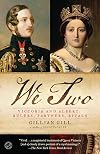
If you are looking for a credible biography of Victoria and Albert, this probably won't satisfy you. It is written in an easy-flowing, engaging style, but makes assertions that are not backed up. There are detailed notes, but no references in the text to point you to them. Perhaps the author's degree in literature led her to value a story that flowed over a properly documented text.
I was reading this for a book club and had to finish it. Therefore, I decided to relax about the lack of show more academic rigour and read this as a story based (largely, I hope) on fact rather than a true biography. That helped me enjoy the book, and I learned about aspects of Victorian society I wasn't previously aware of.
It is a compelling tale of a marriage and the challenges of balancing being Queen of England with being a dutiful, obedient wife and a mother to nine children. Albert, too, struggles with his non-traditional role of being head of the household but not the head of state.
It's also a harrowing tale of child rearing in Victorian royal families -- it's amazing people like Victoria and her son Bertie were able to accomplish what they did given how they were raised.
Bottom line: recommended for people who have a general interest in Victorian times or the life of royals, but not for those with a deeper interest in history or biography. show less
I was reading this for a book club and had to finish it. Therefore, I decided to relax about the lack of show more academic rigour and read this as a story based (largely, I hope) on fact rather than a true biography. That helped me enjoy the book, and I learned about aspects of Victorian society I wasn't previously aware of.
It is a compelling tale of a marriage and the challenges of balancing being Queen of England with being a dutiful, obedient wife and a mother to nine children. Albert, too, struggles with his non-traditional role of being head of the household but not the head of state.
It's also a harrowing tale of child rearing in Victorian royal families -- it's amazing people like Victoria and her son Bertie were able to accomplish what they did given how they were raised.
Bottom line: recommended for people who have a general interest in Victorian times or the life of royals, but not for those with a deeper interest in history or biography. show less
Virginia Woolf: And the Women Who Shaped Her World by Gillian Gill is a biography of Virginia Woolf and her forebearers. Gill, who holds a Ph.D. in modern French literature from Cambridge University, has taught at Northeastern, Wellesley, Yale, and Harvard. She is the author of We Two: Victoria and Albert: Rulers, Partners, Rivals; Nightingales: The Extraordinary Upbringing and Curious Life of Miss Florence Nightingale; Agatha Christie: The Woman and Her Mysteries; and Mary Baker Eddy.
There show more are plenty of biographies of Virginia (née Stephen)Woolf as well as her collected letters and diaries. Her life still does hold a few mysteries, one very large aspect of her life, is covered in detail by Gill but not universally agreed on by Woolf scholars. Gill's work, however, is almost a prequel of Woolf. She goes back several generations to explore her French and Indian family background.
In digging deeper into Woolf's past, Gill explores the topic of mental illness in the Stephens lineage which affected many of Virginia's generation. Her Sister Vanessa was susceptible to breakdowns, another sister was institutionalized, and both her brothers showed signs of Cyclothymia. Although most of us would consider the middle of the 20th century as modern times, it is surprising how little was known about mental illness and its treatment.
Another aspect that is covered in this book is sexuality especially among those of the Bloomsbury Group and the upper levels of society. Homosexuality was more common than one would expect and there were more than a few show marriages meant to hide the crime of homosexuality. Although well known in the upper circles, it remained a secret from the public. Private matters were deemed to remain private. Gill ties in another term that was prevalent in England at the time and expands on it: homosocially. Segregation by sex was very common and began in early schooling and lasted through the university experience. The use of Jacob's Room is used to explain some of the concepts when Jacob decides to go swimming (skinny dipping) and to sun-dry afterward -- nudity among men was commonplace and although did not mean homosexuality, it may have encouraged it in some.
Virginia Woolf: And the Women Who Shaped Her World is a well researched and very well documented work of the Stephens and Jackson (maternal) families. It examines the society that Virginia Woolf was raised in and lived as well as her personal conflicts. The Victorian society that shaped her early years. Her lack of formal education, but reading from a large family library. Her promiscuous friends and her abstinence. It is also one of the few biographies where Woolf's mental illness is not sensationalized and her relationship with Vita Sackville-West is not made a center point of her life. Virginia Woolf's life in many ways has strong ties to her ancestry and to the historical setting in which she lived. Gill does an outstanding job of providing a more complete picture of one of England's greatest 20th-century writers. show less
There show more are plenty of biographies of Virginia (née Stephen)Woolf as well as her collected letters and diaries. Her life still does hold a few mysteries, one very large aspect of her life, is covered in detail by Gill but not universally agreed on by Woolf scholars. Gill's work, however, is almost a prequel of Woolf. She goes back several generations to explore her French and Indian family background.
In digging deeper into Woolf's past, Gill explores the topic of mental illness in the Stephens lineage which affected many of Virginia's generation. Her Sister Vanessa was susceptible to breakdowns, another sister was institutionalized, and both her brothers showed signs of Cyclothymia. Although most of us would consider the middle of the 20th century as modern times, it is surprising how little was known about mental illness and its treatment.
Another aspect that is covered in this book is sexuality especially among those of the Bloomsbury Group and the upper levels of society. Homosexuality was more common than one would expect and there were more than a few show marriages meant to hide the crime of homosexuality. Although well known in the upper circles, it remained a secret from the public. Private matters were deemed to remain private. Gill ties in another term that was prevalent in England at the time and expands on it: homosocially. Segregation by sex was very common and began in early schooling and lasted through the university experience. The use of Jacob's Room is used to explain some of the concepts when Jacob decides to go swimming (skinny dipping) and to sun-dry afterward -- nudity among men was commonplace and although did not mean homosexuality, it may have encouraged it in some.
Virginia Woolf: And the Women Who Shaped Her World is a well researched and very well documented work of the Stephens and Jackson (maternal) families. It examines the society that Virginia Woolf was raised in and lived as well as her personal conflicts. The Victorian society that shaped her early years. Her lack of formal education, but reading from a large family library. Her promiscuous friends and her abstinence. It is also one of the few biographies where Woolf's mental illness is not sensationalized and her relationship with Vita Sackville-West is not made a center point of her life. Virginia Woolf's life in many ways has strong ties to her ancestry and to the historical setting in which she lived. Gill does an outstanding job of providing a more complete picture of one of England's greatest 20th-century writers. show less
Lists
Awards


You May Also Like


Associated Authors
Statistics
- Works
- 6
- Members
- 1,256
- Popularity
- #20,421
- Rating
- 3.8
- Reviews
- 23
- ISBNs
- 32
- Languages
- 1
- Favorited
- 1