
Kate Williams (1) (1974–)
Author of Becoming Queen Victoria: The Tragic Death of Princess Charlotte and the Unexpected Rise of Britain's Greatest Monarch
For other authors named Kate Williams, see the disambiguation page.
About the Author
Kate Williams is the author of the New York Times bestseller Becoming Queen Victoria, which was the inspiration for the Academy Award-winning film The Young Victoria, starring Emily Blunt and Rupert Friend as Queen Victoria and Prince Albert. Kate works as CNN's British royalty and historical show more expert. She lives in England. show less
Series
Works by Kate Williams
Becoming Queen Victoria: The Tragic Death of Princess Charlotte and the Unexpected Rise of Britain's Greatest Monarch (2008) 399 copies, 19 reviews
The Betrayal of Mary, Queen of Scots: Elizabeth I and Her Greatest Rival (2018) 116 copies, 3 reviews
Associated Works
Tagged
Common Knowledge
- Birthdate
- 1974-11-30
- Gender
- female
- Education
- University of London (Queen Mary College|M.A.|Royal Holloway College|M.A.)
University of Oxford (Somerville College|B.A.|D.Phil.) - Occupations
- television presenter
social historian - Organizations
- University of Reading
- Relationships
- Gipp, Marcus (husband)
- Short biography
- Kate Williams is an author, social historian, constitutional and royal expert, broadcaster and novelist. She has an MA from Queen Mary, University of London, and a DPhil from the University of Oxford. She appears regularly on the BBC and Channel 4. She lives in London.
- Nationality
- UK
- Birthplace
- Staffordshire, England, UK
- Places of residence
- London, England, UK
- Map Location
- UK
Members
Reviews
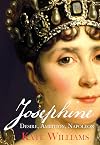
The recent Napoleon 'biopic' with Joaquin Phoenix - go figure - prompted me to read more about his pathetic wife, Josephine, but honestly, I wish I hadn't bothered. Marie Antoinette was born to wealth and privilege, married into French royalty at a very young age, persecuted for her excessive spending, accused of being a whore, and was executed during the Revolution. Josephine - and that wasn't actually her name, but the moniker her narcissistic husband lumped her with - was born on a show more plantation island, was a whore in all but name, escaped execution by the skin of her rotten teeth, married a French dictator younger than herself, spent even more money than Marie Antoinette, before finally being dumped for a younger woman who could give the little man an heir. I know who I feel sympathy and admiration for, and she didn't have to play at being queen alongside her faker of a husband.
Kate Williams has written a comprehensive biography, even if most of the later chapters are given over to Napoleon because Josephine surrendered her own personality and dignity, but reading about the pair of them made me nauseous. Only men could revere Napoleon, and what was Josephine's claim to fame? Spending money and collecting treasures stolen from France and the countries her husband invaded and tying herself in knots to stay in the obnoxious little bully's good graces. She even forced her only daughter into marriage with her husband's repulsive brother and told her to play nice when Hortense begged to be released from her abusive marriage! Napoleon was the original incel, who instead of hating women on social media, wrote the Code Napoleon to keep them in their place: 'We need the notion of obedience in Paris, especially where women think they have the right to do as they like.' When he came into power, literally crowning himself Emperor, he could force young women into sleeping with him - lasting all of four minutes tops - by staring at them like a creep, but Josephine could not look or talk to other men. And she just accepted his rules! That's not even being the power behind the throne, she was just a doll to be named, dressed and manoeuvred by her husband's fragile masculinity. 'The pride of women consists in submission and we should have no other power than such as a mild and gentle character imparts to us.' Vomit.
Before being mentally sterilised by Napoleon, Josephine's story was actually very interesting, but the bulk of the biography is a repetitive litany of Josephine mothering Napoleon with her soft voice and gentle hands after one of his many tantrums alongside a growing tally of the many millions she frittered on dresses, shoes, plants and paintings. Meanwhile, he storms around Europe and Egypt murdering thousands of men. Lovely couple! show less
Kate Williams has written a comprehensive biography, even if most of the later chapters are given over to Napoleon because Josephine surrendered her own personality and dignity, but reading about the pair of them made me nauseous. Only men could revere Napoleon, and what was Josephine's claim to fame? Spending money and collecting treasures stolen from France and the countries her husband invaded and tying herself in knots to stay in the obnoxious little bully's good graces. She even forced her only daughter into marriage with her husband's repulsive brother and told her to play nice when Hortense begged to be released from her abusive marriage! Napoleon was the original incel, who instead of hating women on social media, wrote the Code Napoleon to keep them in their place: 'We need the notion of obedience in Paris, especially where women think they have the right to do as they like.' When he came into power, literally crowning himself Emperor, he could force young women into sleeping with him - lasting all of four minutes tops - by staring at them like a creep, but Josephine could not look or talk to other men. And she just accepted his rules! That's not even being the power behind the throne, she was just a doll to be named, dressed and manoeuvred by her husband's fragile masculinity. 'The pride of women consists in submission and we should have no other power than such as a mild and gentle character imparts to us.' Vomit.
Before being mentally sterilised by Napoleon, Josephine's story was actually very interesting, but the bulk of the biography is a repetitive litany of Josephine mothering Napoleon with her soft voice and gentle hands after one of his many tantrums alongside a growing tally of the many millions she frittered on dresses, shoes, plants and paintings. Meanwhile, he storms around Europe and Egypt murdering thousands of men. Lovely couple! show less
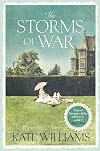
I'm so glad I went out of my way to read this one (& by out of my way, I mean bought my copy on AmazonUK). I very much enjoyed the story of the de Witts and how they fared during WWI. Celia is the character followed most closely and as she is the youngest in the family, I had moments where watching the family from her perspective reminded me of Atonement (especially in her relationship with Emmeline).
I felt great sorrow and true frustration watching Rudolf and Verena as the reality of their show more situation kept issuing blows but they were still in denial. To be fair, there wasn't anything that they could have done to mitigate their circumstances and there are far worse things than relying on the world being a rational place & your beloved country treating you fairly as a citizen. These things sadly, have failed people, over & over throughout history. Still, it was painful to read. For Rudolf to find that his chosen country considered him a traitor & inter him for the duration must have been heartbreaking. For Verena to have had to register as an alien because of who she married & have what everyone said was sacrosanct, her birth & English lineage, discounted turns the whole sense & justice of the "system" on its head. I of course felt for Michael, Emmeline & Celia in finding out that they weren't English enough & that what mattered was their paternity which happened to be German. But through it all, I liked how each found ways to participate in making the world a better place. I found Emmeline's choices to be most interesting even though her way infuriated me at times. Michael's time in combat was bittersweet and ended on such a tragic note. Celia's various jobs during the war were interesting even if I didn't quite believe she'd have done all that & even had an offer to be a spy. She was consistently naive and no matter her language skills, that would surely not serve her well in an undercover situation. I don't know what to make of Arthur who was mentioned throughout & only showed up at the very end of everything, the war & the book. And then there's Tom. The servant, friend & possible very close relative to the De Witts in general & problematically to Celia in particular. I can only assume that the next book will delve & clear up that little mystery because Tom & Celia don't have the story right & Mrs. Cotton, for some reason hasn't told her son the truth (that I'm assuming was related in the story by Verena's memories). I also hope the next book explores the fate of Hilde & Johann. Having heard about them, I really want to know how they've fared through the war & what it will all mean now for them as they are in Germany.
I'm definitely going to read the second book in the series. Highly recommended for historical fiction fans & those interested in fiction of the time in particular. show less
I felt great sorrow and true frustration watching Rudolf and Verena as the reality of their show more situation kept issuing blows but they were still in denial. To be fair, there wasn't anything that they could have done to mitigate their circumstances and there are far worse things than relying on the world being a rational place & your beloved country treating you fairly as a citizen. These things sadly, have failed people, over & over throughout history. Still, it was painful to read. For Rudolf to find that his chosen country considered him a traitor & inter him for the duration must have been heartbreaking. For Verena to have had to register as an alien because of who she married & have what everyone said was sacrosanct, her birth & English lineage, discounted turns the whole sense & justice of the "system" on its head. I of course felt for Michael, Emmeline & Celia in finding out that they weren't English enough & that what mattered was their paternity which happened to be German. But through it all, I liked how each found ways to participate in making the world a better place. I found Emmeline's choices to be most interesting even though her way infuriated me at times. Michael's time in combat was bittersweet and ended on such a tragic note. Celia's various jobs during the war were interesting even if I didn't quite believe she'd have done all that & even had an offer to be a spy. She was consistently naive and no matter her language skills, that would surely not serve her well in an undercover situation. I don't know what to make of Arthur who was mentioned throughout & only showed up at the very end of everything, the war & the book. And then there's Tom. The servant, friend & possible very close relative to the De Witts in general & problematically to Celia in particular. I can only assume that the next book will delve & clear up that little mystery because Tom & Celia don't have the story right & Mrs. Cotton, for some reason hasn't told her son the truth (that I'm assuming was related in the story by Verena's memories). I also hope the next book explores the fate of Hilde & Johann. Having heard about them, I really want to know how they've fared through the war & what it will all mean now for them as they are in Germany.
I'm definitely going to read the second book in the series. Highly recommended for historical fiction fans & those interested in fiction of the time in particular. show less
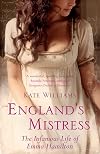
This is an exceptional biography at so many levels. It recovers not so much a person as a period.
Emma, Lady Hamilton, was a clever but perhaps not always intelligent person of great beauty and charm, and acting skills, who rose from extreme poverty to become the wife of an ambassador and the mistress of a national hero, Lord Nelson.
Many biographies of such women present romantic fantasies – the sort of rubber-necking at history of those women who wish life was like a Jane Austen novel. show more This book is a good corrective.
What we have instead is a profound insight into a pre-industrial aristocratic culture where sexuality was a tradable community that women could employ at successive levels of skill in order to rise from the gutter to become the confidante of queens.
The morality that started to be imposed on society not long after Emma’s heyday (of which Austen’s novels represent an important cultural staging post) may have helped to weaken much overt exploitation but it also closed off avenues of advancement for poor, good-looking women.
The early chapters of her life and the book give us a world far more familiar to us than the late-Victorians – a full-blown celebrity culture with people living on credit and manipulating the media with narratives of sexual scandal.
Emma and Nelson were the Posh and Becks of their day with an added element of hysteria that was closer to the fascination of moderns with Diana, Princess of Wales - and with the same public fickleness as soon as their heroes and heroines are shown to be men and women of straw.
There is the same merchandising industry, public performance, status games, fashion-setting, and damned hard work that would be recognisable to the likes Jordan, Britney and Rihanna today.
For Emma, having done time as a high class hooker and in the period’s equivalent of the adult entertainment industry, and been the good little mistress for a while, the path up the ladder came from her celebrity as an artist’s model, equivalent today to a fashion model.
She gets passed by her ‘master’ to his older relative and, somehow, manages, as supermodel, to get herself married, to get entitled by that marriage and to become confidante to the Queen of Naples (which is when Nelson turns up).
These central sections of the book are perhaps the most interesting. This is not a book that will endear the reader to the human species. You need be no Marxist to see the essential truth that morality arises from economic conditions – ‘First bread, then morals’ as Brecht pithily put it.
The early chapters have already painted a picture of extreme poverty and sexual exploitation that is not a simple case of men exploiting women but of them’s ‘as ‘as exploiting them’s as ‘asn’t.
The final chapters will provide a picture of greedy cynicism amongst relatives who would be nothing without the two lovers and whose selfish sheltering behind the strange customs of aristocratic society resulted in a kind if rather dim Emma ending up in poverty and dying in a foreign land.
But all this soap opera nastiness – easily most nasty when within families ambitious for cash and preferment – is as nothing compared to the brutalities of Neapolitan aristocratic society towards its own subjects.
While deploring the rape and murder of Marie Antoinette’s confidante, the blood lust of the guillotine and Napoleon’s murderous march through Europe, the roots of that horror lie in the callous brutality of the ancient regime.
Naples in the late eighteenth century was the epitome of aristocratic cruelty. De Sade might be regarded as the moralist that he rightly was in the context of the actual thuggery of the Neapolitan aristocracy.
At one festival, these vile specimens would pile up a mountain of excess food and then entertain themselves by watching the poor fight amongst themselves and tear live animals apart to get at the food.
Emma, though born in conditions equivalent to those of the Neapolitan Poor in Northern England, is not one for class-consciousness. She becomes the classic lackey of an oppressing class that only takes to her because she is beautiful and patronised by great men.
This is when that vain and courageous little man Nelson pops up – Becks to her Posh in terms of achievement. The man who scores for Ingerland now acquires the media icon of the day.
A sort of polyamorous arrangement emerges – Hamilton is in debt and needs Royal patronage, the war hero want to join the highest ranks and will get into debt to do so, and Emma’s sees her future secured as escort to the war hero and ‘England’s Mistress’. But Nelson does not come out of this story well.
The little patriotic display near HMS Victory in Portsmouth allows that his treatment of his wife Fanny was problematic. She was not right for him at all but his wanton humiliation of her in public and in favour of Emma was celebrity politics at its most vile.
But the real story of Nelson – something to be remembered as we drone people to death across the world – is that he was a war criminal, using a form of slave labour (through impressments) to mount his victories.
Impressment is not such an issue. The pressed seemed to have lived better lives than in the rookeries and to have loved their commanders in that way the weaker or more economically desperate members of our species will kow-tow before bigger ‘baboons’.
However, in one of the few actions he was involved in away from the sea, Nelson’s breach of treaty with the rebels made him directly complicit in the murder of many Neapolitans in the subsequent purges.
We get an account of his vicious treatment of the defeated Admiral Carraciolo that is filled with unnecessary cruelty and malice ... Nelson lacked honour in this act of personal barbarism. But let us put the rather unpleasant and emotionally hysterical Nelson to one side.
What is equally interesting is the public hysteria around him and his mistress that certainly required eighteenth century celebrity culture to fuel it but which took such matters to another level entirely. What was this all about?
The book is less explicit here but the truth of the matter is that the English middle classes were probably genuinely terrified that their throats would be cut and their property taken by blood-crazed Jacobins.
The hysteria about Nelson kicks off with the Battle of the Nile by which Napoleon was deprived of the opportunity to threaten the British stranglehold over India – and a great deal of English wealth was based not on manufactures but on trade at this time.
The US colonies had also recently been lost so that the loss of the East might have been a serious economic matter, while the war itself was causing a major down turn with some important trading interests already questioning its purpose.
Nelson is thus positioned as saviour of the middle classes and as their ‘boy’, a lad made good. Emma cements the vision with super model glamour – sex and violence providing the basis for a massive cathartic outpouring that spreads across anti-Napoleonic middle class Europe.
This is the same psychology of interwar fascism – fear resulting in a loss of self into the hero figure. Of course, it goes rather badly wrong for Nelson and Emma.
He fails to provide for her in a ruthless age, saddles her with massive debts, get conveniently killed (from the point of view of the Government) and becomes a still more massive but dead icon - Emma is surplus to requirements. The rest is depressing tragedy.
This is not a jobbing biography for middle aged female romantics. This is much better than that. It is a rare insight into the heartless centre of English aristocratic society, the lying mystifications of celebrity economics and middle class terrors.
As for Emma herself, I suspect that she would have driven me up the wall for all her beauty and charm. But she comes across as kind if not very bright on occasions.
Her greatest achievement was not to have been Nelson’s Mistress or even Europe’s leading model but to have produced a stable, level-headed daughter, Horatia, who lived long, prospered and built her own extensive middle class family.
From a background of dire poverty and exploitation herself, it would seem that, unable to leave her anything but a moderate education and an example, a loving mother created something more important than her fame. That is a lesson to us all ... show less
Emma, Lady Hamilton, was a clever but perhaps not always intelligent person of great beauty and charm, and acting skills, who rose from extreme poverty to become the wife of an ambassador and the mistress of a national hero, Lord Nelson.
Many biographies of such women present romantic fantasies – the sort of rubber-necking at history of those women who wish life was like a Jane Austen novel. show more This book is a good corrective.
What we have instead is a profound insight into a pre-industrial aristocratic culture where sexuality was a tradable community that women could employ at successive levels of skill in order to rise from the gutter to become the confidante of queens.
The morality that started to be imposed on society not long after Emma’s heyday (of which Austen’s novels represent an important cultural staging post) may have helped to weaken much overt exploitation but it also closed off avenues of advancement for poor, good-looking women.
The early chapters of her life and the book give us a world far more familiar to us than the late-Victorians – a full-blown celebrity culture with people living on credit and manipulating the media with narratives of sexual scandal.
Emma and Nelson were the Posh and Becks of their day with an added element of hysteria that was closer to the fascination of moderns with Diana, Princess of Wales - and with the same public fickleness as soon as their heroes and heroines are shown to be men and women of straw.
There is the same merchandising industry, public performance, status games, fashion-setting, and damned hard work that would be recognisable to the likes Jordan, Britney and Rihanna today.
For Emma, having done time as a high class hooker and in the period’s equivalent of the adult entertainment industry, and been the good little mistress for a while, the path up the ladder came from her celebrity as an artist’s model, equivalent today to a fashion model.
She gets passed by her ‘master’ to his older relative and, somehow, manages, as supermodel, to get herself married, to get entitled by that marriage and to become confidante to the Queen of Naples (which is when Nelson turns up).
These central sections of the book are perhaps the most interesting. This is not a book that will endear the reader to the human species. You need be no Marxist to see the essential truth that morality arises from economic conditions – ‘First bread, then morals’ as Brecht pithily put it.
The early chapters have already painted a picture of extreme poverty and sexual exploitation that is not a simple case of men exploiting women but of them’s ‘as ‘as exploiting them’s as ‘asn’t.
The final chapters will provide a picture of greedy cynicism amongst relatives who would be nothing without the two lovers and whose selfish sheltering behind the strange customs of aristocratic society resulted in a kind if rather dim Emma ending up in poverty and dying in a foreign land.
But all this soap opera nastiness – easily most nasty when within families ambitious for cash and preferment – is as nothing compared to the brutalities of Neapolitan aristocratic society towards its own subjects.
While deploring the rape and murder of Marie Antoinette’s confidante, the blood lust of the guillotine and Napoleon’s murderous march through Europe, the roots of that horror lie in the callous brutality of the ancient regime.
Naples in the late eighteenth century was the epitome of aristocratic cruelty. De Sade might be regarded as the moralist that he rightly was in the context of the actual thuggery of the Neapolitan aristocracy.
At one festival, these vile specimens would pile up a mountain of excess food and then entertain themselves by watching the poor fight amongst themselves and tear live animals apart to get at the food.
Emma, though born in conditions equivalent to those of the Neapolitan Poor in Northern England, is not one for class-consciousness. She becomes the classic lackey of an oppressing class that only takes to her because she is beautiful and patronised by great men.
This is when that vain and courageous little man Nelson pops up – Becks to her Posh in terms of achievement. The man who scores for Ingerland now acquires the media icon of the day.
A sort of polyamorous arrangement emerges – Hamilton is in debt and needs Royal patronage, the war hero want to join the highest ranks and will get into debt to do so, and Emma’s sees her future secured as escort to the war hero and ‘England’s Mistress’. But Nelson does not come out of this story well.
The little patriotic display near HMS Victory in Portsmouth allows that his treatment of his wife Fanny was problematic. She was not right for him at all but his wanton humiliation of her in public and in favour of Emma was celebrity politics at its most vile.
But the real story of Nelson – something to be remembered as we drone people to death across the world – is that he was a war criminal, using a form of slave labour (through impressments) to mount his victories.
Impressment is not such an issue. The pressed seemed to have lived better lives than in the rookeries and to have loved their commanders in that way the weaker or more economically desperate members of our species will kow-tow before bigger ‘baboons’.
However, in one of the few actions he was involved in away from the sea, Nelson’s breach of treaty with the rebels made him directly complicit in the murder of many Neapolitans in the subsequent purges.
We get an account of his vicious treatment of the defeated Admiral Carraciolo that is filled with unnecessary cruelty and malice ... Nelson lacked honour in this act of personal barbarism. But let us put the rather unpleasant and emotionally hysterical Nelson to one side.
What is equally interesting is the public hysteria around him and his mistress that certainly required eighteenth century celebrity culture to fuel it but which took such matters to another level entirely. What was this all about?
The book is less explicit here but the truth of the matter is that the English middle classes were probably genuinely terrified that their throats would be cut and their property taken by blood-crazed Jacobins.
The hysteria about Nelson kicks off with the Battle of the Nile by which Napoleon was deprived of the opportunity to threaten the British stranglehold over India – and a great deal of English wealth was based not on manufactures but on trade at this time.
The US colonies had also recently been lost so that the loss of the East might have been a serious economic matter, while the war itself was causing a major down turn with some important trading interests already questioning its purpose.
Nelson is thus positioned as saviour of the middle classes and as their ‘boy’, a lad made good. Emma cements the vision with super model glamour – sex and violence providing the basis for a massive cathartic outpouring that spreads across anti-Napoleonic middle class Europe.
This is the same psychology of interwar fascism – fear resulting in a loss of self into the hero figure. Of course, it goes rather badly wrong for Nelson and Emma.
He fails to provide for her in a ruthless age, saddles her with massive debts, get conveniently killed (from the point of view of the Government) and becomes a still more massive but dead icon - Emma is surplus to requirements. The rest is depressing tragedy.
This is not a jobbing biography for middle aged female romantics. This is much better than that. It is a rare insight into the heartless centre of English aristocratic society, the lying mystifications of celebrity economics and middle class terrors.
As for Emma herself, I suspect that she would have driven me up the wall for all her beauty and charm. But she comes across as kind if not very bright on occasions.
Her greatest achievement was not to have been Nelson’s Mistress or even Europe’s leading model but to have produced a stable, level-headed daughter, Horatia, who lived long, prospered and built her own extensive middle class family.
From a background of dire poverty and exploitation herself, it would seem that, unable to leave her anything but a moderate education and an example, a loving mother created something more important than her fame. That is a lesson to us all ... show less
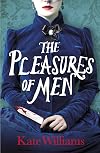
Kate Williams’ debut novel, The Pleasures of Men, is more than a murder mystery. While a serial killer preying on young girls in a downtrodden part of London is a key figure in the novel, it is as much about Catherine’s search for happiness, or at least a sense of acceptance, in a society that is ultimately distasteful and foreign to her. Catherine’s initial impressions are not always what they seem. As such, a reader is then left to ferret out the clues and answers among the myriad of show more misdirection. It is a creative spin on a familiar story, and one that gives readers a great sense of satisfaction and accomplishment for sticking it out until the end.
Catherine is quite the narrator. Her past is tumultuous, but a reader does not get a clear understanding of her history until well into the later stages of the novel. In the meantime, one is left wondering how reliable she really is. She freely admits that she is losing track of time and her belongings, and her writings about the Man of Crows become part of the story in their own right – further blurring the line between Catherine’s imaginings and the truth. Between her self-isolation, definite anti-social stance, and her mind’s wanderings, a reader must also determine if she is a sympathetic character. It is enough to leave a reader feeling decidedly off-kilter through much of the novel.
The Pleasures of Men is not designed for passive reading. In fact, everything about the story is designed to keep readers active, if not fully engaged. From the constant switch in narrators to Catherine’s madness, a reader is never 100 percent certain what is actually occurring, what is a figment of Catherine’s imagination, and what is seen from another character’s point of view. There are many questions, not enough answers, and what answers are given require a reader to weed through the extraneous details. A reader never gets a break from this constant uncertainty. It is a gamble on Ms. Williams’ part, and one that is only going to succeed with certain types of readers. However, for the right reader, it is a novel that will leave one stunned at its resolution and impressed at the dexterity with which Ms. Williams wove this very intricate story.
The Pleasures of Men is not the type of novel where one can sit down and escape to 1840 London for an afternoon. It requires a reader’s full attention from the very first page and makes a reader work for every secret revealed and every answer shared. Ms. Williams’ debut is also not the type of novel which readers can and will appreciate while in the throes of reading or even immediately upon finishing. It requires reflection and time to understand everything that she accomplished with her story, allowing even the most jaded of readers to grudgingly admit her adroitness and talent at storytelling. Given everything she accomplishes in The Pleasures of Men, Ms. Williams is definitely an author worth watching. show less
Catherine is quite the narrator. Her past is tumultuous, but a reader does not get a clear understanding of her history until well into the later stages of the novel. In the meantime, one is left wondering how reliable she really is. She freely admits that she is losing track of time and her belongings, and her writings about the Man of Crows become part of the story in their own right – further blurring the line between Catherine’s imaginings and the truth. Between her self-isolation, definite anti-social stance, and her mind’s wanderings, a reader must also determine if she is a sympathetic character. It is enough to leave a reader feeling decidedly off-kilter through much of the novel.
The Pleasures of Men is not designed for passive reading. In fact, everything about the story is designed to keep readers active, if not fully engaged. From the constant switch in narrators to Catherine’s madness, a reader is never 100 percent certain what is actually occurring, what is a figment of Catherine’s imagination, and what is seen from another character’s point of view. There are many questions, not enough answers, and what answers are given require a reader to weed through the extraneous details. A reader never gets a break from this constant uncertainty. It is a gamble on Ms. Williams’ part, and one that is only going to succeed with certain types of readers. However, for the right reader, it is a novel that will leave one stunned at its resolution and impressed at the dexterity with which Ms. Williams wove this very intricate story.
The Pleasures of Men is not the type of novel where one can sit down and escape to 1840 London for an afternoon. It requires a reader’s full attention from the very first page and makes a reader work for every secret revealed and every answer shared. Ms. Williams’ debut is also not the type of novel which readers can and will appreciate while in the throes of reading or even immediately upon finishing. It requires reflection and time to understand everything that she accomplished with her story, allowing even the most jaded of readers to grudgingly admit her adroitness and talent at storytelling. Given everything she accomplishes in The Pleasures of Men, Ms. Williams is definitely an author worth watching. show less
Lists
Awards


You May Also Like


Associated Authors
Statistics
- Works
- 14
- Also by
- 2
- Members
- 1,620
- Popularity
- #15,894
- Rating
- 3.6
- Reviews
- 86
- ISBNs
- 213
- Languages
- 5
