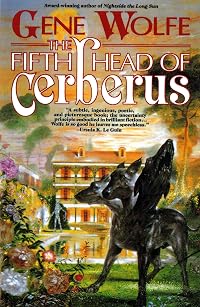
The Fifth Head of Cerberus: Three Novellas
by Gene Wolfe
There is 1 current discussion about this work.
On This Page
Description
Far from Earth two sister planets, Sainte Anne and Sainte Croix, circle each other. It is said that a race of shapeshifting aliens once lived here, only to become extinct when human colonists arrived. But one man believes they still exist, somewhere out in the wilderness. In THE FIFTH HEAD OF CERBERUS, Gene Wolfe brilliantly interweaves three tales: a scientist's son gradual discovery of the bizarre secret of his heritage; a young man's mythic dreamquest for his darker half; the mystifying show more chronicle of an anthropologist's seemingly-arbitrary imprisonment. Gradually, a mesmerising pattern emerges. show lessTags
Recommendations













Member Recommendations
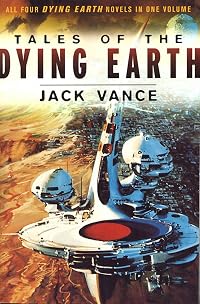
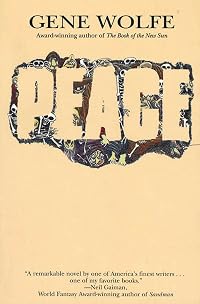
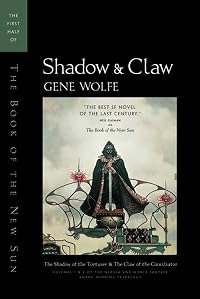
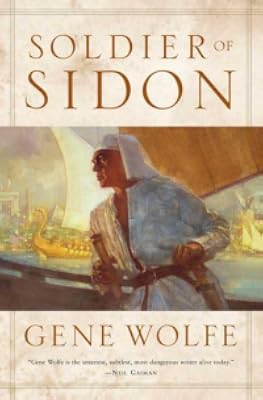
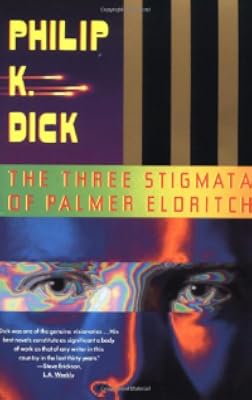
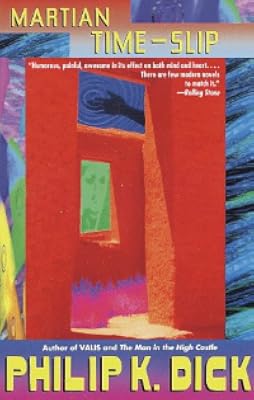
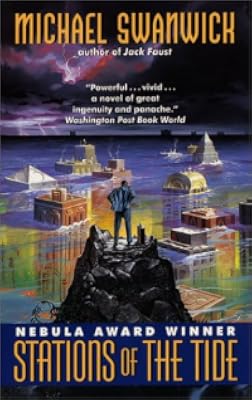
Rynooo If you enjoyed this, check out Wolfe's sci-fi fantasy epic The Book of the New Sun. It's mind-boggling, frequently shocking, and I'm not sure I understood it. Brillant stuff.
20
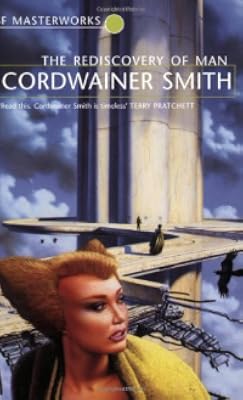
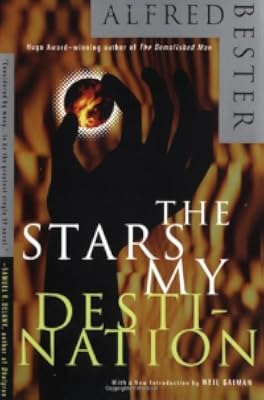
paradoxosalpha In each book there are multiple stories metafictionally linked to one another, in which far-future science fiction scenarios are used to explore archetypal human dilemmas and paradoxes regarding dominance, difference, communion, and communication.
Member Reviews
I don't feel qualified to give a comprehensive review of this book. It is only the 2nd book of Gene Wolfe's I've read, and the first I've come close to understanding. I think this must be a better book to begin with though, than his Book of the New Sun series. I am a big fan of Jack Vance's Dying Earth series and Wolfe's is similar in setting but not in tone. You get a lot of humor in Vance, and almost no humor in Wolfe - so far. Or at least the humor partakes of the same dense opacities as the rest of the book's literary ingredients. It is hard to tell what is meant as truth or misconception, and many readers have found this to be part of the fun.
Wolfe ties together many deep themes, wild characters, and disarming alien descriptions show more alongside droll pseudo-reminiscences. He touches on Imperialism, genetic modification, interplanetary travel, sibling relationships, folklore, shapeshifting creatures, ghosts and many more intriguing elements, but only through hints and by undermining your expectations. The plot is only discoverable beneath a riptide of otherworldly richness, of bizarre, hallucinogenic revelations, and if swallowed half-digested and barely understood, it can still be incredibly interesting.
When the story flips to the perspective of the aborigines, I was treated to an intense array of breathtaking surprises. The reader is left questioning who is the actual protagonist of this story, and who's version of reality can be believed.
The two nearby planets the author describes each have their own philosophy, anthropology, and history, and in the famous Wolfian fashion, none of it is readily discernible, except through subtle insinuations. This puzzle-narrative technique ceaselessly sabotages the reader's attempts at interpretation. Like the characters themselves, the reader is forced to undergo an investigation of the facts provided, and is left to draw their own conclusions.
The author might have split up the book into 3 separate novellas, but that would not have aided much in how approachable they are. Taken together they enlarge upon their interior modus operandi in unique ways. This extraordinary interaction within the texts may never have been incorporated into literature before or since. I will have to examine his New Sun series at length to see if it lives up to his layered accomplishment with "Cerberus."
The intelligence of the structure, the imaginative setting, and the elegant descriptions are enough to impress any fan of science fiction. If you do not mind Wolfe's trickery, I think that there is a great deal of enjoyment to be gained from this book. Keep in mind this was written very early in his career, and he had only begun to experiment... show less
Wolfe ties together many deep themes, wild characters, and disarming alien descriptions show more alongside droll pseudo-reminiscences. He touches on Imperialism, genetic modification, interplanetary travel, sibling relationships, folklore, shapeshifting creatures, ghosts and many more intriguing elements, but only through hints and by undermining your expectations. The plot is only discoverable beneath a riptide of otherworldly richness, of bizarre, hallucinogenic revelations, and if swallowed half-digested and barely understood, it can still be incredibly interesting.
When the story flips to the perspective of the aborigines, I was treated to an intense array of breathtaking surprises. The reader is left questioning who is the actual protagonist of this story, and who's version of reality can be believed.
The two nearby planets the author describes each have their own philosophy, anthropology, and history, and in the famous Wolfian fashion, none of it is readily discernible, except through subtle insinuations. This puzzle-narrative technique ceaselessly sabotages the reader's attempts at interpretation. Like the characters themselves, the reader is forced to undergo an investigation of the facts provided, and is left to draw their own conclusions.
The author might have split up the book into 3 separate novellas, but that would not have aided much in how approachable they are. Taken together they enlarge upon their interior modus operandi in unique ways. This extraordinary interaction within the texts may never have been incorporated into literature before or since. I will have to examine his New Sun series at length to see if it lives up to his layered accomplishment with "Cerberus."
The intelligence of the structure, the imaginative setting, and the elegant descriptions are enough to impress any fan of science fiction. If you do not mind Wolfe's trickery, I think that there is a great deal of enjoyment to be gained from this book. Keep in mind this was written very early in his career, and he had only begun to experiment... show less
I love a good puzzle book, books where often not only the answer has to be deduced from the text, but so has the question. Books like The Quincunx, House Of Leaves and...um... I wish I knew more of them. Anyway, this is one, three linked novellas set on twin colony worlds where identity is fungible and we can't be sure whether the humans are aliens, the aliens are human or if the aliens really exist at all. What does it mean to be alien? What does it mean to be human? Are you a son or a brother or a twin or a clone? Has someone else replaced you or are you the replacement? Is the truth a tool of dystopian oppression? Does slavery set you free? One can have one's head wrecked by a book, be utterly chilled and yet emerged cleansed and show more confused. Being alive is a puzzle, after all, and we don't want to jump to the ultimate answer too soon. show less
"Three novellas" says the cover, and that's what this volume contains. Although the three share a science-fictional setting (the double-planetary system of St. Anne and St. Croix) and there is a single character (Dr. John V. Marsch) who appears in all three, they could be read in any sequence. They are mutually illuminating, but not serial; while they form a greater whole, the end of each is only the end of one novella, and not the conclusion of a larger novel. In fact, Marsch only appears in the second novella "Story" by virtue of a fictional by-line. There is a strong metafictional element throughout, brought out most fully in the third novella "V.M.T." where the principal content consists of documentary fragments being considered in show more largely "random" sequence by a reader within the frame of the tale.
All three stories arouse musings about personal, cultural, and biological identity. Cerberus guards Hades, the realm of the shades of the dead, and various spectral ancestries are at play in these pieces as well. The first story is called "The Fifth Head of Cerberus," and it seems like Wolfe may have let that stand as the general title out of refusal to come up with a further name that would imply a greater unity to the multi-headed whole. The Cerberus in the book (a statue in the first story) is of the conventional three-headed sort, and the beyond-extra fifth head is a role that fits various characters based on their apparitional and fluctuating functions in the narratives. Indeed, for all of the links between the stories, they serve to raise questions about each other as much as to provide answers.
One of the recurring questions is: Who--if anyone--is human in this story? Of course, that calls forth the necessary corollary: What is a human? To answer the second would require a crude didacticism far beneath this author. It is a signal of the artistry of this volume that the answer to the first is never entirely divulged. show less
All three stories arouse musings about personal, cultural, and biological identity. Cerberus guards Hades, the realm of the shades of the dead, and various spectral ancestries are at play in these pieces as well. The first story is called "The Fifth Head of Cerberus," and it seems like Wolfe may have let that stand as the general title out of refusal to come up with a further name that would imply a greater unity to the multi-headed whole. The Cerberus in the book (a statue in the first story) is of the conventional three-headed sort, and the beyond-extra fifth head is a role that fits various characters based on their apparitional and fluctuating functions in the narratives. Indeed, for all of the links between the stories, they serve to raise questions about each other as much as to provide answers.
One of the recurring questions is: Who--if anyone--is human in this story? Of course, that calls forth the necessary corollary: What is a human? To answer the second would require a crude didacticism far beneath this author. It is a signal of the artistry of this volume that the answer to the first is never entirely divulged. show less
A powerfully weird book, and a great example of Wolfe's style.
Most other sci-fi would explicitly show off the setting and landscape very early on, and make the internal conflicts clear.
Not so with Wolfe; he throws you in to the memoirs of someone starting as a small boy, and at first you're not sure where you are... it feels like a European French city or colony, but it becomes clear that we're on another planet (that has been colonized) and that all kinds of changes are a regular part of this world. Sentient computers, cloning, genetic manipulation, and a mystery or myth surrounding the people who may or may not have lived on the planet before earthlings came along.
That's just the first of three novellas inside this book, and there's a show more LOT I'm not covering there.
I won't synopsize the other two, because uncovering those stories and figuring them out is part of the appeal with this book. It's also not easy to synopsize! It ends definitively, but without a concise moral or lesson, requiring you to process what you've read and how it impacts you.
Regarding the setting and it's connection to colonization: reading this in 2022 in Canada, where we are grappling with reconciliation and transforming settler culture to engage ethically with indigenous culture, there is a lot to chew on here... the absorption of one culture by another, but the possible twists within that, are useful questions today.
Perhaps the need to uncover it's details, the shifting perspectives of narrators, and it's less-obvious setting are why this book isn't as famous as his New Urth series, but it's worth your time and effort! show less
Most other sci-fi would explicitly show off the setting and landscape very early on, and make the internal conflicts clear.
Not so with Wolfe; he throws you in to the memoirs of someone starting as a small boy, and at first you're not sure where you are... it feels like a European French city or colony, but it becomes clear that we're on another planet (that has been colonized) and that all kinds of changes are a regular part of this world. Sentient computers, cloning, genetic manipulation, and a mystery or myth surrounding the people who may or may not have lived on the planet before earthlings came along.
That's just the first of three novellas inside this book, and there's a show more LOT I'm not covering there.
I won't synopsize the other two, because uncovering those stories and figuring them out is part of the appeal with this book. It's also not easy to synopsize! It ends definitively, but without a concise moral or lesson, requiring you to process what you've read and how it impacts you.
Regarding the setting and it's connection to colonization: reading this in 2022 in Canada, where we are grappling with reconciliation and transforming settler culture to engage ethically with indigenous culture, there is a lot to chew on here... the absorption of one culture by another, but the possible twists within that, are useful questions today.
Perhaps the need to uncover it's details, the shifting perspectives of narrators, and it's less-obvious setting are why this book isn't as famous as his New Urth series, but it's worth your time and effort! show less
A set of unreliable narrators recount three histories from the sister planets Saint Croix and Saint Anne, where colonizing humans search for evidence of an indigenous alien race.
The Fifth Head of Cerberus comprises three interwoven novellas: "The Fifth Head of Cerberus," "'A Story,' by John V. Marsch," and "V. R. T." The three stories are not exactly linked, as they concern three separate protagonists in three different stories, but they occasionally encroach upon one another. They can easily be read in isolation, but they function better as a unit. Each complicates its neighbor. Issues you thought simple or settled in one story are suddenly muddled by the revelations in the next.
In "The Fifth Head of Cerberus," a young man returns to show more his childhood home after a period in prison. Driven by an oblique terror, he writes out his autobiography. In passing, he recounts his brief acquaintance with John Marsch, an anthropologist who has come from Earth to discover the vanished (or non-existent) "aborigines" of Saint Anne. The next story in the collection recounts the first contact between humans and aborigines, and it explains all the tantalizing rumors of that indigenous group -- but its title ("'A Story,' by John V. Marsch") signals that it is a conscious work of fiction by an anthropologist who is trying to fit all those tantalizing fragments into a workable whole. It explains everything, but its explanation is suspect. In the third story, "V. R. T.," a bored bureaucrat shifts through journal entries and field reports from a state prisoner -- one John Marsch -- who stands accused of being an agent provocateur. Marsch contends that he is an Earth anthropologist, but the government of Saint Croix argues that he has no proof of his identity. And it becomes increasingly clear -- although the bureaucrat never recognizes the full truth -- that there are certain holes and inconsistencies in Marsch's story that suggest he may not be John V. Marsch at all...
The stories rattle against one another like billiard balls. In "V. R. T.", John V. Marsch answers (in passing) the central unanswered question that terrorizes the unnamed protagonist in "The Fifth Head of Cerberus." In "The Fifth Head of Cerberus," a crime is committed that will lead to an arrest in "V. R. T." "'A Story,' by John V. Marsch" is just a story, unless you believe the coinciding accusations in the other two novellas, in which case it becomes a true story. Characters in all three stories keep offering different suggestions on the fate of the (possible) aborigines, but the most alarming theory is that they were shape-shifters who mimicked the human settlers so successfully that they forgot their original existence...
The core issues at the heart of The Fifth Head of Cerberus are identity and instrumentality. Its stories are populated by doppelgangers struggling for agency apart from their oppressive partner: rival twins; human-like robots; sons and fathers; slaves and owners; clones and creators; natives and colonists; anthropologists and their dehumanized subjects. It is a struggle not to be subsumed. In each novella, there is a space -- a gap, a slip, a pause -- where the narrator has been (possibly) replaced by his double without any acknowledgment (or realization) of the substitution. The characters of The Fifth Head of Cerberus resist looking in mirrors, lest they find a ghost looking back. show less
The Fifth Head of Cerberus comprises three interwoven novellas: "The Fifth Head of Cerberus," "'A Story,' by John V. Marsch," and "V. R. T." The three stories are not exactly linked, as they concern three separate protagonists in three different stories, but they occasionally encroach upon one another. They can easily be read in isolation, but they function better as a unit. Each complicates its neighbor. Issues you thought simple or settled in one story are suddenly muddled by the revelations in the next.
In "The Fifth Head of Cerberus," a young man returns to show more his childhood home after a period in prison. Driven by an oblique terror, he writes out his autobiography. In passing, he recounts his brief acquaintance with John Marsch, an anthropologist who has come from Earth to discover the vanished (or non-existent) "aborigines" of Saint Anne. The next story in the collection recounts the first contact between humans and aborigines, and it explains all the tantalizing rumors of that indigenous group -- but its title ("'A Story,' by John V. Marsch") signals that it is a conscious work of fiction by an anthropologist who is trying to fit all those tantalizing fragments into a workable whole. It explains everything, but its explanation is suspect. In the third story, "V. R. T.," a bored bureaucrat shifts through journal entries and field reports from a state prisoner -- one John Marsch -- who stands accused of being an agent provocateur. Marsch contends that he is an Earth anthropologist, but the government of Saint Croix argues that he has no proof of his identity. And it becomes increasingly clear -- although the bureaucrat never recognizes the full truth -- that there are certain holes and inconsistencies in Marsch's story that suggest he may not be John V. Marsch at all...
The stories rattle against one another like billiard balls. In "V. R. T.", John V. Marsch answers (in passing) the central unanswered question that terrorizes the unnamed protagonist in "The Fifth Head of Cerberus." In "The Fifth Head of Cerberus," a crime is committed that will lead to an arrest in "V. R. T." "'A Story,' by John V. Marsch" is just a story, unless you believe the coinciding accusations in the other two novellas, in which case it becomes a true story. Characters in all three stories keep offering different suggestions on the fate of the (possible) aborigines, but the most alarming theory is that they were shape-shifters who mimicked the human settlers so successfully that they forgot their original existence...
The core issues at the heart of The Fifth Head of Cerberus are identity and instrumentality. Its stories are populated by doppelgangers struggling for agency apart from their oppressive partner: rival twins; human-like robots; sons and fathers; slaves and owners; clones and creators; natives and colonists; anthropologists and their dehumanized subjects. It is a struggle not to be subsumed. In each novella, there is a space -- a gap, a slip, a pause -- where the narrator has been (possibly) replaced by his double without any acknowledgment (or realization) of the substitution. The characters of The Fifth Head of Cerberus resist looking in mirrors, lest they find a ghost looking back. show less
I just finished reading The Fifth Head of Cerberus and it is one of the best pieces of speculative fiction I've ever had the pleasure of reading. I have to admit, being honest, it took 1/3 of a way through the book for things to start click. There was a moment where I sat up right and had a "wait just a damn second" moment. Imagine my surprise where, in one period, I was just sort of pushing my way through the book, the next I found my self jumping back pages to confirm certain suspicions.
You may find that I'm being very vague and this is on purpose. If it were up to me I would prefer for users reading this to just grab a copy A.S.A.P. and get to reading. But there are a couple things the would be almost dishonest not to mention:
This show more is not easy/light reading
The book is brain candy at times, poetry at others, and frankly some parts of the book may seem completely pointless when first reading. You may have to fight your brain not to skim. If you are a skimmer you may not get much out of the three novellas.
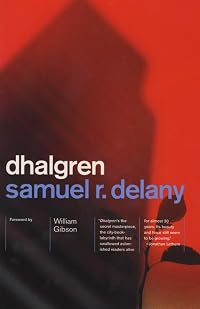
With that said this is not an experimental tome like Dhalgren by Samuel R. Delany. It is a reasonable legnth and it never jumps of the cliff of WTF that Dhalgren(not hating on Dhalgren. I love it) does. In fact, I'd say it's the opposite, it can be reserved in how much it lets you in.
Minor Spoilers
Seriously don't keep reading if you don't even like the hint of spoilers
The use of the unreliable narrator here is astonishing. I actually find some of the stuff hidden in the text horrifying. Some of it is left to the person reading. The idea of identity, what makes us us, how our culture shapes acceptability, and so much more. The final 10 our so pages were absolutely mind blowing. I'm not sure I've read so much crammed into this such a small amount of text in Science Fiction. If I could compare it to anything it would be Dubliners by James Joyce. On the surface you have these dull reserved stories but anyone paying attention finds so much more.
Anyway, sorry for the rambling, but my brain is on fire after reading this one. I wanted to write this while the high of reading it was still set in. show less
You may find that I'm being very vague and this is on purpose. If it were up to me I would prefer for users reading this to just grab a copy A.S.A.P. and get to reading. But there are a couple things the would be almost dishonest not to mention:
This show more is not easy/light reading
The book is brain candy at times, poetry at others, and frankly some parts of the book may seem completely pointless when first reading. You may have to fight your brain not to skim. If you are a skimmer you may not get much out of the three novellas.
With that said this is not an experimental tome like Dhalgren by Samuel R. Delany. It is a reasonable legnth and it never jumps of the cliff of WTF that Dhalgren(not hating on Dhalgren. I love it) does. In fact, I'd say it's the opposite, it can be reserved in how much it lets you in.
Minor Spoilers
Seriously don't keep reading if you don't even like the hint of spoilers
The use of the unreliable narrator here is astonishing. I actually find some of the stuff hidden in the text horrifying. Some of it is left to the person reading. The idea of identity, what makes us us, how our culture shapes acceptability, and so much more. The final 10 our so pages were absolutely mind blowing. I'm not sure I've read so much crammed into this such a small amount of text in Science Fiction. If I could compare it to anything it would be Dubliners by James Joyce. On the surface you have these dull reserved stories but anyone paying attention finds so much more.
Anyway, sorry for the rambling, but my brain is on fire after reading this one. I wanted to write this while the high of reading it was still set in. show less
I have definitely joined the camp of those who consider The Fifth Head of Cerberus to be set in the same universe as Book of the New Sun/Long Sun/Short Sun. Indeed, the predicament in which Urth finds itself in BotNS now feels like the wages of the sins committed in the establishment of the societies described in Cerberus. Set on a double planet* some twenty light-years from Earth/Urth a good hundred years (at least) since its colonization by the French, who named one planet St. Anne and the other St. Croix, the three novellas comprising the book are haunted by a terrible consequence of that colonization, one that seems to be typical of humans among the stars in this universe -- and in our own.
For St. Croix, at least, was not show more uninhabited when we got there. But the aboroginals -- abos for short -- didn't survive our coming for long. And now theories abound as to how and why that is so -- or if, indeed, it is. Some St. Annes, at least, are obsessed with a theory that the abos had once been human, descended from an earlier wave of human expansion, which would mean that they had killed off their own kind. No one seems sure if that makes it better or worse.
Another theory is that the abos possessed the power to mimic humans so successfully that they then lost their power of perfect mimicry, lost it because the humans they mimic don't possess it, and either lived among the humans in forgetful secrecy as St. Anne/St. Croix society developed or, in one radical interpretation, actually killed off and replaced the human colonists and live on now believing they are the colonists themselves. How would they know?
It's to haunting ideas like these that Wolfe scholars like Robert "Solar Labyrinth" Borski point when they start talking about the predicament of Urth in Severian's day as a punishment inflicted on humanity by alien intelligences of the kind of awesome power we only get glimpses of until we encounter them full bore in Urth of the New Sun. I'm trying not to get spoilery here, but if the kind of unwitting bad behavior that founded is at all typical of how humans from Urth behave among the stars, no wonder the megatherians are fighting behind to keep Severian and other candidates from fulfilling their potential.
Even without the game of drawing connections to Wolfe's later work (The Fifth Head of Cerberus is only the second book Wolfe published; the dude was just warming up, here)**, these three novellas are satisfying reads in their own right, though when you're done with them you'll have spent so much of your brainspace on puzzling out all the questions of identity, in particular, that they pose, that you might doubt your own.
The titular novella concerns a boy growing up in a high end brothel, whose father specializes in customizing his employees in ways the airbrush artists at fashion magazines could only dream of, but using a similar aesthetic, and who is himself the product of generations of experimentation not unlike what he himself practices in his lab as he grows up. The second, "A Story by John V. Marsch"*** is told from the point of view of a minor character in "The Fifth Head of Cerberus", an anthropologist who is either making up or participating in a story of the lost abo culture and its first terrible contact with humanity. The third, "V.R.T." riffs on themes in the first two, calls into question all the assumptions the reader may have been making on the first read of those two, and sends her back to read them again to see whether she was wrong, right, confused or had been hit on the head by something and just dreamed them.
Yeah, it's like that. Because it's, you know, Gene Wolfe.
*Which itself seems an awful lot like the double-planet system to which the Whorl brings its colonists at the end of Book of the Long Sun, one world being blue and one green. But Gene Wolfe, when pressed "doesn't know" why this motif of Urth/Lune, St. Croix/St. Anne, Blue/Green recurs.
**But this is an irresistible game. For instance, we know that some of the inhabitants of Urth in Severian's time are returnees from the stars, returnees who came back weirdly changed and perhaps not altogether human (kind of like, say, the Ascians of whom it is impossible not to think when the protagonist of the middle story sees Shadow Children riding men like ponies) and brought back various odd creatures, and might even have terraformed the moon to make it into Green Lune out of homesickness for having a sister planet in their night sky.
***Prefiguring his strange and weirdly entertaining Pandora by Holly Hollander, Wolfe seems to like to play with the concept of authorship in titles more than any other writer ever. show less
For St. Croix, at least, was not show more uninhabited when we got there. But the aboroginals -- abos for short -- didn't survive our coming for long. And now theories abound as to how and why that is so -- or if, indeed, it is. Some St. Annes, at least, are obsessed with a theory that the abos had once been human, descended from an earlier wave of human expansion, which would mean that they had killed off their own kind. No one seems sure if that makes it better or worse.
Another theory is that the abos possessed the power to mimic humans so successfully that they then lost their power of perfect mimicry, lost it because the humans they mimic don't possess it, and either lived among the humans in forgetful secrecy as St. Anne/St. Croix society developed or, in one radical interpretation, actually killed off and replaced the human colonists and live on now believing they are the colonists themselves. How would they know?
It's to haunting ideas like these that Wolfe scholars like Robert "Solar Labyrinth" Borski point when they start talking about the predicament of Urth in Severian's day as a punishment inflicted on humanity by alien intelligences of the kind of awesome power we only get glimpses of until we encounter them full bore in Urth of the New Sun. I'm trying not to get spoilery here, but if the kind of unwitting bad behavior that founded is at all typical of how humans from Urth behave among the stars, no wonder the megatherians are fighting behind to keep Severian and other candidates from fulfilling their potential.
Even without the game of drawing connections to Wolfe's later work (The Fifth Head of Cerberus is only the second book Wolfe published; the dude was just warming up, here)**, these three novellas are satisfying reads in their own right, though when you're done with them you'll have spent so much of your brainspace on puzzling out all the questions of identity, in particular, that they pose, that you might doubt your own.
The titular novella concerns a boy growing up in a high end brothel, whose father specializes in customizing his employees in ways the airbrush artists at fashion magazines could only dream of, but using a similar aesthetic, and who is himself the product of generations of experimentation not unlike what he himself practices in his lab as he grows up. The second, "A Story by John V. Marsch"*** is told from the point of view of a minor character in "The Fifth Head of Cerberus", an anthropologist who is either making up or participating in a story of the lost abo culture and its first terrible contact with humanity. The third, "V.R.T." riffs on themes in the first two, calls into question all the assumptions the reader may have been making on the first read of those two, and sends her back to read them again to see whether she was wrong, right, confused or had been hit on the head by something and just dreamed them.
Yeah, it's like that. Because it's, you know, Gene Wolfe.
*Which itself seems an awful lot like the double-planet system to which the Whorl brings its colonists at the end of Book of the Long Sun, one world being blue and one green. But Gene Wolfe, when pressed "doesn't know" why this motif of Urth/Lune, St. Croix/St. Anne, Blue/Green recurs.
**But this is an irresistible game. For instance, we know that some of the inhabitants of Urth in Severian's time are returnees from the stars, returnees who came back weirdly changed and perhaps not altogether human (kind of like, say, the Ascians of whom it is impossible not to think when the protagonist of the middle story sees Shadow Children riding men like ponies) and brought back various odd creatures, and might even have terraformed the moon to make it into Green Lune out of homesickness for having a sister planet in their night sky.
***Prefiguring his strange and weirdly entertaining Pandora by Holly Hollander, Wolfe seems to like to play with the concept of authorship in titles more than any other writer ever. show less
Members
- Recently Added By
Lists

Best Science Fiction Novels
816 works; 430 members

S.F. Masterworks (Complete)
229 works; 15 members

David Pringle's Science Fiction: The 100 Best Novels
101 works; 9 members

SF Masterworks
193 works; 8 members
SOPA Book Recommendations
19 works; 1 member

Unreliable Narrators
170 works; 43 members

Top Five Books of 2023
767 works; 317 members

Books Read in 2024
4,623 works; 126 members
Favorite Science Fiction
456 works; 218 members

Literary SF/F
19 works; 1 member
Talk Discussions
Current Discussions
2nd edn Finalist discussion: Gene Wolfe's Fifth Head of Cerberus in Consensus Press (November 2025)
Author Information

314+ Works 43,635 Members
Gene Wolfe was born in New York City on May 7, 1931. He dropped out of Texas A&M University during his junior year and was drafted into the Army to fight in the Korean War. After the war, he received a degree in mechanical engineering from the University of Houston. He worked as an industrial engineer for Procter and Gamble, where he developed the show more machine that cooks the dough used to make Pringles potato chips. He was an editor of the trade journal Plant Engineering from 1972 to 1984 before retiring to become a full-time writer. He wrote more than 30 books during his lifetime including The Fifth Head of Cerberus, Peace, The Book of the New Sun, and The Land Across. He received the Campbell Memorial Award, the Edward E. Smith Memorial Award, the Locus Award four times, and the Nebula Award and the World Fantasy Award two times each. In 1996, he was given the World Fantasy Award for Lifetime Achievement. He was inducted into the Science Fiction Hall of Fame in 2007 and was named a Grand Master by the Science Fiction and Fantasy Writers of America in 2012. He died after a long battle with heart disease on April 14, 2019 at the age of 87. (Bowker Author Biography) show less
Some Editions
Awards and Honors
Series
Belongs to Publisher Series
Work Relationships
Common Knowledge
- Canonical title*
- Der fünfte Kopf des Zerberus
- Original title
- The Fifth Head of Cerberus
- Original publication date
- 1972-04; 1972
- People/Characters
- Number Five; David; Mr. Million; Aunt Jeannine/Dr. Aubrey Veil; Dr. John V. Marsch; John Sandwalker (show all 10); John Eastwind; Trenchard; V.R.T.; The Officer
- Important places
- Sainte Anne; Sainte Croix; Port Mimizon; Maison du Chien/Cave Canem; Frenchman's Landing
- Dedication
- To Damon Knight, who one well-remembered June evening in 1966 grew me from a bean.
- First words
- When I was a boy my brother David and I had to go to bed early whether we were tired or not.
- Last words
- (Click to show. Warning: May contain spoilers.)When he had gone, the office found a spool of tape where it had rolled behind the lamp on his table; he dropped it out the window into one of the neglected flower beds, among the sprawling angels'-trumpets.
- Blurbers
- Le Guin, Ursula K.
- Original language
- English
- Disambiguation notice
- This is the collection of three novellas: Fifth Head of Cerberus - A Story by John V. Marsch - V.R.T.
Please do not combine with the work containing only Fifth head of Cerberus.
*Some information comes from Common Knowledge in other languages. Click "Edit" for more information.
Classifications
Statistics
- Members
- 1,972
- Popularity
- 10,730
- Reviews
- 33
- Rating
- (3.95)
- Languages
- 6 — English, French, German, Italian, Polish, Spanish
- Media
- Paper, Ebook
- ISBNs
- 27
- ASINs
- 18