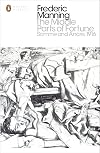
The Middle Parts of Fortune
by Frederic Manning
On This Page
Description
Born in Australia, novelist and poet Frederic Manning moved to England in his youth and was an off-and-on presence there for much of his life. Spurred to defend his adopted homeland, Manning enlisted to serve in World War I. This fictionalized account of his experiences—initially published anonymously—offers a gripping look into the historical period and the implications of early twentieth century trench warfare..
Tags
Recommendations


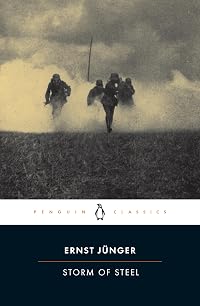


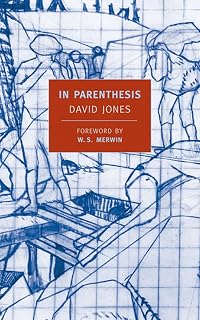


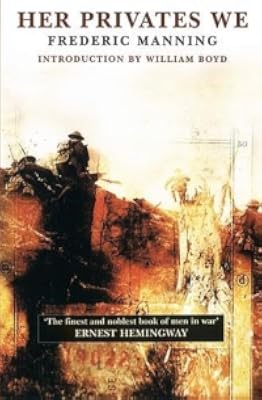

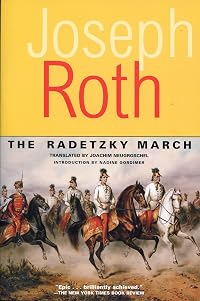


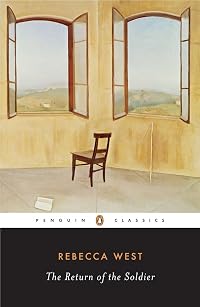
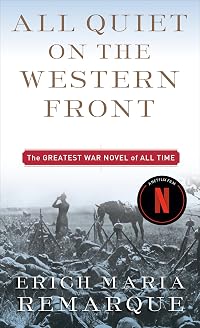
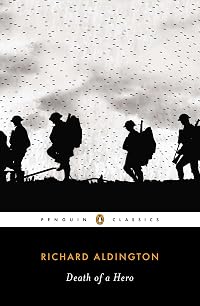










Member Recommendations

ten_floors_up Another fictionalised account based on personal experience of an infantryman's life in the First World War. This one describes events in a part of Europe that an English-language reader might not associate with trench warfare of the time.
Member Reviews
Partly because of contemporary censorship, and partly because so many of the writers of the time were well-educated, middle-class boys, there is sometimes a tendency to imagine everyone from the First World War speaking in cut-glass Eton English. ‘Ready to give the Boche a damn good thrashing, Blodger?’ ‘Lumme, I should hope so old man,’ and so on. I mean you know logically that people still swore and cursed in the 1910s, but it's hard to take it on board instinctively when there's so little record of it. And then again, maybe people really were a bit more reserved in those days…?
I have fallen into that trap before; and linguistically speaking, The Middle Parts of Fortune has been a necessary corrective for me. Here, privates show more in the trenches are more direct:
‘Fuckin' slave drivers, that's what they are!’ said Minton, flinging himself on the ground. ‘What's the cunt want to come down 'ere buggerin' us about for, 'aven't we done enough bloody work in th' week?’
As soon as you read it, you think: ah. Yes. Of course that's how people spoke. I can hear people I know saying that.
Capturing this dialogue is one of Manning's key aims in this novel, and it was also one of the reasons the book got into trouble when it first came out (anonymously) in 1929. A year later it was bowdlerised and re-released as Her Privates We, the title under which it's still published by many modern editors, although it's not clear to me which version of the text is being used by who.
It's a great book anyway, and one that reminded me very much of Henri Barbusse's Le Feu. They have many incidents in common, but they also both depend stylistically on naturalistic slang, and they both spend the bulk of their time examining the interminable boredom that comprised ninety percent of soldiers' lives – the forced marches, billeting in tiny French villages in the rain, linguistic misunderstandings, trench philosophising, drinking binges in two-bit estaminets, the petty politics between different officers. All the time trying not to think about the next ‘show’: it was an existence based around rejecting the immediate future – what Manning describes as ‘their subterranean, furtive, twilight life, the limbo through which, with their obliterated humanity, they moved as so many unhouseled ghosts’.
As perhaps you can tell already, some of the prose is of quite an elevated register, especially compared with the speech. Manning is not averse to throwing in some rare archaisms like venusty to try and ratchet up the emotional effect of some scenes; I'm still not sure how I feel about that. I think the dialogue was more successful than many of the descriptive passages.
He does write very incisively, though, on many aspects of trench life, like its enforced masculinity. The lack of female interaction brings about all kinds of strange psychological symptoms – it instils a ‘sense of privation, which affected more or less consciously all these segregated males, so that they swung between the extremes of a sickly sentimentalism and a rank obscenity’, as demonstrated in several scenes.
I think ultimately Le Feu might be a better book. The Middle Parts of Fortune was very slightly let down for me by the central character, Bourne, who seems to move through a series of scenes that are designed to show off the excellence of his character: he is always the most level-headed, the most intelligent, the most judicious of his companions, and since he's a thinly veiled version of the author, this struck me as slightly off-putting. On the other hand, the portraits of other soldiers are very moving here, and I cared about some of them more than I cared about anyone in Barbusse.
They had nothing; not even their own bodies, which had become mere implements of warfare. They turned from the wreckage and misery of life to an empty heaven, and from an empty heaven to the silence of their own hearts. They had been brought to the last extremity of hope, and yet they put their hands on each other's shoulders and said with a passionate conviction that it would be all right, though they had faith in nothing, but in themselves and in each other.
The book ends with his company going over the top, and by this stage, after so much detailed uncertainty and procrastination, the effect is very powerful. My palms were sweating. Manning handles it perfectly: it feels as though you too, as a reader, have been waiting the whole time, with a sort of sick anxiety that can only be the tiniest shadow of its original, for this final, dreadful rush into hell. show less
I have fallen into that trap before; and linguistically speaking, The Middle Parts of Fortune has been a necessary corrective for me. Here, privates show more in the trenches are more direct:
‘Fuckin' slave drivers, that's what they are!’ said Minton, flinging himself on the ground. ‘What's the cunt want to come down 'ere buggerin' us about for, 'aven't we done enough bloody work in th' week?’
As soon as you read it, you think: ah. Yes. Of course that's how people spoke. I can hear people I know saying that.
Capturing this dialogue is one of Manning's key aims in this novel, and it was also one of the reasons the book got into trouble when it first came out (anonymously) in 1929. A year later it was bowdlerised and re-released as Her Privates We, the title under which it's still published by many modern editors, although it's not clear to me which version of the text is being used by who.
It's a great book anyway, and one that reminded me very much of Henri Barbusse's Le Feu. They have many incidents in common, but they also both depend stylistically on naturalistic slang, and they both spend the bulk of their time examining the interminable boredom that comprised ninety percent of soldiers' lives – the forced marches, billeting in tiny French villages in the rain, linguistic misunderstandings, trench philosophising, drinking binges in two-bit estaminets, the petty politics between different officers. All the time trying not to think about the next ‘show’: it was an existence based around rejecting the immediate future – what Manning describes as ‘their subterranean, furtive, twilight life, the limbo through which, with their obliterated humanity, they moved as so many unhouseled ghosts’.
As perhaps you can tell already, some of the prose is of quite an elevated register, especially compared with the speech. Manning is not averse to throwing in some rare archaisms like venusty to try and ratchet up the emotional effect of some scenes; I'm still not sure how I feel about that. I think the dialogue was more successful than many of the descriptive passages.
He does write very incisively, though, on many aspects of trench life, like its enforced masculinity. The lack of female interaction brings about all kinds of strange psychological symptoms – it instils a ‘sense of privation, which affected more or less consciously all these segregated males, so that they swung between the extremes of a sickly sentimentalism and a rank obscenity’, as demonstrated in several scenes.
I think ultimately Le Feu might be a better book. The Middle Parts of Fortune was very slightly let down for me by the central character, Bourne, who seems to move through a series of scenes that are designed to show off the excellence of his character: he is always the most level-headed, the most intelligent, the most judicious of his companions, and since he's a thinly veiled version of the author, this struck me as slightly off-putting. On the other hand, the portraits of other soldiers are very moving here, and I cared about some of them more than I cared about anyone in Barbusse.
They had nothing; not even their own bodies, which had become mere implements of warfare. They turned from the wreckage and misery of life to an empty heaven, and from an empty heaven to the silence of their own hearts. They had been brought to the last extremity of hope, and yet they put their hands on each other's shoulders and said with a passionate conviction that it would be all right, though they had faith in nothing, but in themselves and in each other.
The book ends with his company going over the top, and by this stage, after so much detailed uncertainty and procrastination, the effect is very powerful. My palms were sweating. Manning handles it perfectly: it feels as though you too, as a reader, have been waiting the whole time, with a sort of sick anxiety that can only be the tiniest shadow of its original, for this final, dreadful rush into hell. show less
To a large extent, the popular British memory of the First World War is shaped by it's literature; the poems of [a:Wilfred Owen|4242|Wilfred Owen|https://d.gr-assets.com/authors/1211230350p2/4242.jpg], plays, notably [b:Journey's End|19422141|Journey's End (York Notes)|R. C. Sherriff|https://d.gr-assets.com/books/1386922333s/19422141.jpg|27499570] by [a:R. C. Sherriff|7190389|R. C. Sherriff|https://s.gr-assets.com/assets/nophoto/user/u_50x66-632230dc9882b4352d753eedf9396530.png], and memoirs cum novels by the likes of [a:Edmund Blunden|31139|Edmund Blunden|https://d.gr-assets.com/authors/1335026460p2/31139.jpg], [a:Robert Graves|3012988|Robert Graves|https://d.gr-assets.com/authors/1251049332p2/3012988.jpg], and [a:Richard show more Aldington|94230|Richard Aldington|https://d.gr-assets.com/authors/1301735220p2/94230.jpg].
While these are all valuable documents, written as they were by men who served, there is a danger that they present an unrepresentative picture of life in the British army on the Western Front. Blunden, Graves, and Aldington, as well as [a:Siegfried Sassoon|146538|Siegfried Sassoon|https://d.gr-assets.com/authors/1210181586p2/146538.jpg], were all privately educated university men at a time when very few Brits could say that. As a result, the picture of Britain's war that emerges from the literature is disproportionately posh.
In it's unbowlderised form, [b:The Middle Parts of Fortune|19292587|The Middle Parts of Fortune|Frederic Manning|https://d.gr-assets.com/books/1386524779s/19292587.jpg|366662] goes some way towards re balancing that. The hero is a slightly irritating semi toff who is presented as a bit of an ideal, but lots of space is given to the rank and file, characters like Shem, Martlow and Smart. With their grim humour and determination, these men, as much as their well educated officers, were the raw material of Britain's military success in the First World War. This book takes a closer look at them than any other and, as a result, is perhaps the most enlightening piece of British literature to emerge from the trenches. show less
While these are all valuable documents, written as they were by men who served, there is a danger that they present an unrepresentative picture of life in the British army on the Western Front. Blunden, Graves, and Aldington, as well as [a:Siegfried Sassoon|146538|Siegfried Sassoon|https://d.gr-assets.com/authors/1210181586p2/146538.jpg], were all privately educated university men at a time when very few Brits could say that. As a result, the picture of Britain's war that emerges from the literature is disproportionately posh.
In it's unbowlderised form, [b:The Middle Parts of Fortune|19292587|The Middle Parts of Fortune|Frederic Manning|https://d.gr-assets.com/books/1386524779s/19292587.jpg|366662] goes some way towards re balancing that. The hero is a slightly irritating semi toff who is presented as a bit of an ideal, but lots of space is given to the rank and file, characters like Shem, Martlow and Smart. With their grim humour and determination, these men, as much as their well educated officers, were the raw material of Britain's military success in the First World War. This book takes a closer look at them than any other and, as a result, is perhaps the most enlightening piece of British literature to emerge from the trenches. show less
The same bleak story over and over. It is always a wonder to me that anyone survived, let alone then set to write about it. For some reason I was reminded of Malouf's Fly Away Peter.
Published as fiction but based on the experiences of the author as a very literate private at the Somme.
Ratings
Members
- Recently Added By
Lists

Books mentioned in The Diary of a Provincial Lady
59 works; 4 members

r/AskHistorians' Recommended Books
1,068 works; 19 members
Author Information

10+ Works 901 Members
Some Editions
Awards and Honors
Series
Belongs to Publisher Series
Work Relationships
Is abridged in
Common Knowledge
- Canonical title
- The Middle Parts of Fortune
- Original title
- The middle parts of fortune
- Alternate titles*
- Her privates we
- Original publication date
- 1929
- People/Characters
- Bourne; Shem; Martlow
- Important places
- Somme, Hauts-de-France, France; Picardy, Hauts-de-France, France
- Important events
- World War I (1914-1918); Battle of the Somme (1916)
- Dedication*
- Voor Peter Davies, die me dwong het te schrijven
- First words
- The darkness was increasing rapidly, as the whole sky had clouded, and threatened thunder.
- Last words
- (Click to show. Warning: May contain spoilers.)Then they all bowed over their own thoughts again, listening to the shells bumping heavily outside, as Fritz began to send a lot of stuff over in retaliation for the raid. They sat there silently; each man keeping his own secret.
- Original language
- English
- Disambiguation notice
- An expurgated version was published as "Her Privates We".
*Some information comes from Common Knowledge in other languages. Click "Edit" for more information.
Classifications
Statistics
- Members
- 445
- Popularity
- 68,880
- Reviews
- 4
- Rating
- (3.93)
- Languages
- 7 — Dutch, English, Estonian, Finnish, Italian, Portuguese, Spanish
- Media
- Paper, Audiobook, Ebook
- ISBNs
- 44
- ASINs
- 16