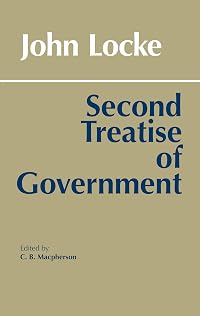
The Second Treatise of Government
by John Locke
On This Page
Description
This essential volume features John Locke''s hand-corrected text with an outstanding introduction to Locke''s life and role in intellectual history, his principal works, and their purpose. Written by the editor, Richard Cox, the introduction also outlines the course of both treatises of government and analyzes the problems of interpretation. Also included are a list of the principal dates in the life of John Locke as well as a selected bibliography.Tags
Recommendations


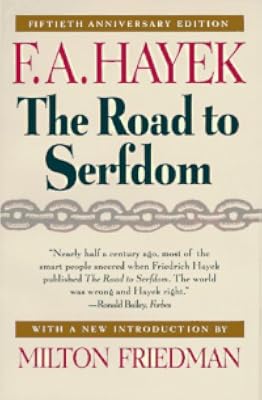
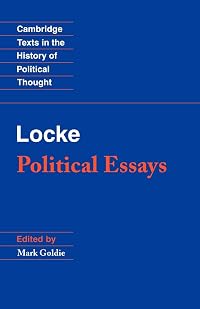
Member Recommendations


mcaution Insights into "The Nature of Government", "Man's Rights", and "What is Capitalism". A perfect stepping stone from Locke's political ideas. You can also find this lectures on the Ayn Rand Institute's website for free. aynrand(dot)org
06
Member Reviews
Yikes- I'd thought that, since so many liberals (or what in America are called, bizarrely enough, conservatives) take this as a kind of ur-text, it'd be, you know, good. My bad. I should have realized that quality of argument is totally superfluous in political matters.
Whatever he meant to say, Locke ends up saying very little. He says the state of nature is peaceable and pleasant... and that we form political societies to escape from the state of nature. He writes an entire treatise to describe a legitimate state. He describes a legitimate state as one that originates in a compact between people in the state of nature, and then ignores the fact that there are no such states. (Note to America-boosters: the founders of America were not show more in the state of nature, they were already part of a civil society. America is the result of civil war/conquest, not compact). The much ballyhooed 'mingling of my labor' as a claim of property rights actually ends up meaning 'mingling of my labor, and that of my employees,' thus fundamentally undermining any justification that he might have had for the origins of property- because he has no account of how some people come to be employers and some to be employees.
As with all political theory that tries to lay out a rationale for people obeying modern nation states, it ignores history, logic and morality. Still, worth reading- it's short and easy to prove wrong. No wonder it's a staple in first year philosophy courses. show less
Whatever he meant to say, Locke ends up saying very little. He says the state of nature is peaceable and pleasant... and that we form political societies to escape from the state of nature. He writes an entire treatise to describe a legitimate state. He describes a legitimate state as one that originates in a compact between people in the state of nature, and then ignores the fact that there are no such states. (Note to America-boosters: the founders of America were not show more in the state of nature, they were already part of a civil society. America is the result of civil war/conquest, not compact). The much ballyhooed 'mingling of my labor' as a claim of property rights actually ends up meaning 'mingling of my labor, and that of my employees,' thus fundamentally undermining any justification that he might have had for the origins of property- because he has no account of how some people come to be employers and some to be employees.
As with all political theory that tries to lay out a rationale for people obeying modern nation states, it ignores history, logic and morality. Still, worth reading- it's short and easy to prove wrong. No wonder it's a staple in first year philosophy courses. show less
“Mine!”
It begins early with a child yelling, “Mine!” We have all heard him/her bursting into tears and the quick crawl/run/waddle to a parent claiming the injustice of lost property. From an early age, we feel the seemingly self-evident truth of private property. We were given an object; we collected items; we connected those items in ways that made a new and much better object.
In all of these scenarios, we learned the idea of “mine.” In John Locke’s Second Treatise of Government, the author presents a theological case for government authority through the principle of property.
The Premise of Property
Any discussion regarding John Locke’s Second Treatise of Government must center on property. A highly influential writing show more on political philosophy, Locke’s tome details the ways in which a society organizes and manages itself. But before one can state maxims regarding political government, one must discuss the reasons for organizing societal connections. For Locke, this reason begins with private property.
Locke’s justification for private property begins with the assumption that God the Creator fashioned a world for humanity to subdue and manage. Locke writes,
“God, who hath given the world to men in common, hath also given them reason to make use of it to the best advantage of life, and convenience. The earth, and all that is therein, is given to men for the support and comfort of their being” (18).
The earth, then, exists in a supporting role to humankind; it carries no first order intrinsic value. Instead, it functions instrumentally for the good of humanity.
From this position, Locke believes that private property arises from mixing personal labor with land from the God-given commons of the earth. Locke argues,
“Though the earth, and all inferior creatures, be common to all men, yet every man has a property in his own person: this no body has any right to but himself. The labour of his body, and the work of his hands, we may say, are properly his. Whatsoever then he removes out of the state that nature hath provided, and left it in, he hath mixed his labour with, and joined to it something that is his own, and thereby makes it his property. It being by him removed from the common state nature hath placed it in, it hath by this labour something annexed to it, that excludes the common right of other men: for this labour being the unquestionable property of the labourer, no man but he can have a right to what that is once joined to, at least where there is enough, and as good, left in common for others” (19).
Thus, while God provides commons for the good of all humanity, the ability for any human to conduct work allows him or her to transfer land held in common into private property.
To illustrate, under Locke’s philosophy of property, I cannot travel to a pristine wilderness and, upon discovering it, proclaim the land my property. Instead, I must cultivate this discovered land. By building on it and utilizing its soil for food, I then possess the right to proclaim the land my private property.
In short then, Locke suggests that God, who created humanity through labor, considers humans God’s property. God provides the earth as a common for which humans can use their God-given gifts of manual labor to cultivate and transfer the earth into private hands.
Governance
The need for political government arises from this principle of private property. When a society expands beyond the simplicity of cultivating open commons into private property, the need to protect and govern property becomes an important issue. Locke reasons,
“Political power is that power, which every man having in the state of nature, has given up into the hands of the society, and therein to the governors, whom the society hath set over itself, with this express or tacit trust, that it shall be employed for their good, and the preservation of their property” (89).
Even though the Second Treatise of Government explores many specific matters in the execution of governmental affairs in a united society, the core principles behind these discussions surround Locke’s theological notion of property and the need for governing those God-given rights.
Locke: An American Ideal
Interestingly, I find that Locke’s arguments sound natural as if they are ingrained in the psyche of American society and capitalism as a whole. John Dunn, in an essay titled “Measuring Locke’s Shadow” confirms this idea when he writes,
“Locke is still intractably America’s philosopher, and still very much America’s philosopher for what still seems ever more peremptorily America’s globe. He is the sign on the banner of America’s imperious external reach, her cultural, imaginative, ideological, economic, and even political Griff nach der Weltmacht [bid for world power].”
Put differently, Locke’s ideas on property and the need for government to authorize and protect it are the modus operandi for American business and politics.
Property as Dominance
In fact, Locke’s ideas seem to be the foundation for the domination of nature for which society now encounters drastic repercussions. In other words, to align theologically with Locke’s views on property, one must translate “dominion” in Genesis 1:28 as “domination.” What else could private property mean other than the absolute control of a specific portion of God’s creation?
By assuming “domination” of God’s creation in Genesis 1:28, I find tension in Locke’s arguments. Given Locke’s premises, God owns humanity because God created us through work. Under the same assumption, God possesses all of creation. Therefore, humans cannot possess an absolute right over a portion of creation because they were not the first to labor on it.
It then follows that the God-given commons for which humans carry the right to fill and subdue is not a space which humans carry the right to section off into private property but an area owned by God given to humans in common to share and steward for the good of the whole.
Locke centers his political philosophy on a theological case for private property. By mixing labor with the God-given commons, private property arises. As an extension, political governance exists to protect that property. Nevertheless, the notion that God created and thus possesses the created world forces us to consider the earth in stewardship instead of domination. Even though we feel the pull of private property from an early age, our connection to an item through work does not require it to become our private possession.
With dense philosophical writing, Locke’s Second Treatise of Government is a difficult but rewarding read. Despite my reservations regarding Locke’s premises, this book is a must read for anyone interested in politics.
Originally published at http://wherepenmeetspaper.blogspot.com show less
It begins early with a child yelling, “Mine!” We have all heard him/her bursting into tears and the quick crawl/run/waddle to a parent claiming the injustice of lost property. From an early age, we feel the seemingly self-evident truth of private property. We were given an object; we collected items; we connected those items in ways that made a new and much better object.
In all of these scenarios, we learned the idea of “mine.” In John Locke’s Second Treatise of Government, the author presents a theological case for government authority through the principle of property.
The Premise of Property
Any discussion regarding John Locke’s Second Treatise of Government must center on property. A highly influential writing show more on political philosophy, Locke’s tome details the ways in which a society organizes and manages itself. But before one can state maxims regarding political government, one must discuss the reasons for organizing societal connections. For Locke, this reason begins with private property.
Locke’s justification for private property begins with the assumption that God the Creator fashioned a world for humanity to subdue and manage. Locke writes,
“God, who hath given the world to men in common, hath also given them reason to make use of it to the best advantage of life, and convenience. The earth, and all that is therein, is given to men for the support and comfort of their being” (18).
The earth, then, exists in a supporting role to humankind; it carries no first order intrinsic value. Instead, it functions instrumentally for the good of humanity.
From this position, Locke believes that private property arises from mixing personal labor with land from the God-given commons of the earth. Locke argues,
“Though the earth, and all inferior creatures, be common to all men, yet every man has a property in his own person: this no body has any right to but himself. The labour of his body, and the work of his hands, we may say, are properly his. Whatsoever then he removes out of the state that nature hath provided, and left it in, he hath mixed his labour with, and joined to it something that is his own, and thereby makes it his property. It being by him removed from the common state nature hath placed it in, it hath by this labour something annexed to it, that excludes the common right of other men: for this labour being the unquestionable property of the labourer, no man but he can have a right to what that is once joined to, at least where there is enough, and as good, left in common for others” (19).
Thus, while God provides commons for the good of all humanity, the ability for any human to conduct work allows him or her to transfer land held in common into private property.
To illustrate, under Locke’s philosophy of property, I cannot travel to a pristine wilderness and, upon discovering it, proclaim the land my property. Instead, I must cultivate this discovered land. By building on it and utilizing its soil for food, I then possess the right to proclaim the land my private property.
In short then, Locke suggests that God, who created humanity through labor, considers humans God’s property. God provides the earth as a common for which humans can use their God-given gifts of manual labor to cultivate and transfer the earth into private hands.
Governance
The need for political government arises from this principle of private property. When a society expands beyond the simplicity of cultivating open commons into private property, the need to protect and govern property becomes an important issue. Locke reasons,
“Political power is that power, which every man having in the state of nature, has given up into the hands of the society, and therein to the governors, whom the society hath set over itself, with this express or tacit trust, that it shall be employed for their good, and the preservation of their property” (89).
Even though the Second Treatise of Government explores many specific matters in the execution of governmental affairs in a united society, the core principles behind these discussions surround Locke’s theological notion of property and the need for governing those God-given rights.
Locke: An American Ideal
Interestingly, I find that Locke’s arguments sound natural as if they are ingrained in the psyche of American society and capitalism as a whole. John Dunn, in an essay titled “Measuring Locke’s Shadow” confirms this idea when he writes,
“Locke is still intractably America’s philosopher, and still very much America’s philosopher for what still seems ever more peremptorily America’s globe. He is the sign on the banner of America’s imperious external reach, her cultural, imaginative, ideological, economic, and even political Griff nach der Weltmacht [bid for world power].”
Put differently, Locke’s ideas on property and the need for government to authorize and protect it are the modus operandi for American business and politics.
Property as Dominance
In fact, Locke’s ideas seem to be the foundation for the domination of nature for which society now encounters drastic repercussions. In other words, to align theologically with Locke’s views on property, one must translate “dominion” in Genesis 1:28 as “domination.” What else could private property mean other than the absolute control of a specific portion of God’s creation?
By assuming “domination” of God’s creation in Genesis 1:28, I find tension in Locke’s arguments. Given Locke’s premises, God owns humanity because God created us through work. Under the same assumption, God possesses all of creation. Therefore, humans cannot possess an absolute right over a portion of creation because they were not the first to labor on it.
It then follows that the God-given commons for which humans carry the right to fill and subdue is not a space which humans carry the right to section off into private property but an area owned by God given to humans in common to share and steward for the good of the whole.
Locke centers his political philosophy on a theological case for private property. By mixing labor with the God-given commons, private property arises. As an extension, political governance exists to protect that property. Nevertheless, the notion that God created and thus possesses the created world forces us to consider the earth in stewardship instead of domination. Even though we feel the pull of private property from an early age, our connection to an item through work does not require it to become our private possession.
With dense philosophical writing, Locke’s Second Treatise of Government is a difficult but rewarding read. Despite my reservations regarding Locke’s premises, this book is a must read for anyone interested in politics.
Originally published at http://wherepenmeetspaper.blogspot.com show less
When you examine the "axioms" of his doctrine, it is very difficult to take his posterior developments very seriously as political theory. What if access to land is limited?
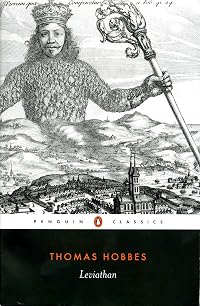
I read this book immediately after Hobbe's Leviathan. I found both to be tough recreational reads, but there were sufficient rewards in both to cover the pain.
Locke's book makes more sense to my modern mind - he quite rightly puts the view that the head of government (King or whatever) must be subject to the laws of the Commonwealth, and must not be judges in their own cases. This is the fundamental point of difference between Locke and Hobbes.
But while Locke may be right, Hobbes is the better writer. While Hobbes is short, direct and punchy in his prose, Locke wanders and is need of a good editor. Often he summarises his views at the end of a chapter, and this reader couldn't help but think that the summary should be at the start, and show more most of the rest of the chapter ditched.
While both want to be seen to be developing their position from first principles, both writer views are coloured by the English Civil War. Hobbes considers the rebels criminals; Locke supports their actions, and their writing shows their preferences.
I was also amused to see (Ch 13) that fair electoral boundaries and equal representation was already a thorny issue. Gerrymandering is clearly not only a modern problem.
Read Aug 2014 show less
Locke's book makes more sense to my modern mind - he quite rightly puts the view that the head of government (King or whatever) must be subject to the laws of the Commonwealth, and must not be judges in their own cases. This is the fundamental point of difference between Locke and Hobbes.
But while Locke may be right, Hobbes is the better writer. While Hobbes is short, direct and punchy in his prose, Locke wanders and is need of a good editor. Often he summarises his views at the end of a chapter, and this reader couldn't help but think that the summary should be at the start, and show more most of the rest of the chapter ditched.
While both want to be seen to be developing their position from first principles, both writer views are coloured by the English Civil War. Hobbes considers the rebels criminals; Locke supports their actions, and their writing shows their preferences.
I was also amused to see (Ch 13) that fair electoral boundaries and equal representation was already a thorny issue. Gerrymandering is clearly not only a modern problem.
Read Aug 2014 show less
John Locke was an incredibly influential writer and thinker. But his writing is dense and outdated, so hard to sift through, and it's all a little redundant now. I love old theory writings but this one didn't really jump off the page at me, and plus Locke was super racist when it came to indigenous Americans. His beliefs are basically structured around keeping property in the hands of the elite so long as they seek to "better the collective stock of mankind", which seems very in line with some of America's greatest problems.
But, of course, life liberty and property. Natural rights. All that stuff. So he has his moments too.
But, of course, life liberty and property. Natural rights. All that stuff. So he has his moments too.
A masterpiece that refined ideas of the early political philosophers (Aristotle, Hobbes, Rousseau) into what became American government. I can understand why the Federalist authors relied on Locke and see directly his influence in those works. All of the key elements are there: libertarianism (trade-off of commonwealth to protect property against the initiation of force), balance of powers, ultimate recourse of the people, state of nature, benefits of commonwealth, justice. He builds with the elements of power -- slavery is not a right but a sustained state of war, paternal power is different than power of the government. Regarding robbery, he contrasts the effect of that done by an individual with that done by government, the former show more being abhorrent, the latter lauded. Regarding the fall of government, Locke draws distinctions between conquest (external), usurpation (internal), tyranny (internal with the benefit going to the tyrant), and degradation into anarchy. The basis of political society is that people give up their natural right of force available in a state of nature to get the protection of property, which includes threat of punishment and legal recourse. The latter provides for the third branch of government. Regarding monarchy, he shows that almost all forms were at some point elective, originally when a king was designated and accepted; later anytime that decision is validated. The legislative is the first and supreme power, being directly designated by the people. show less
Thankfully, we don't analogize the United States government as our parents. Parenthood implies a duty to guide and hold authority over its citizens. However, it was aptly utilized by John Locke to explain how minors are protected in their decision making by those God placed as their guardians, but conversely, government, through a commonwealth, is a voluntary association of men using common law to protect the most precious thing of all: property. And yes, property includes one's self.
Laying the groundwork for federalism and arbitrariless ajudication of the law to promote equality and protect our "rights," John Locke writes a persuasive piece on a form of government not really in existance since the Roman empire. It is no wonder why the show more American Founding Fathers so widely adopted ideas from this writing. show less
Laying the groundwork for federalism and arbitrariless ajudication of the law to promote equality and protect our "rights," John Locke writes a persuasive piece on a form of government not really in existance since the Roman empire. It is no wonder why the show more American Founding Fathers so widely adopted ideas from this writing. show less
Members
- Recently Added By
Lists

Books that changed the world
67 works; 65 members

Política - Clásicos
164 works; 2 members

Generation Joshua
115 works; 3 members

Changamire's Bookshelf
19 works; 1 member

Greatest Books, allegedly
484 works; 9 members

New Lifetime Reading Plan by Fadiman and Major
225 works; 5 members

The Well-Educated Mind, Susan Wise Bauer, 2016
179 works; 3 members

Foundational Books in International Relations
13 works; 1 member
Author Information

276+ Works 14,693 Members
John Locke's works of political and social philosophy, written in the 17th century, have strongly influenced intellectuals ever since - including the founders of the United States of America. Born in 1632 in Wrington, England, Locke studied at Christ Church, Oxford, where he earned his B.A. and M.A. degrees in the late 1650's. He also studied show more medicine and earned a medical license. His studies led to an interest in contemporary philosophers influenced by science, such as Rene Descartes. Locke read widely among them while teaching at Christ Church over the next few years. In 1667, Locke became personal physician and adviser to Anthony Ashley Cooper, who later was appointed Earl of Shaftesbury. Through Shaftesbury's patronage, Locke earned some government posts and entered London's intellectual circles, all the while writing philosophy. He was one of the best-known European thinkers of his time when he died in 1704. In An Essay Concerning Human Understanding (1690), Locke established the philosophy of empiricism, which holds that the mind at birth is a blank tablet. Experience, Locke believed, would engrave itself upon the tablet as one grew. He felt humans should create theories according to experience and test them with experiments. This philosophy helped establish the scientific method. Locke codified the principals of liberalism in "Two Treatises of Government" (1690). He emphasized that the state must preserve its citizens' natural rights to life, liberty and property. When the state does not, Locke argued, citizens are justified in rebelling. His view of liberalism comprised limited government, featuring elected representation and legislative checks and balances. While a Christian, Locke believed in absolute separation of church and state, and he urged toleration of those whose religious views differed from the majorities. (Bowker Author Biography) show less
Some Editions
Awards and Honors
Series
Belongs to Publisher Series
Work Relationships
Is contained in
Is abridged in
Has as a commentary on the text
Has as a student's study guide
Common Knowledge
- Canonical title
- The Second Treatise of Government
- Alternate titles*
- Tutkielma hallitusvallasta : tutkimus poliittisen vallan oikeasta alkuperästä, laajuudesta ja tarkoituksesta
- Original publication date
- 1690
*Some information comes from Common Knowledge in other languages. Click "Edit" for more information.
Classifications
- Genres
- Philosophy, Politics and Government, Nonfiction, General Nonfiction, History
- DDC/MDS
- 320.01 — Society, government, & culture Political science Types of Government Political Science Philosophy and Theory
- LCC
- JC153 .L85 — Political Science Political theory Political theory. The state. Theories of the state Modern state
- BISAC
Statistics
- Members
- 3,687
- Popularity
- 4,403
- Reviews
- 30
- Rating
- (3.60)
- Languages
- 14 — Czech, Danish, Dutch, English, Finnish, French, German, Greek, Hebrew, Italian, Spanish, Swedish, Turkish, Portuguese (Brazil)
- Media
- Paper, Audiobook, Ebook
- ISBNs
- 141
- UPCs
- 1
- ASINs
- 49