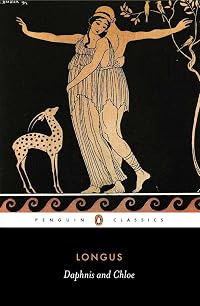
Daphnis and Chloe
by Longos
There is 1 current discussion about this work.
On This Page
Description
Longus' Daphnis and Chloe is arguably our finest surviving Greek novel. Written under the Roman Empire and engaging with romantic, pastoral and rhetorical themes, the story and characterisation have captured the imaginations of artists over the centuries. Despite a growing interest in ancient novels over the past half-century, this is the first full commentary to address Longus' linguistic texture and its implications for his literary aspirations, as well as his narrative skills and show more intertextuality with earlier Greek writers. The commentary provides a detailed analysis of Longus' Greek and its relation to other Greek prose and poetry of the second century AD and earlier, and emphasises the construction and style of the original text, drawing out key points for clarification and discussion. A wide-ranging introduction ensures that this book will be an indispensable guide for teachers and students of all levels who are looking to engage with Longus' writing. show lessTags
Recommendations















Member Reviews
Written in the 2ndC CE, this pastoral romance struck me just by how naively uncynical it was. Charming, and interesting more than engaging, I thought. But it’s a short read, and well worth having read it.
A goatherd and a shepherdess (each abandoned as babies by their wealthy parents) fall hard for each other, but since they have no idea what love is (much less sex), their emotions confuse them, and they fumble about, kissing and hugging like there’s no tomorrow. And someone had to explain even kissing to them. Various mishaps happen to either half of the couple, and in a world where capricious Gods and Nymphs can turn against anyone for almost any reason, a harmonious outcome is never guaranteed. The only thing that the text takes show more pains to assure the readers of remains inviolable isChloe’s virginity .
What I’ll remember most clearly from Daphnis and Chloe is its almost pathological naiveté: sarcastic, snarky little me is not used to being served uncynical charm unless its purpose is later subversion. This ancient tale, though, is so … wholesome! As though cynicism had not yet been invented. I’m not sure what to make of that, really.
Also,it’s eye-rolling just how much importance is attached to female virginity. The “loss” of female innocence is presented as unthinkable in ways that male innocence would not even qualify for. But yeah: the past is a different country.
Do give it a try: even with its insistence on innocence, it’s an interesting view into an ancient society and the kinds of tropes and tales it apparently appreciated. show less
A goatherd and a shepherdess (each abandoned as babies by their wealthy parents) fall hard for each other, but since they have no idea what love is (much less sex), their emotions confuse them, and they fumble about, kissing and hugging like there’s no tomorrow. And someone had to explain even kissing to them. Various mishaps happen to either half of the couple, and in a world where capricious Gods and Nymphs can turn against anyone for almost any reason, a harmonious outcome is never guaranteed. The only thing that the text takes show more pains to assure the readers of remains inviolable is
What I’ll remember most clearly from Daphnis and Chloe is its almost pathological naiveté: sarcastic, snarky little me is not used to being served uncynical charm unless its purpose is later subversion. This ancient tale, though, is so … wholesome! As though cynicism had not yet been invented. I’m not sure what to make of that, really.
Also,
Do give it a try: even with its insistence on innocence, it’s an interesting view into an ancient society and the kinds of tropes and tales it apparently appreciated. show less
This book seems so out of place. This little novel of pastoral love when set against the epics of Greek and Roman poetry seems like something the contemporaries couldn’t have taken seriously. Yet it’s a captivating and sensuous read, perhaps more now than it was then. It bears some resemblance to Sorrows of Young Werther and many books with simple plots, but it contains the magical elements of myth, like Shakespeare’s more lighthearted plays. It was a lot of fun, and could be considered one of the archetype texts of the pastoral genre. It is definitely an important book, though considering it a perfect novel is impossible. The plot is eccentric and the characters highly naïve, and it partakes of many of the elements of fable and show more bedtime stories. The descriptions are well-done and the action is brief and unimportant. It could have been written by Flaubert, or an admirer of Flaubert. It is the only thing Longus ever wrote that survived, if he even existed as an actual person. Nothing is known about him, yet he is remembered for this slight and charming tale, the type of thing he might have scribbled out over a few weeks, composed with wide brush strokes that spoke to many different sorts of people and appealed to the desires we all feel for the freedom of the heathens who enjoy Nature more than busy city folk. show less
In this delightful short tale from ancient Greece, in fact one of the oldest existing novels, Daphnis and Chloe are both foundlings raised by foster families in a pastoral community and spend their days tending their goats. As they come of age they find they are attracted to one another, but being complete innocents they aren't sure how to act on it. Luckily, fate and the gods ultimately come to the rescue!
I have to say it was a really amazing experience to read such an old work which, incredibly, has survived more or less intact for nearly 2000 years. This translation is surprisingly readable today, way more accessible than a lot of stiff and formal older works. And, it's a cute and heartwarming story to boot — highly recommended!
I have to say it was a really amazing experience to read such an old work which, incredibly, has survived more or less intact for nearly 2000 years. This translation is surprisingly readable today, way more accessible than a lot of stiff and formal older works. And, it's a cute and heartwarming story to boot — highly recommended!
This is a story written by Longus between the 3rd and 5th century A.D. This version is a translation into English by George Thornley, published in 1657.
A boy and a girl, by coincidence, were both abandoned at birth but discovered and reared by two pastoral families as their own. As two young people, they work side by side on the island of Lesbos as a goatherd and shepherd. This is the story of how they fall in love and how poor Daphnis faces and recovers from a number of challenges. Scattered in between the events are short side stories about adventures of the Roman gods, which are told to Daphnis and Chloe by incidental characters in the story.
I found this book to be a both delightful and fascinating. It is a Greek story that provides show more a glimpse into everyday life of ordinary folk in an era when, for example, religious devotion and sacrifice to the appropriate gods was how you lived. And the description of how hard Daphnis falls for Chloe is poetic, sweet, and slightly erotic.
George Thornley used the subtitle "A Most Sweet, and Pleasant Pastorall ROMANCE for Young Ladies." For our era, "young adult" would be more appropriate. Nevertheless, this Greek story translated into the English of Shakespeare's era is an easy and pleasant read. show less
A boy and a girl, by coincidence, were both abandoned at birth but discovered and reared by two pastoral families as their own. As two young people, they work side by side on the island of Lesbos as a goatherd and shepherd. This is the story of how they fall in love and how poor Daphnis faces and recovers from a number of challenges. Scattered in between the events are short side stories about adventures of the Roman gods, which are told to Daphnis and Chloe by incidental characters in the story.
I found this book to be a both delightful and fascinating. It is a Greek story that provides show more a glimpse into everyday life of ordinary folk in an era when, for example, religious devotion and sacrifice to the appropriate gods was how you lived. And the description of how hard Daphnis falls for Chloe is poetic, sweet, and slightly erotic.
George Thornley used the subtitle "A Most Sweet, and Pleasant Pastorall ROMANCE for Young Ladies." For our era, "young adult" would be more appropriate. Nevertheless, this Greek story translated into the English of Shakespeare's era is an easy and pleasant read. show less
A classic, but one that doesn't move neatly on a straight line into our own times. It has been rewritten under many guises; here, then, is the original, by way of a marvellous translation; but this is a book to be studied, not consumed. It isn't throwaway fiction, but I fear I treated it as such.
This is a pastoral poem, the story of which has been taken and remade by many other authors. They are separated from their real parents as babies and Daphnis is suckled by a goat, while Chloe is nursed by a ewe. Eventually they are found by shepherds who raise them to be a shepherd and a goatherd. They pasture their flocks together and develop a warm affection for one another. They are eventually restored to their true estates and are happily married.
Recommended if the sentence, "I swear by the goats," said not an iota ironically, appeals to you.
Members
- Recently Added By
Lists

100 Books to Read in a Lifetime (That Are Older Than 200 Years)
415 works; 173 members

Love and Marriage
93 works; 10 members

DigitalDreamDoor top 300
300 works; 4 members
Talk Discussions
Current Discussions
Daphnis and Chloe by Longus - LIMITED EDITIONS CLUB 1934 in George Macy devotees (June 6)
Author Information

The pastoral Daphnis and Chloe, the best of the ancient Greek romances, is attributed to Longus. Nothing is known of his life except what he states in his prologue to the work. His passionate love story of two foundlings raised together by shepherds on Lesbos is sweetly told and has been persistently admired for its bucolic charm. (Bowker Author show more Biography) show less
Some Editions
Awards and Honors
Notable Lists
Series
Belongs to Publisher Series
Imprint Society (1972)
The Abbey Classics (13)
Bernat Metge (213)
Salamanderpockets (113)
insel taschenbuch (0136)
Insel-Bücherei (Nr. 1527)
Penguin Classics (L059)
Reclams Universal-Bibliothek (6911)
Work Relationships
Is contained in
Is abridged in
Inspired
Common Knowledge
- Canonical title
- Daphnis and Chloe
- Original title
- Δάφνις καὶ Χλόη; Daphnis kai Chloē (Transkription) (Transkription)
- Original publication date
- 200's
- People/Characters
- Daphnis; Chloe
- Important places
- Lesbos, Greece; Ancient Greece
- First words
- Out hunting in Lesbos,
in a grove sacred to the Nymphs
I saw a sight
whose like, for beauty, I had never seen—
a painting,
a love-story. (preface) - Last words
- (Click to show. Warning: May contain spoilers.)And now Chloe learned for the first time that all their exploits in the greenwood were just GAMES THAT SHEPHERDS PLAY.
- Original language
- Ancient Greek
Classifications
- Genres
- Fiction and Literature, General Fiction, Romance
- DDC/MDS
- 883.01 — Literature & rhetoric Classical & modern Greek literatures Classical Greek epic poetry and fiction Pseudo-Callisthenes
- LCC
- PA4229 .L8 .E5 — Language and Literature Greek language and literature. Latin language and literature Greek literature Individual authors
- BISAC
Statistics
- Members
- 1,296
- Popularity
- 18,743
- Reviews
- 20
- Rating
- (3.71)
- Languages
- 19 — Catalan, Dutch, English, Estonian, Finnish, French, German, Greek (Ancient), Hungarian, Icelandic, Italian, Latin, Norwegian, Polish, Portuguese, Russian, Spanish, Swedish, Turkish
- Media
- Paper, Audiobook, Ebook
- ISBNs
- 119
- UPCs
- 1
- ASINs
- 67