
The Glass Hotel
by Emily St. John Mandel 
On This Page
Description
Vincent is a bartender at the Hotel Caiette, a five-star glass and cedar palace on an island in British Columbia. Jonathan Alkaitis works in finance and owns the hotel. When he passes Vincent his card with a tip, it's the beginning of their life together. That same day, Vincent's half-brother, Paul, scrawls a note on the windowed wall of the hotel: 'Why don't you swallow broken glass.' Leon Prevant, a shipping executive for a company called Neptune-Avramidis, sees the note from the hotel bar show more and is shaken to his core. Thirteen years later Vincent mysteriously disappears from the deck of a Neptune-Avramidis ship. Weaving together the lives of these characters, the story moves between the ship, the skyscrapers of Manhattan, and the wilderness of northern Vancouver Island, painting a breathtaking picture of greed and guilt, fantasy and delusion, art and the ghosts of the pasts. show lessTags
Recommendations
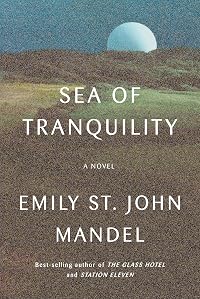
















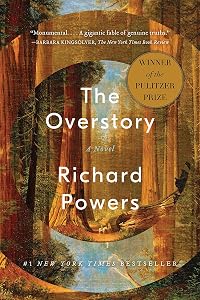



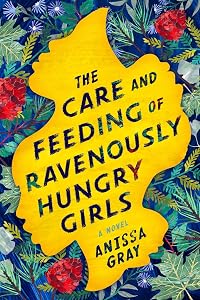
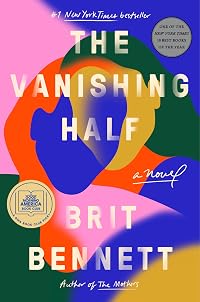






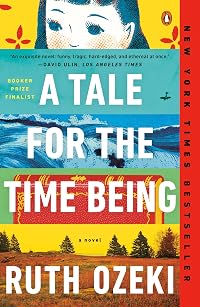










Member Recommendations

novelcommentary Similar structure. Ms. Mantel mentions the book herself as one she admired
51

M_Clark Like The Glass Hotel, the Deptford Trilogy cleverly weaves together the threads of the story.
Member Reviews
Ethereal and addictive – I’d no sooner open the cover of my kobo than I’d get swept up into this hauntingly dreamlike story. There’s no point in saying what it’s about because that's not what matters. It’s the timing of how events unfold and the way elements are revealed that gives this its intensity and depth. It revisits key scenes from different characters' perspectives and from after and then before, building a timeline that twists and intertwines with itself until it returns to the beginning. In its own way it’s every bit as astonishing as Mandel’s earlier (and somewhat prophetic) book, Station Eleven.
Been up since 6am reading this and it was exceptionally good - I think I may have preferred it to Station Eleven, which I unabashedly loved. It's unbearably beautiful and unbearably sad, dealing as it does with boundaries - the worlds of the rich and the poor and insecure, the living and the dead, reality and dreams, the imprisoned and the free.
I don't want to say too much without spoiling it, but at its heart it's a mystery - what happened to Vincent? The answer to that question is a huge story of crisis, despair, and international billion dollar fraud that criss-crosses back and forth along different timelines and from the perspective of a host of well-drawn characters. The subject matter is something that I would never normally be show more interested in, as the romance of high finance has always left me cold, but everything is told from a heartbreakingly human perspective - despite the fact that in many ways this is a ghost story.
Can't recommend it enough. show less
I don't want to say too much without spoiling it, but at its heart it's a mystery - what happened to Vincent? The answer to that question is a huge story of crisis, despair, and international billion dollar fraud that criss-crosses back and forth along different timelines and from the perspective of a host of well-drawn characters. The subject matter is something that I would never normally be show more interested in, as the romance of high finance has always left me cold, but everything is told from a heartbreakingly human perspective - despite the fact that in many ways this is a ghost story.
Can't recommend it enough. show less
Emily St. John Mandel is an author whose name has been coming up regularly on ‘to read during a pandemic’ lists because of Station Eleven, which is about a flu pandemic. Now I’m too chicken to read this at the moment, so I chose her most recent novel instead. Once this pandemic is over though, I’ll be heading straight for Station Eleven because wow, what an author Mandel is! She has that rare ability to make literary fiction read like a thriller, no matter what the topic.
The Glass Hotel is about a number of different things- loss, addiction, a Ponzi scheme, gaol and shipping. You might think that you really don’t care to read about the shadiness of the finance market or container ships, but trust me – you do. Mandel could show more take any topic and make it fascinating. She also has the rare ability of bringing together a number of disparate characters and making the reader care for them, and what happens to them. A rich man in a hotel bar with money to invest? You’ll be concerned for him when he’s living in an RV trying to make ends meet working in an online retailer warehouse. The man who owns the hotel and a lot of money belonging to other people? You’ll share his concerns when he thinks he is losing his mind.
It’s difficult to explain the plot of The Glass Hotel without spoilers or making it seem too separate. But think of it as the story of a number of people who are in a beautiful, remote hotel one night when something shocking happens. Little do each of them know what is going to happen to them in the future, but it will all be wildly different from what they expect. None will continue on that same path and for some, the journey will be wildly different. The characters are interlinked, but the hotel is the setting where they all come together for the first (and possibly the last time). The plot is magnificent, giving each character deep details into their life, thoughts and concerns. No one is unlikeable, but all have their own flaws (even though some choose not to recognise them). The plot seems as though it is shrouded in mist, as everything has a slight other-worldly feeling about it. It creates a mesmerising effect and I dare any reader not to become absorbed by this novel, wondering what will happen and how each of the characters will be affected. My only complaint is that the graffiti scrawled at the hotel didn’t seem to warrant the shocked reaction from the characters (it’s not obscene or targeting), but be patient and all will be revealed.
Even though it contains no mention of a pandemic, it’s the kind of story you want to read during one because it moves the reader’s focus solely to the book. Beautiful and absorbing, read it even if you have no interest in finance or shipping.
Thank you to Pan Macmillan for the copy of this book. My review is honest.
http://samstillreading.wordpress.com show less
The Glass Hotel is about a number of different things- loss, addiction, a Ponzi scheme, gaol and shipping. You might think that you really don’t care to read about the shadiness of the finance market or container ships, but trust me – you do. Mandel could show more take any topic and make it fascinating. She also has the rare ability of bringing together a number of disparate characters and making the reader care for them, and what happens to them. A rich man in a hotel bar with money to invest? You’ll be concerned for him when he’s living in an RV trying to make ends meet working in an online retailer warehouse. The man who owns the hotel and a lot of money belonging to other people? You’ll share his concerns when he thinks he is losing his mind.
It’s difficult to explain the plot of The Glass Hotel without spoilers or making it seem too separate. But think of it as the story of a number of people who are in a beautiful, remote hotel one night when something shocking happens. Little do each of them know what is going to happen to them in the future, but it will all be wildly different from what they expect. None will continue on that same path and for some, the journey will be wildly different. The characters are interlinked, but the hotel is the setting where they all come together for the first (and possibly the last time). The plot is magnificent, giving each character deep details into their life, thoughts and concerns. No one is unlikeable, but all have their own flaws (even though some choose not to recognise them). The plot seems as though it is shrouded in mist, as everything has a slight other-worldly feeling about it. It creates a mesmerising effect and I dare any reader not to become absorbed by this novel, wondering what will happen and how each of the characters will be affected. My only complaint is that the graffiti scrawled at the hotel didn’t seem to warrant the shocked reaction from the characters (it’s not obscene or targeting), but be patient and all will be revealed.
Even though it contains no mention of a pandemic, it’s the kind of story you want to read during one because it moves the reader’s focus solely to the book. Beautiful and absorbing, read it even if you have no interest in finance or shipping.
Thank you to Pan Macmillan for the copy of this book. My review is honest.
http://samstillreading.wordpress.com show less
[Station Eleven] didn't sustain my interest but this one, loosely based on the Bernie Madoff case, did. There's an ethereal chaos to the narrative structure of the book that evokes the character's lives and plights. Ultimately, it's a sad book, as the characters never seem to pull themselves out of the morass of their own choices. But the possibility keeps you reading. Elegiac and consuming.
At the center of this novel is Jonathan Alkaitis, a Bernie Madoff-type figure whose massive ponzi scheme is, we know as soon as we meet him, about to collapse and land him in prison. Although his centrality is not at all obvious at first, as the story starts somewhere else entirely, with someone who sure looks like he's going to be the main character but then mostly fades out of the narrative for a very long while. The whole thing, really, is structured like this. Changes of POV, jumping back and forth in time, characters who weave in and out of each other's lives in chaotic and often glancing ways. Even having read Station Eleven, where the author does something very similar and pulls it off amazingly well, I find myself thinking that show more this structure should not work. It should feel disjointed, unsatisfying, perhaps even confusing. And yet, it reads absolutely smoothly and it all comes together into something I found really compelling and strangely beautiful, with characters I completely believed in and some quietly complex themes. It's kind of amazing. show less
Emily St. John Mandel's 2020 novel “The Glass Hotel” is a bit hard to peg. It covers a lot of years in relatively few pages. There are numerous characters. It is about a Ponzi scheme, yet it is also a ghost story
All this adds to the novel's charm.
The hotel of the title is where the novel begins and where it ends. Hotel Caiette is isolated on Vancouver Island, accessible only by boat. Only rich people stay there. Only those who prefer isolation can work there.
Early on Jonathan Alkaitis, a wealthy investor, meets Vincent, the bartender. Despite the misleading name, Vincent is actually a beautiful young woman. Alkaitis quickly makes her his pretend wife, never a replacement for his beloved late wife, but an attractive woman to keep on show more his arm and to share a bed with.
The life suits them both of them until authorities arrest Alkaitis for stealing from his many wealthy clients. He goes to prison. Vincent goes into isolation, working aboard ships where nobody knows her past.
Meanwhile Mandel looks into the lives of the scheme's victims, as well as those who worked with Alkaitis and suspected something was wrong yet were making too much money to take a stand. While all this is going on, ghosts come and go, appearing to several people during the course of the novel.
This is not your usual crime novel — or ghost story — but it is a gem. show less
All this adds to the novel's charm.
The hotel of the title is where the novel begins and where it ends. Hotel Caiette is isolated on Vancouver Island, accessible only by boat. Only rich people stay there. Only those who prefer isolation can work there.
Early on Jonathan Alkaitis, a wealthy investor, meets Vincent, the bartender. Despite the misleading name, Vincent is actually a beautiful young woman. Alkaitis quickly makes her his pretend wife, never a replacement for his beloved late wife, but an attractive woman to keep on show more his arm and to share a bed with.
The life suits them both of them until authorities arrest Alkaitis for stealing from his many wealthy clients. He goes to prison. Vincent goes into isolation, working aboard ships where nobody knows her past.
Meanwhile Mandel looks into the lives of the scheme's victims, as well as those who worked with Alkaitis and suspected something was wrong yet were making too much money to take a stand. While all this is going on, ghosts come and go, appearing to several people during the course of the novel.
This is not your usual crime novel — or ghost story — but it is a gem. show less
UPDATE: Added a star since I still can't get the book out of my mind.
Although I awarded 4 stars to this book when I finished it several years ago, I held back for a few days on writing a review because I didn't know what I wanted to say about it. Quite honestly, I don't feel adequate to the task of explaining the meaning of the book, and yet the images and messages won't let me go.
It's certainly beautifully written; the language and imagery are often exquisite, and the structure of the book, though complicated, glides along without a hitch.
At the core of the plot is a long running Ponzi scheme, clearly modeled after the one run by Bernie Madoff that imploded in late 2008. We approach this financial world obliquely, through characters show more who initially seem impossibly remote from it, but whose lives intersect with it by chance. There is a wealth of detail about the company running the Ponzi scheme, the people who own it, the people who work there, how it began, how it was sustained, and how it fell apart.
All of that is very concrete, very much rooted in real events and likely scenarios. But the essence of the book, the part that won't release me, is the representations of ways in which fate puts the characters of the book in the paths of one another, shows them opportunities, exploits their strengths and their vulnerabilities, their greed and their compassion. A sense of permeability between the living and the dead runs through the book, providing an aura of unreality, but also an enhanced appreciation of what it means to be real; how fragile are our connections to one another and to reality.
A unique book, one that I won't shake off easily. Upgraded to 5 stars. show less
Although I awarded 4 stars to this book when I finished it several years ago, I held back for a few days on writing a review because I didn't know what I wanted to say about it. Quite honestly, I don't feel adequate to the task of explaining the meaning of the book, and yet the images and messages won't let me go.
It's certainly beautifully written; the language and imagery are often exquisite, and the structure of the book, though complicated, glides along without a hitch.
At the core of the plot is a long running Ponzi scheme, clearly modeled after the one run by Bernie Madoff that imploded in late 2008. We approach this financial world obliquely, through characters show more who initially seem impossibly remote from it, but whose lives intersect with it by chance. There is a wealth of detail about the company running the Ponzi scheme, the people who own it, the people who work there, how it began, how it was sustained, and how it fell apart.
All of that is very concrete, very much rooted in real events and likely scenarios. But the essence of the book, the part that won't release me, is the representations of ways in which fate puts the characters of the book in the paths of one another, shows them opportunities, exploits their strengths and their vulnerabilities, their greed and their compassion. A sense of permeability between the living and the dead runs through the book, providing an aura of unreality, but also an enhanced appreciation of what it means to be real; how fragile are our connections to one another and to reality.
A unique book, one that I won't shake off easily. Upgraded to 5 stars. show less
Members
- Recently Added By
Published Reviews
It’s a beguiling conceit: the global financial crisis as a ghost story. As one of Alkaitis’s employees reflects of a swindled investor: “It wasn’t that she was about to lose everything, it was that she had already lost everything and just didn’t know it yet.” But Mandel’s abiding literary fascination is even more elemental: isn’t every moment – coiled with possibilities – show more its own ghost story? Isn’t every life a counterlife?... All contemporary novels are now pre-pandemic novels – Covid-19 has scored a line across our culture – but what Mandel captures is the last blissful gasp of complacency, a knowing portrait of the end of unknowing. It’s the world we inhabited mere weeks ago, and it still feels so tantalisingly close; our ache for it still too raw to be described as nostalgia. “Do you find yourself sort of secretly hoping that civilisation collapses ... Just so that something will happen?” a friend asks Vincent. Oh, for the freedom of that kind of reckless yearning. show less
added by Lemeritus
The Glass Hotel isn't dystopian fiction; rather it's "straight" literary fiction, gorgeous and haunting, about the porous boundaries between past and present, the rich and the poor, and the realms of the living and the dead.... This all-encompassing awareness of the mutability of life grows more pronounced as The Glass Hotel reaches its eerie sea change of an ending. In dramatizing so show more ingeniously how precarious and changeable everything is, Mandel's novel is topical in a way she couldn't have foreseen when she was writing it. show less
added by Lemeritus
The question of what people keep when they lose everything clearly intrigues Mandel.... By some miracle, although it’s hard to determine what it’s about, The Glass Hotel is never dull. The pleasure, which in the case of The Glass Hotel is abundant, lies in the patterns themselves, not in anything they mean. This novel invites you to inhabit it without striving or urging; it’s a place to show more be, always fiction’s most welcome effect. show less
added by Lemeritus
Lists

Top Five Books of 2020
982 works; 350 members

Magic Realism
371 works; 52 members

Books Set in Canada
80 works; 16 members

Boarding House and Hotel Fiction
73 works; 25 members

Female Author
1,234 works; 67 members

Top Five Books of 2021
604 works; 181 members

Books recommended by Barack Obama
295 works; 28 members

Books Read in 2023
5,547 works; 145 members

Books Set on Islands
190 works; 24 members

Indie Next Picks
196 works; 4 members

Books Read in 2020
4,379 works; 124 members

Obama Reads
181 works; 3 members

Books Read in 2021
5,361 works; 114 members

Economist Books of the Year 2020
41 works; 5 members

Global Reads: Books by Canadian Authors
6 works; 1 member

Books We Love to Reread
688 works; 296 members

Barack Obama's Summer Reading List 2020
17 works; 5 members

Fiction Published in 2020
32 works; 1 member

Fall 2025 reading
10 works; 1 member
Author Information

Emily St. John Mandel was born in British Columbia, Canada. She is a staff writer for The Millions. She has written several novels including Last Night in Montreal, The Singer's Gun, The Lola Quartet, and Station Eleven. Her work has appeared in numerous anthologies including The Best American Mystery Stories 2013 and Venice Noir. In 2015, her show more novel, Station Eleven, was on the New York Times bestseller list and was nominated for the PEN/Faulkner Award for Fiction 2015. In the same year she won the 2015 Arthur C. Clarke Award for science-fiction writing for her novel Statio Eleven. (Bowker Author Biography) show less
Emily St. John Mandel is a LibraryThing Author, an author who lists their personal library on LibraryThing.
Some Editions
Awards and Honors
Awards
Distinctions
The Guardian Book of the Day (2020-05-02)
Series
Belongs to Publisher Series
Keltainen kirjasto (540)
Work Relationships
Is contained in
Has as a reference guide/companion
Common Knowledge
- Canonical title
- The Glass Hotel
- Original title
- The Glass Hotel
- Original publication date
- 2020-03-24
- People/Characters
- Vincent Smith; Melissa; Walter; Leon Prevant; Paul Smith; Jonathan Alkaitis (show all 7); Miranda Carroll
- Important places
- Vancouver Island, British Columbia, Canada
- Dedication
- For Cassia and Kevin
- First words
- Begin at the end: plummeting down the side of the ship in the storm's wild darkness, breath gone with the shock of falling, my camera flying away through the rain --
- Quotations
- Painting was something that had grabbed hold of her for a while, decades, but now it had let go and she had no further interest in it, or it had no further interest in her. All things end, she’d told herself, there was alwa... (show all)ys going to be a last painting, but if she wasn’t a painter, what was she? It was a troubling question.
There is exquisite lightness in waking each morning with the knowledge that the worst has already happened. (p. 113-114)
It turned out that never having that conversation with Vincent meant that he was somehow condemned to always have that conversation with Vincent.
We had crossed a line, that much was evident, but it was difficult to say later exactly where that line had been. Or perhaps we'd all had different lines, or crossed the same line at different times. (p. 163)
He didn't insist on a detailed explanation. One of our signature flaws as a species: we will risk almost anything to avoid looking stupid. (p. 206)
It was an accident, of course it was, she would have never left me on purpose. She has waited so long for me. She was always her. This was always home. (p. 301) - Last words
- (Click to show. Warning: May contain spoilers.)She's gazing at the ocean, at the waves on the shore, and she looks up in amazement when I say her name.
- Publisher's editor
- Jackson, Jennifer; Jonathan, Sophie; Lambert, Jennifer
- Original language
- English
- Canonical DDC/MDS
- 813.6
- Canonical LCC
- PR9199.4.M3347
Classifications
Statistics
- Members
- 4,063
- Popularity
- 3,823
- Reviews
- 213
- Rating
- (3.81)
- Languages
- 9 — Dutch, English, Finnish, French, German, Italian, Korean, Portuguese, Spanish
- Media
- Paper, Audiobook, Ebook
- ISBNs
- 43
- ASINs
- 9