
Count Belisarius
by Robert Graves 
On This Page
Description
The sixth century was not a peaceful time for the Roman empire. Invaders threatened on all fronties, but they grew to respect and fear the name of Belisarius, the Emperor Justinian's greatest general. With this book Robert Graves again demonstrates his command of a vast historical subject, creating a startling and vivid picture of a decadent era.Tags
Recommendations











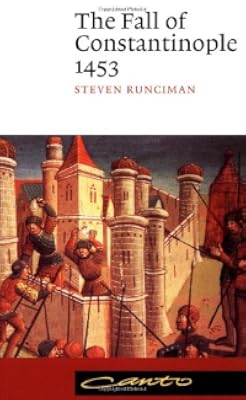
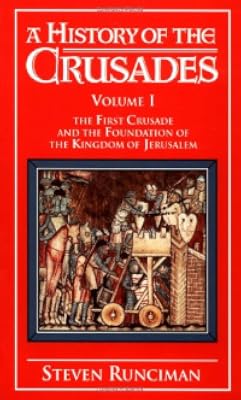
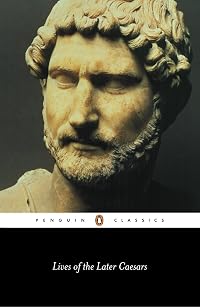





Member Recommendations


nessreader Literary historical fiction, about the later roman empire, the decline and fall. sumptuously written.
Member Reviews
I confess to being a Graves fan; his style of writing and peculiar humor fits my fancy.
Others might find the long discursions into politics and military strategy & tactics boring (rather along the lines of the whale hunting details in Moby Dick), but all of them are important to the plot and character development.
If I had any complaints, it would be that Belisarius is just too moral and upstanding to be really true.
As is usual, Graves gives significant space to the several important women in the story, especially Antonina, the wife of Belisarius.
Their courtship and marriage is one of the more interesting facets of the story, especially her role as his de facto, when not de jure, deputy.
The story is told in first-person by Eugenius, a show more eunuch who is the personal servant (formerly slave) of Antonina: a combination secretary, valet, and butler, or whatever the equivalent was in the 6th century.
Sometimes I think that he is voicing the thoughts, philosophies, and character of Graves himself (I have read a lot of his fiction, his nonfiction, and his autobiography - both editions).
Reviewers have quibbled some with the accuracy of the history. I have no deep knowledge of that.
I'm fairly certain Graves is true to the histories, and sometimes legends, extant when he wrote the book.
However, it's a ripping good story on its own merits.
As of 2025-05, I don't see any movies made from the book, but (edited down) it would make a great show, somewhat like Braveheart or Spartacus. show less
Others might find the long discursions into politics and military strategy & tactics boring (rather along the lines of the whale hunting details in Moby Dick), but all of them are important to the plot and character development.
If I had any complaints, it would be that Belisarius is just too moral and upstanding to be really true.
As is usual, Graves gives significant space to the several important women in the story, especially Antonina, the wife of Belisarius.
Their courtship and marriage is one of the more interesting facets of the story, especially her role as his de facto, when not de jure, deputy.
The story is told in first-person by Eugenius, a show more eunuch who is the personal servant (formerly slave) of Antonina: a combination secretary, valet, and butler, or whatever the equivalent was in the 6th century.
Sometimes I think that he is voicing the thoughts, philosophies, and character of Graves himself (I have read a lot of his fiction, his nonfiction, and his autobiography - both editions).
Reviewers have quibbled some with the accuracy of the history. I have no deep knowledge of that.
I'm fairly certain Graves is true to the histories, and sometimes legends, extant when he wrote the book.
However, it's a ripping good story on its own merits.
As of 2025-05, I don't see any movies made from the book, but (edited down) it would make a great show, somewhat like Braveheart or Spartacus. show less
Having enjoyed Graves's Claudius novels, I decided to have a go at this book, set in the reign of the Byzantine emperor Justinian. Graves has distilled the official histories of the time, and more gossipy works like Procopius' Secret History, to create a moving story about the ingratitude of rulers. Large parts of the book are filled with descriptions of battles, but Graves writes very well and never allows them to become tedious. Besides, the Byzantine Empire certainly has a lot of colour to keep the interest up. The emperor Justinian came out of the whole thing extremely poorly. I don’t know how far Graves exaggerated his character, but I found him cowardly, ungrateful, blind, unstrategic, easily-misled, henpecked and generally show more flawed in every possible way; worst of all, he didn’t even have the sense to recognise that Belisarius was the one man in the Empire whom he could trust implicitly. It may be true, as some critics claim, that Belisarius is a little too good to be true; but nevertheless it's a convincing and powerful story of injustice, which is all the more moving because it is based on historical events. show less
Robert Graves's models for Count Belisarius include some of the great historical works of classical antiquity: Livy, Thucydides, Herodotus, and certainly Xenophon in the Persian war sections. The novel is set in the sixth century of our era. Belisarius is perhaps the last loyal general the Roman Empire can still count on. He is deeply Christian (Orthodox) but with an admirable tolerance for divergent views (Arianism, Monophysitism, etc.). He is also a military leader of genius. The accounts of his successes in Persia, Carthage, and Italy, are depicted at length. The Seige of Rome against an Ostrogoth army ten times the size of Belisarius's own constitutes a set piece of extraordinary brilliance. If you like any of the classical show more histories mentioned, you'll like this book. Be advised, however, that it tends to be better written than its models--or, I should say, than the English translations of those models that I have read. I wanted to read it because I liked the lethal palace intrigue so abundant in I, Claudius. That's here alright but the ramp up is longish. The first bits of intrigue don't begin until p. 102 of this edition; the backstabbing politics in earnest not until p. 150. But then hold on to your hoody because the last 300 pages are wonderful.
The book is narrated by Eugenius, the eunuch slave of Antonina, the entertainer and prostitute whom we first meet at a soiree given by the fourteen year old Belisarius's tutor. The Empress herself, Theodora, also a former prostitute, is an old friend of Antonina. In their youth they clubbed together with other girls and opened a brothel in Adrianople. Emperor Justinian, who met his empress in that house of pain, Graves's depicts as not very smart and easily led by those motivated almost solely by self interest. They ruthlessly smear Belisarius's squeaky-clean reputation and eventually succeed in driving this brilliant man from Justinian's good graces. I can't begin to hint at the intrigue and casuistry on display here. The sheer cruelty and malice. The incompetence, usually driven by jealousy, of Belisarius's generals. You simply must read it for yourself. Suffice it to say that the last 300 pages are on a par with I, Claudius and somewhat better in my view than Claudius the God. I think Graves's may have wanted to provide a more in-depth opening since details of the late Roman Empire are less well known than those of the classical period. That's my guess, anyway. Exuberantly recommended despite the slow start, especially for lovers of the historical novel.
This beautiful edition was produced by The Folio Society (London). show less
The book is narrated by Eugenius, the eunuch slave of Antonina, the entertainer and prostitute whom we first meet at a soiree given by the fourteen year old Belisarius's tutor. The Empress herself, Theodora, also a former prostitute, is an old friend of Antonina. In their youth they clubbed together with other girls and opened a brothel in Adrianople. Emperor Justinian, who met his empress in that house of pain, Graves's depicts as not very smart and easily led by those motivated almost solely by self interest. They ruthlessly smear Belisarius's squeaky-clean reputation and eventually succeed in driving this brilliant man from Justinian's good graces. I can't begin to hint at the intrigue and casuistry on display here. The sheer cruelty and malice. The incompetence, usually driven by jealousy, of Belisarius's generals. You simply must read it for yourself. Suffice it to say that the last 300 pages are on a par with I, Claudius and somewhat better in my view than Claudius the God. I think Graves's may have wanted to provide a more in-depth opening since details of the late Roman Empire are less well known than those of the classical period. That's my guess, anyway. Exuberantly recommended despite the slow start, especially for lovers of the historical novel.
This beautiful edition was produced by The Folio Society (London). show less
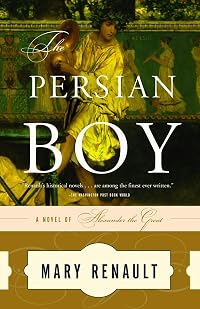
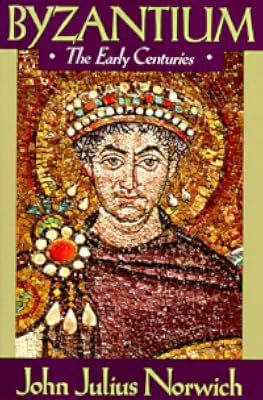
I've always been fascinated by the Byzantine empire, and this book gives an insight into one of its most lively times and some of its biggest characters - in Justinian and Theodora, perhaps those most familiar to a modern audience through the mosaics at Ravenna, Justinian's legal reforms and the scurrilous stories of Procopious. Graves writes this as an autobiography by the eunuch to the wife of Belisarius, undeniably one of the great military geniuses of all time. The first person narrator is not particularly vividly depicted, and for most of the time this simply reads as a straight historical narrative, moving forwards magisterially through Belisarius' life, full of incident and episode, at times painful, at times triumphant. It's show more interesting to move to other histories of the time, for example [John Julius Norwich], to see that Graves makes some very deliberate choices of emphasis and nuance in how we see the impeccable Belisarius and the wily Justinian, where perhaps there is room for more ambiguity. I must confess to preferring [Mary Renault] as a historical novelist; more lively, more vivid, much more personal - but this is a fascinating and engaging read nonetheless show less
Cast in the form of a chronicle/memoir, written by Eugenius, the eunuch servant of Belisarius's wife, Antonina, this purports to tell the story of Count [Generalissimo] Belisarius, of the Eastern Roman army in the days of Justinian and Theodora, 6th century AD. It begins with the boy Belisarius and reveals his quick-thinking at so young an age. Becoming general, he cuts a wide swath through North Africa, Roman cities in Italy and Sicily. We see his tactical and strategic genius. He also deals with machinations at the court of Justinian and Theodora set against the broader history of that period.
The style was stilted, using pseudo-Victorian language. This put me off somewhat. The first few chapters introduced the characters and gave them show more personalities in broad strokes. The book was more interesting from Belisarius's quelling of the Nika [Victory] Riots, through his battles to regain the Western Roman Empire and final fate: 350+ pages or so. I could not get close to any of them; writing was mere reporting of facts as Eugenius remembered them. I believe much was taken from Procopius, historian who appears in the story. What he wrote we can't trust completely; the man had his own agenda.
Recommended, as a classic of the 6th century. show less
The style was stilted, using pseudo-Victorian language. This put me off somewhat. The first few chapters introduced the characters and gave them show more personalities in broad strokes. The book was more interesting from Belisarius's quelling of the Nika [Victory] Riots, through his battles to regain the Western Roman Empire and final fate: 350+ pages or so. I could not get close to any of them; writing was mere reporting of facts as Eugenius remembered them. I believe much was taken from Procopius, historian who appears in the story. What he wrote we can't trust completely; the man had his own agenda.
Recommended, as a classic of the 6th century. show less
Belsarius was a leading general during the rule of Justinian and Theodora. The historical research required to create this fictional narrative was superb, as would be expected for anything Graves has written. The point of view was that of the eunuch who served Belsarius' wife. This gave it a feeling of dispassionate, remoteness rather than a story that was lived and experienced. If one is reading for historic detail, this is an excellent work. If one is looking for more interesting historic fiction turn to Graves' I, Claudius, Claudius the God or Wife to Mr. Milton.
Belisarius was a tragic hero, deserving of the title "The Last Roman". An honest and principled man, who reconquered Rome and Carthage with a miniscule force, and died, according to legend, a blind beggar, fallen to the intrigues of the Byzantine court.
Graves, who is no slouch when it comes to historical fiction, does well here. He does his research on an all too obscure period of history, and writes a gripping novel. Detailed yet energetic.
Graves, who is no slouch when it comes to historical fiction, does well here. He does his research on an all too obscure period of history, and writes a gripping novel. Detailed yet energetic.
Members
- Recently Added By
Lists

The Guardian's 1000 Novels Everyone Must Read
1,005 works; 552 members

Best Historical Fiction
620 works; 261 members

Historical Fiction
889 works; 91 members

Best historical fiction set in the ancient world
126 works; 40 members

Fiction Featuring Real People
81 works; 17 members

THE WAR ROOM
813 works; 24 members
Author Information

259+ Works 40,616 Members
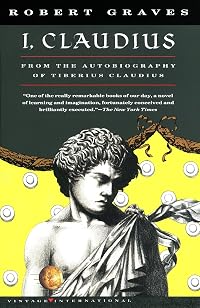
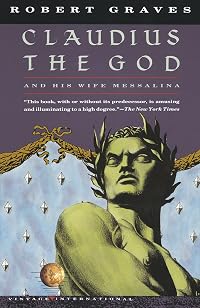
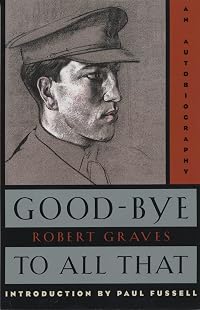
Robert Graves (also known as Robert Ranke Graves) was born in 1895 in London and served in World War I. Goodbye to All That: an Autobiography (1929), was published at age thirty three, and gave a gritty portrait of his experiences in the trenches. Graves edited out much of the stark reality of the book when he revised it in 1957. Although his most show more popular works, I, Claudius (1934) and its sequel, Claudius the God and His Wife Messalina (1935), were produced for television by the BBC in 1976 and seen in America on Masterpiece Theater, he was also famous as a poet, producing more than 50 volumes of poetry. Graves was awarded the 1934 James Tait Black Memorial Prize for both I, Claudius and Claudius the God. Also a distinguished academic, Graves was a professor of English in Cairo, Egypt, in 1926, a poetry professor at Oxford in the 1960s, and a visiting lecturer at universities in England and the U.S. He wrote translations of Greek and Latin works, literary criticism, and nonfiction works on many other topics, including mythology and poetry. He lived most of his life in Majorca, Spain, and died after a protracted illness in 1985. (Bowker Author Biography) show less
Robert Graves has a Legacy Library. Legacy libraries are the personal libraries of famous readers, entered by LibraryThing members from the Legacy Libraries group.
Some Editions
Awards and Honors
Awards
Notable Lists
Series
Belongs to Publisher Series
Work Relationships
Common Knowledge
- Canonical title
- Count Belisarius
- Original title
- Count Belisarius
- Original publication date
- 1938
- People/Characters
- Belisarius
- Important places
- Byzantine Empire; Rome, Italy; Constantinople, Byzantine Empire
- First words
- When he was seven years old, Belisarius was told by his widowed mother that it was now time for him to leave her for a while, and her retainers of the household and estate at Thracian Tchermen, and go to school at Adrianople,... (show all) a city some miles away, where he would be under the guardianship of her brother, the Distinguished Modestus.
- Last words
- (Click to show. Warning: May contain spoilers.)So much, then, for these things.
Classifications
Statistics
- Members
- 1,138
- Popularity
- 22,273
- Reviews
- 16
- Rating
- (3.75)
- Languages
- 10 — Czech, Dutch, English, Finnish, German, Hungarian, Italian, Polish, Spanish, Turkish
- Media
- Paper, Audiobook, Ebook
- ISBNs
- 36
- ASINs
- 39