The Washing of the Spears
by Donald R. Morris
On This Page
Description
Filled with colorful characters, dramatic battles like Isandhlwana and Rorke's Drift, and an inexorable narrative momentum, this unsurpassed history details the sixty-year existence of the world's mightiest African empire--from its brutal formation and zenith under the military genius Shaka (1787-1828), through its inevitable collision with white expansionism, to its dissolution under Cetshwayo in the Zulu War of 1879.Tags
Recommendations









































Member Recommendations

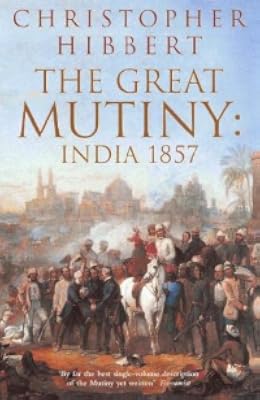
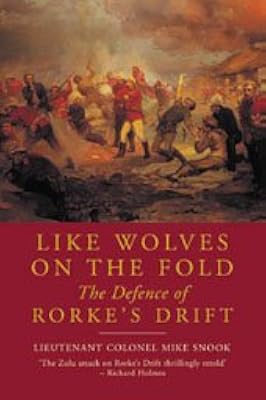
John_Vaughan Further reading on this tragic if brave battle.
Artymedon Mitford's action takes place more in the 1890s and admirably analyze through fiction the influence of European values such as laws, taxes and police, on traditional Zulu society.


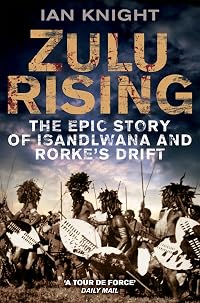
John_Vaughan A rather 'graphical' but interesting version.

Member Reviews
> Time and again, for no discernible reason, Shaka, with a flick of his hand and no further attention, ordered the execution of some member of his entourage. It was a phenomenon that was noted on every occasion on which a European paid a visit to the royal kraal, and despite the initial impression that Shaka merely wished to impress his visitors with his absolute powers, it gradually sank in that the executions were a normal part of Zulu court life, and that Shaka gave as little heed to the impression left on his visitors as he did to that made on the victims or their families. The power was indeed absolute, and it had reached the ultimate corruption.
> At noon the whole force formed a circle with Shaka in the center, and sang a show more war-song, which afforded them some relaxation during its continuance. At the close of it, Shaka ordered several men to be executed on the spot; and the cries became, if possible, more violent than ever. No further orders were needed; but, as if bent on convincing their chief of their extreme grief, the multitude commenced a general massacre. Many of them received the blow of death while inflicting it on others, each taking the opportunity of revenging his injuries, real or imaginary. Those who could no more force tears from their eyes — those who were found near the river panting for water — were beaten to death by others who were mad with excitement. Towards the afternoon I calculated that not fewer than seven thousand people had fallen in this frightful indiscriminate massacre. The adjacent stream, to which many had fled exhausted to wet their parched tongues, became impassable from the number of dead corpses which lay on each side of it; while the kraal in which the scene took place, was flowing with blood … Nandi was buried on the third day, with ten handmaidens, their arms and legs broken, buried alive to keep her company. A regiment of 12,000 men was set to guard the grave for a year, supplied with 15,000 head of cattle taken up from every kraal in the country. Shaka then set the conditions of mourning. No crops were to be planted for the following year, nor was milk to be used; it was to be poured on the ground as it came from the cow. (Since milk curds formed the diet staple, the order was equivalent to national starvation, once the limited stores of grain and the cattle themselves had been eaten.) All women found pregnant during the next year would be killed, together with their husbands. … The insane commands and the killings continued for three months, and on three occasions Shaka called the nation together to help him mourn. On the last occasion he ordered everyone to bring all their cattle with them, so that the bellowing of a single gigantic herd could be added to that of his people. Still not satisfied with the din, he ordered every kraal head to rip the gall bladder out of a calf and pour the contents over him; the mutilated animals were then released. Cows were then killed, so that even the calves might know what it was to lose a mother.
> No one in the army was permitted to marry; Shaka on very rare occasions gave entire regiments permission to don the head-ring and settle down, but such permission came only when the men were too old to be of further value in the field. The entire youth of the nation was thus held in a state of enforced celibacy, the men in the military formations and the girls in the corresponding female guilds, and the few times that Shaka authorized a regiment to spend a day in ukuHlobonga with a particular female guild did little to relieve the pressure.
> Shaka passed the month of September in typical fashion. He displayed his smelling-out prowess; summoning some three hundred women he asked each one whether or not she owned a cat, and then killed them all regardless of the answer. Most of them had been married to men in one of the head-ringed regiments then off in the north. He then developed a mild interest in embryology and sliced open a hundred pregnant women to look into the subject
> Shaka had arrived 63 years ago to claim his inheritance. He had found an apathetic clan no one had ever heard of, who numbered less than the Zulu dead that now lay unburied across the river, and out of them he had fashioned an army and on that army he had built an empire. The proud and fearless regiments had carried their assegais south to the Great Kei River, west to the high veld over the Drakensberg Range and north to Delagoa Bay. He had smashed more than a thousand clans and had driven them from their ancestral lands, and more than two million people had perished in the aftermath of the rise of his empire, which had survived him by a scant fifty years show less
> At noon the whole force formed a circle with Shaka in the center, and sang a show more war-song, which afforded them some relaxation during its continuance. At the close of it, Shaka ordered several men to be executed on the spot; and the cries became, if possible, more violent than ever. No further orders were needed; but, as if bent on convincing their chief of their extreme grief, the multitude commenced a general massacre. Many of them received the blow of death while inflicting it on others, each taking the opportunity of revenging his injuries, real or imaginary. Those who could no more force tears from their eyes — those who were found near the river panting for water — were beaten to death by others who were mad with excitement. Towards the afternoon I calculated that not fewer than seven thousand people had fallen in this frightful indiscriminate massacre. The adjacent stream, to which many had fled exhausted to wet their parched tongues, became impassable from the number of dead corpses which lay on each side of it; while the kraal in which the scene took place, was flowing with blood … Nandi was buried on the third day, with ten handmaidens, their arms and legs broken, buried alive to keep her company. A regiment of 12,000 men was set to guard the grave for a year, supplied with 15,000 head of cattle taken up from every kraal in the country. Shaka then set the conditions of mourning. No crops were to be planted for the following year, nor was milk to be used; it was to be poured on the ground as it came from the cow. (Since milk curds formed the diet staple, the order was equivalent to national starvation, once the limited stores of grain and the cattle themselves had been eaten.) All women found pregnant during the next year would be killed, together with their husbands. … The insane commands and the killings continued for three months, and on three occasions Shaka called the nation together to help him mourn. On the last occasion he ordered everyone to bring all their cattle with them, so that the bellowing of a single gigantic herd could be added to that of his people. Still not satisfied with the din, he ordered every kraal head to rip the gall bladder out of a calf and pour the contents over him; the mutilated animals were then released. Cows were then killed, so that even the calves might know what it was to lose a mother.
> No one in the army was permitted to marry; Shaka on very rare occasions gave entire regiments permission to don the head-ring and settle down, but such permission came only when the men were too old to be of further value in the field. The entire youth of the nation was thus held in a state of enforced celibacy, the men in the military formations and the girls in the corresponding female guilds, and the few times that Shaka authorized a regiment to spend a day in ukuHlobonga with a particular female guild did little to relieve the pressure.
> Shaka passed the month of September in typical fashion. He displayed his smelling-out prowess; summoning some three hundred women he asked each one whether or not she owned a cat, and then killed them all regardless of the answer. Most of them had been married to men in one of the head-ringed regiments then off in the north. He then developed a mild interest in embryology and sliced open a hundred pregnant women to look into the subject
> Shaka had arrived 63 years ago to claim his inheritance. He had found an apathetic clan no one had ever heard of, who numbered less than the Zulu dead that now lay unburied across the river, and out of them he had fashioned an army and on that army he had built an empire. The proud and fearless regiments had carried their assegais south to the Great Kei River, west to the high veld over the Drakensberg Range and north to Delagoa Bay. He had smashed more than a thousand clans and had driven them from their ancestral lands, and more than two million people had perished in the aftermath of the rise of his empire, which had survived him by a scant fifty years show less
A huge great big book. Informative and fair minded as well as being able to write a pretty gripping battle. The account of the defence of Rorke's drift was alone worth carrying over 600 pages around for over a week.
A superb account of the Zulu Nation, an expanding and Imperial power that collided with the Boers and later Great Britain. Modern weaponry and warfare would prove to be the downfall of the Zulus, but not before they inflicted the greatest defeat England would ever suffer at the hands of spear-wielding warriors. Gripping and informative.
1374 The Washing of the Spears: A History of the Rise of the Zulu Nation under Shaka and Its Fall in the Zulu War of 1879, by Donald R. Morris (read 20 Dec 1975) This is a truly excellent book. It tells the story of the Zulu nation, and is filled with fascinating material which I had not known of. The book tells the story of Natal, the first white settlements, and the rise of the Zulu nation, built by Shaka (who was killed 22 Sept 1828). The whole fascinating story of the Zulu War of 1879 is told, and of course the story of Isandhluana fought on Jan 22, 1879, and of Rorke's Drift. From this point on the account drags, except for the chapter on Napoleon's son, killed later in the year. The book ends: "The last independent king of the show more Zulus was now a homeless refugee without a throne, and his capital lay in ashes. His army had ceased to exist, and what remained of the regiments had silently dispersed to seek their home kraals. The House of Shaka had fallen, and the Zulu nation was no more." This is a truly outstanding book. show less
This is the best history of South Africa and it is written by an American!
Ratings
Members
- Recently Added By
Lists

Best Military History Books
123 works; 21 members

r/History Recommended Reading List
603 works; 12 members
Author Information
3+ Works 737 Members
Awards and Honors
Distinctions
Common Knowledge
- Canonical title
- The Washing of the Spears
- Original publication date
- 1965
- People/Characters
- Frederic Thesiger, 2nd Baron Chelmsford; Cetshwayo; Gonville Bromhead, Lt. "B" Co., 24 Infantry Regt. (Gonny Bromhead); John Chard, Lt., Royal Engineers; Shaka Zulu
- Important places
- Natal, South Africa; Transvaal, South Africa; Zulu Kingdom; Cape Town, Western Cape, South Africa; Zululand
- Important events
- Battle of Isandlwana (1879); Battle of Rorke's Drift (1879); Zulu War (1879)
- Related movies
- Zulu (1964 | IMDb)
Classifications
Statistics
- Members
- 713
- Popularity
- 39,846
- Reviews
- 5
- Rating
- (4.20)
- Languages
- English
- Media
- Paper, Ebook
- ISBNs
- 18
- ASINs
- 20